Pegasus Aviation

UK
Markets the AX2000 two-seat very light monoplane and several flex-wing microlights as the single-seat Chaser- S, two-seat Quantum Sport and Supersport, two-seat Quantum LITE Basic 503TC and two-seat Quasar.
Publicly owned Pegasus Aviation bought the rights to the French edition of a highly modified Weedhopper.

1998:
Elm Tree Park
Manton
SN8 1PS Marlborough
United Kingdom

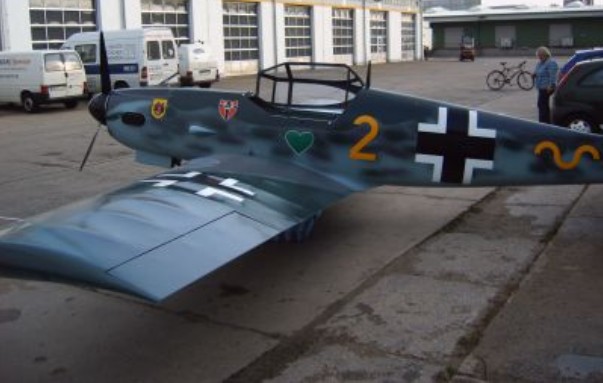
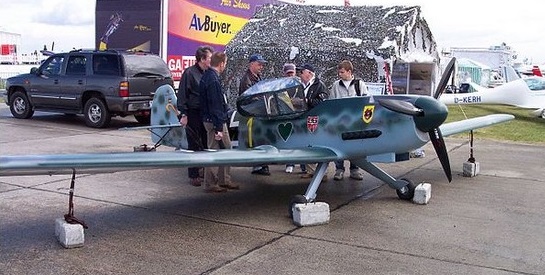
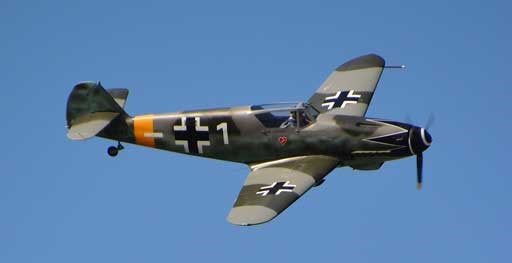
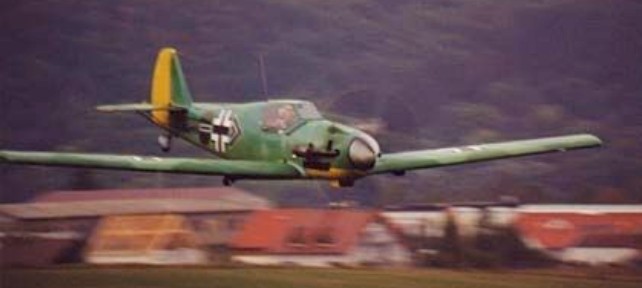
Peak Me 109 UL / Mecklenburger Ultraleicht Flugzeugbau Christian Engelen Me 109 / Classic Planes GmbH Me 109

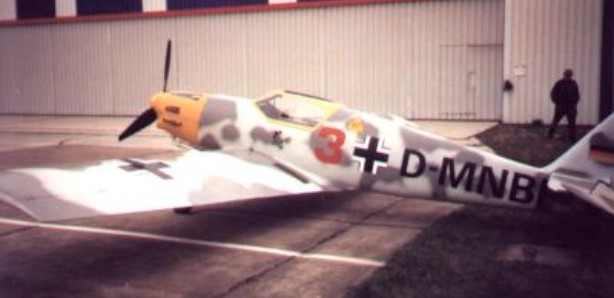
The first 109 flew well, but was not particularly agile. Thus Bek began to build the first form for a plastic 109. Soon finished the first 109 from that form first flew in 1991. The second aircraft, registered D-MYBB, first flew in 1992, but was lost in an accident that same year. Bek’s third prototype, D-MNBP, was flown in about 1994 and resulted in some kits being sold.

The Messerschmitt BF 109 is certified as an ultralight aircraft, after the BfU 84 – LTA UL 2003. From the 1992 form, the new series had its first flight on 17 November 2006, after extensive revision.

The Peak Me 109 microlight Messerschmitt is now available either as a microlight or an experimental kit.

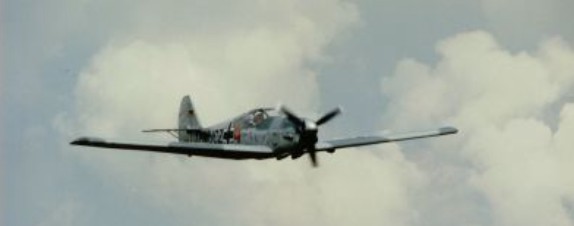
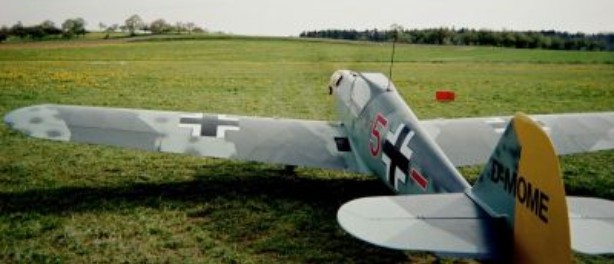
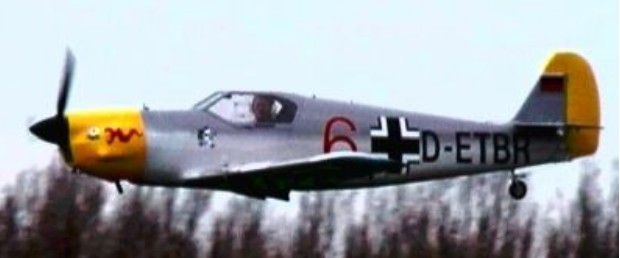
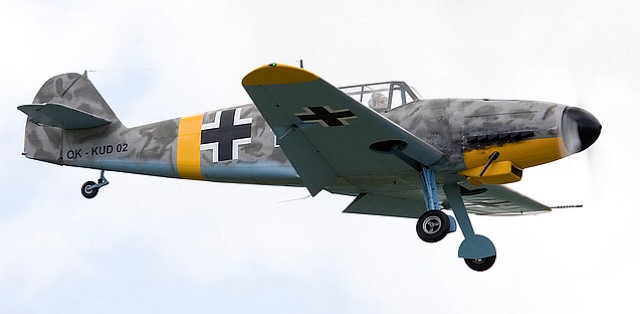
The BF 109 UL is a single-seat GRP low-wing aircraft with one piece wing, and tail wheel landing gear. The retractable main landing gear has a steerable tail wheel. Parachute: BRS 5 UL 1050 Softpack.

The Peak Aerospace Me 109R was originally produced by Peak Aerospace, Mecklenburger Ultraleicht Flugzeugbau Christian Engelen and then by Classic Planes GmbH of Pasewalk.

Bek flew a homebuilt category version of the Me 109 in 1996, powered by a Hirth F30 and later a Subaru automotive conversion, which became the prototype of the Me 109R kit aircraft. Bek then sold the company and the new owner ceased development of the Me 109. In 2003 Christian Engelen purchased the project and continued work on the aircraft, officially re-launching it in 2004. Since then production has continued on a demand basis.

The production version, the Me 109R is made from composites. Standard engines available include the 64 hp (48 kW) Rotax 582 two-stroke, the 70 hp (52 kW) Weber Motor MPE 750 and the 80 hp (60 kW) D-Motor LF26 four-stroke powerplants. The unit cost, assembled, was €40,990 in 2015.

Engine options:
Rotax 582 DCDI 65PS/48KW reduction 1:2,62
Sauer M800UL 70PS/50KW reduction 1:2,66
Jabiru 2200 80PS/54KW direct drive

Propeller:
Helix H50v 3 Blade 1,60m Diameter
Warp Drive 3 Blade 1,65m Diameter

Gallery

Wingspan: 8,20 m
Length: 6,30 m
Height: 1,45 m
Wing area: 10,10 qm
Empty weight: 200-220 kg
MTOW: 322.5 kg (proven to 340kg)
Fuel capacity: 55 lt / 52 usable
Stall speed Vs: < 65 km/h
Va: 120 km/h
Cruising speed Vr: 160 km/h
Maximum speed Vne: 210 km/hr
Range: 600 km (3,5 hr Std. + Res.)
Average consumption: 12-14 lt/hr at 160/170 km/h IAS
Seats: 1

Mecklenburger Bf 109 UL
Stall: 32 kt / 37 mph / 59 kmh
Cruise: 97 kt / 112 mph / 180 kmh
VNE: 113 kt / 130 mph / 210 kmh
Empty Weight: 190 kg / 419 lbs
MTOW Weight: 300 kg / 661 lbs
Climb Ratio: 1100 ft/min / 5.5 m/s

Me 109R
Engine: 1 × Rotax 582, 48 kW (64 hp)
Propeller: 3-bladed Helix-Carbon composite
Wingspan: 8.10 m (26 ft 7 in)
Wing area: 10.53 m2 (113.3 sq ft)
Length: 6.3 m (20 ft 8 in)
Height: 1.5 m (4 ft 11 in)
Empty weight: 190 kg (419 lb)
Gross weight: 322 kg (710 lb)
Fuel capacity: 52 litres (11 imp gal; 14 US gal)
Wing loading: 30.6 kg/m2 (6.3 lb/sq ft)
Maximum speed: 190 km/h (120 mph, 100 kn)
Cruise speed: 175 km/h (109 mph, 94 kn)
Stall speed: 59 km/h (37 mph, 32 kn)
Never exceed speed: 190 km/h (120 mph, 100 kn)
Rate of climb: 6 m/s (1,200 ft/min)
Crew: one
Capacity: one passenger
Aerobatic

Me 109R
Engine: 1 × Rotax 912UL, 80 hp (60 kW)
Gross weight: 500 kg / 1,100 lb
Loading: +6/-4g
Aerobatic

Me 109R
Engine: 1 × MPE 750, 70 to 120 hp (52 to 89 kW)
Gross weight: 500 kg / 1,100 lb
Loading: +6/-4g
Aerobatic

Me 109R
Engine: 1 × D-Motor LF26, 80 hp (60 kW)
Gross weight: 500 kg / 1,100 lb
Loading: +6/-4g
Aerobatic
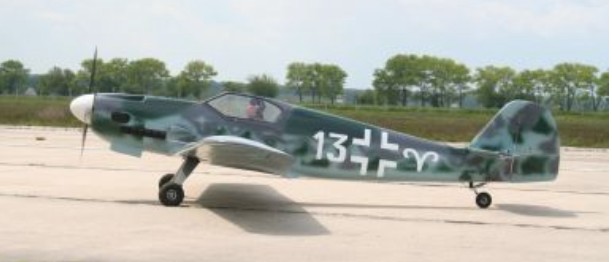
Peak Me 109 v

V.2

To make the aircraft more agile and reduce the building expenditure, in 1992 Tassilo Bek developed new wings with a majority of GRP structure, and using the Hirth F30 in order to bring the machine to or over the 200 km/h mark. The new wing withstood in the load test, up to a maximum take-off weight of 340 kg. The following machine WNr. 1992 flew. D-MYBB was lost in the same year through accident.

Powered with a Hirth 2704 of 40 hp, the machine reached 190 km/h maximum speed. The simple and reliable retractable landing gear of the 109 was incorporated at that time.

It still flies in close proximity to Jena. The machine is reliable and the wings are of timber construction method with foam material ribs.

V.3

The experiences from the flight behaviour, the structure and the examinations taken place following the accident of D-MYBB flowed immediately into the building of the next machine and the following.

Due to becoming largely popular inquires from prospective customers appeared. With that, Mr. Bek built several kits. First became the factory serial number 3, D-MNBP. This flew for the first time around 1993.
It was sold around Berlin. The construction units and/or kits sold, from which, among other things, the factory serial number 4, D-MCUZ was developed.

Serial number 4 had a Hirth F30 and flew from 1994 to 2003. In the meantime, the French certified the type.

The factory serial number 5 was equipped with a Rotax 582, this engine was intended from the beginning for the re-equipment of other machines like the factory serial number 3 and 4.

Mr. Bek on a strenghtened version, which became certified as experimental, in order would do aerobatics. This machine flew for the first time in 1996 equipped with the F30, shortly after changed to a Subaru autoengine.

The factory serial number 7 received a Rotax 912 and it emigrated in 2005, together with its new owner, to Paraguay.

Peak Me 109 v.1 / Bek Treppenbau Me 109

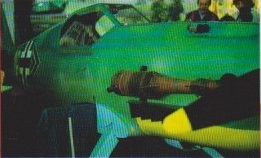
The ME 109 UL began with Tassilo Bek´s visit in the middle of the 80’s to Oshkosh. Seeing small reproductions of Mustangs and other fighters, hardly back in Germany, he began to sketch his own airplane. After some planning and drafts he began with the work on the first ME 109. Basis was a covered timber frame, with retractable landing gear (operates via crank) in addition, and somewhat larger span of approx. 10.5 m with a length of approximately 7 m. The first prototype, registered D-MBAK, was powered by a Hirth 2704 producing only 40 hp (30 kW) and first flew in 1991. This first 109 flew well, was not particularly agile. This aircraft achieved 190 km/h (118 mph) on its low power output, but Bek started a second prototype based on lessons learned in 1992. Thus he began to build with friendly engineers and craftsmen the first form for a plastic 109.

Peak Aerospace / Bek Treppenbau

1998:
Bek Treppenbau
Fȁrberweg 73
D-88444 Riedlingen
Germany

The Peak Aerospace GmbH builds airplanes, delivery parts and special developments in GRP components materials in Mecklenburg-Western Pomerania. In particular they build the Messerschmitt BF 109 as single-seat ultralight aircraft. They manufacture all components in house.

Mr. Bek had much to do with his stair building firm and the 109 had always remained a hobby. In co-operation with Mr. Bek the co-workers were trained and the first static model, factory serial number developed during 2000 to 2004.

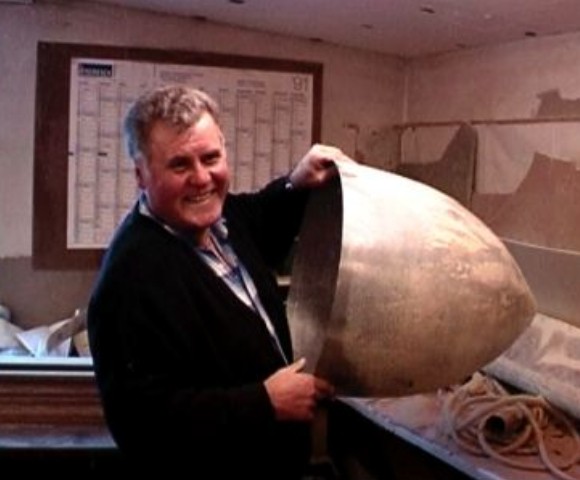
Tassilo Bek

PDQ Aircraft Products PDQ-2

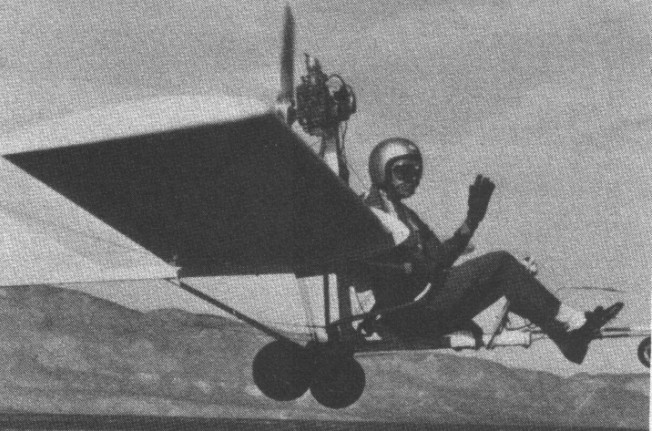
Back in the early 1970’s Wayne Ison designed the P.D.Q. The PDQ-2 is a sort of strap-on monoplane with shoulder-high wings, a tiny tricycle gear and a pylon-mounted JLO snowmobile engine that swings a two-bladed pusher prop. The pilot sits up front biting bugs at a Vmax of 80 mph. On a cold day vertical velocity is 400 fpm. The I-tail is hung at the end of a boom borrowed from the Bensen gyrocopter. The wings are made from Styrofoam bonded over plywood ribs at root and tip of each panel, with seven foam ribs in between. The foam is then covered with Dynel, bonded at the edges and heat¬shrunk, with resin squeegeed into the cloth and sanded light¬ly. Finally, the direct-driven prop develops 45 hp at 5500 rpm or 35 hp at 5000 rpm.

Engine: 1385cc VW, 40hp
Wingspan: 22 ft
Length: 14 ft 6 in
Max wt: 600lbs
Empty wt: 340 lb
Max speed: 80mph
Cruise: 70mph
Climb rate: 500 fpm

PC Flight PG

The PG is a side by side two seater with a spaceframe fuselage. The wings are made of riveted sheet dural and can be folded for transport.

Engine: Rotax 912 UL, 80 hp
Wing span: 10 m
Wing area: 11.66 sq.m
MAUW: 450 kg
Empty weight: 280 kg
Fuel capacity: 100 lt
Max speed: 210 kph
Cruise speed: 195 kph
Minimum speed: 63 kph
Climb rate: 5.5 m/s
Certification: vVz
Seats: 2
Fuel consumption: 17 lt/hr
Price (1998): 85 000 DM