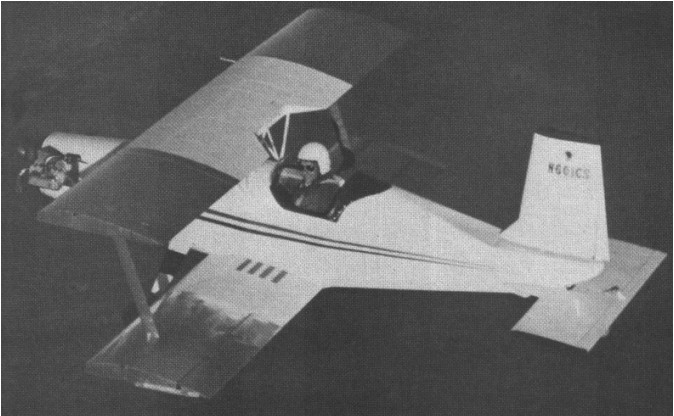
Smith Der Cricket

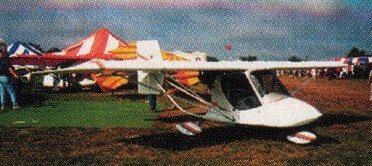
Der Kricket, an original bipe design by Cyril Smith, was built in 857 man hours, and finds that it flies fine from mile-high airports. The philosophy of design simplicity for Der Kricket began with selection of basic materials, and the construction concept developed requires only two sizes of 2024-13 aluminum angle. The spar for the horizontal stabilator is 2-inch square 6063 tubing, requiring a minimum of work. A 2-inch diameter 6063-15 tube spar for the rudder becomes self-hinging with two nylon, teflon or phenolic bushings. All ribs are constructed with a unique self-jigging tab to insure ac¬curate alignment dpring attachment to the various spars. Fuselage is semi-monocoque construction, built upside down on a flat surface, and tricks bor¬rowed from model-airplane building days are employed in assembling the fuselage. A 2 x 11-foot “pin board” on sawhorse supports is used for the fuselage layout. Longerons are tacked to the layout, then four bulkheads added to assure simple, accurate alignment. The “poor man’s deco,” (1/8th-inch soft aluminum pop rivets) are used when necessary for positioning, then are drilled out and replaced with monel or stainless steel pop rivets during final assembly. Full-flying tail surfaces, both vertical and horizontal, are easily constructed and attached, and provide effective control at low airspeeds, with ample rudder movement for takeoff and land¬ing rolls. A good-sized antiservo tab was chosen to provide ample control feel and reasonable sensitivity at cruise speeds. Smith elected to utilize as many pre¬fabricated items as possible in building Der Kricket – landing gear legs from the VP-1 Volksplane; aircraft-style Go Kart wheels and brakes; low-pressure aircraft tires for the mains; and a modified 5-inch caster for a tailwheel. The wing is a NACA 4412.

First flying on 19 September 1978, the prototype N501CS, flew for 25 years before Smith donated it to the Mid-America Air Museum.

Gross weight 750 lbs
Empty weight 500 lbs
Fuel capacity 8-10 Usgal
Wing¬span (biplane) 16’
Length 15’
Engine 1500cc-1835cc VW
Prop: 54 x 30
Vmax 138 mph
Cruise speed 90 mph
Climb rate 500 fpm
Range 200 nm
Wing loading: 7.3 lb/sq.ft
Pwr loading: 14 lb/hp
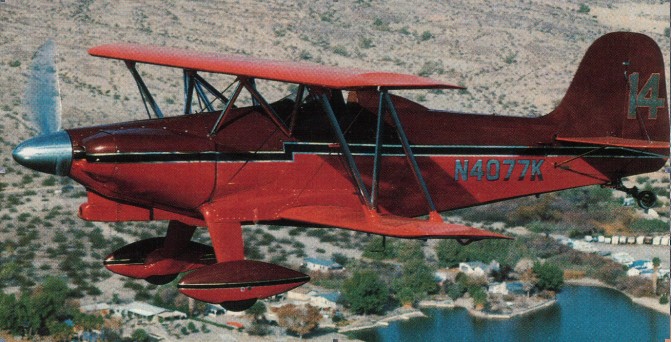
Smith DSA-1 Miniplane / Sky Classic Aircraft Miniplane

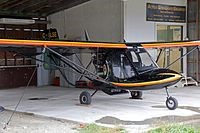
The primary appeal of the Smith Miniplane is its small-size construction simplicity and open-cockpit. The fuselage framework is a conventional truss structure of welded steel tubing, faired to shape with wood stringers. As on most similar designs, the vertical stabilizer is welded up as part of the rear fuselage structure. The wings are made from spruce spars and ribs. Several engines can provide the power, the Continental from 65 to 85 hp or the Lycoming from 100 to 125 hp.

Smith DSA-1 Miniplane Article

The 1956 DSA-1 Miniplane model designation was for “Damn Small Aeroplane”. The prototype first flew on 29 October 1956.

Smith Miniplane N90P

There have been hundreds of the original Smith Miniplane Biplanes built and flying today. In 1996 plans cost US$140.

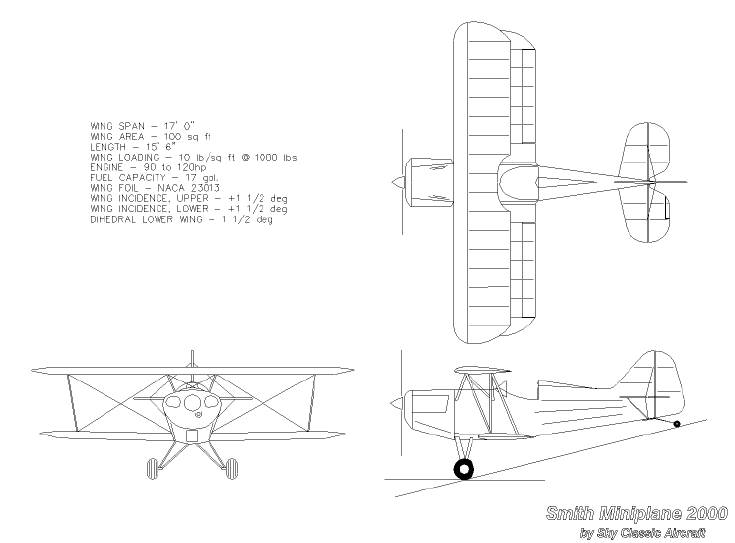
Sky Classic Aircraft introduced the 2000 version of the Smith Miniplane Biplane. Many of the parts and pieces on the aircraft were simplified to make it easier to build.

Changes include:
1) New wing fittings to simplify building.
2) Stretched the length of the fuselage by 5 inches to accommodate a larger person.
3) Stretched the width of the fuselage by 2 inches to accommodate a larger person.
4) Added a trim tab to the elevator.
5) Reshaped the rudder assembly to look more racy.
6) Added struts to the horizontal stabilizer to stop any cracking like the Pitts did.
7) Changed the wing foil to a NASA 23013. Good for aerobatics yet very stable with less drag.
8) Changed the wing angles of attack to fix an old problem on the old aircraft.
9) Reduced the rudder control speed to make it just a little easier to fly.
10) Aircraft plans on computer CAD so that they are easy to read.
11) Adding springs to the original type landing gear.

Gallery

Engine: 65- 85-hp Continental, 100-125-hp Lycoming.
Gross Wt: 1000 lb
Empty Wt: 616 lb.
Fuel capacity: 17 USG
Wingspan: 17’.
Length: 15’3”
Wing area: 100 sq.ft.
Top speed: 130 mph
Cruise: 122 mph.
Stall: 56 mph
Climb rate: 1600 fpm.
Ceil¬ing: 13,000 ft
Takeoff run: 450 ft
Landing roll: 500 ft
Range: 275 sm
Seats: 1

Sky Classic Aircraft Smith Miniplane 2000
Engine: Lycoming O-235, 100 hp
HP range: 90-120
Length: 15.5 ft
Wing span: 17 ft
Wing area: 100 sq.ft
Empty weight: 650 lb
Gross weight: 1000 lb
Fuel capacity: 15 USG
Cruise: 125 mph
Stall: 60 mph
Range: 90 sm
Rate of climb: 1000 fpm
Takeoff dist: 400 ft
Landing dist: 400 ft
Seats: 1
Cockpit width: 23 in
Landing gear: tailwheel

Sky Classic Aircraft Smith Sport Miniplane
Engine: Continental O-200, 100 hp
HP range: 90-120
Height: 5.5 ft
Length: 15.5 ft
Wing span: 100 ft
Wing area: 100 sq.ft
Empty weight: 650 lb
Gross weight: 1000 lb
Fuel capacity: 17 USG
Top speed: 135 mph
Cruise: 125 mph
Takeoff dist: 400 ft
Landing dist: 400 ft
Seats: 1
Landing gear: tailwheel

SMAN Petrel

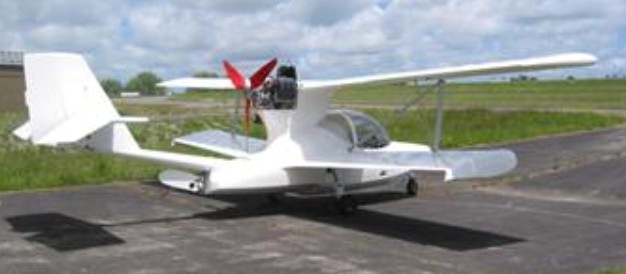
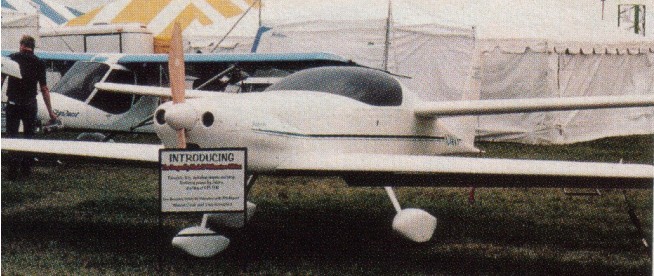
A side by side two seat amphibious pusher biplane. A full detachable canopy that can be converted into an open cockpit with its own separate windshield.

The wings, boom and tail section detach for reduced storage and easy transportation.

Production of the Petrel was taken over by SMAN, who returned it to the market circa 1998.

Engine Rotax 618
Propeller Airplast 166DAS6275/3
Undercarriage retractable

Engine: Rotax 912, 80 hp
Wing span: 8.50 m
Wing area: 17 sq.m
MAUW: 450 kg
Fuel capacity: 53 lt
Max speed: 150 kph
Cruise speed: 130 kph
Minimum speed: 65 kph
Climb rate: 3.5 m/s
Seats: 2
Fuel consumption: 13 lt/hr
Price (1998): 245 000 F
Kit price (1998): 121 000 F sm

Slip Stream International Genesis / Innovation Engineering Genesis

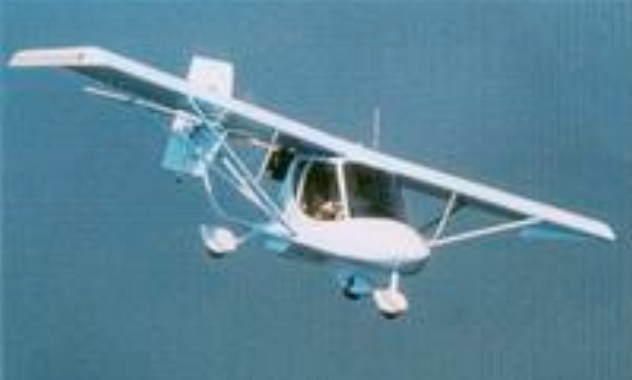
Originally designed by Chuck Hamilton and prototyped in 1992, the Genesis is a two-place, roomy, side-by-side aircraft for a 2009. Available with a choice of dual yoke controls or center stick, and equipped with the standard Rotax 582, in solo configuration take-off roll is 100 feet, with a 250 foot landing roll and a climb rate of 1,000 fpm. The Genesis base 2009 Price also included dual 10-gallon wing tanks to provide for four hours endurance.

The series were originally produced by Innovation Engineering of Davenport, Iowa and then by SlipStream International of Wautoma, Wisconsin.

Innovation Engineering Genesis

The XL version has extended wings. The kit price in 1997 was US$12,900, including engine.

Optional are “Shark Series” amphibious floats. Computer designed to reduce drag and to provide for rapid hydroplaning, the “Shark Series” floats are built to withstand impacts in excess of 3,000 lbs. per square inch and are rated for up to 1,600 lbs.

With an average empty weight of 565 lbs., the Genesis equipped with the standard Rotax 582 has a useful load of 635 lbs. With any of the larger optional powerplants, and the gross weight capability increases to 1400 lbs., providing for a larger useful load. The HD option has a “beefed up” airframe capable of safely carrying up to 1600 lbs. and a useful load envelope of over 800 lbs.

The Genesis typically will take about 400 hours to complete. All of the welding and fabrication is done before the kits leaves the factory, and the manuals are written with step by step instructions, and numerous photos, illustrations and CAD drawings.

The Genesis airframe sold for US$11,073 in 2009, and includes all of the flight surfaces, fuselage, fiberglass enclosure, landing gear, wheels and tires, control system and doors. Among the options are custom hydraulic brakes, cabin heating, floats, wheel pants, strut fairings, complete instruments packages, and finishing systems.

A complete Genesis aircraft, ready to fly, typically runs from $21,000 to $32,000, depending on your powerplant and choice of options.

Stall: 41 kt / 47 mph / 76 kmh
Cruise: 87 kt / 100 mph / 161 kmh
VNE: 104 kt / 120 mph / 193 kmh
Empty Weight: 295 kg / 650 lbs
MTOW Weight: 590 kg / 1300 lbs
Climb Ratio: 800 ft/min / 4 m/s
Take-off distance: 350 ft / 107 m

Innovation Engineering Genesis
Engine: Rotax 503, 53 hp.
HP range: 53-100.
Speed max: 90 mph.
Cruise: 85 mph.
Range: 225 sm.
Stall: 40 mph.
ROC: 800 fpm.
Take-off dist: 150 ft.
Landing dist: 100 ft.
Service ceiling: 10,000 ft.
Fuel cap: 13.5 USG.
Weight empty: 490 lbs.
Gross: 1000 lbs.
Height: 6.92 ft.
Length: 19.33 ft.
Wing span: 26.67 ft.
Wing area: 155 sq.ft.
Seats: 2.
Landing gear: nose wheel.

Sling Aircraft Sling

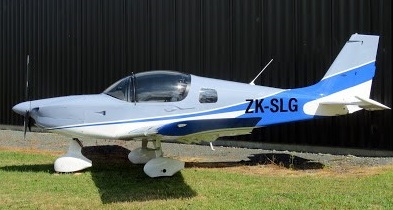
ZK-SLG (c/n 182)

The two-seater Sling was designed by Mike Blyth bigger than some of the comparable sport aircraft and can be certified as an LSA.

The prototype first flew on 18 November 2009. It is produced by Sling Aircraft (Pty) Ltd of Johannesburg in South Africa as a kit or a fully built up aircraft. After a full testing programme the second prototype was flown around the world from East to West in 40 days in 2009, which proved the credentials of the design. The Sling is of all metal construction with composite cowling and fairings. The design has been extended to a 4 seater aircraft which is called the Sling 4 while the 2 seater has been renamed the Sling 2.

Sling
Engine: Rotax 912, 100 hp
Wingspan: 30 ft 1 in / 9.17 m
Wing area: 127.5 sq.ft
Length: 22 ft 10 in / 6.98 m
empty weight: 806 lb / 370 kg
MAUW LSA: 1,320 lb / 598 kg
Cruise: 140 mph / 120 kt
Stall: 46 mph / 40 kt