Starflight Starfire

The aircraft was designed before the US FAR 103 Ultralight Vehicles rules were brought into effect, but all models comply with them anyway, including the category’s maximum empty weight of 254 lb (115 kg). The line of aircraft all feature a cable-braced high-wing, a single-seat, open cockpit, tricycle landing gear and a single engine in pusher configuration.

Starflight Starfire Article

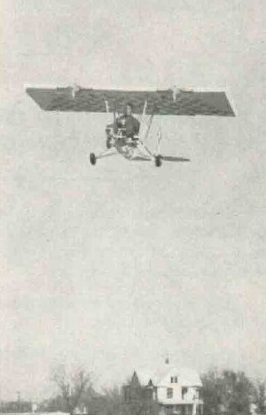
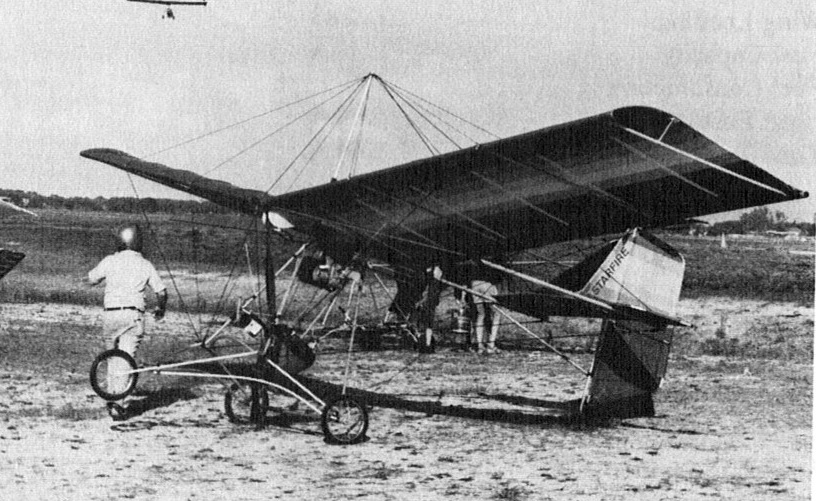
The Star Flight Starfire is the first aircraft in a large family of American ultralight aircraft that was designed by Dick Turner and produced by Star Flight Manufacturing, introduced in 1979. The aircraft were all supplied as kits for amateur construction.

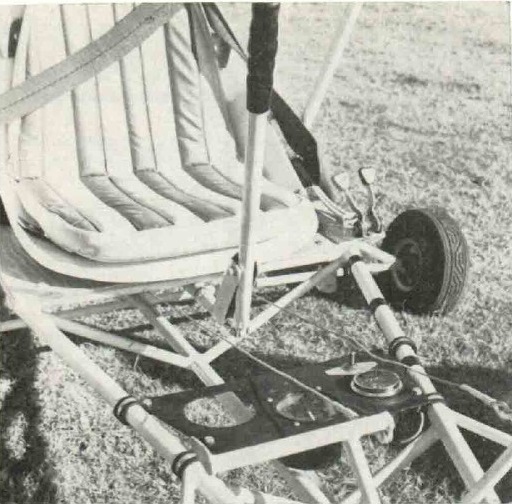
The aircraft is made from bolted-together aluminium tubing, with the flying surfaces covered in Dacron sailcloth. Its 33 ft (10.1 m) span wing is cable-braced from a single element kingpost. The landing gear features a steerable nose wheel with a bicycle-style rim brake. The powerplant is mounted underneath the wing and drives a pusher propeller.
Single seat single engined high wing mono¬plane with hybrid control. Wing has unswept leading and trailing edges, and constant chord; cruciform tail. Pitch control by weight¬shift; yaw control by fully flying rudder; no separate roll control; control inputs through weight shift for pitch/yaw. Wing braced from above by kingpost and cables, from below by cables; wing profile; single surface.

Undercarriage has three wheels in tricycle formation; with additional tailskid; glass fibre suspen¬sion on main wheels. No ground steering. No brakes. Aluminium tube framework, without pod. Engine mounted below wing driving pusher propeller.

Up to the beginning of 1983 the Star Flight Aircraft company belong¬ing to Dick Turner was called Starflight Manufacturing. His basic model, the Starfire made its appearance in 1982 and was sold as a kit requiring 16 h for assembly at a price of $3995, with options including wheel fairing for $150.

However, in common with other manufac¬turers, Dick Turner has found that the market is moving away from hybrid control to stick operated machines. As a result, the Starfire was discontinued in 1983.

Engine: Cuyuna 215R engine
Max power 20 hp at 6000 rpm
Propeller diameter and pitch 52 x 24 inch, 1.32 x 0.60 in
Belt reduction, ratio 2.4/1
Power per unit area 0.12 hp/sq.ft, 1.3 hp/sq.m
Fuel capacity 2.5 US gal, 2.1 Imp gal, 9.5 litre
Length overall 9.0ft, 2.74m
Height overall 16.0ft, 4.87m
Wing span 33.0ft, 10.05m
Constant chord 5.0ft, 1.52m
Dihedral 5 deg
Sweepback 0 deg
Total wing area 165 sq.ft, 15.3 sq.m
Wing aspect ratio 6.6/1
Nosewheel diameter overall 16 inch, 41 cm
Main wheels diameter overall 16 inch, 41 cm
Empty weight 175 lb, 79kg
Max take off weight 475 lb, 215 kg
Payload 300 lb, 136 kg
Max wing loading 2.87 lb/sq.ft, 14.0 kg/sq.m
Max power loading 23.8 lb/hp, 10.83kg/hp
Max level speed 42mph, 68kph
Never exceed speed 55mph, 88kph
Max cruising speed 30mph, 48kph
Stalling speed 19 mph, 31 kph
Max climb rate at sea level 450 ft/min, 2.3 m/s
Best glide ratio with power off 6/1
Take off distance 100 ft, 30 m
Landing distance 50 ft, 15 m
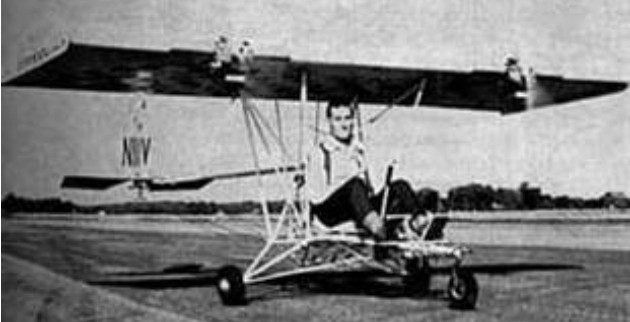
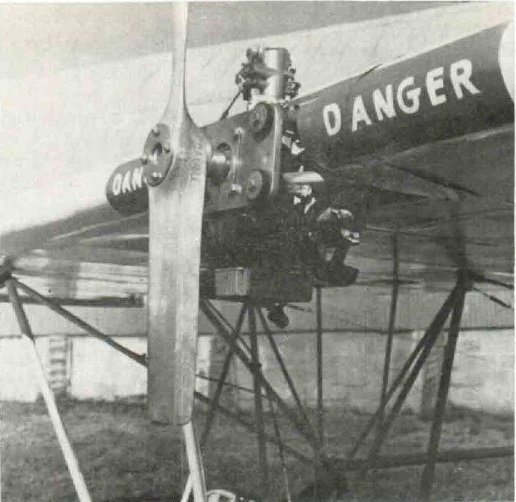
Staib LB-4 Airey-Plane

Wilbur Staib built this small airplane in limited spare time and working in limited hangar space in 1966. The “Airy-Plane” is a twin-engine aircraft registered N11V. Three months and about $500 were spent on the craft.

The LB-4 is a high-wing, uncovered welded steel tube fuselage, single seat twin-engine tricycle gear aircraft. It was registered by the FAA in 1966, and was considered at the time to be the world’s smallest twin engine aircraft. The wing ribs were a shortened pattern from a Piper Cub, assembled with staples. The tail is section is mounted on a wire braced removable boom for storage. Fuel tanks are made from 1 U.S. gallon (3.8 L; 0.83 imp gal) paint-thinner cans.

The engines are more or less inserted into the leading edge of the rather thick wing. Equipped with recoil starters they swing 24 in Troyer wood props.

The fuel is carried in two 1 USG paint thinner cans. Instruments consist of an airspeed indicator and a tacho with a left-right toggle switch to pick up the reading from either engine.

Registration was N11V.

First flying in 1966, only the one was built. The LB-4 was test flown in 1966 at Carthage, Missouri. The aircraft cruises at 60 mph (97 km/h) and must be flown at full throttle. Later configurations included a third 10 hp (7 kW) engine mounted on top of the wing in pusher configuration.

Engines: 2 x 10 hp (7.5 kW) West Bend 820 chain-saw
Propellers: 2-bladed Troyer
Wing span: 14 ft (4.3 m)
Wing area: 70 sq ft (6.5 m2)
Airfoil: Modified Clark-Y
Length: 15 ft (4.6 m)
Empty weight: 175 lb (79 kg)
Gross weight: 340 lb (154 kg)
Useful load: 165 lb
Fuel capacity: 2 U.S. gallons (7.6 L; 1.7 imp gal)
Maximum speed: 52 kn (60 mph, 97 km/h)
Cruise speed: 52 kn (60 mph, 97 km/h)
Stall speed: 30 kn (35 mph, 56 km/h)
Seats: 1

SR-1 Enterprises Stinger

Biplane, struts and cable bracing, cruciform tail. Taildragger, steerable tailwheel. The Stinger is derived from the Hornet, being of similar configuration and construction, and differs principally by having a smaller wing span and area.

The power pack is a Kawasaki TA440, as on the Hornet, and the price was $6450 ready to fly in 1983.

Engine: Kawasaki TA440, 35 hp at 6000 rpm
Propeller diameter 50 inch, 1.27 m
V belt reduction, ratio 2.0/1
Max static thrust 235 lb, 107 kg
Power per unit area 0.19 hp/sq.ft, 2.0 hp/sq.m
Fuel capacity 5.0 US gal, 4.2 Imp gal, 18.9 litre
Length overall 18.0 ft, 5.49 m
Height overall 6.3 ft, 1.91 m
Wing span 26.3 ft, 8.02 m
Total wing area 185 sq.ft, 17.2 sq.m
Empty weight 245 lb, 111kg
Max take off weight 600 lb, 272kg
Payload 355 lb, 161kg
Max wing loading 3.24 lb/sq.ft, 15.8 kg/sq.m
Max power loading 17.1 lb/hp, 7.8 kg/hp
Load factors; +12.0, 12.0 ultimate
Max level speed 62mph, 100kph
Never exceed speed 100mph, 161kph
Cruising speed 55mph, 88 kph
Stalling speed 24 mph, 39 kph
Max climb rate at sea level 700 ft/min, 3.6 m/s
Best glide ratio with power off 8/1

SR-1 Enterprises Hornet

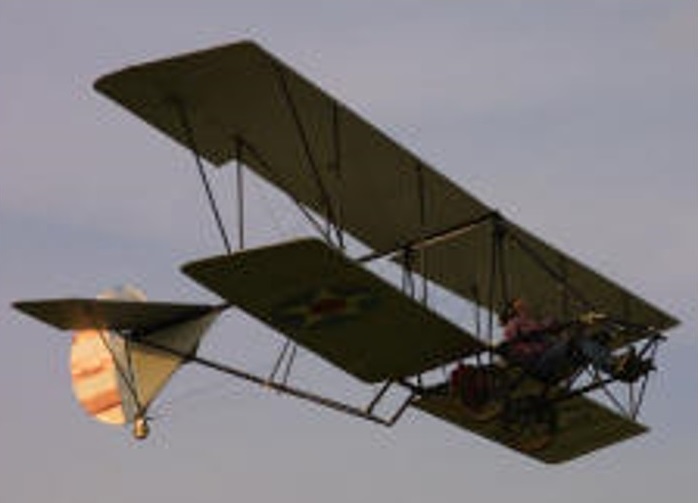
The Hornet was originally powered by a Mac 101 go cart engine, was foot launched, and had three axis controls using elevator and ailerons through a side stick arrangement. With it’s large wing area and light weight it made an excellent glider. Later models had landing gear added to them and engine power increased to the Rotax 503.

SR-1 Enterprises Hornet Article

Single seat single engined biplane with conventional three axis control. Wing has unswept leading and trailing edges, and constant chord; cruciform tail. Pitch control by elevator on tail; yaw control by fully flying rudder; roll control by half span ailerons on upper wing; control inputs through stick for pitch/ roll and pedals for yaw. Wings braced by struts and transverse X cables; wing profile; double surface. Undercarriage has three wheels in tail dragger formation; suspension on tailwheel and bungee suspension on main wheels. No ground steering. No brakes. Aluminium tube/steel tube framework, without pod. Engine mounted between wings driving pusher propeller.

Introduced in 1982, the Hornet is a biplane which is built very much according to the customer’s wishes and it is thus rather difficult to describe a ‘standard’ machine. However, all Hornets use a combination of steel and aluminium tubing for their construction, with a ladder frame for the wings and drag and anti drag diagonal cables inside the double surface wing. Two steel tubes in the shape of an inverted V run between the trailing edges of the upper and lower wings and provide a mounting for the engine, usually a 30 hp Cuyuna 430R.

Engine: Cuyuna 430R, 30 hp at 5500 rpm
Propeller diameter and pitch 45 x 33 inch, 1.14 x 0.84 m
V belt reduction, ratio 2.0/1
Power per unit area 0.13 hp/sq.ft, 1.5hp/sq.m
Fuel capacity 3.0 US gal, 2.5 Imp gal, 11.4 litre
Length overall 18.3 ft, 5.56 m
Height overall 6.7ft, 2.03m
Wing span 34.0ft, 10.36m
Sweepback 0 deg
Total wing area 218 sq.ft, 20.3 sq.m
Main wheels diameter overall 20 inch, 50 cm
Empty weight 200 lb, 91 kg
Max take off weight 575 lb, 261 kg
Payload 375 lb, 170 kg
Max wing loading 2.64 lb/sq.ft, 12.9 kg/sq.m
Max power loading 19.2 lb/hp, 8.6 kg/hp
Load factors; +5.5, 4.5 ultimate
Max level speed 60 mph, 97 kph
Never exceed speed 65 mph, 105kph
Economic cruising speed 48mph, 77kph
Stalling speed 21mph, 34kph
Max climb rate at sea level 800 ft/min, 4.1 m/s
Min sink rate 250ft/min at 33mph, 1.3m/s at 53 kph
Best glide ratio with power off 9.3/1 at 33 mph, 53 kph
Take off distance 75 ft, 23 m
Landing distance 160 ft, 49 m

Squirecraft SA102.5 Cavalier / K & S SA102.5 Cavalier

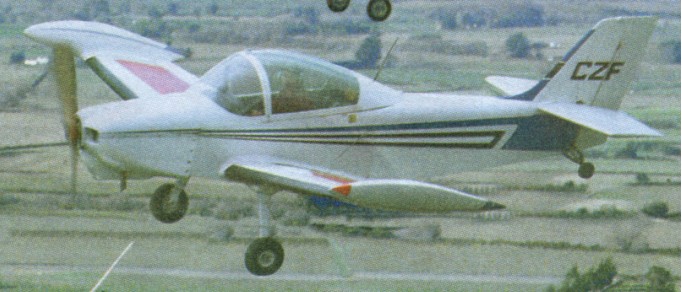
The original plans built, all wood, two place Cavalier SA.102 was designed in 1964 by Stan McLeod of Calgary, Alberta, and was based on the French Minicab. Retaining much of the basic airframe of the GY-20 but features a redesigned cockpit with a third, child, seat. The tail surfaces were redesigned and the aircraft sits on a tricycle undercarriage.

The initial version, the SA.102, encountered stability problems but these were solvrf by the addition of angled tip-tanks. This version first flew in February 1971, designated SA.102.5.

Subsequent revisions by McLeod led to the 100 to 125 hp SA.102.5 and SA.102.88.

The SA 102-5 Cavalier is a side-by-side two-seater of all wood and fabric construction, that can use any four-cylinder Continental, Lycoming or Franklin engine and rated in the 85 to 150-hp range. The prototype flew in 1969. The wing section is a NACA23015 at the root and NACA23012 at the tip. The wing structure consists of a single wooden box spar plywood leading edge, an auxiliary rear spar for the flaps and ailerons and a diagonal drag spar. The entire centre section is plywood covered, the remainder of the wing being fabric covered. The fuselage is a wooden truss type structure of spruce and ply construction. The cockpit doors and canopy are of moulded fibreglass. The rear decking is fabric covered. The empennage is of all wood construction with fabric covered control surfaces. The standard aircraft has a fixed tricycle under-carriage, but a tailwheel version is available. Fuel is carried in wing tip tanks of 13 or 1 6 Imp gallon capacity.

Gross Wt. up to 1800 lb
Empty Wt. 900 lb
Fuel capacity 40 USG
Wingspan 26’l0”
Length 18’4”
Wing area: 118 sq.ft
Top speed 200 mph
Cruise speed 165 mph
Stall 50 mph
Climb rate 1500 fpm
Range 850 sm
Landing roll 800 ft
Seats: 2

Engine: Lycoming O-290, 125 h.p
Span: 27’4”
Length: 22’0”
Wing Area: 118 sq. ft
Empty Weight: 9001b
Loaded Weight: 1,500 lb
Max. Speed: 150mph
Cruise Speed: 130mph
Stall Speed: 50mph
Initial Climb: 1,000 fpm
Range: 715 miles

Engine: 135 hp
Cruise: 150 mph
ROC: 2000 fpm
Range: 700 sm

SA.102.5-88
Engoine: 125 hp
Empty weight: 950 lb
MTOW; 1800 lb
Tip tank cap: 38 USG
Max level speed: 170 mph
Vne: 200 mph
Cruise: 150 mph
Rate of Climb: 1200 fpm
Loading: +3g
Take off dist: 500 ft
Landing dist: 600-800 ft

Squadron Leader Hawker Hurricane

Hawker Hurricane
Stall: 39 kt / 45 mph / 72 kmh
Cruise: 132 kt / 152 mph / 244 kmh
VNE: 180 kt / 207 mph / 333 kmh
MTOW Weight: 285 kg / 628 lbs
Climb Rate: 1150 ft/min / 6 m/s
Take-off distance (50ft obstacle): 600 ft / 183 m
Landing distance (50ft obstacle): 600 ft / 183 m

Hawker Hurricane MKII Replica
Stall: 34 kt / 39 mph / 63 kmh
Cruise: 115 kt / 132 mph / 212 kmh
VNE: 156 kt / 180 mph / 290 kmh
MTOW Weight: 599 kg / 1320 lbs
Climb Rate: 1150 ft/min / 6 m/s
Take-off distance (50ft obstacle): 850 ft / 259 m
Landing distance (50ft obstacle): 850 ft / 259 m

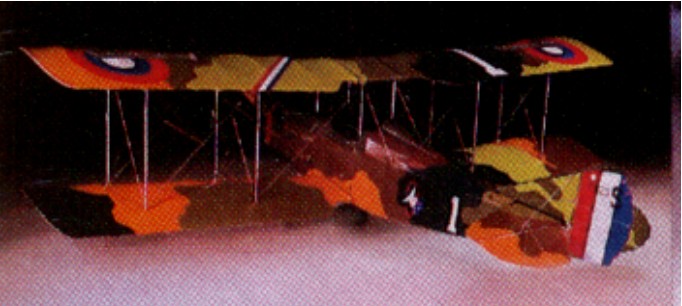
Squadron Aviation SPAD XIII Model 12

Squadron Aviation produce a variety of replicas and most of the specs are very similar. All three of the aircraft, designed by Lew Parsley, are produced at the company’s Columbus, Ohio plant and are structurally the same. Wing panels are pre-assembled at the factory from stamped aluminium ribs and aluminium tubing, as is the precisely jigged aluminium tubing fuselage and tail feathers. The kit-builder is faced with assembly (all critical holes are drilled), rigging (accomplished with a simple jig concept detailed by the factory) and traditional dope and fabric covering. The external styling to create each replica is obtained with the use of a plastic pre-moulded and coloured cowling for the three individual ultralights. Flight perform¬ances are very good with a take-off roll of 22 metres the standard. A very comprehensive kit was available which includes everything, right down to the dope finish of the squadron of your choice.

Max gross wt: 505 lbs
Max pilot wt: 225 lbs
Empty weight: 250 lbs
Fuel capacity: 3.6 lbs
Climb rate: 1000+ fpm
Power off stall: 22 kts
Wing loading (225 lbs pilot): 3.0 lbs/sq.ft
Power loading (170 lbs pilot): 12.8 lbs/hp
Take-off distance: 75 ft
Landing distance: 100 ft
Glide ratio: 5.5:1
Vne: 60 kts
Cruise speed: 50 kts
G loading: +4 / -2
Engine: Cuyuna UL II-02
Wing spans average: 24.5 ft.