Stephenson Tigershark

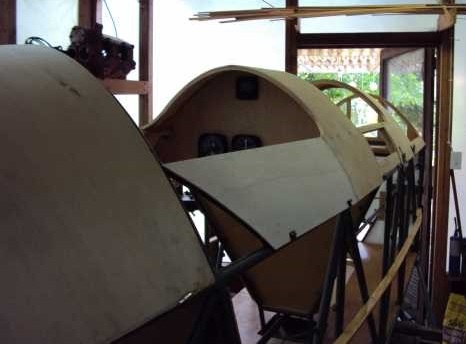
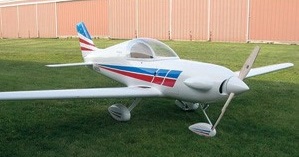
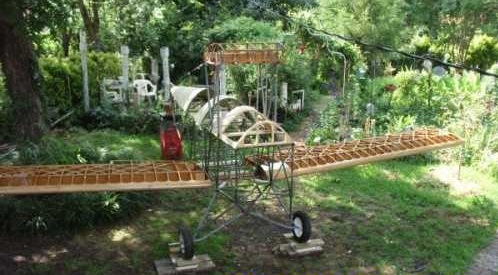
This project was started by Steve Stephenson in Dallas, TX, USA, as a Tiger Moth replica. It uses Fisher Flying Product wings and stabilizers. The fuselage and landing gear were designed by Steve Stephenson.

This project started in the spring of 2002. Due to traveling for work for some years and building space issues for other times, the progress has been slow.

Due to scaling issues and the modernization of certain components, and a non scale engine it was decided to rename the aircraft Tigershark.

Sterner Skywalker

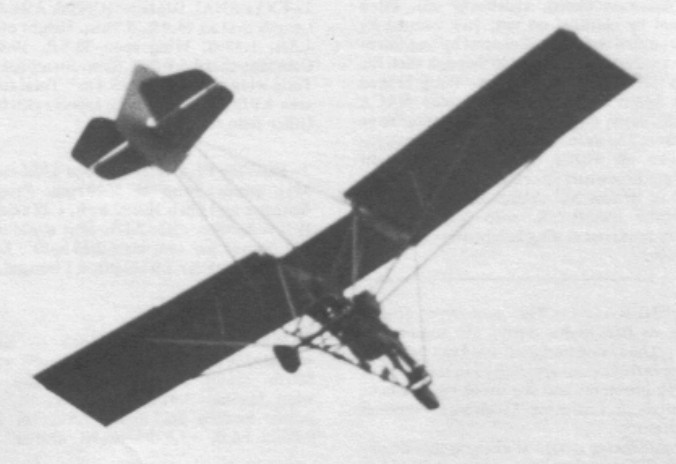
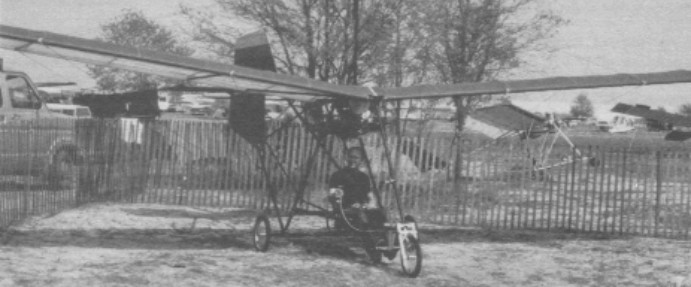
Single seat single engined high wing mono¬plane with conventional three axis control. Wing has unswept leading and trailing edges, and constant chord; flaps fitted. Cruciform tail. Pitch control by elevator on tail; yaw control by fin mounted rudder; roll control by ailerons; control inputs through stick for pitch/roll and pedals for yaw. Wing braced from below by struts; wing profile; double surface. Undercarriage has three wheels in tricycle formation. Push right go right nosewheel steering con¬nected to yaw control. Alumi¬nium tube framework, without pod. Engine mounted below wing driving pusher propeller.

In most respects the Sky Walker is a thoroughly conventional high¬wing tube and Dacron machine, powered by the Cuyuna 430. Both the aircraft and its manufacturer made their debut in 1983 and, as is becoming common with recent ultralight designs of this type, strut bracing is employed rather than the kingpost and cable bracing which has been almost universal hitherto.

Quite the most unusual feature of the Sky Walker is its use of flaps. These lift augmenta¬tion devices can be moved to four positions and at their maximum they reduce the stall speed by 3 mph (5 kph). Controls are conven¬tional three axis, with a side mounted stick controlling the elevator and differential ailer¬ons, and pedals controlling the rudder.

Price of the Sky Walker was $5495 in 1983.

Engine: Cuyuna 430, 30 hp at 6600 rpm
Propeller diameter and pitch 54 x 24 inch, 1.37 x 0.61 m
V belt reduction, ratio 2.1/1
Power per unit area 0.21 hp/sq.ft, 2.3 hp/sq.m
Fuel capacity 5.0 US gal, 4.2 Imp gal, 18.9 litre
Length overall 18.0 ft, 5.49 m
Height overall 9.0ft, 2.74m
Wing span 32.0ft, 9.75m
Constant chord 4.4 ft, 1.33 m
Sweepback 0 deg
Total wing area 140 sq.ft, 13.0 sq.m
Wing aspect ratio 7.3/1
Empty weight 253 lb, 115kg
Max take off weight 510 lb, 231kg
Payload 257 lb, 117kg
Max wing loading 3.64 lb/sq.ft, 17.8 kg/sq.m
Max power loading 17.0 lb/hp, 7.7kg/hp
Load factors; +5.0, 3.5 ultimate
Max level speed 62 mph, 100 kph
Never exceed speed 80 mph, 129 kph
Max cruising speed 62 mph, 100 kph
Economic cruising speed 50 mph, 80 kph
Stalling speed 24 mph, 39 kph (with flaps)
Stalling speed 21 mph, 34 kph (without flaps)
Max climb rate at sea level 600 ft/min, 3.1 m/s
Best glide ratio with power off 11/1

St.Croix Excelsior

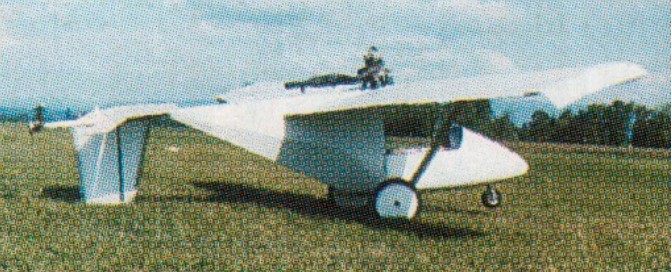
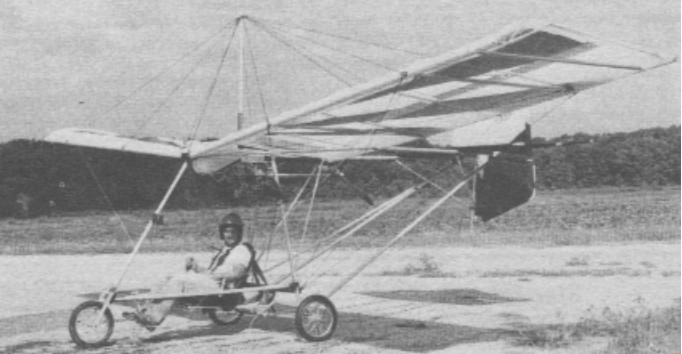
Single seat single engined high wing monoplane with conventional three axis control. Wing has unswept leading edge, swept forward trailing edge and tapering chord; inverted conventional tail. Pitch control by elevator on tail; yaw control by fin mounted rudder; roll control by spoilerons; control inputs through stick for pitch/roll and pedals for yaw. Wing braced from below by struts; wing profile; double surface. Undercarriage has two wheels side by side with tailskid; bungee suspension on both wheels. Push right go right nosewheel steering connected to yaw control. No brakes. Aluminium tube/glassfibre/steel tube framework partially enclosed (totally enclosed optional). Engine mounted above wing driving pusher propeller.

St.Croix Excelsior Article

The Excelsior was designed by Chad and Charles Wille with the experience gained from the construction in 1947 of a Pietenpol Aircamper by Charles, who redesigned it in 1977 as a biplane called Aerial.

The Excelsior is immediately recognisable thanks to its unusual tail, with the fin forming a keel under the horizontal tail surfaces. On it is hinged the rudder, itself mounted on the tube which forms a tail skid. Even more unusual, the pusher propeller is placed behind this tail driven by a very long shaft from the motor mounted above the wing, a flexidyne damper being used to eliminate the vibrations implicit in such a long transmission.

A variety of materials are used in the Excelsior’s construction. A welded steel frame acts as the bottom of the fuselage structure and provides a mounting for the undercarriage, while the rest of the fuselage consists of aluminium tubes pop rivetted to the main transmission tube. The wings use a D section leading edge spar with foam ribs, the wings coming jig built from the factory. Covering is aircraft grade Dacron, heat shrunk with an iron and then doped.

The Excelsior was sold as plans for $95 or as a complete kit, in 1983.

Engine: Zenoah G25B, 20 hp at 6500 rpm
Power per unit area 0.15 hp/sq.ft, 16.2 hp/sq.m
Fuel capacity 3.0 US gal, 2.5 Imp gal, 11.4 litre
Length overall 6.1 ft, 1.83 m
Height overall 17.5ft, 5.33m
Wing span 34.6ft, 10.54m
Mean chord 3.8ft, 1.17m
Sweepback 0 deg
Total wing area 133 sq.ft, 12.4 sq.m
Wing aspect ratio 8.9/1
Wheel track 4.8 ft, 1.45 m
Empty weight 200 lb, 91kg
Max take off weight 450 lb, 204kg
Payload 250 lb, 113kg
Max wing loading 3.38 lb/sq.ft, 16.5 kg/sq.m
Max power loading 27.5 lb/hp, 10.2kg/hp
Load factors; +4.0, 4.0 ultimate
Max level speed 75 mph, 121 kph
Max cruising speed 70 mph, 113kph
Stalling speed 20mph, 32kph
Max climb rate at sea level 600 ft/min, 3.1 m/s
Best glide ratio with power off 20/1
Take off distance 200 ft, 60 m
Landing dis¬tance 150 ft, 45 m

Star-Lite Warp 1-A

The Star-Lite Warp 1-A is an American homebuilt aircraft that was designed and produced by Star-Lite Engineering of Englewood, Ohio, introduced in 1996.

The aircraft was designed to comply with the US FAR 103 Ultralight Vehicles rules, including the category’s maximum empty weight of 254 lb (115 kg). The aircraft has a standard empty weight of 250 lb (113 kg). The original Star-Lite used a Rotax 447 engine.

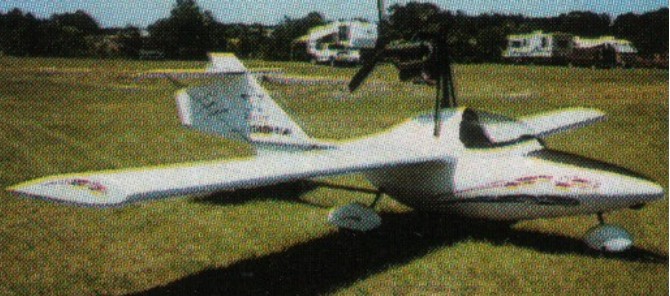
The Warp 1-A features a cantilever mid-wing, a single-seat enclosed cockpit under a bubble canopy, fixed tricycle landing gear with wheel pants, a boom-mounted T-tail and a single pod-mounted engine in pusher configuration.

The aircraft is made from composites. Its 25.0 ft (7.6 m) span wing is made with an aluminum spar and S-glass vinyl-ester resin, is detachable for ground transport or storage and has a wing area of 87.5 sq ft (8.13 m2). The standard engine used is the 50 hp (37 kW) Rotax 503 two-stroke powerplant.

Introduced in 1996, the aircraft was supplied as a kit for amateur construction. The manufacturer estimated the construction time from the supplied kit as 100 hours. The kit, including engine, propeller and instruments, cost US$26,995.00 in 1998.

In March 2014 one example, the prototype, was registered in the United States with the Federal Aviation Administration as an Experimental – Amateur-built, although its registration expired in June 2013.

Star-Lite M2

Brian Burghgrave built a Star-Lite M2 using a Rotax 503, necessitating a new cowl. In addition, he installed flaps and counterbalanced the ailerons and elevator. First flown in October 2009, these changes add the “M2” to the name.

Gallery

Top speed: 70 mph
Cruise: 55 mph
Stall: 22 mph
Range: 100 sm
Rate of climb: 900 fpm
Takeoff dist: 50 ft
Landing dist: 50 ft
Service ceiling: 12,000 ft
Engine: Rotax 503, 46 hp
HP range: 40-100
Fuel capacity: 5 USG
Empty weight: 250 lb
Gross weight: 575 lb
Height: 6.5 ft
Length: 19.5 ft
Wing span: 25 ft
Wing area: 87.5 sq.ft
Seats: 1
Landing gear: nosewheel

Star-Lite Warp 1-A
Engine: 1 × Rotax, 50 hp (37 kW)
Propeller: 2-bladed fixed pitch
Wingspan: 25 ft 0 in (7.62 m)
Wing area: 87.50 sq ft (8.129 sq.m)
Aspect ratio: 7:1
Empty weight: 250 lb (113 kg)
Gross weight: 575 lb (261 kg)
Fuel capacity: 5 U.S. gallons (19 L; 4.2 imp gal)
Full fuel payload: 295 lb (134 kg)
Wing loading: 6.6 lb/sq ft (32 kg/sq.m)
Cruise speed: 95 mph (153 km/h, 83 kn)
Stall speed: 40 mph (64 km/h, 35 kn)
Never exceed speed: 110 mph (180 km/h, 96 kn)
Service ceiling: 12,000 ft (3,700 m)
Rate of climb: 900 ft/min (4.6 m/s)
Take-off & landing roll: 150 ft (46 m)
Crew: one

Starflight TX1000

Similar to the Tristar except with a conventional three-axis aerodynamic control system, nosewheel has suspension and a nosewheel brake. The prototype of the TX 1000 had its first public showing at Sun’n’Fun in March 1983 at Lakeland, Florida. Described by Dick Turner as a development of the Tristar, this newcomer uses the same wing with 5 degrees of dihedral and double skin over 30% of the chord. However, it uses a different engine, a Rotax unit.

It also has a considerably reinforced structure, the leading edge spars being 2 inch (51 mm) diameter, and the compression tubes and trailing edge spars 1.5 inch (38mm). There are other differences from the Tristar too: the horizontal tail is stiffened in flight by V struts and on the ground by stainless steel cables instead of just the cables of its predecessor. On this model a braked steerable nosewheel is standard. There is a black epoxy coating on all exposed airframe parts, bonded to the tubing and baked to a glass finish.

The TX 1000 was sold as a kit requiring 40 h for assembly for $5195 in 1983, options being electric start and a hand deployed parachute.

Manufactured by Spectrum Aircraft Inc.

Engine: Rotax 377, 34 hp at 6500 rpm
Propeller diameter and pitch 54 x 27 inch, 1.37 x 0.69 m
Belt reduction, ratio 2.1/1
Max static thrust 250 lb, 113 kg
Power per unit area 0.20 hp/sq.ft, 2.2 hp/sq.m
Fuel capacity 4.5 US gal, 3.8 Imp gal, 17.0 litre
Length overall 15.0ft, 4.57m
Height overall 9.0 ft, 2.74 m
Wing span 33.0 ft, 10.05 m
Constant chord 5.0ft, 1.52m
Dihedral 5 deg
Sweepback 0 deg
Total wing area 165 sq.ft, 15.3 sq.m
Wing aspect ratio 6.6/1
Nosewheel diameter overall 16 inch, 41 cm
Main wheels diameter overall 16 inch, 41 cm
Fin height 8.0 ft, 2.44 m
Total elevator area 25.0sq.ft, 2.32 sq.m
Empty weight 252 lb, 114kg
Max take off weight 502 lb, 228 kg
Payload 250 lb, 113 kg
Max wing loading 3.14 lb/sq.ft, 14.8 kg/sq.m
Max power loading 14.8 1b/hp, 6.7kg/hp
Load factors; +5.8, 3.6 ultimate
Max level speed 60 mph, 97 kph
Never exceed speed 75 mph, 121 kph
Max cruising speed 45 mph, 72 kph
Economic cruising speed 32 mph, 51 kph
Stalling speed 21 mph, 34 kph
Max climb rate at sea level 800 ft/min, 4.1 m/s
Min sink rate 320 ft/min at 30 mph, 1.6 m/s at 48 kph
Best glide ratio with power off 7.14 at 32mph, 51 kph
Take off distance 50 ft, 15 m
Landing distance 50 ft, 15 m
Service ceiling 12,000 ft, 3660 m
Range at average cruising speed 90 mile, 145 km

Starflight Tristar / SC-1000 / AC-2000

The aircraft was designed before the US FAR 103 Ultralight Vehicles rules were brought into effect, but all models comply with them anyway, including the category’s maximum empty weight of 254 lb (115 kg). The Tristar, for instance, has a standard empty weight of 220 lb (100 kg). The line of aircraft all feature a cable-braced high-wing, a single-seat, open cockpit, tricycle landing gear and a single engine in pusher configuration.

The aircraft is made from bolted-together aluminium tubing, with the flying surfaces covered in Dacron sailcloth. Its 33 ft (10.1 m) span wing is cable-braced from a single element kingpost. The landing gear features a steerable nose wheel with a bicycle-style rim brake. The powerplant is mounted underneath the wing and drives a pusher propeller.

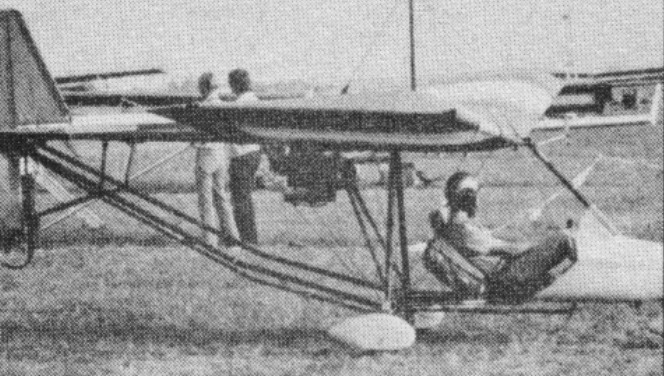
Single seat single engined high wing mono¬plane with conventional three axis control (two axis optional). Wing has unswept leading and trailing edges, and constant chord; cruci¬form tail. Pitch control by elevator on tail; yaw control by fully flying rudder; roll control by spoilerons; control inputs through stick for pitch/roll and pedals for yaw. Wing braced from above by kingpost and cables, from below by cables; wing profile; 30% double surface. Undercarriage has three wheels in tricycle formation; with tailskid; glass fibre suspension on main wheels. Push right go¬-right nosewheel steering connected to yaw control. No brakes. Aluminium tube framework, without pod. Engine mounted below wing driving pusher propeller.

The Tristar also put in its appearance in 1982 but it is not just a three axis version of the Starfire with spoiler¬ons and elevators added to the rudder of the earlier model. The framework of the Tristar is considerably changed from that of the Starfire and the manufacturer has obviously made an important design effort, not being purely content to develop a three axis machine directly from a hybrid. The wing characteris¬tics, for example, have been considerably altered by double surfacing the first third of the chord. In fact, the Tristar does not have to be bought in three axis form as the manufac¬turer offers a two axis version as a no cost option.

The Tristar model took 25 hours to build from the factory-supplied assembly kit. Sold as a kit requiring 25 h for completion at a price of $4750 in 1983, the Tristar in standard form uses a Cuyuna 430R 30hp engine, in which form we detail it below. However, for $100 less it can befitted with the Cuyuna 215R 20hp unit. Other options include storage covers and wheel fairings ($150).

Tristar
Model designed in 1980, with a conventional three-axis aerodynamic control system, using a side stick and spoilers for roll control. Revised fuselage for new control system. The standard engine supplied was the 30 hp (22 kW) Cuyuna 430R.

SC-1000
Improved model

AC-2000
Improved model introduced in 1984.

Tristar
Engine: Cuyuna 430R, 30 hp (22 kW) at 5500 rpm
Propeller diameter and pitch 52 x 27 inch, 1.32 x 0.69 m
Belt reduction, ratio 2.0/1
Power per unit area 0.18 hp/sq.ft, 2.0hp/sq.m
Fuel capacity 2.5 US gal, 2.1 Imp gal, 9.5 litre main tank; 2.5 US gal, 2.1 Imp gal, 9.5 litre res (opt)
Length overall 15.0ft, 4.57m
Height overall 9.0 ft, 2.74 m
Wing span 33.0 ft, 10.05 m
Constant chord 5.0ft, 1.52m
Dihedral 5 deg
Sweepback 0 deg
Total wing area 165 sq.ft, 15.3 sq.m
Wing aspect ratio 6.6/1
Nosewheel diameter overall 16 inch, 41 cm
Main wheels diameter overall 16 inch, 41 cm
Empty weight 220 lb, 100kg
Max take off weight 470 lb, 213kg
Payload 250 lb, 113kg
Max wing loading 2.85 lb/sq.ft, 13.9 kg/sq.m
Max power loading 15.7 lb/hp, 7.1kg/hp
Load factors; +5.0, 3.0 ultimate
Max level speed 55mph, 88kph, 48 kt
Never exceed speed 55mph, 88 kph
Max cruising speed 38 mph, 61 kph, 33 kt
Economic cruising speed 35mph, 56kph
Stalling speed 21 mph, 34 kph, 18 kt
Max climb rate at sea level 750 ft/min, 3.8 m/s
Min sink rate 350ft/min, 1.8m/s
Best glide ratio with power off 7/1
Take off distance 75 ft, 23 m (on gravel)
Landing distance 100ft, 30m (on gravel)
Service ceiling 10,000ft, 3050m
Range at average cruising speed 60 mile, 97 km
Crew: one
Starflight Stiletto

Stiletto XC

Centre mounted joy stick, rudder pedals, nosewheel steerable through rudder pedals.

XC
Empty wt: 251 lbs
Wing span: 29’
Wing area: 160 sq.ft
Height: 7’10”
Length: 17’
Fuel cap; 5 USG
Construction: Aluminium, Dacron
Engine: Rotax 377 (368 cc) 36 hp
Static thrust: 285 lbs
Max wt: 502 lbs
Stall: 25 mph
Max speed: 63 mph
Vne: 75 mph
Climb rate: 600 fpm @ 40 mph
Design limit: +6, -3g
Glide ratio: 8-1
Wing loading: 3.14 lbs/sq.ft
Power loading: 15.69 lbs/hp

XC Series
Empty wt: 232 lbs
Wing span: 28’
Wing area: 140 sq.ft
Height: 8’
Length: 16’
Fuel cap; 5 USG
Construction: Aluminium, Dacron
Engine: Rotax 277 (268 cc) 28 hp
Static thrust: 205 lbs
Max wt: 487 lbs
Stall: 21 mph
Max speed: 60 mph
Vne: 65 mph
Climb rate: 600 fpm @ 32 mph
Design limit: +6, -3g
Glide ratio: 6-1
Wing loading: 3.48 lbs/sq.ft
Power loading: 17.39 lbs/hp