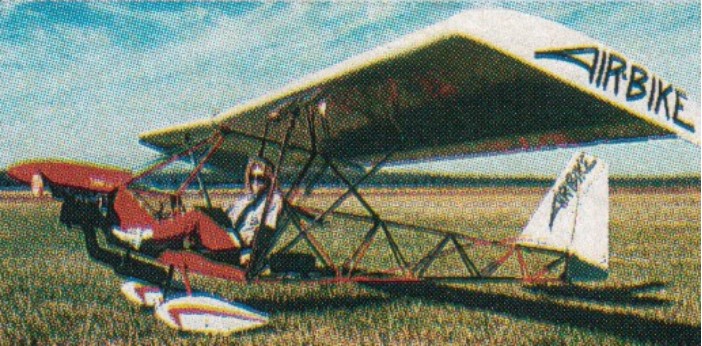
TEAM Air-Bike

Airbike RX-40

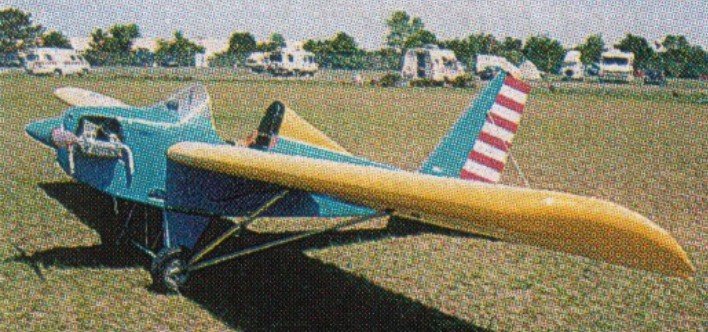
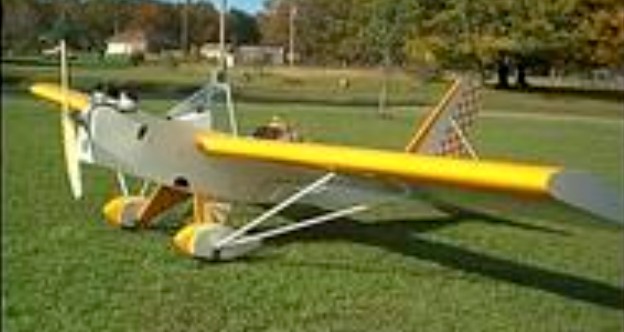
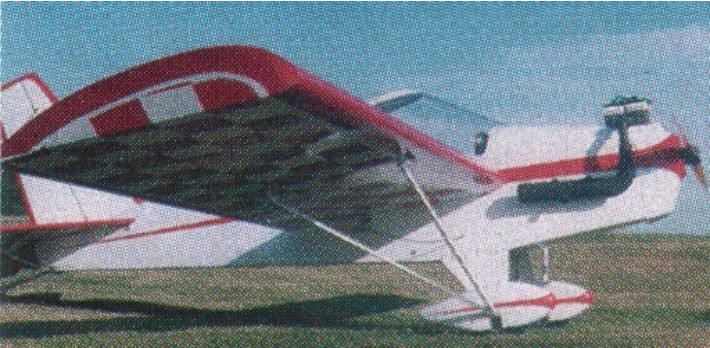
The Airbike has been in production since 1995. It mates a welded steel fuselage to an all wood wing.Standard features include an open cockpit, removable wings, steerable tailwheel, 4 point safety harness, fuel tank, factory welded fuselage and tail. Options include various engines, folding wings brakes, trim, wheel pants, wing tips bucket seat, extra fuel, plus various quick build and assembly packages.

Air-Bike has the strong, wood wings of the miniMAX but joins them to the tail by a welded structure. Since the Air-Bike has an open fuselage, a little more wing was necessary to make the Air-Bike fly like a mini-MAX. An extra bay was added to create a total span difference of one foot, however, the air-foil is the same.
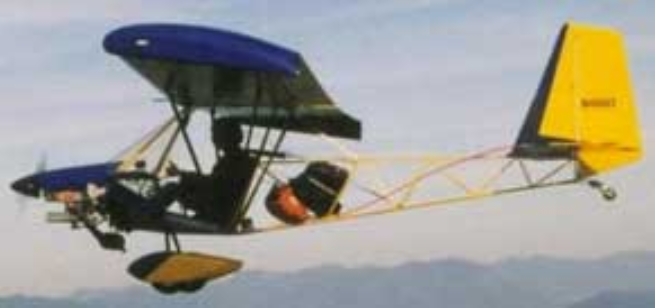
TEAM first displayed their Air-Bike at Sun ‘n Fun ‘94. TEAM developed the new Enduro model of the Air-Bike.
Changes were made to the newest Air-Bike. The Enduro model showed increased roll rate found by changing linkages at the mixer point, the firewall came back three centimetres to accommodate heavier engines like the 447.
The rudder was enlarged slightly and control linkages were also improved to make the Enduro a better flying machine. The addition of two inches of area to the rudder (not stabilizer) harmonized the handling in a most beneficial way. Air-Bike Enduro comes with prebuilt spars and ribs, brakes, 5 USG wing tank, all-terrain wheels and droop wing-tips.
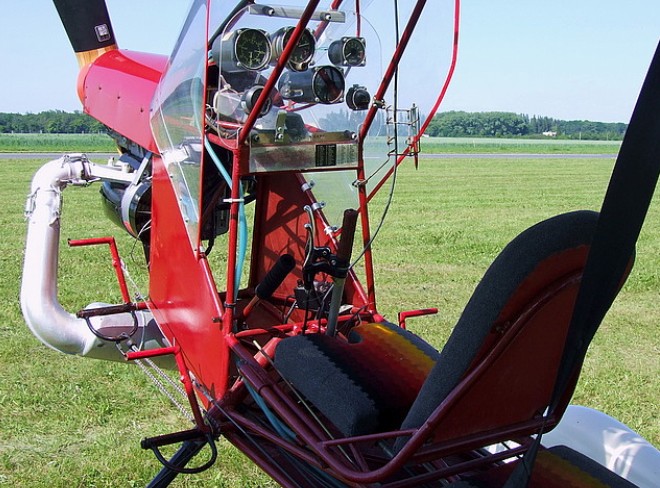
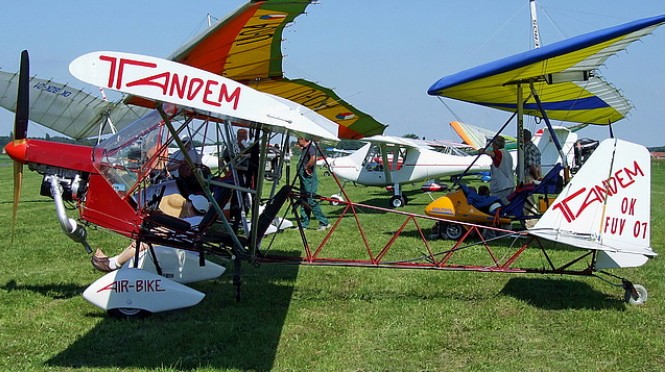
Team Aircraft Tandem Airbike

Gallery

Airbike
Engine: Zenoah G-25, 22 h¬p

Engine: Rotax 227

Airbike Enduro
Engine: Rotax 447, 42 hp
Speed max: 80 mph
Cruise: 63 mph
Range: 150 sm
Stall: 27 mph
ROC: 1200 fpm
Take-off dist: 100 ft
Landing dist: 200 ft
Service ceiling: 10,000 ft
HP range: 28-42
Fuel cap: 7.5 USG
Weight empty: 251 lbs
Gross: 560 lbs
Height: 5.5 ft
Length: 16 ft
Wing span: 26 ft
Wing area: 118 sq.ft
Seats: 1
Landing gear: tail wheel

Airbike RX-40
Engine: Rotax 447, 42 hp
Speed max: 80 mph
Cruise: 63 mph
Range: 150 sm
Stall: 27 mph
ROC: 1000 fpm
Take-off dist: 100 ft
Landing dist: 200 ft
Service ceiling: 10,000 ft
HP range: 28-42
Fuel cap: 2-10 USG
Weight empty: 257 lbs
Gross: 560 lbs
Height: 5.5 ft
Length: 16 ft
Wing span: 26 ft
Wing area: 118 sq.ft
Seats: 1
Landing gear: tail wheel

Airbike
Engine: Rotax 447, 42 hp
Wing span: 7.8 m
Wing area: 10.2 sq.m
MAUW: 242 kg
Empty weight: 107 kg
Fuel capacity: 38 lt
Max speed: 130 kph
Cruise speed: 90 kph
Minimum speed: 43 kph
Climb rate: 5 m/s
Certification: vVz
Seats: 1
Fuel consumption: 10 lt/hr
Plan price (1998): 1200 Fttc

Tandem Airbike
Engine: Rotax 503, 52 hp
Wing span: 9.54 m
Wing area: 13.11 sq.m
MAUW: 400 kg
Empty weight: 181 kg
Fuel capacity: 38 lt
Cruise speed: 115 kph
Minimum speed: 56 kph
Climb rate: 3 m/s
Seats: 2
Fuel consumption: 15 lt/hr
Plan price (1998): 1200 Fttc
Kit price (1998): 73 900 Fttc
TEAM 1700R Hi-MAX

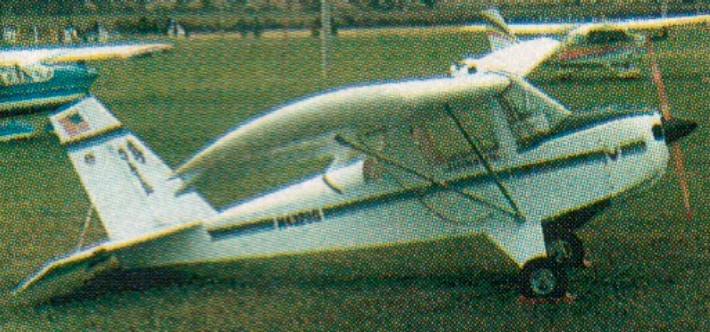
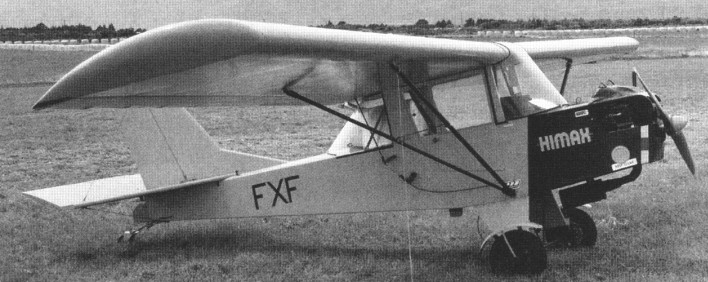
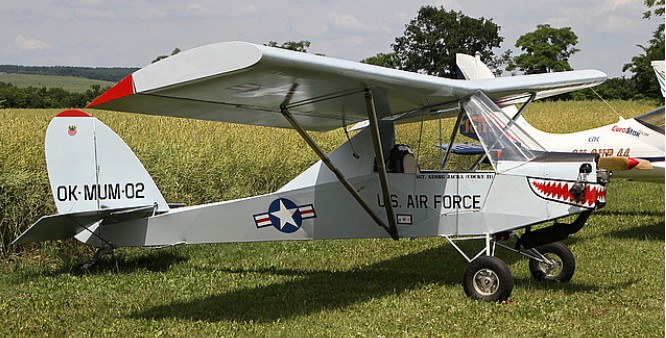
First flew in 1989. Take one or more parts from an already proven design, add a few parts for creature comfort and/or customer preferences, a wrap-around windshield of Lexan makes for excellent visibility and comfortable flying, and optional windows are removable for open-air flying in the summer. For power recommended is a Rotax 447, or any engine up to 45 hp.

Wood was chosen as the basic building material. It is easy to work with, dependable in its strength characteristics, and is not bothered by the vibrations associated with 2-cycle engines.

Construction techniques are of the old-fashioned, tried and true wood truss and plywood gusset method. It is very simple, and builds quickly. If you have ever built a balsa-wood model airplane, you have the experience required to build this “full-scale” model! While construction time will vary from builder to builder, approximately 300 hours is the average.

March 1999

1700R Hi-MAX Standard equipment:
Fiberglass engine cowl
Prop spinner
Quick removable wings
Shoulder harness/seat belt
Strut-braced tail
5 gallon gas tank
2009 Price: 5795 US$

Engine: Rotax 277
Empty wt.: 250 lbs
Max wt.: 500 lbs
Wing span: 25 ft
Wing area: 112.5 sq.ft.
Wing loading: 4.4 lbs/sq.ft
Power loading: 17.8 lbs/hp
Max speed: 60 mph
Cruise: 55 mph
Stall: 26 mph
Vne: 90 mph
Seats: 1

Engine: Rotax 447, 42 hp
HP range: 30-50
Speed max: 100 mph
Cruise: 70 mph
Range: 120 sm
Stall: 35 mph
ROC: 1200 fpm
Take-off dist: 100 ft
Landing dist: 210 ft
Service ceiling: 10,000 ft
Fuel cap: 5 USG
Weight empty: 319 lbs
Gross: 560 lbs
Height: 5.5 ft
Length: 16 ft
Wing span: 25 ft
Wing area: 112.5 sq.ft
Seats: 1
Cockpit width: 24 in
Landing gear: tail wheel
LSA: yes

TEAM 1550V V-MAX

First flown in 1987.

Engine: VW 1600cc, 50 hp
Hp range: 50-60
Height: 5 ft
Length: 16 ft
Wing span: 26.5 ft
Wing area: 118 sq.ft
Fuel cap: 5 USG
Weight empty: 400 lbs
Gross: 700 lbs
Speed max: 110 mph
Cruise: 75 mph
Range: 150 sm
Stall: 37 mph
ROC: 900 fpm
Take-off dist: 150 ft
Landing dist: 200 ft
Service ceiling: 10,000 ft
Seats: 1
Cockpit width: 24 in
Landing gear: tail wheel
LSA: yes

TEAM 1400Z Hi-MAX

First flown in 1990.

Engine: Zenoah G-50, 42 hp
HP range: 30-50
Height: 5.5 ft
Length: 16 ft
Wing span: 25 ft
Wing area: 112.5 sq.ft
Fuel cap: 5 USG
Weight empty: 323 lbs
Gross: 560 lbs
Speed max: 100 mph
Cruise: 70 mph
Range: 120 sm
Stall: 28 mph
ROC: 1200 fpm
Take-off dist: 100 ft
Landing dist: 210 ft
Service ceiling: 10,000 ft
Seats: 1
Landing gear: tail wheel

TEAM Minimax / Eros / JDT 1500R

Mini-MAX 1100R

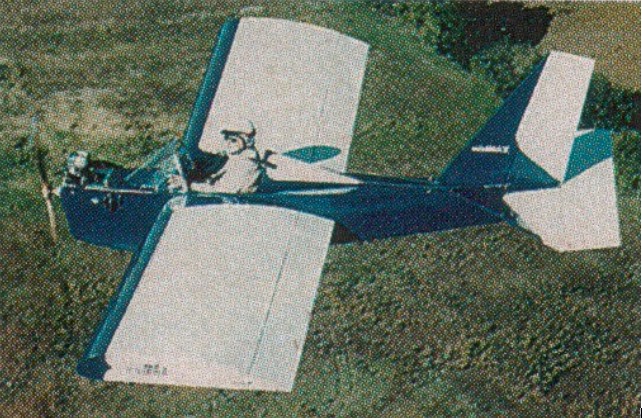
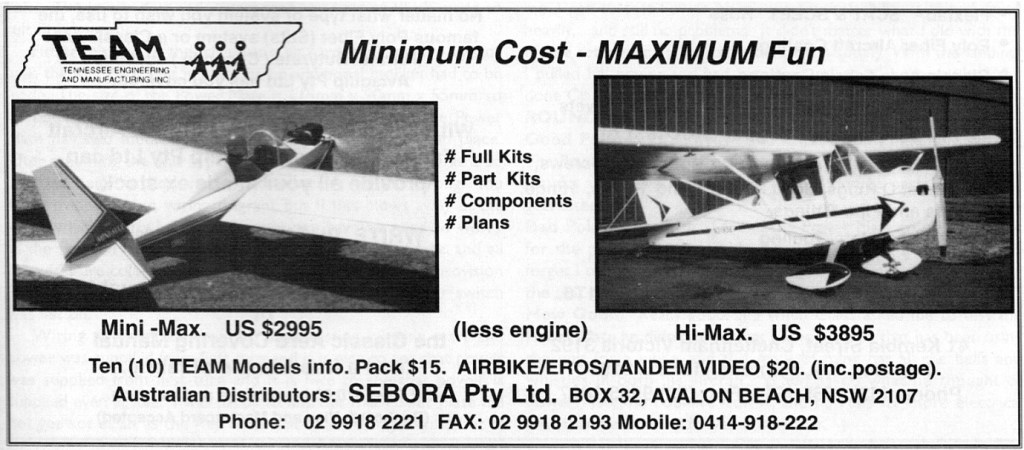
The Mini-MAX 1100R is a minimum cost aircraft, requiring a Minimum of building space, time or skill. A “Maximum” high of pure pleasure and performance.
Mini-MAX 1100R standard equipment:
Quick removable wings
Shoulder harness/seat belt
Full-span flaperons
Curved windshield
Strut-braced tail
5 gallon gas tank
2009 Price: 4795 US$

Tne Mini-MAX 1100R can be upgraded to models 1550R and 1260R.

Mini-MAX 1100R
1200Z

The 1200Z can be upgraded to the 1500R. First flown in 1984.

The TEAM 1300Z MiniMAX was first flown in 1991.

TEAM 1300Z

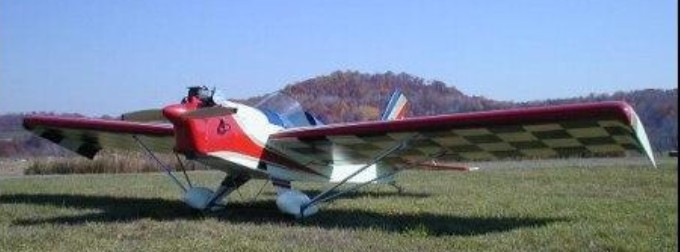
The 1500R was first flown in 1991. A Minimum-cost aircraft, requiring a Minimum of building space, time or skill. Wood was chosen as the basic building material. It is easy to work with, dependable in its strength characteristics, and is not bothered by the vibrations associated with 2-cycle engines.

1500R

1500R construction techniques are of the old-fashioned, tried and true wood truss and plywood gusset method. It is very simple, and builds quickly. If you have ever built a balsa-wood model airplane, you have the experience required to build this “full-scale” model. While construction time will vary from builder to builder, approximately 300 hours is the average.

March 1999

The 1500R was also marketed as the JDT 1500R.

1500R SPORT Standard equipment:
Fiberglass engine cowl
Prop spinner
Quick removable wings
Shoulder harness/seat belt
Curved windshield
Strut-braced tail
5 USgallon gas tank
2009 Price: 5290 US$

The TEAM1600R first flew in 1993.

TEAM1600R

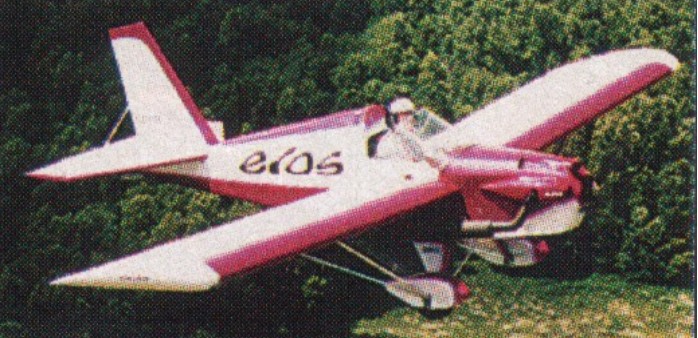
The 1650 Eros first flew in 1987.

1650 Eros

Gallery

1100F “Ultralight”
Engine: Hirth F-33
Flight controls: 3-Axis
Wingspan: 25′ 0″
Wing area: 112.5 sq. ft.
Wings: Removable
Length: 15′ 6″
Empty weight: 237 lbs.
Gross weight: 560 lbs.
Design load factors: +4.4 -1.8
Top speed: 70 mph
Cruise speed: 55 mph
Stall speed: 27-30 mph
Climb rate: 650 fpm
Vne: 90 mph
Take-off roll: 150 ft.
Landing roll: 180 ft

JDT Mini-Max 1100R
Engine: Rotax 447, 42 hp
Height: 5 ft
Length: 16 ft
Wing span: 25 ft
Wing area: 113 sq.ft
Fuel cap: 5 USG
Empty Weight: 121 kg / 267 lbs
MTOW Weight: 254 kg / 560 lbs
VNE: 87 kt / 100 mph / 161 kmh
Speed max: 86 mph
Cruise: 56 kt / 65 mph / 105 kmh
Range: 120 sm
Stall: 24 kt / 28 mph / 45 kmh
ROC: 1000 fpm / 5 m/s
Take-off distance (50ft obstacle): 100 ft / 30 m
Landing distance (50ft obstacle): 210 ft / 64 m
Service ceiling: 10,000 ft
Seats: 1
Landing gear: tail wheel
LSA: yes

Team 1100R miniMAX
Engine: Rotax 447, 42 hp
Wing span: 8 m
Wing area: 11 sq.m
MAUW: 220 kg
Empty weight: 130 kg
Fuel capacity: 20 lt
Max speed: 140 kph
Cruise speed: 120 kph
Minimum speed: 55 kph
Climb rate: 5 m/s
Certification: PFA
Seats: 1
Fuel consumption: 8 lt/hr
Plan price (1998): 1125 Fttc
Kit price (1998): $3825

1200Z
Engine: Zenoah G-50, 42 hp
HP range: 30-50
Height: 5 ft
Length: 16 ft
Wing span: 25 ft
Wing area: 112.5 sq.ft
Fuel cap: 15 USG
Weight empty: 278 lbs
Gross: 560 lbs
Speed max: 100 mph
Cruise: 65 mph
Range: 150 sm
Stall: 28 mph
ROC: 1200 fpm
Take-off dist: 100 ft
Landing dist: 210 ft
Service ceiling: 12,500 ft
Seats: 1
Landing gear: tail wheel

TEAM 1300Z
Engine: Zenoah G50C, 42 hp
HP range: 30-50
Height: 5 ft
Length: 16 ft
Wing span: 25 ft
Wing area: 113 sq.ft
Fuel cap: 5 USG
Weight empty: 300 lbs
Gross: 560 lbs
Speed max: 86 mph
Cruise: 75 mph
Range: 200 sm
Stall: 35 mph
ROC: 1000 fpm
Take-off dist: 150 ft
Landing dist: 200 ft
Service ceiling: 10,000 ft
Seats: 1
Landing gear: tail wheel

1500R
Engine: Zenoah G-50, 42 hp
HP range: 30-50
Height: 5 ft
Length: 16 ft
Wing span: 25 ft
Wing area: 112.5 sq.ft
Fuel cap: 5 USG
Weight empty: 269 lbs
Gross: 560 lbs
Speed max: 100 mph
Cruise: 65 mph
Range: 150 sm
Stall: 28 mph
ROC: 1200 fpm
Take-off dist: 100 ft
Landing dist: 210 ft
Service ceiling: 10,000 ft
Seats: 1
Landing gear: tail wheel

JDT Mini-Max 1500R Sport

JDT Mini-MAX 1500R Open cockpit
Engine: Rotax 447, 42 hp
HP range: 30-50
Length: 16 ft
Wing span: 25 ft
Wing area: 112.5 sq.ft
Fuel capacity: 10 USG
Empty Weight: 122 kg / 269 lbs
MTOW Weight: 254 kg / 560 lbs
VNE: 87 kt / 100 mph / 161 kmh
Stall: 24 kt / 28 mph / 45 kmh
Cruise: 56 kt / 65 mph / 105 kmh
Range: 170 sm
Rate of climb: 1000 ft/min / 5 m/s
Take-off distance (50ft obstacle): 100 ft / 30 m
Landing distance (50ft obstacle): 210 ft / 64 m
Landing dist: 210 ft
Seats: 1
Cockpit width: 24 in
Landing gear: tailwheel
LSA: yes

1600R
Engine: Rotax 447, 42 hp
HP range: 30-50
Speed max: 100 mph
Cruise: 72 mph
Range: 180 sm
Stall: 28 mph
ROC: 1200 fpm
Take-off dist: 100 ft
Landing dist: 200 ft
Service ceiling: 10,000 ft
Fuel cap: 5 USG
Weight empty: 301 lbs
Gross: 560 lbs
Height: 5 ft
Length: 16 ft
Wing span: 25 ft
Wing area: 112.5 sq.ft
Seats: 1
Landing gear: tail wheel

JDT Mini-Max 1600R
Engine: Rotax 447, 42 hp
HP range: 30-50
Cruise: 72 mph
Range: 210 sm
Stall: 28 mph
ROC: 1200 fpm
Take-off dist: 100 ft
Landing dist: 210 ft
Fuel cap: 10 USG
Weight empty: 301 lbs
Gross: 560 lbs
Length: 16 ft
Wing span: 25 ft
Wing area: 112.5 sq.ft
Seats: 1
Landing gear: tail wheel
Cockpit width: 24in

1650 Eros
Engine: Rotax 503, 52 hp
HP range: 40-52
Height: 5 ft
Length: 16 ft
Wing span: 26.5 ft
Wing area: 118 sq.ft
Fuel cap: 5 USG
Weight empty: 345 lbs
Gross: 640 lbs
Speed max: 110 mph
Cruise: 85 mph
Range: 125 sm
Stall: 35 mph
ROC: 1600 fpm
Take-off dist: 125 ft
Landing dist: 225 ft
Service ceiling: 12,000 ft
Seats: 1
Cockpit width: 24 in
Landing gear: tail wheel
LSA: yes

TEAM 1030R Max 103UL

1030R Max 103UL

The 1030R Max 103UL featured an open cockpit with swing over canopy.

JDT 1030F MAX 103
Engine: Hirth F-33
Flight controls: 3-Axis
Wingspan: 25′ 0″
Wing area: 112.5 sq. ft.
Wings: Removable
Length: 16′ 0″
Empty weight: 250 lbs.
Gross weight: 500 lbs.
Design load factors: +4.4 -1.8
Top speed: 63+ mph
Cruise speed: 55 mph
Stall speed: 26 mph
Climb rate: 650 fpm
Vne: 90 mph
Take-off roll: 150 ft.
Landing roll: 180 ft

1030R Max 103UL
Engine: Rotax 277, 28 hp
Fuel cap: 5 USG
Weight empty: 250 lbs
Gross: 500 lbs
Height: 5 ft
Length: 15.5 ft
Wing span: 25 ft
Wing area: 113 sq.ft
Speed max: 62 mph
Cruise: 55 mph
Range: 120 sm
Stall: 26 mph
ROC: 650 fpm
Take-off dist: 150 ft
Landing dist: 180 ft
Service ceiling: 10,000 ft
Seats: 1
Cockpit width: 22 in
Landing gear: tail wheel
LSA: yes

TEAM Inc / ISON Aircraft

Tennessee Engineering and Manufacturing

1995-8: 10790 Ivy Bluff Rd. K, Bradyville, TN 37026, USA.

Markets plans and/or kits to build a range of aircraft, including Air-Bike single-seat and open-frame microlight, Hi-MAX single-seat cabin monoplane, and miniMAX single-seat mid-wing monoplane.

ISON Aircraft (formerly TEAM Aircraft) won prestigious awards at Oshkosh and Sun ‘n Fun, and Wayne Ison and were EAA Ultralight Hall of Fame Inductees.

Production of the TEAM Inc Mini-MAX and Hi-MAX lines has moved to the JDT facility at the Nappanee, Indiana Airport (Hangar M). Who do not own the rights to any other Ison designs.

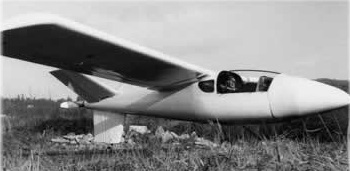
Taylor Bullet

The 1982 Taylor Bullet was a two-seat counterpart of Micro-IMP. With retractable undercarriage, power was a 2100cc Revmaster pusher. He used the best features of his earlier designs, including the GA(PC)-1 airfoil with full length flaperons and optimal adaptations of TPG. With significant assistance from Jerry Holcomb, Molt wound up with a contoured fiberglass shell that gave no impediments to the smooth passage of air over it. The wings had a high angle of attack, allowing it to get in and out of small airstrips. Molt kept the nose low (tail high) for maximal forward visibility during low-speed take-offs and landings. This allowed him to mount the propeller on the tail and give clean airflow over the fuselage and wings. Its reverse pitch capability shortened the ground run after landing. By sweeping the wings forward and placing the Revmaster engine at the front of the plane, Molt assured that variations in pilot/passenger weight would not disturb the Bullet’s center of gravity.

As with most prototypes, there were some annoying glitches, such as difficulties with the long Flexidyne coupling between the engine in front and the propeller at the tail, and some trouble retracting the main gear, which were left extended during the 50 hours of flight-testing. Eventually the owner, Jim Berry, donated his Bullet to the Oregon Air Museum in Eugene, where it remains on display.

Engine: Revmaster 2100cc, 70 hp
Wingspan: 31’0″
Length: 18’9″
Useful load: 550 lb
Max speed: 150 mph
Stall: 50 mph
Range: 500 mi
Seats: 2

Taylor Mini-Imp

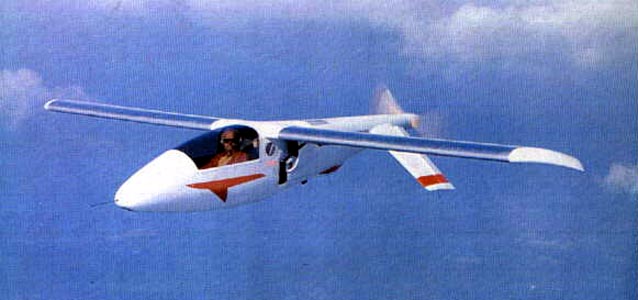
During the energy crisis of the mid 1970’s Moulton B. (Molt) Taylor decided to turn to a small, easy-to-build, light plane which focused on maximum cruise speed and efficiency. The result is the Taylor Mini-IMP.

Taylor Mini-Imp Article

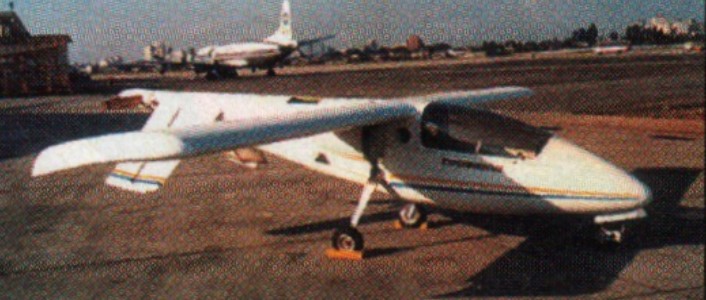
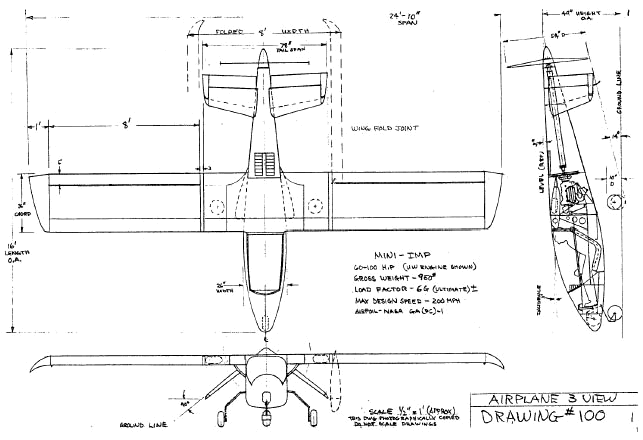
The Mini-Imp is a two-seat version of the single-seat Imp designed in 1975. It features an unusual configuration with a pusher prop aft of an inverted V-type tail assembly and cantilevered high wing that folds back for towing and storage. The wing is the latest NASA design with spoiler and flaps. The retractable gear is the tricycle spring-legged type. A controllable propeller is available. Power is provided by any engine from 60 to 115 hp with the 60-hp Franklin, 60-hp Limbach VW, 70-hp Turbo Revmaster VW, 100-hp Continental or 115-hp Avco Lycoming modification being the most common. The aluminum and fiberglass Mini-Imp requires a minimum of tools to construct, and all hard-to-build parts are available. It offers unequalled safe flyability and stability, positive spiral stability, limited acrobatic capability (stressed to 9 Gs), and good fuel economy (3 1/2 gph).

The O-200 powered price in 1982: $10,000 (Includes complete kit). All metal construction. Year. Units delivered to June 1982: 50.

The Model “C” version of the Mini-IMP is the long nose version which was developed after the prototype was flown with the Limbach converted VW engine. The Model “C” is powered with the Continental O-200 engine (100 HP at sea level at full throttle). The Model “C” also incorporates a larger baggage compartment and the nose is lengthened 12 inches so that the pilot sits one foot further forward of the main bulkhead. This lengthening of the nose required the installation of an additional vertical fin on tip of the tail boom giving the “long nose” Mini-IMP an inverted “Y” tail configuration. This addition was used instead of lengthening the tail boom to accommodate the longer nose length of the design rather than lengthen the shaft and to accommodate the further aft placement of the propeller (with its weight effect on the CG).

The O-200 powered Mini-IMP requires the use of a different propeller and due to the increased weight of the engine a heavier landing gear is used. The drawings indicate several other areas of change for the Model “C” needed to accommodate the higher power and resulting performance increases. These include heavier side frame members and a different nosewheel installation. When ordering “kits” be sure to advise of your preference in this regard. The same set of drawings is used to cover either version of the Mini-IMP (the long nose or the short nose).
It is practical to use the long nose version with the big baggage compartment if the builder intends to use the turbocharged Revmaster engine and controllable propeller. However, if the normally aspirated Revmaster engine and a fixed pitch propeller (or other such VW conversion) is to be used, the short nose configuration should be used.

A prototype of the Model “C” has been flown extensively and its improved performance with the higher power is evident. Flight tests of the O-200 powered Mini-IMP “C” have shown a cruise speed of approximately 175 MPH at 4000 foot altitude at 75% rated power. Climb speeds of better than 1500 FPM are initially available at full throttle. These performances are obtained at approximately 1000 pounds gross weight. Exact performance to be obtained with any engine combination is of course dependent on the power level the builder wants to pull from his engine/propeller installation. The O-200 Model “C” requires approximately the same takeoff and landing run as the VW versions, with exact performance dependent on temperature, altitude, and gross weight.

Following Taylor’s death, the plans and licensing for the Mini-IMP have been marketed by the Mini-IMP Aircraft Company of Weatherford, Texas. The Mini-IMP Aircraft Company was formed to provide builder support and to further promote the design.

Gallery

Engine: Continental O-200, 100 hp
Hp range: 8-125
Speed max: 200 mph
Cruise: 170 mph
Range: 500 sm
Stall: 45 mph
ROC: 1500 fpm
Take-off dist: 600 ft
Landing dist: 600 ft
Service ceiling: 20,000 ft
Fuel cap: 13 USG
Weight empty: 700 lb
Gross: 1000 lb
Height: 4 ft
Length: 16 ft
Wing span: 27 ft
Seats: 1
Cockpit with: 26 in
Landing gear: retractable nose wheel

Engine: 60-hp
Gross Wt. 800 lbs
Empty Wt. 500 lbs
Fuel capacity 12+ USG
Wingspan 25’
Length 16’
Cruise 150+ mph
Stall 48 mph
Climb rate 1200 fpm
Takeoff run 800 ft
Range 500 sm