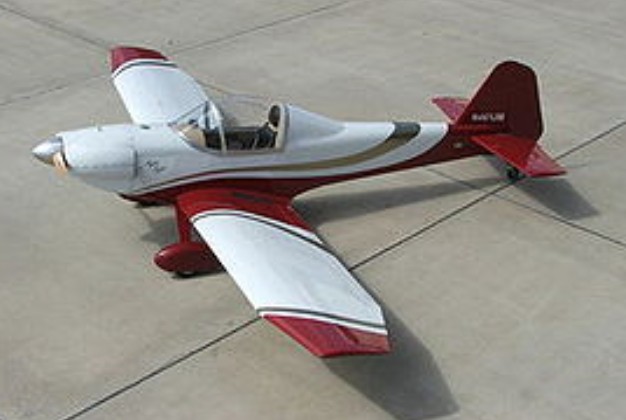
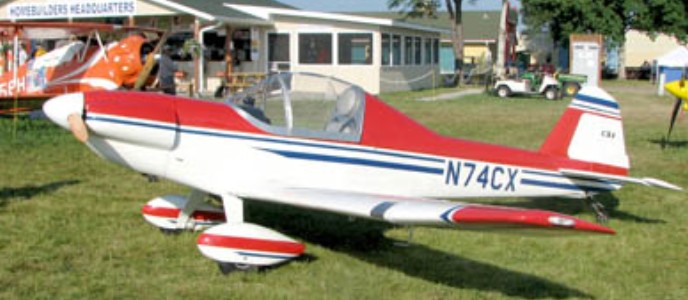
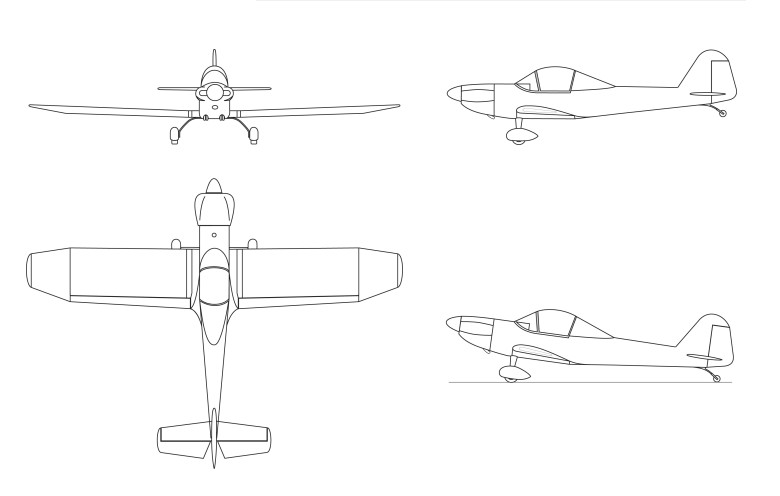
The CX4 is a low wing, single-seat aircraft designed to be simple to build and safe to fly. The name of the plane, CX4, is taken from an old radio show featuring Hop Harrigan, whose plane was called CX4.
The aircraft is all metal, 6061-T6 aluminium, except the cowling. It has hydraulic disc toe brakes and a heater and ventilation system for all season flying. The aircraft can be built with an optional 3 gal aux fuel tank. The CX4’s standard specified powerplant is a Volkswagen air cooled engine. The design load factor is 3.8 g, with an ultimate load of 5.7 g
The CX4 first flew in 2004. At the end of 2010, there were eighteen flying CX4s in the United States and South Africa. Parts and kits are currently supplied by Peter Beck.
Powerplant: 1 × Volkswagen Length: 18 ft 3 in (5.56 m) Wingspan: 24 ft (7.3 m) Height: 4 ft 8 in (1.42 m) Wing area: 48 sq ft (4.5 sq.m) Empty weight: 520 lb (236 kg) Gross weight: 850 lb (386 kg) Cruise speed: 109 kn; 201 km/h (125 mph) Stall speed: 35 kph 64 km/h (40 mph) Never exceed speed: 135 kn; 249 km/h (155 mph) Service ceiling: 10,000 ft (3,000 m) Rate of climb: 825 ft/min (4.19 m/s) Crew: 1
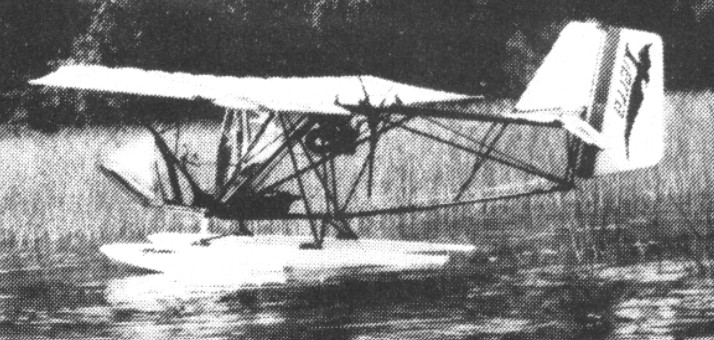
Single seat single engined high wing mono¬plane with conventional three axis control. Wing has unswept leading and trailing edges, and constant chord; conventional tail. Pitch control by elevator on tail; yaw control by fin mounted rudder; roll control by half span ailerons; control inputs through stick for pitch/roll and pedals for yaw. Wing braced from below by struts; wing profile Worth¬mann FX63 137; double surface. Undercar¬riage has three wheels in tricycle formation with additional tailskid; suspension on all wheels. Push right go right nose¬wheel steering connected to yaw control. No brakes. Aluminium tube framework, without pod. Engine mounted below wing driving pusher propeller.
An important manufactur¬er of hang gliders, producing around 300 of these aircraft per year, Thalhofer produced its first microlight in 1976. Two prototypes of the Bronco were built and flew for the first time at the end of March 1983. Production got under way in 1983, after the certification of the model.
Length overall 18.7ft, 5.70m Wing span 28.5 ft, 8.70 m Constant chord 3.9 ft, 1.20 m Sweepback 0 deg Tailplane span 5.2ft, 1.60 m Total wing area 114 sq.ft, 10.6 sq.m Total aileron area 6.9 sq.ft, 0. 64 sq.m Total fin and rudder area 16.4 sq.ft, 1.52 sq.m Total tailplane and elevator area 17.2 sq.ft, 1.60 sq.m Wing aspect ratio 7.1/1 Wheel track 5.9 ft, 1.80 m Engine: Konig SC430, 25hp at 4200rpm Propeller diameter 55 inch, 1.40 m Belt reduction, ratio 1.8/1 Max static thrust 132 lb, 60 kg Power per unit area 0.22 hp/sq.ft, 2.4 hp/sq.m Fuel capacity 5.3 US gal, 4.4 Imp gal, 20.0 litre Empty weight 221 lb, 100 kg Max take off weight 486 lb, 220 kg Payload 265 lb, 120 kg Max wing loading 4.24 lb/sq.ft, 20.7 kg/sq.m Max power loading 19.4 lb/hp, 8.8 kg/hp Load factors; +6.0, 3.0 ultimate Max cruising speed 59 mph, 95 kph Economic cruising speed 40mph, 65kph Stalling speed 24mph, 40 kph Max climb rate at sea level 400 ft/min, 2.0 m/s Take off distance 165 ft, 50 m Land¬ing distance 100 ft, 30 m
LS-ac / HG-hg 1983: Thalhofer, Steinengrabenstrasse 12, D 7440 Nfirtingen, West Germsny. By 1998 UP Delta had bought out aircraft manufacturer Thalhofer. In 1998 UP Europe was manufacturing the wings for the rigid wing Pegasus of Jurgen Lutz, having bought out aircraft manufacturer Thalhofer.
The one-off Texas Parasol Ontario Modifications, C-IVME, was built to fit Canadian Ultralight regulations. Texas Parasol uses a VW engine, plus small “Ontario” modifications, and the approximate cost to build was less than $5000.
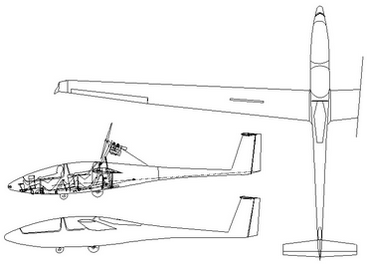
TST-14 Bonus is designed mainly for leisure thermal flights. Its performance is comparable to common two-seat gliders. The wheels on the wing ends allow for independent taxiing and take off.
The major advantage of the TST-14 is the possible and easy installation of the power unit in order to upgrade to the TST-14M. Bonus is equipped with complete duplicate controls and avionics. These make it suitable for flying schools that provide training on motorless and motorized gliders. Aerotow capable
Instrumentation of the TST-14 Bonus glider is fully optional – the customer can either choose instruments from our list of avionics manufacturers or he/she can supply the instrumentation himself/herself during the production of the ordered aircraft. The Bonus can be delivered with an entire range of accessories and a trailer.
Since the completion and testing of the first prototype in 2005, we have sold 10 Bonus gliders to pilots in seven countries. There is greater demand for the TST-14M model, which is the version with the engine installed.
The TST-14 is a tandem two-seat, mid-winged monoplane with a cantilever wing, T-shaped tail and two-wheel tandem undercarriage. Its composite structure is made in negative molds. The wings with sandwich structure is equipped with ailerons and air brakes on the upper surface. There are no ribs in the wing. The strength system of the wing is formed by the main spar, by the aileron spar and by the root rib. All the wing profile of the sandwich structure forms the torsion box.
The wings are interconnected by fittings and two horizontal pins. The connection wing-fuselage is made by means of pins and fittings placed in the fuselage and the wing root rib. The composite ailerons are hung by four hinges with the turning axis on the upper side. Air brakes on the upper side of the wing are made of aluminium and are retracted into pits.
The fuselage with a shell structure is made in the negative mould together with the fin. The tail is a T-shaped sandwich structure. The controls, enabling pitch, roll, air brake and trim controlling, are of the lever design, with a push-pull rods system. The relevant backstops are placed on the stick. The yaw control with adjustable pedals is transmitted by cables. The airplane can be trimmed by a torsional member in the elevator drive that is controlled by a lever in the left of the front cockpit. The undercarriage consists of one unsprung main wheel 350×100 mm and one fixed front wheel. The brake handle is on the left side of the floor. The tail wheel 80×30 mm is turnable.
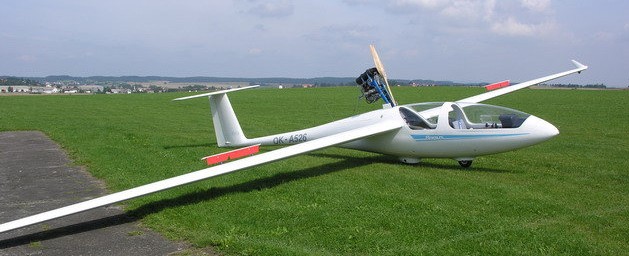
TST-14M Bonus is a two-seat motorized composite ultralight self-launcher with a retractable power unit, suitable for thermal flying, long wave or ridge flights and for flying schools. The aircraft also offers easy handling and the capability of independent take off. TST-14M Bonus is designed mainly for leisure thermal flights. Its performance is comparable to common two-seat gliders. The plane is equipped with a retractable power unit enabling independent take off and reach of an airfield without any thermal support. Engine extraction and retraction is fully automatic and is controlled by electronic servo motors. The power unit is operated by the pilot using two buttons on the instrument panel. The handling of a landed Bonus is very easy thanks to its weight. The wheels on wing ends allow for independent rolling and take off. Production commenced in 2004.
Steve Meassick, a dealer of TeST gliders in the USA, has successfully finalized the certification of the two-seater self-launcher TST-14M Bonus in the LSA category.
TST-14 Bonus M
The Bonus glider can also be delivered in a motorless version (type TST-14), ready for possible future engine installation. Since the completion and testing of the first prototype in 2005, Test have sold 18 Bonus gliders to pilots in seven countries.
With a 17 meter wing span, complete duplicate controls and the ability to extract and retract the engine anytime during the flight, up to 150 km range is possible with the Rotax 503 engine engaged. The TST-14M is still aerotow capable. The Rotax 503 has two carburetors and reducer B, ratio 1:2. An electric starter is standard. The propeller is wooden, two-bladed with fixed adjustment; diameter 1200 mm.
The TST-10 ATLAS, TST-13 JUNIOR and TST-14 BONUS – formed the core of the 2009 production program and have brought a great deal of commercial success.
The TST-14J BonusJet is a two seat, high performance, self-launching, jet powered sailplane. Featuring a PBS TJ-100 turbine engine on a retractable pod, it is capable of self launching, cross country soaring and cruising flight.
TST-14J BonusJet
Phase one flight tests have been completed. All systems are functioning perfectly. Initial flight tests show a climb rate in excess of 900 ft/minute.
TST-14 Bonus Wing span: 17 m Wing area: 12.01 sq.m Aspect ratio: 24 Length: 8.24 m Seats: 2 MTOW without BRS: 450 kg MTOW with BRS: 472.5 kg Weight of crew: 65 – 180 kg Vne: 205 km/h Max. maneuvering speed: 150 km/h Max. speed with extended air brakes: 150 km/h Max. speed in aerotow: 150 km/h Stall speed: 65 km/h Max. theor. glide ratio without winglets: 37 by 105 km/h Max. glide ratio with winglets: 39 by 105 km/h Min sink rate: 0,65 m/s at 85 km/h Max. permitted load factor: +4 / -2 Max. calculated load factor: +5.2 / -2.6
TST-14M Bonus Wing Span: 12m Wing Area: 12.01sq.m Aspect ratio: 24 Length: 8.24 m Empty Weight: 472kg MTOW without BRS: 450 kg MTOW with BRS: 472 kg Weight of crew and fuel: 65 – 188 kg Structure: all-composite Seats: 2 Vne: 205 km/h Max. maneuvering speed: 150 km/h Max. speed with extended air brakes: 150 km/h Max. speed in aerotow: 150 km/h Stall speed: 65 km/h Max. theor. glide ratio without winglets: 37 at 105 km/h Max. glide ratio with winglets: 39 at 105 km/h Min. sink rate: 0,65 m/s at 85 km/h Max. permitted load factor: +4 / -2 Max. calculated load factor: +5.2 / -2.6 Engine: Rotax 503, 34 kW (46 HP) Reducer: 1:2 Propeller: Wooden, 1200mm Fuel tank capacity: 30 liters Fuel consumption when climbing: 11 liters / h Fuel consumption at cruising speed: 9 liters / h
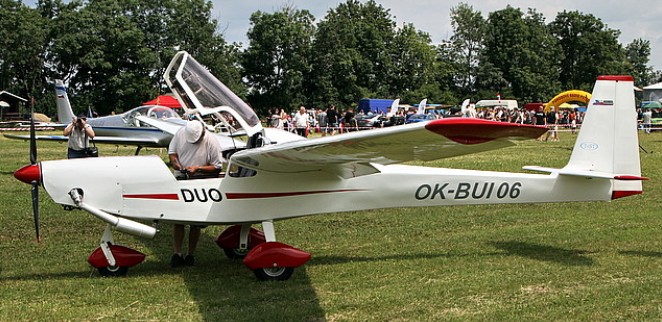
The TST-5 VARIANT is an alternative to the DUO with shorter wings (1996) Two seater, side-by-side microlight aircraft, with ROTAX 582 engine in tractor configuration, clipped wings, suported by struts, and nose wheel undercarriage. JAR 22 certified.
The company TeST was established in 1992 by three enthusiastic, experienced glider pilots. Their initial goal was to design and manufacture ultralight motor gliders and ultralight aircraft.
During the few first years, production was carried out in a hangar in Křižanov. The firm designed its first wooden ultralight glider, the TST-1 Alpin, and tested the prototype in 1993. Despite gliding parameters that could bring smiles today, the glider demonstrated a couple of interesting performance feats – e.g. several 300 km FAI triangles and even a 500 km FAI triangle.
The company rented new production facilities in Velké Meziříčí in 1995 and production capacity grew to 10 aircraft a year. The development and production of new aircraft then continued, featuring mostly wooden construction:
TST-7 JUNIOR more or less an ALPIN with the engine mounted in the front and a fixed three-wheel undercarraige (1995)
TST-6 DUO, two seat motor glider similar to the JUNIOR (1996)
TST-5 VARIANT, an alternative to the DUO with shorter wings (1996)
TST-3 ALPIN T, a significantly upgraded ALPIN, also supplied with a retractable engine (TST-3 ALPIN TM). This aircraft flew several 500 km FAI triangles – in gliding mode (1998).
1998: Zahradni ul. CZ-59401 Velke Mzirici Czech Republic
In September 1998, TeST moved to larger facilities in Velká Bíteš allowing production to increase to 25 aircraft a year. The development of new types continued:
TST-8 ALPIN DM, a new tandem two seater with a retractable engine (1999)
TST-9 JUNIOR, a modernized TST-7 with an elliptical fuselage and T-shaped tailplanes (2000)
TST-3 TL, a new lighter version of the TST-3 T; its pilot broke a series of records in cross-country flights in the 220 kg flying weight category (2001).
In order to satisfy increased demand, the company moved again in November 2002, this time to its new facilities in Velké Meziříčí. Development activity began to focus mainly on composite technology. The following aircraft were designed:
TST-10 ATLAS M, the first two seater made of composites with a retractable engine opened the new era of technologies based on carbon fiber – also supplied as the motorless TST-10 ATLAS (2002).
TST-12, a tandem low-wing plane combining modern features and traditional wooden construction (flown in summer of 2004; built as a prototype only)
TST-13 JUNIOR 2005, an all-composite successor to the TST-9; span of 15 m
TST-14 BONUS M, a tandem all-composite two seater; production commenced in 2004 TST-14 BONUS.
The newly designed aircraft – the TST-10 ATLAS, TST-13 JUNIOR and TST-14 BONUS – formed the core of the 2009 production program and have brought a great deal of commercial success.
The original wooden construction was replaced by composite technology in 2002. Detraction and retraction of the engine is fully automatic and controlled by an electronic device.
The development and design of the new aircraft is in cooperation with experts from the Faculty of Mechanical Engineering at the VUT University of Technology in Brno and the Light Aircraft Association (LAA ČR), which helps to increase the quality and safety of newly designed aircraft.
The aircraft are designed to meet existing and anticipated standards and regulations in the overall UL category – maximum flying weight of 300 kg (or 322 kg during BRS use) for single seaters or 450 kg (or 472 kg during BRS use) for two seaters. The minimum speed is always under the 65 km/h limit, often conforming to even stricter standards (JAR-22).
2009: K Libusi 4/24 Praque 4 148 00 Czech Republic
In 2009 TeST Aircraft were marketed in North America by Bohemican International, 36 Buchanan Road, St. Cathatires, Ontario L2M 4R6, Canada.
Single or side by side two seat single engined high wing monoplane with conventional three axis control. Wing has unswept leading and trailing edges, and constant chord; cruciform tail. Pitch control by elevator on tail; yaw control by fin mounted rudder; roll control by full span ailerons; control inputs through stick for pitch/roll and pedals for yaw. Wing braced from below by struts; wing profile NC; double surface. Undercarriage has three wheels in tail dragger formation; nylon rope suspension on tailwheel and steel spring sus¬pension on main wheels. Ground steering by differential braking. Brakes on main wheels. Aluminium tube framework, partially enclosed (totally enclosed optional). Engine mounted above wing driving pusher propeller.
One of the revelations of Sun ‘n’ Fun in March 1983 at Lakeland was the prototype Tierra with which Teratorn Aircraft made a spectacular entrance into that section of the ultralight market which is in direct competition with traditional light air¬craft. This machine offers the facility to be used either as a single seat ultralight or to be transformed into a US category experimental aircraft by the addition of a second scat, the problem of centre of gravity shift being resolved by positioning the single seat in the centre of a wide cockpit, so that it only has to be moved sideways to make room for two. The single stick is central and, as the Tierra has two rudder bars, it becomes a dual control machine when fitted with both seats.
The fuel tank is mounted behind the seating low down at the rear of the cockpit which closes with the clever use of zips for the side panels, the windows coming down to the lower longeron of the cabin. This enclosure is available as an option, as are isolation panels for the cabin. These are made of soundproof material and fit behind the cabin and above the wing and are easily removable. The structure of the Tierra is formed from triangular frames. All the joints in the airframe are reinforced with a strong high density elastic foam pressed into the tubes which absorbs vibration and eliminates metal to metal con¬tact.
Engine location is above the cabin, the motor using dyna focal mounts as in modern conventional aviation. It is a Rotax 377 cc unit fitted with a reduction drive and Teratorn’s own Flexidyne type clutch system. Finally comes an accessory which is still rare in ultralight aviation: the horizontal tail surface of the Tierra is fitted with a trimmer permit¬ting maximum stability in flight regardless of the load carried or its position.
Tierra Engine: Rotax 377, 36hp at 6600rpm Propeller diameter and pitch 60 x 36 inch, 1,52 x 0.91 m Toothed belt reduction, ratio 2.6/1 Max static thrust 245 lb, 111 kg Power per unit area 0.24 hp/sq.ft, 2.7 hp/sq.m Fuel capacity 5.0 US gal, 4.2 Imp gal, 18.9 litre Length overall 18.5 ft, 5.64 m Height overall 6.0ft, 1.83m Wing span 31.5ft, 9.60m Constant chord 4.5 ft, 1.37 m Sweepback 0 deg Total wing area 142 sq.ft, 13.2 sq.m Wing aspect ratio 7.0/1 Empty weight 253 lb, 115kg Max take off weight 550 lb, 249 kg Payload 297 lb, 135 kg Max wing loading 3.87 lb/sq.ft, 18.9 kg/sq.m Max power loading 15.3 lb/hp, 6.9 kg/hp Load factors; +6.0, 3.0 ultimate Max level speed 63 mph, 101 kph Never exceed speed 63 mph, 101kph Cruising speed 50mph, 80kph Stalling speed 25 mph, 40 kph Max climb rate at sea level 800 ft/min, 4.1 m/s Min sink rate 300ft/min, 1.5m/s Best glide ratio with power off 10/1 Take off distance 50 ft, 15 m




 All Aero