First registered ZK-JFV to Mr B.T.Tuira, of Temuka, New Zealand, on 8 July 1996. An ultralight.
LSA/UL
Tube Works Phoenix
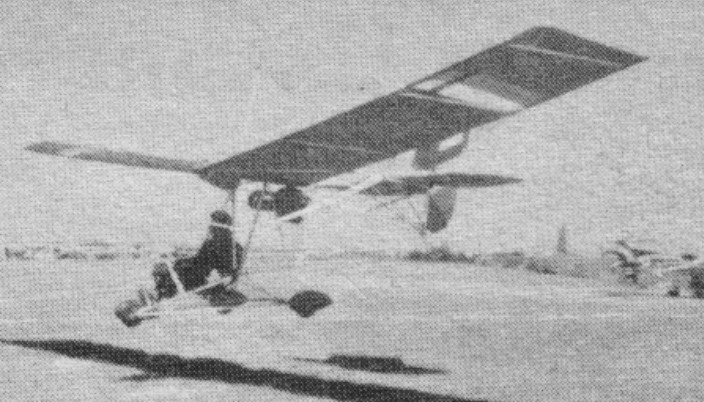
Phoenix
Empty wt: 239 lbs
Max wt: 489 lbs
Wing span: 32ft
Wing area: 160 sq.ft.
Wing loading: 3.06 lbs/sq.ft
Power loading: 17.46 lbs/hp
Engine: Rotax 277
Max speed: 52 mph
Cruise: 45 mph
Stall: 23 mph
Seats: 1
Phoenix II
Empty wt.: 312 lbs
Max wt.: 720 lbs
Wing span: 32ft
Wing area: 160 sq.ft
Wing loading: 4.5 lbs/sq.ft
Power loading: 14.4 lbs/hp
Engine: Rotax 503
Max speed: 52 mph
Cruise: 45 mph
Stall: 28 mph
Seats: 2
Phoenix Laser
Empty wt.: 252 lbs
Max wt.: 502 lbs
Wing span: 32ft
Wing area: 160 sq.ft.
Wing loading: 3.14 lbs/sq.ft
Power loading: 17.93 lbs/hp
Engine: Rotax 277
Max speed: 60 mph
Cruise: 45 mph
Stall: 23 mph
Seats: 1
Phoenix Laser II
Empty wt.: 330 lbs
Max wt.: 738 lbs
Wing span: 32 ft 8 in
Wing area: 180 sq.ft.
Wing loading: 4.1 lbs/sq.ft
Power loading: 14.76 lbs/hp
Engine: Rotax 503
Max speed: 60 mph
Cruise: 50 mph
Stall: 32 mph
Seats: 2
Tri-R Technologies
High Tech Composites / HTC
High Tech Composites (HTC) in Oxnard, California, USA, owned by Rich Trickle, produced composite structures for other aircraft manufactures before Rich designed the two-seat KIS TR-1 (KIS stands for “Keep It Simple”). Constructed with the assistance of Vance Jaqua and Martin Hollmann, the aircraft was first presented at the EAA event at Oskosh, Wisconsin, in July 1991.
Subsequently HTC was renamed Tri-R Technologies and the composite kit plane was marketed to the homebuilt constructor.
1995-7: 1114 E. 5th St., Oxnard, CA 93030, USA.
In 2001 the Pulsar Aircraft Company (formed in 1999) acquired the design and production rights of Tri-R, while the latter still produced the composite parts. The two-seat KIS TR-1 was re-designated Pulsar 150, while the KIS Tr-4 Cruiser became the Pulsar Super Cruiser. In 2005 all aircraft production was transferred to Ilopango, El Salvador.
Pulsar Aircraft Corp improved the design and offered an new, larger version called the Super Pulsar 100. They also keep the original legacy Pulsar design alive under the name of Pulsar XP.
Markets kits to build the KIS (Keep It Simple) side-by-side two-seat composites monoplane (first flown 1991), plus the four-seat TR-4 Cruiser (first flown 1994).
Tradewinds Gliders TW-21
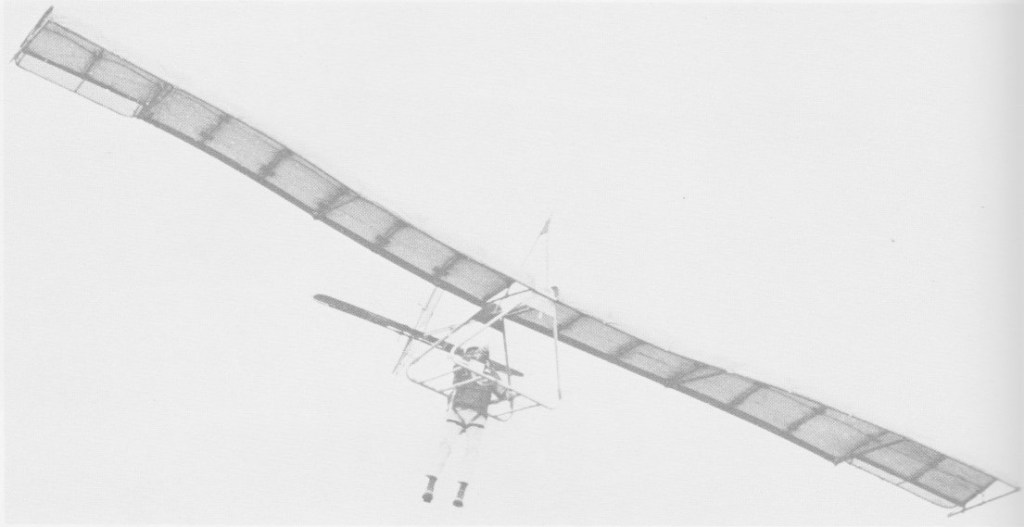
Circa 1972, the TW-21 is a fixed wing that has full three axis control, ailerons, rudder and elevators.
Stressed for 4.5G, all tubing is 6061-T6 seamless aircraft aluminium. Sizes from 5/8in to 1 5/8 in is used. Rigging cable is 3/32in 7×7 and 1 5/8 x .049 is used. All fittings and joints are heli-arc welded.
All bolts, nuts, turnbuckles, pulleys and brackets are aircraft quality. The sail options were 3.0 or 5.8 oz dacron, with a choice of 10 colours. All seams and stress areas are double zig-zag stitched and reinforced.
The TW-21 has fully adjustable seat harness and ground support straps, and an optional prone harness was available.
The control system and control stick are machined steel and welded.
Chord length: 4 ft 9 in
Wing span: 32 ft
Aspect ratio: 6.85
Nose angle: 0˚
Wing area: 153 sq,ft
Weight: 55 lb
Pilot weight: 110-220 lb
Takeoff speed: 12 mph
Stall speed: 14 mph
Max speed: 45 mph
Best glide ratio (L/D): 12:1
Best L/D speed: 26 mph
Min sink: 185 fpm
Chord length: 4 ft 9 in
Wing span: 34 ft
Wing area: 154.5 sq,ft
Aspect ratio: 7.55
Nose angle: 0˚
Weight: 71 lb
Pilot weight: 110-250 lb
Takeoff speed: 12 mph
Stall speed: 14 mph
Max speed: 45 mph
Best glide ratio (L/D): 12:1
Best L/D speed: 26 mph
Min sink: 185 fpm
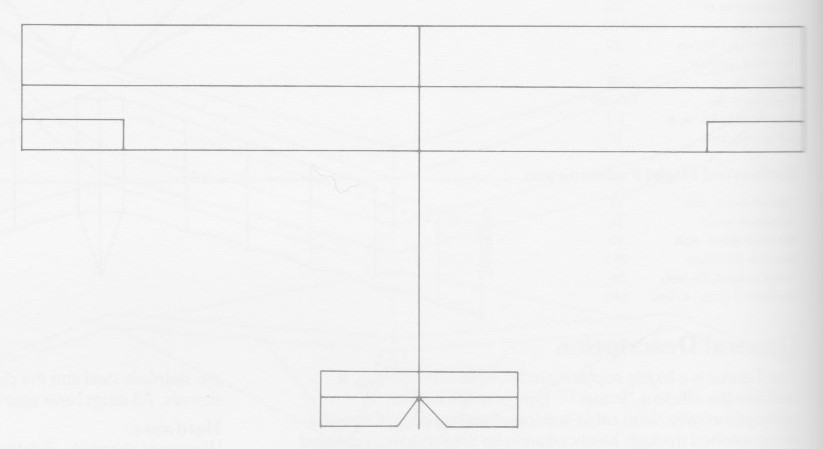
Toxo Sportster
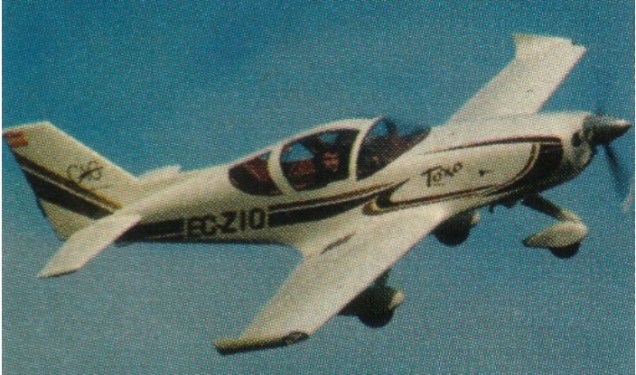
Engine: Rotax 912, 100 hp
HP range: 85-160
Length: 17.6 ft
Wing span: 28 ft
Wing area: 94 sq.ft
Empty weight: 750 lb
Gross weight: 1356 lb
Fuel capacity: 40 USG
Cruise: 175 mph
Stall: 40 mph
Range: 980 sm
Rate of climb: 1500 fpm
Takeoff dist: 500 ft
Landing dist: 600 ft
Seats: 2
Landing gear: nosewheel
Townsley, Mike
2008: PO Box 441, Walford, IA 52351, USA.
LSA builder
Toresi
1998:
Ujezd 474
569 61 Dolni
Czech Republic
LSA builder
Topa Aircraft Scout
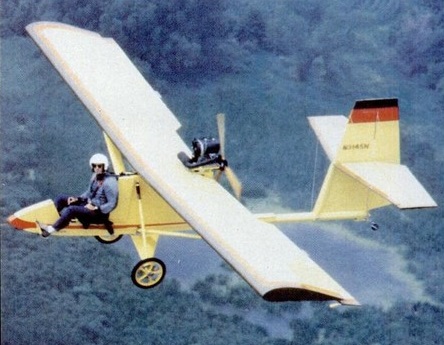
The 1983 Topa Aircraft Scout ultralight was designed for pop-rivet construction. Plans sold for $100. It cruised at 45 mph on 47 hp.
Topa Aircraft Co
1983
1401 Offshore
Oxnard
California
USA
UL builder
Tomak SD-4 Viper
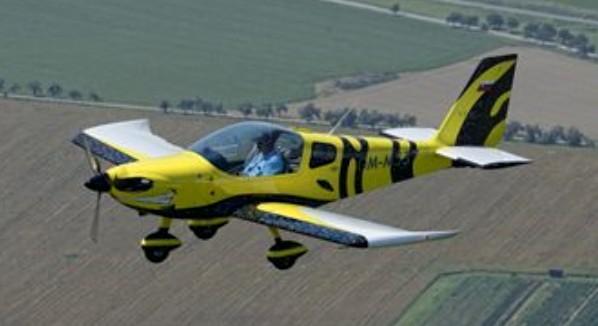
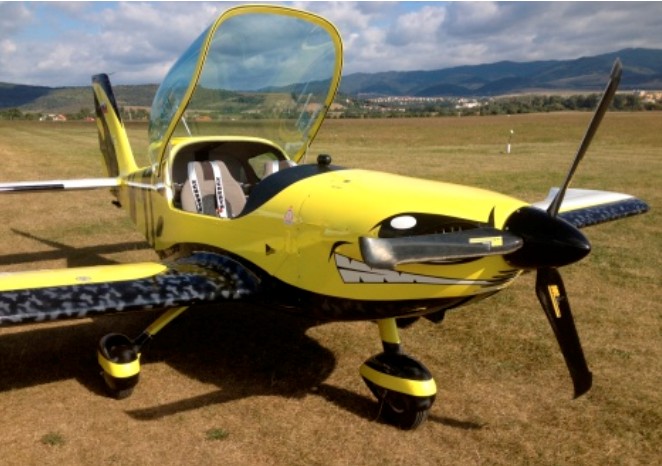
Viper is an all-metal microlight plane designed for sport, recreational flying and glider towing. The control of the aircraft is helped by LCD flight, navigation and communication systems. Viper SD-4 was developed and is made by aviation and mechanical engineering specialists at Tomark s.r.o., based in Slovakia. Modern technologies and CAD systems are used in its manufacture. Individual parts are cut by laser or machined on CNC machines for maximum precision. 2009 Price: 66000 EURO
This aircraft has:
DUC SWIRL Propeller
Ballistic recovery system 600kg
Dynon Flightdeck D180
GPS AVmap Geopilot plus
Garmin SL-40 radio
Garmin GTX 327 Transponder
Engine 4-stroke Rotax 912 ULS, 100 HP
Wing span 8.4 m
Length 6.4 m
Height 2.2 m
Empty Weight: 285 kg / 628 lbs
Maximum take-off weight 472,5 kg
Cruising speed: 108 kt / 124 mph / 200 kmh
Never exceed speed: 130 kt / 149 mph / 240 kmh
Stall speed: 35 kt / 40 mph / 65 kmh
Climb rate: 1200 ft/min / 6 m/s
Ceiling 5,000 m
Take-off distance 150 m / 180 m
Landing distance 140 m / 160 m
Take-off distance (50ft obstacle): 820 ft / 250 m
Landing distance (50ft obstacle): 920 ft / 280 m
Fuel tank volume 70 lt
Range 750 km
 All Aero