1998:
Bouvenay
F-44110 Soudan
France
UL engine builder
1998:
Bouvenay
F-44110 Soudan
France
UL engine builder
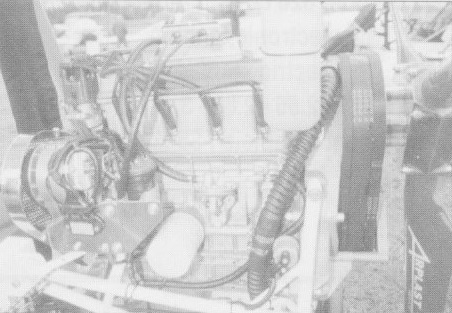
1998:
Cycle: 4 stroke
No cylinders: 4
Compression: 9
Displacement: 1260 cc
Cooling: Liquid
Ignition: Slick Magneto
Reduction: none
Weight: 42 kg
Max pwr: 40 hp at 3200 rpm
An amphibious three axis ultralight circa 1998.
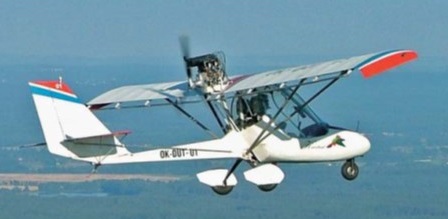
The Jaroslav Sedláček UL-jih Colibri was an easy built aircraft, with two side-by-side seats, braced wing, powered by a Rotax 503 UL/DCDI in pusher configuration.
With sprung landing gear with a nose wheel, the fuselage is aluminium and steel tubes, wings aluminum tubes, PU ribs, aluminum structure ailerons, and steel support structure with thin wall steel tubes. Wing fuel tanks were optional.
Engine: Rotax 503 UL/DCDI
Span: 9,44 m
Length: 5,5 m
Wing area: 12 sq.m
Weight: 195 kg
Speed range: 62 – 140 km/h

Jaroslav Sedláček UL-JIH is engaged in the manufacturer of 3 types of ultralight aircraft, provides maintenance, flying school and other related services. The Fascination and Evolution are the main part.
Jaroslav Sedláček was involved in creation of the two aircraft with more than 200 of the Fascination sold.
Establishing of Fascination a.s. in 2010 was reaction to the market. Jaroslav Sedláček was the investor. Fascination a.s. took over all commercial and marketing activities.
Jaroslav Sedláček UL-jih,
Linecká 829,
382 41 Kaplice,
Czech Republic

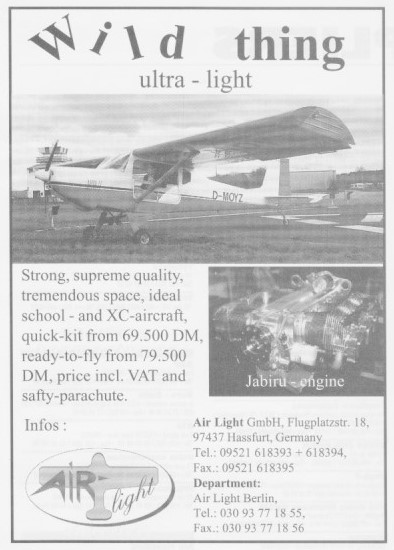
The ULBI Wild Thing is a German ultralight aircraft, designed by R. Kurtz and produced by Ultraleicht Bau International (ULBI), of Hassfurt. The aircraft was supplied as a kit for amateur construction or as a complete ready-to-fly-aircraft.
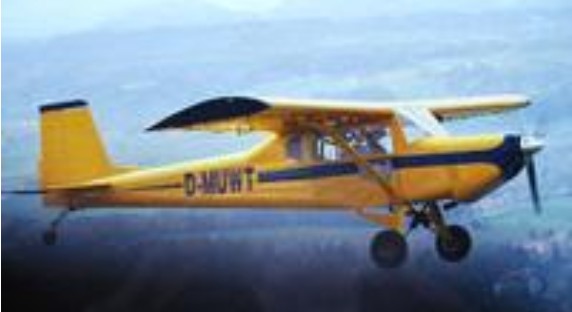
Since 1997 the Wild Things have been built in WT 01 and WT 02 versions at the Aerodrome Hafurt (EDQT). Construction is of aluminum and the Wild Thing is suitable for training, towing, as well as for the relaxing.
The Wild Thing wings are foldable, and an engine option is a Hirth F 20.
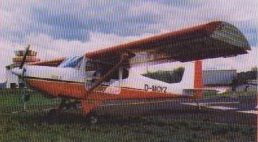
In the 1990s the aircraft was marketed by Air-Max GmbH of Nuremberg, Germany.
The aircraft was introduced in 1996 and production ended when ULBI went out of business in 2014.
Stall: 30 kt / 35 mph / 56 kmh
Cruise: 76 kt / 87 mph / 140 kmh
VNE: 108 kt / 124 mph / 200 kmh
Engine: Jabiru, 80 hp
Wing span: 9.2 m
Wing area: 13.88 sq.m
MAUW: 450 kg
Empty weight: 273 kg
Fuel capacity: 2×40 lt
Max speed: 215 kph
Cruise speed: 160 kph
Minimum speed: 56 kph
Climb rate: 3 m/s
Fuel consumption: 10 lt/hr
Certification: Vz
Seats: 2
Price (1998): 69 500 DM
ULBI went out of business in 2014
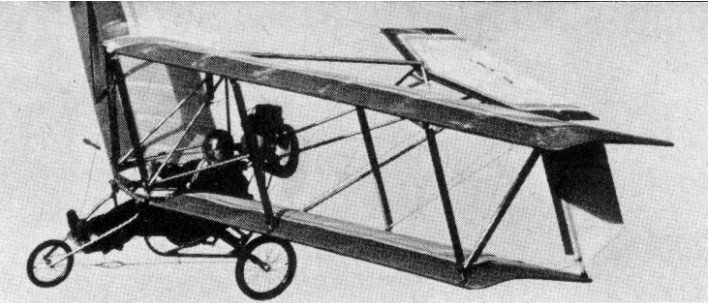
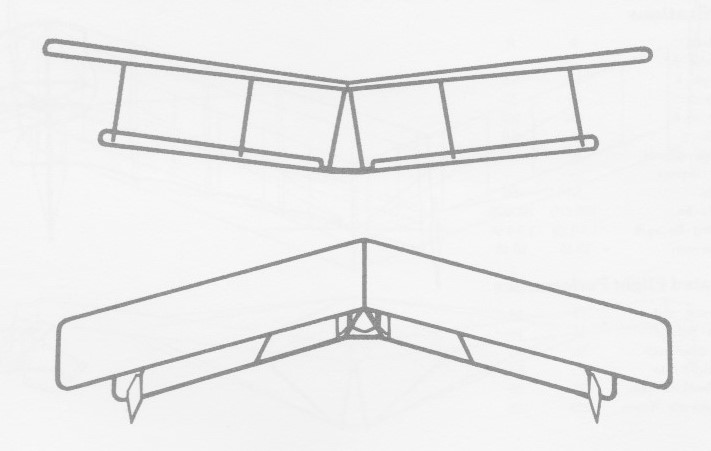
The Aeroplane is a single seat single engined biplane with two-axis control. Wings have swept back leading and trailing edges, and constant chord; no tail, elevator only. Pitch control by elevator at rear; yaw control by tip rudders; no separate roll control; control inputs through stick for pitch/yaw. Wings braced by struts and transverse X cables; wing profile; double surface. Undercarriage has three wheels in tricycle formation; bungee suspension on all wheels. Nosewheel steering independent from yaw control. Brake on nosewheel. Aluminium tube framework, without pod. Engine mounted between wings driving pusher propeller.
Designed by Larry Mauro, under the original title of Icarus II as a hang glider, this famous biplane was one of the first hybrid control hang gliders to be motorised (in 1975 by John Moody). It then pursued a remarkable career under the name of Easy Riser; by 1981 more than 900 were flying in the United States, built from plans supplied by the Larry, or sold as kits by different firms such as UFM of Kentucky.
UFM Icarus II / Aeroplane Article
Since 1981, this company has offered it with an elevator added at the back of the interplane struts, in which form it carries the name Aeroplane. It is fitted with two axis control and there is a fixed seat for the pilot, the hybrid control with the pilot moving in a swing seat having been abandoned. The rudders on the standard Aeroplane are hinged on the rear interplane struts at the wing tips. The engine is the Cuyuna 215R of 20hp, which as an option ($300) can be replaced by the 430R as on the Aeroplane XP, the three axis control version. The Aeroplane is sold either ready to fly for $5200 in 1983, or as a kit requiring 150h assembly for $3995. Options include floats for $900, transport covers for $250, skis, parachute and an instrument panel.
Whereas UFM of Kentucky has fitted the Easy Riser with a conventional tail giving rise to the Aeroplane (a 1983 model), Northstar had preferred a canard of variable incidence, thus acting as an elevator, for its Viking.
This rigid wing biplane has retrofit horizontal tail and strong spars. A joystick controls the elevator and drag tip rudders. Side mounted joy stick, rudder pedals, nose wheel steerable through rudder pedals. Single-cylinder Cuyuna 215R engine has reduction drive and is pusher mounted in the rear behind the pilot. It turns a 50-inch prop. Tricycle gear has 20-inch wheels which are shock cord mounted and a 16-inch nosewheel with a wheel brake.
The Aeroplane XP is a single seat single engined biplane with conventional three axis control. Wings have swept back leading and trailing edges, and constant chord; conventional tail. Pitch control by elevator on tall; yaw control by fin mounted rudder; roll control by spoilerons on upper wing; control inputs through stick for pitch/roll and pedals for yaw. Wings braced by struts and transverse X cables; wing profile; double surface. Undercarriage has three wheels in tricycle formation; bungee suspension on all wheels. Push right go right nosewheel steering connected to yaw control. Brake on nosewheel. Aluminium tube framework, with optional pod. Engine mounted between wings driving pusher propeller.
The Aeroplane XP is basically a three axis version of the Aeroplane with a twin cylinder engine. The design abandons the tip rudders of the Aeroplane in favour of a conventional tail, the stick and pedal arrangements being similarly conventional, with the stick mounted on the side of the framework.
One interesting point, however, is that both spoilers can be simultaneously deployed to act as air brakes; this is quite a common arrangement with pedal actuated spoilers, but most unusual when the spoilers are actuated by the stick.
Options for the Aeroplane XP are as for the Aeroplane, except that UFM of Kentucky announced in March 1983 that a pod was available for the XP. Price is $4500 and the XP can be folded into a package measuring some 2 x 4 x 16 ft (0.6 x 1.2 x 4.9 m), allowing trailer or car top transport. Rigging time is quoted as 50 min by one person.
Aeroplane
Engine: Cuyuna 215R, 20hp at 5500rpm
Propeller diameter and pitch 54 x 20 inch, 1.37 x 0.51 m
Reduction ratio 2.0/1
Power per unit area 0.12hp/sq.ft, 1.3hp/sq.m
Fuel capacity 5.0 US gal, 4.2 Imp gal, 18.9 litre
Length overall 11.0 ft, 3.35 m
Height overall 8.0ft, 2.44m
Wing span 30.0ft, 9.14m
Constant chord 3.4ft, 1.04m
Dihedral 15 deg
Sweepback 15 deg
Total wing area 170 sq.ft, 15.8 sq.m
Upper wing area 102.5 sq.ft, 9.52 sq.m
Lower wing area 67.5 sq.ft, 6.27 sq.m
Upper wing aspect ratio 8.8/1
Lower wing aspect ratio 5.8/1
Wheel track 4.5 ft, 1.37 m
Wheelbase 4.5 ft, 1.37 m
Nosewheel diameter overall 20 inch, 51 cm
Empty weight 180 lb, 82 kg
Max take off weight 400 lb, 181 kg
Payload 220 lb, 100kg
Max wing loading 2.35 lb/sq.ft, 11.5kg/sq.m
Max power loading 20.0 lb/hp, 9.1kg/hp
Load factors +6.0, 4.0 design; +10.0, 5.0 ultimate
Never exceed speed 50 mph, 80 kph
Aeroplane XP
Engine: Cuyuna 430R, 34hp at 6000rpm
Propeller diameter and pitch 54 x 30 inch, 1.37 x 0.76 m
V belt reduction, ratio 2.0/1
Max static thrust 250 lb, 113 kg
Power per unit area 0.20 hp/sq.ft, 2.2 hp/sq.m
Fuel capacity 5.0 US gal, 4.2 Imp gal, 18.9 litre
Length overall 11.0 ft, 3.35 m
Height overall 8.0ft, 2.44m
Wing span 30.0ft, 9.14m
Constant chord 3.4ft, 1.04m
Dihedral 15 deg
Sweepback 15 deg
Total wing area 170 sq.ft, 15.8 sq.m
Upper wing area 102.5 sq.ft, 9.52 sq.m
Lower wing area 67.5 sq.ft, 6.27 sq.m
Upper wing aspect ratio 8.8/1
Lower wing aspect ratio 5.8/1
Wheel track 4.5 ft, 1.37 m
Wheelbase 4.5 ft, 1.37 m
Nosewheel diameter overall 20 inch, 51 cm
Tailplane span 8.5ft, 2.59m
Fin height 3.5ft, 1.07m
Empty weight 225 lb, 102 kg
Max take off weight 475 lb, 215 kg
Payload 250 lb, 113kg
Max wing loading 2.79 lb/sq.ft, 13.6kg/sq.m
Max power loading 14.0 lb/hp, 6.3kg/hp
Load factors +6.0, 4.0 design; +10.0, 5.0 ultimate
Max level speed 55 mph, 88 kph
Never exceed speed 55 mph, 88 kph
Max cruising speed 50 mph, 80 kph
Economic cruising speed 40 mph, 64 kph
Stalling speed 22 mph, 35 kph
Max climb rate at sea level 1200 ft/min, 6.1 m/s
Min sink rate 290 ft/min at 30 mph, 1.5 m/s at 48 kph
Best glide ratio with power off 8/1 at 28 mph, 45 kph
Take off distance 75 ft, 23 m
Landing distance 100 ft, 30 m
Service ceiling 18,000 ft, 5490 m
Range at average cruising speed 125 mile, 201 km
Aeroplane XP-2
Engine: Cuyuna, 43 hp or Rotax 47 hp
Wingspan: 32 ft
Wing area: 196.5 sq.ft
Empty wt: 250 lbs
Max wt: 700 lbs
Cruise: 55 mph
Stall: 26 mph
Vmax: 63 mph
ROC: 600 fpm
TO run: 100 ft
Ldg roll: 100 ft
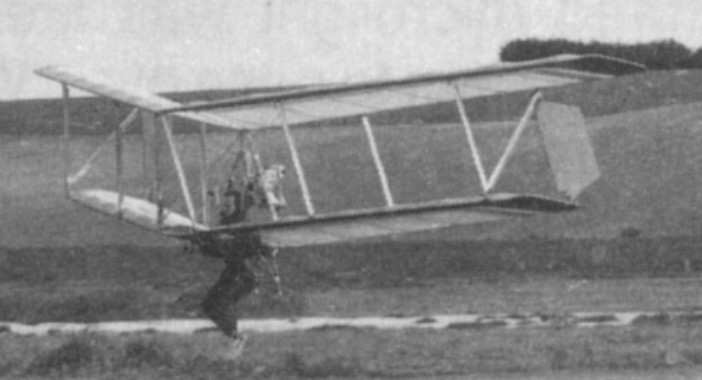
The Easy Riser biplane was designed by Larry Mauro and which under the name Icarus II was one of the earliest hang gliders to be motorised, back in 1975 by John Moody. A rigid wing tailless biplane flown by supplemental weight-shift. A variety of engines could be fitted, including the 125cc McCulloch 101 go cart engine, UFM selling the machine as a hang-glider. Control method: Standard tip rudder and weight-shift pitch axis, optional 2 or 3 axis control. First year built 1976. Units delivered by June 1981 2,500. Many options in power and landing gear were available. It is strut and cable braced.
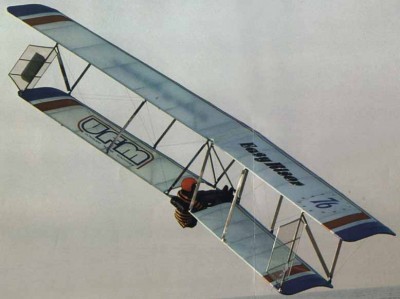
The Easy Riser is a progression from the Icarus II but the wing is a modified monowing with a double surfaced rigid airfoil. Wingtip rudders are mounted on ball bearings and drag brakes are fitted. Wing tips are fully contoured. Wing covering is 1.3oz dacron sealed with aircraft dope.
The spars are made from 6061-T6 aluminium tubing with foam core spruce ribs. Wing bracing is both aluminium struts and cable. All rigging is aircraft grade. All hardware is aircraft grade, fastened with pop rivets and bolts.
The pilot has a tube cockpit support with an optional swing seat.
The Easy Riser won the 1976 World Open Hang Gliding Championships.
The Easy Riser is offered as a hang glider, and engine and landing gear packages to use with this aircraft are offered separately by other companies. Power and landing gear optional. Standard tip rudder and weight-shift pitch axis, optional 2 or 3 axis control.
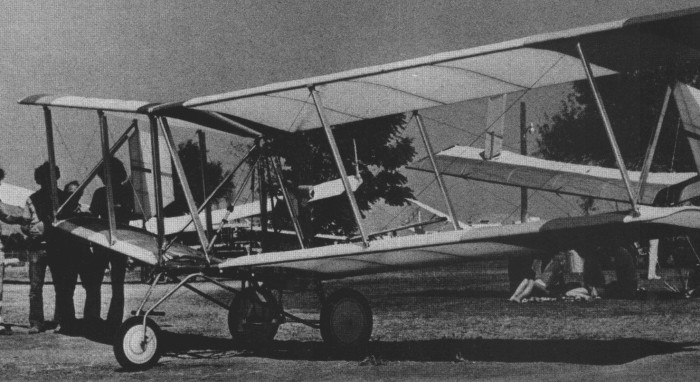
Easy Riser 1
Wingspan 30’
Wing area 170 sq.ft
Aspect ratio 8.8
Empty weight 55 lbs. (without engine or landing gear)
Gross wt: 350 lbs
Empty wt: 110-150 lbs
Max pilot wt: 200 lbs
Easy Riser
Chord length: 3.41 ft
Wing span: 30 ft
Wing area: 170 sq,ft
Aspect ratio: 8.8
Wing sweep: 15˚
Weight: 50 lb
Pilot weight: 200 lb
Takeoff speed: 17 mph
Stall speed: 16 mph
Max speed: 45 mph
Best glide ratio (L/D): 10-1
Best L/D speed: 18 mph
Min sink: 180 fpm
Founded in 1972.
1981: 2960 Corvin Dr, Santa Clara, CA 95051, USA.
During 1981 UFM shifted operations from Santa Clara, California.
1983: P.O. Box 2967, Turlock, CA 95381, USA.
1983: Ultralight Flying Machines (UFM) of Kentucky Inc, 2700 Freys Hill Road, Louisville, Kentucky 40222, USA.
1984: 2700 Freys Hill Rd, Dept GR-1, Louisville, KY 40222, USA.
1990: Ultralight Flying Machines, Turlock, California, USA.
 All Aero