1998:
216 rue Hutchcheson
J1T 4J8 Abestos
Canada
LSA builder
1998:
216 rue Hutchcheson
J1T 4J8 Abestos
Canada
LSA builder
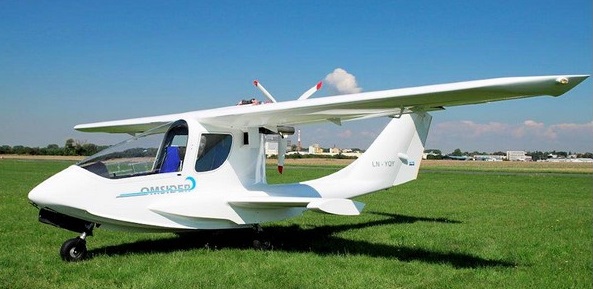
The Nordic Omsider (English: at last or finally) is a Norwegian amphibious flying boat, designed by Terje Sandvik and Jostein Eide and under development by Nordic Aircraft AS of Kinservik.
The Omsider was developed to provide an amphibious aircraft suited to Norwegian conditions. Conceived in the 1980s, development was started in 1999 and 20,000 person-hours and €600,000 have been invested in building the molds and the prototypes.
The design features a cantilever high-wing, with a stub lower wing/float, an enclosed cockpit, with two-seats-in-tandem under a forward-hinged bubble canopy, a T-tail, retractable tricycle landing gear and a single engine in pusher configuration.
The aircraft is made from composite material. Its 9.1 m (29.9 ft) span wing mounts flaps. Standard engines available are the 100 hp (75 kW) Rotax 912ULS and Rotax 912iS four-stroke powerplants.
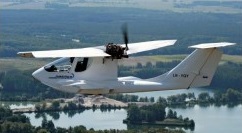
The initial prototype was built in Norway and has logged over 500 flying hours. It features outrigger floats. The second prototype was built under contract by ATEC v.o.s. in the Czech Republic. The wings and part of the tail are from the ATEC 321 Faeta and the second prototype features stub wings/floats.
It was introduced at the AERO Friedrichshafen show in 2014. The program had cost €600,000 by 2014 and the unit cost was to be €90,000 assembled in 2015. Once in production the aircraft is intended to be supplied complete and ready-to-fly.
Omsider
Engine: 1 × Rotax 912ULS, 75 kW (101 hp)
Propeller: 3-bladed composite
Wingspan: 9.1 m (29 ft 10 in)
Length: 6.9 m (22 ft 8 in)
Empty weight: 320 kg (705 lb)
Gross weight: 495 kg (1,091 lb)
Fuel capacity: 80 litres (18 imp gal; 21 US gal)
Cruise speed: 210 km/h (130 mph, 110 kn)
Stall speed: 64 km/h (40 mph, 35 kn)
Never exceed speed: 254 km/h (158 mph, 137 kn)
Range: 900 km (560 mi, 490 nmi)
Crew: one
Capacity: one passenger
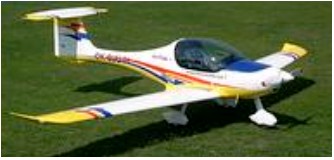
The ATEC 321 Faeta is a cantilever low-winged all composite aircraft with a high content of carbon fibre. The ultralight modification is one of a series of very light sport planes of a derived design. The two crew aircraft is equiped with a high-speed parachute rescue system without a drastic loss of payload.
The wing is a reinforced shell of a carbon-fibre sandwich with a tapered backswept wing of SM 701 airfoil full span. The all-composite main wing spar is equipped with carbon flanges for a high safety factor, and slotted flaps. The fuselage is a carbon-fibre shell braced by multi-layer wooden bulkheads. The cross-section is elliptic with wing fillets and a spacious cabin. The hinged perspex canopy can swing upwards and backwards. A steerable nosewheel is attached to the firewall.
The all-composite T-tail is tapered and the tapered vertical tail surface is part of the fuselage shell. The rudder suspended from the last fuselage bulkhead is completely composite.
The landing gear is a fixed with a steerable nose wheel. The main gear is composite leaf springs and the front leg is composite and metal tubes. The main wheels are equipped with disc brakes. The main tyres are 350×120 mm, while that of front tyre is 300×100 mm. All wheels have aerodynamic fairing.
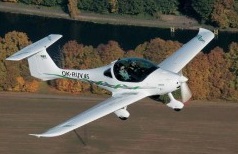
The dual control checking points in the wings are equipped with inspection holes with a perspex covering. The ailerons, flaps and elevator are controlled through the control rods and levers, the rudder through the steel wire ropes. All the control attachments are situated within the airframe.
The engine options include Rotax 912 UL 80 HP or Rotax 912 SUL 100 HP that drives a FITI three or two blade ground adjustable propeller.
The fuel tank is integrated in the fuselage. The static and dynamic pressure for instruments is taken from the Pitot tube attached below the port wing.
321 Faeta
Stall: 32 kt / 37 mph / 60 kmh
Cruise: 124 kt / 143 mph / 230 kmh
VNE: 148 kt / 171 mph / 275 kmh
Empty Weight: 275 kg / 606 lbs
MTOW Weight: 472 kg / 1041 lbs
Climb Ratio: 1400 ft/min / 7 m/s
Glide Ratio: 1:18
Take-off distance (50ft obstacle): 660 ft / 200 m
Landing distance (50ft obstacle): 980 ft / 300 m
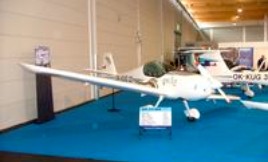
The ATEC 212 Solo Czech ultralight aircraft, designed and produced by ATEC v.o.s. of Libice nad Cidlinou, was designed to comply with the Fédération Aéronautique Internationale microlight rules. It features a cantilever low-wing, a single-seat, enclosed cockpit with a bubble canopy, fixed conventional landing gear and a single engine in tractor configuration.
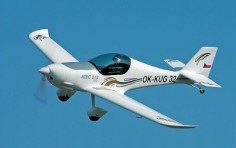
The 212 Solo is made from carbon fibre and was derived from the ATEC 321 Faeta and ATEC 122 Zephyr 2000 designs. Its 7.48 m (24.5 ft) span wing employs an SM701 airfoil and slotted flaps. Standard engines available are the 64 hp (48 kW) Rotax 582 two-stroke and the 80 hp (60 kW) Rotax 912UL four-stroke powerplant.
The aircraft was supplied as a complete ready-to-fly-aircraft.
212 Solo
Engine: 1 × Rotax 582, 48 kW (64 hp)
Propeller: 3-bladed composite
Wingspan: 7.48 m (24 ft 6 in)
Wing area: 7.27 m2 (78.3 sq ft)
Empty weight: 200 kg (441 lb)
Gross weight: 315 kg (694 lb)
Fuel capacity: 50 litres (11 imp gal; 13 US gal)
VNE: 157 kt / 180 mph / 290 kmh
Maximum speed: 250 km/h (160 mph, 130 kn)
Cruise speed: 220 km/h (140 mph, 120 kn)
Stall speed: 65 km/h (40 mph, 35 kn)
Rate of climb: 7 m/s (1,400 ft/min)
Wing loading: 43.32 kg/m2 (8.87 lb/sq ft)
Crew: one
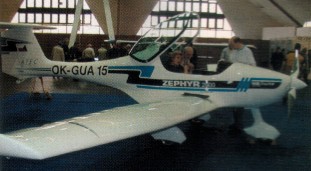
This aerodynamic, cantilevered, low wing sport pilot aircraft of mixed construction can transport two people over 800 statute miles at a maximum cruising speed of 155 mph. The Zephyr has a composite exterior but wooden wings. It all begins with a 200 to 400 foot ground roll on a grass or concrete strip and a maximum climb rate of nearly 1,700 feet per minute.
Developed in collaboration with renowned Czech aircraft designer, Oldrich Olsansky, the ATEC Zephyr Sport Pilot airplane made its debut around 2000. By 2008 over 110 units were flying in Australia, Europe and North America.
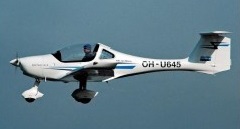
The options are Sport Pilot, Amateur-built (Experimental in the U.S.) or Ultralight (Canada only; Advanced Ultralight pending). By opting for the first category, operators can enjoy all of the benefits of a fully-certified aircraft and can train student pilots in a flying club environment. For those who no longer qualify for the standard aviation medical, the Ultralight and Sport Pilot categories less restrictive requirements may be the answer.
The MTOW is 472.5 kg in the European ultralight version and in US the LSA version of the Zephyr allows 550 kg. The LSA Zephyr is called Zephyr 2550.
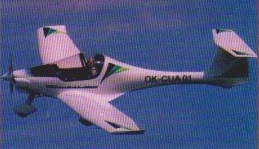
Zephyr 122
Stall: 35 kt / 40 mph / 65 kmh
Cruise: 130 kt / 150 mph / 241 kmh
VNE: 143 kt / 165 mph / 265 kmh
Empty Weight: 265 kg / 584 lbs
MTOW Weight: 550 kg / 1213 lbs
Climb Ratio: 1700 ft/min / 9 m/s
Glide Ratio: 1:17
Take-off distance (50ft obstacle): 660 ft / 200 m
Landing distance (50ft obstacle): 660 ft / 200 m
Price 2009: 44000 EURO
Engine: Rotax 912, 80 hp
Fuel consumption: 8 lt/hr
Wing span: 10.6 m
Wing area: 10.2 sq.m
MAUW: 450 kg
Empty weight: 275 kg
Fuel capacity: 60 lt
Max speed: 260 kph
Cruise speed: 180 kph
Minimum speed: 64 kph
Climb rate: 4.5 m/s
Seats: 2
Price (1998): 72 000 DM
Kit price (1998): 25 000 DM
This private company is based in the Czech Republic and has been active in the aviation industry since about 1992 and has developed the Zephyr 2 two-seat ultralight.
1998:
ATEC v.o.s.
Opolanska 171
CZ-28907 Libice nad Cidliniou
Czech Republic
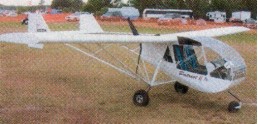
Engine: Jabiru, 120 hp.
Hp range: 80-175.
Wingspan: 30 ft.
Length: 20 ft.
Wing area: 130 sq.ft.
Empty wt: 720 lbs.
Mtow: 1320 lbs.
Fuel cap: 24 USG.
Cruise: 138 mph.
Stall: 44 mph.
Range: 810 sm.
Roc: 1200 fpm.
To dist: 375 ft.
Ldg dist: 350 ft.
Cockpit width: 48 in.
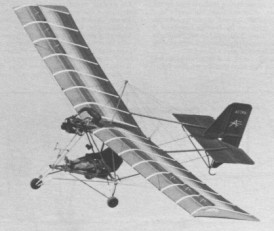
Single seat single engined high wing mono¬plane with conventional three axis control. Wing has unswept leading and trailing edges, and constant chord; cruciform tail. Pitch control by elevator on tail; yaw control by fully flying rudder; roll control by 3 spoilers for each wing; control inputs through stick for pitch/roll and pedals for yaw. Wing braced from above by kingpost and cables, from below by cables; wing profile; single ¬surface. Undercarriage has three wheels in tricycle formation with additional tailskid; steel spring suspension on main wheels. No ground steer¬ing (nosewheel steering optional). No brakes. Aluminium tube framework, without pod. Engine mounted at wing height driving tractor propeller.
Despite its participation in Sun ‘n’ Fun in March 1983 and a brief presentation in the May edition of Glider Rider, this interesting single seater is only just going on sale in 1982.
The Astra seats its pilot much higher compared with other tube and Dacron single-¬seaters and, according to John Todhunter, the accent has been put on passive safety, with the design of the framework intended to protect the pilot in the case of a crash or too rapid stop. Moreover the Astra has proved itself without doubt to be one of the easiest and fastest ultralights to rig or derig: 17 and 12 min respectively by two people without excessive haste.
The final point of note is that each wing carries three small spoilers side by side rather than a single one of equivalent width.
Engine: Rotax 377, 36 hp at 6000 rpm.
Propeller diameter and pitch 52 x 34 inch, 1.32 x 0.86 m.
Hall planetary reduction, ratio 2.0/1.
Max static thrust 230 lb, 104 kg.
Power per unit area 0.22 hp/sq.ft, 2.3 hp/sq.m.
Fuel capacity 4.4 US gal, 3.7 Imp gal, 16.7 litre.
Length overall 13.4 ft, 4.08 m.
Height overall 9.4ft, 2.87m.
Wing span 33.0ft, 10.05m.
Constant chord 5.0 ft, 1.52 m.
Sweepback 0 degs.
Total wing area 165 sq.ft, 15.3sq.m.
Wing aspect ratio 6.6/1.
Empty weight 248 lb, 112kg.
Max take off weight 550 lb, 249kg.
Payload 302 lb, 137kg.
Max wing loading 3.33 lb/sq.ft, 16.23kg/sq.m.
Max power loading 15.3 lb/hp, 6.9kg/hp.
Load factors +6.0. 4.0 ultimate.
Max level speed 55 mph, 88 kph.
Never exceed speed 55 mph, 88 kph.
Cruising speed 45 mph, 72 kph.
Stall¬ing speed 22 mph, 35 kph.
Max climb rate at sea level 800 ft/min, 4.1 m/s.
Astra International was previously called Ultralight Engineering, with John Todhunter as president.
1982-83: Astra International Inc, 2333 Camino del Rio South, Suite 380, San Diego, California 92108, USA.
UL builder
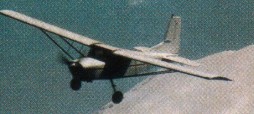
Markets kits to build Air Liberty 181 four-seat cabin monoplane (first flown 1996).
Engine: Continental O-470, 230 hp.
HP range: 230-300.
Top speed: 140 mph.
Cruise: 130 mph.
Stall: 36 mph.
Range: 1170 sm.
ROC: 2000 fpm.
TO dist: 200 ft.
Ldg dist: 120 ft.
Fuel cap: 100 USG.
Empty wt: 1650 lbs.
MTOW: 3000 lbs.
Height: 6.3 ft.
Length: 24.5 ft.
Wing span: 40 ft.
Wing area: 200 sq.ft.
Seats: 4.
Undercarriage: tail wheel.

