A two seater designed by Gordon Bedson in Australia. The designer was killed during testing.
LSA/UL
Bedson Resurgam
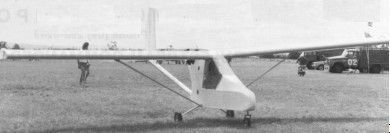
Designed by Gordon Bedson in Australia, the Resurgam is a strut braced high wing pusher, with a fully enclosed cockpit. A true home builders aircraft, the builder has the option of building from the plans up or by purchasing pre-molded fibre glass compo¬nents and the manufactured spar, ribs and undercarriage, by which he can almost half construction time. The Resurgam has been updated and improved over the years.
The Resurgam was originally designed in 1948 to accommodate the JAP engine. A single-seat single-engined high-wing monoplane with conventional three-axis control. Wing has unswept leading and trailing edges, and constant chord; conventional tail. Pitch control by elevator on tail; yaw control by fin-mounted rudder; roll control by 58% -span spoilers (half-span ailerons optional); control inputs through stick for pitch/rod and pedals for yaw. Wing braced from below by struts; wing profile 4415; 100% double-surface. Undercarriage has three wheels in tricycle formation; suspension type wood/glass-fibre suspension on main wheels. Push-right go-right nosewheel steering connected to yaw control. Wood/aluminium-tube fuselage, partially enclosed. Engine mounted at wing height driving pusher propeller.
The front half of the two-part structure is made of spruce and plywood, while the other half consists of a triangulated structure of aluminium-alloy tubes, which supports the engine and extends rearwards to form the empennage. The centre section of the wing is attached to the front fuselage, while the remainder of the wings are attached by six pip pins to facilitate derigging, which can be achieved without breaking any control cables. Wing design consists of a single spruce-and plywood spar, to which plywood-and-foam composite ribs are attached by epoxy, with the joints strengthened by use of glass-fibre. Foam is used for leading and trailing edges, the former being glass-fibre covered and the latter by plywood.
An unusual feature of the Resurgam is that it is designed to accommodate two different roll-control systems. Spoilers are the normal fitment, operated by an aluminium-alloy torque tube which spring loads the spoiler into the closed position, but as you can see from our picture, ailerons can be incorporated instead, operated by the same torque tubes.
In the 1982 London-Paris, when a Konig-engined Resurgam tied with the Huntair Pathfinder as winner of the speed event. The Konig SC430 is a popular fitment to this aircraft, the main alternative being the Skylark MkII.
The Mk.1 and Mk.2 differ in rear fuselage construction with the Mk.2 having a single tube boom.
Engine: Skylark MkII, 24 hp/4800 rpm.
Propeller dia x pitch: 39 x 15 inch, 0.99 x 0.39 m.
Reduction: None
Max static thrust: 135 lb, 61 kg.
Power/area: 0.21 hp/sq.ft, 2.3 hp/sq.m.
Fuel capacity: 4.8 US gal, 4.0 Imp gal, 18.2 litre.
Wing span: 28.0 ft, 8.53 m.
Constant chord: 4.0 ft, 1.22 m.
Sweepback: 0 deg
Tailplane span: 8.0 ft, 2.44 m.
Total wing area: 112 sq.ft, 10.4 sq.m.
Wing aspect ratio: 7.0/1.
Nosewheel dia: 11 inch, 28 cm.
Main wheels dia: 11 inch, 28 cm.
Empty weight: 208 lb, 94 kg.
Max take-off weight: 400 lb, 181 kg.
Payload: 192 lb, 87 kg.
Max wing loading: 3.57 lb/sq.ft, 17.4 kg/sq.m
Max pwr load: 16.7 lb/hp, 7.5 kg/hp.
Load factors design: +3.8
Max level speed: 67 mph, 108 kph.
Cruising speed: 45 mph, 72kph.
Stalling speed: 30 mph, 48 kph.
Max climb rate SL: 460 ft/min, 2.3m/s.
Take-off distance 250ft, 75 m.
Engine: Konig SC430, 30 hp at 4500 rpm.
Propeller: three-blade
Reduction: Belt.
Power per unit area: 0.27 hp/sq.ft, 2.9 hp/sq.m
Wing span: 28.0 ft, 8.53 m.
Fuel capacity: 4.8 US gal, 4.0 Imp gal, 18.2 lt
Constant chord: 4.0 ft, 1.22 m.
Sweepback: 0 deg
Tailplane span: 8.0 ft, 2.44 m.
Total wing area: 112 sq.ft, 10.4 sq.m
Wing aspect ratio: 7.0/1.
Nosewheel diameter: 11 inch, 28 cm
Main wheels diameter: 11 inch, 28 cm.
Empty weight: 205 lb, 93 kg
Max take-off weight: 400 lb, 181 kg.
Payload: 195 lb, 88 kg
Max wing loading: 3.57 lb/sq.ft, 17.4 kg/sq.m.
Max power loading: 13.3 lb/hp, 6.0 kg/hp
Load factors design: +3.8.
Mk.I
Engine: Konig SD570 28hp
Wing span: 9.14m.
Length: 5.94m
Empty wt: 100kg.
MAUW: 200kg
Range: 241 km.
Mk.II
Engine: Konig 430cc-570cc 30 hp. Prop: 132cm 3-blade adj.
Wing span: 8.53 m
Wing area: 10.68 sq m.
Length: 5.64m
Empty wt: 99kg.
Fuel capacity: 19 ltr
Cruise speed: 48-55 kts.
Stall: 27 kts
Construction time: 200-350 hrs.
Bedson
1984: Gordon Bedson and Associates, P.O. Box 6, Bundarra 2359, Australia.
LSA builder
Bede BD-22L
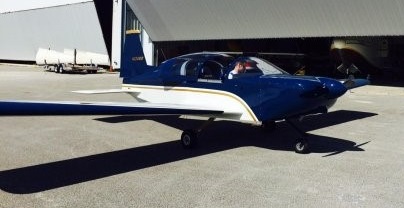
The BD-22 was a two-seat light sport version of the BD-17 with a 47 inch wide cockpit first shown in public in January 2015 as N224BD. Powered by Lycoming O-235 (118 hp) engine. Composite fuselage, metal wings and tricycle undercarriage.
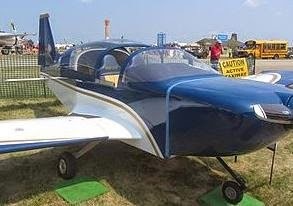
The first BD-22 example built was N224BD which first flew in March 2015. There was only one BD-22, and that was the BD-22L.
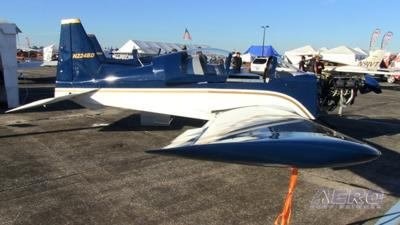
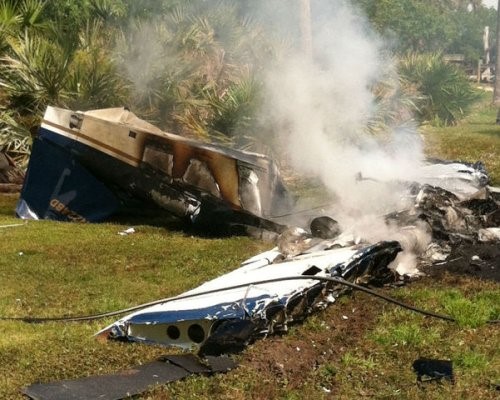
The BD-22L was involved in a fatal crash on 1 April 2015.
Bede HB-1 / Demoiselle
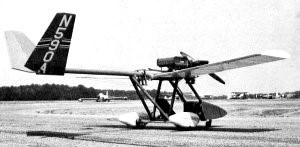
A single-seat sport plane, the Demoiselle N590A first flew in July 1966 and had a Continental A65 engine. Reportedly this aircraft was later briefly tested with an enclosed cabin (as the Super Demoiselle), the planned production model, but development was soon halted.
Bede NAC Dream
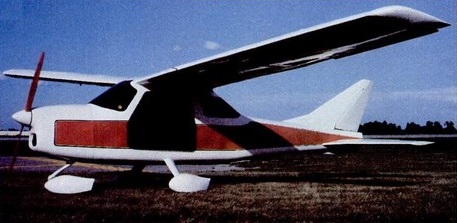
Designed by Jim Bede, the Dream was to be an affordable airplane.
The NAC Dream featured leading edge wing slots and spoilers for glidepath control, in addition to ailerons. The spoiler control lever is used by the same hand as the throttle. The ailerons had a 2-to-1 differential.
The fuel tank is mounted on the centre of gravity.
A prototype only was built in 1983 and in 1984 it was to be sold with a 35 hp Cuyuna 430-2UL engine at a target price of $7200 ready to fly.
Jim Bede was contracted by a development group and plans were to market the aircraft by a company named NAC under the name Dream.
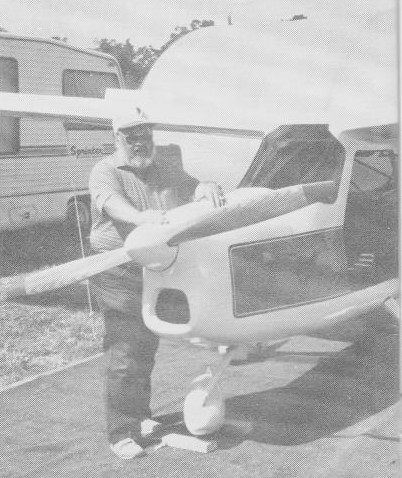
Bede BD-17 Nugget
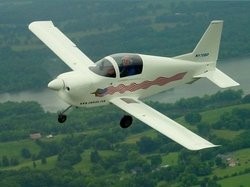
The Bede BD-17 Nugget is an American single-seat monoplane. designed by Bedecorp for amateur construction from a kit.
The Nugget was announced in June 2000 and was designed to be easy to build with a maximum of 110 parts. The first flight of the tricycle landing gear prototype (N624BD) was on 11 February 2001.
It is an all-metal low-wing constant-chord monoplane, it has optional folding wings and is available with fixed conventional landing gear with a tailwheel or a tricycle landing gear. Scotch ply main legs and differential braking. The prototype BD-17 has 5.00-5 mainwheel tyres and 25 cm (10 in) nosewheel tyre. It can be fitted with an engine between 45 and 80 hp (33.6 to 59.7 kW). The flying controls are conventional and manual. No flaps were fitted on the prototype BD-17 but production kits have flaps.
The prototype BD-17L N170BD had a 60 hp (45 kW) HKS 700E two-cylinder four-stroke engine. The pilot has an enclosed cockpit with a rearward-sliding canopy. The structure is all-metal honeycomb sandwich. Honeycomb fuselage covered with 5 mm (0.20 in) aluminium sheet and control surfaces are of urethane foam. Constant-chord wings have extruded tube spar.
The public debut was at Sun ‘n’ Fun, April 2001.
The BD-17L is a LSA version of the original BD-17. The BD-17L sold as a kit,meets the 51% rule.
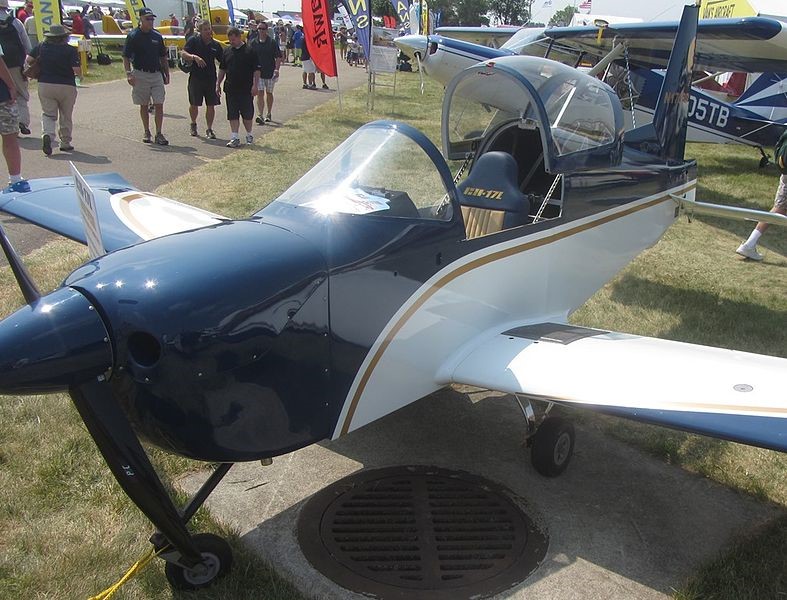
The BD-17L uses a half inch honeycomb sandwich panels. They are chemically welded with gussets to each other. This concept was originally used on the BD-1 and the Yankee. It is a honeycomb core with .020 skins bonded on each side. This creates an extremely light weight but strong panel.
The BD-17 wing spar is strong, light and simple, extruded aircraft-quality aluminum tube. Both wing spars slide over a center spar rigidly, fastened to the fuselage, providing exceptional load-carrying strength. Ribs are made of the same honeycomb aluminum that makes the fuselage 300% stronger than conventional construction. The BD-17′s wing spar has been tested to 11.2 Gs without failure in destructive testing. The honeycomb wing ribs form a series of sealed panels in each wing, capable of holding up to ten gallons of fuel in each with the option of an additional panel on each wing to store fuel.
The landing gear is one continuous hoop that is fastened to the center section with two pins. The actual assembly to the center section takes approx. 15 minutes. The landing gear is bullet drilled for the brake lines. Fittings are attached at the top and bottom of the hoop. The main landing gear takes approximately 3 hours to build including wheels and brakes.
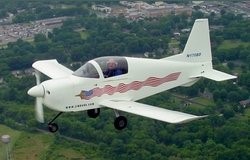
The BD-17 Nugget possesses exceptional flying qualities. Being small and lightweight, it utilizes the side stick control first adopted on the BD-5. The basic stability in all three axes are positive, both in static and dynamic stability. Control harmony is smooth and even for all three surfaces. Roll response is smooth and positive even into stall buffet. Cockpit room is accommodating for both large and small pilots, and visibility is excellent throughout.
The cost of the BD-17 was US$19,990 less engine in 2003. Seven had been produced by 2011. At least 17 BD-17 kits sold and four aircraft registered by August 2003; three of which were completed by that time.
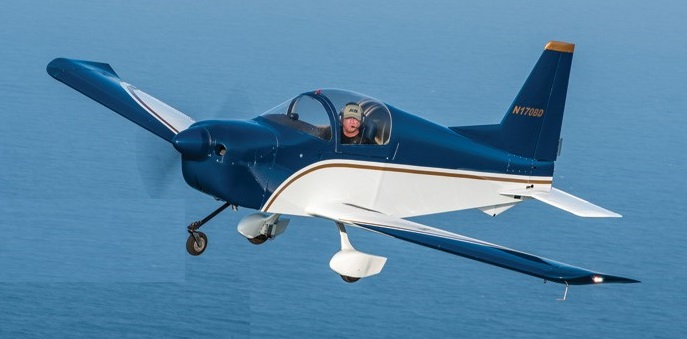
Bede BD-17 Nugget
Engine: HKS 700E, 60 hp (44.6 kW)
Wingspan: 21 ft 6 in (6.55 m)
Wing area: 53.5 sq ft (4.97 m2)
Wing chord, constant: 0.76 m (2 ft 6 in)
Wing aspect ratio: 8.6
Length: 17 ft 6 in (5.33 m)
Height: 7 ft 9 in (2.36 m)
Empty weight: 450 lb (204 kg)
Gross weight: 850 lb (386 kg)
Fuel capacity: 20 USG / 76 lt / 16.7 Imp gallons
Maximum speed: 195 mph (313 km/h, 169 kn)
Cruise speed: 150 mph (241 km/h, 130 kn)
Stall speed: 52 mph (84 km/h, 45 kn)
Range: 702 mi (1,129 km, 610 nmi)
Rate of climb: 1,050 ft/min (5.3 m/s)
T-O run: 213 m (700 ft)
Landing run: 189 m (620 ft)
Cockpit max width: 1.17 m (3 ft 10 in)
Seats: 1
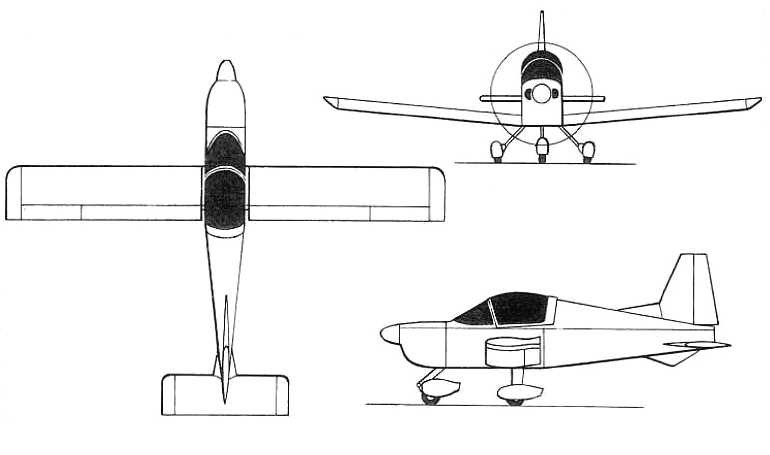
Bede Aircraft Corp
The original Bede Aviation Corporation was established 1960 in Kansas to develop an advanced STOL aircraft. An early type was the BD-1 that first flew 1963 and was later produced by others as Yankee Trainer and Traveler. Subsequent designs included BD-4 two/four-seat sporting monoplane of 1970s, and the BD-5 Micro single-seat pusher-engined monoplane and its turbojet-powered derivative as the BD-5J.
The BD-5 and BD-5J were heavily promoted, and the company accepted thousands of orders and deposits before the project ran out of money, causing customers to lose their deposits. As a result, the Federal Trade Commission banned Bede from accepting aircraft kit investments for a period of 10 years.
Following difficult period, company later reestablished as Bede Aircraft Corporation in Missouri, reviving BD-4 and BD-6 for sale in kits and plans forms. BD-12A of 1994 became tandem two-seat variant of BD-5, with larger four-seat BD-14A then put under development.
Beaujon Ultralights Mach .07
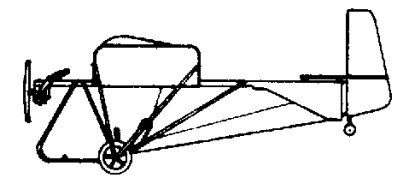
Single seat single engined high wing monoplane with conventional three axis control. Wing has unswept leading and trailing edges, and constant chord; cruciform tail. Pitch control by elevator on tall; yaw control by fully flying rudder with additional fin; roll control by spoilers; control inputs through stick for pitch/roll and pedals for yaw. Wing braced from below by struts; wing profile single surface. Undercarriage has three wheels in tail dragger formation; no suspension on tailwheel and bungee suspension on main wheels. No ground steering. No brakes. Aluminium tube framework, without pod. Engine mounted at wing height driving tractor propeller.
The Beaujon Mach .07 was aimed at amateur constructors, being available only as a sheet of plans.
Length overall: 18.5 ft, 5.61 m.
Sweepback: 0 degs
Total wing area: 165 sq.ft, 15.3sq.m
Beaujon Ultralights Easy Flyer
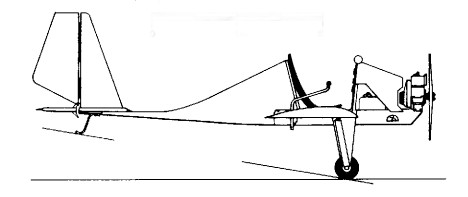
Single seat single engined low wing mono¬plane with conventional three axis control. Wing has unswept leading and trailing edges, and constant chord; conventional tail. Pitch control by elevator on tail; yaw control by fin mounted rudder. Control inputs through stick for pitch/roll and pedals for yaw. Wing braced from below by struts; wing profile FX 72 MS 150 modified; double¬surface. Undercarriage has two wheels with tailskid. Fuselage partially enclosed. Engine mounted above wing driving tractor propeller.
The Easy Flyer was one of the earliest microlights offered in plan form for amateur constructors. Designed by H Beaujon, it was first built in 1976 and offered for sale the following year. It is of classical configuration, remaining very close to the traditional aircraft concept, and differs really only in those aspects of specification and performance where change was essential to qualify it as an ultralight. H Beaujon was one of the first designers to advise using two-¬stroke engines for aeronautical use, and in this instance chose a Rockwell JLO L 395 single cylinder motor weighing 59 lb (27 kg).
Engine: Rockwell JLO L 395, 24.5hp at 5500rpm.
Prop diameter/pitch: 46×20 inch, 1.04 x 0.45 m
Power/unit area: 0.28 hp/sq.ft, 3.0 hp/sq.m.
Length overall: 15.3 ft, 4.64 m
Height overall: 4.8ft, 1.42m.
Wing span: 25.1ft, 7.87m
Total wing area: 89 sq.ft, 8.3sq.m
Constant chord at root: 3.8ft, 1.11m
Wing aspect ratio: 7.5/1.
Empty weight: 175 lb, 79kg
Max take off weight: 372 lb, 169kg.
Payload: 197 lb, 89kg.
Max wing loading: 4.18 lb/sq.ft, 20.4kg/sq.m.
Max power loading: 15.2 lb/hp, 6.9kg/hp
Max level speed: 79mph, 128kph.
Cruising speed: 65mph, 104 kph
Stalling speed: 28 mph, 46 kph.
Max climb rate at SL: 490 ft/min, 2.5 m/s.

