BRM Aero Ltd was established for development, production, sale and maintenance of ultralight and light sport aeroplanes. The company is mostly oriented on individual orders. The company finished colaboration with ROKO AERO company and stopped sale of NG 4 aircrafts built from ROKO AERO quick built kits, but continued to support the NG 4 customers with spare parts, repair and any kind of modifications on their aircraft.
2012: Václava Kulíška 1224 686 05 Uherské Hradiště Czech Republic
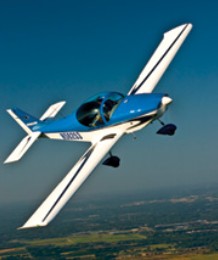
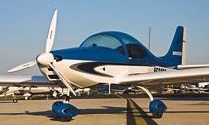
Breezer is an ultra light, LSA, and experimental category design. The entire cockpit was designed ergonomically; from the instrument panel to the seating arrangement, everything was modeled and shaped. Planning for a Breezer kit plane version from day one, the aluminum airframe structure design was kept simple and sturdy. To assemble the pre-manufactured components, you only need a flat table top. The high level of prefabrication allows a rapid fuselage assembly. Accurate matched drilling lets you to assemble aluminum alloy parts without extensive jigging. Other parts, like the spar center section, are provided fully assembled. Wherever needed the fuselage is reinforced in an optimal way. The wings are built in a spar/rib structure. As the wings sport no wash-out, neither aerodynamically nor geometrically, these can be built on a flat table top. Jigging is minimal. Like with the fuselage, the wing parts come with most holes match drilled into the ribs, spar and wing skin. This assures that assembly errors are eliminated from the outset. This same simple and sturdy structure is used to assemble the horizontal stabilizer and elevator. The Breezer experimental category kit plane was developed along with the ultralight. The following items were modified for the experimental category kit plane:
MTOW raised to 580 kg / 1279 lb
Stronger wing spar
Stronger wing spar center section
Stronger stabilizer (as requested by the Swiss) After Germany allowed sailplanes to be towed by ultra light aircraft, the Breezer was tested and found suitable for towing flights. The Breezer is made in three models. The Breezer CR. The Breezer Club as a dedicated flight training edition, and the Breezer Acro, aerobatic aeroplane.
Breezer II
In 2012 the all-metal Breezer II was available as a ready built or E-LSA kit airplane. Price 2012: S-LSA Breezer is US$125,800. Quick Build kit (less engine and avionics): US$46,600.
Engine: Rotax 80 hp Cruise speed (75%): 180 km/h / 112 mph Maximum Speed Vne: 245 km/h / 152 mph Stall speed: 64 km/h / 40 mph Climb speed: 4,5 m/s / 886 fpm Wingspan: 8,03 m / 26.4 ft Cabin width: 1,16 m / 45,7 in Length: 6,40 m / 21 ft Height: 2,15 m / 7 ft Wing area: 10,92 sq.m / 117.5 sq ft Empty weight incl. BRS: 296 kg / 652.6 lb Maximum gross weight: 472,5 kg / 1041.7 lb Load: 176,5 kg / 389 lb Fuel capacity: 70 liter / 18.5. USgal Average fuel consumption / hr: 11-14 lt / 2.9 -3.7 USgal Take off dist: 135 m / 443 ft Landing dist: 140 m / 459 ft
Engine: Rotax 100 hp Cruise speed (75%): 200 km/h / 124 mph Maximum Speed Vne: 245 km/h / 152 mph Stall speed: 64 km/h / 40 mph Climb speed: 6 m/s / 1181 fpm Wingspan: 8,03 m / 26.4 ft Cabin width: 1,16 m / 45,7 in Length: 6,40 m / 21 ft Height: 2,15 m / 7 ft Wing area: 10,92 sq.m / 117.5 sq ft Empty weight incl. BRS: 300 kg / 661.4 lb Maximum gross weight: 472,5 kg / 1041.7 lb Load: 172,5 kg / 380 lb Fuel capacity: 70 lt / 18.5 USgal Average fuel consumption / hr: 12-15 / lt / 3.1-3.9 USgal Take off dist: 95 m / 312 ft Landing dist: 140 m / 459 ft
Breezer II Engine: Rotax 912 ULS, 100hp@SL Propeller: 3-blade Neuform Gross weight: 1320 lb Empty weight with optional BRS: 763lb Useful load, std: 557 lb Payload, full std. fuel: 518lb Fuel capacity (lbs.): 21 Wing area: 117.5 sq. ft Cruise speed, 75% power: 105 kt Range with 30-min. reserve, 75% power: 420 nm Best rate of climb, solo: 1181 fpm Best rate of climb, two people: 900 fpm Service ceiling: 14,500 ft Takeoff over 50 ft obstacle: 925 ft Landing ground roll: 606 ft Vne: 120 kt V Stall: 36 kt
In 2000 engineer Ralf Magnussen designed and built the very first Breezer prototype. In 2006 Breezer Aircraft GmbH & Co.KG was founded to produce high quality units. The production facilities were relocated to Bredstedt, in the north of Germany, where a commercial development area offered ample space to set up our new Breezer Aircraft development and production centre. By 2005 there were twenty employees, and an aircraft division managed by engineer Ralf Magnussen, geared towards product development and production. A Flight Training Center offers an in-house flight training facility. There is a Sales & Finance division that markets the Breezer product line, with offerings for leasing or financing.
The Bradley Pitbull was designed as a first time builders project for assembly in 250 hrs. No jigs or alignment beams are needed, and no special tools required. Of all metal construction, there is no bending, forming or welding to do. Only 2024 T3 Aircraft grade aluminum is used for skins, wing ribs and bulkheads. All skins, ribs and bulkheads are blind riveted. With spring undercarriage, the front gear is castering. The kit also includes a carbon fiber canopy frame and windshield bow, and F-15 style canopy. Matco wheels and brakes and tires are included. Wing tips with inset lighting and strobes and all hardware are included in kit. 4130 steel tube pushrod controls and housed push pull cables are fitted and a 46 US gallon fuel capacity. The Pitbull is available as a tricycle or tail wheel versions, and it accepts the Lycoming O-320 or )-360 or any 100 to 200 Hp engines. The Pitbull qualifies in the Experimental (150-200HP) and Light Sport category (100hp). The Speed wing has a 9+ 9- g rating (Aerobatic).
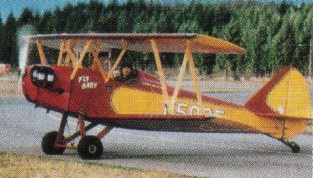
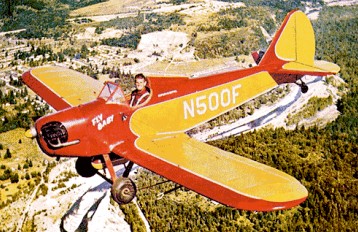
The prototype Fly Baby 1 B biplane, which first flew in 1969, could be converted from monoplane to biplane in around an hour. The two monoplane wing panels are replaced by four smaller ones, plus a center section for the top wing. The biplane wings take longer to build, since there are four panels and a center section, and they’re swept rather than straight. And there are some internal braces and external tangs that have to be added to the fuselage. This can be done after the fuselage is done (The prototype was converted after completion), but it is easier during construction. The biplane is slower, and the wings don’t fold.
In monoplane or biplane configuration, the Fly Baby does meet the US rules for Sport Pilot. In the United States, you do not need an FAA medical to fly a Fly Baby.
This plane is a structurally simple and easy-to-fly airplane designed to the requirements of the Experimental aircraft Association for home construction and storage in a space 7 x 8 x 20 feet, which is equivalent to the standard home garage. Great emphasis has been placed upon safe flight characteristics and good low speed performance for takeoff and landing at some sacrifice of high speed. The structure has been designed for standard airplane engines from 65 to 85 horsepower and the aerodynamic features are of sizes and proportions suited to obtaining the best all-around performance in this power range. Because of this, there is not enough advantage to be gained from using engines of significantly higher power to offset the cost and weight penalties. Increasing the power to increase the aerobatic capability is not recommended. Fly Baby will do simple recreational aerobatics very well but is not intended for rough air show or competition maneuvers.
Originally designed in 1960 by former Boeing engineer Peter Bowers to compete in the first EAA design competition, the Fly Baby is a single-seat, open cockpit, folding-wing monoplane powered by engines ranging from 65 to 100 hp. It is built primarily of wood, with fabric covering. It’s got a big cockpit as Peter Bowers is six feet two inches tall. First flown in 1960 the Fly Baby 1-A single place monoplane won the 1962 EAA competition for the best amateur plane with a C-85 engine. The Fly Baby has the distinction of being one of the most enduring designs in the homebuilt field. It has been tested with floats and in 1968 was fitted with biplane wings which were interchangeable with the single wings. The wings are a wooden structure covered with Dacron fabric, and the fuselage is a conventional plywood-covered wooden structure with a single open-cockpit seat. Plans were made available to amateur constructors.
Most are powered by Continental A-65, C-75, C-85, or O-200 engines. The 100 hp Continental is recommended over the 85 hp engine as it is only 13 pounds heavier, and gives a cruise speed of 92 knots with a two-blade fixed-pitch propeller. The fully aerobatic aircraft has a 22 foot wingspan and is 19 feet long. It will climb at 700 fpm and weighs 651 lbs empty with a MAUW of 972 lbs.
The prototype Fly Baby 1 B biplane, which first flew in 1969, could be converted from mono¬plane to biplane in around an hour. The two monoplane wing panels are replaced by four smaller ones, plus a center section for the top wing. The biplane wings take longer to build, since there are four panels and a center section, and they’re swept rather than straight. And there are some internal braces and external tangs that have to be added to the fuselage. This can be done after the fuselage is done (The prototype was converted after completion), but it is easier during construction. The biplane is slower, and the wings don’t fold.
In monoplane or biplane configuration, the Fly Baby does meet the US rules for Sport Pilot. In the United States, you do not need an FAA medical to fly a Fly Baby.
This plane is a structurally simple and easy-to-fly airplane designed to the requirements of the Experimental aircraft Association for home construction and storage in a space 7 x 8 x 20 feet, which is equivalent to the standard home garage. Great emphasis has been placed upon safe flight characteristics and good low speed performance for takeoff and landing at some sacrifice of high speed. The structure has been designed for standard airplane engines from 65 to 85 horsepower and the aerodynamic features are of sizes and proportions suited to obtaining the best all-around performance in this power range. Because of this, there is not enough advantage to be gained from using engines of significantly higher power to offset the cost and weight penalties. Increasing the power to increase the aerobatic capability is not recommended. Fly Baby will do simple recreational aerobatics very well but is not intended for rough air show or competition maneuvers.
Bowers recommends Continentals between 65 and 85 horsepower. The Fly Baby isn’t a fast airplane so bigger engines don’t really give much. A reported Fly Baby which replaced the A-65 with a C-85, increased the cruise from 80 to 95 mph and his rate of climb from 500 to 1000 fpm.

 All Aero