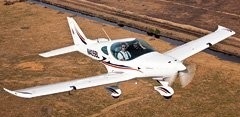
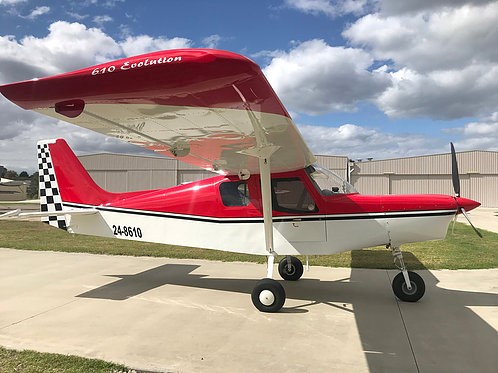
Brumby 610 Evolution

An Australian-made light sport aircraft factory built circa 2015.

Feature include:
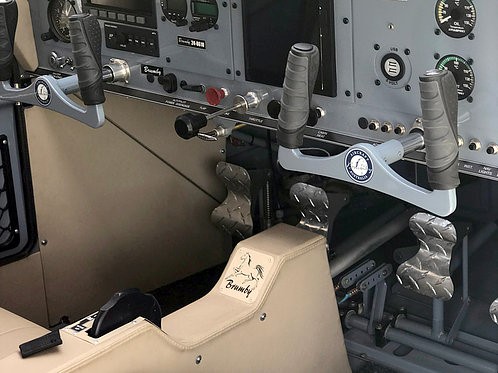
Cabin heat
Electric flaps
Rudder trim
Adjustable seats
Steerable nosewheel / dual brakes
Wiring for lighting and circuit breakers ready for full lights
Dual fuel valves (right and left wings)
Electric fuel gauge
Wheels 6” high profile
Full front oleo strut
Compass

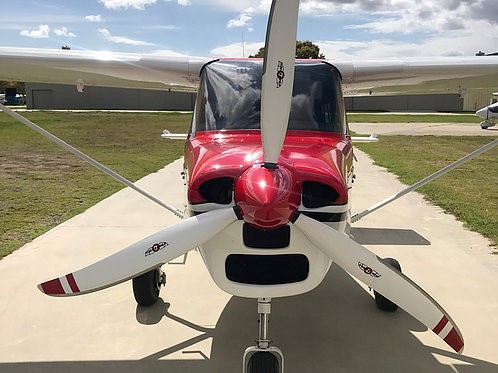
Engine: Rotax 912ULS
Propeller: Sensenich ground-adjustable, 3 blade
MTOW: 600kg
Fuel capacity: 136 Lt
Top speed: 100kts IAS

Brown Starlite / Star-Lite Engineering Warp

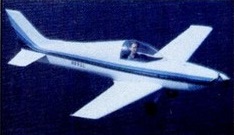
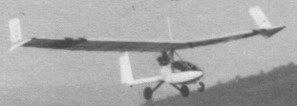
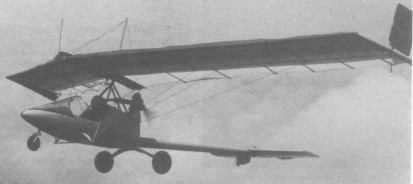
Starlite I

Mark Brown created this aircraft in the early 1980s. First flying on 17 May 1983, the original Star-Lite weighed 195 lb and achieved 110 mph with 20 hp. The 1983 price was $4000. Thirty-five were flying by February 1988.

One small single place machine providing 150 knot cruise on only 40hp caused minor sensation amongst would be constructors when it appeared in the marketplace around 1985. The Starlite was conceived by design engineer and computer buff Mark Brown as a sleek, easy to build runabout. Marketed in kit form, the package was complete with everything required with one exception, the trim colour, which the designer reasoned would remain the choice of the individual constructor.

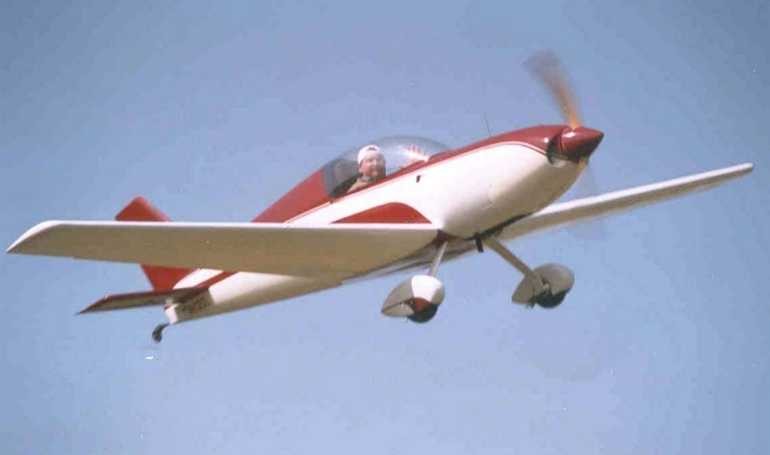
Having grabbed everyone’s attention, the next from the Brown stable was the ¬two place Pulsar. Using a similar form of construction as the Starlite, the Pulsar has undergone extensive flight testing in preparation for release in kit form.

Built up from premoulded sandwich composite parts made of pre-pregnated fibreglass surrounding a structural foam core, the Pulsar fuselage halves come as moulded units epoxied together at joints consisting of internal flanges; no wet lay ups are required. Parts are simply taped together as the epoxy glue cures, then the tape is removed.
Composite sandwich bulkheads are cut to shape, using full size templates, by the builder and are attached by fibreglass tapes and epoxy filler. Three bulkheads support the wings, seats and undercarriage. Construction simplicity is a feature of Mark Brown’s designs. Wing construction differs considerably from that of the fuselage, being substantially from wood. The mainspar, machined from aircraft spruce, has factory laminated tapered unidirectional fibreglass spar caps both top and bottom to reduce inboard bending. One inch thick, pre-cut, foam ribs are spaced eight inches apart and one sixteenth inch thick plywood is wrapped around and bonded to the structure to form the aerofoil. Each spar extends inboard and overlap inside the fuselage, pinned together and to the fuselage with five-eights shear pins, glider style. The tailplane is likewise removable, providing a road transportable/ confined storage aircraft. Modern epoxy adhesives and new flexible polyurethane finishes virtually eliminate the main disadvantages of wood built aircraft and, properly protected from moisture, the designer claims that the Pulsar will survive as long as full composite and aluminium counterparts.

Preliminary flight tests of the Pulsar, powered by a water cooled two stroke 64 hp Rotax 532, have demonstrated encouraging performance figures and fuel economy.

Engine: 40hp Rotax 447
Wingspan: 21’6″
Length: 16’5″
Useful load: 250 lb
Max speed: 140 mph
Cruise: 100 mph
Stall: 42 mph
Range: 400 mi
Seats: 1

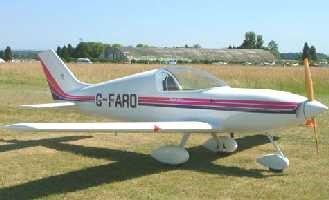
SL-1 Star-Lite
Wing Span: 6.5 m
Length: 5 m
Height: 1.2 m
MTOW: 200 kg
Fuel Capacity: 19 ltr
Maximum Speed: 104 kts
Optimum Speed: 87 kts
Take Off Distance: 244 m
Landing Distance: 305 m
Absolute Ceiling: 13,000 ft
Optimum Ceiling: 10,000 ft
Maximum Range: 340 NM
Maximum Climb Rate: 800 ft/min
Seats: 1

Broome Le Beau

second aircraft

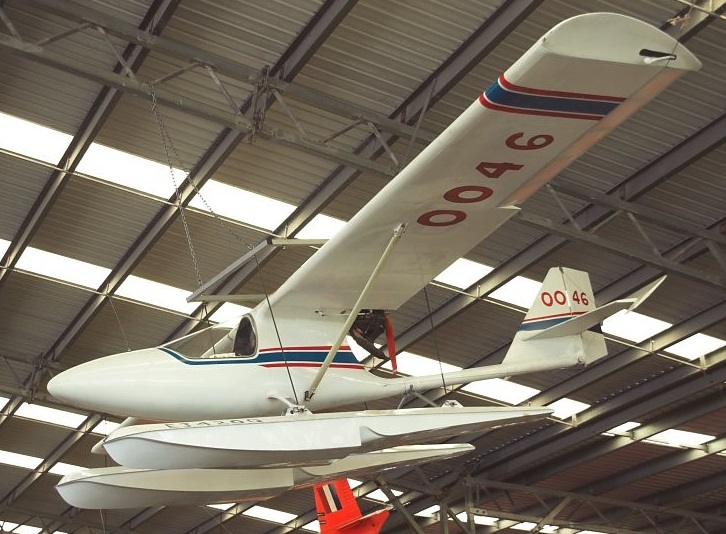
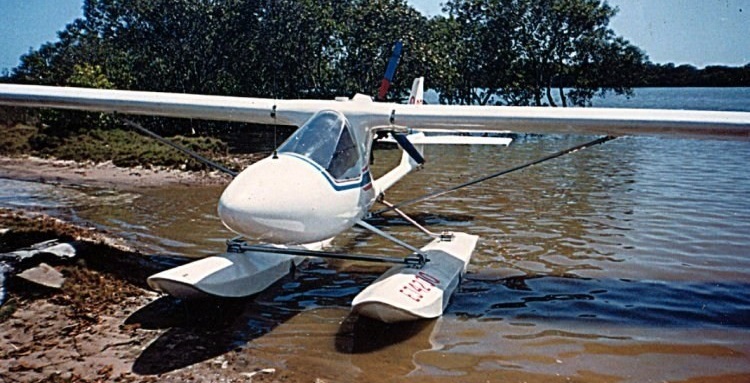
Ray Broome designed and built two ultralight aircraft in the late 1980s early 1990s based on the Resurgam parameters.

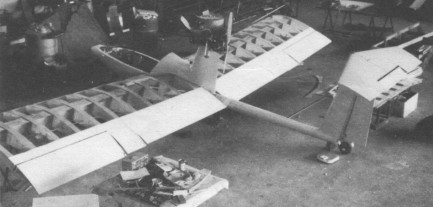
Number one was completed in 1987 as a landplane with a tricycle undercarriage although it was operated on floats for a time. The fuselage of the first aircraft was built solely from fibreglass. It was sold unregistered in 1991 and reconfigured as a taildragger and was still flying in NSW, Australia, as late as mid-2014.

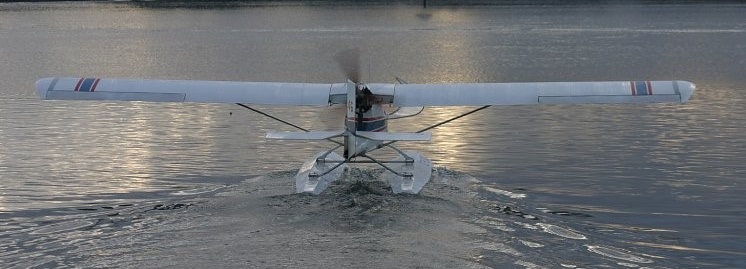
The second aircraft was built in 1992 and took up the registration 10-0046 C/N 2. It was always operated as a floatplane, mostly around the Moreton Bay area until 2008 by which time it had accumulated approximately 330 hours in service.

The fuselages of both aircraft were built on a mould taken from the front section of a damaged Club Libelle glider which inspired the name LeBeau. The composite was 6mm Kevlar foam sandwich. The rear fuselage is an aluminium tube with the tail sections having timber ribs on aluminium spars. The wings similarly have timber ribs with a double sided plywood main spar and plywood nose skin. Wing, rudder and tailplane are covered with Stits aircraft fabric painted in two-pack.

second aircraft

The floats are single skin fibreglass with plywood ribs and sealed flotation chambers. The engine is a 2-stroke, 4-cylinder Konig SD-570, rated at 28hp at 4200 rpm with a toothed belt reduction drive. The propellor is a 3 bladed ground adjustable in pitch. A third nose cone and fuselage was moulded but not taken any further.

second aircraft

The second aircraft was delivered by road to QAM Caloundra by the builder/donor Ray Broome.

second aircraft
Engine: Konig SD-570, 21kW (28hp)
Wing Span: 9.75m / 32ft
Wing Area: 11.89sq m / 128sq ft
Wing Chord: 1.22m / 48in
Wing Section: NACA 4415
Length: 5.64m / 18ft 6in
Height: 1.98m / 6ft 6in
Weight Empty: 150.88kg / 337lb
Weight Loaded/MTOW: 258.55kg / 570lb
Fuel Capacity: 35L / 7.7gal
Max Speed: 105km/h / 65mph
Cruising Speed: 96km/h / 60mph
Initial Climb: 122m/min / 400ft/min
Range: 193km / 120mile
Fuel Consumption: 14L/hr / 3.3gal/hr

Broc Epervier

Single seat twin engined mid wing monoplane with conventional three axis control. Wing has unswept leading and trailing edges, and constant chord; T tail. Pitch control by fully flying tail; yaw control by fin mounted rudider; roll control by one third span ailerons; control inputs through stick for pitch/roll and pedals for yaw. Cantilever wing; wing profile Worthmann FX 63 137; double surface. Undercarriage has two wheels in tandem with wing tip skids; steel spring suspension on tailwheel and oleo-pneumatic suspension on main wheels. Push right go right tailwheel steering connected to yaw control. Brake on main wheel. Glass fibre/Kevlar fuselage, totally enclosed. Engines mounted above wing driving tractor and pusher propellers. Wing and T tail are also made with carbon and glass fibre, Kevlar and Dacron covered.
A twin engined push pull aircraft, the Epervier descends in a direct line from his earlier Libellule. This prototype is a cross-country microlight, capable of covering 522 mile (840km) on one engine at economic cruise. The consumption of the Konig SC340 tri cylinder is 1.6 US gal/h (1.3 Imp gal/h, 6.0 litre/h) with the Epervier cruising at 40mph (65 kph). The Epervier can also be regarded as a motor glider with a glide ratio of 20/1 at 34 mph (55 kph), thanks to its Worthmann FX63 137 wing profile combined with a NACA0012 profile for the empennage. In addition to the ailerons, this wing is also fitted with three position flaps acting as flaps at 2o and 15 o and air brakes at 70 o camber.
The construction of the prototype, designed at the end of 1981, was first seen during the summer of 1982, the first flight being made in May 1983.

Broc Libellule Mk.III

At the European microlight salon at Lyon Bron in September 1982, Bernard Broc showed the prototype of the new single seat three axis microlight, this time with a T tail. As Aviasud had earlier given the name of Libellule MkII to the prototype which was destined to become the Sirocco, Bernard decided on the spot that he would name the machine Libellule MkIII to prevent confu¬sion. Retaining the Fledge wing of his earlier model, the Libellule Mk.III not only acquired a T tail but also a totally enclosed cabin. Bernard tells us he intends to replace the existing wing with a mid mounted cantilever design of composite construction and a Worthmann FX63 137 profile, which is very deep and gives high lift, with the aim of improving the glide angle to around 22/1. This project gave rise to the prototype Epervier twin engined aircraft.
Single seat single engined high wing mono¬plane with conventional three axis control. Wing has swept back leading and trailing edges, and constant chord; T tall. Pitch control by fully flying tail; yaw control by fin mounted rudder and tip rudders; roll control by one third span spoilers; control inputs through stick for pitch/roll and pedals for yaw. Wing braced from above by kingpost and cables, from below by cables;; double surface. Undercarriage has three wheels in tricycle formation with additional tailskid; steel spring suspension on nosewheel and glass fibre suspension on main wheels. Push right go right nosewheel steering con¬nected to yaw control. Brake on nosewheel. Glass fibre fuselage totally enclosed. Engine mounted below wing driving pusher propeller. Epoxy, polyester and glass fibre for T tail and supporting boom.
The Libellule MkIII has the option of a 26 hp JPX PUL425 engine in place of the 24 hp Konig SC430. Our data is based on the latter version. The Libellule MkIII is only produced in small numbers, availability being limited to 15 machines per year maximum in 1983.

Engine: Konig SC430, 24 hp at 4200 rpm.
Propeller diameter and pitch 43 x 24 inch, 1. 10 x 0.60 m.
No reduction.
Power per unit area 0.15hp/sq.ft, 1.6hp/sq.m.
Fuel capacity 6.6 US gal, 5.5 Imp gal, 25.0 litre.
Length overall 19.8 ft, 6.00 m.
Height overall 8.2ft, 2.50m.
Wing span 32.9ft, 10.00m.
Constant chord 4.1ft, 1.50m.
Dihedral 10degs.
Tailplane span 8.2 ft, 2.50 m.
Fin height 3.9ft, 1.20m.
Total wing area 161 sq.ft, 15.0 sq.m.
Total spoiler area 8.6 sq.ft, 0.80 sq.m.
Fin area 12.9 sq.ft, 1.20 sq.m.
Rudder area 6.5 sq.ft, 0.60 sq.m.
Total elevator area 25,8 sq.ft, 2.40sq.m.
Wing aspect ratio 6.6/1.
Wheel track 4.9 ft, 1. 50 m.
Wheelbase 4.7 ft, 1.40m.
Nosewheel diameter overall 13 inch, 33 cm.
Main wheels diameter overall 16 inch, 40 cm.
Empty weight 2321b, 105kg.
Max take off weight 5521b, 250kg.
Payload 3201b, 145 kg.
Max wing loading 3.40 lb/sq.ft, 16.7 kg/sq.m.
Max power loading 23.01b/hp, 10.4kg/hp.
Load factors design; +4.5, 2.5 ultimate.
Max level speed 56 mph, 90 kph.
Never exceed speed 75 mph, 120 kph.
Max cruising speed 50 mph, 80 kph.
Economic cruising speed 44 mph, 70 kph.
Stalling speed 24 mph, 40 kph.
Max climb rate at sea level 300 ft/min, 1.5 m/s.
Min sink rate 325 ft/min at 31 mph, 1.6 m/s at 50 kph.
Best glide ratio with power off 14/1 at 34 mph, 55 kph.
Take off distance 165 ft, 50 m.
Land¬ing distance 250 ft, 75 m.
Service ceiling 10,000 ft, 3050 m
Range at average cruising speed 622 mile, 1000 km.

Engine: JPX PUL425, 26 hp.
Fuel capacity 6.6 US gal, 5.5 Imp gal, 25.0 litre.
Length overall 19.8 ft, 6.00 m.
Height overall 8.2ft, 2.50m.
Wing span 32.9ft, 10.00m.
Constant chord 4.1ft, 1.50m.
Dihedral 10 degs.
Tailplane span 8.2 ft, 2.50 m.
Fin height 3.9ft, 1.20m.
Total wing area 161 sq.ft, 15.0 sq.m.
Total spoiler area 8.6 sq.ft, 0.80 sq.m.
Fin area 12.9 sq.ft, 1.20 sq.m.
Rudder area 6.5 sq.ft, 0.60 sq.m.
Total elevator area 25,8 sq.ft, 2.40sq.m.
Wing aspect ratio 6.6/1.
Wheel track 4.9 ft, 1. 50 m.
Wheelbase 4.7 ft, 1.40m.
Nosewheel diameter overall 13 inch, 33 cm.
Main wheels diameter overall 16 inch, 40 cm.
Load factors design; +4.5, 2.5 ultimate.
Never exceed speed 75 mph, 120 kph.

Broc Libellule Mk.I

The prototype Libellule Dragonfly in translation made its first flight in May 1981, and on the 14 July (a national holiday in France), Bernard Broc flew from Paris to Avignon in almost 7 h, covering the 435 mile (700 km).
This first Libellule was a two axis machine using a Pterodactyl Fledgling wing and with a monobloc all flying horizontal tail surface, yaw control being by the use of tip rudders. This horizontal tail surface was joined to the fuselage by a tapered circular section polyester boom which reduced from 8 to 5 inch (20 to 13 cm). The fuselage formed an open cockpit with a large integral windshield, also of polyester. The landing gear was tricycle with a steerable nosewheel, main wheel suspension using glass fibre laminate.
In this form and assisted in its manufacture by Frangois Goethals and Bernard d’Otreppe, the Libellule was put on sale in a small way through Aviasud.
Bernard Broc’s Libellule Mkl went out of production at the end of 1982.

Belite Aircraft Sealite

Belite Aircraft has developed the single-seat Sealite amphibious floatplane that weighs less than 338 pounds empty and meets FAR 103 requirements for ultralight float-equipped “vehicles,” as the FAA calls them.

The Sealite flew in December 2013, the 110th anniversary of the Wright brothers’ first flight at Kitty Hawk. Belite President James Wiebe made the first flight – “I was pleased with this test flight. It demonstrated the performance and utility possible with a single-place amphibious aircraft. The ground roll was very short, the climb rate was impressive, and the landing manners were easy and benign”.

The first flight was from a grass strip but water tests are planned. The vehicle is an adaptation of the company’s UltraCub model. It made the weight with extensive use of carbon fiber in the floats and wing spars. The wings and floats weigh only 20 pounds each.

BRM Aero Bristell NG 5

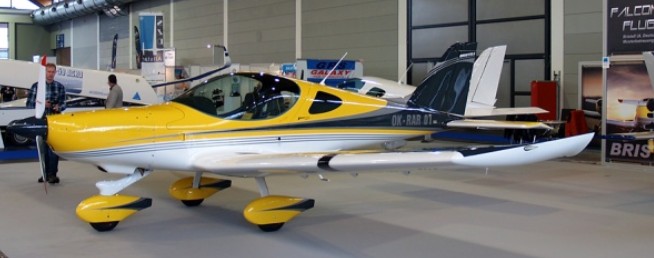
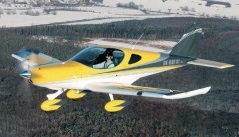
The BRM Aero Bristell is a Czech low-wing, two-seat in side-by-side configuration, single engine in tractor configuration, ultralight and light-sport aircraft that was designed by Milan Bristela and produced by BRM Aero. The aircraft was supplied as a complete ready-to-fly aircraft.

The aircraft was designed to comply with both European microlight rules and also the US light-sport aircraft regulations, by using different versions for each regulatory environment.

The aircraft is made from aluminium and features a 130 cm (51 in) wide cabin at the shoulder, with a bubble canopy over the cockpit. The wings feature flaps. The standard engine is a 60 kW (80 hp) Rotax 912UL, with the 75 kW (101 hp) Rotax 912ULS, the 71 kW (95 hp) ULPower UL260i/iS and the 88 kW (118 hp) ULPower UL350iS powerplants optional. The 115 hp (86 kW) Rotax 914, 85 hp (63 kW) Jabiru 2200 and 120 hp (89 kW) Jabiru 3300 are also available. Other engines are planned, particularly for the United States market. The aircraft has a useful load of 279 kg (615 lb). The landing gear is of tricycle configuration.

The aircraft was introduced at the Aero show held in Friedrichshafen in 2011. After 42 examples had been completed (September 2011) the aircraft was introduced into the US market in September 2011 at the AOPA Summit. The 2011 base price was US$125,000.

Ultralight aeroplane Bristell UL and its modifications Bristell HD, Bristell RG and Bristell LSA are aeroplanes for flight training in flight schools, gliders towing and recreational flying.
The Bristell HD version offers heavy-duty wing spars, and Bristell RG is a version with retractable undercarriage.

The Bristell tricycle-gear (and new taildragger version), low-wing S-LSA comes standard with 10-inch Dynon SkyView or Advance Flight Systems AF5600 EFIS panel, Com, two-axis autopilot, BRS parachute and leather interior. Price 2012: $156,000.

Gallery

Variants:

Bristell UL
Base ultralight model
Engine: 1 × Rotax 912ULS , 75 kW (100 hp)
Wing span: 8,13 m (26 ft 8 in)
Wing area: 10,5 sq.m (113 sq ft)
Wing loading: 45 kg/ sq.m
Length: 6,45 m (21 ft 2 in)
Height: 2,28 m (7 ft 6 in)
Cabin width: 1,3 m
Empty weight: 290 kg (639 lb)
Maximum take-off weight: 472,5 kg (1,042 lb)
Useful load: 182,5 kg
Fuel tanks capacity: 130 lt (29 imp gal; 34 US gal)
Fuselage luggage compartment: 15 kg
Wing luggage compartment: 2 x 20 kg
Load factors: +4/-2g
Stall speed with flaps VSO: 52 km/h
Stall speed without flaps Vs1: 67 km/h
Manoeuvring speed VA: 165 km/h
Maximum flap speed VF: 139 km/h
Cruising speed: 214 km/h 250 km/h
Never exceeded speed VNE: 270 km/h
Seats: 2

Bristell HD
Heavy duty model
Wing span: 8,13 m
Wing area: 10,5 sq.m
Wing loading: 57,1 kg/ sq.m
Length: 6,45 m
Height: 2,28 m
Cabin width: 1,3 m
Empty weight: 310 kg
Maximum take-off weight: 600 kg
Useful load: 290 kg
Fuel tanks capacity: 130 lt
Fuselage luggage compartment: 15 kg
Wing luggage compartment: 2 x 20 kg
Load factors: +4/-2g
Stall speed with flaps VSO: 78 km/h
Stall speed without flaps Vs1: 87 km/h
Manoeuvring speed VA: 165 km/h
Maximum flap speed VF: 139 km/h
Cruising speed: 250 km/h
Never exceeded speed VNE: 290 km/h
Bristell LSA
Model for the US light-sport aircraft category
Wing span: 9,13 m
Wing area: 11,75 sq.m
Wing loading: 51,06 kg/sq.m
Length: 6,45 m
Height: 2,28 m
Cabin width: 1,3 m
Empty weight: 330 kg
Maximum take-off weight: 600 kg
Useful load: 270 kg
Fuel capacity: 130 lt
Fuselage luggage capacity: 15 kg
Wing luggage compartment: 2 x 20 kg
Load factors: +4/-2g
Stall speed with flaps VSO: 58 km/h
Stall speed without flaps Vs1: 74 km/h
Manoeuvring speed VA: 165 km/h
Maximum flap speed VF: 139 km/h
Cruising speed: 250 km/h
Never exceeded speed VNE: 290 km/h
Bristell RG
Rectractable gear model
Wing span: 9,13 m (30.0 ft)
Wing area: 11,75 sq.m
Wing loading: 51,06 kg/ sq.m
Length: 6,45 m
Height: 2,28 m
Cabin width: 1,3 m
Empty weight: 335 kg
Maximum take-off weight: 600 kg (1,323 lb)
Useful load: 265 kg
Fuel tanks capacity: 130 lt
Fuselage luggage compartment: 15 kg
Wing luggage compartment: 2 x 20 kg
Load factors: +4/-2g
Stall speed with flaps VSO: 58 km/h
Stall speed without flaps Vs1: 74 km/h
Manoeuvring speed VA: 165 km/h
Maximum flap speed VF: 139 km/h
Cruising speed: 250 km/h
Never exceeded speed VNE: 290 km/h
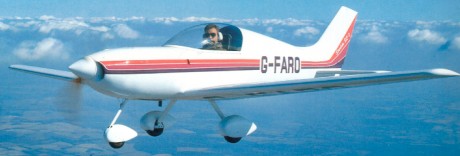
BRM Aero NG 4

BRM Aero finished colaboration with ROKO AERO company and stopped sale of NG 4 aircrafts built from ROKO AERO quick built kits, but continued to support the NG 4 customers with spare parts, repair and any kind of modifications on their aircraft.