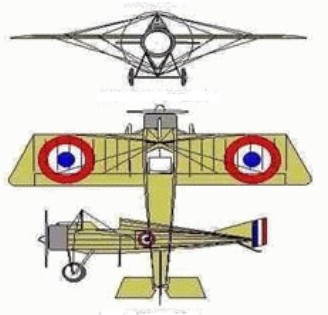
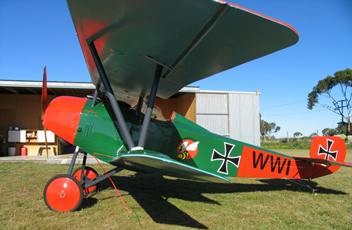
The Morane Saulnier N or Bullet is an earlier WW1 Design, one of the first to have a gun that fired through the propeller requiring deflector plates on the propeller. This Shoulder wing design was faster than anything around at the time despite being wire braced. The replica is constructed just like the Nieuport, of tubes and gussets, but has the addition of 1/8 plywood formers and stringers to round out the fuselage. Builders could forego the formers and change the tail to produce a Pfalz (the German variant). The Morane replica has proper ailerons, as they did on the later models, and the flying stabilator can be split into stab and elevator. It flew well either way. Best Performance with Rotax or Hirth ~ 500cc 2.5 or 3:1 reduction. VW is possible, but performance will suffer appreciably in acceleration and climb due to short propeller diameter. Rotax 503 will swing a 72 X 33 or 68 X 34 and really perform. VW’s will swing 60 or 61 inch @ 3000 RPM with just over Half the thrust.
Wingspan: 23 ft 10 in Wing Area: 117.5 Length: 19 ft 3 in Height: ~6 ft Weight: ~275 lbs empty Fuel Tank: Up to 12 US gal. Stall: mid 30’s Cruise: mid 70’s Top Speed: 100+ Never Exceed: 115 Gross wt.: 600 lbs G Factor: 5.7+ 2.8-
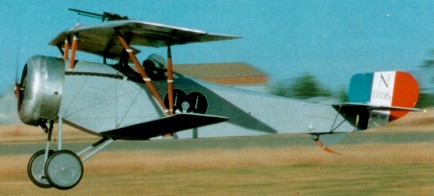
Plans from Canadian Graham Lee who had re drawn the original drawings down to the 7/8 scale. The Nieuport 17 is all aluminium construction, covered with a polysynthetic fabric and painted with aircraft finishes. Powered by an 1835cc VW engine that has been fitted with a starter motor, it cruises at a leisurely 65 70 mph. A CIRCA Reproduction Nieuport 11/17 features 6061 tube, pop rivet construction. Average cost in 2008 was $6,000.00.
Engine: 1835cc VW 60HP Span: 21’5″ Length: 16’5″ Empty Weight: 300 LBS Useful Load: 300 LBS Wing Area: 114 SQ. FT. Seats: 1 Take Off Distance: 250 FT Stall: 33 MPH Landing Speed: very slow Cruise: 80 MPH Rate Of Climb: 650 FPM
Engine: VW1600. Wing span: 22 ft. Length: 16 ft. Height: 6 ft 6 in. Weight: 362 lb. Max speed: 70 mph. Endurance: 4 hr.
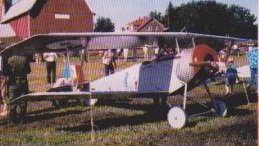
The 87% scale replica of a Nieuport 12 was designed and prototyped in 1989, at Oshkosh ‘90, it took 3rd place in the light plane category. The 12 is constructed of the same materials as the Nieuport 11 with the exception of the main wing spars which are formed sheet. The 12 is a 2 place with a Rotax 582 recommended. Construction is fabric covered tube structure, pull riveted gussets and AN bolts. Plans are oriented to the experienced builder with little instruction needed. Videos are available of Building procedures 4 hrs as well as a flight preview video (2 hours)
Engine: Rotec R2800 or Rotax 582, 65 hp HP range: 65-85. Reduction: 3.47:1 Propeller (flight): 84″ diameter Span Main Wing: 26.5 ft Span Sub Wing: 21.2 ft Chord Main Wing: 4.85 ft Chord Sub Wing: 31.5 Wing Area: 189 sq. ft. Span Stabilizer: 9 ft Length cowl to tail: 21.5 ft Height: 7.5 ft Weight empty: 575 bs Fuel Capacity: 12 Gal US. Gross Weight: 1070 lbs Stall Speed: 33 MPH Cruise: 75 MPH Top Speed: 94 MPH Never Exceed (Vne): 112 MPH Take off run: 300 ft Landing Roll: 300 ft ROC: 550 fpm. Range: 180 sm. G Factor (@ 550 lbs): +5.7/ – 2.8 Tubes: 6061-T6 Gussets / fittings: 2024 – T3 Build time: 1400 hrs Seats: 2. Landing gear: tail wheel.
Engine: Rotax 582, 64 hp Wing span: 8 m Wing area: 17.56 sq.m MAUW: 475 kg Empty weight: 255 kg Fuel capacity: 50 lt Max speed: 150 kph Cruise speed: 115 kph Minimum speed: 53 kph Climb rate: 2.2 m/s Seats: 2 Plan price (1998): $200
A variation of the Graham Lee designed 7/8 scale copy of the 1916 French Nieport 11 is the German copy by Seimens Schukert featuring lowered top wing and four point carbane struts. Rotax 503 powered Gas powered Spandau MG adds to fun flying.
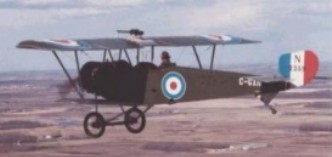
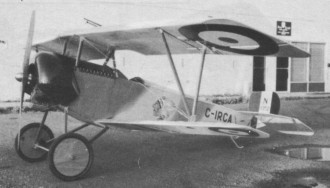
An 87% scale replica first displayed at Oshkosh in 1984 after a hurried 10 hours of serious test flying before being loaded on a trailer for the trip. Construction drawings includes more than 100 pages of dimensional drawings, assembly sketches and construction notes, in 9 x 12 format The Baby Nieuport is an outwardly accurate reproduction with handling characteristics much like the original World War I fighter. Special construc¬tion techniques make the best use of aluminum tube and sheet for a light, robust structure, capable of meeting ultralight or amateur-built criteria, powered by either a Rotax 447 or 50 hp Rotax 503. With more than 100 pages of dimensional drawings, assembly sketches and construction notes, Circa claim that the aircraft, built from alloy tube and sheet, can be put together in around 500 hours. Tubes 6061-T6 Gussets / fittings 2024 – T3 Loops, spins, Split S and a 7000ft power dive were performed on C-IRCA but aerobatics are NOT recommended. A CIRCA Reproduction Nieuport 11/17 features 6061 tube, pop rivet construction. Average cost in 2008 was $6,000.00.
Engine: 1835cc VW 60HP Span: 21’5″ Length: 16’5″ Empty Weight: 300 LBS Useful Load: 300 LBS Wing Area: 114 SQ. FT. Seats: 1 Take Off Distance: 250 FT Stall: 33 MPH Cruise: 60 MPH Rate Of Climb: 650 FPM
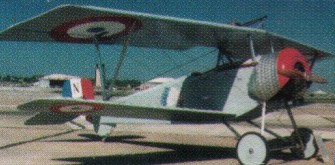
Nieuport 11 EXP Engine: Rotax 503, 46 hp. HP range: 22-50. Reduction 258:1 Propeller (flight) 72×33 Height: 7.5 ft. Length: 16.5 ft. Wing span upper: 21.5 ft. Wing span lower: 20.2 ft Wing area: 114 sq.ft. Chord Main Wing 3.6 ft Chord Sub Wing 2 ft Span Elevator 8.2 ft Weight empty 254 to 300 lbs Fuel Capacity 5 to 12 Gal US. Gross: 675 lbs. Top Speed 85 MPH Never Exceed (Vne) 95 MPH Cruise: 80 mph. Range: 200 sm. Stall: 32 mph. ROC: 850 fpm. Take-off dist: 125 ft. Landing dist: 250 ft. Service ceiling: 10,000 ft. Seats: 1. Landing gear: tail wheel. Take off run 250 ft Landing Roll 225 ft G Factor (@ 550 lbs) +6/ – 2.8
Nieuport 11 UL Engine: Rotax 447, 40 hp. HP range: 22-40. Speed max: 77 mph. Cruise: 64 mph. Range: 75 sm. Stall: 27 mph. ROC: 650 fpm. Take-off dist: 200 ft. Landing dist: 250 ft. Service ceiling: 10,000 ft. Fuel cap: 5 USG. Weight empty: 250 lbs. Gross: 550 lbs. Height: 75 ft. Length: 16 ft. Wing span: 21.5 ft. Wing area: 114 sq.ft. Seats: 1. Landing gear: tail wheel.
Engine: Rotax 503, 48 hp Wing span: 7.16 m Wing area: 11.6 sq.m MAUW: 272 kg Empty weight: 125 kg Fuel capacity: 50 lt Max speed: 135 kph Cruise speed: 115 kph Minimum speed: 48 kph Climb rate: 3 m/s Seats: 1 Plan price (1998): $139
Argentinian engineer Augusto Cicare has designed and built a successful ultralight helicopter that weighs in at 135 kg, the CH IV. Powered by a Rotax 532, the prototype completed over 150 hours by 1988.
The Chandelle Mk IV is an American ultralight aircraft that was designed by Nile Downer and produced by Chandelle Aircraft. The aircraft was supplied as a kit for amateur construction.
The aircraft was designed to comply with the US FAR 103 Ultralight Vehicles rules, including the category’s maximum empty weight of 254 lb (115 kg). The aircraft has a standard empty weight of 243 lb (110 kg). It features a strut-braced high-wing, a single-seat, open cockpit, tricycle landing gear and a single engine in pusher configuration.
The aircraft is made from bolted-together aluminum tubing, with the wings and tail surfaces covered in Dacron sailcloth. Its tapered planform, single-surface, 30.5 ft (9.3 m) span wing is supported by both lift struts and jury struts. The wing features 3/4 span ailerons. The pilot is accommodated in an open seat without a windshield. The tail surfaces are mounted on tubes that travel beside and below the pusher engine and propeller. The tricycle landing gear features main gear suspension.
The Mark IV appeared just before the collapse of the US ultralight market in 1984 and so few were produced or sold.
Chandelle Aircraft Mk IV Engine: 1 × Cuyuna UL II-02 twin cylinder, two-stroke, 30 hp (22 kW) Propeller: 2-bladed wooden Wingspan: 30 ft 6 in (9.30 m) Length: 17 ft (5.2 m) Height: 8 ft 7 in (2.62 m) Wing area: 153 sq ft (14.2 sq.m) Empty weight: 243 lb (110 kg) Gross weight: 500 lb (227 kg) Fuel capacity: 5 U.S. gallons / 19 lt / 4.2 imp gal Maximum speed: 59 mph / 95 km/h / 51 kt Cruise speed: 45 mph / 39 kt / 72 km/h Stall speed: 23 mph / 20 kt / 37 km/h Never exceed speed: 75 mph / 65 kt / 121 km/h Rate of climb: 700 ft/min / 3.6 m/s Crew: one
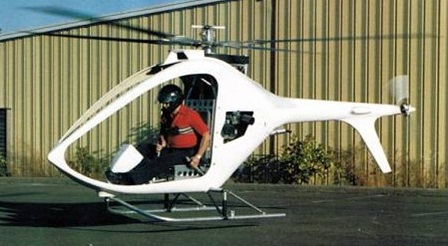
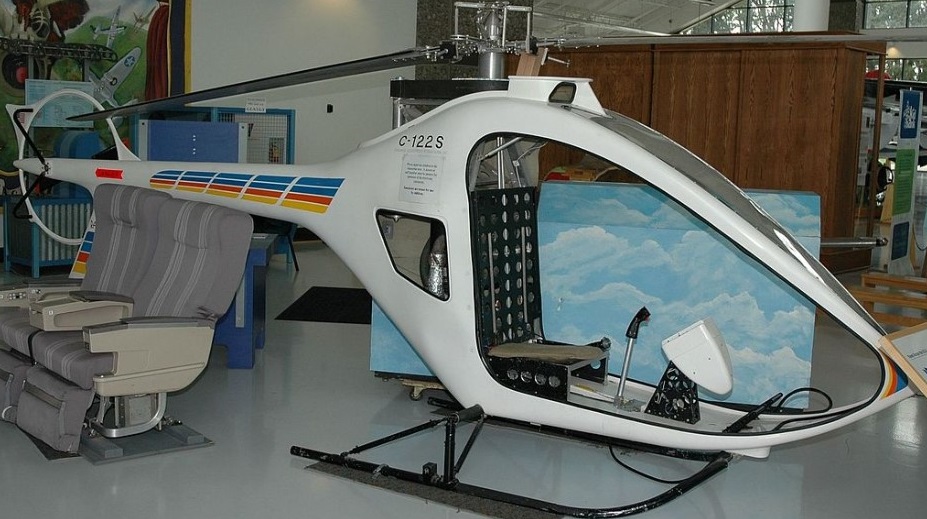
The single-seat C-122 Rainbow helicopter was a design of Russell Chadwick, and was intended to be available in kit form for amateur construction. Powered by a 40 hp Rotax 503 two-stroke piston engine, the prototype started tethered tests late 1985 and was mainly intended as a proof of concept/technology demonstrator.
The design consists of a fibreglass shell enclosing a truss structure to which the engine, rotor mast, landing gear, and pilot’s seat were attached. The skid-type undercarriage could be quickly fitted with wheels for ground-handling, or floats for operations from water.
A prototype was constructed in 1985, and publicly unveiled at the Helicopter Association International annual convention the following year. Flight testing continued through 1987, with deliveries anticipated for that Autumn.
In 1986 Chadwick formed Chadwick Helicopters International, Inc. at Sherwood, Oregon for development, marketing and production of the type in ready-to-fly form. These were to have a longer tail boom, new rotor blades and a tail rotor guard ring, but reportedly only two C-122S machines were built and further development was halted.
Chadwick C-122 Engine: Rotax 503, 40 hp Rotor diameter: 18 ft 6 in (5.64 m) Rotor disk: 268.8 sq.ft (24.97 sq.m) Length (rotors turning): 22 ft 6 in (6.86 m) Length: 19 ft 0 in (5.79 m) Height: 7 ft 2.25 in (2.19 m) Weight empty: 253 lb (115 kg) Weight loaded: 500 lb (227 kg) Max speed: 94 mph (151 kmh) Cruise speed: 74 mph (119 kmh) Climb: 945 ft (288 m)/min Service ceiling: 13,480 ft (4,110 m) Range: 120 mls (193 km) Seats: One pilot

 All Aero