Dakomat DEKO-5

Deko 51

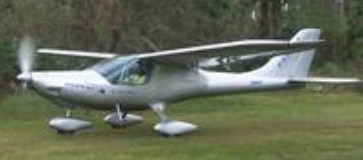
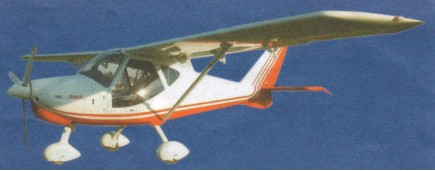
DEKO-5 was designed by Polish aeronautical engineers: Marek Debski, Krzysztof Kotlinski, Type: Side-by-side ultra-light, training and observation aircraft – ideal for recreational flyer. First flight, June 1996 Design Features: Pod-and-boom fuselage. Wings braced by V-type struts. Structure: Wing and elevator are made of aluminum tubes and dacron (or ceconite) soft skin. Fuselage structure is construction, as space truss of aluminum tubes with composite joints (Polish Patent). Tail boom is made of two aluminum tubes. Cockpit canopy is made of glassfibre laminate and organic glass. The open cabin offers a very good view. The DEKO-5 is designed to a +4g / -2g load limit Power Plant: One Rotax 582 (65 hp, electric start and brakes), piston engine with reductor gear 2.58. Propeller: Junkers three-blade, carbon fibre, ground-adjustable pitch propeller. System: Ballistic parachute recovery system

Engine: One Rotax 582 (65 hp, electric start)
Reduction gear: 2.58.
Propeller: Junkers three-blade, carbon fibre, ground-adjustable pitch
Stall: 32 kt / 37 mph / 60 kmh
Cruise: 57 kt / 65 mph / 105 kmh
VNE: 86 kt / 99 mph / 160 kmh
Empty Weight: 250 kg / 551 lbs
MTOW Weight: 450 kg / 992 lbs
Climb Ratio: 600 ft/min / 3 m/s
Glide Ratio: 6:1
Take-off distance (50ft obstacle): 590 ft / 180 m
Landing distance (50ft obstacle): 460 ft / 140 m

Daedalus Apex 2

Single seat single engined high wing mono¬plane with hybrid control. Wing has unswept leading and trailing edges, and constant chord; cruciform tail. Pitch control by elevator on tail; yaw control by fully flying rudder; no separate roll control; control inputs through weight shift for pitch/yaw/roll. Wing braced from above by kingpost and cables, from below by cables; wing profile 100% double surface. Undercarriage has two wheels with tailskid. Aluminium tube framework, without pod. Engine mounted at wing height driving tractor propeller.
The Daedalus Apex 2, is similar in concept to the Quicksilver E, in that it uses weight shift allied to a rudder and elevator to give hybrid control, a formula which is popular in North America but unusual in Europe.
The obvious difference between the Apex 2 and the Eipper product, however, is the choice of power unit and the use of a tractor propeller. Marco uses the Konig SC430 three cylinder radial engine, allied to a three blade propeller, a combination which has proved highly effective. Not only has Marco flown extensively in the Alps with the Apex 2, but he also competed in the 1982 London Paris, where he got a special award for having the quietest aircraft in the competition.

Engine: Konig SC430, 24 hp.

CZAW Parrot

The all-metal Parrot is the first LSA to offer a full-cantilever metal wing, a glass shape in real metal, a forward-hinged canopy, and plenty of payload. Flight tests on the new machine have exceeded expectations. The entire design effort was built around the Sport Pilot (LSA) rules. Designed from the ground up for the American rules and the American market; and uses American-sourced materials, optimized performance to the LSA rules. Its efficient airfoil, developed on high-performance sailplanes, is a key feature unmatched in the industry. The smooth shape, made possible by the Parrots proprietary construction fixtures, also contributes to the quiet ride. With a shape usually considered achievable only on composite aircraft, the Parrots stretch formed and hydroformed panels blend together with flush rivets to give the appearance of composite, with standard full-interior zinc chromate protection on the ready-to-fly machine.

Stall: 30 kt / 35 mph / 56 kmh
Cruise: 113 kt / 130 mph / 209 kmh
VNE: 137 kt / 157 mph / 253 kmh
Empty Weight: 360 kg / 793 lbs
MTOW Weight: 599 kg / 1320 lbs
Climb Ratio: 1000 ft/min / 5 m/s
Take-off distance (50ft obstacle): 750 ft / 229 m
Landing distance (50ft obstacle): 400 ft / 122 m

CZAW SportCruiser / PS-28 Cruiser / Czech Sport Aircraft SportCruiser

An all-metal, low-wing, 100hp SportCruiser is priced at $65,000 (FOB Indiantown 2009) and burning around 4~4.5 gallons of auto gas per hour. It has American-designed, all-metal traditional construction and US-sourced materials and airframe components. All three SAW aircraft are designed to be easy to fly, with touchdown speeds in the high 20-knot range. Sport Aircraft Works, importer and distributor of the Czech Aircraft Works designs, completed all the certification work on time.
Named ‘SportCruiser’ it is designed by Jiří Konečný and manufactured by Czech Aircraft Works.

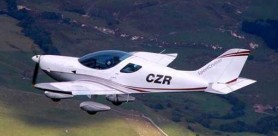
The all-metal SportCruiser flew for the first time in 2005 and features a similar wing, main undercarriage and canopy arrangement as the CH601 XL. But with an all-new nose-wheel undercarriage, streamlined fuselage and swept-back tail arrangement, the SportCruiser is a deluxe low wing aircraft with superior performance.
The slow stall speed is achieved by electrically operated slotted flaps, with the ailerons and elevator being push-rod operated for better control response. The main gear consists of two composite gear legs (tried & proven on the CH601XL), equipped with toe operated differential hydraulic brakes.

The SportCruiser is fitted with the 100HP Rotax 912ULS engine and a Woodcomp Klassic 170/3/R propeller, either ground adjustable or electric constant speed. The Jabiru 3300 of 120 hp is optional.

The SportCruiser has an optional Ballistic Recovery Systems parachute, auto pilot and Dynon or TruTrak EFIS.

The aircraft is capable of cruising at 214 km/h (133 mph) with a range of 1,014 km (630 mi). No wind, standard day gross weight takeoff is achieved in 106 m (348 ft) and landing in 123 m (404 ft).

The SportCruiser is designed to fit into the ultralight or microlight category in several countries as well as the United States’ Light-sport Aircraft category. Between 2006 and 2010 it was available either as a kit, or as a fully built production model. The SportCruiser is accepted as a US FAA LSA, FAA homebuilt kit and the UK under BCAR Section “S”.

The SportCruiser has an optional Ballistic Recovery Systems parachute, auto pilot and Dynon or TruTrak EFIS.

The SportCruiser’s stall behaviour is consistant; with the aircraft buffeting strongly from the tail end before the stall and eventually breaking with a straight nose drop four times out of five. When a wing drop does occur, or is induced, the wing drop is to the right but only through 15 to 20 degrees. The wing starts flying again as soon as the nose has fallen through, even against full back stick.

Comments from people who have flown the SportCruiser are that it is a well mannered aircraft, positively stable about all axis, with nicely balanced controls.

The seating is very comfortable with room to accommodate tall people and long legs. With a very user friendly cockpit environment, this is a confidence-inspiring aircraft to fly, yet sparkling enough in its handling to satisfy the most sporting aviator.

With 10 new US registrations, the SportCruiser numbers 192 flying in the US in 2012. Base price 2012: $119,000.

On 21 January 2010 Piper Aircraft announced that they had licensed a derivative of the SportCruiser and would market it as the PiperSport. Piper CEO Kevin Gould said: “The PiperSport is an amazing entry-level aircraft that will bring new customers into Piper and lead the way for those customers to step up into more sophisticated and higher performance aircraft within our line over time.”

The PiperSport is a minimally modified version of the existing SportCruiser. The plan was that it would continue to be manufactured by Czech Sport Aircraft, with Piper’s manufacturing operation playing no part in the construction, although Piper was distributing parts. The changes to the aircraft are stronger nosegear, a Ballistic Recovery Systems parachute and leather interior both as standard equipment, a cockpit sunshade and modified pitch controls, plus a custom paint scheme. Previously the Sport Cruiser was available as a completed aircraft or a kit, but Piper offered it only as a completed aircraft, sold as a Special Light-sport aircraft in the USA. It was distributed by the Piper dealer network worldwide. Deliveries under the Piper name commenced with the initial customer receiving their aircraft on 13 April 2010 at Sun ‘n Fun. The aircraft was offered in three different trim and avionics configurations, with higher end models offering the Dynon Avionics D100 glass cockpit and autopilot. All models were delivered with the Rotax 912S powerplant of 100 hp (75 kW). The price in 2010 was USD$119,000 – $139,000.

PiperSport LSA aircraft exhibited at the 2011 Sun ‘n Fun show at Lakeland Linder International Airport Florida

Piper indicated that they had carried out extensive test flying on the SportCruiser before agreeing to add it to their line and that the aircraft’s slow sales in the past had been related to marketing issues and not any deficiencies with the aircraft design. Piper planned to market the aircraft to flight schools as well as private owners.

On 12 January 2011, after selling a total of 45 aircraft, Piper announced that the PiperSport would be discontinued. Piper CEO Geoffrey Berger stated:

After a year working with Czech Sport Aircraft, Piper determined that it is in our company’s best long-term interests to discontinue the business relationship which distributed a Light Sport Aircraft manufactured by the Czech company and distributed under Piper’s brand by a separate distributor network. Clearly, the company has a different business perspective and approach to the market than Czech Sport Aircraft.

After the Piper announcement the PiperSport importer and dealer network indicated that the aircraft would be continued to be imported under a new name. Importer U.S. Sport Aircraft CEO Don Ayres stated that said his company was engaged in “business as usual…aircraft will continue to be sold and supported”.

Czech Sport Aircraft reacted to the ending of the Piper deal by indicating that business would continue through the same distributor and dealer network and that the name of the aircraft would be changed back to SportCruiser. The company did indicate that the disagreement with Piper involved the geographical focus that Piper had put on marketing in the US to the detriment of the rest of the world. The company indicated that it will continue to develop the aircraft and planned revisions to the spinner, canopy, elevator, ailerons and wingtips in the immediate future.

Variants:

SportCruiser
Version built 2006–10 and 2011–present by Czech Sport Aircraft, available as a kit or completed aircraft and equipped with 100 hp (75 kW) Rotax 912ULS or 120 hp (89 kW) Jabiru 3300 engine.

PiperSport
Version built 2010–2011 by Czech Sport Aircraft and marketed by Piper Aircraft, available only as a completed aircraft and equipped with 100 hp (75 kW) Rotax 912ULS engine. Discontinued in January 2011.

PS-28 Cruiser
Version built for EASA CS.LSA certification with 600kg gross weight limit.

Gallery

Stall: 30 kt / 34 mph / 55 kmh
Cruise: 117 kt / 135 mph / 217 kmh
VNE: 139 kt / 160 mph / 258 kmh
Empty Weight: 720 lbs
MTOW Weight: 599 kg / 1320 lbs
TO run; 420 ft
Take-off distance (50ft obstacle): 700 ft / 213 m
Landing distance (50ft obstacle): 400 ft / 122 m
Fuel capacity: 30 USG
Endurance: 6.7 hr
Range: 650 nm
Stall: 34-42 kt
75% cruise: 109 kts
ROC: 980 fpm
Cockpit width: 46 in

CZAW SportCruiser
Engine:Rotax 912
Horsepower: 100@SL
TBO (hrs.): 2000
Fuel type: 100/100LL
Propeller type: FP/3-blade
Landing gear type: Tri./Fixed
Max ramp weight (lbs.):1320
Gross weight (lbs.): 1320
Landing weight (lbs.):1320
Empty weight, std. (lbs.): 765
Useful load, std. (lbs.): 555
Useful fuel, std. (gals.):30
Usable fuel (gals.): 37
Payload, full std. fuel (lbs.): 392
Wingspan: 28 ft. 9 in.
Overall length: 21 ft. 4 in.
Height: 6 ft. 5 in.
Wing area (sq. ft.):141.6
Wing loading (lbs./sq. ft.): 9.3
Power loading (lbs./hp.): 13.2
Wheel size (in.): 6.00 x 6
Seating capacity: 2
Cabin width (in.): 46.5
Cruise speed 75% power @ 8,000 ft.: 115 kt
Range (nm) 75% power: 575
Vso (kts.): 32
Best rate of climb (SL gph): 1200
Service ceiling (ft.): 20,000
Takeoff ground roll (ft.): 360
Landing ground roll (ft.): 400

Engine: Rotax, 100 hp
Wing span: 8.7m
Length: 6.5m
Wing area: 11.8 sq.m
Wing loading: 49 kg/sq.m
Empty weight; 307 kg
Gross weight: 544 kg
Cabin width: 1.14m
Fuel capacity: 2 x 56 lt
Load factor: +6 -4G
Take off: 100m
Landing; 100m
ROC: 1200 fpm
Stall: 26-29 kt
75% cruise: 110 kt
Vne: 140 kt
Range 75% no res: 700 nm
Endurance no res: 7 hr

SportCruiser SC3D
Engine: Rotax 912IS 100hp
Propeller: Ground adjustable (CSU available)
Wing span: 8.86 m
Wing area: 12.2 sq.m
Length: 6.5 m
Height: 2.3 m
Seating: 2 side by side
Cabin width: 1.24 m
Empty weight: 365 kg
Gross weight – LSA: 600 kg
Gross weight – Microlight: 544 kg
Fuel capacity: 120 L (2x 60 litre wing tanks)
Never exceed speed (Vne): 140 knots
Cruise speed: 115 knots
Stall speed (flaps): 27 knots
Stall speed (clean): 32 knots
Rate of climb: 1200 fpm (6.1 m/sec)
Take-off distance (grass): 130 m
Landing distance (grass): 150 m
Cruise duration: 8 hrs (no reserve)
Cruise range: 800 nm (no reserve)
Design loading: +4/-2 (ultimate +6/-6)

CZAW SportCruiser
Engine: 1 × Rotax 912 ULS2, 73.5 kW (98.6 hp)
Propeller: 3-bladed Woodcomp Klassic 170/3/R
Wingspan: 8.6 m (28 ft 3 in)
Wing area: 12.3 sq.m (132 sq ft)
Length: 6.62 m (21 ft 9 in)
Height: 2.315 m (7 ft 7 in)
Empty weight: 388 kg (855 lb)
Gross weight: 600 kg (1,323 lb)
Fuel capacity: 114 litres (25 imp gal; 30 US gal)
Maximum speed: 220 km/h (140 mph, 120 kn)
Cruise speed: 172 km/h (107 mph, 93 kn) 75% power at 3000 ft
Stall speed: 55 km/h (34 mph, 30 kn)
Never exceed speed: 255 km/h (158 mph, 138 kn)
Range: 953 km (592 mi, 515 nmi) with 30 minute reserve
Endurance: 5:25
Rate of climb: 4.2 m/s (830 ft/min)
Crew: one
Capacity: one passenger
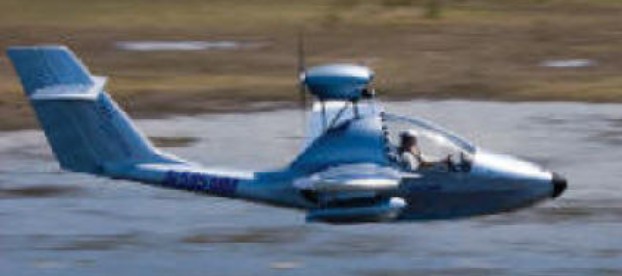
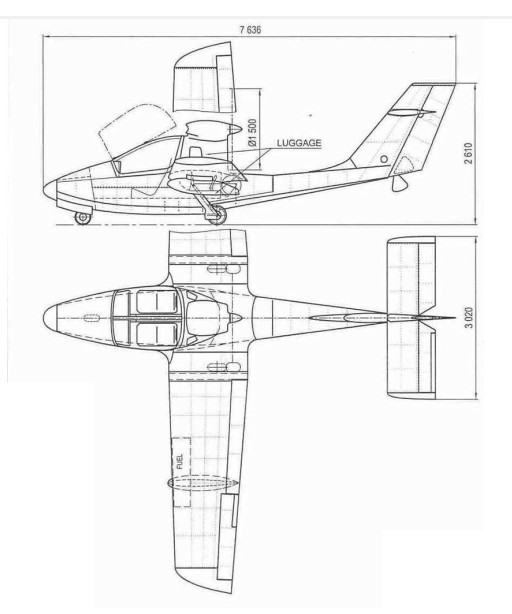
CZAW Lake Sport Mermaid / WetAero M6 Mermaid

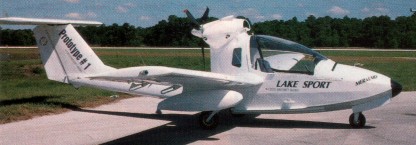
The all-new Mermaid is the first amphibian to be designed especially to comply with the FAAs new Light Sport Aircraft rules. It is also the first new certified single-engine amphibian to reach production in decades.
The design parameters were challenging: make a certifiable, roomy amphibian that will fit the LSA rules (2-place, 1235 pounds gross, low stall speed), and that will be affordable, reliable, and fun to fly; then give it the speed and range to be practical as a transportation device, and dual controls, for training and peace of mind. The Mermaid does it all, and more.
Of conventional all-metal design, the Mermaid is built by European craftsmen, with US-sourced materials. Its five watertight compartments are built with EDO-style pump-outs. The slipper-clutch Rotax 912ULS (914 also available) puts out 100 reliable horsepower while burning well under 5 gph. The useful load is over 500 pounds, and the large baggage area is located nearly on the CG, to make its capacity truly usable. The wide cockpit is comfortable; and it affords a large panel area.

In the US, the very early stages of prototype 1 used a Rotax 100HP as the power plant. This installation was refined over the next two years with probably no less than 6 different configurations using the Rotax. After essentially complete redesign of the prototype number one in the U.S. with this power plant, the next one and half years of performing flight and water testing gave good results. Even though adequate in horsepower, performance should be better on hot and heavily loaded days, and there were propeller inefficiencies from some of the after body aerodynamic interference.

WetAero M6 Mermaid

During one of the demo flights a customer from Australia suggested it might have better performance with a Jabiru 125 HP power plant. During initial flight tests this power plant proved to perform slightly better than the Rotax. But the installation was still lacking its full potential until repositioned higher above the after body structure. This one modification substantially increased the performance of the M6. The Jabiru was a tough engine to cool in the pusher configuration. After almost a year perfecting this engine installation they were capable of running on step taxi without limitations.

But then one customer insisted on the Rotax installation.

Dan Card received the first production Mermaid in parts and began construction in December 2005. Parts and pieces to make the fuselage, bulkheads, tail, and wings arrived from Czech Aircraft Works, where they were previously partially assembled using the factory jigs. Dan still had much of the aircraft to build. The challenge to build the first customer-built Mermaid began with assembling the aircraft for fit and finish while meeting the individual aspects of being “the first.” The construction of the Mermaid is very conventional as far as riveted aluminum monocoque construction goes. With plenty of traditional rivets to squeeze and buck, the fuselage in essence emerges in one piece, from nose to vertical stabilizer, including a robust center section to which the wings attach. The V hull is reinforced with a boxed section (at the bow) that houses the nose wheel when it’s retracted and closed off by its doors. It’s also triangulated with a flat floor onto which the seats, rudder pedals, and center console get fastened. With a series of 10 bulkheads, about a foot apart, completing the structure, the hull area below the seats becomes exceedingly robust.

The wing center section extends past the cockpit just far enough to support (or be supported by) the repositionable (not fully retracted) hydraulically actuated main gear. The wings are attached just outside the main gear bay via three bolts in the main spar and one in the drag spar, but in each instance, there is no carry-through of either spar. The ailerons on the Mermaid are actuated by push-pull and torque tubes, not cables. The flaps stop at the butt end of the wing and do not extend through the center section and die into the fuselage. They are slotted and use a displaced hinge pivot similar to the RV-10, a Cirrus SR22, or a Lancair Legacy; not really clean, but simple. The center section is also used as a platform for supporting/carrying ancillary systems like the battery, fuel pumps and filters, strobe pack, solenoids, disconnects, and relays, but it also serves as the main attachment for the engine pylon.

This Mermaid’s inaugural flight took place in September 2007 and was conducted over the rural farmlands of Fresno, California.

The Mermaid received ASTM certification #19.

Stall: 35 kt / 40 mph / 64 kmh
Cruise: 100 kt / 115 mph / 185 kmh
VNE: 115 kt / 132 mph / 212 kmh
Empty Weight: 330 kg / 727 lbs
MTOW Weight: 560 kg / 1235 lbs
Climb Ratio: 1000 ft/min / 5 m/s
Take-off distance (50ft obstacle): 600 ft / 183 m
Landing distance (50ft obstacle): 600 ft / 183 m

Engine: Jabiru 3300, 120 hp
Wing span: 31 ft
Wing area: 124 sq.ft
Length: 24 ft
Empty weight: 888 lb
Gross weight: 1430 lb
Fuel capacity: 30 USG
Cruise: 115 mph
Stall: 40 mph
Range: 580 sm
Rate of climb: 1000 fpm
Takeoff dist: 450 ft
Landing dist: 500 ft
Seats: 2
Cockpit width: 44 in
Landing gear: retract tricycle
LSA: yes

WetAero M6 Mermaid
Engine: Rotax 912 ULS
Wing span: 33.3 ft / 10,152 m
Length: 25 ft / 7,62 m
Wing area: 134.5 sq.ft / 12,5 sq.m
Wing loading: 10.65 lb/sq.ft / 45,6 kg/sq.m
Empty weight: 925 lb / 420 kg
Gross weight: 1430 lb / 650 kg
Useful load: 505 lb / 230 kg
Cabin width: 46 inch / 117 kg
Fuel capacity: 2×15 U.S.gal / 2×57 liters
Luggage space: 16 cu.ft / 450 lt
“G” limit: +4 / -2 G
Take-off (grass): 511 ft / 156 m
Take off (50″ object grass): 850 ft / 259 m
Climb rate: 800 fpm / 4 m/s
Stall speed with flaps: 32 mph / 52 km/h
Stall speed w/o flaps: 36 mph / 57 km/s
Cruise speed (75% power – TAS): 110 mph / 177 km/h
Never exceed speed (VNE): 155 mph / 250 km/h
Range (75% power, no res.): 450 sm / 725 km
Endurance (no res.): 4,5 hours
Landing ground roll (grass): 434 ft / 132 m
Price 2012: $147,000 Rotax 912ULS Base Model
$168,000 fully optioned.

WetAero M6 Mermaid
Jabiru 3300 120 HP
Takeoff (grass): 450 ft / 137 m
Takeoff (50-foot object grass): 1,080 ft / 330 m
Climb rate: 910 fpm / 4,6 m/s
Stall speed with flaps: 32 mph / 52 km/h
Stall speed w/o flaps: 36 mph / 57 km/h
Cruise speed (75% power TAS): 118 mph / 190 km/h
Never-exceed speed (Vne): 155 mph / 250 km/h
Range (75% power, no reserve): 620 sm / 1000 km
Endurance (no reserve): 4 hours
Landing ground roll (grass): 434 ft / 132 m

CZAW Zodiac

In 1992, Heintz also entered into a license agreement with Czech Aircraft Works of Stare Mesto, Czech Republic, to produce and market his Zodiac CH 601 and STOL CH 701 designs for the European market. The Czech-produced Zodiacs were modified and lightened to meet European rules for microlight aircraft. CZAW produced some 750 such machines under this agreement. On 31 December 2006, after the license agreement, under which the Zenair Zodiac CH 601 and STOL CH 701 light aircraft designs were produced by CZAW, was terminated and the Czech production came to an end.

CZAW / Czech Aircraft Works / Czech Sport Aircraft

In 1992, Heintz also entered into a license agreement with Czech Aircraft Works of Stare Mesto, Czech Republic, to produce and market his Zodiac CH 601 and STOL CH 701 designs for the European market. The Czech-produced Zodiacs were modified and lightened to meet European rules for microlight aircraft. CZAW produced some 750 such machines under this agreement. On 31 December 2006, after the license agreement, under which the Zenair Zodiac CH 601 and STOL CH 701 light aircraft designs were produced by CZAW, was terminated and the Czech production came to an end.

Czech Aircraft Works (CZAW) was renamed Czech Sport Aircraft.

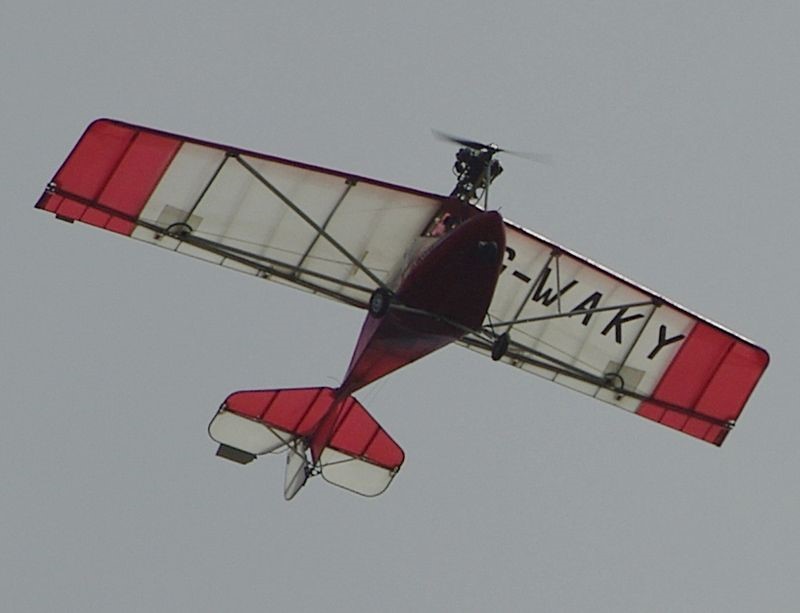
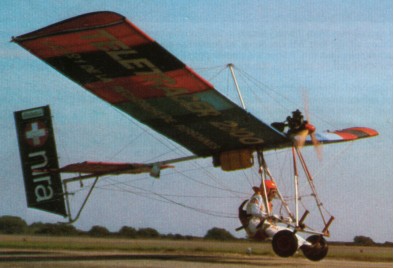
Cyclone Airsports AX2000             

HKS 700E powered AX2000

The Cyclone Airsports AX2000 is a development of the earlier Cyclone AX3, a UK regulation compliant variant of the French Ultralair Premier AX3. This, in turn, was a three axis development of the US Chotia Weedhopper from the early 1980s.

The AX2000 is a British built three axis microlight, with an aluminium tube framed three axis microlight with flying surfaces covered with a polyester fabric with outer PVF lamination (URLAM). The whole aircraft is built around a long, high aluminium keel boom, which bears the engine, wings and empennage.

The wing is a two spar structure, with surfaces formed by upper and lower battens rather than ribs. It carries conventional, full span, tapering ailerons but no flaps. The tailplane is mounted on the keel and has an anti-balance/trim tab on the starboard elevator. There is a small fixed fin below the keel but none above; the rudder is balanced and extends below the elevators, moving in a cut-out.

The short, deep fuselage is built around a wire braced tube beam. Lift and landing loads are taken by V-shaped, cross braced pairs of lift struts from the bottom of the fuselage to each wing, assisted by a centre line strut to the boom at the wing leading edge. The cockpit enclosure is non-structural, with forward opening doors to a pair of side-by-side seats. These are equipped with separate rudder pedals but the occupants share a central control column. The AX2000 has a tricycle undercarriage mounted close to the fuselage.

The engine is mounted, uncowled, ahead and above the wing leading edge, with the propeller shaft on the boom line. One of three engines may be fitted: a 48 kW (64 hp) Rotax 582/48 or 38 kW (50 hp) 503 2V, both upright twin cylinder two strokes, or the 45 kW (60 hp) HKS 700E (either V3 or Beta variants), flat twin four stroke.
Both Rotax engines drive propellers with ground adjustable pitch: the 582 has a three blade, composite propeller and the 503 a two blade wooden one.

As well the new engines, the AX2000 differs chiefly from the AX3 in having a completely double surface wing of reduced area and modified structure, a change of alloy for the main keel beam, a revised and lightened fuselage with new undercarriage, an increased fuel capacity and the addition of an elevator anti-balance trim tab.
The AX2000 is certificated as a glider tug, for gliders of class 1 and 2. A V-shaped forward tow line extension joins the main line to a pair of tug pillars attached to the rear spar on the under surfaces of the AX2000’s wing.

In mid-2011 there were 29 AX2000s on the UK civil aircraft register.

Wingspan: 9.10 m (29 ft 10 in)
Wing area: 15.77 m2 (169.7 sq ft)
Length: 5.60 m (18 ft 4 in)
Height: 2.10 m (6 ft 11 in)
Empty weight: 201 kg (443 lb)
Max takeoff weight: 450 kg (992 lb)
Fuel capacity: 62 L
Maximum speed: 100 km/h; 54 kn (62 mph) manoeuvring
Stall speed: 58 km/h; 31 kn (36 mph)
Never exceed speed: 145 km/h; 78 kn (90 mph)
Crew: 2