1998:
249 route de Pegomas
F-06130 Grasse
France
LSA amphibian builder
1998:
249 route de Pegomas
F-06130 Grasse
France
LSA amphibian builder
2008: DART Industries
PO Box 223, Botha’s Hill
Kwazula Natal, So Africa 3660
Built Viking Aircraft Dragonfly LSA
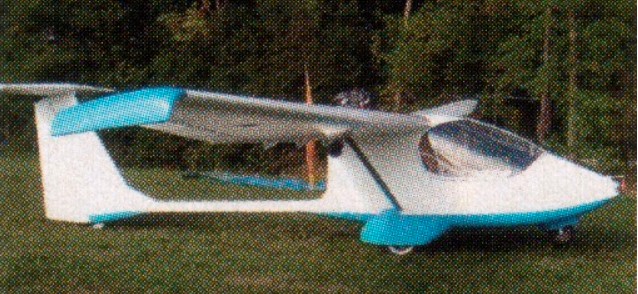
A 2 seat project is also available, the Piuma Twin, later substituted by the Piuma Twin Evolution, that includes all the improvements suggest during 9 years of Piuma Twin constructions, with a 20 cm longer front fuselage. This gives a better balance for 2 people without the ballast and a shape similar to the one seat Piuma Evolution. This shape allow lighter aft parts and more stiffness of the tail boom. Also the elevators are similar to the Evolution one seat.
The Piuma Twin Project was finished in 1998.
The wooden fuselage is lighter; the instrument panel is similar to a glider.
There is a single version of the Twin, with wings of 42,7 feet and 132 sq.ft.
The special drawings numbers 12sp, 13sp and 14sp are always available, to allow to build the wings from 42 to 45 feet with high efficiency winglets.
It’s recommended, considered the positioning behind the cockpit; a light engine not exceeding 55 kg for complete engine, engine mounting and propeller.
A Rotax 503, (45/50 hp), combined with a carbon fibre 3 blade prop can be suitable for the project. The HKS, 4 stroke of 60 Hp could be an alternative. The two seats cabin is 43in wide and the seats are padded.
The new project is made with 16 big drawings of 24 x 41 or more (the ribs are in 1-1 scale):
N. 1 to 6 Triptych, fuselage, frames, landing gears, levers, engine mounting, etc
N. 7 to 11 Wings, ribs, spars, levers in the wings, ailerons, flaps and air brakes
N. 15 to 19 Vertical, Elevators, ribs and spars, levers and aft little wheel
The special drawings n. 12sp, 13sp and 14sp are in option and they allow to build the wings from 42 to 45 feet with high efficiency winglets, to cover the wings with all birch ply, to put the fuel tanks in the wings and to build new special air brakes.
The Plans Basic are made from 16 drawings in English and the Construction Book in English (44 pages with 30 photos and a lot of drawings to explain the construction); a complete note of the materials to buy is also included.
It is possible to check the centre of gravity and flight is explained in detail. There is also a note of the parts weight.
In the Plans Advanced there are also the 3 option drawings, the Project book (this is in Italian language, but there are 32 photos and 80 drawings, graphics and lists and it is easy to understand the calculations) and a DVD with 3200 photos (1600 are of the Twin construction).
The tail boom in Aluminium 6005-T16 is also available: diameter 127mm – thickness 1,5mm – length 5,2 m.
The wing profiles are the same of the Tourer Piuma.
The material cost, without engine and instruments, is about 8000 euro, at the 2007 prices.
The time of construction is about 1200 hours.
Wing Span: 42.7 ft. / 13 m
Wing Area: 132 sq.ft. / 12.2 sq.m
Length: 21.3 ft / 6.5 m
Height: 5.6 ft / 1.7 m
Empty Weight: 600 lbs. / 270 kg
Gross Weight: 980 lbs. / 440 kg
Fuel Capacity: 11 gal / 40 lt
hp: 50
hp Range: 45/60
Vne: 106 mph. / 175 Km/h
Top speed: 103 mph. / 165 Km/h
Va: 92 mph. / 145 Km/h
Stall: 44 mph. / 70 Km/h
Stall full flaps: 35 mph. / 55 Km/h
L/D: 20/1
Min.Sink Rate: 220 ft/min. / 1.1 m/sec
Load factors max: + 4.6 -2.3
Take-off distance: 400 ft. / 120 m
Landing distance: 400 ft. / 120 m
Bldg Time: 1.200 hr
Engine: Rotax 503, 45 hp
HP range: 45-65
Length: 20.6 ft
Wing span: 41 ft
Wing area: 125 sq.ft
Aspect ratio: 13.5-1
Empty weight: 490 lb
Gross weight: 910 lb
Fuel capacity: 10 USG
Cruise: 92 mph
Stall: 43 mph
L/D: 18:1
Min sink: 240 fpm
Seats: 2
Cockpit width: 43 in
Landing gear: tri
LSA: yes
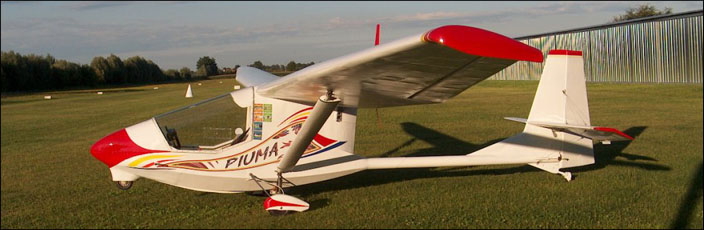
The ultralight motorglider Piuma appeared in 1989 because the designer and builder was looking for a safe ULM motorglider, easy to build and to pilot, whose flight and comfort was better than the “fabric and tube” ULM available at the time.
The Original Piuma first flew in 1990 and the project changed and the plans were modified with improvements. The Original Piuma is the more quiet version and the more suitable as first construction. The steel landing gear, with rubbers shock-absorbers, also allows the beginners hard landing. The 2005 plans allow to build the streering front gear. This improvement also allowed to increase the top speed of 5 km/h (3 mph).
ULM single seat motorglider made of fabrics and wood, only the tail pipe in aluminium alloy and propulsive engine. The maximum wing loading is 4.3 lb/sq.ft; this low wing loading allows the motorglider to fly at low stall and landing speeds. The glide ratio is about 16 – 17 and the minimum sink rate is 200 ft/min.; it is possible to use a little 25 HP engine with very low consumption (1 Imp Gal/h). The stall speed is 30 MPH and the take-off speed is normally 34 MPH, but it is possible also 29 MPH, for the ground effect. The normal cruising speed is 50 MPH and the VNE is 75 MPH.
Construction characteristics
Conventional 3 axis control with air-brakes.
The wings are tapered; the chord at root is 47,2 inches and at tip is 21,6 inches.
The wing profile is the Rhode St. Genese 36, with the 16% thickness.
The landing gear is built with the Cr-Mb steel, with the rubbers shock-absorbers, and it is put very near (but in front of) the C of G. The wheels have brakes and fairings. The nose wheel has no steering and shock-absorber.
The little tail wheel and the rudder are steerable at the same time; this special shape unites the advantages of the classic three wheel in tricycle formation take-off and landing and the good ground characteristic of the tail-dragger formation.
The instruments panel is big enough for a complete set of instruments. The fuel-tank can contain more than 4 Imp Gal. and it is sufficient for 4 fly-hours (or much more of soaring).
The plans have been improved compared with the prototype (that has flown very well since the 1990).
They are available, with notes in English and with a new construction handbook in English of 39 pages, with more of 50 photos and some little draws for the explanation.
Also the tail boom is available: diameter 127 mm – thickness 1,5 mm – length 5,2 m.
The complete material list is in the handbook (birch plywood, spruce, aluminium, steel, fabric, etc.).
The material cost, without engine and instruments, was about 6000 euro, at the 2007 prices.
Since 2003 the original Piuma plans allow nosewheel steering.
The Piuma Evolution is different from the Original Piuma in the following modifications:
Fuselage shape: the cockpit is 1 inch more wide. The rear side is completely tapered and the lower side is rounded for better attractiveness and aerodynamic.
Wing shape: the chord at root is 43,3 inches (the original is 47,2 inches) and the aspect ratio is 13/1 (original 11,2/1). Dihedral is 2 degrees instead of 3 degrees and the wing profile changes from 16% into 15%. Max thickness.
Tail shape: the tail and fin area now are more little and slimmer; the tail is cantilever, with 2 little strut drops. The 8 steel cables used in the Original Piuma were removed.
Wing struts: now the wing struts are smaller and they are aluminium-alloy.
Engine: the engine is partially hidden by the wings in the Original Piuma; now it is in the full air and it is possible to use the engine at the full power for longer.
Front wheel: now it is electrically retrectable; it is also possible to build it fixed and with fairing, steering too.
Landing gear: the wood landing gear covered with epoxy glass (or epoxy carbon fiber) is much more aerodynamic.
Seat: it is shaped for a more outstretched position, right for a glider. It is more comfortable and also suitable for 6 feet tall pilots (or little more).
Instrument panel: it is more similar to a glider panel.
Tail trim: it is electrical; the construction is clearly drawn in the plans.
Aerodynamic brakes: the controls and have been improved and drawn in 1 to 1 scale.
The best efficiency now is 20 and the normal cruise is about 63 MPH at 80% power with a 25HP engine.
The estimated building time is 1000 hours, the same of the Original Piuma.
Evolution Piuma (a little faster and more suitable for soaring, with a best glide ratio of 20) and Tourer Piuma (it’s the faster version for tourism, normal cruise 84 mph) became available.
The Italian C.A.P. (E.A.A. chapter n. 459) gave two prizes for the best ultralight project and the best achivement during the Carpi meeting of 1997 and 1999 (prize “Giancarlo Maestri” and “Caproni Cup”).
It is also possible to build two stronger versions of the one seat Piuma, for heavier pilots:
Rotax 447 Evolution Piuma (max take-off weight 660 lbs)
Rotax 447 Tourer Piuma (max take-off weight 660 lbs)
Plans only are sold.
All the “Piuma” versions are designed in accordance with the aeronautical standard and, for both the one seat Piuma and the Piuma Twin, the “project books” are available (only in Italian, at the moment). Every “project book” is composed of three parts:
The motivations of the choices about the shapes (wings, fin, rudder and elevators, fuselage with the rear engine mounting, etc.) with a lot of draws showing the fuselage, wings, tail, etc.
Structural calculations.
Characteristics of fly, wing and total drag, wing lift, efficiency, Vx, Vy, VNE, Vstall, etc.
The plans are composed of technical drawings of big dimensions (24 x 40 inches).
Some details must be realized with the lathe and the cutter, but almost the entire construction may be built without special tools; it is very easy and the planner completed the original Piuma after 18 months of work, in the 2 car garages, 7 yards long and 4,4 yards wide.
Normally about 1000 hours are sufficient to complete construction.
The wings, fin, rudder and elevators ribs are drawn in 1 to 1 scale; the same scale is used for a lot of wood or aluminium details. The handbook describes the work the step by step and the check list for the pre-fly controls.
About 30 minutes are sufficient to assemble or disassemble the Piuma.
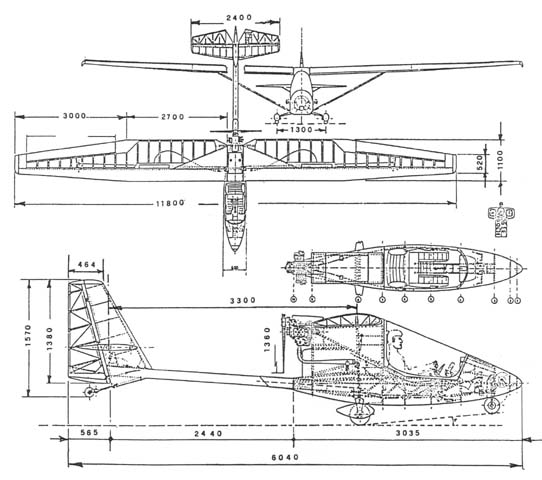
The Piuma Evolution construction plans are composed of 15 drawings with references in Italian and english and a handbook in Italian language (35 pages) or English (25 pages). These books contain a lot of photos and little drawings and the materials list.
Also the tail boom is available: diameter 127 mm – thickness 1,5 mm – length 5,2 m.
The material cost, without engine and instruments, is about 6000 euro, at the 2007 prices.
The time of construction is about 1000 hours.
The Piuma Tourer is the fast version. The basic information about the fuselage and the tail is the same as the Piuma Evolution.
The only difference between the “fast version” and the Piuma Evolution is the wing with less span and area and with two different profiles.
Changes in comparison with the Piuma Evolution are:
WING profile: NACA 4415 (for the rectangular wing area); NACA 2R1-12 (for the tip – sweepback 3degrees)
Wing areas: change from 114,1 sq.ft into 99 sq.ft (wing loading = 5,5 lb/sq.ft)
Wing span: change from 38,7 ft into 34,1 ft; the aspect ratio is 11,7
Tailplane balancing
Change of the wing connection point for the strut
Spar thickness increase
Max take-off increase to 550 lbs
On request it is possible to build the Rotax 447 Tourer Piuma Version (max take-off weght 660 lbs).
The plans are the same 15 drawings of Piuma Evolution with one big drawing more showing:
The 9 ribs profiles.
The new wing design.
The new spar.
The tailplane balancing system.
The material cost, without engine and instruments, is about 6000 euro, at the 2007 prices.
Original
Wing span: 38.4 ft
Total wing area: 125 sq.ft
Aspect ratio: 11.2
Dihedral: 3 degrees
Total tailplane area: 17.2 sq.ft
Tail arm: 10.7 ft
Length overall: 19.4 ft
Max height: 4.6 ft
Empty weight: 320 lb
Max take-off weight: 518 lb
Max wing loading: 4.14 lb/sq.ft
Recommended load factors: + 3.4 -1.2
Ultimate load factors: + 6.8 – 2.5
Max level speed: 59 MPH
Normal cruising speed: 50 MPH
Stalling speed: 30 MPH
Never exceed speed: 75 MPH
Best glide ratio with power off: 17
Take-off: 330 ft
Landing: 330 ft
Max climb rate at sea level: 390 ft/min
Min sink rate (at 36 MPH): 200 ft/min
Engine: 25 HP
Piuma Evolution
Wing span: 38,7 ft
Total wing area : 114 sq.ft
Aspect ratio: 13
Dihedral: 2 degrees
Total tailplane area: 15 sq.ft
Tail arm: 10,8 ft
Length overall: 19,7 ft
Max height: 5,3 ft
Empty weight: 330 lb
Max take-off weight: 530 lb
Max wing loading: 4,6 lb/sq.ft
Recommended load factors: + 3.5 – 1.9
Ultimate load factors: + 7 – 3.8
Max level speed: 72 MPH
Normal cruising speed: 62 MPH
Stalling speed: 35 MPH
Never exceed speed: 84 MPH
Best glide ratio (at 43 MPH): 20
Take-off: 330 ft
Landing: 330 ft
Max climb rate at sea level: 460 ft/min
Min sink rate (at 39 MPH): 165 ft/min
Engine: 25 HP
Tourer
Max level speed (with 35 hp engine): 93 mph
Normal cruising speed: 84 mph (glide ratio = 10)
Never exceed speed: 100 mph
Stalling speed: 39 mph
Max climb rate at sea level: 1000 ft/min
Min sink rate (at 42 mph): 235 ft/min
Best glide ratio (47mph): 17
2001: Via dei Tamburini, 14, 36015 Schio (VI) 36015, Italy
2010 – Via dei Tamburini, 14 – 36015 Schio (VI) Italy
LSA builder
The Wolfgang Dallach Company collapsed and on 1 August 2008 DG Aircraft GmbH took over support of the Dallach “Fascination”, “Evolution”, “Sunwheel” and all derivatives.
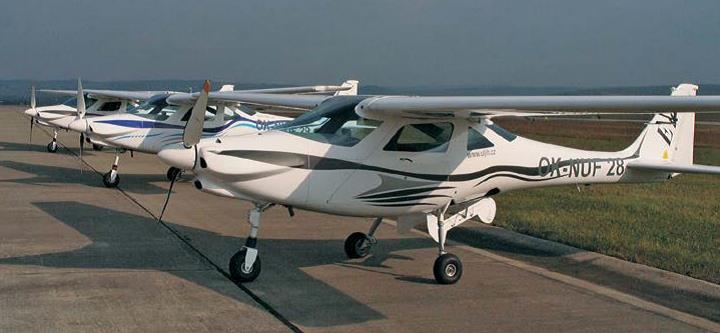
A side-by-side two-seat, cantilever high-wing monoplane of composite structure. Wing with slotted flaps, fixed or retractable tricycle undercarriage.
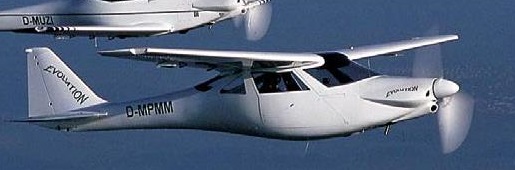
The E100 Evolution was later produced by Jaroslav Sedláček UL-JIH.
Stall: 35 kt / 40 mph / 64 kmh
Cruise: 146 kt / 168 mph / 270 kmh
VNE: 162 kt / 186 mph / 300 kmh
Empty Weight: 270 kg / 595 lbs
MTOW Weight: 472 kg / 1041 lbs
Climb Ratio: 1200 ft/min / 6,5 m/s
Take-off distance (50ft obstacle): 330 ft / 100 m
Landing distance (50ft obstacle): 330 ft / 100 m
Engine: Rotax 912, 80 hp
Wing span: 9.4 m
Wing area: 11.2 sq.m
MAUW: 450 kg
Empty weight: 280 kg
Max speed: 250 kph
Cruise speed: 230 kph
Minimum speed: 65 kph
Climb rate: 5 m/s
Seats: 2
Jaroslav Sedláček UL-JIH E100 Evolution
Engine: Rotax 912UL (ULS)
Propeller: ground-adjustable DUC, or variable-pitch Woodcomp SR 3000/2W
Span: 9,12 m
Length: 6,9 m
Wing area: 11 sq.m
Weight: 294 kg
Cruising speed: 243 km/h
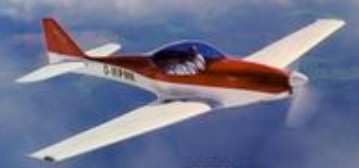
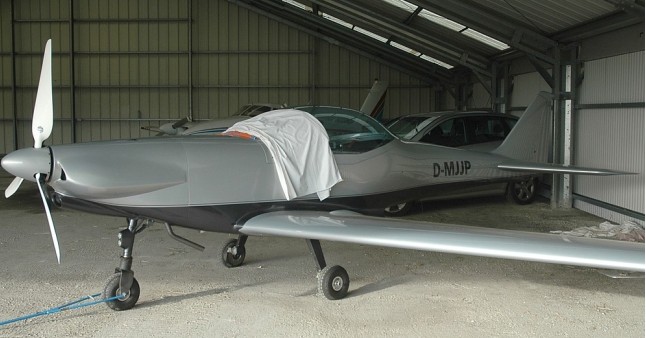
The Fascination was marketed by WD Flugzeugleichtbau of Heubach, Germany as the Dallach D.4 Fascination. This was an aircraft of mixed construction, including wood, composites and steel components with fabric covering. It first flew in 1996. An all-composites version, the Dallach D.4 BK Fascination was flown in 1999.
The Fascination has a spaceframe fuselage and composite wings covered in Dacron. It is equipped with a retractable undercarriage, wing flaps and a variable pitch prop. It is powered by a Rotax 912 UL or Rotax 912 ULS engine. Price 2009: 84000 EURO
The Fascination F100 is an advanced version of the ultralight/VLA airplane which was based on the all composite VLA layout of the Fascination (D4BK) by Wolfgang Dallach. During and after his collaboration with Wolfgang Dallach, Jaroslav Sedláĉek from UL-Jih in the Czech Republic made own contributions to the design which finally led to the UL-Jih F-100.
The Wolfgang Dallach Company collapsed and on 1 August 2008 DG Aircraft GmbH took over support of the Dallach “Fascination”, “Evolution”, “Sunwheel” and all derivatives.
The Czech Kaplice company UL-Jih successfully completed testing the Fascination F100. On December 12, 2007, the craft was weighed in the presence of the LAA’s chief inspector, the German engineer Otto Bartsch, and a representative of the French company J.F. Boudet. The aircraft, together with adjustable propeller and retractable landing gear in operational mode, weighed 294 kg. The hull also passed the stress test with an overall burden of 3265 kg. In July of 2007 the wings were subjected to a fracture test with a 2100 kg load. In 2008 the aircraft will be ready for the French and German market. 2009 Price: 62500 EURO
UL-Jih fabricated the Fascination F100 models and claimed sole production and marketing rights both to the D.4 and D.5 when WD Flugzeugliechtbau ceased trading in 2005, though those rights are challenged by Swiss Light Aircraft AG, who build their own versions.
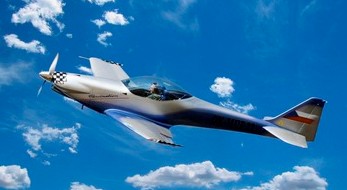
The later Fascinations are all-composite aircraft, with a low wing of trapezoidal planform. The ailerons have external balance trim tabs and sealed nosegaps. Inboard, there are electrically operated Fowler flaps. The fuselage becomes slender towards the tail, where the trapezoidal tailplane is set at mid-height, the elevators having a small cutout for rudder movement. The fin is swept but the rudder has vertical edges; it extends to the bottom of the fuselage. The cockpit seats two in side-by-side configuration under a one-piece bubble canopy, lever hinged from the rear; behind the seat backs there is luggage space. Until 2008, all Fascinations had a retractable tricycle undercarriage. The main wheels, mounted from the fuselage on cantilever spring legs, retract electrically outward into the wing and the nosewheel retracts rearwards. The fixed wheel option has wheel fairings. The main wheels have brakes and the nosewheel power steering. A Stratos Magnum 501 ballistic recovery parachute is fitted.
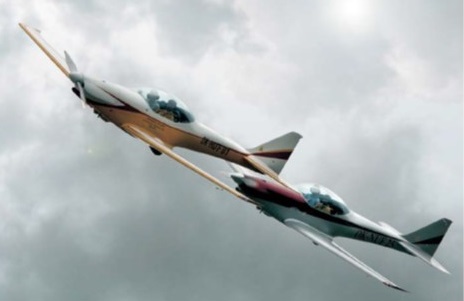
The Fascination has been marketed both complete and in kit form. More than 200 had been sold by 2006 and 183 appeared on the mid-2010 civil registers of European countries, excluding Russia. The price in 2017 was €89.380 for the F100.
It was reported that Fascination-airplanes (various versions) were flying in countries as remote as Brazil, Australia, and the Philippines.
DN4
Original mixed construction Fascination
First flew 1996
41 built
DN4 BK
Composite construction
Stall: 35 kt / 40 mph / 64 kmh
Cruise: 146 kt / 168 mph / 270 kmh
VNE: 157 kt / 180 mph / 290 kmh
Empty Weight: 290 kg / 639 lbs
MTOW Weight: 450 kg / 992 lbs
Climb Ratio: 1600 ft/min / 8,5 m/s
F80
Engine: Rotax 912UL, 59.6 kW (79.9 hp)
Wing span: 9.10 m (29 ft 6 in)
Wing area: 10.6 sq.m (115.2 sq ft)
Length: 6.87 m (22 ft 6 in)
Height: 2.10 m (6 ft 11 in)
MAUW: 472.5 kg (1,042 lb)
Empty weight: 297 kg (655 lb)
Fuel capacity: 96 L (25.3 US gal; 21.1 Imp gal)
Never exceed speed: 270 km/h (170 mph, 150 kn)
Cruise speed: 243 km/h (151 mph, 131 kn)
Stall speed: 65 km/h (40 mph, 35 kn) flaps extended
Climb rate: 6.0 m/s (1,180 ft/min)
Range: 1,400 km (870 mi, 760 nmi) with max fuel
g limits: +4.0/-2.0
Certification: VZ
Seats: 2
Fuel consumption: 15 lt/hr
Price (1998): 120 500 DM
Kit price (1998): 76 300 DM
F100
Engine: Rotax 912ULS
Propeller: ground-adjustable DUC, or variable-pitch Woodcomp SR 3000/2W
Span: 9,00 m
Wing area: 10,76 sq.m
Length: 6,65 m
Stall: 35 kt / 40 mph / 65 kmh
Cruise: 132 kt / 152 mph / 245 kmh
VNE: 146 kt / 168 mph / 270 kmh
Empty Weight: 300 kg / 661 lbs
MTOW Weight: 472 kg / 1041 lbs
Climb Ratio: 1200 ft/min / 6 m/s
Glide Ratio: 10
Take-off distance (50ft obstacle): 690 ft / 210 m
Landing distance (50ft obstacle): 1150 ft / 350 m
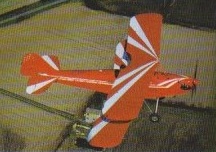
A tandem two seat biplane capale of aerobatics, the Sunwheel has a welded steel spaceframe fuselage while the wings have spars of argon-welded dural tube. The retro style biplane tail-dragger has dual controls and powered with a Rotax 912 UL four stroke engine. The wing spars are aluminum tubes with PU ribs covered with fabric. The ailerons are fitted on both upper and lower wings.
W.D. Flugzeugleichtbau GmbH marketed in completed and kit forms the Dallach D.3 Sunwheel tandem two-seat biplane.
The Wolfgang Dallach Company collapsed and on 1 August 2008 DG Aircraft GmbH took over support of the Dallach “Fascination”, “Evolution”, “Sunwheel” and all derivatives.
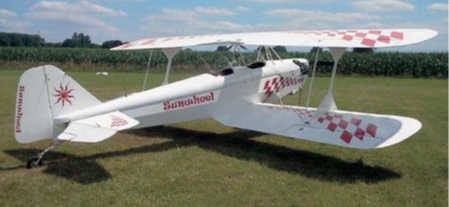
Sedláček UL-JIH marketed the Sunwheel UL.
Engine: Rotax 912, 80 hp
Wing span: 7 m
Wing area: 16 sq.m
MAUW: 450 kg
Empty weight: 250 kg
Fuel capacity: 30 + 30 lt
Max speed: 145 kph
Cruise speed: 135 kph
Minimum speed: 65 kph
Climb rate: 3.5 m/s
Certification: VZ
Seats: 2
Fuel consumption: 15 lt/hr
Price (1998): 88 800 DM
Kit price (1998): 62 700 DM
Sedláček UL-JIH Sunwheel UL
Engine: Rotax 912 UL
Span: 7 m
Length: 6,1 m
Wing area: 16 sq.m
Empty weight: 251 kg
MTOW: 400 kg
Stall speed: 50 km/h
Cruising speed: 130 km/h
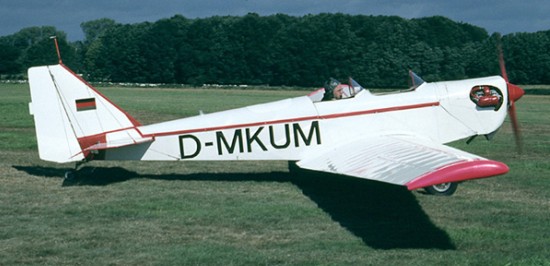
The Sunrise II was the first UL-aeroplane designed and built by Wolfgang Dallach, the prototype first flying in 1986. About 40 Sunrise II were built by Wolfgang Dallach Flugzeugbau and delivered complete or as a building package before production ended in 1991; the airframe remaining in production as the basis for the Sunwheel biplane. Originally powered by a 40 hp, 2 cylinder 4-stroke Lemon-Visas engine, most of the Sunrise UL aeroplanes have modified or replacement heavier engine.
Engine: Lemon-Visas, 40 hp
Seats: 2
Wolfgang Dallach developed not only the Sunrise and Sunwheel but also the Diabolo and the Fascination.
The Wolfgang Dallach Company collapsed.
Swiss Light Aircraft had the rights to the “Fascination”, “Evolution”, “Sunwheel” and all derivative aircraft and the type support acquired by the insolvency administrator. But they had never really had the intention to take an active care for UL aircraft.
On 1 August 2008 DG Aircraft GmbH took over support of the Dallach “Fascination”, “Evolution”, “Sunwheel” and all derivatives.
Wolfgang Dallach was working for DG Aircraft as a freelancer since 2006.
 All Aero