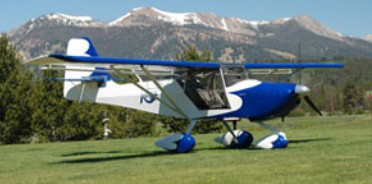
The Alto aircraft is an all-metal construction aircraft for amateur construction. The Alto aircraft meets both requirements to European category “ultralight aircraft” and “light sport aircraft” (LSA) category that has been defined in the U.S.A.
Different versions were offered. A basic version with the tricycle, nose type landing gear or optional with the tail landing gear with Rotax 912 ULS/UL as standard, but Jabiru on request, and wheel-type control or the stick control, standard is wheel control
Alto is single-engine, two-seat, low-wing, cantilever monoplane. The aircraft is all-metal riveted construction and may be equipped with rescue parachute system.
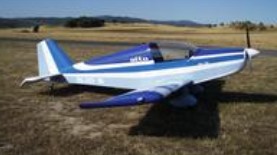
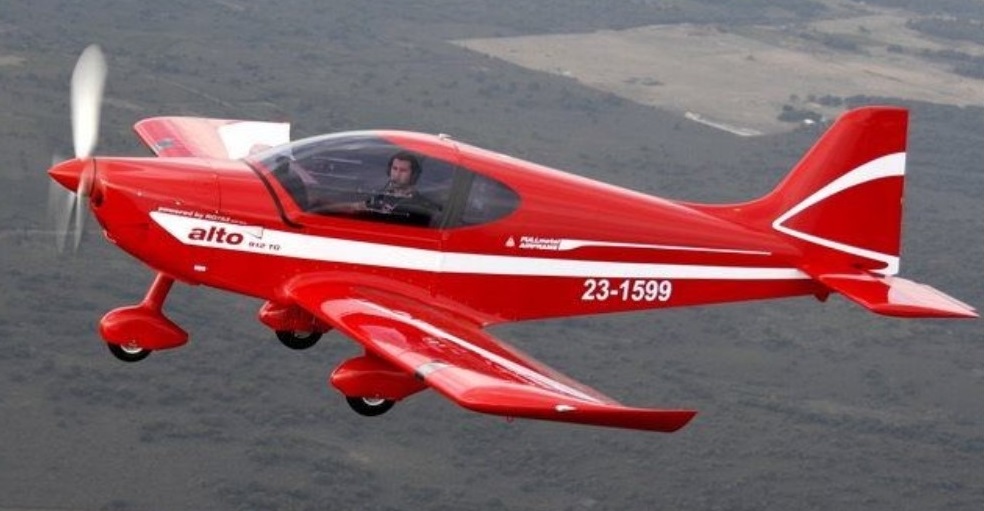
Alto 912 TG
The TG version (basic) is the tricycle, nose type with the nose landing gear steering. The main wheels are attached to the flexible all-composite legs. The main landing gear wheels brakes are operated by the hydraulic system, by means of break pedals (in the left side only) or with central brake with parking function. The TW version (optional) has the tail wheel landing gear.
The rectangular wing is a monospar construction with an auxiliary spar. The skin is made from duralumin sheet. The wing is equipped with ailerons, slotted flaps and integral fuel tanks with a total capacity of 105 l. All the parts are riveted together. The wing-body attachment forms a wing centre section, which is firmly placed into the fuselage. The wing main spar is connected to the wing centre section by bolts and the rear auxiliary spar is connected by a hinge.
The rectangular fuselage is of semimonocoque, riveted construction and has a bottom and the side walls reinforced by diagonal stiffeners. The dorsal is of oval cross section.
Alto 912 TG
The tail unit is of all-metal, riveted structure and has a standard configuration.
Aeroplane control consist of elevator, ailerons and rudder control surfaces. The manual control is of a wheel-type or a stick and deflections are transmitted by chains, push-pull tubes, and cables. The pedal control deflections are transmitted by cables to the rudder, and by push-pull tubes to the nose landing gear steering. The wing flaps and the elevator trim tabs are operated electrically. The main landing gear wheels brakes are independently operated by the hydraulic system, by means of break pedals on the pedal control.
The cockpit inner width is 106 cm and the wheel-type control and a forward sliding canopy make for easy boarding. The canopy is made from glass, and optionally may has light blue colour, and may be equipped with the wind-wings.
2009 Price: 44000 EURO
Alto TG 912 UL Engine: Rotax 912UL, 80 hp Length: 6,15 m / 20,18 ft Wing span: 8,20 m / 26,9 ft Wing area: 10,5 sq.m / 114 sq.ft Height: 2,25 m / 7,38 ft Cabin width: 1,10 m / 3,61 ft Seats: 2 Fuel: 118 lt / 31,2 US gal Take off run: 100 m / 328 ft Landing run: 150 m / 492 ft Empty weight: 280 kg / 618 lb MTOW – ULM: 472 kg / 1041 lb MTOW – LSA: 600 kg / 1320 lb Vne: 255 km/h / 158 mph Maximum speed: 230 km/h / 143 mph Cruising speed: 185 km/h / 115 mph Stall speed full flaps 450 kg: 65 km/h / 41 mph Stall speed no flaps 600 kg: 81 km/h / 51 mph G factor: +4 / -2 Climb rate 450 kg: 5,6 m/s / 1100 fpm Climb rate 600 kg: 4,5 m/s / 890 fpm
Alto TG 912 ULS Engine: Rotax 912ULS, 100 hp Length: 6,15 m / 20,18 ft Wing span: 8,20 m / 26,9 ft Wing area: 10,5 sq.m / 114 sq.ft Height: 2,25 m / 7,38 ft Cabin width: 1,10 m / 3,61 ft Seats: 2 Fuel: 118 lt / 31,2 US gal Take off run: 90 m / 295 ft Landing run: 150 m / 492 ft Empty weight: 285 kg / 628 lb MTOW – ULM: 472 kg / 1041 lb MTOW – LSA: 600 kg / 1320 lb Vne: 270 km/h / 168 mph Maximum speed: 250 km/h/ 155 mph Cruising speed: 200 km/h / 124 mph Stall speed full flaps 450 kg: 65 km/h / 41 mph Stall speed no flaps 600 kg: 81 km/h / 51 mph G factor: +4 / -2 Climb rate 450 kg: 6,3 m/s / 1250 fpm Climb rate 600 kg: 5,1 m/s / 1005 fpm Take-off distance (50ft obstacle): 440 ft / 135 m Landing distance (50ft obstacle): 490 ft / 150 m
The company Direct Fly s.r.o. was founded in 2006. The main subject of enterprise of the company is batch production of the ultralight sport aircraft ALTO. The aircraft factory is situated near Uherské Hradiště – Kunovice, in region with 70 years tradition of aircraft production.
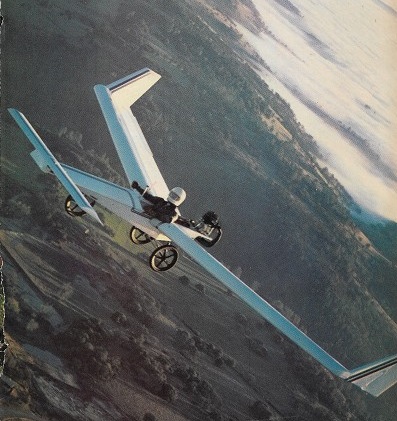
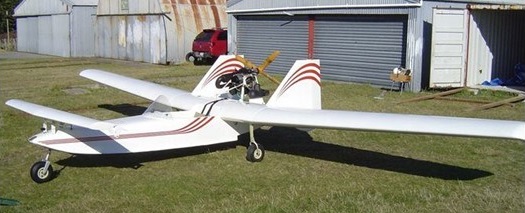
Single seat single engined mid wing monoplane with conventional three axis control. Wing has swept back leading edge, swept forward trailing edge, and tapering chord; two fin tail and canard wing. Pitch control by fully flying canard; yaw control by fin-mounted rudders; roll control by one third span spoilers; control inputs through stick for pitch/roll and pedals for yaw. Cantilever wing; wing profile double surface. Undercarriage has three retractable wheels in tricycle formation; steel spring suspension on all wheels. Push right go right nosewheel steering connected to yaw control. Individual brakes on main wheels. Glass fibre fuselage partially enclosed (total enclosure optional). Engine mounted above wing driving pusher propeller. Composite foam/glass fibre construction with spars in carbon fibre.
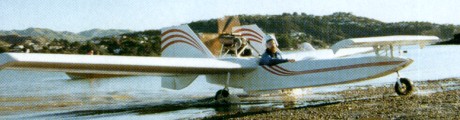
The appearance of the world’s first purpose designed amphibious ultralight created quite a stir when it appeared in prototype form at the ’82 Oshkosh and it has continued to attract great interest ever since.
This composite construction machine has floats at its wing tips and the entire fuselage forms a hull. The main wheels of the XTC Hydrolight retract sideways and outwards and the nosewheel retracts forward, nestling in the nose of the fuselage. Foot operated individual main wheels brakes are fitted.
Though originally fitted with a twin cylinder Cuyuna 430RR and later with the Kawasaki TA440 developing 39 hp at 6000 rpm, the XTC Hydrolight is now normally supplied with the KFM 107 engine. The title stands for Cross Terrain Craft and, according to its constructor, is pronounced ‘ecstasy’! To allow trailer transport, the outer wing sections are removable, rigging time being quoted as 10 min with one person. The aircraft is supplied in kit form, requiring some 100 h for completion, for around $6000 in 1982, the exact price depending on the options selected from a long list including bubble canopy, parachute systems, lights, instruments, skis, Tedlar wing covering and a trailer.
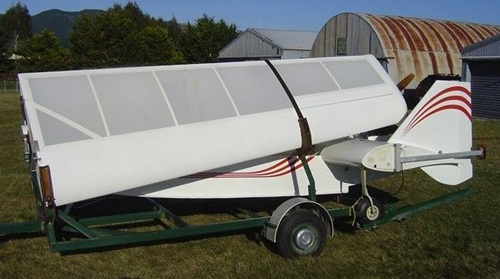
Powered by a Rotax 447 it cruises at around 45-50mph at only 4700rpm and uses around eight litres per hour. You can up the cruise to 60-65mph. The hull is constructed of fibreglass and Kevlar, the wing has a fibreglass D-section leading edge and covered with sail cloth, and a carbon fibre capped spar. Wing attach fittings are titanium, and with extensive use of stainless steel and anodised aluminium in a majority of the rest of the metal fittings this is a very low maintenance airframe even if operated in the sea.
Engine: KFM 107, 25 hp at 6280 rpm. Propeller diameter and pitch 52×22 inch, 1.32×0.56m. V belt reduction, ratio 2.1/1. Max static thrust 170 lb, 77 kg. Power per unit area 0.16 hp/sq.ft, 1.7 hp/sq.m. Fuel capacity 5.0 US gal, 4.2 Imp gal, 18.9 litre. Length overall 15.2 ft, 4.62 m. Height overall 4.8ft, 1.44m. Wing span 32.0ft, 9.75m. Chord at root 5.0ft, 1.52m. Chord at tip 3.0ft, 0.91m. Dihedral 3 degs. Canard span 12.0ft, 3.65m. Canard chord 2.5 ft, 0.76 m. Fin height 3.0 ft, 0.91 m. Total wing area 155 sq.ft, 14.4 sq.m. Main wing area 128 sq.ft, 11.9sq.m. Canard area 27.0 sq.ft, 2.5 sq.m. Total spoiler area 4.0 sq.ft, 0.37 sq.m. Fin area 10.0ft , 0.93 sq.m. Rudder area 8.0 sq.ft, 0.74 sq.m. Main wing aspect ratio 8.0/1. Wheel track 6.3ft, 1.93m. Wheelbase 10.2ft, 3.09m. Nosewheel diameter overall 11 inch, 26 cm. Main wheels diameter overall 11 inch, 26 cm. Floats, dimensions 2.4 x 14.0 ft, 0.71 x 4.26 m. Empty weight 247 lb, 112kg. Max take off weight 500 lb, 227kg. Payload 253 lb, 115kg. Max wing loading 3.22 lb/sq.ft, 15.8 kg/sq.m. Max power loading 20 lb/hp, 9.1 kg/hp. Load factors +4.0, 4.0 design; +8.0, 8.0 ultimate. Max level speed 62 mph, 100 kph. Never exceed speed 80 mph, 129 kph. Max cruising speed 60 mph, 97 kph. Economic cruising speed 50 mph, 80 kph. Stalling speed 25 mph, 40 kph. Max climb rate at sea level 600 ft/min, 3.1 m/s. Min sink rate 250 ft/min at 37 mph, 1.3 m/s at 59 kph. Best glide ratio with power off 14/1 at 40 mph, 64 kph. Take off distance 100 ft, 30 m. Landing distance 200 ft, 60 m. Range at average cruising speed 120 mile, 193 km.
Engine: KFM 107 ER, 22 hp. 2.1:1 reduction belt drive. Wingspan 32ft. Wing area 150 sq.ft. Aspect ratio 6:1. Length 14ft. Empty weight 280 lbs. Payload 250-lbs. pilot plus fuel. Wing loading 3.2 lbs/sq.ft. L/D 16:1. Cruise speed 50 mph. Stall speed 26 mph. Vmax 60 mph. Climb rate 600 fpm. Fuel 5 USgal.
Hoffmann Flugzeugbau-Friesach GesmbH Wolf Hoffinann Flugzeugbau KG Hoffmann Aircraft Ltd HOAC AG HOAC-Austria, Flugzeugwerk Wiener Neustadt Gesellschaft mbH Dimona Aircraft Diamond Aircraft Industries GmbH
Hoffmann Flugzeugbau-Friesach GesmbH was founded in Friesach, Austria, in 1981 to produce the newly certified H36 Dimona motorglider. 1983: Wolf Hoffinann Flugzeugbau KG, Sportflugplatz, D 8870 Gfinzburg; West Germany. By 1985, Hoffmann Aircraft Ltd, was a 100% subsidiary of Simmering-Graz-Pauker AG, and in 1985 moved to Vienna and introduces the Dimona Mk II. Production facilities are established at the Wiener Neustadt airport, just south of Vienna in 1987. The airport has a long history, dating back to before the first world war. The Dries family acquired 100% control of the company, now named HOAC AG, in 1989, thereafter being known as HOAC-Austria, Flugzeugwerk Wiener Neustadt Gesellschaft mbH. Immediately, development of the HK36R Rotax 912 powered motorglider and its derivative, the DV20 “Katana”, were started. With a view to supplying the US market with its new technology training aircraft, a full production facility was established in London, Ontario, Canada, in 1992. The company was named Dimona Aircraft. The Austrian built DV 20 Katana is certified in 1993 and the first, DV20, OE-CPU went on a demo tour in the US and Canada. The first Canadian built production DA20-A1 was delivered to Central Missouri State University in 1995 and serial production was ramped up. The DA20-A1 Katana receives the prestigous Flying Magazine Eagle Award, for best light aircraft. Named Diamond Aircraft Industries GmbH since March 1996, Diamond Aircraft Industries Canada division produced the HK 36 Super Dimona motorglider in four versions, but stopped production of the DV 20 Katana two-seat lightplane in Austria (first flown March 1991 as the HOAC LF 2000, becoming LF2 before DV 20), which is now produced in Canada as the DA 20 Katana. Latest aircraft is the four-seat DA 40 Katana (first flown 1998). HOAC introduces 4 new versions of the HK36 motorglider: taildragger or tricycle gear, either with the Rotax 912 or turbo 914 engine. The 4 seater DA40 program is announced in 1997 at the AERO EXPO in Friedrichshafen. The first experimental aircraft are powered by Rotax 914 and TCM IO-240 engines. The Lycoming IO360 is selected for the production version. The Rotax powered Katana, after production of 500 units, is replaced with the all new TCM IO240 powered DA20-C1, featuring improved performance, useful load and comfort. Diamond opens its new Diamond Flight Center, including training facilities and the Katana Kafé restaurant, at the London Airport. HOAC is renamed Diamond Aircraft GmbH, to align with the North American operation, and Diamond Austria acqired the Wiener Neustadt – East Airport (LOAN). In 1998 Diamond Aircraft maintained two research and de¬velopment centres, located in London, Ontario, Canada, and Weiner Neustadt, Austria. Diamond’s primary manufacturing facilities are located at their Canadian base, where the Con¬tinental powered Katana C1 is produced. The new Diamond DA40, four-place aircraft was also to be manufactured in this facility. Production of Diamond’s Katana Xtreme, high performance motor glider/glider tug aircraft takes place at the company’s Austrian facilities. By 1999 over 1250 Diamond aircraft were flying worldwide. The Wiener Neustadt airport and company facilities undergo significant expansion, with the addition of new taxiways, runway lighting, NDB approach, construction of a new administration building, pilot shop, restaurant, and maintenance facilities. The DA20-100, a factory refurbished and re-engined (Rotax 912S-100hp) Katana, is introduced and proves very popular, particularly in Europe. Diamond opens a factory sales, service and flight training center in Egelsbach (Frankfurt). The DA20-C1 Eclipse, an improved and enhanced version of the DA20-C1, enters production. The IFR DA40-180 Diamond Star is certified in 2000 and enters production. The HK36TTC-ECO, a specialized aerial camera platform also enters service. The DA40-180 receives FAA type certification and production for the North American market starts in London, Ontario in 2001. Diamond Austria flies the world’s first modern production GA diesel powered aircraft, the DA40-TDI, in 2001. The DA20-C1 was selected for the USAF Introductory Flight Training Program in 2002. The DA42-TDI project is announced at the Berlin International Airshow in May 02. Company CEO, Christian Dries makes the first test flight on December 9th. The DA40-TDI turbo diesel powered Diamond Star receives European certification. In 2004 the DA42, equipped with the Garmin G1000, receives European certification and serial production is started. The company’s DA42 demonstrator crosses the Atlantic nonstop, direct from St. John’s, Newfoundland to Porto, Portugal, with a total fuel burn of only 72 gallons of jet fuel. DA20 and DA40 receive Chinese CAAC certification and first G1000 equipped DA40’s are delivered to PanAm Beijing. The DA40 FP, a carburated fixed pitch version of the DA40 was certified in 2005. Diamond announces a Chinese joint venture to produce the DA40 Diamond Star for the Chinese market. The DA42 receives FAA certification and first US delivery is made. In 2006 the DA20-C1 was selected for new USAF training program, D-JET completes first flights, the first Diamond Brilliance Center opens in Naples, FL, and DA40 XL introduced. The DA50 Super Star made its first flight in 2007 and the DA40 XLS/CS Launch at AOPA Expo. 2008: 1560 Crumlin Sideroad, London N5V 1S2, Ontario, Canada. Diamond DA42 is certified for Known Icing in 2008 and in 2009 the Turbo diesel Austro Engine AE 300 is certified.
It was in 2017 that China-based Wanfeng Aviation Industry acquired full ownership of the Austria-based Diamond Aircraft Group, founded in 1981 and maker of single- and twin-engine piston aircraft, including the four-seat DA40, four-seat DA42, and seven-seat DA62 models. Wanfeng’s acquisition also included Diamond’s sister company and diesel aerospace engine maker Austro Engine.
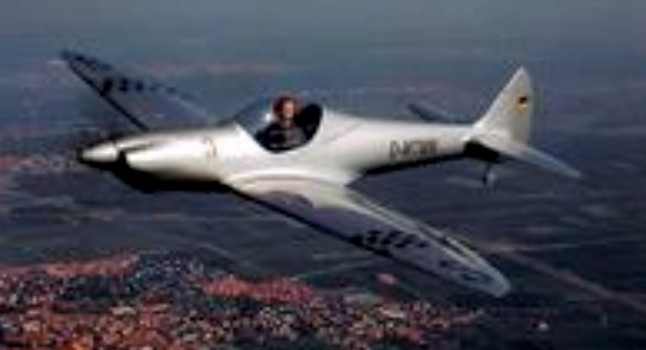
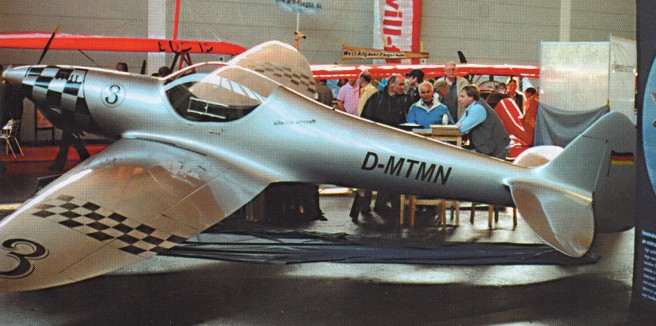
The developers of the Silence single place ultralight joined DG to produce both kits and finished aircraft. The main components are of a honeycomb sandwich.
Silence Twister
Silence, manufactured by Silence Aircraft in Verl near Bielefeld, Germany.
Silence Twister
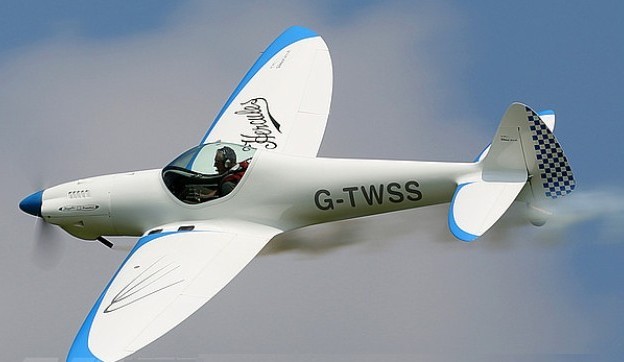
The Swiss company H55 was working with the Solar Impulse project co-founder and pilot André Borschberg. They use the Silence Aircraft Twister and jointly with Siemens they developed a single seat aerobatic airplane.
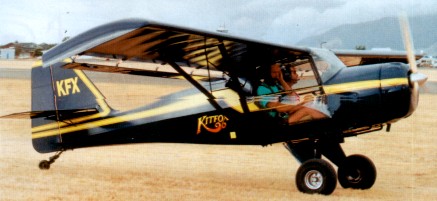
The Kitfox Model 1 introduced the “bump” cowl that has become the signature of the Kitfox. This cowl design was originally intended to accommodate a small radial engine, but the engine intended for the Kitfox never matured. The “round engine” look was retained, and remained popular. The Model 1 had an empty weight of only 425 pounds, and a gross weight of 850 pounds. The Rotax 532 was the engine of choice, although other two-stroke engines have been used. From a flying standpoint, the Kitfox Model 1 is an ultralight by today’s standards. It is a very simple, basic airplane that is light weight and relatively high powered (usually 65 hp). The interior can best be described as “cozy,” and the aircraft was usually built without dual brakes. The Model 1 accelerates rapidly and has light ailerons. There is a good deal of adverse yaw coupled with a neutral yaw axis. The adverse yaw is easily taken care of with rudder. The wing construction of tubular aluminium spars and wooden ribs, with full span Junkers type flaperons. The flaperons may be moved as flaps to affect pitch trim and lower the stall speed. The flaps can be extended 0 20 degrees and still allow full aileron travel. Lowering the flaperons to more than 2/3 of their full travel will result in up to a 50% reduction in roll rate. Takeoffs and landings are quite normal for a tailwheel airplane and easier than most. The nose fuel tank keeps most of the mass (center of gravity) right along the centerline, and directional control is not a major challenge.
The larger, wider Kitfox Model 2 was introduced in 1989. This “beefier” Kitfox allowed for greater useful loads and more room in the cabin. The Model 2 featured a larger vertical tail area and the new Rotax 582 engine option. The gross weight was increased to 950 pounds. The airfoil and control systems remained the same as the Model 1, but spars were strengthened to accommodate the higher gross weight. Flying-wise, the Kitfox Model 2 is quite similar to the Model 1. The larger tail surface helped some with the yaw issues, but was somewhat offset by larger engines and the introduction of wing tanks. Like the Model 1, the Model 2 is yaw neutral and needs to have the nose “placed” where it needs to be. Flaperon use and characteristics are virtually identical to the Model 1. Dual brakes were available for late Model 2 airplanes, and many earlier Model 2 airplanes have had dual brakes installed. Ground handling is similar to the Model 1, but the increase in gross weight, therefore greater mass, does cause one to pay a bit more attention to the landing rollout. Composite floats were developed, adding 70 lb to the airframe after substituting for the main gear. The Kitfox Model 3 featured structural changes that were designed to improve flight characteristics and provide a better platform for more powerful engines like the new 80 hp Rotax 912. A larger vertical stabilizer and rudder were added, as well as larger, stronger lift struts and spar carry through tubes in the fuselage. The gross weight was increased to 1050 pounds, but the empty weight only went up by a few pounds. This was the last Kitfox to use the original airfoil and flight control system introduced on the Model 1. The Model 3 was the first major attempt to aggressively deal with the yaw control issue. It should be remembered that we are not talking about yaw instability, but a neutral yaw condition. In other words, it was desired to have the airplane return to straight flight after pressing a rudder without having to move it back with your feet. Much of this objective was achieved by increasing the size of the vertical fin. The flaperon system is identical to the Model 1 and Model 2, with very similar handling characteristics. Again, the higher gross weight requires one to practice at least average tailwheel skills.
Introduced at Oshkosh in 1991, the Kitfox Model 4 was a completely new aircraft featuring innovations that enhanced the STOL abilities, improved flight handling and stability, and increased top speed by 10 to 15%. The Model 4 featured a new higher speed, laminar flow airfoil, new flaperon design, metal flaperon attach brackets, and a brand new 2:1 differential aileron control system that allows much improved control at full flaps. The gross weight of the Kitfox Model 4-1050 was the same as the Model 3, 1,050 pounds.
Kitfox IV
The Model 4 is an ideal platform for the Rotax 912 series of engines but is equally suitable for two-stroke engines. From a flying standpoint, the Kitfox Model 4-1050 was a genuine attempt to make the Kitfox handle like a contemporary, certified airplane, without losing the heritage of agility. It worked. The new airfoil added speed and performance. The flaperon airfoil, area, placement and movement ratios were changed significantly. For the first time, the flaperon moving up traveled twice as far as the flaperon moving down. This is similar to a Piper Cherokee. Rudder coordination was made much easier. The flaperons continued to be used for climb and cruise pitch trim, and back pressure is required to maintain approach speed. While reduction of roll rate was not as pronounced, the use of full flaperons did reduce the roll by up to 30% and increased the stick loads. The vertical fin area remained the same as the Model 3, once again a bit small for the larger engines now being installed. While yaw stability was no longer neutral, it was not aggressively positive. It would take one more iteration to get yaw stability to a more contemporary feel. The Kitfox Model 4-1200, marketed under the name of the Kitfox Classic 4, is the final evolution of the original Denney Aerocraft Kitfox design that began in 1984. One of the most successful kits on the market today, the Classic 4 kit has been sold continuously since late 1991. The Classic 4 has heavier lift struts and gear legs, as well as beefed up carry through tubes in the fuselage, to allow for a higher gross weight than the earlier Model 4 kits. The height of the vertical stabilizer and rudder was increased by 10 inches, and the rudder depth was increased by 2 inches to allow for improved handling. The Classic 4 is also available in a short wing Speedster configuration for those wishing more speed and a higher roll rate. In 1994, a light weight version of the Classic 4 was introduced with a Rotax 503 as the standard power plant. This airplane, known as the Kitfox XL, qualified as an ultralight trainer, but did not gain market popularity.
In 2001, an upgraded version of the Kitfox XL was introduced as the Kitfox Lite Squared and met with instantaneous market success. The Kitfox Classic 4 remains suitable for both the two-stroke and four-stroke Rotax 912 engine series. Many other engines have been adapted to the Kitfox Classic 4. Not only is the Kitfox Model 4 (Classic 4, Speedster, Lite Squared) the final evolution of the original Denney Aerocraft concept in terms of structure and engineering, but it is the best flying of all the previous versions. The vertical surfaces were increased significantly, resulting in excellent, positive, yaw stability. The Speedster version of the Model 4 added aerodynamic enhancements to the empennage, including an electric trim tab. Speedster modifications can be used on any Model 4 variant. Handling is smooth and crisp. While rudder coordination is needed, it is much closer to what most pilots encounter in today’s modern training airplanes. The higher gross weight and larger wing fuel tanks cause one to pay attention on landing rollout, but the much larger vertical tail surface gives you all the control power needed, and then some. The available electric pitch trim allows the Model 4 (in all its variations) to be trimmed for hands off flight in almost all normally anticipated flight attitudes. Many Model 4 aircraft were equipped with the 4-cylinder, 4-stroke, Rotax 912 that produces 80 HP. Model 4 variants are now turning up with the 100 HP Rotax 912S, resulting in power loadings that are better than the original, light weight, Model 1. Be prepared for an airplane that is ready to fly before you are. In 2001, the Classic 4 was packaged as the Lite Squared and introduced into the ultra light community as a two place, ultra light trainer. This packaging resulted in the Classic 4/Lite Squared being adapted to tri-gear in addition to the familiar tail wheel configuration. The Kitfox IV features a laminar flow wing aerofoil as well as a new flaperon aerofoil providing a full span, high performance fowler flap like performance. The new wing contributes to an increase in cruise speed of around 25 mph claims the manufacturer while decreasing the stall by about 2 mph. Computer marketing pioneer Phil Reed bought rights to the Kitfox line, changed the company name to SkyStar, brought out new sleeker looking models including trigears, and sold the company when sales began to slacken. Several groups of investors made Kitfox kits for a while, but the project eventually collapsed into bankruptcy. The McBeans have put the Kitfox, or at least one top-end model, back in the game. In 1994, SkyStar aircraft was faced with an increasing demand to produce a significantly larger version of the Kitfox that would be able to utilize contemporary certified engines (Continental and Lycoming) in addition to the Rotax 912 engines. The answerer to this demand was the entirely new Kitfox Series 5. While appearing very similar to the Kitfox Classic 4, it is, in fact, a completely new design. The Kitfox Series 5 introduced a new marketing approach in which different variations of the Series 5 were given names. The tailwheel version became known as the Safari, and the tri-gear version (the first production tri-gear airplane based on the Kitfox design) was named the Vixen. The Vixen utilized a swept tail, a cosmetic change that did not affect performance. Originally introduced with a gross weight of 1400 pounds, the gross weight was increased to 1550 pounds in mid-1995. The handling characteristics became much more like those of contemporary certified aircraft, but lost none of the agility that had become a Kitfox trademark. As with all Kitfox aircraft, the folding wing feature was retained. In 1998, the name of the Safari was changed to the Outback, and the Vixen became the Voyager, but the basic features remained the same. A short wing version of the Series 5 was also sold, and it was known as the Series 5 Speedster. Although heavier and larger, the Series 5 is an aerodynamically cleaner design than the Classic 4 and cruises at a higher speed. The Series 5, and variations thereof, are a delight to fly. Refinements to the vertical tail surfaces and a new, trimable, horizontal stabilizer enhanced the pitch feel. The Series 5 has a “smoother” feel than the quick reacting Model 4, but retains the overall agility. Yaw stability is positive and good. The greater weight of the 1550 pound airplanes, coupled with the greater mass of Continental and Lycoming engines, causes the Series 5 to feel very much like a larger, heavier, certified airplane. This is not a surprise, as the Series 5, along with its tooling, was specifically designed to meet Primary Aircraft certifications standards. The tri-gear version of the Series 5 (Vixen/Voyager) is a contemporary nose gear airplane in all respects. The use of differential braking to steer the tri-gear airplane may take some practice, but offers unparalleled ground maneuverability. The larger engine choices result in a larger cowling and limited forward visibility during ground operation of the tailwheel version of the Series 5. Good tailwheel proficiency is suggested before your first flight of the “limited view” Series 5. Cruise flight in the Series 5 is nose low, resulting in very good in-flight visibility.
In 1990 the first Skyfox (RPX-44), the Philippine version of Kitfox, assembled by the Philippine Aircraft Company, Inc. (PACI) in agreement with Denney Aerocraft of the U.S.A., flew. By 1995 the Kitfox was being built under licence in the Philippines by PACI. The Speedster version is based on the Classic IV or series V.
SkyStar’s new management team introduced the Kitfox Series 6 in 2000. The multiple versions of the Series 5 Kitfox were all rolled into a single airplane that possessed the most versatile features of all the Kitfox’s. The Kitfox Series 6 has a useful load of up to 800 pounds and a range of over 700 miles, coupled with cruising speeds of over 120 mph. The factory’s Series 6 actually averaged 137 mph in the Sun ‘n Fun 100 Air Race in 2001, and that was with two folks on board. The Series 6 could be configured as either a tri-gear or tailwheel airplane, and can be converted to either version after assembly is completed. Assembly times were significantly reduced, and the Series 6 accommodates more engine types than any other Kitfox. The look, feel and flight characteristics of the Kitfox Series 6 are like those of the most sophisticated, certified airplane, but none of the Kitfox adventure has been sacrificed. All of the good flying qualities inherent to the Kitfox Series 5 are present in the Kitfox Series 6. The Series 6 has a heavy-duty landing gear system that improves soft and rough field ground handling. The Series 6 no longer used the bungee/tube landing gear that was standard on the Series 5, resulting in a more easily controlled airplane during rollout after a tailwheel landing. Like all Kitfox’s, the Series 6 retains the ability to perform awesome forward slips and is an ideal airplane for short field operations. The Kitfox Series 6 has a refined flap system that allows the selection of two optimum flap positions. The first notch is used for takeoff and approach. while the second notch is generally reserved for landing. The tri-gear version of the Series 6 is very well balanced, and smooth takeoff and landing rotations are effortless. The Model 6 kits are intended for rapid assembly. All of the welding is done at the factory, then powder coated. The wings and ailerons are fabricated in the factory, and fuel tanks are fitted and ready to be bolted in. Most components are prefabricated or preshaped and finished for quick attachment. John and Debra McBean decided to concentrate on the Super Sport model, replacing the Classic IV. The Super Sport kit cost $5000 more than the Classic IV did, and the 80-hp Rotax 912 engine should work well in the Super Sport.
The Kitfox Series 7 introduces a variety of both major and subtle changes in the Kitfox history of ongoing product development. Most noteworthy is a variety of engine system enhancements that have resulted in an airplane that can cruise at over 150 mph, fly 700 miles non-stop, and heft a useful load of 700 pounds. Through use of the remarkable Rotax 914, turbo-charged engine, the Kitfox Series 7 has a service ceiling of 25,000 feet, meaning it can operate from any public use airport in the United States, without concern over runway length, field elevation or air temperature. Flight control improvements have lowered the landing speed and reduced aileron induced yaw. The larger elevator and new manual trim system strengthen pitch authority and stability. The entire Rotax engine installation has been greatly simplified, resulting in a significant reduction in assembly time. This new installation also results in much improved windshield weatherproofing. Like the Kitfox Series 6, which has been replaced by the Series 7, convertible landing gear, folding wings, and many custom features are standard. While many of the Series 7 performance improvements are achieved with the Rotax 914, Continental and Lycoming engines, in addition to the popular Rotax 912S, remain very popular engine choices. Most Series 7 improvements can be retrofitted to the Kitfox Series 5 and 6.
New from Skystar in 1998 was the Kitfox Lite, as a US Part 103 ultralight. It has a spaceframe fuselage, wings with tubular spars and plywood ribs. The Fowler flaps have been retained.
Skystar Kitfox Lite
More than 5,000 had been delivered by 2012. The latest model, Kitfox SLSA, was available ready to fly or as a kit, this fabric/tube taildragger (also tricycle gear) backcountry STOL performer then offering a Rotax 912iS fuel-injected version. Price 2012: $99,995.
Kitfox 1 Engine: Rotax 532LC, 64 hp. Max wt.: 950 lbs Wing span: 32 ft. Wing area: 128 sq.ft. Wing loading: 7.42 lbs/sq.ft Power loading: 14.61 lbs/hp Average empty weight: 426 lbs. Average useful load: 424 lbs. Max speed (Vne): 100 mph Cabin width: 36 in. Length (wings folded): 21 ft. Width (wings folded): 7 ft. 10 in. Height: 67 in. Average cruise speed: 75 mph Stall Speed: 36 mph Seats: 2
Kitfox II Engine: Rotax 582, 64 hp. Wing span: 32 ft. Wing area: 128 sq.ft. Gross weight: 950 lbs. Average cruise speed: 85 mph Stall Speed: 36 mph Average empty weight: 426 lbs. Average useful load: 524 lbs. Max speed (Vne): 100 mph Cabin width: 39.5 in. Length (wings folded): 21 ft. 1 in. Width (wings folded): 7 ft. 10 in. Height: 67 in.
Kitfox III Engine: 912, 80 hp. Gross weight: 1050 lbs. Average cruise speed: 85 mph Stall Speed: 37 mph Average empty weight: 460 lbs. Average useful load: 590 lbs. Max speed (Vne): 100 mph Cabin width: 39.5 in. Wing span: 32 ft. Length (wings folded): 21 ft. 1 in. Width (wings folded): 7 ft. 10 in. Height: 67 in
Kitfox IV Classic Engine: Rotax 912, 80 hp. HP range: 50-100. Speed max: 112 mph. Cruise: 110 mph. Range: 570 sm. Stall: 32 mph. ROC: 840 fpm. Take-off dist: 200 ft. Landing dist: 200 ft. Fuel cap: 26 USG. Weight empty: 495 lbs. Gross: 1200 lbs. Height: 75 ft. Length: 18.42 ft. Wing span: 32 ft. Wing area: 132 sq.ft. Seats: 2. Landing gear: tail wheel.
Kitfox IV Classic Engine: Rotax 912, 80 hp. HP range: 50-100. Cruise: 110 mph. Range: 700 sm. Stall: 36 mph. ROC: 1300 fpm. Take-off dist: 250 ft. Landing dist: 250 ft. Fuel cap: 27.5 USG. Weight empty: 650 lbs. Gross: 1200 lbs. Length: 18.5 ft. Wing span: 32 ft. Wing area: 132 sq.ft. Seats: 2. Cockpit width: 39 in Landing gear: tail wheel. LSA
Skystar Aircraft Classic IV Engine: Rotax 912, 80 hp Wing span: 9.75 m Wing area: 12.40 sq.m MAUW: 543 kg Empty weight: 278 kg Max speed: 180 kph Cruise speed: 175 kph Minimum speed: 60 kph Climb rate: 6 m/s Seats: 2 Fuel consumption: 13 lt/hr Kit price (1998): US$25,285
Kitfox V Engine: Rotax 912, 80 hp. HP range: 80-125. Speed max: 123 mph. Cruise: 110 mph. Range: 605 sm. Stall: 35 mph. ROC: 750 fpm. Take-off dist: 185 ft. Landing dist: 215 ft. Fuel cap: 26 USG. Weight empty: 705 lbs. Gross: 1550 lbs. Height: 7.5 ft. Length: 20.58 ft. Wing span: 29 ft. Wing area: 121 sq.ft. Cabin width: 42.5 in. Seats: 2. Landing gear: tail wheel.
Skystar Kitfox V Engine: Continental IO-240, 125 hp Wing span: 8.84 m Wing area: 11.13 sq.m MAUW: 703 kg Empty weight: 406 kg Fuel capacity: 99 lt Max speed: 233 kph Cruise speed: 222 kph Climb rate: 6 m/s Seats: 2 Fuel consumption: 25 lt/hr Kit price (1998): $15,995
Kitfox Vixen Engine: Continental IO-240, 125 hp. HP range: 80-125. Speed max: 145 mph. Cruise: 138 mph. Range: 618 sm. ROC: 1200 fpm. Take-off dist: 230 ft. Landing dist: 220 ft. Fuel cap: 26 USG. Weight empty: 725 lbs. Gross: 1550 lbs. Height: 8.08 ft. Length: 20.25 ft. Wing span: 29 ft. Wing area: 121 sq.ft. Seats: 2. Landing gear: nose wheel.
Kitfox Safari Engine: Continental IO-240B, 125 hp. HP range: 80-125. Speed max: 136 mph. Cruise: 130 mph. Stall: 43 mph Range: 610 sm. ROC: 1800 fpm. Take-off dist: 129 ft. Landing dist: 300 ft. Fuel cap: 27 USG. Weight empty: 750 lbs. Gross: 1550 lbs. Height: 5.7 ft. Length: 19.2 ft. Wing span: 29 ft. Wing area: 120 sq.ft. Seats: 2. Landing gear: tail wheel.
Kitfox IV Speedster Speed max: 120 mph. Cruise: 115 mph. Range: 640 sm. Stall: 39 mph. ROC: 1200 fpm. Take-off dist: 200 ft. Landing dist: 240 ft. Engine: Rotax 912, 80 hp. Fuel cap: 26 USG. Weight empty: 640 lbs. Gross: 1200 lbs. Height: 6.64 ft. Length: 18.33 ft. Wing span: 28.66 ft. Wing area: 116.8 sq.ft. Seats: 2. Landing gear: tail wheel.
Kitfox Super Sport Cruise: 120 mph Stall: 41 mph Range: 700 sm Rate of climb: 1300 fpm Takeoff dist: 290 ft Landing dist: 270 ft Engine: Rotax 912S, 100 hp HP range: 80-100 hp Fuel capacity: 18 USG Empty weight: 750 lb Gross weight: 1320 lb Length: 19.8 ft Wing span: 32 ft Wing area: 132 sq.ft Seats: 2 Cockpit width: 43 in Landing gear: nose or tail
Kitfox Lite Squared
Skystar Kitfox Lite Engine: 2SI F 35, 30 hp Wing span: 9.14 m Wing area: 10.23 sq.m MAUW: 226 kg Empty weight: 113 kg Max speed: 101 kph Cruise speed: 101 kph Minimum speed: 43 kph Climb rate: 3 m/s Seats: 1 Fuel consumption: 10 lt/hr





 All Aero