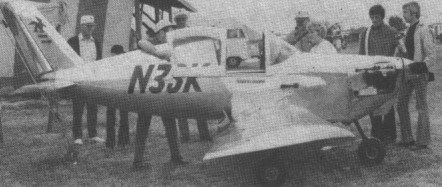
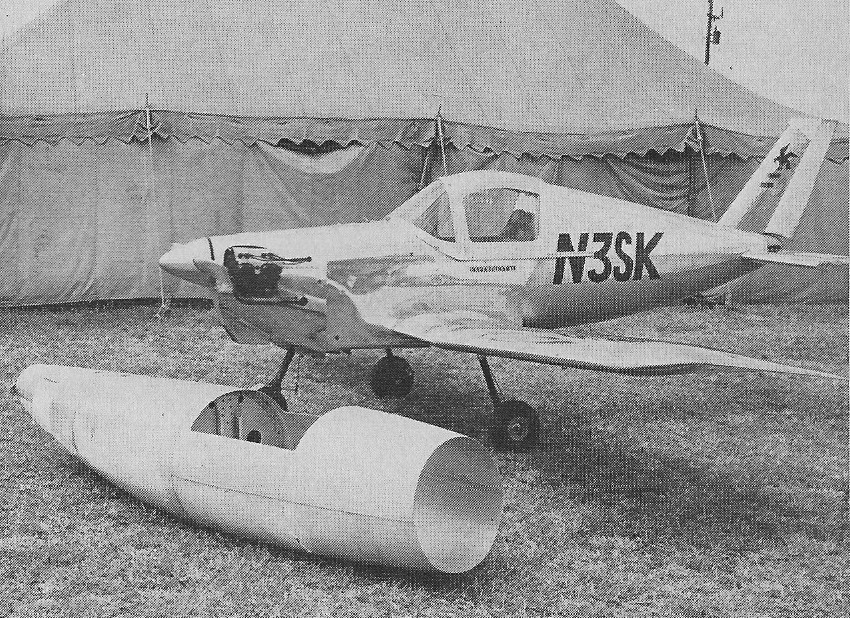
The Hawk is a single-seat, low-wing monoplane stressed to 9G’s. Originally it was designed by Dick Killingsworth to be built around a surplus 200-gal drop-tank, but plans also provide for a bulkhead and stressed skin structure, The wings are built with twin light-alley spars and the landing gear is the non-retractable tricycle type. Fuel is carried in a forward tank with the capacity of nine gallons, but an optional 14-gallon tank can be added in the aft section.
Powered by a Lycoming O-145B-2, the Hawk was designed to be built with ordinary hand tools, pop rivets and very little welding or machine work. By 1974 over 250 sets of plans had been sold, at $50 each.
Gross Wt. 893 lbs. Empty Wt. 525 lbs. Fuel capacity 9-23 USG. Wingspan 20’4”. Length 15’. Engine 65-hp Lycoming. Top speed 156 mph. Cruise 141 mph. Stall 50 mph. Climb rate 1500 fpm. Ceiling 12,000 ft. Takeoff run 600 ft. Landing roll 550 ft. Range (14 gals) 480 sm.
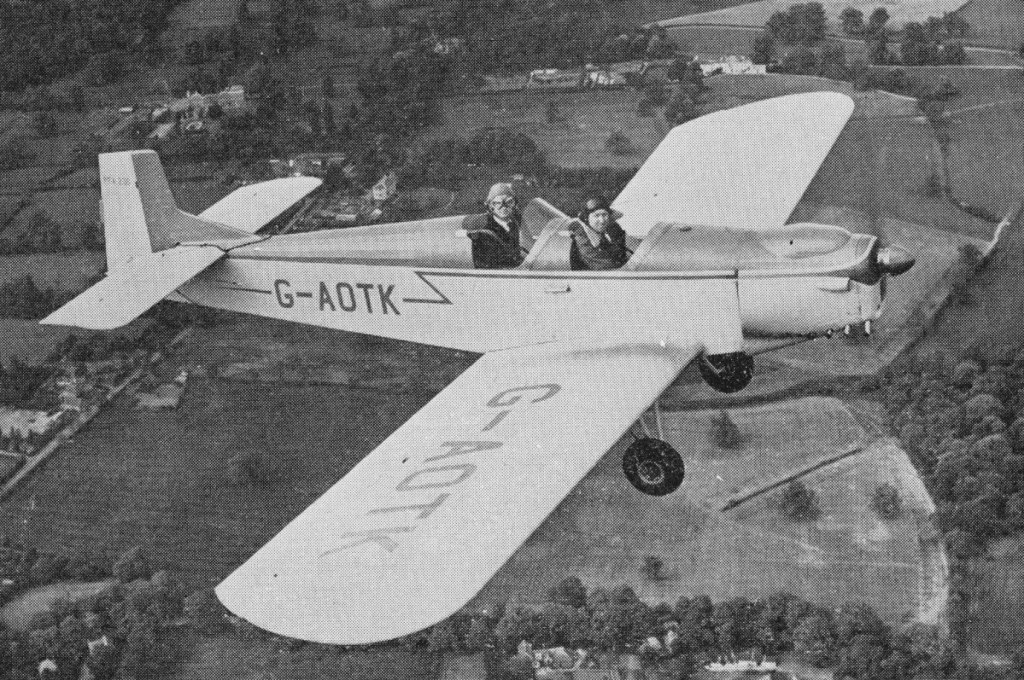
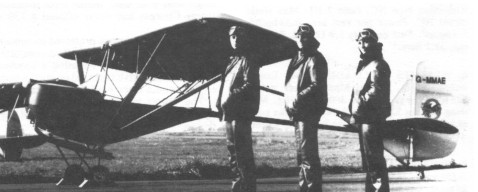
After designed the Turbulent, Roger Druine created the two-seat version, the D.5 Turbi. The prototype first flying in the late 1940s, powered by a Beaussier Bo2.
The Turbi tandem two-seater follows the same lines as the Turbulent and the construction is very similar. The rear turtle-decking on early models was fabric covered, but later models are plywood covered. Dual controls are fitted. The fuselage is of rectangular slab-sided construction with four spruce longerons and frames. The fin is built integral with the fuselage. The tailplane is non-adjustable and like the fin is plywood covered. The wings employ fixed slots, a box type main spar, drag spar, rear spar, lattice type ribs and plywood covering forward of the main spar. The remainder including the ailerons are fabric covered. The main undercarriage is of divided type and has coil springs for shock absorption. A variety of engines may be installed from 45 to 85 h.p.
Falconar plans show open cockpit with dual controls that can be flown solo from either the front or back seat, the original design was a dual windshield open cockpit. Early Turbi’s built in England were powered with the DH Gipsy Minor. The 4 cylinder 65hp Czech Walter LOM II AE has a dry weight of only 132 lbs – which is a similar configuration to the Gipsy Minor. Other popular engines can be a Continental or Lycoming 65 to 115 HP.
Built by the de Havilland Technical School students – Walter Mikron 60 hp
Falconar updated plans & kits for this light 2-seater tandem sportplane, in the LSA catergory. Options include enclosed cockpit either with single curvature windows or vacuum formed bubble canopy.
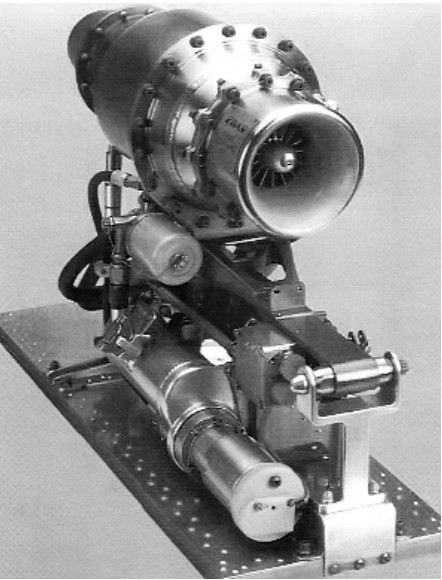
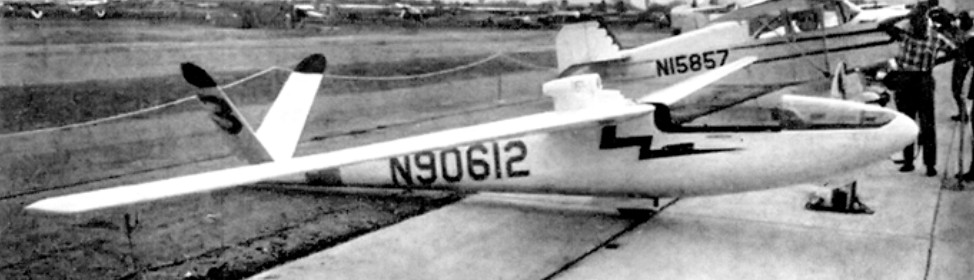
ln 1963, Max Dreher began work on the design of the youngest member of his turbine family, the TJD-76 Baby Mamba. It was designed to power a sailplane and had a static thrust of 55 lbs. He tried to keep it as simple and light as possible. No gear reduction was used and it had a free-spinning rotor. He selected a single-stage mixed flow compressor, an annular combustion chamber and a single stage axia-flow turbine for the basic layout.
A single-shaft turbojet, the air intake at the front, with an air flow of 0.50 kg (1.1 lb)/sec. The compressor is a single-stage mixed-flow, with single 17-4 PH stainless steel impeller with sixteen vanes. Splined to shaft and supported in two ball bearings. Mixed-flow two-stage diffuser of 347 stainless steel. Pressure ratio : 2.8 : 1
The compressor casing is of 2024 aluminium alloy and 347 stainless steel.
The combustion chamber is an annular type with Hastelloy X outer casing and flame tube. Vaporising system with fuel/air pre-mix. One spark plug in flame tube.Fuel system: Manual with pressurised fuel supply, or electrically-driven fuel pump. Fuel pressure 5.52 bars(80 lb/sq in). Automatic system for drone applications. Fuel grade: Kerosene or petrol.
The nozzle guide vanes are single axial stage, with sixteen investment-cast vanes in Stellite 31.Turbine: Single-stage axial-flow, with nineteen integrally-cast blades, of Inconel 713 LC. Gas temperature 770°C before turbine, 675°C after turbine, at continuous cruising power.
A fixed type jet pipe, with jet pipe and cone of Hastelloy X. LUBRICATION: Air/oil mist system with total loss, using bleed air equivalent to 2.5 per cent of total mass flow. Capacity 1 litre (2 US pints) of MIL-L-7808E (Turbo 15).
Mounting is by two rigid connections on diffuser section and one flexible connection on turbine section. Starting is by compressed air 1034 bars (150 lb/sq in), via three nozzles driving turbine wheel.
The whole job, from the begining to end, took about 3600 hours.
After initial running on the test stand, Max Dreher installed the engine on his Prue 215A sailplane. To do this he designed a jet pack consisting of the engine, the pressurized fuel system and the lubrication unit. the total weight of this first pack was 25 pounds. An auxiliary oil tank is mounted separately and employs an electrical driven gear pump.
A third unit, the jet control pack (engine controls, instruments, switches) is located in the cockpit.
Prue 215A – Mamba Jet
Length overall: 416 mm (16.38 in) Diameter: 151 mm (5.94 in) Dry weight: 6.4 kg (14.1 lb) Complete weight with fuel tank: 10.0 kg (22 lb) Specific fuel consumption: 42.5 mg/Ns (1.5 lb/hr/lb st) At max rating Oil consumption: 25 cc/min At max rating Max rating: 0.245 kN (55 lb st) Continuous rating: 0.20 kN (45 lb st)
Side by side two seat single engined high-wing monoplane with conventional three axis control. Wing has swept back leading edge, unswept trailing edge and tapering chord, conventional tail. Pitch control by elevator on tail; yaw control by fin mounted rudder; roll control by half span ailerons; control inputs through stick for pitch/roll and pedals for yaw. Wing braced from below by struts; 100% double surface. Undercarriage has three wheels in tail dragger formation; composite suspension on tailwheel and bungee suspension on main wheels. Push right go right tailwheel steering connected to yaw control. No brakes. Aluminium/fabric fuselage, partially enclosed. Engine mounted below wing driving tractor propeller. Anodized aluminium tubing is seamless mandrel drawn. Aluminium extrusions are to British HE30 standard. Stainless steel cables, aircraft quality fasteners, Dacron wing covering, heat shrunk polyester covering to tail surfaces and ailerons. The Dragon 150 is the first aircraft produced by the Dragon Light Aircraft Co, which is an offshoot of the independent airline British Air Ferries. It makes no claim to be revolutionary, but instead is intended as a robust, practical machine in which conventional aircraft pilots will feel immediately at home. The Dragon 150 only just a microlight and is certainly not an ultralight in the US sense of the term. Designer Billy Brooks deliberately made the weight and wing loading as high as the microlight definition would allow, to maxi¬mise the number of days in which the aircraft can be used in the fickle British climate. Although the prototype, which first flew on 10 July 1982, was powered by a Hunting HS525A engine, DLAC decided to fit the Robin EC44 to the production version. Controls include a central control column, dual linked rudder pedals and dual linked throttles with a friction adjuster. A wide range of options is available, including 720 channel radio, electric start, parachute and extra instruments. Supplied as a pre cut, pre bent, pre drilled kit requiring 30 40 h to complete.
Dragon 150 Length overall 23.7 ft, 7.23 m. Height overall 7.7ft, 2.35m. Wing span 34.9ft, 10.64m. Chord at root 6.2ft, 1.88m. Chord at tip 4.8ft, 1.45m. Dihedral 1.5 degs. Sweepback 1deg. Tailplane span 11.0ft, 3.36m. Fin height 6.3 ft, 1.91 m. Total wing area 189 sq.ft, 17.6 sq.m. Total aileron area 30.8 sq.ft, 2.86 sq.m. Fin area 19.5 sq.ft, 1.81 sq.m. Rudder area 9.8 sq.ft, 0.91 sq.m. Tailplane area 40.4 sq.ft, 3.75 sq.m Total elevator area 12.4 sq.ft, 1.15 sq.m. Wing aspect ratio 6.0/1. Wheel track 5.7 ft, 1.74 m. Wheelbase 18.2 ft, 5.55 m. Tailwheel diameter overall 4 inch, 10 cm. Main wheels diameter overall 16 inch, 40 cm. Engine: Robin EC44, 45 hp at 6500 rpm. Propeller diameter and pitch 72 x 42 inch, 1.83 x 1.07 m. Toothed belt reduction, ratio 3.3/1. Max static thrust 240 lb, 109kg. Power per unit area: 0.24hp/sq.ft, 2.6hp/sq.m . Fuel capacity 6.9 US gal, 5.7 Imp gal, 26.0 litre. Empty weight 328 lb, 149kg. Max take off weight 791 lb, 359kg. Payload 463 lb, 210kg. Max wing loading 4.181b/sq.ft, 20.4kg/sq.m. Max power loading 17.6 lb/hp, 8.0kg/hp. Load factors; +6.0, 3.0 ultimate. Max level speed 66mph, 106 kph. Never exceed speed 85mph, 136kph. Max cruising speed 60mph, 96kph. Economic cruising speed 53mph, 86kph. Stalling speed 25mph, 40 kph. Max climb rate at sea level 500 ft/ min, 2.5m/s. Min sink rate 400ft/min at 28kph, 2.0m/s at 45kph. Best glide ratio with power off 9/1 at 38 mph, 61 kph. Take¬off distance 150 ft, 45 m. Landing distance 100ft, 30m. Service ceiling 14,000ft, 4270m. Range at average cruising speed 100 mile, 160km.
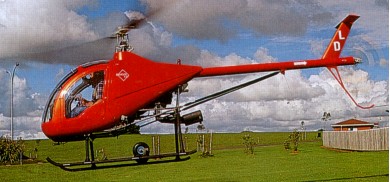
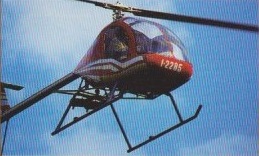
Designed by Angelo and Alfredo Castiglioni to FAR 27. Constructed with a welded titanium frame, the overall configuration is conventional, with a two bladed main rotor with a semi-rigid teetering head, and two bladed tail rotor. Both sets of blades are metal and of similar design to the proven Jet Ranger – although the blades, following European convention, rotate clockwise (when viewed from above). The Dragon Fly shows the influence of Bell Augusta parentage. The transmission is only about 20 cm deep and 30 cm in diameter. It is driven through a pair of triple V-belts and a centrifugal clutch by a horizontally opposed, four cylinder, two stroke engine. At 6250 RPM the 1052 cc engine develops 105 HP, although a more powerful 1300 cc 140 HP version is undergoing testing at the moment (1995) and will be fully inter-changeable with the 105 HP engine. The engine is fed by four Nikuni 44 carburettors, each with their own air filter and automatic vacuum pump, ensuring continuous fuel supply in the event of a failure of both of the main booster pumps. The carbs are mounted on each cylinder via a thermionic manifold – thereby eliminating the need for a carburettor heat control since they are heated directly by conduction. The need for a mixture control is also eliminated by the provision of a fixed jet with automatic altitude and temperature compensation. Engine cooling is by forced air from two axial, belt driven fans. HELIOT variant is for military and civil special operations, with a 661 lb (300 kg) useful load and is fitted with a camera and color monitor; can carry an external module to permit unmanned remote flying; with module removed, HELIOT can be piloted.
Dragonfly 300 Engine: Hirth F30A26AK, 105 hp. MTOW: 450 kg. Empty wt: 230 kg. Rotor Dia: 6.6m. Cabin width: 1.25m. Vne: 80 kt. Cruise: 65 kt. HIGE: 6730 ft. HOGE: 4760 ft. Endurance: 2 hr 50 min. Fuel cap: 64 lt. ROC @ 37 kt: 1300 fpm. Seats: 2. Descent autorotation: 1200 fpm @ 35 kt.
Engine: Hirth F30, 130 hp Rotor span: 6.6 m MAUW: 450 kg Empty weight: 230 kg Fuel capacity: 60 lt Max speed: 150 kph Cruise speed: 110 kph Minimum speed: 0 kph Climb rate: 9.5 m/s Seats: 2 Fuel consumption: 18 lt/hr Price (1998): £65,000 Kit price (1998): $83,000
Established 1993, produces the Dragon Fly model 333 two-seat piston-engined light helicopter (certificated June 1996). HELIOT variant is for military and civil special operations, with a 661 lb (300 kg) useful load and is fitted with a camera and color monitor; can carry an external module to permit unmanned remote flying; with module removed, HELIOT can be piloted. 1998: Via Raffaello, 1/A, I-22060 Cucciago (CO), Italy.
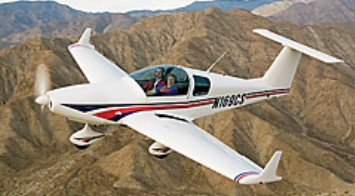
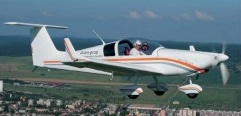
The Skylark takes Light Sport Aircraft to a new level in style. The lines and contours exude a sense of high energy and grace that not only looks good, but turns heads and delivers in performance. This two place, side-by-side, all metal, low wing aircraft provides strength and ruggedness not found in most LSA’s: it can withstand 7 G’s and has a Vne of 179 mph and a maximum LSA cruise of 138 MPH.
Stall: 36 kt / 42 mph / 68 kmh Cruise: 117 kt / 135 mph / 217 kmh VNE: 156 kt / 179 mph / 288 kmh Empty Weight: 296 kg / 653 lbs MTOW Weight: 599 kg / 1320 lbs Climb Ratio: 1200 ft/min / 6 m/s Take-off distance (50ft obstacle): 500 ft / 152 m Landing distance (50ft obstacle): 530 ft / 162 m
Dova Skylark LSA Engine: Rotax 912S, 100hp@SL TBO (hrs.): 1500 Fuel type: 100/100LL Propeller type: Fixed Pitch Landing gear type: Tri./Fixed Max ramp weight (lbs): 1320 Gross weight (lbs.): 1320 Landing weight (lbs.): 1320 Empty weight, std. (lbs.): 653 Useful load, std. (lbs.): 667 Useful fuel, std. (gals.): 24 Payload, full std. fuel (lbs.): 523 Wingspan: 26 ft. Overall length: 21 ft. 7 in. Height: 7 ft. 5 in. Wing area (sq. ft.): 101 Wing loading (lbs./sq.ft.): 13.1 Power loading (lbs./hp): 13.2 Seating capacity: 2 Cabin width (in.): 43 Cruise, 75% power (kts.): 117 Fuel burn, 75% power (gph): 4.0 Max range (nm): 75% power: 457 Max range (nm): 60% power: 543 Vso (kts.): 37 Service ceiling (ft.): 14,000 Best rate of climb (fpm.): 1200 Takeoff ground roll (ft.): 500 Landing ground roll (ft.): 530


 All Aero