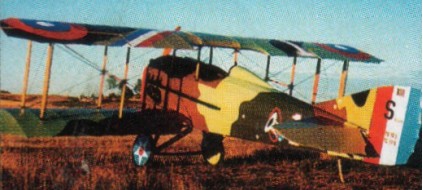
Early Bird Fokker D-VII

Designed by Dennis Wiley and built by Early Bird Aviation. LSA approved.

Engine: Rotax 277, 28 hp.
HP range: 28-36.
Height: 6.67 ft.
Length: 16.5 ft.
Wing span: 24 ft.
Wing area: 168 sq.ft.
Weight empty: 250 lbs.
Gross: 525 lbs.
Fuel cap: 5 USG.
Speed max: 63 mph.
Cruise: 53 mph.
Range: 85 sm.
Stall: 20 mph.
ROC: 1000 fpm.
Take-off dist: 80 ft.
Landing dist: 150 ft.
Service ceiling: 12,500 ft.
Seats: 1.
Landing gear: tail wheel.

Engine: Rotax 503, 50 hp
HP range: 28-50
Length: 16.5 ft
Wing span: 24 ft
Wing area: 168 sq.ft
Empty weight: 265 lb
Gross weight: 525 lb
Fuel capacity: 5 USG
Cruise: 65 mph
Stall: 22 mph
Range: 100 sm
Rate of climb: 1000 fpm
Takeoff dist: 75 ft
Landing dist: 150 ft
Cockpit width: 20 in
Landing gear: tailwheel

Early Bird SE-5A

A tube and fabric ultralight designed by Dennis Wiley, built by Early Bird Aviation.

Engine: Rotax 277, 28 hp.
HP range: 28-36.
Height: 6.67 ft.
Length: 16.5 ft.
Wing span: 24 ft.
Wing area: 168 sq.ft.
Weight empty: 250 lbs.
Gross: 525 lbs.
Speed max: 63 mph.
Cruise: 53 mph.
Range: 85 sm.
Stall: 20 mph.
ROC: 1000 fpm.
Take-off dist: 80 ft.
Landing dist: 150 ft.
Service ceiling: 12,500 ft.
Fuel cap: 5 USG.
Seats: 1.
Landing gear: tail wheel.

Engine: Rotax 503, 50 hp
HP range: 28-50
Length: 16.5 ft
Wing span: 24 ft
Wing area: 168 sq.ft
Empty weight: 265 lb
Gross weight: 525 lb
Fuel capacity: 5 USG
Cruise: 65 mph
Stall: 22 mph
Range: 100 sm
Rate of climb: 1000 fpm
Takeoff dist: 75 ft
Landing dist: 150 ft
Cockpit width: 20 in
Landing gear: tailwheel

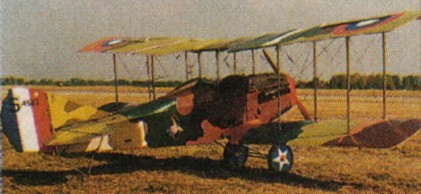
Early Bird Spad XIII

A copy of the Spad XIII designed by Dennis Wiley. Available as either of SE-5A, Fokker D-VII, or Spad XIII with the same specifications.

167 were built by Early Bird before manufacture and marketing was taken over by Loehle. Loehle shipped kits pre-built to covering stage. LSA approved.

Engine: Rotax 277, 28 hp.
HP range: 28-36.
Speed max: 63 mph.
Cruise: 53 mph.
Range: 85 sm.
Stall: 20 mph.
ROC: 1000 fpm.
Take-off dist: 80 ft.
Landing dist: 150 ft.
Service ceiling: 12,500 ft.
Fuel cap: 5 USG.
Weight empty: 250 lbs.
Gross: 525 lbs.
Height: 6.67 ft.
Length: 16.5 ft.
Wing span: 24 ft.
Wing area: 168 sq.ft.
Seats: 1.
Landing gear: tail wheel.

Engine: Geo Tracker, 80 hp.
HP range: 80-100.
Speed max: 90 mph.
Cruise: 80 mph.
Range: 270 sm.
Stall: 45 mph.
ROC: 600 fpm.
Take-off dist: 300 ft.
Landing dist: 400 ft.
Service ceiling: 14,000 ft.
Fuel cap: 10 USG.
Weight empty: 550 lbs.
Gross: 800 lbs.
Height: 6.4 ft.
Length: 16.25 ft.
Wing span: 20.17 ft.
Wing area: 142 sq.ft.
Seats: 1.
Landing gear: tail wheel.

Loehle Spad XIII
Cruise: 65 mph
Stall: 22 mph
Range: 100 sm
Rate of climb: 1000 fpm
Takeoff dist: 75 ft
Landing dist: 150 ft


Engine: Rotax 503, 50 hp
HP range: 28-50 hp
Fuel capacity: 5 USG
Empty weight: 265 lb
Gross weight: 525 lb
Length: 16.5 ft
Wing span: 24 ft
Wing area: 168 sq.ft
Seats: 1
Cockpit width: 20 in
Landing gear: tail wheel

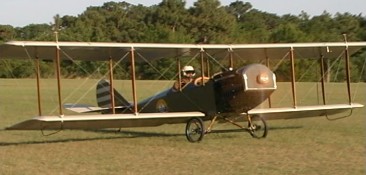
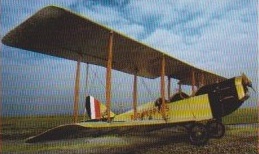
Early Bird Jenny

Designed by Dennis Wiley, the Jenny is a 2/3 scale WW I replica biplane. The fuselage construction is welded 4130 steel tube. Wing construction uses aluminium leading and trailing edge spars, and stamped aluminium ribs. The craft is covered in standard aircraft fabric. Building times are reported to be 400 to 600 hours.

A construction video is available which will cut building time considerably. The craft can be powered by the Rotax 503/582, or the AMW. The designer has completed the installation of a Chevy Geo engine on his own craft and had about 40 hours flying time on it.

The Geo is reported to put out about 65 HP and come in at a weight of 135 lbs. complete. The Jenny is a tail dragger, in a tractor configuration. Controls are stick and rudder.

The craft can be built from a set of plans and raw materials or was available in kit form.

The Jenny takes off in about 300 feet climbs at about 600 feet per minute and cruises in the 65/70 m.p.h. range.
The designer indicates that the craft has been tested to +6 and -4 G’s ultimate. Apparently 400 plan sets have been sold 40 aircraft are flying, with another 27 under construction.

By 2009, the Jenny was marketed by Loehle Aircraft Corp who carried the design for a while.

John-Hal Barfield
bjohnhal@aol.com
I need plans 2/3 Jenny I would like to put back in the air
12 May 2018

Variation:
Timber Tiger Aircraft Jenny

Engine: Rotax 503 CDI, 46 hp.
HP range: 46-65.
Empty Weight: 419 lbs.
Gross Weight: 800 lbs.
Wing Span: 27 ft. 6 in.
Wing Area: 175 sq. ft.
Wing Loading: 4.6 lbs. sq. ft.
Length: 18.33 ft.
Height: 7 ft.
Speed max: 70 mph.
Cruise Speed: 65 m.p.h.
Stall Speed: 35 m.p.h.
VNE: 80 m.p.h.
Range: 180 sm.
ROC: 450 fpm.
Take-off dist: 250 ft.
Landing dist: 300 ft.
Fuel cap: 10 USG.
Seats: 2.
Landing gear: tail wheel.

Engine: Rotax 503, 52 hp
Wing span: 8.3 m
Wing area: 16.3 sq.m
Empty weight: 190 kg
MAUW: 362 kg
Fuel capacity: 38.8 lt
Max speed: 130 kph
Cruise speed: 100 kph
Minimum speed: 60 kph
Climb rate: 4 m/s
Seats: 2
Fuel consumption: 11 lt/hr
Plan price (1998): US$125
Kit price (1998): US$9100

Eagle’s Perch Eagle’s Perch / Nolan 51-HJ

Eagle’s Perch single-seat kit-built helicopter was first flown 1994 as the Perch Nolan 51-HJ.

A single seat open frame coaxial pendulum helicopter. Steel tube frame, controlled with stick, throttle and rudder, no collective. Hydraulic controls, contra-rotating and two engines preclude autorotation. Engine: 2 x 65 hp Hirth 2706. Rotor blades: 4 blades, 14’ diameter, 4.75” chord, aluminium, asymmetric aerofoil. No tail rotor.

Gallery

Nolan 51-HJ
Engine: 2 x Hirth 2706, 130 hp
Rotor span: 4.11 m
Blade area: 0.12 sq.m
MAUW: 500 kg
Empty weight: 258 kg
Fuel capacity: 37.8 lt
Max speed: 160 kph
Cruise speed: 120 kph
Minimum speed: 0 kph
Climb rate: 15 m/s
Seats: 1
Fuel consumption: 17 lt/hr
Kit price (1998): $18,500

Eagle’s Perch
Cruise: 60 mph.
Top speed: 80 mph.
Empty wt: 525 lbs.
Useful load: 325 lbs.
Gross wt: 850lbs.
Width: 5’6”.
Height: 8’.
Length: 14’11’.

Nolan 51-HJ
Engine: 2 x Rotax 503, 50 hp.
HP range: 50-70.
Speed max: 85 mph.
Cruise: 60 mph.
Range: 60 sm.
Fuel cap: 10 USG.
Weight empty: 481 lbs.
Gross: 775 lbs.
Height: 8.5 ft.
Length: 14.25 ft.
Disk span: 13.5 ft.
Seats: 1.
Landing gear: skids.

Eagle R&D Helicycle Turbine

Engine: turbine, 110hp
Seats: 1.
Endurance: 1.5 hrs.
Max air speed: 100 kts.

Engine: Modified Solar T62 turbine, 160 derated to 90 hp
Gross Weight: 850 lbs
Empty Weight: 500 lbs
Fuel Capacity: 21 (16 + 5 reserve) US gal
Range with reserve: 160 miles
Rate of Climb: 900 fpm
Hover IGE: 9,500 ft
Service ceiling: 11,000 ft
Normal cruise with doors: 95 mph
Max airspeed at sea level: 110 mph
Seats: 1
Max pilot weight: 220 lb

Eagle R&D Helicycle

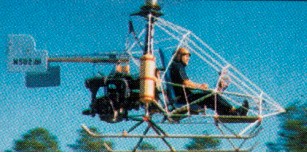
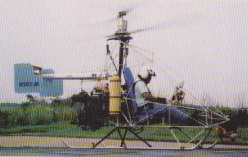
First flown in April 1985.
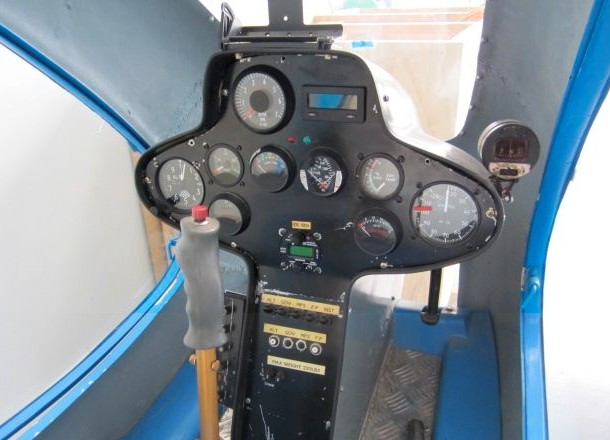
After crashing his demonstrator Helicycle in 1999, Schramm did find investment. The result is a single seat partially enclosed helicopter which flies conventionally or as a compound with an additional pusher engine. An ultralight version uses Rotax 503. Elastomeric rotor head, long-life blades. Optional turbo version has full power to 10,000 ft.
Engine options are: 74 hp Rotax 618 derated to 60 hp, Rotax 503. Compound engine: 45 hp Zenoah. Rotor blades: 21’ x 7” all aluminium by Eagle R&D.
The HELICYCLE in it’s normal configuration is designed to cruise along side the industry standard R-22. Landings and take offs at above 9000 ft. are possible because of a 7.5/1 power to weight ratio. The same as the Hughes 500.
The Helicycle features include a fully harmonized rotor, a modulated collective system, very low 2-per-rev vibration level due to elastomeric thrust bearings, generous flapping angle for low “G” and slope landing conditions, control friction devices, and electronic throttle control.
The cyclic control in the HELICYCLE accurately models the feel of the R-22. With a high degree of control power, it provides a transition for the R-22 qualified student pilot. To aid in controlling costs, the Helicycle has 12 grease zerks and 2 sliders that do need a minute or two of attention now then, the rest of the bearings are sealed. The Helicycle certified level lifetimes for it’s drive train and rotor system components are 1500-2000 hrs.

Engines: 2 x McCulloch
Top speed: 105 mph
Cruise: 90 mph
Range: 160 sm
Rate of climb: 900 fpm
Service ceiling: 9000 ft
Fuel capacity: 12 USG
Empty weight: 395 lb
Gross weight; 672 lb
Length: 21.7 ft
Height: 7 ft
Disk span; 20 ft
Disk area: 314 sq.ft
Seats: 1

Helicycle E
Cruise: 95 mph (120 compound).
Top speed: 105 mph (135 compound).
Empty wt: 395 lbs.
Useful load: 277 lbs (320 compound).
Gross wt: 820 lbs.
Width: 4’2”.
Height: 7’.
Length: 19’7”.

Engine: Rotax 618, 60 hp
MAUW: 310 kg
Empty weight: 179 kg
Fuel capacity: 45 lt
Max speed: 170 kph
Cruise speed: 145 kph
Minimum speed: 0 kph
Climb rate: 4.5 m/s
Seats: 1
Fuel consumption: 16 lt/hr
Kit price (1998): $25,000

Eagle R&D          

Schramm’s association with flying began in 1958 when he built and flew a Bensen Gyrocopter. He studied at California Polytechnic State University and eventually was drafted into the military where he worked on missles as an electronics technician at the White Sands Proving Ground. There he did design and drawings and began to formulate a plan for building a helicopter that the average pilot could afford. After his discharge in 1967, he immediately entered helicopter manufacturing and started his own company, Rotorway, with the goal of producing his own designs.
After Schramm’s health began to fail in 1987, he made some poor business decisions and failed to put the right people in charge of operations during his absence. This resulted in the company declaring bankruptcy in 1990.
After leaving Rotorway, Schramm moved to Nampa, Idaho, and began to develop a new engine for Dan Denney.
By the time he returned to the drawing board, the Rotax 582 and 618 were on the market and the power to weight ration that would suit his design. Almost three years later, he accomplished his goal of landing on War Eagle Mountain. Funds were short so Schramm formed Eagle R&D LLC to try to gain some financial backing.

1997: 2203 S. 10th Ave, Caldwell, ID 83605, USA.
2009: Eagle Research & Development, 2321 Hemingway Blvd, Nampa, Idaho, USA