1984: #4 Wade Ave, Dept. GR, Piggott, AR 72454, USA.
UL builder
1984: #4 Wade Ave, Dept. GR, Piggott, AR 72454, USA.
UL builder
An open cockpit high-wing, wire-braced monoplane, pusher prop. Side-by-side two-place seating, center-mounted 3-axis control sticks.
Engine: Rotax 503, 48 hp.
Prop: Ultra prop, composite. 59in diameter.
Wingspan 32ft.
Wing area 160 sq.ft.
Empty weight 310 lbs.
Gross weight 750 lbs.
Cruise speed 42 mph.
Stall speed 26 mph.
Vmax 60 mph.
Climb 500 fpm.
Takeoff run 150ft.
Lan¬ding roll 135ft.
Landing gear: Tricycle, aluminum.
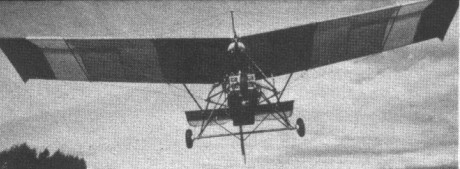
A 40 per¬cent, double-surface, high-wing monoplane, open cockpit, 3-axis stick control to elevator/spoilers, rudder foot-pedal controlled.
Engine: Rotax 377, 36 hp.
Prop: Ultra prop, 3-bladed, 59in diameter.
Wingspan 32 ft.
Wing area 160 sq.ft.
Empty weight 251 lbs.
Gross weight 576 lbs.
Cruise speed 45 mph.
Stall speed 20 mph.
Vmax 60 mph.
Climb 900 fpm.
Takeoff run 80ft.
Land¬ing roll 75ft.
Undercarriage: Tricycle, aluminum.
Price 1984: US$4,995.
1984: PO Box 25528, Lake City, WA 98125, USA.
UL builder
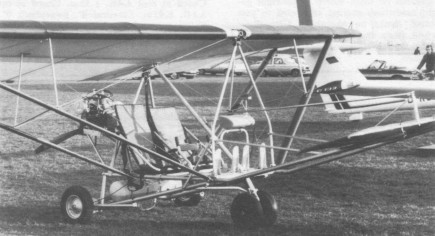
Side by side two seat single engined high¬wing monoplane with conventional three axis control. Wing has swept back leading and trailing edges, and constant chord; no tail, canard wing. Pitch control by fully flying canard; yaw control by tip rudders; roll control by spoilers; control inputs through stick for pitch/roll and pedals for yaw. Wing braced from below by struts; wing profile; double surface. Undercarriage has four wheels in ‘tricycle’ formation; suspension on all wheels. No ground steering. Brakes on all wheels. Aluminium tube framework, without pod. Engine mounted below wing driving pusher propeller.
Easily distinguishable from other Fledge derivatives by its unusual double nosewheel, the T1 is basically a two seat version of the M1. It was first shown at the Aero 83 Exhibition at Friedrichshafen in March 1983 and was placarded as having made its first flights the month before. The standard version includes electric start, while options include wheel fairings and floats.
Engine: Hirth 276A13, 40 hp at 7000 rpm.
Propeller diameter 63 inch, 1.60 m.
Belt reduction, ratio 2.04.
Max static thrust 252 lb, 114 kg.
Power per unit area 0.22 hp/sq.ft, 2.4 hp/sq.m.
Length overall 10.5ft, 3.20m.
Wing span 32.8 ft, 10.0 m.
Constant chord 5.6 ft, 1.70 m.
Canard span 6.7 ft, 2. 00 m.
Main wing area 183 sq.ft, 17.0 sq.m.
Rudder area 9.7 sq.ft, 0.90 sq.m.
Wing aspect ratio 5.9/1.
Wheel track 5.3 ft, 1.60 m.
Empty weight 327 lb, 148kg.
Max take off weight 707 lb, 320kg.
Payload 380 lb, 172 kg
Max wing loading 3.86 lb/sq.ft, 18.8 kg/sq.m.
Fuel capacity 6.9 US gal, 5.7 Imp gal, 26.0 litre.
Max power loading 17.7 lb/hp, 8.0kg/hp.
Load factors: +6.0, 3.0 ultimate.
Never exceed speed 56mph, 90kph.
Economic cruising speed 44mph, 70kph.
Stalling speed 28mph, 45 kph.
Max climb rate at sea level 600 ft/min, 3.1 m/s.
Best glide ratio with power off 8/1 at 37mph, 60kph.
Take off distance 100ft, 30 m.
Landing distance 65 ft, 20 m.
Range at average cruising speed 112 mile, 180km.
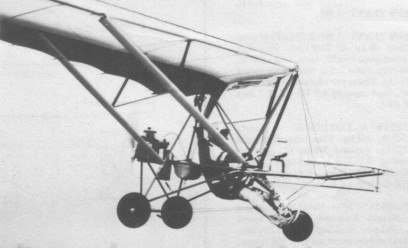
The prototype of the single seater M1 from Firebird made its first flight in 1979 and by 1983 more than 100 examples have been produced. The wing is directly descended from the famous Fledgling designed by Klaus Hill, originally as a hybrid control hang-¬glider. This wing, with its rudders at its wing tips, was powered in 1978 in the USA and the following year in Europe, by Firebird. Just as Pterodactyl does with its Ptraveler and Ascen¬der, Firebird uses it with a variable incidence canard. There is one fundamental difference between Firebird’s approach and that of the Americans, in that the German manufacturer chooses to support the wing with two profiled struts under each half wing, thus dispensing with all the ground and flight rigging wires.
The other principal difference is the power pack, which on the Firebird has to conform with West Germany’s stringent noise regulations. With Konig en¬gine and three bladed propeller, the standard arrangement on the M1, under 60 dB is recorded using the regulation measuring conditions.
Complete with electric start and battery, the M1 cost DM 17,408 in 1983, while options in¬clude an extra fuel tank, an instrument panel, floats and a parachute of 755 sq.ft (70 sq.m) area, which is usable at speeds up to 155 mph (250 kph) and which gives a rate of descent of 1300 ft/min (6.7 m/s) with a 442 lb (200 kg) load. Wing profile; FNI 4 81; double surface. Undercarriage has three wheels in tricycle formation; steel spring suspension on nosewheel and no suspension on main wheels. Push right go left nosewheel steering independent from yaw control. Brake on nosewheel. Aluminium tube/carbon fibre framework, without pod. Engine mounted below wing driving pusher propeller.
Engine: Konig SC430, 24 hp at 4200 rpm.
Propeller diameter 53 inch, 1.34 m (three blade).
Belt reduction, ratio 2.2/1.
Max static thrust 143 lb, 65 kg.
Power per unit area 0.15hp/sq.ft, 1.6 hp/sq.m.
Height overall 9.4 ft, 2.85 m.
Wing span 32.8 ft, 10.00 m.
Chord at root 5.6 ft, 1.70 m.
Chord at tip 4.6ft, 1.40m.
Dihedral 5 degs.
Sweepback 38 degs.
Canard span 6.6ft, 2.00m.
Canard chord 2.1 ft, 0.63 m.
Total wing area 175 sq.ft, 16.3sq.m.
Main wing area 161 sq.ft, 15.0 sq.m.
Canard area 14.0 sq.ft, 1.3 sq.m.
Wing aspect ratio 6.7/1.
Wheel track 6.9 ft, 2. 10 m.
Wheelbase 4.6 ft, 1.40 m.
Nosewheel diameter overall 14 inch, 35 cm.
Main wheels diameter overall 16 inch, 41 cm.
Empty weight 2161b, 98kg.
Max take off weight 420 lb, 190 kg.
Payload 204 lb, 92 kg.
Main fuel capacity 3.4 US gal, 2.8 Imp gal, 13.0 litre
Reserve fuel capacity 2.6 US gal, 2.2 Imp gal, 10.0 litre in.
Max wing loading 2.60 lb/sq.ft, 12.7 kg/sq.m.
Max power loading 17.5 lb/hp, 7.9 kg/hp.
Load factors +4.0, 2.0 design; +6.0, 3.0 ulti¬mate.
Max level speed 50 mph, 80 kph.
Never exceed speed 56 mph, 90kph.
Economic cruising speed 37mph, 60kph.
Stalling speed 24mph, 40kph.
Max climb rate at sea level 400 ft/min, 2.0 m/s.
Min sink rate 350ft/min at 34mph, 1.8m/s at 55 kph.
Best glide ratio with power off 8.5/1 at 37mph, 60kph.
Take off distance 100ft, 30 m.
Landing distance 65 ft, 20 m.
Range at average cruising speed 93 mile, 150 km.
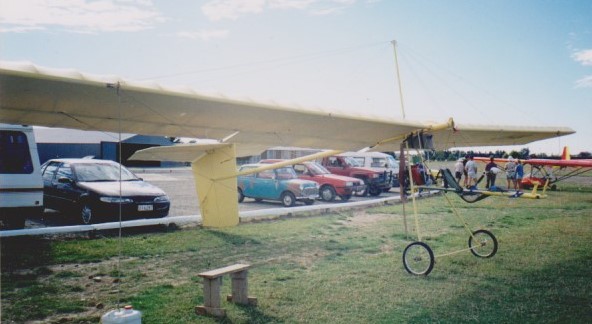
Otherwise known as the “Mangamingi Monster Mark III” this aircraft was designed by Tim Hardwick-Smith to achieve a low horsepower, slow flying aeroplane, for low cost flying, farm surveillance and motor gliding. The machine first flew on 1 February 1997 and was registered ZK-JHH on 13 February 1997.
Engine: 1 x Briggs & Stratten.
Cruise: 60 kph.
Stall: 35 kph.
A single-seat microlight in assembled and kit forms
Italy
Offers Olimpios two-seat cabin monoplane and Tucano single-seat microlight in assembled and kit forms.
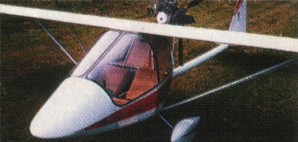
Designed by Bill Ferguson and first flown in 1991, the Fergy was developed from the Kolb Mark III and introduced to the market in 1991. The Fergie won the Grand Champion title at Sun ‘n Fun in 1991. Reviewer Andre Cliche describes it as a “clone”, whilst Noel Bertrand et al. claim it was “inspired by the Kolb Twinstar”. The aircraft differs from the Kolb design in that it has a revised cockpit pod, with centerline-hinged doors and a square-tipped rudder. The horizontal stabilizer was also raised a few inches to give better ground clearance.
The Precision Tech Fergy F-II B is a two-seat side-by-side, conventional landing gear, strut-braced, high-wing, pusher configuration ultralight aircraft that was manufactured by Ferguson Aircraft and later Precision Tech Aircraft in kit form for amateur construction.
Ferguson Aircraft manufacturers of the Fergie, sold the design to Precision Tech Aircraft out of Cartersville Georgia.
Precision Tech has made some design changes, changing to a new airfoil, landing gear, and tail section. The airfoil change was required when the wing spar was changed to a 6 inch spar.
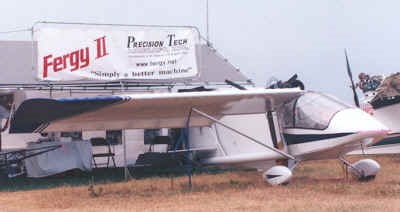
The aircraft is constructed from aluminium tubing, covered with aircraft fabric. The wings fold for storage or trailering. The standard engine supplied with the kit was the 50 hp (37 kW) Rotax 503, with the liquid-cooled 64 hp (48 kW) Rotax 582 optional, although the Fergie can accept engines that range in output from 50 to 80 hp (37 to 60 kW).
The average construction time from the kit was reported by the manufacturer as 350 hours and 40 had been completed by 2001. The unit cost was US$10,900 in 2001.
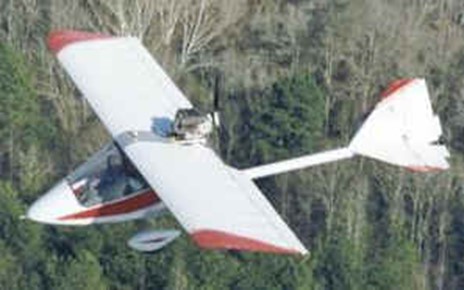
The aircraft was out of production circa 2002 and no longer available.
Ferguson F-II
Engine: Hirth 2704, 55 hp.
HP range: 46-70.
Height: 5.5 ft.
Length: 21.25 ft.
Wing span: 30 ft.
Wing area: 160 sq.ft.
Fuel cap: 12 USG.
Weight empty: 425 lbs.
Gross: 900 lbs.
Speed max: 90 mph.
Cruise: 70 mph.
Range: 200 sm.
Stall: 32 mph.
ROC: 1200 fpm.
Take-off dist: 200 ft.
Landing dist: 200 ft.
Service ceiling: 10,000 ft.
Seats: 2.
Landing gear: tail wheel.
Ferguson F-II
Engine: Rotax 503, 55 hp.
HP range: 46-70.
Height: 5.5 ft.
Length: 21.25 ft.
Wing span: 30 ft.
Wing area: 140.2 sq.ft.
Fuel cap: 12 USG.
Weight empty: 425 lbs.
Gross: 900 lbs.
Speed max: 90 mph.
Cruise: 70 mph.
Range: 200 sm.
Stall: 32 mph.
ROC: 1200 fpm.
Take-off dist: 200 ft.
Landing dist: 200 ft.
Service ceiling: 10,000 ft.
Seats: 2.
Landing gear: tail wheel.
Ferguson II-B
Wingspan: 29ft. 6 in.
Wing Area: 140 sq. ft
Length: 22 ft.
Height: 5ft. 8in with 2 blade prop
Empty Weight: 400 lbs.
Gross Weight (65 hp): 900 lbs.
Useful Load: 500 lbs.
Fuel Cap: 12.5 gal.
Take-off Roll Pilot only 46 hp: 175 ft
Rate of Climb 46hp: 800 ft/min
Rate of Climb 65hp: 1200 ft/min
Cruise: 50 – 80 mph
VNE: 100 mph
Landing Speed w/Flaperons: 28mph
Landing Speed wo/Flaperons: 34mph
Seats: 2
Storage Aft of Seats: 4 cubic feet
Precision Tech Fergy F-II B
Engine: 1 × Rotax 503, 50 hp (37 kW)
Propeller: 3-bladed ground adjustable
Wingspan: 29 ft 6 in / 8.99 m
Wing area: 140 sq ft / 13 sq.m
Length: 18 ft 8 in / 5.7 m
Empty weight: 400 lb / 181 kg
Gross weight: 1,000 lb / 454 kg
Fuel capacity: 12.5 US gallons / 47 lt
Maximum speed: 90 mph / 145 km/h / 78 kn
Cruise speed: 75 mph / 121 km/h / 65 kn
Stall speed: 28 mph / 45 km/h / 24 kn
Range: 220 mi / 191 nmi / 354 km
Rate of climb: 1,000 ft/min / 5.1 m/s
Wing loading: 7.14 lb/sq ft / 34.9 kg/sq.m
Crew: one
Capacity: one passenger
 All Aero