Flitzer Z-1 / Z-21 / Staaken Z-1 / Z-21 / Z-21A Flitzer

Flitzer Z-21

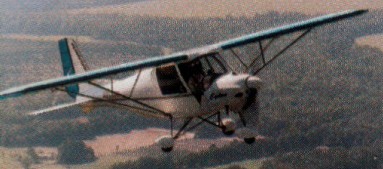
Designed by British aviation artist Lynn Williams, the Flitzer is a mythical inter-war sport plane. The original Z-1 prototype was powered by an 1835cc VW. Since first flight, the LSA 1834cc VW-powered prototype Flitzer Z-1 has flown over 70 hrs, without any changes to rigging or trim of the machine, other than for experimental purposes.

The aeroplane has been dived to over 125 mph, controls firming-up appropriately, without any aerodynamic
buzz, and terminal velocity appears to be well short of the flutter regime. It flies hands-off in the cruise (Vc = 86 mph.) and will complete a 360 deg. turn in 7 secs at this speed. At Vc, deliberate displacements in pitch, both positive & negative, result in stick-free re-acquisition of flightpath in 1/2 oscillation, ie. deadbeat damped in cruising flight.

This was followed by the stronger Z-21, incorporating a longer span horizontal stabiliser and other refinements, still with a 22in wide fuselage.

The Z-21A features a wider fuselage, at 24in at the cockpit.
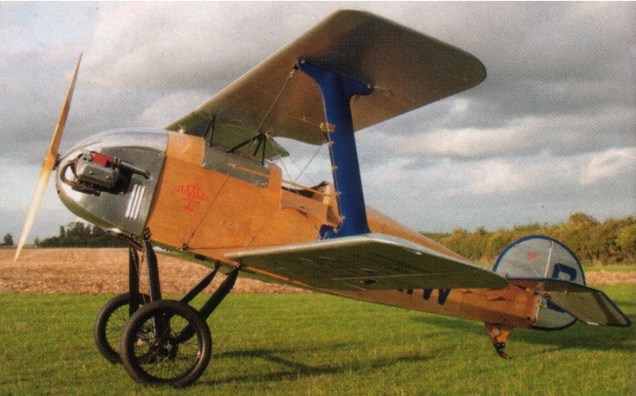
Z-21A

Flitzer plans comprise 33 mostly A1 size sheets, and are comprehensively illustrated, with much text, and many
perspective, exploded views of components.

All metal fittings are drawn full size, and plans have been updated to reduce time and cost of fabrication.
With the American Ellison EFS-2 slide carburettor, developed power is in the order of 60+ hp., and the aeroplane gets airborne in 7 seconds in about 130 yds. At approx. 80% MAUW., rate of climb averages 700 fpm., and maximum speed straight-&-level is just over 90 mph. with the currently un-refined ‘cruise’ propeller, at 3000 rpm., red line being 3300 rpm for this engine, so more performance may be achieved via propeller improvement.
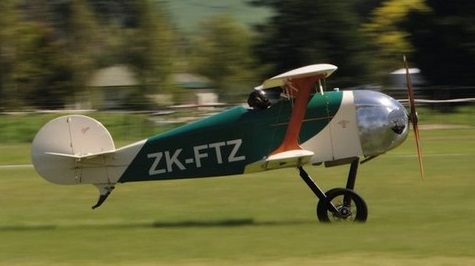
Z-21A

Stalls are innocuous, with or without power: 44 mph. Straight ahead power off, and below 30 mph. IAS at full power – with gentle wing drop and plenty of pre-stall warning in terms of hunting in pitch and short-period wing rock. Control about the yaw and roll axes is maintained below stall. Recovery is immediate on relaxation of stick pressure. The true stall would not develop with the Z-1 prototype’s “small tail”, the aircraft mushing in stable sink at an indicated 44 mph., power off (a safe condition). But with the 6% area increase in the horizontal tail, as shown on the Z-21 “plans” version, a clean g-break is now achievable, and with full power the ‘straight’ , unaccelerated stall occurs at an angle of +35 degrees of pitch.

Best angle of climb is achieved at 45 mph. IAS, and best ROC at 60 mph. Approaches are flown at 60 mph.,
reducing to 55-50 over the hedge, touching down at about 45. The latter figures may be reduced with the slightly
larger tailplane shown on the plans. The machine copes well with crosswinds on a narrow farm strip, despite not
being equipped with brakes or a steerable tailwheel, although these options will be included on a later sheet.
Streamlined main undercarriage leg fairings have been fitted, and add both to the machine’s appearance, and also to performance.
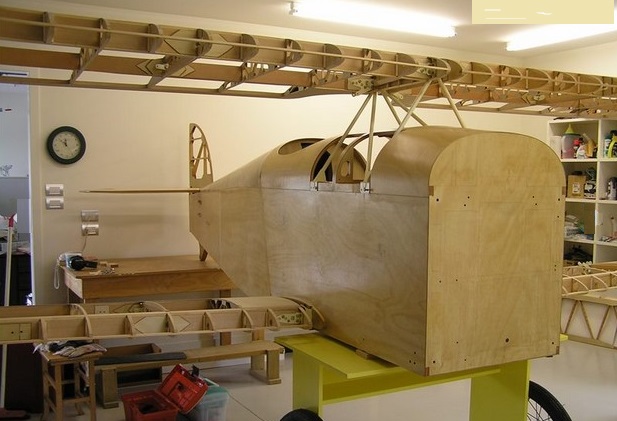
Z-21A

Some fifty sets of Flitzer drawings are in circulation world-wide, with several examples being built in the USA, as well as in Australia, NZ, Italy, France, Germany, Canada, S.Ireland, and the UK. The second Flitzer, the ex-Bell-Aeromarine proof-of-plans Z-21A demonstrator flew in ’99, and handled beautifully, approaches with the larger tail confirming the predicted reduction of some 5 mph in IAS by comparison with the prototype Z-1, the latter a/c having reviously been tested with a facsimile Z-21 tail. The Z-21A s specifically identified by its 2″ wider fuselage (24″ cockpit width compared with 22″ on the prototype and basic Z-21)

Maximum weight authorised is 750 lbs., and structural improvements, higher tailplane reserve factors, and the
use of 4130 steel on the plans versions, have contributed to an increased overall reserve factor at this weight.
Empty weight is 479 lbs., and fuel tank capacity is 8.5 gals. (Imperial). The aeroplane is comfortable to fly, and the cockpit is surprisingly warm and free from draughts, despite the small ‘period’ aeroscreen. The growl from the paired exhaust pipes is a sound quite unlike the typical VW ‘flutter’ , more like a ‘twenties long-stroke V-type. The machine never fails to attract attention wherever it is seen, and has been flown by several eminent test pilots.

Plans are extremely detailed and graphic containing all information needed, down to options on engine installations, exhausts and induction pipe offsets to provide the aerodynamically cleanest and most attractive engine cowling, as well as they’re being a build manual. Section profile is USA35B, with excellent L/D and gentle stalling characteristics.

Flitzer control surfaces have no mass or aerodynamic balancing, but are well harmonised.

The slightly more compact Stummel Flitzer has a shorter fuselage with raked cabane, a larger tank bay and rounded flying surfaces. This comes in two versions, the Stummel Flitzer S and the Stummel Flitzer R, optimised for aerobatics using engines in the 60-100hp range. The fuselage is strengthened to +6/-3G and balanced, slaved ailerons have been added to the upper wing.

By 2008, more than 200 sets of plans had been sold, in 33 illustrated 3x2ft sheets. All metal fittings drawn to full size. The sub versions are all derivatives, and come as modifications to the basic plans. One modification is the use of the round Stummelflitzer vertical stabiliser on the Z-21 / Z-21A. Flitzers use conventional construction with plank spars and built-up ribs forming the USA 35B wing section, squared off with laminated wood wingtip bows. All ribs are identical.

Gallery

Z-21
Engine: VW 1835cc, 60 hp
HP range: 50-100
Length: 14.8 ft
Wing span: 18 ft
Wing area: 97 sq.ft
Fuel capacity: 10.3 USG
Empty weight: 480 lb
Gross weight: 750 lb
Cruise: 93 mph
Stall: 42 mph
Range: 250 sm
Rate of climb: 750 fpm
Takeoff dist: 400 ft
Landing dist: 400 ft
Cockpit width: 24 in
Landing gear: tailwheel

Z-21A
Engine: VW 1800cc
Prop: 2 blade fixed
Wingspan: 18 ft
Wing loading: 7.73 lb/sq.ft
Fuel cap: 10.6 USG
Max gross wt: 750 lb
Empty wt: 540 lb
Useful load: 210 lb
Full fuel payload: 148 lb
Seats: 1
Cabin width: 24 in
Max ROC: 720 fpm
Stall: 42 mph / 37 kt
TO dist: 900 ft
Landing dist: 400 ft
Fuel burn @ cruise: 4.3 USG/hr
Cruise: 86 mph / 75 kt @ 3000 ft @ 75% pwr.

Engine: Jabiru 2200, 80 hp
Prop: Heliptera

Engine: AeroVee 2180cc VW, 80 hp
Prop: 60x34in Beechwood
Flightstar Spyder

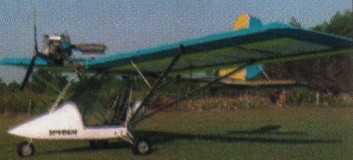
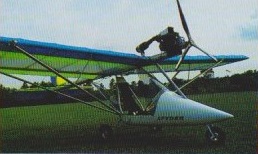
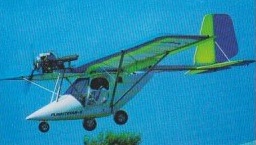
The Flightstar Spyder is a single seat Ultralight type aircraft. The light weight airframe allows maximum performance on minimum installed powerand the Spyder was designed to accept the Rotax 447 and 503 engines on Flightstar’s dynafocal type engine mount. The front fairing and windshield come as standard equipment on the Spyder. The Spyder features conventional three axis controls with full span ailerons, steerable nose wheel and side mounted control stick. The standard fuel tank has a 5 USG capacity with a 10 USG capacity tank as an option. Equipped with the Flightstar wingfold system, the Spyder is easy to assemble and easy to care for.

Standard equipment includes a 42hp rotax 447 aircooled engine w/cowling, composite front fairing w/tinted lexan windshield, high lift wing with streamlined struts, vibration isolated instrument panel, durable aluminum and stainless custom hardware, rugged chromemoly cage and landing gear, heavy duty stamped dynofocal engine mount, anodized airframe for corrosion protection, and 3 point pilot restraint harness.

Optional equipment includes a 48 hp Rotax 503 aircooled engine with supercowl, full instrument package, four point harness, complete electrical system, in-flight adjustable trim, 3 blade composite propeller, azusa drum brake system, rear floor pan, and brs ballistic parachute system. The Flightstar Spyder can be upgraded to full Formula configuration.

Optional equipment also includes the HKS 700E (680 C.C. 60 HP @ 6200 RPM) with 2.58 TO 1 reduction ratio. Propeller options include the Tennessee prop. co. 2-blade, 66” dia and IVO-prop. 3-blade 62”.
The airfoil is the Flightstar FS-I-2 12% thick.

Engine: Rotax 447FA, 42 hp
Reduction; 2.58-1
Wing span: 30 ft.
Wing area: 144 sq.ft.
Height: 7 ft 10 in.
Length: 16 ft 6 in.
Weight empty: 127 kg / 280 lbs.
Gross weight: 650 lbs.
Structural Limit W/Rotax 503: 750 lb
Fuel cap: 5-10 USG.
VNE: 83 kt / 96 mph / 154 kmh
Cruise 75%: 65 mph.
Range 10 USG: 220 sm.
Stall: 36 mph.
ROC: 660 ft/min / 3 m/s
Take-off roll: 205 ft
Take-off distance (50ft obstacle): 350 ft / 107 m
Landing dist: 180 ft.
Service ceiling: 14,000 ft.
Glide Ratio: 8:1
Sink rate: 400 fpm
Aspect Ratio: 6.25
Roll Rate (45 To 45): 2.8 sec
Seats: 1.
Landing gear: nose wheel.
Cockpit width: 41 in

Engine: Rotax 447, 42 hp
Wing span: 9.14 m
Wing area: 13.40 sq.m
MAUW: 295 kg
Empty weight: 126 kg
Fuel capacity: 38 lt
Max speed: 160 kph
Cruise speed: 105 kph
Minimum speed: 42 kph
Climb rate: 5 m/s
Fuel consumption: 9.5 lt/hr
Certification: VZ
Seats: 1

Engine: Rotax 582, 65 hp
Wing span: 9.8 m
Wing area: 14.63 sq.m
MAUW: 450 kg
Empty weight: 236 kg
Fuel capacity: 40 lt
Max speed: 154 kph
Cruise speed: 120 kph
Minimum speed: 62 kph
Climb rate: 3.3 m/s
Seats: 2
Fuel consumption: 17 lt/hr
Certification: Vz
Kit price (1998): US$15.595

Flightstar Formula

Engine: Rotax 447, 42 hp.
Height: 7.5 ft.
Length: 16.5 ft.
Wing span: 30 ft.
Wing area: 144 sq.ft.
Fuel cap: 10 USG.
Weight empty: 320 lbs.
Gross: 750 lbs.
Speed max: 96 mph.
Cruise: 75 mph.
Range: 180 sm.
Stall: 28 mph.
ROC: 1100 fpm.
Take-off dist: 120 ft.
Landing dist: 180 ft.
Service ceiling: 14,000 ft.
Seats: 1.
Landing gear: nose wheel.

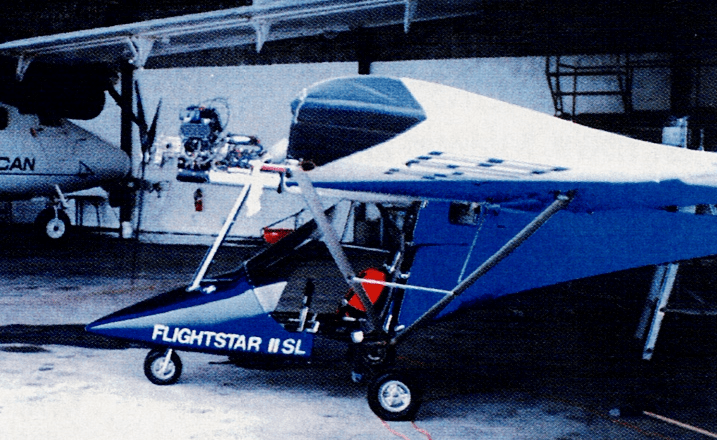
Flightstar II

Flightstar designer Tom Peghiny built the first Flightstar in the mid-1980s for the US FAR 103 Ultralight Vehicles category with its maximum 254 lb (115 kg) empty weight requirement. The two-seat Flightstar II soon followed to fill the role of a trainer. The designs quickly became commercial successes and the basic design has been extensively developed over time. By 2007 over 700 single seaters had been sold.

All models are constructed from anodized aluminum tubing assembled with bolts. The fuselage is suspended from a keel tube that also mounts the engine at the front, the tail at the back and the wings. The wings are strut-braced and utilize jury struts. The wings and tail surfaces are covered in pre-sewn Dacron envelopes, which reduces construction time. The wings have full-span ailerons, while the tail features conventional elevators and rudder. The landing gear is a tricycle gear arrangement with bungee suspension on the main wheels. The nosewheel is steerable and mainwheel brakes are an available option. The reported construction time for the single seat models is 100 hours.

The Flightstar II is LSA legal.

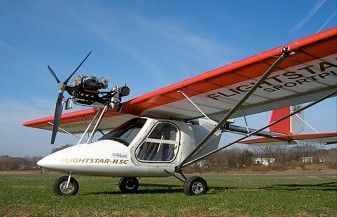
The Flightstar-IISC is the Sport Cabin version of the IISL. The IISC includes all that’s needed to enclose the plane for more comfort and all season flying. The cabin parts include the Fastback rear enclosure, composite cabin fairings, door posts, Lexan roof and zippered sport doors. The IISC was developed with the sport pilot in mind. The large wing allows predictable slow flight handling and quiet low throttle cruising. The IISC features the 54HP dual carb, dual ignition, Rotax 503 with the Flightstar 503 Super Cowl. The optional engines include the 64HP Rotax 582 liquid-cooled twostroke and the 60HP HKS 700E four-stroke engine. The Flightstar II was shown at the ’98 Sun ‘n Fun with an HKS 700 engine.

The Rotax 503 engine installation on a Flightstar II

Standard equipment includes high lift wing with streamlined struts, Flightstar wingfold system, vibration isolated instrument panel, 10 USG rotational molded fuel tank w/sump, full dual control system, chromemoly cage and landing gear, heavy duty stamped dynofocal engine mount, anodized airframe for corrosion protection, and point pilot restraint harnesses.

Optional equipment includes, full instrument package, 4 point harnesses, complete electrical system. in-flight adjustable trim, 3 blade composite propeller, azusa drum brake system, and brs ballistic parachute system.
The Flightstar II SC airfoil is the Flightstar FS-II-2 13% thick.

Flightstar IISC

The Flightstar-IISL combines the open air freedom of ultralight type flying and the fun of being side by side with your passenger. With a 120 hour assembly time and the Flightstar wingfold system, the IISL is fitted with full dual controls. The wide stance landing gear for cross wind landings and light wing loading offers easy handling and landings. The airframe is designed for the rigors of flight training and is tested to last. The IISL offers the same standard and optional equipment as the IISC.

The full engine options are the Rotax 503FA (496 C.C. 54HP @ 6800 RPM) with 2.58 TO1 reduction ratio, and the HKS 700E (680 C.C. 60 HP @ 6200 RPM) with 3.47-1 reduction ratio. Propeller options include Tennessee prop. Co. 2-blade, 68” dia, Ivo-prop. 3-blade 68”, and Powerfin F model 70” diameter.

March 1993

The Flightstar II kit, including engine, cost US$15,395 in 1997.
The Flightstar II-SL kit, including engine, cost US$13,795 in 1997.

Flightstar IISL

The two seat models all have side-by-side seating and have folding wings. The aircraft were also produced under licence in India by Albatross Flying Systems.

In 2009 the Flightstar single and two-seat, high wing, single engined kit aircraft produced by Flightstar Sportplanes of South Woodstock, Connecticut, rights, tooling and parts inventory were sold to Yuneec International of China when Flightstar Sportplanes’ business was wound up.

In July 2009 a new single seat model was exhibited at EAA AirVenture Oshkosh as the Yuneec e-Spyder electric-powered version.

Gallery

Flightstar II
Engine: Rotax 503, 54 hp.
Height: 7.5 ft.
Length: 19 ft.
Wing span: 32.5 ft.
Wing area: 162 sq.ft.
Fuel cap: 10 USG.
Weight empty: 420 lbs.
Gross: 970 lbs.
Speed max: 96 mph.
Cruise: 65 mph.
Range: 180 sm.
Stall: 36 mph.
ROC: 700 fpm.
Take-off dist: 200 ft.
Landing dist: 300 ft.
Service ceiling: 14,000 ft.
Seats: 2.
Landing gear: nose wheel.

Flightstar II SL
Engine: Rotax 503FA, 48 hp.
HP range: 42-65.
Height: 7.5 ft.
Length: 19 ft.
Wing span: 32.5 ft.
Wing area: 160 sq.ft.
Fuel cap: 10 USG.
Weight empty: 365 lbs.
Gross: 500 lbs.
Speed max: 96 mph.
Cruise: 55 mph.
Range: 165 sm.
Stall: 34 mph.
ROC: 600 fpm.
Take-off dist: 150 ft.
Landing dist: 300 ft.
Service ceiling: 13,000 ft.
Seats: 2.
Landing gear: nose wheel.
Cockpit width: 41 in

Flightstar II SC
Engine: Rotax 503FA, 48 hp.
Wing Span 32 ft
Length 19 ft 7 in
Height 7 ft 10 in
Wing Area 157 Sq. Ft.
Empty Weight 385 Lbs.
Gross Weight 950 Lbs.
Fuel Capacity 10 USG.
Cruise Speed (@ 75%) 65 mph
Stall Speed (Vso) 36 mph
Vne 96 mph.
Climb Rate 600 Fpm.
Aspect Ratio 6.53
Max. Range (W/10 USG) 200 Miles.
Roll Rate (45 To 45) 2.8 Sec.
Takeoff Roll 205 Ft. ‘
Glide Ratio 7 To 1
Sink Rate 450 Fpm

Flightstar II-SC
Engine: HKS 700E, 52 hp
HP range: 52-80
Length: 16 ft
Wing span: 32 ft
Wing area: 160 sq.ft
Fuel capacity: 10 USG
Empty weight: 465 lb
Gross weight: 992 lb
Cruise: 70 mph
Stall: 38 mph
Range: 230 sm
Rate of climb: 700 fpm
Takeoff dist: 200 ft
Landing dist: 300 ft
Seats: 2
Cockpit width: 41 in

Engine: Rotax 582, 65 hp
Wing span: 9.8 m
Wing area: 14.63 sq.m
MAUW: 450 kg
Empty weight: 236 kg
Fuel capacity: 40 lt
Max speed: 154 kph
Cruise speed: 120 kph
Minimum speed: 62 kph
Climb rate: 3.3 m/s
Seats: 2
Fuel consumption: 17 lt/hr
Certification: Vz
Kit price (1998): US$15.595

Flight Designs Jetwing ATV

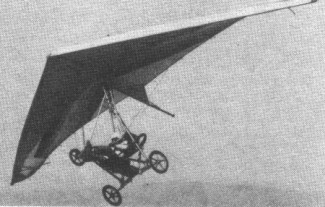
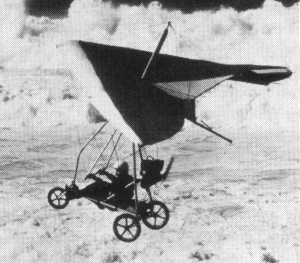
Single seat single engined flex wing aircraft with weight shift control. Rogallo wing with keel pocket. Pilot suspended below wing in trike unit, using bar to control pitch and yaw/roll by altering relative positions of trike unit and wing. Wing braced from above by kingpost and cables, from below by cables; rigid cross tube construction; 60% double ¬surface enclosing cross tube; pre formed ribs. Undercarriage has three wheels in tricycle formation; steel spring suspension on nose¬wheel and bungee suspension on main wheels. Push right go left nosewheel steering indepen¬dent from yaw control. Brakes on main wheels. Aluminium tube trike unit, without pod. Engine mounted below wing driving pusher propeller. Wing has foam insert in leading edges.

Flight Designs Jetwing ATV Article

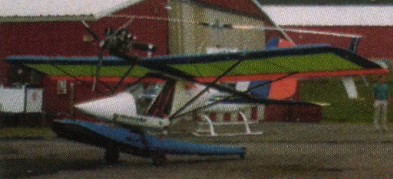
The Jetwing ATV (All Terrain Vehicle) is an original concept: it is not purely a trike in the conventional sense, because its wheels can be replaced by floats. By removing the wing and fitting the rear of the floats with a triangular tubular structure supporting a large rudder, the Jetwing can be transformed into a speedboat. Using its pusher propeller it can be turned into a go kart by refitting the wheels but leaving the wing off, while also available as an option are skis.

The price of the trike unit was US$3000 in 1982 and bought together with the Demon hang glider wing it costs a total of US$4995. Flight Designs does not recommend the use of any other Rogallo with its trike unit and it is worth noting that its Demon Rogallo is not related to the British wing of the same name, made by Hiway.
The later Jetwing ATVs had a belt reduction drive of 2.2/1 ratio, with a max static thrust of 220 lb (100 kg).

Engine: Kawasaki TA440, 30 hp at 5500 rpm.
Prop¬eller diameter and pitch 36 x 16 inch, 0.91×0.40 m.
No reduction. Power per unit area 0.17hp/sq.ft, 1.8hp/sq.m.
Fuel capacity 5.0 US gal, 4.2 Imp gal, 18.9 litre.
Length overall 12.0 ft, 3.65 m.
Height overall 12.0ft, 3.65m.
Wing span 33.5ft, 10.18m.
Mean chord 5.3ft, 1.60m.
Total wing area 175 sq.ft, 16.27 sq.m.
Wing aspect ratio 6.3/1.
Nosewheel diameter overall 16 inch, 40 cm.
Main wheels diameter overall 20 inch, 50 cm.
Empty weight 216 lb, 98 kg.
Max take off weight 480 lb, 218 kg.
Payload 264 lb, 120 kg.
Max wing loading 2.74 lb/sq.ft, 13.4 kg/sq.m.
Max power loading 16.0 lb/hp, 7.3kg/hp.
Load factors; +4.0, 2.0 ultimate.
Max level speed 47 mph, 76 kph.
Never exceed speed 52 mph, 84kph.
Max cruising speed 37mph, 60kph.
Stalling speed 22 mph, 35 kph.
Max climb rate at sea level 400 ft/min, 2.0 m/s.
Min sink rate 350 ft/min at 23 mph, 1.7 m/s at 37 kph.
Best glide ratio with power off 7/1 at 25 mph, 40 kph.
Take off distance 50 ft, 15 m.
Landing distance 75ft, 23 m.
Service ceiling 10,000ft, 3050 m.
Range at average cruising speed 160 mile, 257 km.

Flight Designs [USA]

In 1981 Flight Designs Inc was incorporated into Pioneer International Corporation which has been well known for half a century in the aerospace industry as specialising in parachutes.
1982-3: Flight Designs, PO Box 1503, Salinas, California 93902, USA.

Flight Designs was bought out by Pioneer Parachute in 1982.