Warpath Aviation Mohawk

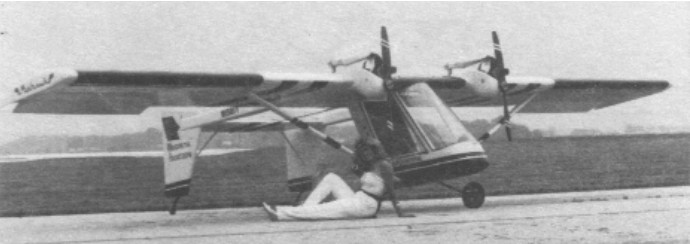
The Mohawk was a single seat twin engined high wing mono¬plane with conventional three axis control. Wing has unswept leading and trailing edges, and constant chord; two fin tail. Pitch control by elevator on tail; yaw control by fin mounted rudders; roll control by half span ailerons; control inputs through stick for pitch/roll and pedals for yaw. Wing braced from below by struts; wing profile; double surface. Undercarriage has two wheels side by side with two additional tail-wheels; steel spring suspension on tail-wheels and glass fibre suspension on main wheels. Ground steering by differential braking. Brakes on main wheels. Composite construction fuselage, totally enclosed. Engines mounted at wing height driving tractor propellers.

Warpath Aviation Mohawk Article
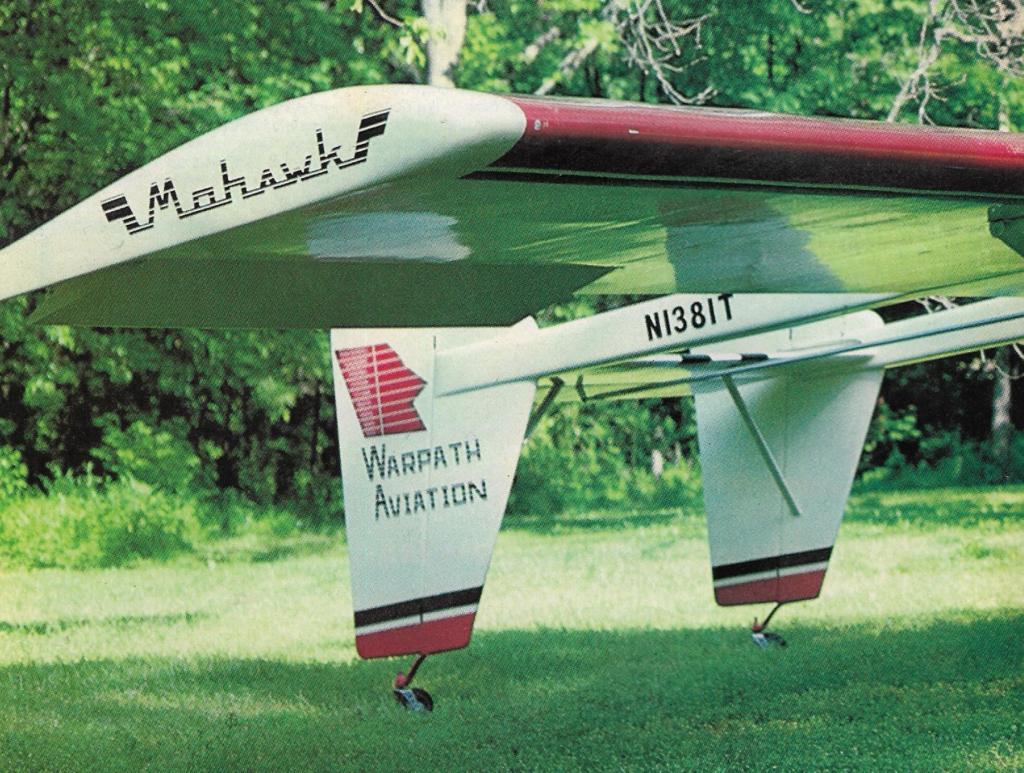
Conceived by Bobby Baker, the prototype of this composite construction machine made its first flight in November 1981. Using aluminium, foam and glass fibre in its construction, the Mohawk became available at the end of 1982 in the form of plans ($100) or a kit requiring 400h completion time, the kit costing $1750 without engines.
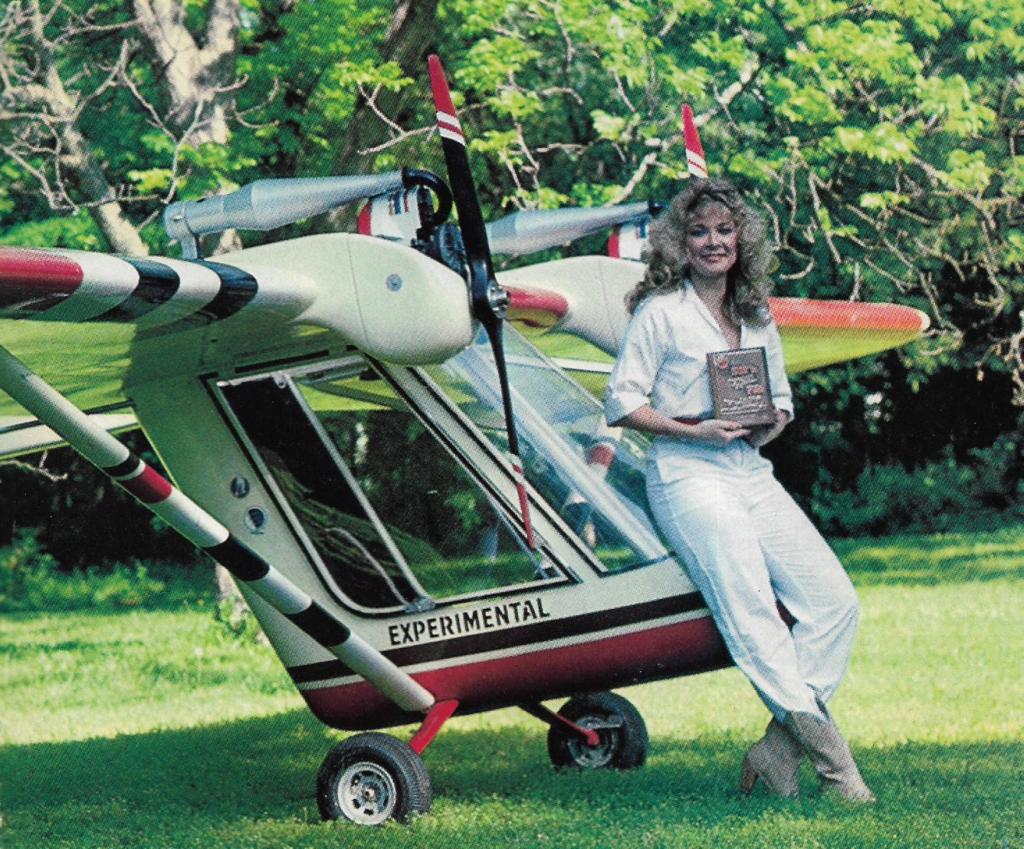
However, the company’s plans for this distinctive twin engined twin boom machine included marketing a factory built version and it is clear from the design of the single engined Mohawk X that it has been engineered with series production in mind. The Mohawk can be towed on its own undercarriage, allowing a set up and break¬down time of 20 min by two people.
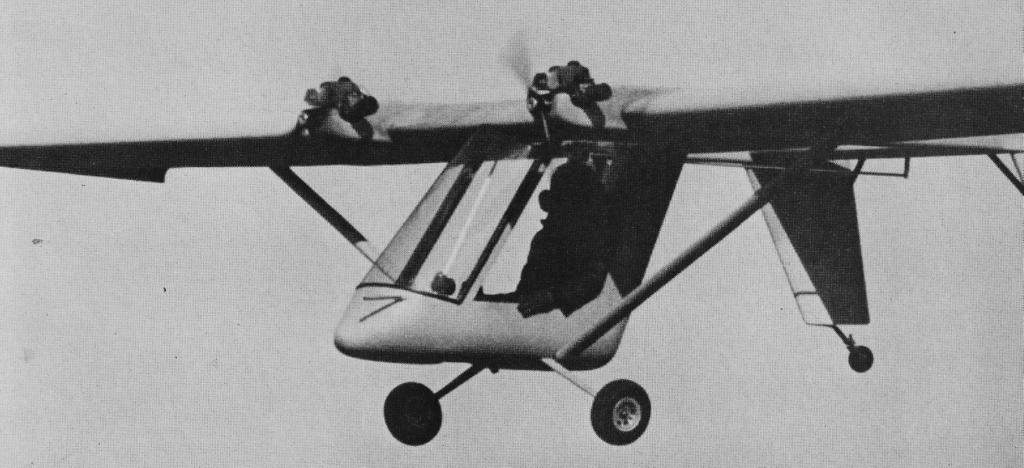
The Mohawk X is similar to the Mohawk except single engined and fitted with flaps. Undercarriage has three wheels in tricycle formation with two addition¬al tailwheels. Engine mounted at wing height driving pusher propeller.

This is basically a single ¬engine version of the original Mohawk with tricycle undercarriage. The X series has a 430 Cuyuna engine driving a larger pusher prop through a 3/1 reduction unit and short extension shaft. It also incorporates a retractable nosewheel and the cockpit well set forward of the original location to compensate for the aft engine. A conventional flap arrangement is incorpo¬rated in the inboard wing panels and the wings pivot and fold back along the booms for a 5 min assembly time requiring one person. Totally re engineered internally for faster production methods, the X uses wing spars and tail booms of aluminium tubing as opposed to the built up units in the prototype Mohawk. The craft is available in two forms from the factory, first shipments to dealers being scheduled for April or May 1983. The first option is a quick build kit requiring about 60 h assembly time; Bobby Baker says this is mainly a matter of pop riveting and bolting with little glueing or glass fibre work required. This price is estimated at $5800. Alternatively, an almost ready to fly aircraft is offered, requiring only that the tail boom assembly be bolted on and minor rigging done, a total time of less than 20 h. List price of the Mohawk X in this form is estimated at $6800.

Mohawk I
Engines: 2 x Cuyuna 215R, 20 hp at 5000 rpm
Propeller diameter and pitch 33 x 10 inch, 0.84 x 0.25 m
Belt reduction, ratio 2.1/1
Max static thrust 300 lb, 136kg
Power per unit area 0.31 hp/sq.ft, 3.3 hp/sq.m
Fuel capacity 5.0 US gal, 4.2 Imp gal, 18.9 litre
Length overall 16.3 ft, 4.95 m
Height overall 6.8ft, 2.08m
Wing span 30.0ft, 9.14m
Constant chord 4.5ft, 1.37m
Dihedral 0 deg
Sweepback 0 deg
Total wing area l30 sq.ft, 12.1 sq.m
Wing aspect ratio 6.9/1
Wheel track 5.0 ft, 1.52 m
Empty weight 240 lb, 109kg
Max take off weight 550 lb, 249 kg
Payload 310 lb, 141 kg
Max wing loading 4.23 lb/sq.ft, 20.6 kg/sq.m
Max power loading 13.8 lb/hp, 6.2kg/hp
Max level speed 64 mph, 103 kph
Never exceed speed 80 mph, 129 kph
Max cruising speed 50 mph, 80 kph
Economic cruising speed 40 mph, 64 kph
Stalling speed 22 mph, 35 kph
Max climb rate at sea level 500ft/min, 2.5m/s
Take off distance 250 ft, 75m

Mohawk X
Engine: Cuyuna 430, 35hp
Propeller diameter 60 inch, 1.52 m
Reduction ratio 3.0/1
Length overall 16.3 ft, 4.95 m
Height overall 8.0ft, 2.44m
Wing span 32.0ft, 9.75m
Wheel track 5.0ft, 1.52 m
Empty weight 250 lb, 113kg
Max take off weight 550 lb, 249kg
Payload 300 lb, 136kg
Max power loading 15.7 lb/hp, 7.1kg/hp
Max level speed 64 mph, 103 kph
Ward TLAR

The TLAR was a locally designed and built ultralight, conforming to NZ CAR Part 103. Of conventional controls, the TLAR first flew on 22 May 1997. First registered, ZK-TLR, to RJ Ward, Christchurch, New Zealand, on 4 June 1997.

In 2009 the registration was cancelled as the TLAR had been dismantled.

Engine: Rotax 377
MAUW: 260 kg
Stall: 30 kt
Cruise: 50 kt
Vne: 75 kt
ROC: 750 fpm

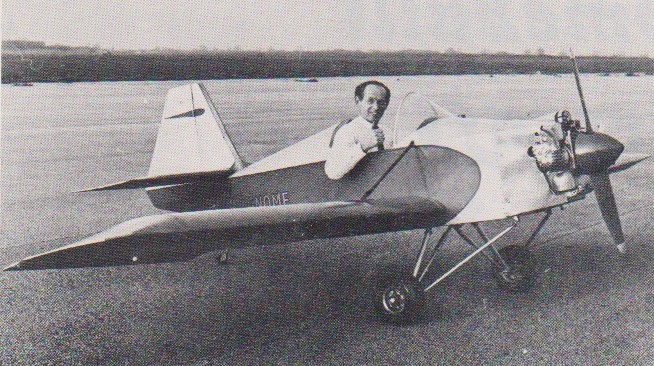
Ward P.45 Gnome

R.A.Fixter in G-AXEI about 1968

The Ward P.45 Gnome was designed and built by M. Ward at Scarle, Lincs, as the smallest aircraft in Britain.

All-wood construction, it was powered by a Douglas motor cycle engine conversion. First flown on 4 August 1967 at Wigsley, piloted by R.A.Fixter. Sold to R.A.Fixter in 1968, it was registered G-AXEI about 1968.

It later went on display at the Lincs Aviation Museum, Tattershall.

Engine: Douglas
Wingspan: 15 ft 9 in
Length: 11 ft 6 in

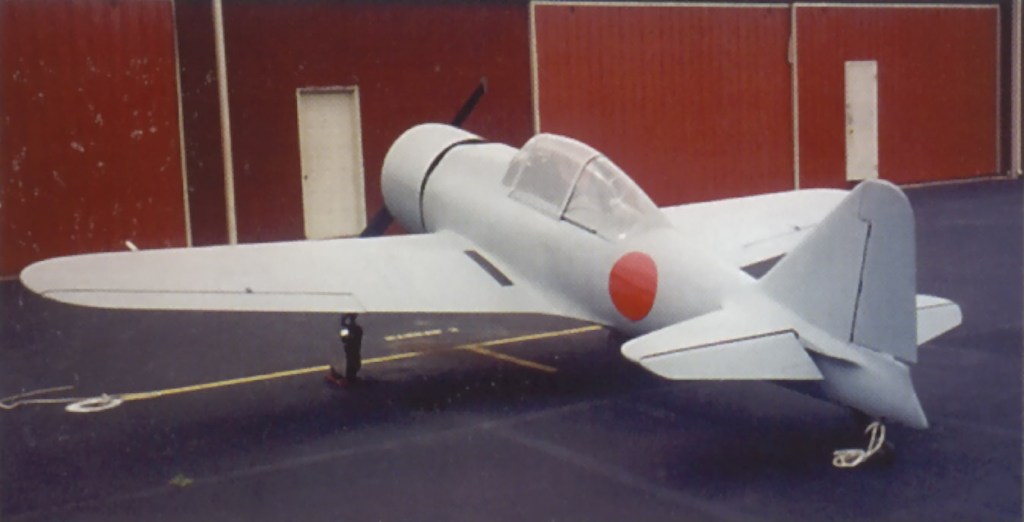
WAR Zero

The scale Zero is built around a plywood box core and covered with styrofoam and fiberglass. Plans have been produced for this and two other ½-scale World War II replicas by War Aircraft Replicas. All use the same common wooden fuselage box and wing spar construction in order to duplicate the various fighter aircraft. Polyurethane foam is shaped and covered with high-strength fiberglass cloth and laminating epoxy resin to form a rigid, yet light structure. Landing gears are of air/oil oleo type, with either electrical or manual retract and have a built-in emergency release. Engines vary from 65 hp to 125 hp, which accounts for variations in perform¬ance. Authentic three and four bladed props are available.
Features fully retractable landing gear, sliding canopy, and detachable wings.

Engine: Continental O-200-A, 100hp
Wing span: 21’0″
Length: 16’6″
Wing twist 2 degree
Seats: 1
Undercarriage: retractable
Plans 2005: US$295

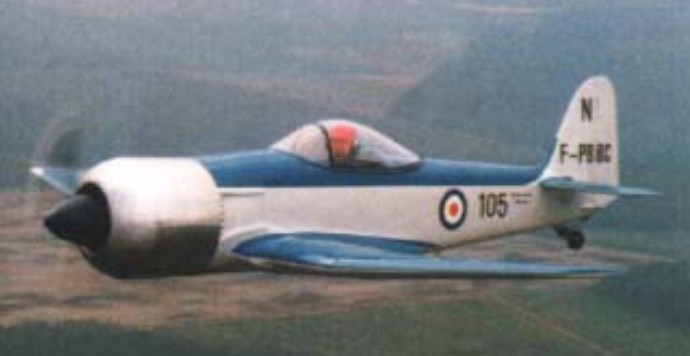
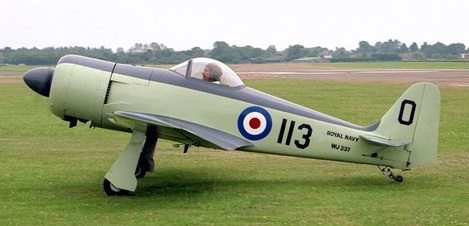
WAR Hawker Sea Fury

The scale Hawker Sea Fury is built around a plywood box core and covered with styrofoam and fiberglass. Plans have been produced for this and two other ½-scale World War II replicas by War Aircraft Replicas. All use the same common wooden fuselage box and wing spar construction in order to duplicate the various fighter aircraft. Polyurethane foam is shaped and covered with high-strength fiberglass cloth and laminating epoxy resin to form a rigid, yet light structure. Landing gears are of air/oil oleo type, with either electrical or manual retract and have a built-in emergency release. Engines vary from 65 hp to 125 hp, which accounts for variations in perform¬ance. Authentic three and four bladed props are available.
Features fully retractable landing gear, sliding canopy, and detachable wings.

Wing twist 2 degree

The first, G-BLTG, flew on 24 February 1986.

Engine: Continental O-200, Lycoming 0-290-D, HCI 7 cylinder Radial
Prop: 60″dia 3 or 4 blade ground adjustable
Wingspan: 20’0″
Length: 16’0″
Footprint: 7’0″
Empty Weight: 600-620 lbs
Max Gross Weight: 900-920 lbs
Fuel capaci¬ty 15 USG
Wing Loading: 12lbs/sq ft
Cruise condition: 135 MPH @3.2 GPH
Wide Open speed: 165 MPH
Stall Speed: 55 MPH
Approach & Pattern Speed: 70-75 MPH
Take off Run: 800-1000 ft
Landing roll 1200 ft
Rate of Climb: 700 ft/min.
Endurance: 3-4 Hrs: 400 miles
Structural capability: Aerobatic (+/- 6 g’s)

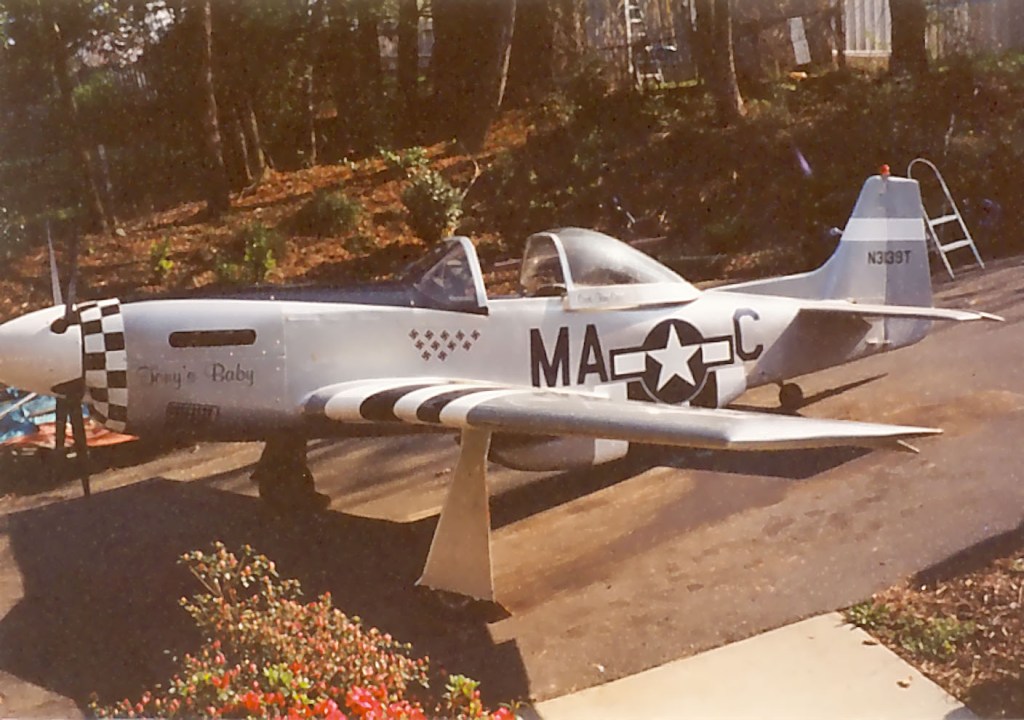
WAR P-51 Mustang

Features fully retractable landing gear, sliding canopy, and detachable wings.
The company fell into financial difficulties in the late 1980s following the death of its president, Peter Nieber, in the prototype P-51.

Plans 2005: US$275

Engine: Continental O-200, Lycoming 0-290-D, HCI 7 cylinder Radial
Prop: 60″dia 3 or 4 blade ground adjustable
Wingspan: 20’0″
Length: 16’0″
Footprint: 7’0″
Empty Weight: 600-620 lbs
Max Gross Weight: 900-920 lbs
Wing Loading: 12lbs/sq ft
Cruise condition: 135 MPH @3.2 GPH
Max level speed: 165 MPH
Stall Speed: 55 MPH
Approach & Pattern Speed: 70-75 MPH
Take off Run: 800-1000 ft
Rate of Climb: 700 ft/min.
Endurance: 3-4 Hrs: 400 miles
Structural Capability Aerobatic (+/- 6 g’s)

Engine: Honda, 100-120hp
Wing span: 20’0″
Length: 17’0″
Undercarriage: retractable

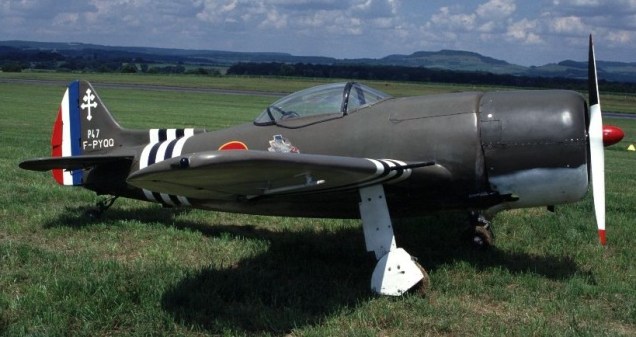
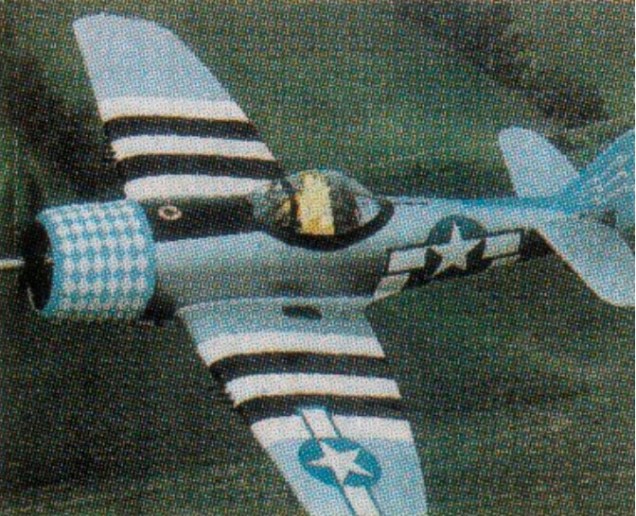
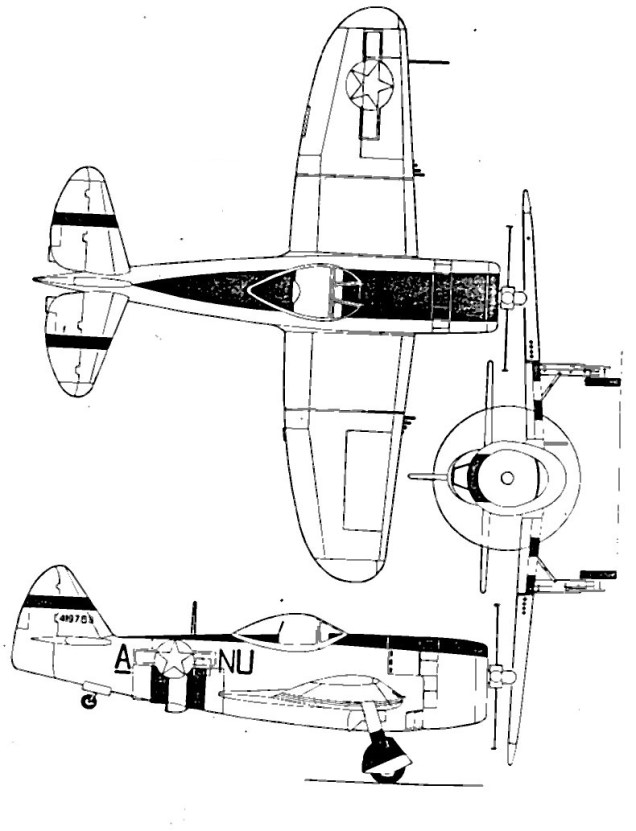
WAR P-47 Thunderbolt

The scale P-47 is built around a plywood box core and covered with styrofoam and fiberglass. Plans have been produced for this and two other ½-scale World War II replicas by War Aircraft Replicas. All use the same common wooden fuselage box and wing spar construction in order to duplicate the various fighter aircraft. Polyurethane foam is shaped and covered with high-strength fiberglass cloth and laminating epoxy resin to form a rigid, yet light structure. Landing gears are of air/oil oleo type, with either electrical or manual retract and have a built-in emergency release. Engines vary from 65 hp to 125 hp, which accounts for variations in perform¬ance. Authentic three and four bladed props are available.
Features fully retractable landing gear, sliding canopy, and detachable wings.

Wing twist 2 degree

Wing section root: 23015 54 in
Wing section mid: 23014 50 in
Wing section tip: 23012 30 in

Engine: Continental 0-200, Lycoming 0-290-D, HCI 7 cylinder Radial
Prop: 60″dia 3 or 4 blade ground adjustable
Wingspan: 20’0″
Length: 16’0″
Footprint: 7’0″
Empty Weight: 600-620 lbs
Max Gross Weight: 900-920 lbs
Fuel capaci¬ty 15 USG
Wing Loading: 12lbs/sq ft
Cruise condition: 135 MPH @3.2 GPH
Wide Open speed: 165 MPH
Stall Speed: 55 MPH
Approach & Pattern Speed: 70-75 MPH
Take off Run: 800-1000 ft
Landing roll 1200 ft
Rate of Climb: 700 ft/min.
Endurance: 3-4 Hrs: 400 miles
Structural capability: Aerobatic (+/- 6 g’s)