Heydecke V16

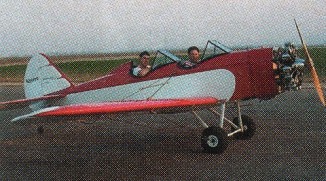
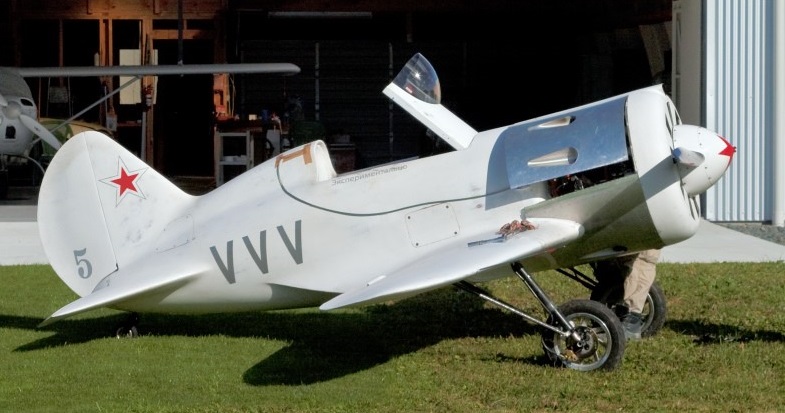
A home built 2/3 scale Polikarpov I-16 replica built by Volker Heydecke of Drury, New Zealand. Volker Heydecke is a mechanical engineer but did not weld a single piece on this airplane. He trusted a licensed airplane welder to do this. The only welded truss-system is the engine mount. There are a few welded brackets made from steel, the undercarriage is bolted. The rest is self supported composite structure (monocoque).

On Saturday, 29 August 2009, around 1730 hrs, the pilot was conducting stalls as part of the test flying regime. On on the second stall, the left wing dropped and the aircraft entered a spin. Standard recovery techniques did not arrest the spin, so the pilot transmitted a distress message and deployed the aircraft ballistic recovery chute. The aircraft sustained damage to the propeller and undercarriage on landing in a farm paddock. The pilot was able to vacate the aircraft with only minor injuries.
Serial: V16001
Herringhausen Vagabund

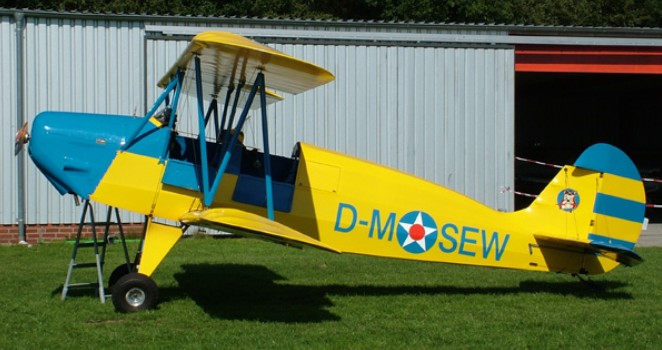
The Vagabund is a 3-axis two-seat ultralight biplane, in classic timber construction. The design of the Vagabund goes back to 1989. The open cockpit biplane is constructed using the usual materials and working procedures for wooden aircraft. The fuselage is conserved with epoxy resin and covered with polyester fabric. A high-quality lacquer finish gives it a maximum weather protection. The open cockpit biplane has a welded tubular steel chassis with one-guidable roll spur. The wooden-propeller is driven by a 80 hp, lightweight four-stroke, horizontally-opposed aircooled Jabiru 2200 engine. As power plant also the 50 hp Nissan Micra 1200 or the 80 hp Rotax 912 UL version engine can be used. The choice of the engine has its influence on the performance of the aircraft: with the Micra 1200 the cruise speed is 125km/h, with the Rotax 912 125 km/h.

Henderson Aero Supplies Little Bear

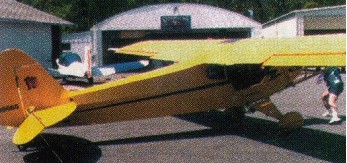
A Super Cub replica. In 1997 the kit price was US$24,500.

Engine: Continental C-65, 65 hp.
HP range: 65-100.
Speed max: 85 mph.
Cruise: 80 mph.
Range: 340 sm.
Stall: 38 mph.
ROC: 800 fpm.
Take-off dist: 400 ft.
Landing dist: 300 ft.
Service ceiling: 11,500 ft.
Fuel cap: 20 USG.
Weight empty: 649 lbs.
Gross: 1220 lbs.
Height: 6.67 ft.
Length: 22.34 ft.
Wing span: 35.21 ft.
Wing area: 178.5 sq.ft.
Seats: 2
Landing gear: tail wheel.

Helve Classic

An LSA kit or plans built plane circa 2010. The kit, including engine, cost US$15,995.

Cruise: 105 mph
Stall: 45 mph
Range: 290 sm
Rate of climb: 1000 fpm
Takeoff dist: 400 ft
Landing dist: 500 ft
Engine: Rotec R2800, 110 hp
HP range: 85-150
Fuel capacity: 16 USG
Empty weight: 800 lb
Gross weight: 1320 lb
Length: 22 ft
Wing span: 28 ft
Wing area: 120 sq.ft
Cockpit width: 27 in
Landing gear: tailwheel

Heath LNB4 Parasol

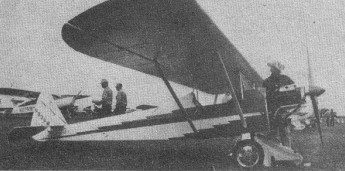
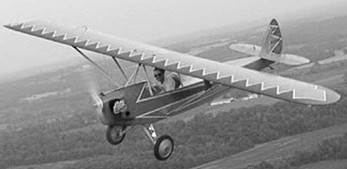
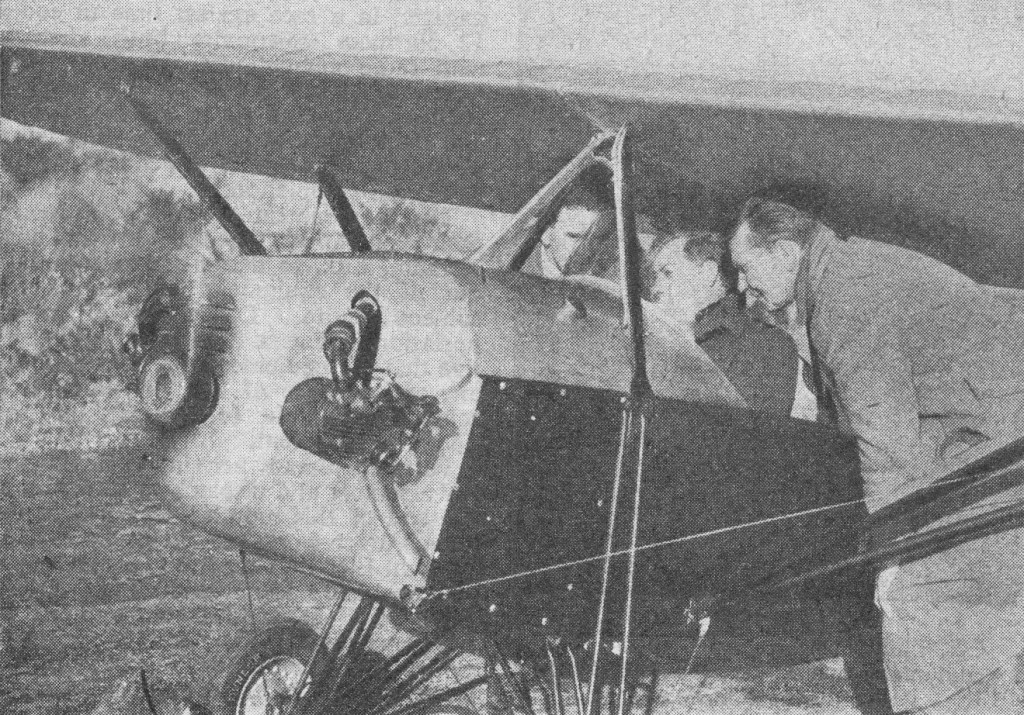
Designed and built originally in the U.S.A. by Ed. Heath during the early 1930s, this single seat sports aeroplane was built in large numbers prior to the 1939-45 War. The Parasol was powered mainly with Heath’s own conversion of the 25-hp Henderson motorcycle engine. Production was undertaken for an early version of this aircraft in Australia, as early as 1931 by the Adcock-Heath Co.

Heath LNB4 Parasol Article

Heath B-4 / OK-AT(V) Švec

The fuselage is built of welded steel tube and is fabric covered. The wings consist of two solid spruce spars, built-up wooden ribs, compression struts and internal bracing. Externally, the wings are braced by steel tubes to the fuselage. The empennage is built of wood, the fin and tailplane being externally braced. The whole aircraft is fabric covered. Two 5 Imp. gallon fuel tanks are installed at the root end of each wing half, the fuel being gravity fed to the engine.

While some were factory built, and the last model actually received an Approved Type Certificate (ATC) in 1932, the majority were homebuilt from factory-supplied kits or from magazine plans. Still being built, this single-seater is usually powered by either a Volkswagen conversion or a 65 hp Continental and is constructed of wood, fabric and tubular steel.

A Plymouth Aero Club member flew a Parasol in the UK powered by a Douglas dirt track motor cycle engine.

1949 A.B.C. Scorpion powered in the UK

Ultralight replica: Rag Wing RW 5 Heath Replica

Gallery

Engine: Continental A40
Wingspan: 31ft. 3 in
Length: 17 ft. 3 in
Wing Area: 135 sq. ft.
Empty Weight: 450 lb.
Gross weight: 700 lb
Fuel capacity: 9 USgals
Wing Loading: 5.2 lb/sq. ft.
Max. Speed: 85mph.
Top speed: 73 mph
Cruise speed: 62 mph
Stall Speed: 32mph.
Climb rate: 500 fpm.
Range: 330 miles.
Takeoff run 400 ft.
Landing roll 400 ft.

Heath Aircraft Co

Edward Bayard Heath

Edward Bayard Heath was born on November 17, 1888 in Brooklyn, New York to Clark Heath and Ada M. Johnson.

Heath designed and built a series of aircraft starting in 1909 with a Bleriot-inspired monoplane. His first flight was on 10 October 1909 in Amsterdam, New York resulting in a broken landing gear. On July 4, 1910 Heath made $500 in appearance fees and $200 in photograph revenues from his aircraft that flew 3 feet above the ground.

In 1911 Heath went to work for Glen Curtiss in Hammondsport, New York as a motorcycle mechanic, next to the Curtiss aircraft factory where he built a second aircraft with Walter Eales making short aerial runs. After purchasing the Chicago-based Bates Aeroplane Company in 1912, Heath founded the E.B. Heath Aerial Vehicle Co., later becoming the Heath Airplane Company.

His company produced the Heath Feather and Heath Favorite after World War I, and later the Heath Parasol series of aircraft powered with Henderson Motorcycle engines.

The 1928 Heath Baby Bullet mid-wing monoplane racer exceeded 100mph (160kmh) on only 32 hp. Heath Super Soarer biplane glider, built 1930, was first unpowered aircraft to loop-the-loop. Heath Parasol of 1931, designed to be powered by a converted motorcycle engine, sold in large numbers to amateur builders.

Married to Berna Heath, Heath died on February 1, 1931 (aged 42) in Maine Township, Cook County, Illinois. He was in an aircraft accident while testing a new low-wing aircraft design.

Heath’s company was eventually purchased and after World War II, changed its product to kit electronics. Heathkit filed for bankruptcy and closed in 2012. As of 2019, the company has a live website at http://www.heathkit.com.