San Diego CA. USA
Built the Hotz Tiger LSA
San Diego CA. USA
Built the Hotz Tiger LSA
The Invader 330 is a one plus one derivative of the Invader 440 (side by side one/two seat), using the smaller Robin EC34PM engine and a Flexiform Sky Sails Striker wing.
Engine: Robin EC34PM.
Toothed belt reduction.
Length overall 11.0ft, 3.35 m.
Wing span 34.5 ft, 10.52 m.
Sweep back 15 degs.
Total wing area 200 sq.ft, 18.6 sq.m.
Wing aspect ratio 7.5/1.
Wheel track 4.3 ft, 1.31 m.
Nosewheel diameter overall 16 inch, 41 cm.
Main wheels diameter overall 16 inch, 41 cm.
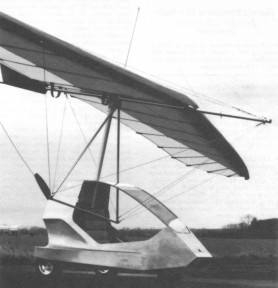
Hornet/Flexiform Sky Sails Invader 440/Dual Striker – A side by side two seat single engined flex wing aircraft with weight shift control. Rogallo wing with keel pocket. Pilot suspended below wing in trike unit, using bar to control pitch and yaw/rod by altering relative positions of trike unit and wing. Wing braced from above by kingpost and cables, from below by cables; bowsprit construction with 65% double surface; pre formed ribs. Undercarriage has three wheels in tricycle formation; steel spring suspension on nosewheel and rubber suspension on main wheels. Push right go left nose¬wheel steering independent from yaw control. Brakes on main wheels. Aluminium tube/ glass fibre trike unit, partially enplosed. Engine mounted below wing driving pusher propeller. All major components made from aircraft quality materials.
The Invader gives weather protection, quick rigging and ease of ground handling a high priority. The wind tunnel developed trike unit is almost fully enclosed, only the sides being open, and is of mono pole construction. The mono pole is an aerofoil rather than the usual round section and is mated to a one piece rear axle instead of the two piece plus tie wire arrangement commonly used with mono poles.
To cope with rough field operation, all three wheels have suspension and in addition the nose wheel geometry is arranged to give a self stabilising effect, so that the aircraft runs true even if the pilot makes a less than perfect touchdown. A hand operated brake is fitted to the main wheels, arranged so that it can be used as a parking brake. The fuel tank is made from aluminium alloy with internal baffles.
Rigging is confined to the wing and is hence claimed to take a maximum of 15 minutes. The trike unit has road tyres on the rear, running on stainless steel axles and taper=roller bearings, so that it can be towed complete on its own wheels. Wing fitment is the Flexiform Skysails Dual Striker, a fast wing which Hornet designer Richard Wolfenden says is well matched to the new trike unit.
Length overall 14.0 ft, 4.27 m.
Height overall 12.5 ft, 3.80m.
Wing span 38.0 ft, 11.58m.
Chord at root 9.0 ft, 2.74m.
Chord at tip 3.5ft, 1.07m.
Dihedral 2 degs.
Sweepback 15 degs.
Keel pocket depth 1.2ft, 0.37m.
Total wing area 250 sq.ft
23.2 sq.m.
Keel pocket area 3.5 sq.ft, 0.33 sq.m.
Wing aspect ratio 6.0/1.
Wheel track 4.3 ft, 1.31 m.
Nosewheel diameter overall 16 inch, 41 cm.
Main wheels diameter overall 16 inch, 41 cm.
Engine: Robin EC44, 50 hp.
Propeller diameter and pitch 60×34 inch, 1.52×0.86m.
Toothed belt reduction, ratio 2.8/1.
Max static thrust 280 lb, 127kg.
Power per unit area 0.20hp/sq.m, 2.2 hp/sq.m.
Fuel capacity 5.0 US gal, 4.2 Imp gal, 19.1 litre.
Empty weight 290 lb, 132kg.
Max take off weight 682 lb, 309kg.
Payload 392 lb, 1.78kg.
Max wing loading 2.73 lb/sq.m, 13.3 kg/sq.m.
Max power loading 13.6 lb/hp, 6.2 kg/hp.
Load factors +4.5, 2.0 design.
The Supreme 440 is identical to the 440 Dual except that the chrome plated joint pieces and electric start are fitted as standard.
While some manufacturers of big engined two seat trikes recommend that ballast should be carried when flying solo, Hornet prefer instead to reduce the throttle opening, saying that, thanks to the lift characteristics of the Cutlass CD wing, the solo pilot can take off quite quickly even on part throttle.
440 Dual
Engine: Robin EC44, 45 hp at 6500 rpm.
Propeller diameter and pitch 54 x 36 inch, 1.37 x 0.91 m.
Toothed belt reduction, ratio 2.5/1.
Max static thrust 270 lb, 122 kg.
Power per unit area 0.23 hp/sq.ft, 2.4hp/sq.m.
Fuel capacity 4.8 US gal, 4.0 Imp gal, 18.2 litre in each tank; two tanks.
Empty weight 293 (313) lb, 133 (142) kg.
Max take off weight 685 lb, 311 kg.
Payload 392 lb, 178 kg.
Max wing loading 3.46 lb/sq.ft, 16.9 kg/sq.m.
Max pow¬er loading 15.2 lb/hp, 6.9 kg/hp.
Load factors; >+3.75 ultimate.
Max level speed 60 mph, 97 kph.
Never exceed speed 68 mph, 109 kph.
Max cruising speed 45 mph, 72 kph.
Economic cruising speed 40 mph, 64 kph.
Stalling speed 26 mph, 42 kph.
Max climb rate at sea level 850 ft/min, 4.3 m/s.
Take off distance 45ft, 14m.
Landing dis¬tance 110ft, 35m (without brakes).
Total range at average cruising speed 190 mile, 306 km.
Supreme 440
Engine: Robin EC44, 45 hp at 6500 rpm.
Propeller diameter and pitch 54 x 36 inch, 1.37 x 0.91 m.
Toothed belt reduction, ratio 2.5/1.
Max static thrust 270 lb, 122 kg.
Power per unit area 0.23 hp/sq.ft, 2.4hp/sq.m.
Fuel capacity 4.8 US gal, 4.0 Imp gal, 18.2 litre in each tank; two tanks.
Empty weight 313 lb, 142 kg.
Max take off weight 705 lb, 320 kg.
Payload 392 lb, 178 kg.
Max wing loading 3.56 lb/sq.ft, 17.4 kg/sq.m.
Max pow¬er loading 15.7 lb/hp, 7.1 kg/hp.
Load factors; >+3.75 ultimate.
Max level speed 60 mph, 97 kph.
Never exceed speed 68 mph, 109 kph.
Max cruising speed 45 mph, 72 kph.
Economic cruising speed 40 mph, 64 kph.
Stalling speed 26 mph, 42 kph.
Max climb rate at sea level 850 ft/min, 4.3 m/s.
Take off distance 45ft, 14m.
Landing dis¬tance 110ft, 35m (without brakes).
Total range at average cruising speed 190 mile, 306 km.
Single seat single engined flex wing aircraft with weight shift control. Rogallo wing with keel pocket. Pilot suspended below wing in trike unit, using bar to control pitch and yaw/roll by altering relative positions of trike unit and wing. Wing braced from above by kingpost and cables, from below by cables; floating cross tube construction with 55% double surface enclosing cross tube; pre-formed ribs. Undercarriage has three wheels in tricycle formation; no suspension on any wheels. Push right go left nosewheel steering independent from yaw control. Optional brake on nosewheel. Aluminium tube trike unit without pod (250), with pod and side fairings (250 Executive). Engine mounted below wing driving pusher propeller. All major components made from aircraft quality materials. Front fork assembly made from aluminium alloy.
The 250 is a basic single seat trike unit generally sold with a Skyhook Sailwings Sabre C wing. Other wings offered are Skyhook Sailwings Cutlass C, Airwave Nimrod, Gold Marque Sports Gyr and Flexiform Skysails Striker.
Instead of the usual bolt and saddle washers method, Hornets use tube joint pieces made from external sleeving, welded together in the appropriate shape (T, L or whatever). The tubes are slid inside the joint pieces and retained by aircraft quality bolts or, for less critical applications, stainless steel rivets. Made from steel, the joint pieces have passivated zinc plating for corrosion protection; chromium plating is an option.
A recognition point is the U shaped nose tube, designed to facilitate the fitting of Hornet’s own glass fibre pod. When fitted with this pod plus glass fibre side fairings, the trike unit is known as the 250 Executive. Other options include a nosewheel brake, alloy skis, alloy wheels, an extra fuel tank holding 3.6 US gal (3.0 Imp Gal).
1983: Templeward Ltd t/a Hornet Microlights, Bankfoot Mills, Wibsey Bank, Bankfoot, Bradford, West Yorkshire BD63JU, Great Britain.
LSA and Trike builder
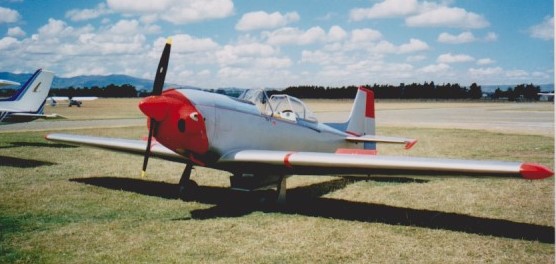
Horn TH 1 ZK-TLH was the result of over forty years of experience in aviation by a Levin pilot, being a low wing monoplane similar in microlight configuration to the Bobcat. Powered by a two cylinder Koenig radial, the TH 1 was undergoing ground trials in 1989.
The single-seat aircraft was built by Tom Horn without plans, and features spoilerons rather than ailerons.
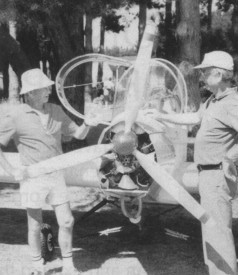
It is surprisingly large for a microlight and was re-powered with a 1.8 litre Subaru engine.
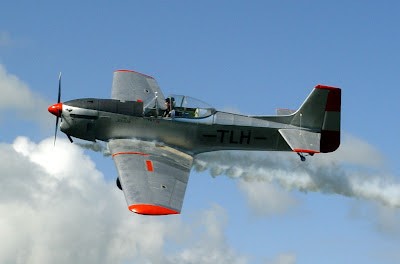
ZK-TLH (c/n MAANZ/423) was first registered to Tom Horn of Levin on 17/4/89.
Tom sold it to his cousin Graham Horn of Taupo on 2 September 2002 although Graham may have been operating it for some time before the change of ownership.
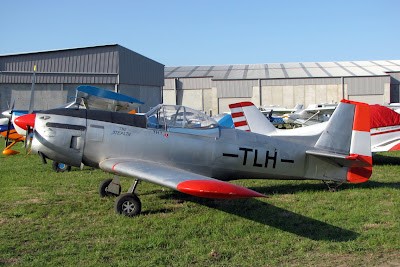
Finally, it was sold to Brian Taylor of Whangarei on 2 August 2004. Brian constructed a new cowling and added a turbo charger to the Subaru engine and has flown it quite a bit around the North of the North Island.
Engine: Konig D-1000.
Seats: 1
Levin, New Zealand.
LSA builder
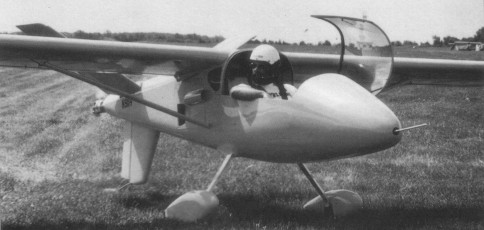
Due to other events, notably the Bullet 2100 project and Molt’s declining health, the Micro-IMP was not developed further. Jerry Holcomb went on however to develop, build and fly a refinement of the Micro-IMP design which he named the “Perigee”.
The Perigee, which was designed by Jerry Holcomb of Perigee Associates and initially called the Ultra Imp, first flew in April 1987 and is based on the TPG form of construction pioneered on the Aerocar Micro-Imp. This is a version of the same company’s Mini-Imp, which clearly provided the conceptual starting point for the Perigee.
The TPG (Taylor Paper Glass) form of construction was developed by Moulton B. Taylor, president and general manager of Aerocar, which was created in 1948 to develop Mr Taylor’s extraordinary flying car concept. TPG is a paper core (with metal inlays to accommodate compression loads) covered in glassfibre in a matrix of polyester resin and covered with ripstop Dacron fabric. The Mini-Imp and Micro-Imp both have retractable tricycle landing gear, but the Perigee uses fixed tailwheel landing gear with cantilever main legs ending in elegant speed fairing round the wheels. The need to accommodate a tailwheel led to an alteration of the Y-shape tail unit by comparison with the Aerocar types: in the Perigee it is turned through 1800 so that the vertical surface is at the bottom with the tailwheel attached to its lower edge.
The streamlined fuselaqe is of composite construction with spruce longerons, TPG bulkheads, cockpit floor, tailcone and side skins, a glassfibre nose and some aluminium alloy components. The braced high-set wing has an aluminium alloy/TPG main spar, a spruce/TPG rear spar, wood main ribs, TPG nose ribs, a glassfibre leading edge and fabric covering aft of the main spar. The full-span flaperons are of aluminium alloy sheet over polystyrene foam. The three tail surfaces are similar to the wing in basic construction, but have no wood in them. Propulsion is the task of a twin-blade pusher propeller behind the tail unit, and this is driven by an extension shaft running aft from the engine located behind the cockpit.
Fixed-gear, strut-based monoplane with Y tail, pusher engine. Wings fold for towing on highway. Optional retractable gear, cantilever wing. Powerplant: Cuyuna 430 drives controllable pusher prop. Landing gear: Fixed taildragger.
Information packages were sold but plans and kits never materialized.
Type: sport lightplane
Seats: one.
Powerplant: one 35-hp (26-kW) Cuyuna 430
Maximum speed 120 mph (193 km/h)
Initial climb rate 700 ft (213 m) per minute
Service ceiling 12,500 ft (3810 m)
Range 200 miles (322 km)
Empty weight 380 lb (172 kg)
Maximum take-off 720 lb (326 kg)
Wingspan 28 ft (8.53 m)
Length 15 ft 8 in (4.78 m)
Height 5 ft 2 in (1.57 m)
Wing area 81 sq.ft (7.53 sq.m).
Aspect Ratio 10:1.
Stall speed 40 mph.
Vmax 140 mph.
Takeoff run 300 ft. Landing roll 300 ft.
Fuel capacity 8+ USG.
1983: Jerry Holcomb, 1010 N.E. 122nd St., Vancouver WA 98664, USA.
LSA builder
 All Aero