Weedhopper JC-26-A Gypsy

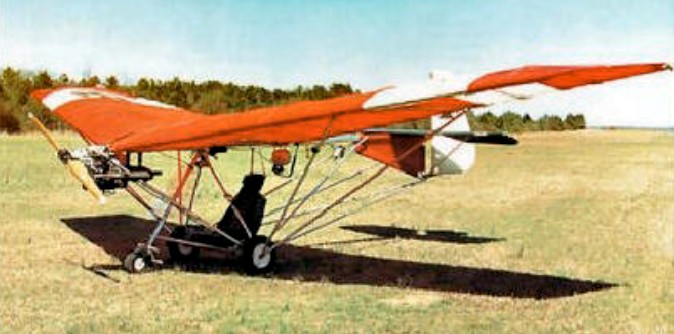
When John Chotia revealed his new Gypsy at Oshkosh ’80, it was to provide an easy-to-fly, simple-to-maintain, efficient airplane.

It’s an ultralight aircraft that weighs. only 165 pounds, and because it can be footlaunched and recovered, it’s in that special -unrecognized” category that the FAA has turned its back on, meaning it can be flown without an airworthiness certificate or a pilot’s license.

The Gypsy is a very conventiowl taildragger, with responsive three-axis controls (the aileron, rudder and elevator surfaces are enormous),

Nevertheless, the Gypsy emerged full blown as a pilot’s airplane and is intended to be used as a motorized glidder. its huge, high-lift wing gives it liftdrag ratio of 16:1 and a minimum sink rate of 165 fpm. The Chotia 460 engine, which weighs only 32 pounds and develops 25 hp, is ample to get any soaring pilot high into the thermals. Once there, it doesn’t take much heat to keep the lightly loaded Gypsy going on up. Ridge soaring offers another good opportunity to lean into the wind for some free flying time. If you like cruising with the engine on, you’ll find it takes a mere 2.5 hp to maintain the 35-40 mph cruise.

A high-wing, wire-braced monoplane with “bathtub” type fuselage/cockpit and conventional tail sur¬faces. A discreet three-axis control system is operated by stick and rudder pedals. Aluminum tubing and wooden dowels are used in combination with styrofoam for ribs and fuselage pod structure. Wing and tail surfaces are covered with doped fabric. Openings in the floor of the cockpit allow for foot-launching. The engine and tail structure are at¬tached to opposite ends of a single aluminum-tube boom. POWERPLANT: Chotia 460 mounted in tractor position ahead of the main wing. The Weedhopper two-blade, wooden propeller is turned by direct drive. Fuel is carried in a polyethylene tank inside the fuselage. The single-cylinder engine is hand-propped for starting and has a compression ratio of 10:1. LANDING GEAR: Conventional taildragger type with a steerable tailwheel attached to the rudder. Main wheels are 20-inch and the tailwheel is 6-inch. There are no brakes, and the main gear are solid mounted.
In 1980 the full kit price was US$2995.

Cockpit space in the Gypsy is generous enough to accommodate a 6-foot-6-inch man with a portly frame. Visibility is incredible. While you’re offered good protection from cold winds, the sides of the fuselage hold a low profile. There’s also a large hole in the floor (for foot launching) that offers an

The aileron horn is activated by a pushrod that’s linked to a bellcrank which is hooked to cables. One cable runs down to the control stick, the other goes across to the other aileron.

The Gypsy, created and sold in kit form by Weedhopper of Ogden, Utah, represents a new, significant break-through in ultralight aircraft design. it utilizes an aluminum frame, styrofoam ribs and fuselage, and the new Chotia 460 engine which develops 25 horsepower and weighs only 32 pounds.
Weedhopper offers the Gypsy as a kit that’s complete with everything except glue and dope. It was created for easy construction: all components requiring bending, machining or sewing are treated at the factory. A drill guide is furnished to permit hand drills instead of a drill press.

Seamless, drawn 6061 T-6 aluminum tubing is used to form the basic structure of the Gypsy. Wooden dowels are’ set inside the tubes at the attach points, and aircraft bolts are used in the joints. In some cases, premachined brackets, tabs or gussets are attached to accommodate struts, spans, cables, pushrods, etc., Ruggedness has been built into the design.

Making the wings is an agreeable matter of laying out the tubes in a rectangular shape, drilling holes for some pop rivets and bolts, fitting on the precut, extruded styrene foam ribs, and gluing on the capstrips. Then the 1.5 ounce Dacron sailplane cloth is glued on. Butyrate, dope gives color and a smoothness to the flying surfaces. Detailed, large-scale drawings and full instructions reduce the entire process to simply “counting numbers.” For the rudder and elevator, you just sand to shape and glue on fiberglass cloth.

The control system follows the tradition for separate aileron, rudder and elevator linkage, Cables run from the control stick and rudder pedals to their respective horns and bell cranks. Everything in the control system is exposed, so you can easily see and closely inspect it. Any wear on the cables or attach points will show up immediately.

Because of the slow stall speed (22 mph), takeoffs and landings in a Gypsy are easy, even for a relatively inexperienced pilot.

Wingspan, 32 ft
Wing area, 144 sq.ft
Aspect ratio, 7.1
Overall length, 18.5 ft
Empty weight, 165 lb
Usable payload (include fuel), 250 lb
Wing loading, 2.31 lbs/sq.ft
L/D power-off glide ratio: 16.1
VNE: 65 kt / 75 mph / 120 kmh
Cruise speed (85% power), 60 mph (redline)
Stall: 22 kt / 25 mph / 41 kmh
Ap¬proach speed, 30mph
Flair speed, 22 mph
Liftoff speed, 25 mph
Take-off distance (50ft obstacle): 100 ft / 30 m
Landing distance (50ft obstacle): 35 ft / 11 m
Rate of climb, 400-600 fpm
Fuel capacity, 2.5 Usgal
Range at cruise, 60 mi
Engine displacement, 456cc
Rated HP, 30 hp
Static thrust 140-150 lb
Cockpit width, 24 in
LSA: yes
Weedhopper JC-24 Weedhopper

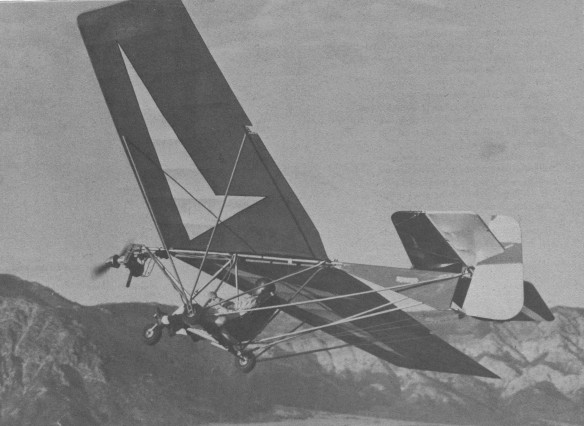
Designed by John Chotia and marketed in kit form by his company, Ultra Systems of PO Box 2253, Ogden, Utah, the Weedhopper is a powered hang glider envisaged as a low cost fun aeroplane that does away with the conventional hang glider’s need for a hill and wind, and the bruises, hard landings and other exertions that usually accompany this form of flying. The Weedhopper is Chotia’s 23rd design, following 18 hang gliders of both rigid and flex-wing types, and five powered gliders of which several are foot-launched.

Weedhopper JC-24 Weedhopper Article

Weedhopper of Utah was founded in 1977 by John Chotia, who asked Klaus Hill, creator of the Hummingbird, Hummer and the famous Fledgling, to design a minimum cost ultralight. His flying wing design was not particularly well accepted in its original form, but fitted with an empennage by John Chotia, it gave rise to one of the most popular of the early ultralights. This ultralight is perhaps the world’s simplest airplane.

It was designed from the start to take engine and landing gear loads, and has conventional rudder and elevator controls (but no ailerons) and proper seating for the pilot, who sits suspended under the wing just about on the cg position; this means that the design is not nearly so sensitive to pilot weight changes as other ultralights. The triangle undercarriage is mounted on the small platform-like structure on which the pilot sits, and has a steerable nosewheel. A rigid as distinct from flexible wing was chosen so as to retain control and stability in all attitudes, and the wings are of the ‘roll up’ kind, which can be dismantled easily for transport. The Weedhopper’s structure is basically of aluminium tubing partially covered with dacron sailcloth, which simply bolts together for assembly, and is strong enough to lift a man weighing 200lb at an airfield elevation of 5,000ft. The engine is a 292cc Yamaha which produces 19hp at 5,000 rpm and is mounted just ahead of the wing leading edge on a tubular framework. An optional double-surfaced wing is available together with streamlined struts for pilots of over 190lb weight who wish to fly at airfield elevations of 4,000ft or more, especailly on warm days. The Weedhopper can be stalled safely and does about 30 miles to a gallon of fuel. It is one of a growing number of powered hang gliders and what are termed ‘minimum aeroplanes’ – ultra-lights of low power and a very simple and basic type of airframe which, unlike motor gliders, are not intended for soaring flight with the engine stopped.

Inspired by the Demoiselle 20 of Santos Dumont, John produced two prototypes and, after an elaborate test flying programme, two pre production aircraft in February 1978, followed in November 1979 by a new prototype, this time with a larger wing area.

The first production machines were known as the Weedhopper JC 24. Single seat single engined high wing mono¬plane with two axis control (three axis option¬al). Wing has swept back leading edge, swept forward trailing edge and tapering chord. cruciform tail. Pitch control by elevator on tail; yaw control by fully flying rudder with additional fin; no separate roll control (option¬al roll control by spoilers); control inputs through stick for pitch/yaw (optional: pedals for roll). Wing braced from below by struts; wing profile; single surface. Undercar¬riage has three wheels in tricycle formation; no suspension on any wheels. Push right go left nosewheel steering independent from yaw control. Optional brake on nosewheel. Alumi¬nium tube framework, without pod. Engine mounted at wing height driving tractor prop¬eller.

John Chotia planed to retain his original two-axis Weedhopper (with a retrofit, three-axis option) for the benefit of nonpilots. “They learn faster and have a much easier time of it with linked controls,” says John. “You can’t knock it.—The Weedhopper, which was available with three different wings (and which the Navy has purchased for testing) was conceived as a trainer, and consequently it’s built like a tank, to withstand “refinements”.

The Weedhopper’s basic structure is of seamless, drawn 6061 aluminum tubing, reinforced at all attach points with larger tubing and/or wooden dowels. Premachined brackets or gussets are used to join the tubes. All bolts and hardware are of aircraft quality. Covering is 3.8-ounce stabilized Dacron sailcloth, presewn to slip into place, with no additional sew¬ing, gluing or doping necessary. Designer John Chotia disliked the high rpm inefficiencies of snowmobile engines, so he designed his own powerplant, the Chotia 460, that delivers 18.5 hp at 3500 rpm to permit a direct-drive pro¬peller. The Weedhopper has dispensed with any control sur¬faces on the wing, relying on a rudder-induced yaw and wing dihedral to achieve a positive roll force and coordinated turns. Power-on stalls result in a loss of just 10-15 feet. Carry¬ing 220 pounds, redline speed is 50 mph, and cruise is 30 mph. First year built 1974. Units delivered by June 1981 1,200.

In 1980 the full kit price was US$2995.

By 1981 the standard model was the Weedhopper JC 24B, often known simply as the Weedhopper B, which had a simpler structure than the original JC 24 and which could be fitted with spoilers to give three axis control, two axis being the standard arrangement. That year three new models were introduced. First came the Weedhopper JC 24C, often abbrevi¬ated to Weedhopper C, which replaced the JC 24B and had a redesigned engine mount, a more striking finish with black anodised tubes and a more comfortable seat. Second came the JC 24BL Weedhopper Two, which de¬spite its title was a single seater. This soaring oriented machine had a larger span and area, a reinforced structure and spoilers, but was only ever distributed in a very small way. Thirdly was the company’s two seater, which took over the ‘Two’ part of the JC 24BL’s title and was dubbed JC 31A Weedhopper Two. At first reserved for dealers, it was later sold openly but without great success.
The JC 24P Pen¬guin was a clipped wing model with smaller area, designed not to fly! It was built for Weedhopper dealers to help with ground training. The Gypsy featured ailerons and a pod.
In 1983, the JC 24C with Chotia engine was the only model, sold as a kit requiring 40h assembly for $4095. Options include a soaring specification, developed from experience with the JC 24BL and using 3.0 ft (0. 91 m) wing tip extensions and spoil¬ers, 16 inch (41 cm) wheels for $75, double ¬surface wing for $200, nosewheel brake for $35, and transport covers for $80.
The Weedhopper C is powered by a Chotia 460 two-stroke driving a Weedhopper-built, two-blade, fixed-pitch wooden propeller via direct drive. The engine is mounted in tractor posi¬tion forward of the main wing. Fuel is carried in a rotational molded HDPE tank. LANDING GEAR: Tricycle-type with steerable nosewheel. The nosewheel is fitted with a brake, and all wheels are 11” in diameter. The gears are solid mounted.
Weedhopper model 40 2009 Price: US$7995

Weedhopper 40 Standard Features:
Steerable nose wheel
Nosewheel brake
Full front windshield
Instrument Package
Tachometer
Exhaust Gas Temperature Gauge
Cylinder Head Temperature Gauge
Airspeed Indicator
Construction Type: Aluminum tubing airframe with Polyester-Dacron sailcloth wing coverings.

Weedhopper Model 40

Weedhopper
Empty wt: 160 lbs
Gross weight 181 lbs
Max pilot weight 220 lbs
Wing span: 28 ft
Engine: Choita 460, 18.5 hp
Vne: 50 mph
Cruise: 30 mph

Weedhopper II
Wingspan, 34 ft
Wing area, 208 sq.ft
Aspect ratio, 5.67
Overall length, 18 ft
Empty weight 195 lbs
Usable payload (include fuel), 400 lbs
Wing loading, 2 lbs/sq.ft
L/D power-off glide ratio, 9.5:1
Cruise speed (85% power), 30 mph
Stall speed, 22 mph
Approach speed, 30 mph
Flair speed, 22 mph
Liftoff speed, 18-22 mph
Takeoff roll distance, 200 ft
Rate of climb, 250 fpm
Fuel capacity, 2 USgal
Range at cruise, 50 mi
Engine: Chotia 460, 456cc
Rated HP, 30 hp
Static thrust 140-150 lbs

Weedhopper DeLuxe
Speed max: 62 mph
Cruise: 50 mph
Range: 75 sm
Stall: 22 mph
ROC: 900 fpm
Take-off dist: 50 ft
Landing dist: 100 ft
Service ceiling: 10,000 ft
Engine: Rotax 447, 40 hp
Fuel cap: 5 USG
Weight empty: 252 lbs
Gross: 500 lbs
Height: 6.9 ft
Length: 18.25 ft
Wing span: 28 ft
Wing area: 168 sq.ft
Seats: 1
Landing gear: nose

Weedhopper C
Engine: Chotia 460D, 25 hp at 3700 rpm
Propeller diameter and pitch 44 x 19 inch, 1.11 x 0.48 m
No reduction
Power per unit area 0.14 hp/sq.ft, 1.6 hp/sq.m
Fuel capacity 3.5 US gal, 2.9 Imp gal, 13.2 litre
Length overall 18.5 ft, 5.64 m
Height overall 6.0ft, 1.83m
Wing span 28.0ft, 8.53m
Mean chord 6.0ft, 1.83m
Total wing area 168 sq.ft, 15.6 sq.m
Wing aspect ratio 4.7/1
Nosewheel diameter overall 11 inch, 28cm
Main wheels diameter overall 11 inch, 28 cm
Empty weight 160 lb, 73kg
Max take off weight 380 lb, 172kg
Payload 220 lb, 100kg
Max wing loading 2.26 lb/sq.ft, 11.0kg/sq.m
Max power loading 15.2 lb/hp, 6.9kg/hp
Load factors; +5.0, 2.0 ultimate
Max level speed 50 mph, 80 kph
Max cruising speed 40mph, 64kph
Economic cruising speed 30 mph, 48 kph
Stalling speed 20 mph, 32 kph
Max climb rate at sea level 600 ft/min, 3.1 m/s
Min sink rate 350 ft/min, 1.7m/s
Best glide ratio with power off 7.3/1
Take off distance 100ft, 30m
Landing distance 75ft, 23m
Service ceiling 10,000ft, 3050m
Range at average cruising speed 90 mile, 145 km

Weedhopper Standard
Cruise: 50 mph
Stall: 25 mph
Range: 120 sm
Rate of climb: 500 fpm
Takeoff dist: 150 ft
Landing dist: 150 ft
Engine: Rotax 277, 30 hp
Fuel capacity: 5 USG
Empty weight: 235 lb
Gross weight: 485 lb
Length: 17.4 ft
Wing span: 28 ft
Wing area: 168 sq.ft
Seats: 1
Landing gear: nosewheel
LSA: yes

Weedhopper Super
Cruise: 60 mph
Stall: 25 mph
Range: 100 sm
Rate of climb: 800 fpm
Takeoff dist: 150 ft
Landing dist: 150 ft
Engine: Rotax 503, 50 hp
Fuel capacity: 5 USG
Empty weight: 330 lb
Gross weight: 830 lb
Length: 18.6 ft
Wing span: 28 ft
Wing area: 168 sq.ft
Seats: 1
Landing gear: nosewheel
LSA: yes

Weedhopper 40
Engine: Rotax 447, 40 hp
Propeller: Ground Adjustable Composite Powerfin.
VNE: 56 kt / 65 mph / 105 kmh
Cruise: 50 mph
Stall: 17 kt / 20 mph / 32 kmh
Range: 120 sm
Rate of climb: 1000 fpm / 5 m/s
Take-off distance (50ft obstacle): 100 ft / 30 m
Landing distance (50ft obstacle): 100 ft / 30 m
Fuel capacity: 5 USG
Empty weight: 113 kg / 250 lb
Gross weight: 249 kg / 550 lb
Length: 18 ft 6 in
Wing span: 28 ft
Wing area: 168 sq.ft
Height: 6 ft. 9 in.
Seats: 1
Landing gear: nosewheel
Assembly time:25 to 30 hours
LSA: yes

Weedhopper of Utah Inc

Chotia
Ultra Systems, PO Box 2253, Ogden, Utah

Designed by John Chotia and marketed in kit form by his company, Ultra Systems of PO Box 2253, Ogden, Utah, the Weedhopper is a powered hang glider envisaged as a low cost fun aeroplane that does away with the conventional hang glider’s need for a hill and wind, and the bruises, hard landings and other exertions that usually accompany this form of flying. The Weedhopper is Chotia’s 23rd design, following 18 hang gliders of both rigid and flex-wing types, and five powered gliders of which several are foot-launched.

On 27 October 1981, John was killed in one of his own prototypes, the JC 35 Rocket, and on 30 December the following year the company filed bankruptcy papers. However, this does not necessarily signify the end of the company as John’s widow, Susan Boman, continues as company president, following a reorganisation which has cut the range to just one model, the JC 24C.
1980: Weedhopper of Utah, Box 2253-H, Ogden, UT 84404
1980-83: Weedhopper of Utah Inc, PO Box 2253 G, Ogden, Utah 84404, USA.
1983: 1148 Cen¬tury Dr., Ogden, UT 84404, USA.
1997: Weedhopper Inc, PO Box 1377, Clinton. MS 39056, USA
Weedhopper Inc has marketed kits for the DeLuxe Ultralight single-seat open-frame microlight.
2009: Weedhopper Aircraft – 20778 Highway 80 – Edwards, Mississippi

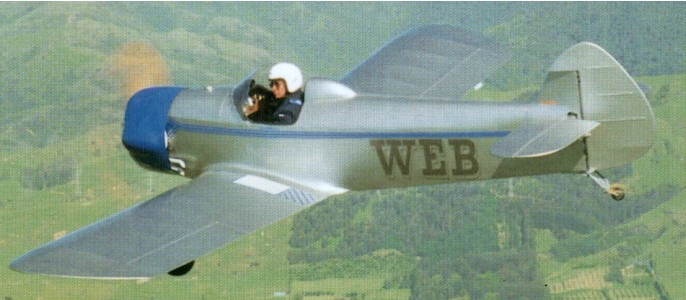
Watson Windwagon

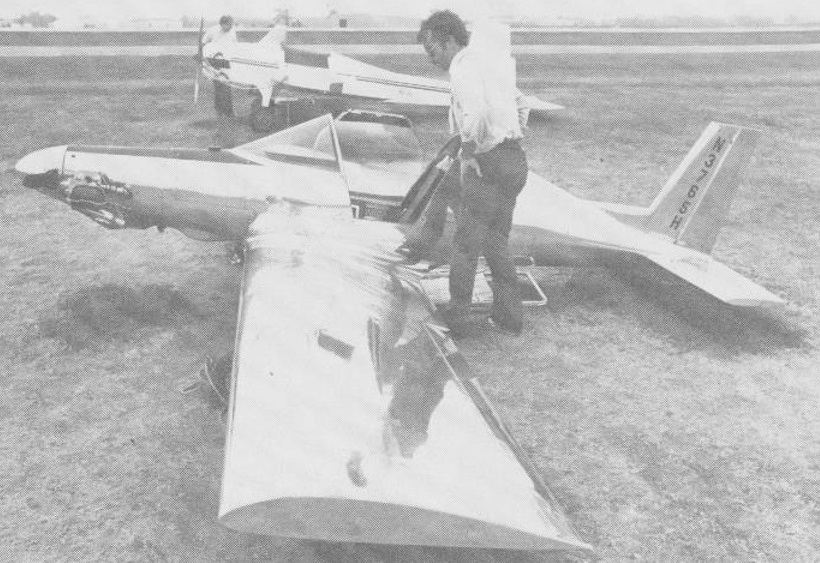
The original Wind Wagon was built in Texas by Gary Wilson and was based on the Teenie Two and used the similar wing ribs that slipped onto the “C” spar. The fuselage was a tapered tube from the seat backward and from the seat to the firewall. The aircraft was equipped with tricycle undercarriage and a ½ VW.

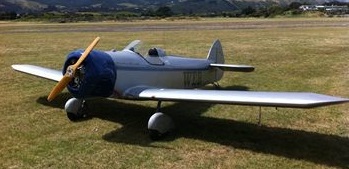
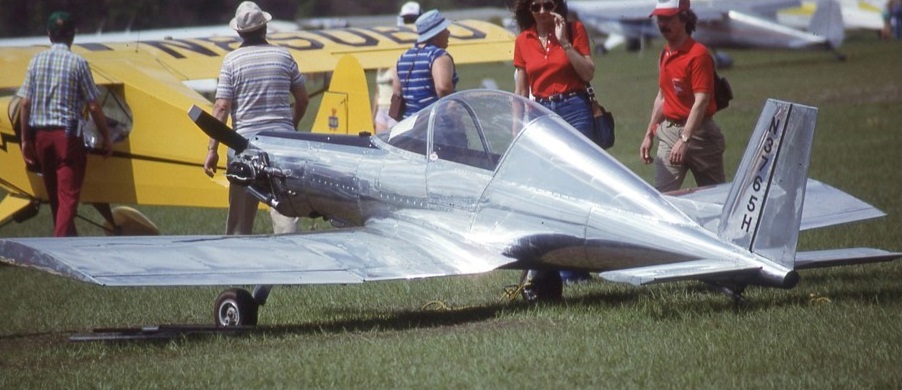
1981 Watson Windwagon N3765H C/N 147

First flown on 19 April 1977 (N64614), the Windwagon measures 18 feet from wingtip to wingtip and it features all-aluminum construction with pop rivets. The tricycle gear are nonretractable, but the wings are removable for storage or transportation. The powerplant is a 900 cc half-Volkswagen modified engine and drives a four-blade propeller. On just two cylinders tip speed is 110 mph, and climb rate is 450 to 500 fpm. The wing features a Clark Y wing section with constant chord. There are conventional ailerons and no flaps. The fuselage is a conventional semimonocoque structure made from pop-riveted aluminum. Morry Hummel introduced a few changes.

1981 Watson Windwagon N3765H C/N 147

In 1980 full size plans were available for US$50.

Gallery

Engine: ½ VW, 30 hp
Speed max: 140 mph
Cruise: 100 mph
Range: 200 sm
Stall: 40 mph
ROC: 400 fpm
Take-off dist: 250 ft
Landing dist: 250 ft
Service ceiling: 12,000 ft
Fuel cap: 4 USG
Weight empty: 273 lbs
Gross: 486 lbs
Height: 4 ft
Length: 13 ft
Wing span: 18 ft
Seats: 1
Landing gear: nose

Engine: VW, 35hp
Wing span: 18’0″
Length: 12’5″
Useful load: 210 lb
Cruise speed: 100 mph
Stall: 40 mph
Seats: 1

Waspair Corp

Robin Haynes, founder and president of the Waspair Corporation which originally produced the Tomcat, designed this unique machine at the end of 1979. It only became the Tomcat after a succession of names, the first production models having been sold under the name The Baron.
1983: 1881 Enterprise Blvd, West Sacramento, CA 95691, USA.

Warwick Bantam

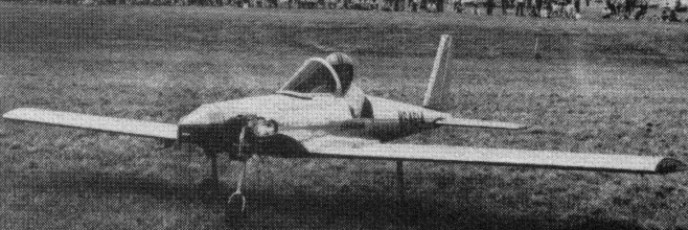
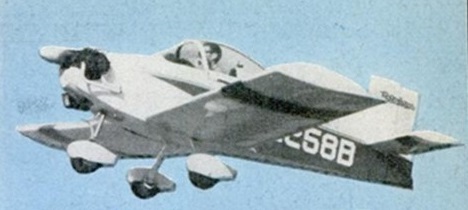
Bill Warwick built his third plane, the Bantam, first flying in 1966. The first Bantam, N2258B, first flew in June 1966.

Designed for simple fabrication, the Bantam uses no compound curves and very few simple ones. The cockpit area is a steel tube structure taking all wing, gear and engine mount loads. The steerable front wheel has a spring leaf shock absorber. The remaining is wood construction with a plywood cover.

The Bantam is a single-seat, low-wing plane that can use any engine from 65 to 100 hp.

Blueprints cost US$55 in 1972.

Gallery

Engine: Lycoming O-145, 65 hp
Wingspan: 18 ft 6 in
Length: 13 ft 9 in
Height: 6 ft 0 in
Gross weight: 790 lb
Empty Wt. 535 lbs
Fuel capacity 11.5 USG
Top speed: 140 mph
Cruise speed: 105 mph
Stall 52 mph
ROC: 1000 fpm
TO run: 550 ft
Ldg run: 500 ft