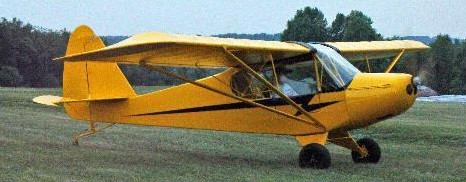
The LSA Tiger Cub Sport II has a wide enough cockpit to seat 2 full grown adults in comfort. Wide main gear and a large rudder aid ground handling and the ailerons have a 2.7 to 1 differential throw, this virtually eliminates adverse yaw. Control surfaces are large, giving good control response throughout the flight envelope. With a 912 Rotax or an O200 Contenental the Sport II needs only 300 ft of hard surface runway to get airborne, and will climb out at 800 ft per min. at gross weight. The landing roll is under 400 ft, It can be ordered as a Tri gear or tail dragger and there were 2 engine options available. The airframe is built of aluminum tubing with aluminum gussets and brackets at the joints, fastened together with bolts and rivets.
Engine: Continental O-200, 100 hp Empty weight: 840 lb MTOW: 1320 lb Wing span: 33′ Wing area: 165 sq. ft. Fuselage length (nose to tail): 22′ 6″ Folded width: 6′ 6″ (width of main gear) Stall full flap: 35 mph. Cruise: 105 mph. Climb: 800 fpm. Glide Ratio: 8 to 1 Take off Roll: 300′ Landing Roll: 400′ Wing Loading: 7.6 lbs. per sq. ft Power Loading: 12.5 lbs. per hp. Stress Loading: 5+ 3- G’s. Vne: 130 mph Cockpit width: 42 in
Engine: 912 Rotax, 100 hp Empty weight: 700 lb MTOW: 1320 lb Wing span: 33 ft Wing area: 165 sq. ft. Fuselage length (nose to tail): 22′ 6″ Folded width: 6′ 6″ (width of main gear) Stall full flap: 35 mph. Cruise: 105 mph. Climb: 800 fpm. Glide Ratio: 8 to 1 Take off Roll: 300′ Landing Roll: 400′ Wing Loading: 7.6 lbs. per sq. ft.@ gross. Power Loading: 12.5 lbs. per hp. @ gross. Stress Loading: 5+ 3- G’s. Vne: 130 mph. Cockpit width: 42 in
The LSA Tiger Cub UL has a wide enough cowl to keep the exhaust inside, (no unsightly two stroke exhaust hanging out) a folding wing and tail, fully enclosed cockpit (large enough to accommodate a 6’6″-250 lb. pilot in comfort) full three axis controls with flaperons and a steerable tail wheel, a wide speed range and rugged landing gear. The first Tiger Cub first flew on 1 April 1996.
The ailerons have a 2.7 to 1 differential throw ro virtually eliminate adverse yaw. With a 447 Rotax engine a 170 pound pilot needs about 150 ft. of hard surface runway to get airborne, and will climb out at 800 ft per min. Landing roll out is under 300 ft, even with out brakes.
The airframe is built of aluminum tubing with aluminum gussets and brackets at the joints, fastened together with bolts and rivets. A drill and pop rivet tool are all that is needed. The plans include a complete materials and vender list . The material list gives a list of the sizes and amounts of all the aluminum and chrome molly tube and sheet needed to build the airframe, a list of all the AN hardware sizes and quantities needed and a list of all the rest of the materials needed to complete the airplane, with descriptions and venders part numbers for hard to find or describe parts. The gusset prints are organized by thickness from .025 to .125 the patterns can be cut out and traced onto the aluminum sheet with a fine tipped marker. No scaling from the plans is required. Directions and tips for cutting out the gussets are included in part one of the assembly manual. Full size prints, of the chromemoly and machined parts, are included.
The panel prints have all the measurements needed to lay out the part on your work table, so you don’t have to scale your measurements from the prints, eliminating a common source of errors. ¼ scale prints (19″ by 30″ prints) of the wings, tail surfaces, fuselage and bulkhead panels. The plans also include an assembly manual (over 200 – 11″ by 17″ ) pages of pictures and text), that gives step by step directions and tips to guide you through assembly, rigging, covering, wiring, plumbing and finishing. Available since Jan. of 2000 over 300 sets of plans have been shipped (as of 1/2007). Est. build time for scratch built…650 hrs. Price for a complete set of plans was $250.00 in 2007.
The basic kit includes, a set of plans, all of the Parts Packages, listed on the previous page, and all of the additional materials needed to build a covered airframe (less engine prop instruments and paint.) The kit will also include the main bulkhead, rear cross tube and the flaperon mixer, already assembled. These three subassembly’s are the most critical and the most difficult to build. Having them built in drill guides and assembly jigs, assures a strong and square part, and reduces building problems considerably. The basic kit eliminates the hassle of having to order materials from six or seven different sources and tracking down all of the numerous small parts needed.
Tiger Cub UL Engine: 447 Rotax, 40 hp Gearbox (2.58 to 1) Empty weight: 275 lb MTOW: 600 lb Wing span: 29 ‘ 4″ Wing area: 130 sq. ft. Fuselage length: 19′ 11″ Folded length: 22′ 8″ Folded width: 6′ 6″ (width of main gear) Stall full flap: 25 mph. Cruise: 65 mph. Climb: 800 fpm. Glide Ratio: 8 to 1 Take off Roll: 150′ Landing Roll: 300′ Wing Loading: 4.6 lbs. per sq. ft.@ gross. Power Loading: 15 lbs. per hp. @ gross. Stress Loading: 6+ 4- G’s. Vne: 90 mph. Cockpit width: 27 in
Tiger Cub UL Engine: 503 Rotax, 52 hp Gearbox (2.58 to 1) Empty weight: 320 MTOW: 650 lb Wing span: 29 ‘ 4″ Wing area: 130 sq. ft. Fuselage length: 19′ 11″ Folded length: 22′ 8″ Folded width: 6′ 6″ (width of main gear) Stall full flap: 27 mph. Cruise: 48 kt / 55 mph / 89 kmh Climb: 1000 fpm. Glide Ratio: 8 to 1 Take off Roll: 75′ Landing Roll: 300′ Wing Loading: 5.0 lbs. per sq. ft.@ gross. Power Loading: 12.5 lbs. per hp. @ gross. Stress Loading: 6+ 4- G’s. Vne: 78 kt / 90 mph / 145 kmh
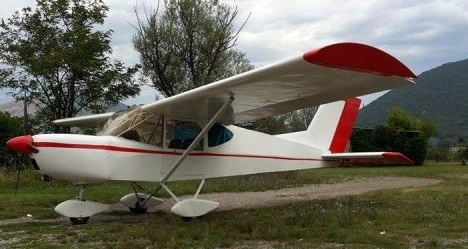
The Jeof Candiana (named for the town of its origin) is an Italian homebuilt aircraft that was designed and produced by Jeof srl of Candiana, introduced in the mid-1990s. When it was available the aircraft was supplied as a kit for amateur construction.
The Candiana features a strut-braced high-wing, a two-seats-in-side-by-side configuration enclosed cabin accessed via doors, fixed conventional landing gear and a single engine in tractor configuration. Tricycle landing gear is optional. It has a spaceframe fuselage and sheet dural wings. The engine is derived from a Fiat car engine.
The aircraft is made from a combination of welded steel tubing and aluminum. The aircraft was designed as a testbed for the Sax 86 engine, a derivative of the Fiat Punto 1.3 liter four-cylinder four-stroke automotive powerplant with dual electronic ignition and a 2.54 : 1 reduction drive (gears). It has a motorcycle carburetor Dell’Orto PHF 32. It gives 92 HP at 6000 rpm max continuous.
The standard day, sea level, no wind, takeoff and landing roll is 100 m (328 ft).
By 1998 the company reported that ten kits had been sold, were completed and flying.
Candania GV Engine: Sax 86, 86 hp Wing span: 8.65 m Wing area: 13 sq.m MAUW: 450 kg Empty weight: 279 kg Fuel capacity: 45 lt Max speed: 260 kph Cruise speed: 160 kph Minimum speed: 60 kph Fuel consumption: 9 lt/hr Seats: 2 side by side Price (1998): 70 000 000 lire
Engine: 1 × Sax 86, 96 hp Propellers: 2-bladed fixed pitch Wingspan: 9 m (28.4 ft) Length: 7 m (21.9 ft) Empty weight: 282 kg (622 lb) Maximum speed: 209 km/h; 113 kn (130 mph) Cruise speed: 171 km/h; 92 kn (106 mph) Fuel consumption: 12 liters (3 gals)per hour at 4800 rpm at 120 km/h (75 MPH) Stall speed: 63 km/h; 34 kn (39 mph) Range: 901 km; 487 nmi (560 mi)
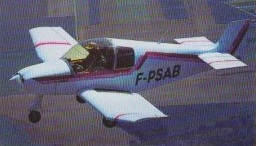
The Jodel D20 has the wing from the D19 married to a completely new fuselage resembling the shape of the Robin-Jodels. Plans for the D20 are not generally available. Instead S.A.B. do all the woodwork, and it can be bought from them in a ready-to-cover state. Designed from the outset to utilize a JPX 85hp engine, the little two-seater is a good a performer just as the D18 and 19. The aircraft is available in Normal and Microlight kit form, and is delivered in either trigear or taildragger configuration, depending on the customer’s preferences. Available in 2009 from AeroConsult in kit or as ready built.
D20 Wing span: 7.50 m Length: 5.80 m Height: 1.93 m Wing area: 9.93 sq.m Cabin width: 1,12 m Fuel capacity: 100 lt Seats: 2 Engine: JPX 4TX75, 85 hp @ 3000 rpm Empty weight: 250/260 kg Max weight: 500 kg Max speed: 240/250 km/h Cruise speed: 200/220 km/h Range: 1500 km
Jodel D20 UL Legende Stall: 32 kt / 37 mph / 60 kmh Cruise: 108 kt / 124 mph / 200 kmh VNE: 146 kt / 168 mph / 270 kmh Empty Weight: 250 kg / 551 lbs MTOW Weight: 450 kg / 992 lbs Glide Ratio: 13 Take-off distance (50ft obstacle): 490 ft / 150 m Landing distance (50ft obstacle): 300 ft / 90 m
Engine: JPX, 75 hp Wing span: 7.2 m Wing area: 9.93 sq.m MAUW: 560 kg Empty weight: 290 kg Fuel capacity: 100 lt Max speed: 220 kph Cruise speed: 20 kph Minimum speed: 69 kph Climb rate: 3 m/s Fuel consumption: 17 lt/hr Seats: 2 Kit price (1998): 149 900 Fttc
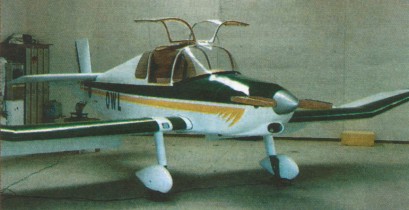
As the D18 has a classical undercarriage and many clubs like a nosegear for their planes, M. Delemontez came up with a variant of the D18 called the D19. Beside the nose wheel, the main difference to the D18 is the flap. The flap drawings contain information for putting a similar flap on the D18, and is a classical Jodel flap of narrow chord. It is not very effective as a high lift device, but a very useful brake on landing. The drag of the nosewheel does degrade the performance to some degree, but ground handling is made simpler. The D 18 and D 19 are small two seater homebuilts that are usually powered by converted Volkswagen engines. Plans are being sold to homebuilders, but they were never factory produced.
Plans for both planes are available through S.A.B. Same firm also sell parts for the aircraft, like hinges, horns, undercarriage assemblies, perspex cockpit canopy, controls and engine mounts. These are definitely home builts and not kit planes.
The Ultralight rules call for a MTOW of 450kg, and that should fit the D18/19 MTOW of 460kg. Same regulations say an ultralight should be able to fly at 65km/h. This is hard to attain with a D18 or 19, but should be possible with a high-lift flap. SAB also seems to have seen this as a new marketing niche. In late 1999 a brochure emerged telling about these recent Jodel developments. The new variants are called D185 and D195, and differ from their D18 and D19 forerunners by having:
an 8 cm wider, more comfortable fuselage.
the hood extended towards the rear, opening by sliding the rear part rearwards.
flap of increased area (which means increasing wing area as well) to lower the stall speed. The increase in area is simply done by stretching the trailing edge of the flap rearwards by 100mm, leaving the wing unchanged. The flap is also extended all the way to the root rib.
hydraulic springs (oléopneumatique) in the undercarriage.
gross weight reduced to 450kg. The rearwards extended hood makes installing the 65l fuel-tank behind the seat the only option left. The brochure lists the specs. of the planes to be very similar to their ancestors. A stall speed of only 60km/h sounds a little optimistic however – at least at gross weight. The engines that are used for the D18/D19 are also listed as suitable for the ultralight variants – VW1600 – 1800, Rotax 912, JPX, Limbach and Jabiru.
D19 Wing span: 7.50 m Length: 5,70 m Wing area: 10 sq.m Cabin width: 1,0 m Fuel capacity: 65 lt Seats: 2 Engine: JPX 1,835 lt, 70 hp Empty weight: 244 kg Max weight: 460 kg Climb (2p): 3-3,5 m/s
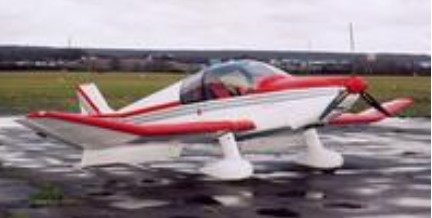
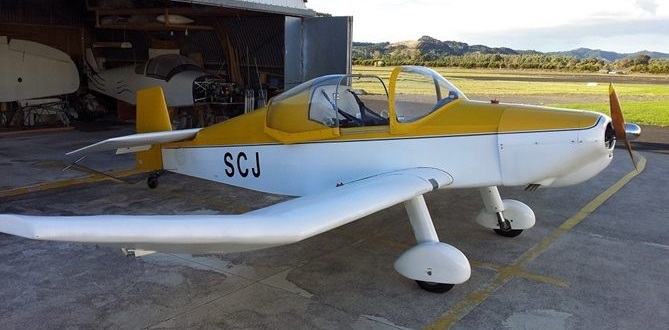
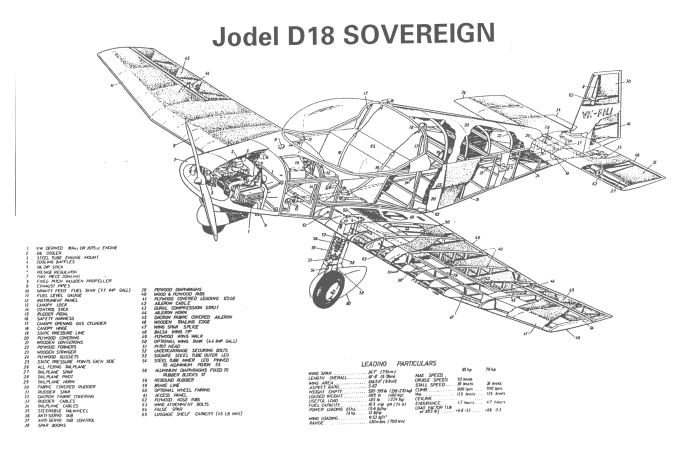
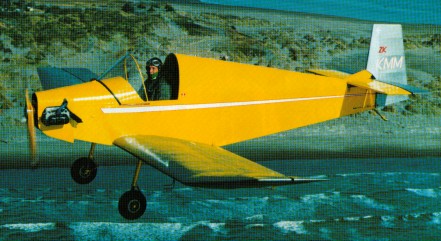
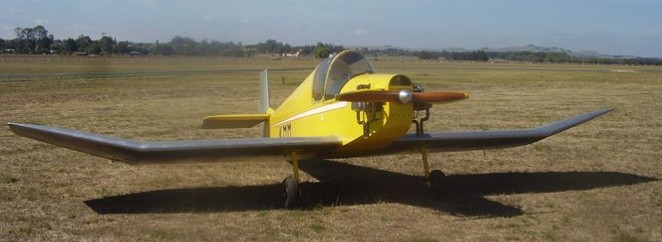
The success of the DC1 lead M. Delemontez to make a thorough revision, and the first D-18 took to the air in the spring of 1984. At first glance looking quite similar to the DC1, there is hardly a single point where Delemontez has not changed something. The prototype has a slightly bigger span than the DC1. An aircraft entirely of wooden construction and built from plans. No kit is available although some sub assemblies can be for control surfaces and undercarriage and perspex canopy can be bought. Douglas Fir is a major material but Australian Hoop Pine has been found very satisfactory. As a two seater the D18 has relevance as a local tourer. The one piece cantilever wing incorporates a sturdy box spar, wooden ribs and ply covered leading edge with dacron covering on the remainder. Flaps are optional. The fuselage is of rectangular cross section with a rounded top decking and made up of wooden longerons, bulkheads, plywood rear formers and is plywood covered. The perspex canopy is attached to a steel tube frame and hinged at the rear. The completed aircraft with some judicious construction will fit into the microlight category and becomes a very cost effective construction project.
As the Ultralight specifications changed during the 1990’s, many builders realised that it should be possible to register a D18 as an U/L with only minor modifications. SAB also seems to have seen this as a new marketing niche. In late 1999 a brochure emerged telling about these recent Jodel developments.
The new variants are called D185 and D195, and differ from their D18 and D19 forerunners by having:
an 8 cm wider, more comfortable fuselage.
the hood extended towards the rear, opening by sliding the rear part rearwards.
flap of increased area (which means increasing wing area as well) to lower the stall speed. The increase in area is simply done by stretching the trailing edge of the flap rearwards by 100mm, leaving the wing unchanged. The flap is also extended all the way to the root rib.
hydraulic springs (oléopneumatique) in the undercarriage.
gross weight reduced to 450kg. The rearwards extended hood makes installing the 65l fuel-tank behind the seat the only option left. The brochure lists the specs. of the planes to be very similar to their ancestors. A stall speed of only 60km/h sounds a little optimistic however – at least at gross weight. The engines that are used for the D18/D19 are also listed as suitable for the ultralight variants – VW1600 – 1800, Rotax 912, JPX, Limbach and Jabiru.
Plans are being sold to homebuilders, but they were never factory produced. In the 13 years that passed between the prototype’s first flight and the summer of 1997, SAB had sold approximately 470 plans.
D18 Sovereign Engine: VW 17l0cc, 58 hp Wing span: 7.50 m Length: 5,70 m Wing area: 10 sq.m Cabin width: 1,0 m Fuel capacity: 65 lt Seats:2 Empty weight: 245/255 kg Max weight: 460 kg Cruise speed: 175 km/h Climb (2p): 3,5 m/s
D18 UL Stall: 32 kt / 37 mph / 60 kmh Cruise: 94 kt / 109 mph / 175 kmh VNE: 134 kt / 154 mph / 248 kmh Empty Weight: 235 kg / 518 lbs MTOW Weight: 460 kg / 1014 lbs Climb Ratio: 700 ft/min / 3.5 m/s Take-off distance (50ft obstacle): 820 ft / 250 m Landing distance (50ft obstacle): 1450 ft / 443 m
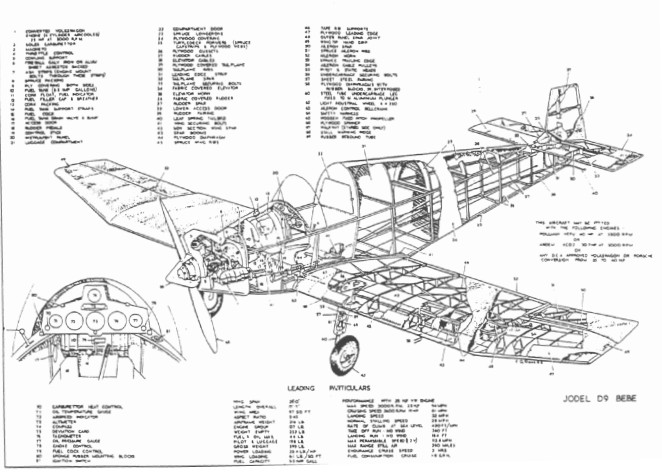
The Jodel design can be traced back to the end of the second world war when the French government, recognising the value of light aviation, purchased considerable numbers of Tiger Moths and Miles Magisters at a very low cost. These were then passed on to flying clubs. But these ex-wartime trainers were very fuel hungry and slow. This left a gap in the market for Edouard Joly, a private pilot who lived in the area of Beaune, and his son-in-law Jean Delemontez, to fill. The story goes that they fell upon some pre-war aircraft-quality plywood and an old 26 hp Poinsard engine and without formal training in aerodynamics decided to design their own single-seat light aeroplane. The wood was turned into a small, single-seat aircraft with cranked wings. It was so tiny, particularly compared to existing training aircraft, that they called it the D9 Bebe (Baby). The fact that Delemontez spent so much time working on the aircraft, rather than with his wife (Joly’s daughter), is also reported to have something to do with the naming.
In March 1946, the French Societe des Avions Jodel was formed, and built the D.9 Bebe light monoplane, which first flew on 21 January 1948. While the original single place D 9 was built for their personal use, word of the light, responsive handling created a major market demand for plans. As word spread of the amazing performance, the design became so well liked that five French manufacturers got involved in factory production of the series at various times. The subsequent Model D.92 uses the modified VW engine for power, replacing the original 25-hp Poinsard engine. Many hundreds have been built in Great Britain, Canada, New Zealand, France, Germany and the U.S.A. The construction is simple and rugged, the materials being spruce and plywood with fabric covering. The one piece wing has a simple box spar, the outer panels being set at a large dihedral angle to give good stability. Another advantage of the polyhedral wing layout is that the loads at the spar splices are lighter than at the wing root, enabling very simple splices to be used. The fuselage is built up conventionally with four 5/8” square longerons and struts, the whole being covered with ply. The simple undercarriage comprises two legs attached to the spar, and uses rubber in compression for springing. The number of metal fittings has been kept to a minimum for ease of construction. The standard engine is the Volkswagen conversion of 30.7 h.p., but other engines of from 25 to 45 h.p. may be fitted The D9 is designed to a load factor of 9.0 at 600 lbs.
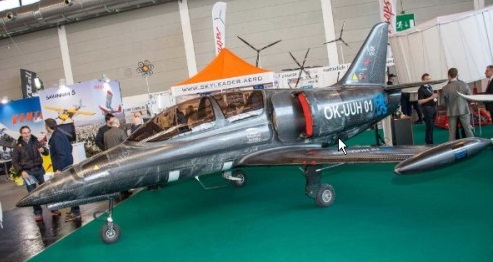
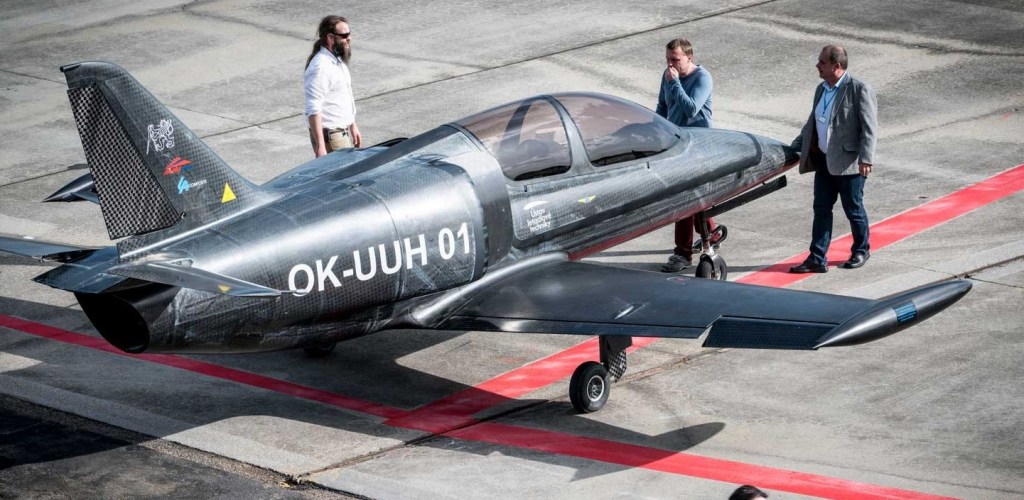
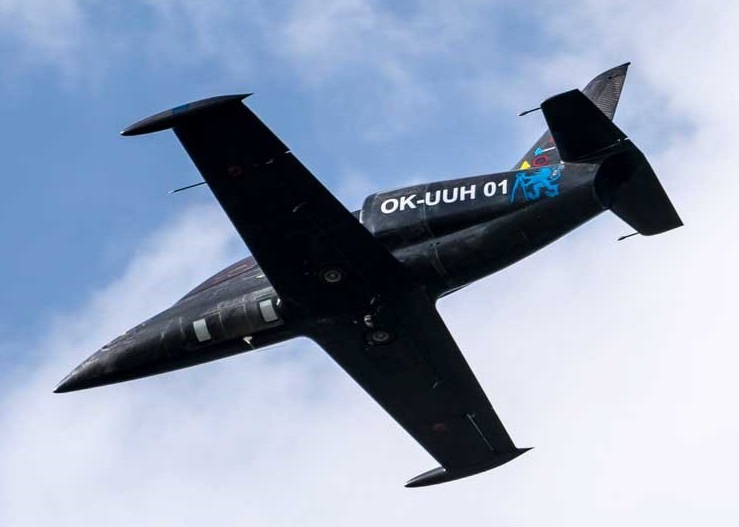
The Jihlavan UL-39 Albi two-seat microlight version of the Czech L-39 Albatross training jet is the result of 17 years of work, 200 engineers and £1.7 million of investment.
The UL-39 Albi is a collaboration between Jihlavan and Prague University’s Faculty of Mechanical Engineering. It’s not simply a student project. This is the first prototype and it’s intended to develop the aircraft further and put it into production. One market is private aviation but another is military. The production price is estimated at 5 million CRK (£146,000).
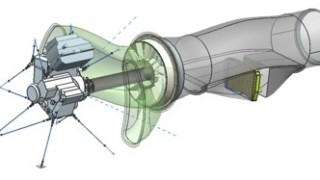
The Albi’s designers at Prague University say that because the engine is a ‘blower’ ducted fan, rather than a conventional jet, the aircraft’s heat ‘signature’ is almost zero making it hard to detect and shoot down.
Public roll-out for the UL-39 Albi
The airframe is made from carbon fibre composite, and this prototype is powered by a 1,000cc 193bhp BMW four-cylinder dohc motorcycle engine driving the blower.
Ducted fan ‘blower’ is driven by a BMW motorcycle engine.
first flight
It’s said to weigh just 320kg, have a max takeoff weight of 472.5kg, be capable of 200km/h (125mph) and have endurance of two hours. The designers say they hope to increase the max speed to 300km/h.
Engine: BMW 1,000cc, 193bhp Wingspan: 7.22 m Length: 7.49 m Height: 2.99 m


 All Aero