1998:
Georg Nützel Str. 10
D-95261 Ködnitz
Germany
UL builder
1998:
Georg Nützel Str. 10
D-95261 Ködnitz
Germany
UL builder
A very light single-seat monoplane (first flown 1996)
Moldovia
Has developed the Favorit very light single-seat monoplane (first flown 1996), with a two-seater for training being studied.
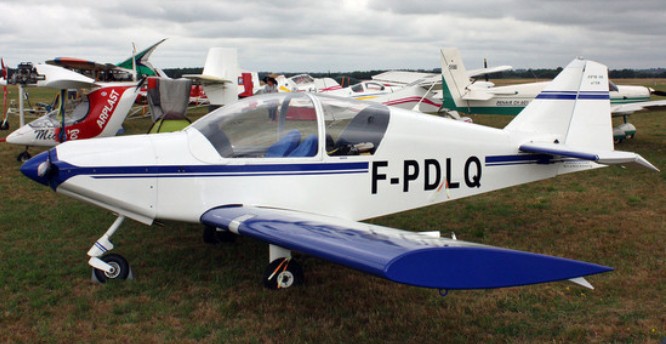
The JPM 01 Médoc is a French amateur-built aircraft that was designed by Jean-Pierre Marie in 1977 and produced by Les Avions Jean-Pierre Marie (JPM) of Le Mesnil-Esnard. The aircraft is supplied as plans for amateur construction, available in 2012 from Les Avions Jean-Pierre Marie (JPM).
The aircraft is named for the French community of Médoc.
The Médoc features a cantilever low-wing a two-seats-in-side-by-side configuration enclosed cockpit under a bubble canopy, fixed tricycle landing gear and a single engine in tractor configuration.
The aircraft is made from wood with its flying surfaces covered in doped aircraft fabric. Its 7.50 m (24.6 ft) span wing has an area of 9.30 sq.m (100.1 sq ft) and mounts flaps. Standard engines recommended are 60 kW (80 hp)-class Volkswagen air-cooled engines, including the 60 kW (80 hp) Limbach L2000 four-stroke powerplant.
The first example was completed by Pierre-Claude Guillem, and registered F-PGMB. It first flew on September 8, 1987. Originally fitted with a 65 hp JPX 4T-60A engine, it later received an 80 hp Limbach L2000 and the aircraft was winner of the 1988 SFACT Trophy for best multi place design. The JPM-01 built by the designer himself was first flown in August 1993, registered as F-PJPM.
A diesel engine powered version was designated JPM-01 Médoc Provence and the first example was completed by Didier Davenna in 2005. He had it registered as F-PDVN under the designation JPM-01 DDI. By mid-2012 at least fourteen Médocs has been built.
Almost forty years after its introduction the aircraft was redesigned and lightened, gaining slotted flaps to reduce stall speed.
JPM 01 Médoc / JPM-01 Tanagra
Engine: 1 × Limbach L2000, 60 kW (80 hp)
Length: 6 m (19 ft 8 in)
Wingspan: 7.50 m (24 ft 7 in)
Wing area: 9.30 sq.m (100.1 sq ft)
Empty weight: 286 kg (631 lb)
Gross weight: 496 kg (1,093 lb)
Fuel capacity: 60 litres (13 imp gal; 16 US gal)
Maximum speed: 210 km/h (130 mph; 113 kn)
Cruising speed: 175 km/h (109 mph; 94 kn)
Stall speed: 70 km/h (43 mph; 38 kn)
Never exceed speed: 247 km/h (153 mph; 133 kn)
Range: 700 km (435 mi; 378 nmi) with no reserve
Endurance: 4 hours plus 0.5 hour reserve
Service ceiling: 4,100 m (13,451 ft)
g limits: +3.5/–1.5
Rate of climb: 4 m/s (790 ft/min)
Wing loading: 53.3 kg/m2 (10.9 lb/sq ft)
Crew: one
Capacity: one passenger
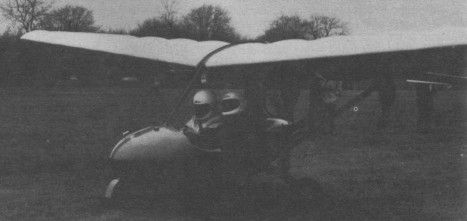
Side by side two seat single engined high-wing monoplane with conventional three axis control. Wing has swept back leading edge, swept forward trailing edge and tapering chord; conventional tail. Pitch control by fully flying tail; yaw control by fin mounted rudder; roll control by spoilerons; control inputs through stick for pitch/roll and pedals for yaw. Wing braced from below by struts; Wing profile 100% double surface. Undercar¬riage has three wheels in tricycle formation; glass fibre/carbon fibre suspension on all wheels. Push right go right nosewheel steering connected to yaw control. Glass fibre fuselage, partially enclosed. Engine mounted below wing driving pusher propeller. Aircraft quality materials are used for all structural and control fittings. The wing and tail are of composite construction.
The Duet was conceived by two professional aircraft designers, Dave Kent and Brian Cunnington, as a rugged composite construction machine for touring, training and commercial uses. Their company, Designability Ltd., is a design consultancy and not a manufacturer, so having built and test flown their first 430cc Cuyuna-engined prototype in July 1982, they found a buyer for the manufacturing rights.
Graham Andrews had just set up the company in conjunction with Barney Jordan and the two were looking for a suitable design when the Duct came on the scene. Since becoming the Jordan rather than the Designability Duet, the aircraft has undergone extensive development, particularly as regards power plant. The Cuyuna was rejected as not powerful enough and the big Rotax was substituted. This, coupled to a reduction drive and three blade propeller, gives greatly improved performance and allows the aircraft to be flown safely in conditions which might ground other micro¬lights; it can easily take off and land in a 12 mph (19 kph) crosswind, for example.
The concept of the design, however, remains the same a practical machine with 15 min rigging time from a trailer and suspension supple enough to allow it to cope with difficult fields. For pilot protection, a strong angled strut is mounted in front of the cockpit.
The prototype was designed to the same airworthiness standards as heavier aircraft. A second prototype, a pre production model, was flying in March 1983, dual rudder pedals will be fitted.
Engine: Rotax 503, 45 hp at 6500 rpm.
Prop¬eller diameter 46 inch, 1.16m (3 blade).
belt reduc¬tion, ratio 2.0/1.
Max static thrust 250 lb, 113 kg.
Power per unit area 0.28 hp/sq.ft 11 hp/sq.m.
Fuel capacity 6.0 US gal, 5.0 Imp gal, 22.7 litre.
overall 22.0 ft, 6.71 m.
Height overall 5.5ft, 1.68m.
Wing span 36.0ft, 10.97m.
Chord at root 6.0ft, 1.83m.
Chord at tip 3.0ft, 0.91m.
Dihedral 3 deg.
Sweepback 0 deg.
Tailplane span 10.0ft, 3.05m.
height 4.0 ft, 1.22 m.
Total wing area 162 sq.ft, 15.1 sq.m.
Fin and rudder area: 11.0 sq.ft, 1.02 sq.m.
Total elevator area 26.6 sq.ft, 2.47 sq.m.
Wing aspect ratio 8.0/1.
Wheel track 6.0 ft, 1.83 m.
Wheelbase 6.0 ft, 1.83 m.
Nose¬wheel diameter overall 10 inch, 254 mm.
Main wheels diameter overall 15 inch, 381 mm.
Empty weight 320 lb, 145kg.
Max take off weight 750 lb, 340kg.
Payload 430 lb, 195kg.
Max wing loading 4.63 lb/sq.ft, 22.6kg/sq.m.
Max power loading 16.6 lb/hp, 7.4kg/hp.
Load factors +4.4, 2.2 design; +6.6, 3.3 ulti¬mate.
Max level speed 70 mph, 113 kph.
Never exceed speed 90 mph, 145 kph.
Max cruising speed 60 mph, 97 kph.
Economic cruising speed 50 mph, 80 kph.
Stalling speed 28 mph, 45 kph.
Max climb rate at sea level 480 ft/min, 2.4 m/s.
Min sink rate 350 ft/min at 40 mph, 1.8 m/s at 64 kph.
Best glide ratio with power off 12/1 at 45 mph, 72kph.
Take off distance on tarmac 150ft, 45 m.
Landing distance 120ft, 35 m.
Service ceiling > 10,000 ft, >3050 m.
Range at average cruising speed 115 mile, 185km.
1983: Jordan Aviation Ltd, Seaside Road, St.Leonards on Sea, East Sussex TN380AL, Great Britain.
UL builder
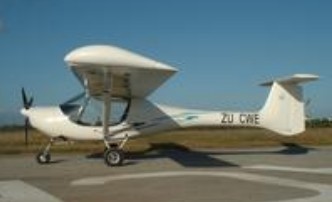
JORA aircraft is a two seat ultra light airplane, with two seats side by side, and T tail. With nose wheel undercarriage, the wheels of the main undercarriage are braked and the nose wheel is stearable. Suspension is by indio-rubber blocks. The Jora features a deep laminar wing profile.
Construction of the airplane is a combination of laminate and wood, and polyester fabric.

Stall: 24 kt / 28 mph / 45 kmh
Cruise: 76 kt / 87 mph / 140 kmh
VNE: 87 kt / 101 mph / 162 kmh
Empty Weight: 225 kg / 496 lbs
MTOW Weight: 450 kg / 992 lbs
Climb Ratio: 500 ft/min / 3 m/s
Take-off distance (50ft obstacle): 260 ft / 80 m
Landing distance (50ft obstacle): 230 ft / 70 m
Engine: Rotax 503, 52 hp
Wing span: 10.80 m
Wing area: 115 sq.m
MAUW: 420 kg
Empty weight: 205 kg
Fuel capacity: 45 lt
Max speed: 160 kph
Cruise speed: 140 kph
Minimum speed: 45 kph
Climb rate: 4 m/s
Certification: Tch, D Dan.
Seats: 2
Fuel consumption: 8 lt/hr
Plan price (1998): 930 Fht
Kit price (1998): 80 700 Fht
1998:
5 u Vysikého Myta
CZ-565 42 Vraclav c.
Czech Republic
LSA builder
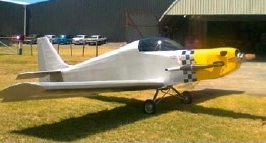
The Jones PJ-1 was started around 2005-6 by Bill Cockram, the plans being loosely based on a two seat Monsoon aircraft with an O-200 engine. As he wanted to use a Rotax engine he set about narrowing the fuselage and designing and building his own wings. Cockram became ill and decided he couldn’t finish the aircraft so he gave what he had built so far to Peter Jones and sold him the Rotax 503.
The aircraft is now a single seat that fits into the ultralight class. It is of all wood construction, fabric covered and uses a LongEze canopy. When weighed, the C of G was too far aft so he extended the front, moving the seat forward.
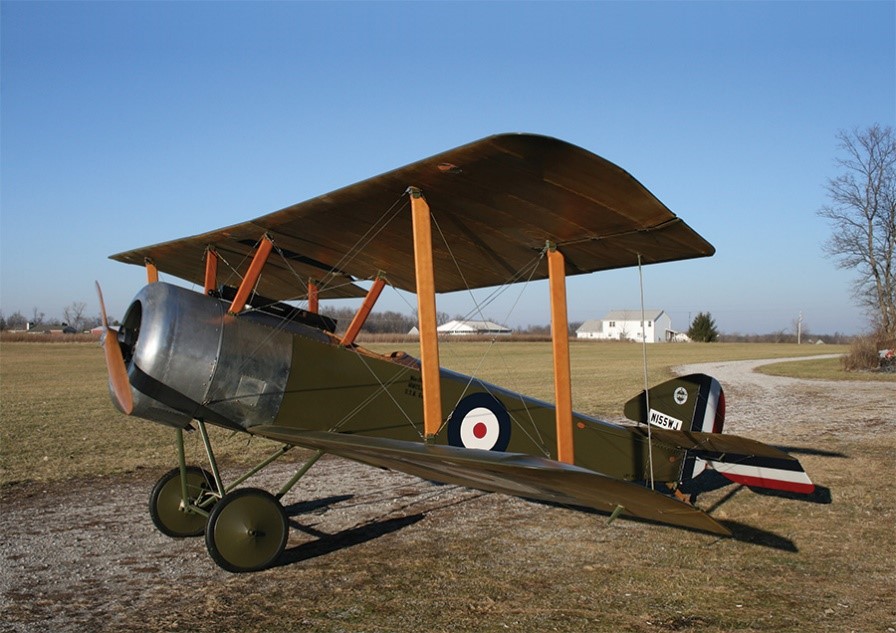
Wes Jones discussed the feasibility of building a full-scale Sopwith Pup with Robert Baslee in 2005. They drew the major components on a dinner napkin later acquiring a set of drawings from Replicraft.
Earnest construction began in December, 2005. The plan was to build a Pup that for all outward appearances would look like an original Pup. There were some mandatory considerations, bank account, settling on a VW engine, instead of a preferred Rotec Radial. The Replicraft plans were used for placement of all uprights and longerons, so the dimensions would match the originals, but the materials are more modern and fit the bank account better.
Three-quarter-inch chrome-moly is used for the forward section of the fuse and transitioned to five-eighth-inch aft of the cockpit for the longerons. TIG welding the basic fuse took about a month.
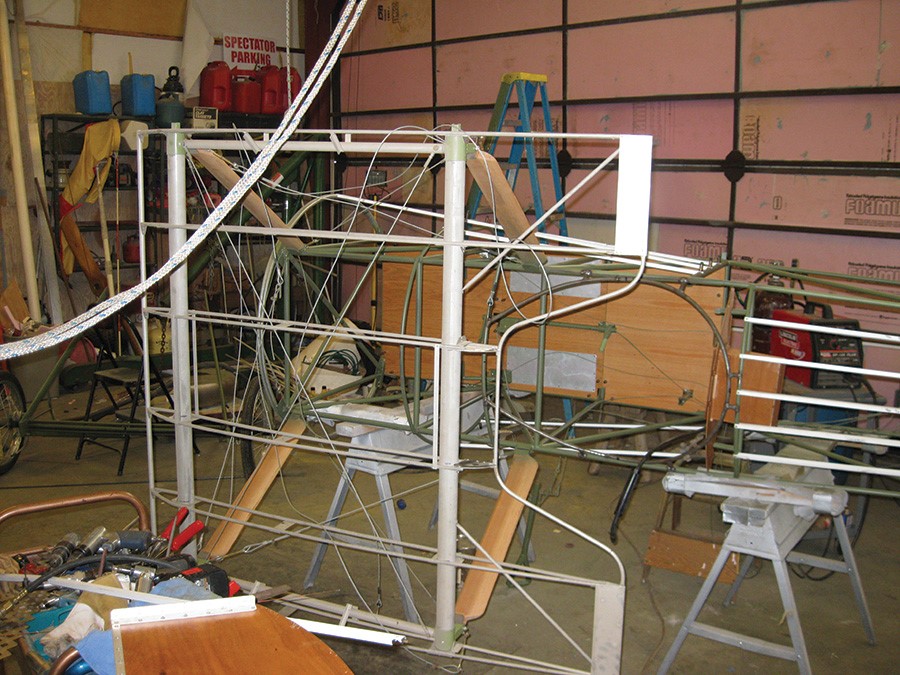
The wing struts and cabanes were fashioned to the original dimensions out of straight-grain Douglas fir to fit welded fittings like Dennis Wiley’s Early Bird Jenny. The landing gear legs were fashioned from streamline tubing to exact specifications from the original 1916 prints.
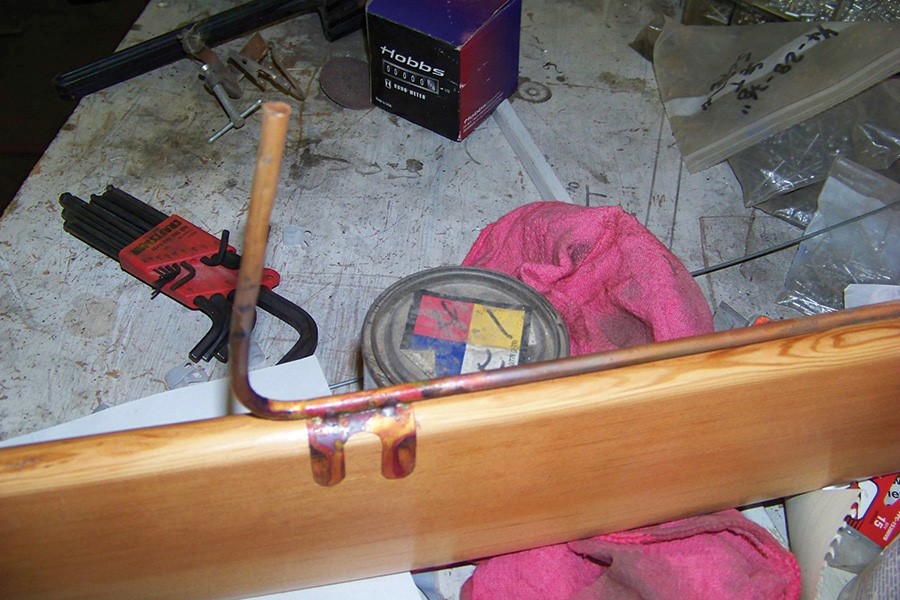
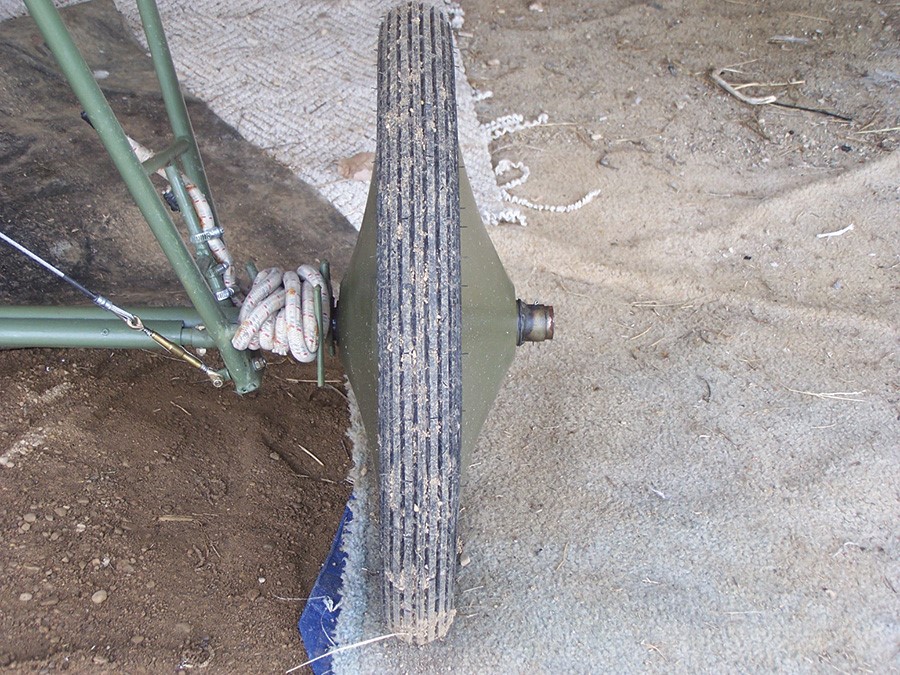
A set of horse racing cart wheels were used for rims and inner spoke attachments, and made a set of hubs on the lathe. The hubs gave 8 inches between the spokes at the axle.
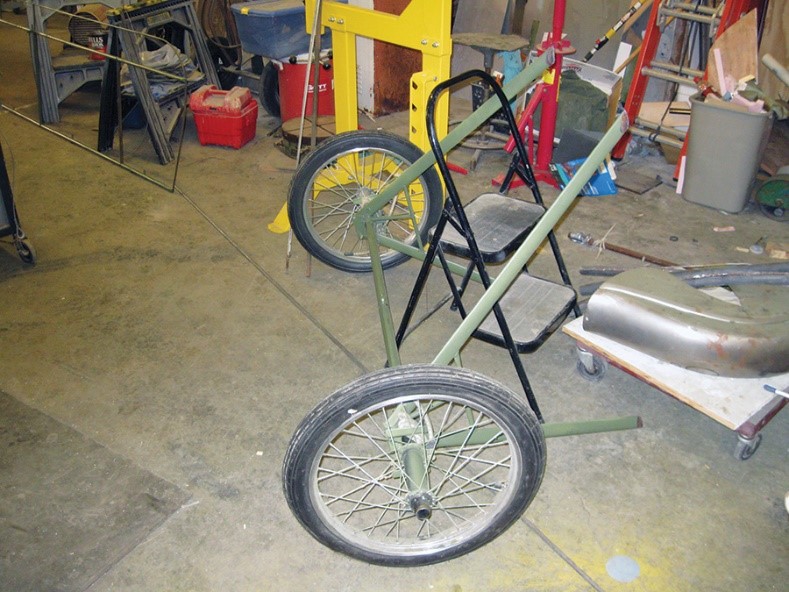
By using longer spokes on the outside and shorter spokes on the inside, it got the dished look of the original wheels.
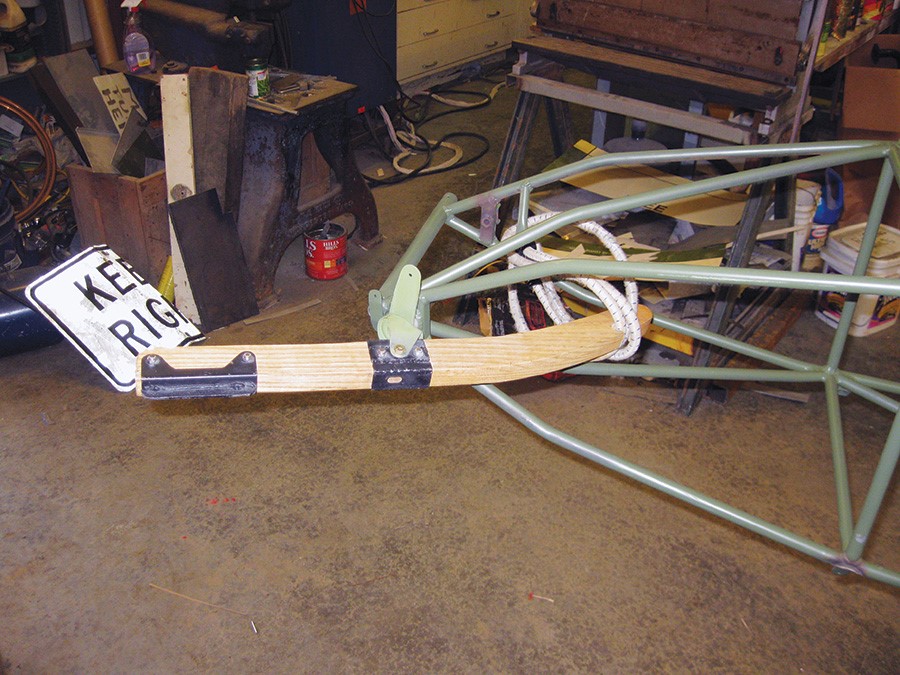
The steerable tailskid was built exactly following the plans of the original, since it was going to be out there for everyone to see. Another reason for sticking with the original skid is that, just like the original, the mains do not have brakes. This helps keep the Pup going straight down a grass field.
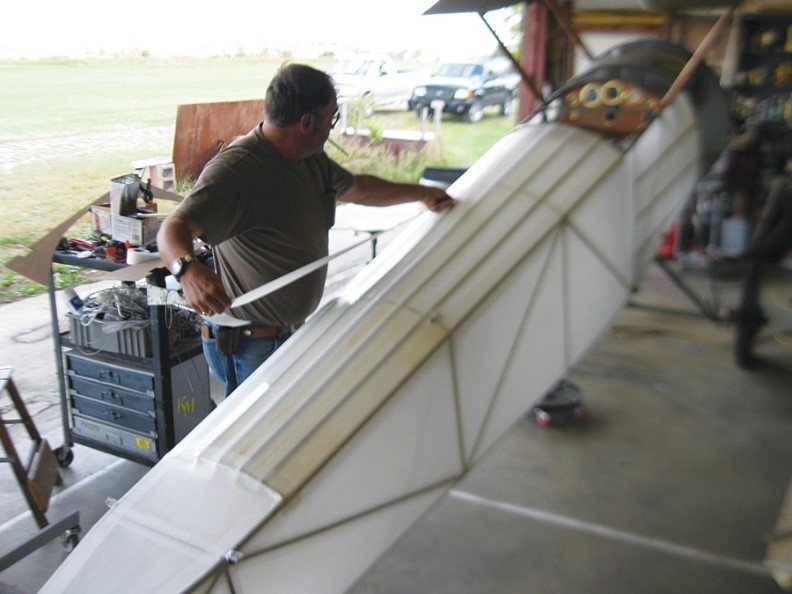
Wingspars were fashioned from 2-inch .065-wall 6061 tubing. Three-eighth-inch aluminum tubing is used to fashion the ribs la a Graham Lee design. The leading edge uses aluminum sheet metal instead of using nose ribs. Wing-root fittings were copies of the Early Bird Jenny’s root fittings, scaled up for the extra weight. Some expert assistance on rib stitching came from Dallas Shaw, Randy O’Conner and Brad Strohm.
The covering was lightweight Dacron using rhe Stits process from Aircraft Technical Support, since Jim Miller was good friend and neighbour. Since the WW-I originals were just doped on the undersides of the wings and fuse, it was decided to finish those areas using clear Poly-Brush fabric sealer, then adding some tint to the last coat to get an approximate look of old varnish brushed over doped fabric. The markings were done by hand with a brush to approximate what was done in the field back then.
A 2180cc VW engine was built from scratch, using parts obtained from several VW suppliers. It used 94mm cylinders, an 82mm stroker crank, and was set up the compression for 6.67:1 for reliability. Valley Engineering supplied the 2.5:1 propeller speed reduction unit (PSRU), as well as the 96×65-inch prop. Due to some leaning problems with the progressive Weber carb, a single-barrel 34 ICT carb fit the bill better.
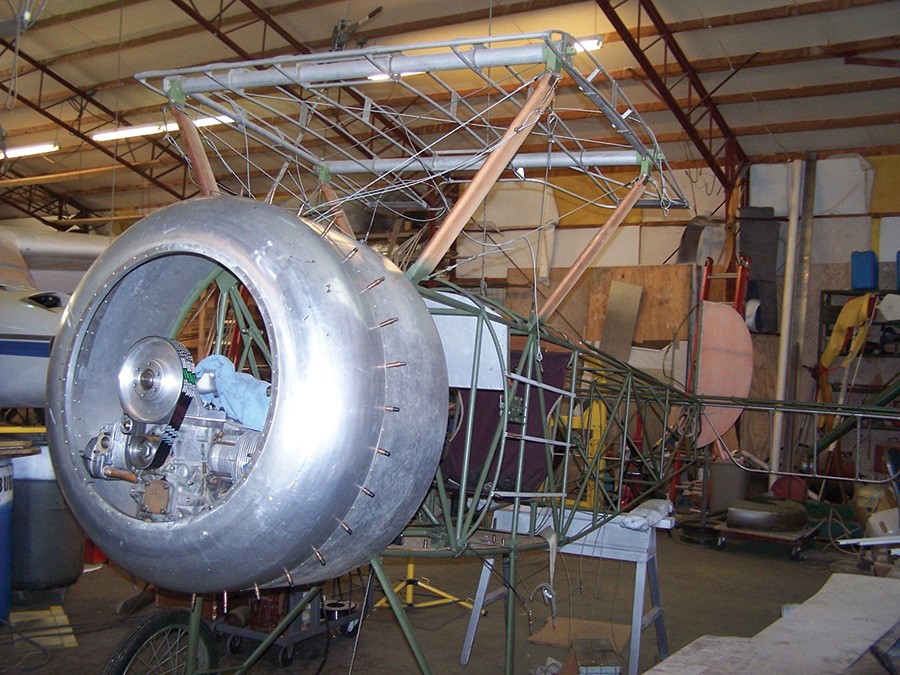
A good friend and Dawn Patrol cohort, Rick Bennett, was able to find a correct-size cowling and arrange to have one delivered.
There was some help with the full-scale Vickers machine gun replica on the cowl from Willie Hill, a local expert on getting them to look realistic.
The OK to test-fly it from the local FAA representative, John Walsh, came in October of 2011 and there was only time for six or seven test flights before winter hit hard, so the rest of the time had to be flown off in the spring.
In the air the Pup flies is very stable in normal flight. The four ailerons give a solid feel in roll. Initial timing of the climb rate showed approximately 1200 feet per minute. The climb angle is like a space shuttle launch, although never actually measured.
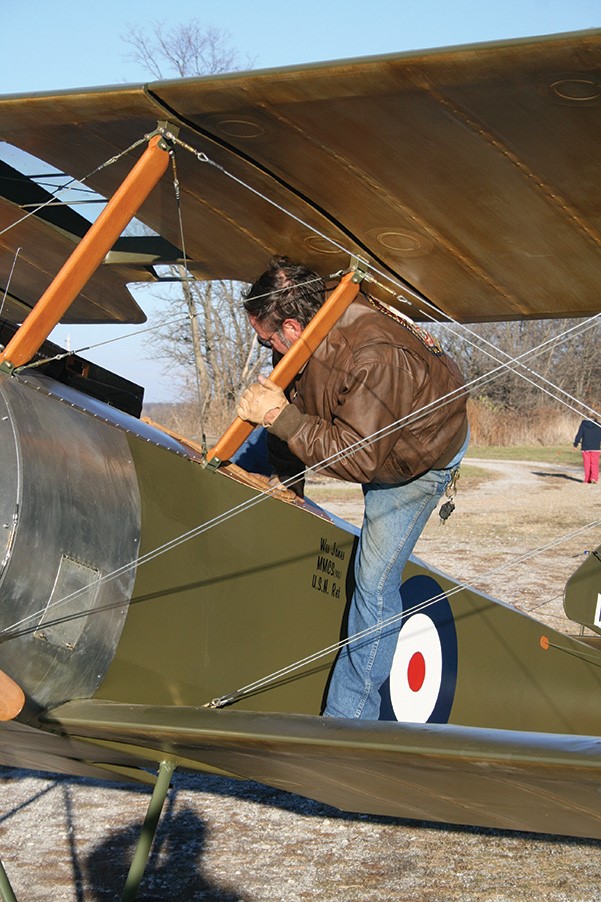
On takeoff, the tail comes up almost immediately (50 feet) and it gets off the ground in about 150 feet. Stall is around 30 mph and cruise is around 60. The plan to obtain another prop with a 73-inch pitch as soon as funds allow, in order to (hopefully) get the cruise up to around 75-80 mph.
About July, on a normally un-eventful landing, the tailskid wood split at about the halfway mark, leaving no steering and sending the plane into another groundloop. This time, the left upper wing got a slight ding in it due to the hair-raising trip into the woods that immediately followed. Fortunately, two days worth of metal, fabric and painting work sufficed to repair the damage.
A piece of ash with the grain conveniently running along the curve of the new skid replaced it; there have been no problems since.
There has been difficulty keeping the cylinder heads at an acceptable temperature (350 F). Normally it gets about 15 minutes of flight time and temps start to creep up to around 375. Changes with the cooling fins—making extensions to direct the air more smoothly over the heads —and a larger oil cooler with a thermostatically controlled fan may get the temps better.
That old British 10/10 airfoil makes the Pup handle amazingly well.
 All Aero