Tridair Helicopters 206 L Gemini ST

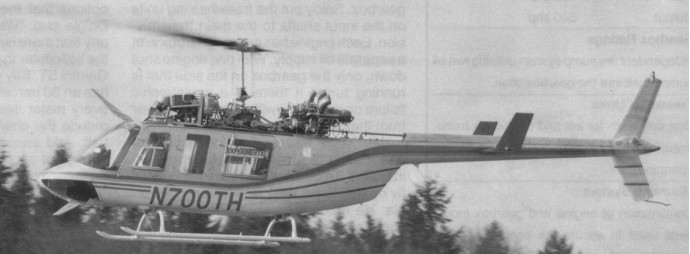
On 17 January 1991, the Tridair Gemini ST twin engine conversion of the Bell 206L LongRanger took to the air for the first time. The Gemini ST was designed to take off and hover at gross weight at sea level on one engine; the only twin engine helicopter that will have no written procedures for a single engine failure on takeoff.

The inspiration for the Gemini ST came to Doug Daigle, president of Tridair Heli¬copters in Costa Mesa, California, in 1986 when he successfully bid on a US Forest Service contract for a Bell LongRanger to be used as a rappelling platform for fire¬fighters.

This was the first time a single engine helicopter had been awarded this contract. The work had previously been done by a Bell 212, but this aircraft had become very expensive to contract, leading the Forest Service to look at the safety records of single engine helicopters and find the Bell LongRanger’s to be outstanding.

After Doug Daigle rappelled out of the helicopter to see what the fire crew would experience (an act he regrets to this day), he concluded that if the engine failed while the crew was rappelling, they would prob¬ably die. Even using a 212, the crew on the rope would be severely injured or killed. The 212 might be able to recover, but the team on the rope would be dragged through the trees or rocks. Mr Daigle then decided to try to design a twin engine conversion for the Bell LongRanger. While several people, includ¬ing from Bell Helicopter, had the same idea in the past, he took a different approach in wanting to design a helicopter that would take off on one engine at sea level at gross weight. The Bell TwinRanger project in¬volved a complete redesign that would weigh almost 1,500 lb more than the LongRanger, weight that caused the project to be shelved.

The first major obstacle overcome for the project was in 1988 when the FAA awarded the programme a grant of exemption. FAA regulations state that any time the number of engines or rotors is changed a new Type Certificate must be obtained. This would have cost many millions of dollars. The only time an exemption can be issued is for public safety and/or public economics. The Gemini qualified on both grounds.

Internally, the Soloy Dual Pac gearboxs have independent dry sump system utilising two oil pumps built into the gearbox case. Freewheel Units One unit each for left and right drive trains, ensuring minimum drag during single engine operation. Mounting System Combination of engine and gearbox mount pads used to secure the engines/gearbox assembly to the airframe. With one engine shut down, only the gearbox on the side that is running turns. If there is a catastrophic failure on one side it will not interrupt power from the good side.

Separate fuel systems for each engine had to be installed. The conversion also demanded a new cowling that incorporates dual oil coolers, blowers, and oil reservoirs.

The flight testing process began in February 1991.

The Gemini ST was certified by the US FAA to operate on one or both engines in all phases of flight.

206L-3ST Gemini ST
Engine: 2 x Allison 250-C20R
Instant pwr: 335 kW
Rotor dia: 11.3 m
MTOW: 1820 kg
Payload: 570 kg
Max speed: 130 kts
Max cruise: 110 kts
Max range: 745 km
HIGE: 10,000 ft
HOGE: 6,900 ft
Service ceiling: 10,000 ft
Crew: 2
Pax: 6
Seats: 8

206L-3ST Gemini ST
Engine: 2 x Allison 250-C20R
Instant pwr: 335 kW
Rotor dia: 11.3 m
MTOW: 2020 kg
Payload: 770 kg
Max speed: 130 kts
Max cruise: 110 kts
Max range: 465 km
HIGE: 20,000 ft
HOGE: 16,400 ft
Service ceiling: 20,000 ft
Crew: 2
Pax: 6
Seats: 8

BELL SDP H500A 206L 3ST
Engines: 2 x Allison 250 C20R, 435 shp each
Gearbox ratings Input (each side) 450 shp, Output 500 shp
Seating: 7
Fuselage Length: 33ft 2.6in
Overall Length: 42ft 8.5in
Overall Height: 10ft 3.8in
Rotor Diameter: 37ft
Blades: 2 x semi rigid teetering all metal
Max. Gross Weight: 4,450 lb
Empty Weight: 2,590 lb
Useful Load: 1,860 lb
W/full fuel: 1,110 lb
Max External Load: 2,000 lb
Vne: 150 mph
Cruise: 135 mph
Max. Rate of Climb: 1,340 fpm
Fuel Capacity: 750 lb 110 USgal
Avg. Fuel Consumption: Single Engine 26 USgph, Twin Engine 42 USgph
HIGE: 16,500 ft
HOGE: 7,500 ft
Service Ceiling: 20,000 ft
Transcendental Aircraft Corp

1946: Transcendental Aircraft Corp founded by Mario A Guerrieri, Robert Lichten, former Piaseski personnel).
Glen Riddle PA and New Castle DE.
USA

Lichten had earlier worked for pioneer helicopter designers Dr Wynn Laurence LePage and Haviland Hull Platt, who initiated the study of a large tilt-rotor aircraft, an outgrowth of their XR-1 lateral twin-rotor helicopter.

1952: Sold interests to William E Cobey.

Lichten had moved to the Bell Helicopter Co seeking support of a major rotorcraft manufacturer in developing the tilt-rotor aircraft. He led the team that got Army and Air Force funding for the development of the XV-3.

c.1957: Holdings acquired by short-lived Helicopter Div,
Republic Avn Corp,
Farmingdale NY.
USA

A Kellett Aircraft Co vibrations expert, William E Cobey, bought out Guerrieri and constructed the model 2, but continued funding could not be obtained—the government was by then backing the Bell XV-3—and the company ended operations in 1957.

Tokyo Yomiuri Y-1

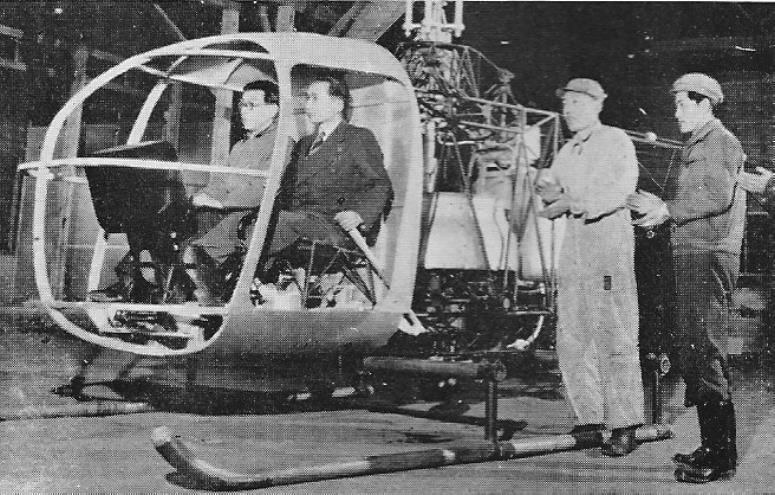
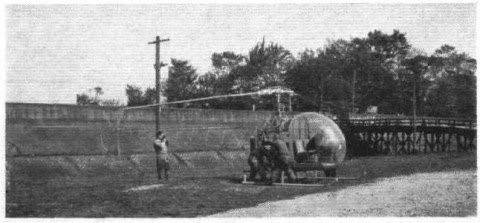
The first post-war Japanese helicopter designed for quantity production, the Yomiuri Y-1 developed as a project to commemorate the resumption of aviation by the Yomiuri Shimbun, and was produced with a prototype research subsidy from the Ministry of International Trade and Industry.

In 1953, Itogawa Eizo and Horikoshi Jiro, two of Japans most distinguised wartime aircraft designers, helped form the Japan Helicopter Association with a grant from MITI and the support of the Yomiuri Shimbun, a leading daily newspaper. Their design, the Yomiuri Y-1, was powered by the wartime Kamikaze-3 engine.

The project was abandoned when it failed to acquire U.S Patents for helicopter design. It took a lot of time to solve the anti-vibration measures, and it was not put into production.

Engine: Hitachi Jinphu III seven-cylinder radial, 150hp
Rotor diameter: 10.0m / 32 ft 10 in
Length: 12.2m / 40 ft 2 in
Height: 3.60m
Empty weight: 1,166 lb
Gross weight: 1,650 lb
Maximum speed: 156km/h / 96 mph
Cruising range: 200 mi
Seats: 2

Texas Helicopter M79 Jet Wasp II

The 1979 M79S Wasp II was a two place Ag modification of the Bell 47G. First flown on 6 January 1979.

First flown in 1979 with a piston engine, the M79T Jet Wasp II was a two-seat turboshaft powered modification of the Bell TH-13T helicopter. One was built (N1001X) in 1982.

M79S Wasp II
Engine: TVO-435, 270hp
Rotor: 37’1″
Length: 36’0″
Useful load: 1480 lb
Max speed: 106 mph
Cruise: 80 mph
Range: 300 mi
Seats: 2

M79T Jet Wasp II
Engine: Soloy-Allison 250
Seats: 2

Texas Helicopter M74 Wasp

Certified in 1976, the M74 Wasp was a single-seat piston-engined agricultural/utility modifications of Bell OH-13E (Bell 47) helicopter.

The 1977 M74A Wasp applied the modifications to Bell OH-13H.

M74 Wasp
Engine: Lycoming TVO-435-A1E, 200hp
Rotor: 35’1″
Length: 31’5″
Useful load: 1020 lb
Max speed: 100 mph
Cruise: 80 mph
Range: 150 mi
Seats: 1

M74A Wasp
Engine: Lycoming TVO-435, 240hp
Seats: 1

Tatarinov Aeromobile

Tatarinov started building his “Aeromobile” at Petrograd in 1909 with a grant provided by the Russian Ministry of War. The project was never completed, since Sukhomlinov, Russian Minister of War at the time, thought the work was progressing too slowly and consequently, the continuation of funding was denied. In despair, Tatarinov set fire to his rotorcraft and the hangar which housed it. The “Aeromobile” had four rotors, each turning at the end of an X-form of beams. Beneath it the chassis contained an EDTT 25 hp water-cooled engine which was to drive the rotors as well as a five-bladed “centrifugal propeller”. The pilot’s seat and controls were placed behind the engine. The total weight of the machine was 1300 kg.

Sud-Ouest SO.1310 Farfadet

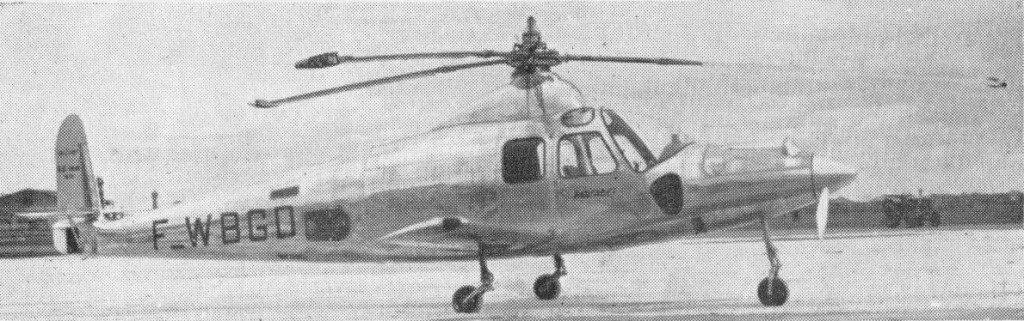
This is the first French convertible. It can take off vertically, hover in the air, land vertically by means of its rotor, and fly forward at a speed greater than that of pure helicopters by means of a fixed wing and an airscrew fully independent of the rotor.

The change from one state to the other is accomplished without any change at all in the external appearance.
The SO.1310 is provided with two independent power units. In the rear is an Arrius II 360hp Turbomeca unit, which supplies the jet rotor with compressed air at take-off. The all-metal three-bladed rotor is identical with the one used in the SO.1120 Ariel III, but with a larger diameter.

In the forepart there is a Turbomeca Artouste II turbo-prop engine with a take-off power of 360 hp, operating a variable-pitch airscrew. During forward flight, the rotor originally used for take-off continues to auto-rotate, but with low lift, and the greater part of the lift is transferred to the fixed wing. Mounted over the fixed wing is the pilot’s cabin, fitted with dual control, and in this cabin there is room for either three passengers, a freight load or two stretchers stacked on top of each other.

The Farfadet single prototype F-WBGD first flew on 8 May 1953. Its maiden flight, lasting about twenty minutes, was made as a true helicopter, the following one, on the same day, with the rotor and the airscrew respectively powered by their individual engines.

SO.1310 Farfadet
Engine: 1 x 360 hp Turbomeca Artouste II gas turbine & 1 x 360 hp Turbomeca Arrius II gas turbine
Rotors: 3-blade tip-powered main rotor; 2-blade propeller
Rotor diameter: 11.2m / 36 ft 6 in
Wingspan: 6.3m / 19 ft
Fuselage length: 10.08m
Height: 3.3m
Weight fully loaded: 1510kg
Empty weight: 995kg
Cruising speed as a helicopter: 155km/h
Cruising speed as an autogyro: 250km/h
Range: 400km / 250 miles at 149 mph
Seats: 3

Sud-Ouest SO.1220 / SO.1221 Djinn / YOH-1

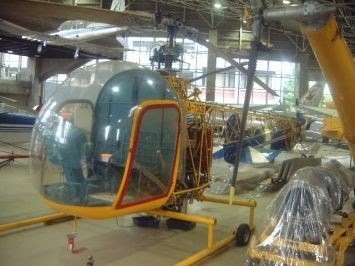
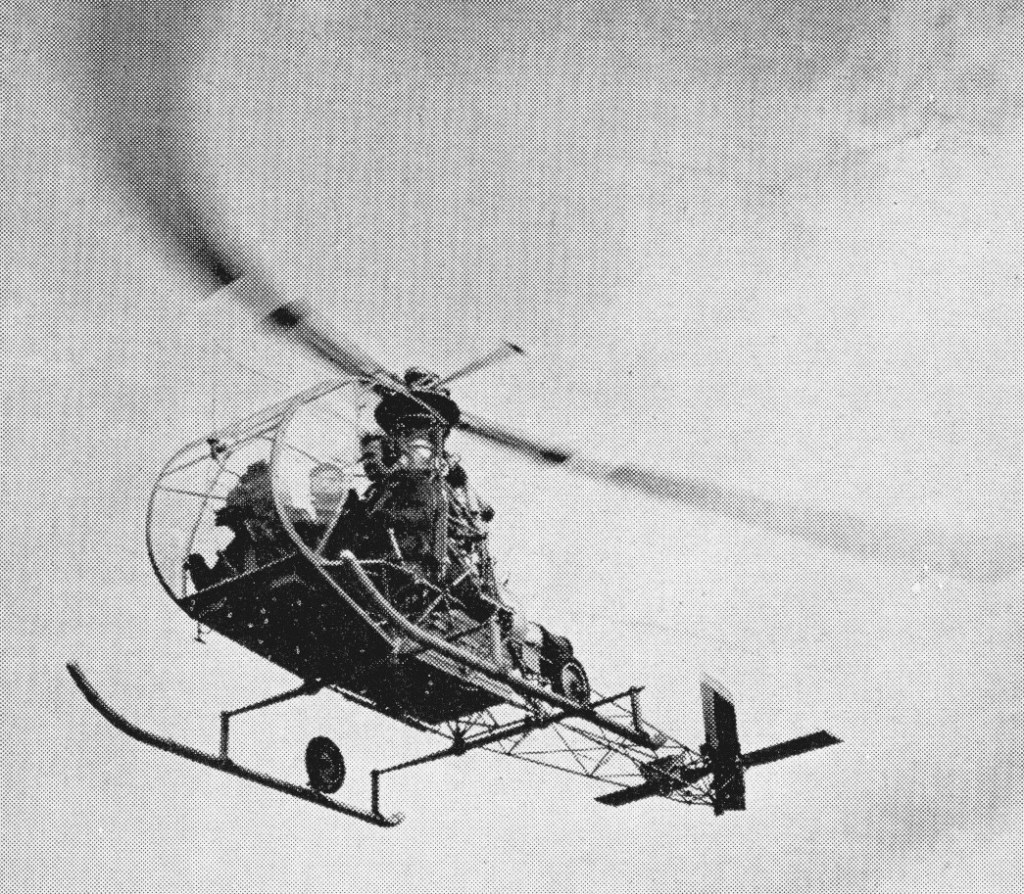
The experience acquired by Sud-Ouest in building its two prototypes of the Ariel led to the SO.1221 Djinn. The Djinn’s began with two single-seat SO.1220 prototypes, F-WGVO and F-WGZX, the first of which made its maiden flight on 2 January 1953. A simple uncovered structure of welded steel tube carrying a two-blade rotor above it, and with a single exposed seat for its pilot. Its powerplant was a Turbomeca Palouste turbo-compressor producing a large volume of compressed air which, using a similar distribution method to that of the Ariel, was discharged at the blade tips. These were both intended primarily to prove the rotor and propulsion systems.

Sud Ouest SO.1220 / SO.1221 Djinn Article

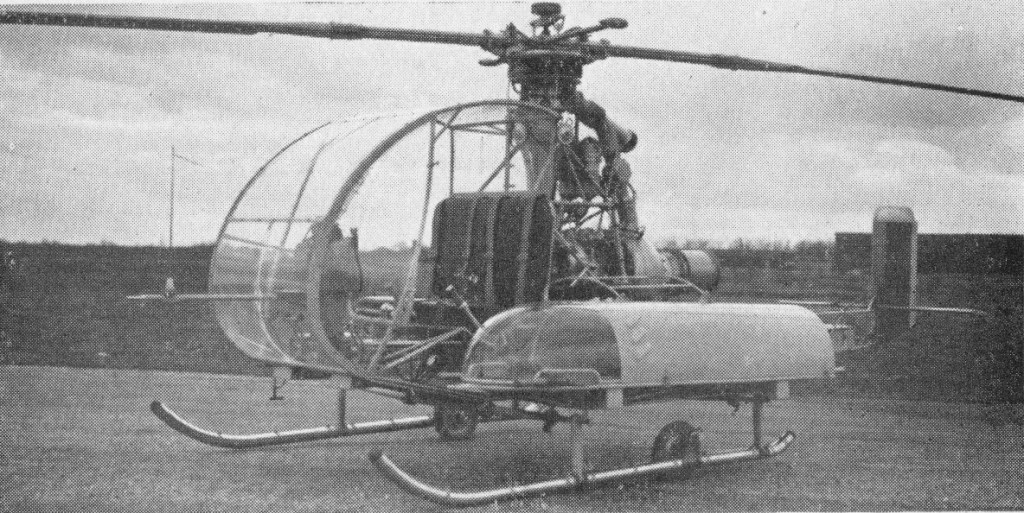
F-WGVO was later fitted experimentally with agricultural spray booms.

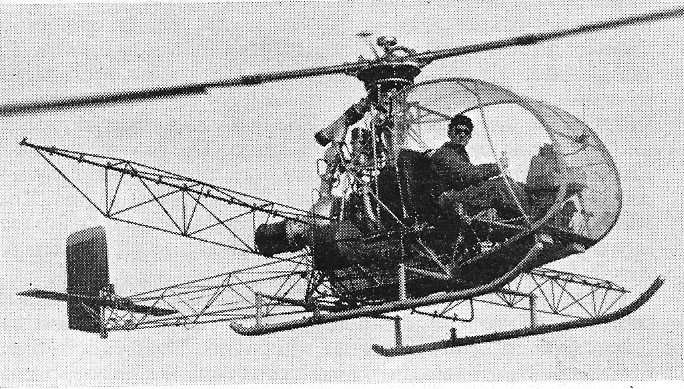
On 16 December 1953 the first of five 2-seat SO.1221 prototypes was flown, having a fully enclosed cabin, two side-by-side seats, an open-framework tail boom, and an all-up weight of 600kg. On 29 December this aircraft established a new altitude record in its class of 4789m.

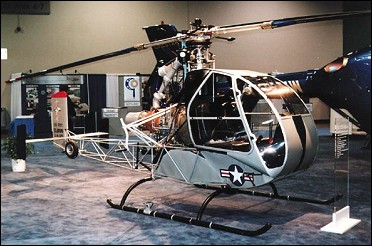
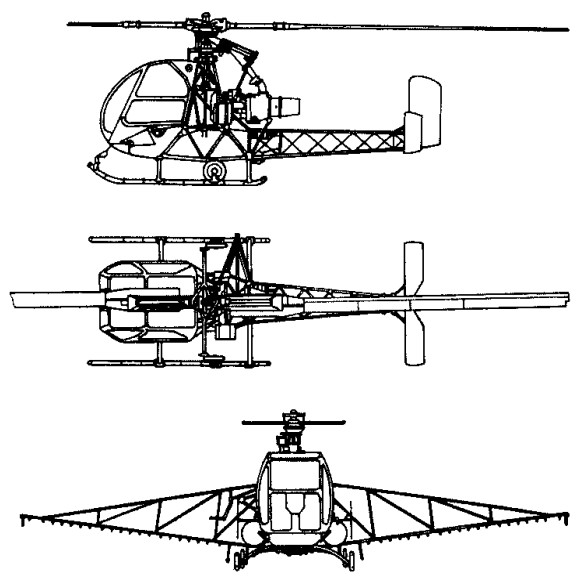
The Djinn was the world’s first production helicopter to make use of the ‘cold jet’ principle of propulsion. This system used a modified Turbomeca Palouste IV engine as a turbo-generator to feed compressed air through the rotor shaft to ejectors built into the tips of each rotor blade. The air itself is in fact warm enough to eliminate the need for other means of de-icing the blades. No tail rotor is fitted, the aircraft having two outrigged fins and a large central rudder that is situated in the line of the residual thrust exhaust from the engine to provide directional control. The craft’s small spartan two-seat cockpit was surrounded by a sectioned bubble-type enclosure and transparent side doors, which combined to provide excellent visibility forward and to both sides. Cockpit instrumentation was quite basic in the standard SO.1221, and The Djinn’s landing gear was of the skid type, with small retractable wheels to facilitate ground handling.

Twenty-two pre-series SO. 1221’s were then built, primarily for evaluation for the French Army, and the first of these was flown on 23 September 1954. Three machines from this batch were evaluated by the U.S. Army, under the designation YOH-1.

In late 1956 the US Army leased three examples for evaluation in the observation role. The Djinn, which had first flown in December 1953, was already in service with the French Army as an observation craft and its success in that role, coupled with its relatively low per-unit cost and fairly basic maintenance requirements, piqued the Army’s interest. The machines obtained by the Army (serials 57-6104 through -6106) were the first helicopters acquired under the new HO (helicopter, observation) classification, and were designated YHO-1. the three YOH-1s were consequently fitted with additional U.S. military-standard avionics and communications equipment for their Army evaluation.

The Army’s engineering and operational evaluation of the YOH-1 found the aircraft to be well built, relatively easy to maintain under field conditions, and an exceptional observation platform. The Djinn was not adopted for service use, however, primarily because the Army faced continuing budgetary constraints and some domestic political opposition to the procurement of French, rather than American (or Canadian) aircraft. In early 1958 all three YOH-1s were returned to Sud-Ouest for ultimate delivery to the French Army.

Chief customer for the Djinn has been France’s Aviation Legere de l’Armee de Terre, which received one hundred of the one hundred and fifty production Djinns completed up to 1961, and still had about half of these in service in mid-1967. The first production aircraft was flown on 5 January 1956, and French and US certification was gained in April 1958. Six were also delivered to the Federal German Heeresfliegerei. The military Djinns operate at a slightly higher gross weight – 800kg – than the civil models. One was used in France for the first experiments in launching Nord SS.10 anti-tank missiles from a helicopter, but the Djinn’s main military functions have been those of observation, liaison, training and (with one pilot and two external litters) casualty evacuation.

Between forty and fifty civil Djinns were active in ten countries, most of them in an agricultural role, for which Sud-Aviation offered renewed conversion facilities in 1965. The so-called ‘agricopter’ version of the Djinn can carry up to 200 litres of liquid chemical in twin tanks, and is fitted with lateral spray bars for the spraying, dusting or ‘fogging’ of crops with fertilisers or pesticides.

When production ended in the mid-1960s a total of 178 had been built, exported to about 10 countries. Many were used in an agricultural role, equipped with two tanks to contain liquid chemicals and spray bars for its distribution. By the time that production ended Sud-Ouest had twice changed its name, to Ouest-Aviation on 1 September 1956 and Sud-Aviation on 1 March 1957 when it merged with Sud-Est Aviation; this explains why the Djinn is sometimes recorded as the Ouest S.O.1221 or Sud-Aviation S.O.1221.

Sud-Ouest SO-1221 Djinn
Engine: 1 x Turbomeca Palouste IV turbo-compressor, 179kW / 237 shp
Main rotor diameter: 32 ft 10 in / 10.97 m
Fuselage length: 17.388 ft / 5.3m
Height: 8.530 ft / 2.6m
Width of hull: 6.332 ft / 1.93 m
Max take-off weight: 800kg / 1,550 lb
Empty weight: 793.8 lb / 360kg
Max speed: 70 kts / 130km/h / 75 mph
Endurance: 2h 15min
Initial climb rate: 1279.53 ft/min / 6.5 m/s
Service ceiling: 13123 ft / 4000 m
Range: 103 nm / 190 km
Typical range: 100 miles at 44 mph
Crew: 2

Sud-Ouest SO.1221 “Djinn”