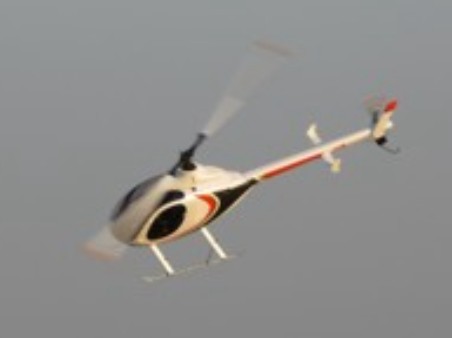
A new helicopter ULM produced by Alps Aviation, the Syton AH130 is an ultralight helicopter built with the precision and the technology of the certified helicopters, from a kit.
The Syton AH130 has side by side seating (equipped of dual controls). The fuselage structure is of aluminium alloys and steel. The fuselage has a lattice of steel tube.
The tail boom uses aluminium sheet, with composite material. Fairings of aerodynamic form and cockpit linings are composite material. The main rotor is two blade semi-rigid. The blades are completely composite in material, with an aluminium alloy rotor head.
Engine: Turbina Turboalbero turboshaft, 130 SHP Max continuous Max Length: 8.84 m (29.00 ft) Max Width: 1.60 m (5.25 ft) Max Height: 2.40 m (7.87 ft) Fuselage Width: 1.12 m (3.67 ft) Fuselage Height: 1.82 m (5.97 ft) Main rotor diameter: 7.63 m (25.00 ft) Tail rotor diameter: 1.28 m (4.20 ft) Empty weight: 290 Kg (693.3 lb) Normal take off weight: 450 Kg (992.0 lb) Maximum take off weight: 580 Kg (1278.7 lb) Max Cruise speed: 190 km/h (103.0 kts) Normal Cruise Speed: 160 km/h (86.0 kts) VNE: 210 km/h (113.5 kts) Max Rate of climb: 8.5 m/s (1670 ft/min) Hovering ceiling IGE: 2800 m (9200 ft) Hovering ceiling OGE: 1800 m (5900 ft) Maximum ceiling: 3800 m (12450 ft) Max endurance: 2 hr
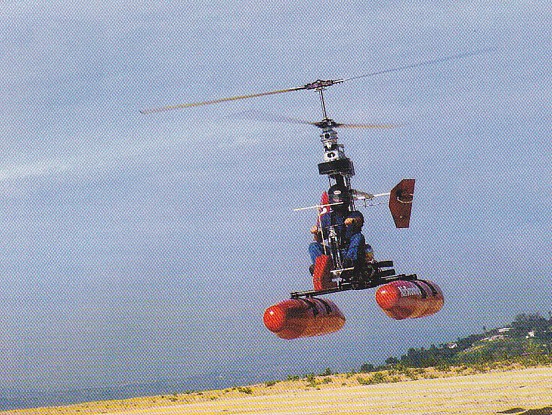
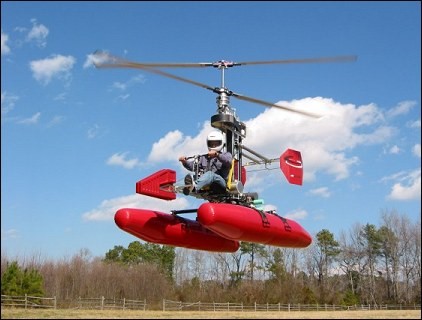
The 2007 AirScooter II is a coaxial design in a modern light-weight craft. By eliminating the need and complexity of swashplates, collective and cyclic control through a coaxial rotor design a number of benefits beyond conventional helicopter designs are immediately realized. First; enhanced, intuitive flight controls are achieved by simple motorcycle-style handlebars and the absence of a tail rotor. To gain altitude, simply throttle up like you would on a motorcycle, turn left or right on the handlebars for craft rotation and move the handlebar assembly as a joystick for directional control (including reverse). No pedal controls are necessary, which means someone without the use of their legs can just as easily fly the AirScooter. Handlebar controls represent the most distinguishable feature of the AirScooter. AirScooter’s patented design also provides an amazing level of stability while in the air and during flight.
The AirScooter falls into the ultralight weight class; requiring no pilot’s license. Weight has been overcome this obstacle by using composite materials.
AirScooter II
The AirScooter is not a kit. The AirScooter was planned to come completely assembled except for installation of the rotor blades and to include pneumatic floats instead of traditional helicopter skids. This feature further adds to the versatility of the AirScooter to get you wherever you want to go on land or swamp while providing a softer landing.
AirScooter II Engine: 1 x 65hp AeroTwin four-stroke Rotor diameter: 4.27m Length: 3.81m Height: 3.35m Width: 2.13m Useful load: 150kg Max speed: 100km/h
Airbus Industries was first established on 29 May 1969, after the signing of a Franco-German agreement to go ahead with the Airbus 300. In December 1970, Airbus Industries was registered under French law as a GIE ( Groupement d’Intérêt Economique ) under the leadership of the ‘Airbus Founding Fathers’ – Franz-Josef Strauss, Henri Ziegler, Robert Bateille and Felix Kracht.
The first delivery of a production A300 was made in My 1974 to Air France.
The A300 programme, launched in May 1969, was initially a Franco-German venture, with the British aircraft industry participating on a private basis. Airbus Industrie, the organisation which was responsible for the management, marketing, sales and product support of the programme, was created in December 1970 as an equal partnership between Aerospatiale of France and Deutsche Airbus GmbH of Germany. The organisation was based at Toulouse, in the South of France, where it remains. Casa of Spain joined in 1971and in 1979 British Aerospace joined as a full partner. The consortium was owned by Aerospatiale of France (37.9 percent), DaimlerChrysler of Germany (37.9 percent), British Aerospace (20 percent) and CASA of Spain (4.2 percent), which are also the main industrial participants in design, development, and manufacture. Associate members of the consortium are Belairbus of Belgium and Fokker Aviation of the Netherlands. Airbus Industrie was restructured into a limited-liability company in 1999, divisions included Airbus Industrie Asia, formed with Alenia of Italy to develop a new airliner in partnership with AVIC of China and ST Aero of Singapore; Airbus Military Company to develop the FLA military freighter (taking over from former Euroflag; and Large Aircraft, founded in 1996 to progress work on the ultra-large A3XX airliner. On 11 July 2001, EADS and BAE Systems completed the final procedures to make the new integrated Airbus company a formal legal entity.
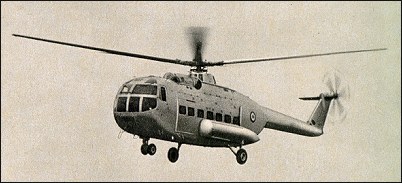
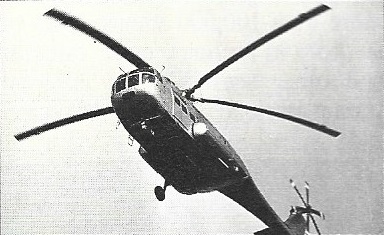
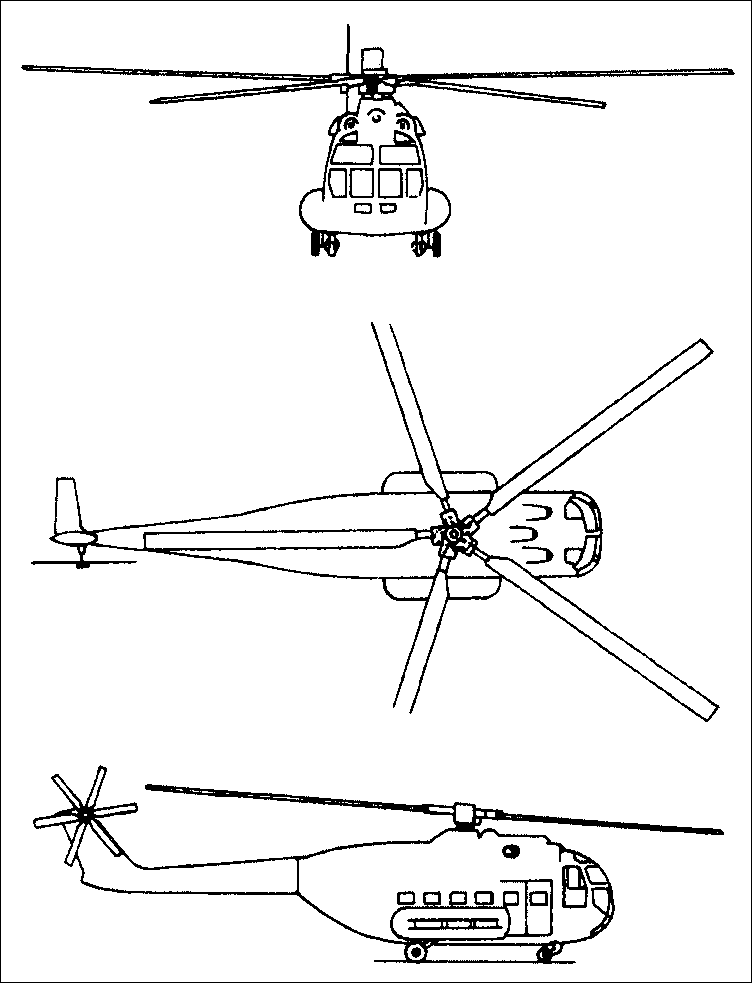
Filippo Zappata’s Agusta A.101D project was introduced at the Milan Trade Fair in April 1958, in the form of a model. The prototype was first flown on 19 October 1964 by test pilot Ottorino Lancia. The single prototype underwent visible external modifications during development under the direction of engineers Bellavita and Lovera and was fitted with a twin nose wheel assembly and longer fairings on each side of the fuselage, which was also extended by grafting in a new section. The helicopter performed service trials involving rapid embarkation and disembarkation through the two lateral sliding doors and tail ramp. It could carry two pilots and 35 equipped troops, or a 5000kg load. The development period involved over 400 flying hours in addition to those on the rotor test rig. The first prototype was fitted with three Rolls-Royce Bristol-Gnome H.1200 turbine engines of 1250shp, and later Gnome H-1400s of 1400shp. The airframe, with a gross weight of 12800kg and a length of sixty-six feet, had a rear ramp and twin sliding troop doors. The A.101 was examined by interested foreign parties visiting Cascina Costa and was displayed at the Turin Air Show in June 1966.
By autumn 1966 the A.101 was ready for large-scale production, but no decision was made by the authorities. In 1968 the helicopter appeared at the Turin Air Show in camouflage finish and was tested at an all-up weight of 13500kg. At the end of autumn 1968 the A.101G was transferred to Praticadi Mare military airport outside Rome for a series of trials which were completed in summer 1971. The aircraft made a few more flights, but was considered out-of-date. The A.101G was originally designated AZ.101G, the second initial denoting the responsibility of Ing. Filippo Zappata. Agusta had reworked the A.101H by redesigning the fuselage and some basic dynamic components. The fuselage was extended by 3 metre and more powerful General Electric T58 turbine engines were installed. This programme was cancelled in 1971 in favour of production under license of foreign aircraft such as Sikorsky and Boeing-Vertol helicopters.
AZ-101G Engine: 3 x Bristol-Siddley “Gnome H. 1400” turboshaft, 1030kW Main rotor diameter: 19.8m Length: 20.2m Height: 6.6m Take-off weight: 11500kg Empty weight: 6400kg Max speed: 225km/h Cruising speed: 203km/h Rate of climb: 12.3m/s Service ceiling: 3950m Range max fuel: 383km Crew: 3 Passengers: 35
AZ.101G Engines: 3 x Bristol-Siddeley Gnome, 1250 shp Main rotors: 5 blades Tail rotor: 6 blades Max gross weight: 24,900 lb Empty weight: 12,566 lb Top speed: 160 mph Cruise speed: 140 mph Range: 1270 mi
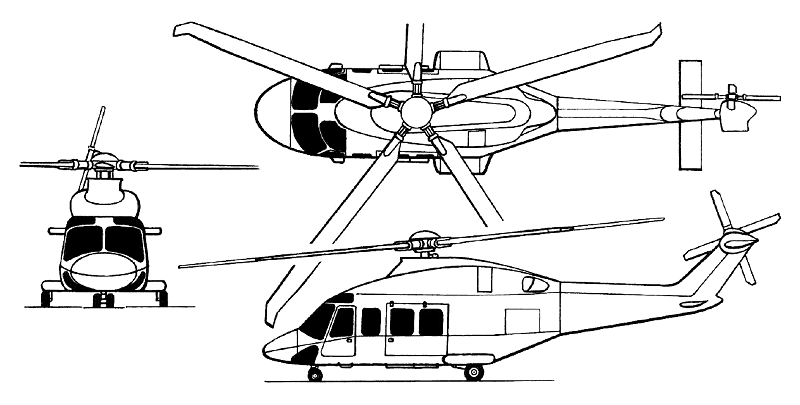
Bell and Agusta announced at Farnborough Air Show on 8 September 1998 that they had agreed to establish a joint venture to manage development of two new aircraft: the BA609 tiltrotor, previously a Bell and Boeing programme, and the AB139, a new helicopter announced on the same day. Following approval of both boards, a definitive agreement was signed on 6 November 1998. A full-scale mockup was unveiled at the Paris Air Show 12 June 1999. Agusta is responsible for the AB139’s development and certification to JAR/FAR 29 and transition to production, with participation by Bell on a 75:25% work-share basis; final assembly by Agusta at Vergiate, and by Bell (possibly at Mirabel, Canada). A military version was revealed in July 2000, and flight testing of the AB139 began in February 2001. Risk-sharing collaborators include GKN Westland (tail rotor drive train), Honeywell (avionics), Kawasaki (transmission input module), Liebherr Germany (landing gear and air conditioning system), Pratt & Whitney Canada (power plant) and PZL Swidnik (airframe components). PZL in Poland were making all the fuselages for the Agusta A109, AW119 and AW139, before shipping them to Brindisi, Italy, for customer fit-out. PZL also manufactured the A109 and A139 tail booms. With no designated prototype, the first preproduction aircraft (01, later I-ACOI) first flew on 3 February 2001 followed by second aircraft (02, later I-ATWO) on 4 June 2001 and third (03, later I-EPIC) on 22 October 2001. The first preproduction aircraft crashed on 22 April 2002. Assembly of first production aircraft began in late November 2001 and this aircraft, I-ANEW, was demonstrated at Farnborough in July 2002. Three preproduction aircraft and one tie-down helicopter (TDH) undertook the flight test programme and the AB139 achieved Italian IFR Type Certification on June 18, 2003 after 1,600hr of ground and flight testing. 750 hours was completed on the TDH.
Featuring a five-blade, fully articulated, ballistic tolerant main rotor and four-blade tail rotor, some of the transmission and rotor elements are based on Agusta A129 Mangusta. The AB139 has four-axis, digital AFCS flight controls and heavy-duty, retractable tricycle landing gear with twin wheels on the nose unit and single wheels on the main units, which retract into side sponsons. Powered by two Pratt & Whitney Canada PT6C-67C turboshafts, with FADEC, each rated is at 1,252kW for T-O and 1,142kW maximum continuous; OEI ratings 1,286kW for two minutes and 1,252kW maximum continuous. Fuel tanks are behind the main cabin. The main transmission can run for up to 30 minutes without oil. Up to 15 passengers are accomodated on crashworthy seats in three rows of five, two forward facing, one rearward facing, in an unobstructed cabin with a flat floor and a flight-accessible baggage compartment at the rear of cabin, or alternatively, six stretchers and four attendants in medevac configuration. Plug-type sliding door are on each side of cabin, with separate crew doors. The commercial version was priced at US$7 million in 2002. More than 80 had been ordered by 25 customers by June 2003. Launch customer Bristow Helicopters of UK announced order for two on 26 September 2000 for delivery in 2003. The AB 139 is operated by the US Coast Guard for recovery and surveillance.
Engine: 2 x Pratt & Whitney Canada PT6C-67C turboshafts Take-off power capacity: 1250kW Max continous power capacity: 1140kW Main rotor diameter: 13.80m Length with rotors turning: 16.65m Fuselage length: 13.53m Width: 3.2m Height: 4.95m Max take-off weight: 6000kg Internal payload: 2500kg External payload: 2700kg Max cruising speed: 290km/h Economic cruising speed: 278km/h Hovering ceiling, OGE: 3600m Endurance: 3.9h
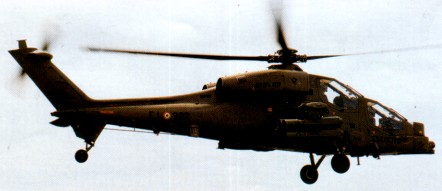
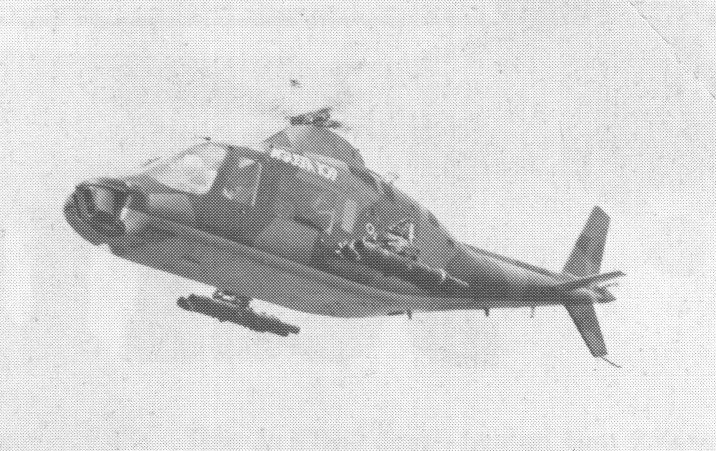
The A.129 Mangusta (Mongoose) is a day/ night military scout/antiarmour helicopter, which preliminary design began in 1978, and the first of four flying prototypes made its initial flight on 15 September 1983 powered by two 800 shp Avco Lycoming LTS101 850 turboshaft engines. The development programme was jointly funded by the Ital¬ian Army and Agusta.
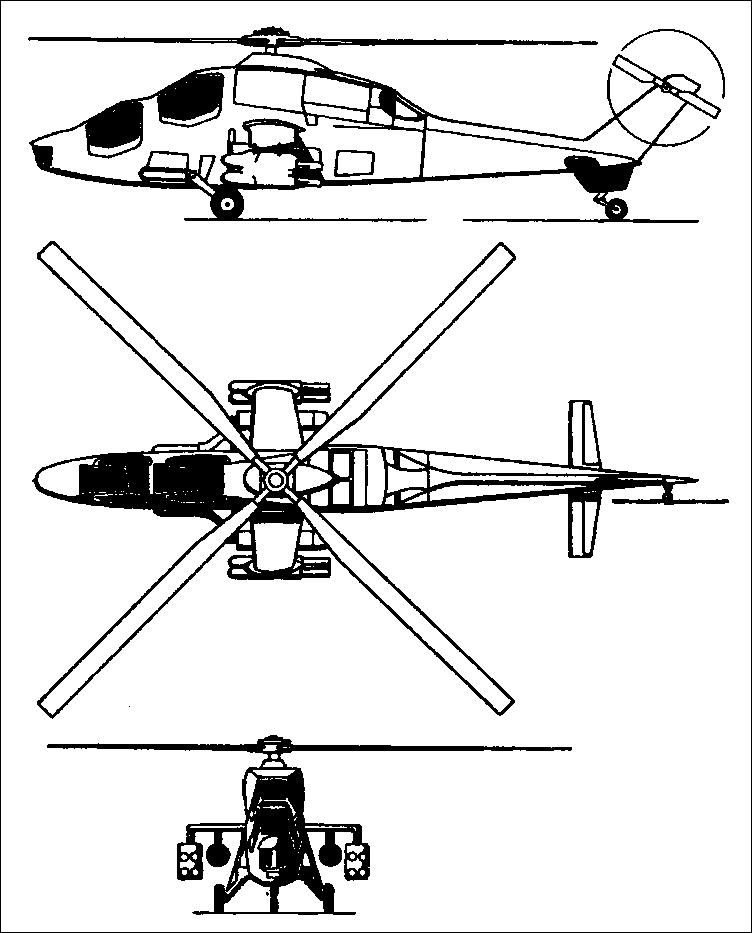
The A.129 uses a fully-articulated fiberglass four-blade main rotor system with elastomeric bearings and low-noise profile tips. The transmission has a run-dry capability. A Harris digital integrated multiplex system controls communication, navigation, engine, armament, power distribution and utility systems. The avionics include active and passive self-protection systems, and the 70 percent composite-built airframe is designed to provide protection against 12.7mm rounds and partial protection against 23mm rounds and meets crashworthiness standards. The main and tail rotors are also designed for 12.7mm ballistic tolerance. The two crew are seated in a tandem cockpit, fitted with a low-glint canopy and with a small frontal area to minimize visual and radar detection. They both use helmet-mounted displays which present targeting information and the imagery from infra-red sensors for operations at night. They also have fly-by-wire controls and multi-function displays showing all flight data.
The powerplant is two Rolls-Royce Gem 2 turbines, license-built in Italy by Piaggio.
Offensive armament can be carried by the A.129 on four stub-wing attachment points, the inner pair being stressed for loads up to 300kg. All four pylons can be elevated 3° and depressed 12°. The standard Mangusta (Mongoose) is armed with eight TOW anti¬tank missiles, with Flir-augmented nose sight and pilot’s night vision sensor linked to helmet display sights. Other equipment includes passive and active infrared and electronic counter measures. Provision is made for the later installation of a mast mounted target acquisition system.
A total of 66 A.129s were ordered by the Italian Army by early 1984 and the first entered service in 1989. Offered to Australia, the cost was around $9 million per aircraft.
In August 1990 Agusta delivered the first production A 129 Mangusta anti-armour helicopter to the Aviazione Leggera de;’Esercito at Viterbo, where the initioan batch of 15 were to be based.
Agusta has test flown an improved development of its Mangusta attack helicopter (the A.129 International) which features a number of improvements to enhance performance and payload, and improved avionics capabilities. The major change is the substitution of the Rolls-Royce Gem 1004 turboshafts with more modern and more powerful LHTEC T800s. The T800s output 30 to 40% more power over the operational range of the engines compared with the Gems, while the transmission rating has been increased to 1795shp (1340kW). Further performance improvements are courtesy of a five bladed, instead of four, main rotor system. The A 129 International’s armament has also been expanded to include a three barrelled M-197 20mm cannon mounted in a nose mounted Martin Marietta/GIAT turret, plus TOW and Hellfire anti tank missile capability, Stinger air-to-air missiles and 70mm and 81mm rockets. Improvements to the avionics include FLIR and CCD television.
The Turkish Aerospace Industries T129 ATAK Helicopter program started in 2007 for development and production of 91 helicopters, as a Joint Collaboration of TAI and AgustaWestland also known as the “ATAK Team”. Within the scope of program, the first T129 ATAK Helicopter was delivered to the Turkish Armed Forces on 22nd of April 2014.
Turkish Aerospace Industries T129 ATAK
Agusta A-129 Mangusta Engine: 2 x Rolls-Royce Gem 2 Mk. 1004D turboshaft, 750 shp / 615kW Main rotor diameter: 39.042 ft / 11.9m Wingspan: 3.20m Length rotors turning: 14.29m Fuselage length: 40.354 ft / 12.28m Height: 3.35m Weight empty: 5576.4 lb / 2529.0 kg MTOW: 9040.5 lb / 4100kg Loaded weight: 2529kg Fuel capacity: 246 gal / 930 lt Max speed: 140 kts / 259km/h Cruising speed: 130 kts / 240 km/h Rate of climb: 2145.67 ft/min / 10.9m/s HOGE: 3105m Service ceiling: 16076 ft / 4900 m Range: 378 nm / 700 km Endurance: 3hr Crew: 2 Armament: 8 Tows or 6 Hellfires
A.129 Mangusta Engine: 2 x R-R Gem 2 Mk 1004D turboshafts, 1,035 shp (772 kW) Installed pwr: 1230 kW Rotor dia: 11.9 m Fuselage length: 12.3 m No. Blades: 4 Empty wt: 2529 kg MTOW: 4100 kg Payload: 1750 kg Max speed: 135 kt ROC: 2000 fpm HIGE: 3290 m HOGE: 2390 m Range: 3 hr Crew: 2
A.129 International Engine: 2 x LHTEC T800-800 Instant pwr: 1044 shp Rotor dia: 11.9 m MTOW: 4113 kg Payload: 1200 kg Max speed: 159 kt Max cruise: 124 kt Max range: 527 km ROC: 2360 fpm HIGE: 10,300 ft HOGE: 6200 ft Crew: 2.
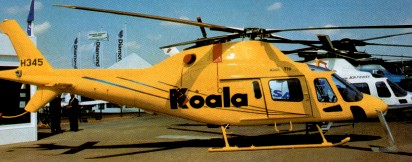
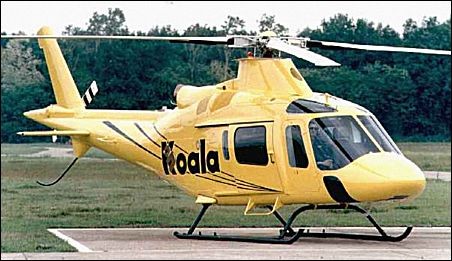
Developed from the A.109 is the single-engined A.119 Koala, the prototype, I-KOAL, with one Pratt & Whitney PT6B-37/1 turboshaft engine and fixed skid u/c, first flew on February 1995. The US Coast Guard operated the A.119 Powers as the MH-68A. PZL in Poland were making all the fuselages for the Agusta A109, AW119 and AW139, before shipping them to Brindisi, Italy, for customer fit-out.
Agusta A119 Engine: 1 x Pratt & Whitney Canada PT6B-37 turboshaft Take-off power capacity: 747kW Max continuous: 650kW / 735 shp Main rotor diameter: 36.089 ft / 11.0m Length rotors turning: 13.10m Fuselage length: 36.319 ft / 11.07m Height: 10.827 ft / 3.3m Max take off weight: 5997.6 lb / 2720.0 kg Internal payload: 1200kg External payload: 1320kg Max speed: 150 kts / 278km/h Cruising speed: 140 kts / 260km/h Service ceiling: 17913 ft / 5460m HOGE: 2450m HIGE: 3320m Range: 360 nm / 655km Endurance: 2h 45min Crew: 1 Passengers: 7






 All Aero