In conjunction with the June certification of the AC311, Avicopter announced orders for 62 of the single-engine, 2.2-ton aircraft from state enterprises, some linked with the manufacturer. The order figure is large for the local market, but it is unclear whether the contracts are binding, since “orders” announced by Chinese manufacturers sometimes do not represent binding contracts, especially when the customer is a state firm.
The AC311 can carry six people and has a 900-kg (2,000-lb.) maximum load capacity, 620-km (385-mi.) range, 4-hr. endurance and 242-kph (150-mph.) maximum cruise speed. “The tips of the main rotor blades are elliptical, improving aerodynamic efficiency and reducing aerodynamic noise,” the manufacturer says.
The rotorcraft is similar to and follows the configuration of the Eurocopter AS350 Squirrel, an unauthorized copy of which Avicopter builds as the AC301. The Chinese company says it has independently developed the AC311 using three-dimensional digital techniques and that it has been designed in accordance with international airworthiness standards. Industry officials say Eurocopter did not help. Honeywell has supplied its LTS101-700D-2 engine for the program, but Turbomeca signed an agreement with Avic unit China South Aviation Industry to cooperate on the Arriel 2B1A for the AC311. Avicopter says the AC311’s dynamic components are designed to be long-lasting, but it gives no figures.
Preliminary design was completed in 2009 and detail design and engineering development in March 2010. First flight occurred the following November. In 2011, the company said it would be certified by the end of that year.
Born out of the South African Air Force’s need for an escort and close air support helicopter, the Rooivalk programme was initiated in the early 1980s by Atlas Aviation. The Alpha XH-1 was purely a test-bed for weapon and cockpit systems. It was fitted with a GA-1 Rattler 20mm cannon in a steerable turret, linked to a Kukri helmet-mounted sight. Following on from the Alpha XH-1 research, Denel comimssioned two Puma helicopters to develop the systems required for the Rooivalk. During 1987, the first of two XTP-1 Puma-based test-beds were built and used to evaluate engines, avionics, optronics, weapons and associated control systems for the larger airframe. These test-beds also included the use of locally-produced composite materials used in both airframe and rotor systems. Puma J1 first flew in 1986 and was the primary avionics, weapons and flight control systems’ test bed.
A highly modified version of the Aérospatiale SA.330 Puma, the XTP-1 has been under development since 1981, and a prototype was revealed in May 1987. Principal upgrades include the installation of an under-fuselage GA-1 20mm cannon turret with a helmet-mounted sight for the gunner and internal ammunition storage, two large stub wings with a total of four pylons for rocket pods, and a redesigned tail unit with a ventral fin and modified horizontal stabiliser.
Puma J2 flew shortly afterwards, its primary task being to develop the weapons systems and integrate them with the aircraft and the other on hoard systems. Concurrently two missile tests were conducted: the first studied the effect of missile blast on the tail boom and the other studied the accuracy of the weapons and associated systems.
The first Rooivalk prototype was unveiled in January 1990 and the second prototype, or advanced design model, flew for the first time in May 1992. It differed from the original experimental design model in having the production 1553B databus and full anti-armour mission equipment fitted. It was also armed with the 20mm cannon fitted in a TC-20 chin turret.
From the J model Pumas the Rooivalk started to take shape in the form of the initial experimental development model (XDM). XDM first flew on 11 February 1990 and began testing aircraft dynamics before progressing on to validate mechanical, aerodynamic and structural design, moving through to expand the flight envelope. It is fitted with an articulated rotor head which allows it to loop, giving it that per¬formance edge over an adversary. Denel also claims that the maximum speed was taken out of the design envelope allowing 196kt in forward flight.
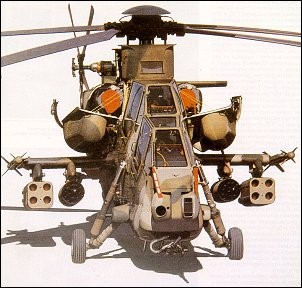
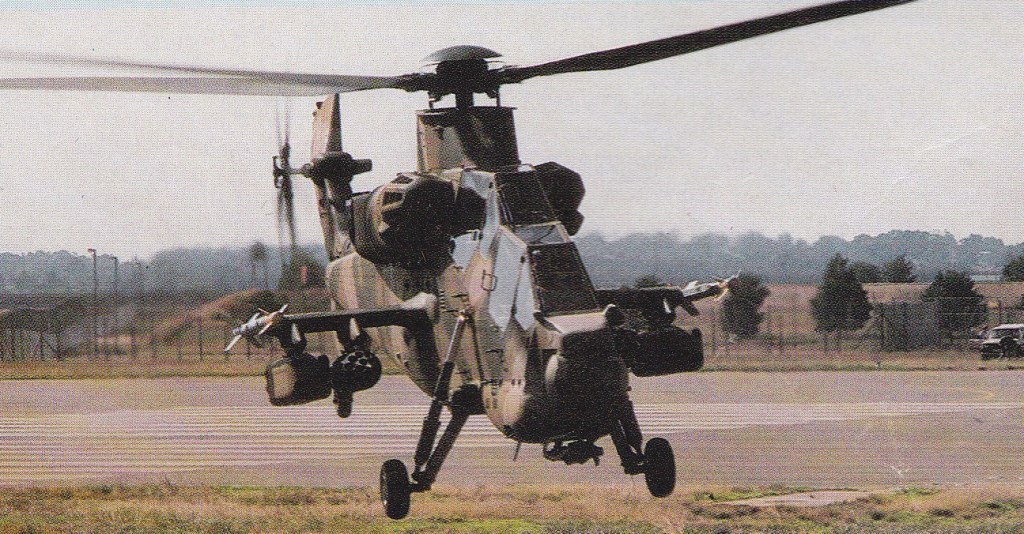
The Rooivalk’s fuselage is mostly metal but with some composites. It has stepped tandem cockpits, with the pilot in the rear and the co-pilot/gunner in the front. The cockpit canopies are formed from flat plate on single curvature sheets to minimise glint from the sun. The twin Topaz turboshaft engines are uprated versions of the Turbomeca Turmo IV and the main rotor is similar to that fitted to the Aerospatiale Puma. An automatic flight control system is fitted, with auto-hover and auto-land. The Rooivalk is designed to operate at low level (under 15m) and at high speeds.
This tandem-seat helicopter is based around a Puma transmission and dynamics and has been built using composite materials. Powered by two Turbomeca Makila turboshafts developing 1175kW it has an all-up-weight of 3245kg. The helicopter can be armed with an assortment of weapons and is capable of operating day or night. Weapons include: 20mm cannon fitted in a TC-20 chin turret or larger DEFA 30mm cannon in a TC-30 chin turret, 2 x 18-tube rocket pods, 2 box launchers for 4 laser beam-riding ZT-35 anti-tank guided missiles, 2 Kukri or Darter Infra-Red homing air-to-air missiles.
The South African Air Force purchased four Rooivalk CHS-2s in 1993 and intend to eventually operate a Squadron of at least 16 Rooivalks. The Rooivalk entered service in late 1996.The Rooivalk was also offered to the British Army to fulfil their Attack Helicopter requirement.
By 1999 was called the Red Hawk.
CSH-2 Engine: 2 x Turbomeca Makila 1A2, 1470kW. Instant pwr: 1492 kW. Rotor dia: 15.58 m. Length with rotors turning: 18.73m Fuselage length: 16.4m Height: 4.59m Empty weight: 5910kg MTOW: 8750 kg. Payload: 2030 kg. Max speed: 167 kt / 309km/h Max cruise: 150 kt / 278km/h Max range (internal fuel): 700 km. Range with max fuel: 705km Range MTOW with external fuel: 1260km Service ceiling: 6100m HIGE: 18,200 ft. HOGE: 16,500 ft / 5545m Crew: 2
Engine: 2 x Topaz (Turboméca Makila 1K2), 1794 shp Rotor diameter: 51.115 ft / 15.58 m Length: 54.626 ft / 16.65 m Height: 17.028 ft / 5.19 m Max take off weight: 19293.8 lb / 8750.0 kg Weight empty: 13031.6 lb / 5910.0 kg Max. speed: 167 kt / 309 km/h Cruising speed: 150 kt / 278 km/h Initial climb rate: 2198.82 ft/min / 11.17 m/s Service ceiling: 16503 ft / 5030 m Maximum range: 680 nm / 1260 km Range: 378 nm / 700 km Endurance: 4 h Crew: 2 Armament: 1x MG 20mm, 8-16 Miss. ext., 4x A/A Miss. V3B Kukri, max. 2030kg
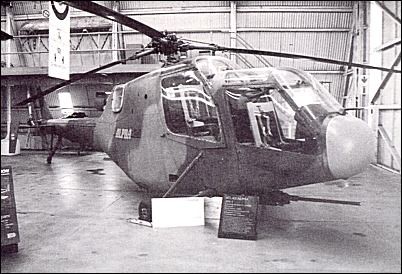
Relying on their own resources, due to trade embargoes with South Africa, Atlas Aviation produced an experimental tandem-seat attack helicopter. Based on the Aérospatiale Alouette III, the Alpha XH-1 tandem-seat attack helicopter was developed under a Government design and manufacture contract signed in 1981.
The Alpha XH-1 was purely a test-bed for weapon and cockpit systems. It was fitted with a GA-1 Rattler 20mm cannon in a steerable turret, linked to a Kukri helmet-mounted sight. During 1987, the first of two XTP-1 Puma-based test-beds were built and used to evaluate engines, avionics, optronics, weapons and associated control systems for the larger airframe. These test-beds also included the use of locally-produced composite materials used in both airframe and rotor systems.
The XH-1 first flew on February 3, 1985. Engine and transmission systems are from the Alouette III, but apart from the tail boom the airframe is a completely new design. Stub wings for weapons carriage were a projected development, while the gun turret is able to accept an alternative arrangement of four 7.62mm machine guns.
Registered as a private company at Kempton Park, Transvaal, in 1964 to establish an aircraft industry in South Africa, jointly with the Industrial Development Corporation. Completed manufacture of Impala (M.B.326M) under Aermacchi license. Developed C4M Kudu utility STOL light transport, first flown February 1974. First flew in 1986 its Cheetah multirole fighter, fighter-bomber, and reconnaissance aircraft conversion of the Mirage III for the SAAF, allowing initial operational capability in 1987. ACE all-composite turboprop trainer first flew April 1991 but later canceled. Developed Rooivalk attack helicopter, Puma gunship, and Oryx. Company also held marketing rights for several foreign aircraft and undertook extensive maintenance and overhaul work for SAAF. Merged with Simera in April 1996 under new Denel Aviation name, having been a division of Denel (Pty) Ltd. within the latter’s Aerospace Group. 1995: A division of Denel (Pty) Ltd, PO Box 11, Atlas Rd, Kempton Park 1620, South Africa. Earlier Denel (Pty.) Ltd. encompassed Atlas Aviation and Simera as divisions of its Aerospace Group. Took the Denel name in April 1996 after merging Atlas and Simera, with new subdivisions created as Tactical Aircraft Support, Transport Aircraft Support, Aircraft Manufacturing and Airmotive. Cooperating with DaimlerChrysler of Germany on AT-2000 Mako program. Cooperates with Aerospatiale of France on aircraft and missiles. Full range of maintenance, repair, and modification facilities, plus component manufacturing. Continuing programs of former Atlas include Cheetah C and D fighter conversion of Mirage III, development and production of AH-2A Rooivalk antiarmour/ attack helicopter (first flown February 1990 and for delivery from 1999), development of the Cirstel (Combined Infra-Red Suppression and Tail rotor Elimination system) tail-rotorless conversion of an Alouette helicopter as a technology demonstrator (first flown 1998), development and production of a variant of the SA 330 Puma helicopter as the Oryx, and development of a modular weapon suite for the Puma helicopter to convert it into a gunship.
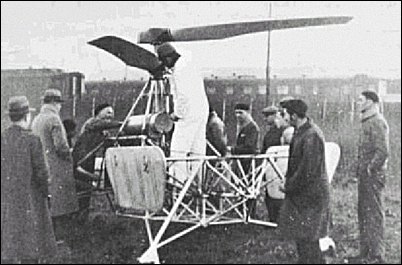
Hungarian engineer Oscar von Asboth, Director of the Austro-Hungarian State Propeller Factory, designed and tested four different helicopters. He worked alongside von Karman, and in particular was responsible for the development work on the rotors for the Petroczy-von Karman helicopter, and between 1928 and 1931, now working in Budapest, von Asboth tested various contra-rotating co-axial two-bladed rotors only 4.35m in diameter. Stability was achieved in the helicopters by the the air which the rotors directed on to six mobile surfaces round the horizontal hinges. These six ‘deflectors’ were operated by the pilot, using traditional aircraft controls. The fourth model, known as AH 4, had, instead of a Le Rhone 110hp rotary, a Clerget 130hp engine, which drove not only the rotors but also a tractor propeller. This rotorcraft in flying condition weighed 410kg, and could climb at a rate of 2m/s. By mid-1930 the aircraft reportedly attained an altitude of 30m and covered 3.2km at about 19km/h. About 1930 two missions, one British, the other French, went to Budapest to von Asboth. An expert in the British mission named Liptrot climbed to a height of 31m, and flew for a distance of 2800m. Von Asboth then completed his research particularly into his rotor system, the blades of which contained a movable part extending from the hub to the middle, and a fixed part from the middle to the tip of the blade. He then went to England, where the Blackburn Company became his licensee.
Aeronautical Research & Development Corporation acquired all rights to Brantly helicopters from Lear Jet Industries in early 1969, then formed a Brantly Division. Promoted ARDC/Brantly Model B-2E. Five-seat Model 305 with engine of 305 hp first flew in 1964, but is also promoted as ARDC/Brantly type.
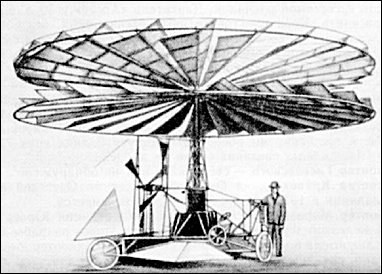
Built by the Russian military engineer K. A. Antonov [К. А. Антонов], in development at St. Petersburg from 1907-1911. The essence of the machine was that it rose vertically by the use of the counter-rotating rotors and after gaining enough height it was flown horizontally by the propeller. In 1907 military engineer K.A.Antonov applied for, and in 1912 obtained a patent for his Helicoplane.
The whole system was driven by one 25 hp engine, so a complex system of cogwheels and rods was probably necessary to work the rotors and propeller. As the Helicoplane – according to reports – did not fly, it may be presumed that it was too heavy. As he was a military engineer it can be assumed that there was some form of financial backing or other help received from the Russian government.
The helicoplane was built and tested in St.Petersburg during 1910. Despite all systems working as expected, the Helicoplane failed to takeoff.
Antonov was otherwise prominent in Russian aviation as he participated in the design and building of the 6,900 m³ dirigible “Krechet” in 1910.
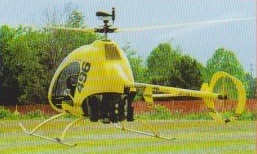
A more powerful, two-seat derivation of the Sport Copter 496. The prototype featured a 4 stroke engine, 23 ft tail shaft and a MTOW of around 1300 lbs. Assembled in New Zealand, the initial four were registered in July 1999.
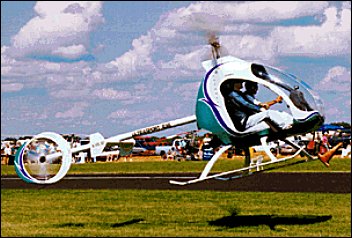
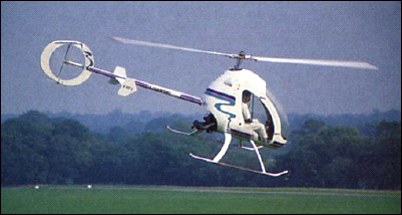
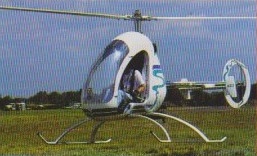
A two seat partially enclosed helicopter. Composite body, main rotor and shrouded tail rotor. Useable as a trainer, either experimental or ultralight. Includes full dual controls, doors, electric start. Infinite life composite rotor blades and fuselage. High inertia blades for excellent autorotation. An 8′ wide landing gear. Floor mounted cyclic now standard. Quick build kit. Meets 51% build rule. Dual controls standard. Plans or Kits delivered within 4-6 weeks of receiving order in 2009. The Ultrasport 496 two-seater which commenced flight testing (N496AS) in July 1995, has a wider cabin than the 331 and uses a 95hp Hirth F.30 engine. The Ultrasport helicopter kits are manufactured in Taiwan. Deliveries began in April 1997. The Ultrasport 496RT announced in 2002 uses a 84.6kW Rotax 914 turbocharged engine with electric start and quadruple carburettors. Prices in 2003 were: 496 US$62,900; 496RT US$77,900. An unmanned surveillance prototype named Vigilante 496 (first flight February 1998) was developed by Science Applications International Corporation. The Vigilante 496 prototype (N496UV) evaluated as optionally piloted vehicle (OPV) by US Navy during first and second quarters of 1998.
Engine: Hirth F 30, 115 hp Rotor span: 7.00 m Blade area: 0.170 sq.m MAUW: 514 kg Empty weight: 245 kg Fuel capacity: 60 lt Max speed: 167 kph Cruise speed: 112 kph Minimum speed: 0 kph Climb rate: 4 m/s Seats: 2 Fuel consumption: 25 lt/hr
Engine: One 85.8kW Hirth F30 quad-carburettor / electric start Main rotor diameter: 7.01m Tail rotor diameter: 0.76m Length rotor blades folded: 6.02m Height: 2.49m Take-off weight: 512kg Empty weight: 256kg Never-exceed speed: 167km/h Max cruising speed: 113km/h Max rate of climb: 305m/min Hovering ceiling, IGE: 3290m Hovering ceiling, OGE: 2135m Range: 240km Endurance: 3h Fuel capacity: 61 lt
Engine: 105 hp Hirth H-30, Quad carb, Dual CDI Transmission 11:1 helical spur (2 stage) Rotor blades diameter: Composite 23 ft Roror blade chord: 7 in composite Tail rotor diameter: 30in Cruise: 69 mph Top Speed: 104 mph Empty Weight: 575 lbs Useful Load: 605 lbs Gross Weight: 1,180 lbs Width: 6 ft 6 in Height 8 ft 2 in Length (w/blades folded): 19 ft 9 in
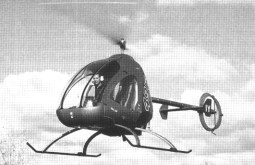
The Ultrasport 331 is a larger version of the 254 falling within the American Experimental category (FAR Part 21.191g), with increased range and higher gross weight. Features include 10 gallon tank, doors, bigger instrument panel, electric starter. The performance as the 254, and the floor mounted cyclic is standard. Optional floats are available. Meeting the 51% rule, a quick build kit requires 80 hours assembly. The two-blade composites construction main rotor has tip weights for momentum conservation and an 8 deg linear twist and infinite life. Equipped with a shielded two-blade tail rotor, and tailplane with tins at tip, the tail rotor drive is carried in narrow streamlined tailboom. A centrifugal sprag clutch for starting engages the rotors at 2,000 engine rpm and automatically disengages in the event of engine failure. The flying controls are conventional collective, cyclic and yaw pedals. A floor-mounted cyclic option has been available since 1998; early models had a top-mounted stick. The prototype 331 (N331UV) first flew December 1993. The single seat 331 is powered by one 48.5kW Hirth 2706 dual-carburettor two-stroke engine with electric starter or Hirth H32 of same power in 331H; 12:1 planetary transmission. Fuel capacity 38 litres. In late 2002, it was announced that Huzbou Taixing Aviation Technology of Huzhou, China was producing helicopters from kits, including examples of Ultrasports. A single-seat ultralight helicopter, the Ultrasport 331H uses the 48.5kW Hirth H32 added to range in 2003. The Ultrasport 331 was available for US$37,900 in 2003.
Engine: Hirth 2706, 65 hp Rotor span: 6.40 m Blade area: 0.170 sq.m MAUW: 295 kg Empty weight: 150 kg Fuel capacity: 38 lt Max speed: 167 kph Cruise speed: 105 kph Minimum speed: 0 kph Climb rate: 4 m/s Seats: 1 Fuel consumption: 14 lt/hr
Engine: Hirth 2703, 55 hp. Disk span: 21 ft. Length: 16.67 ft. Height: 7.5 ft. Weight empty: 330 lbs. Gross: 680 lbs. Fuel cap: 10 USG. Speed max: 104 mph. Cruise: 63 mph. Range: 150 sm. ROC: 1000 fpm. Service ceiling: 12,000 ft. Endurance: 2.5 hr. Seats: 1. Landing gear: skids.
Engine: 65hp Hirth 2706 Dual carb, Dual CDI. Transmission 12:1 Planetary Rotor Blades: Composite 21′ diameter, 7″ chord, Tail rotor: composite 30′ diameter. Empty Weight: 330 lbs Useful Load 320 lbs Gross Weight: 650 lbs Fuel capacity: 10 USG Width 6 ft 6 in Height 8 ft 2 in Length 19 ft 2 in (w/blades off) Cruise: 65mph Top Speed: 104 mph Range: 150 sm ROC: 1000 fpm Service ceiling: 12,000 ft Kit price: US$34,850 (2008)
Ultrasport 331 Main rotor diameter: 6.4m Tail rotor diameter: 0.76m Length with rotor blades folded: 5.84m Height: 2.39m Take-off weight: 294kg Empty weight: 150kg Max level speed: 167km/h Cruising speed: 101km/h Max rate of climb: 305m/min Hovering ceiling, IGE: 3290m Hovering ceiling, OGE: 2135m Range with normal fuel at 100km/h: 241km


 All Aero