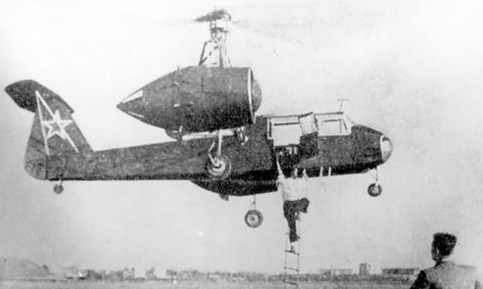
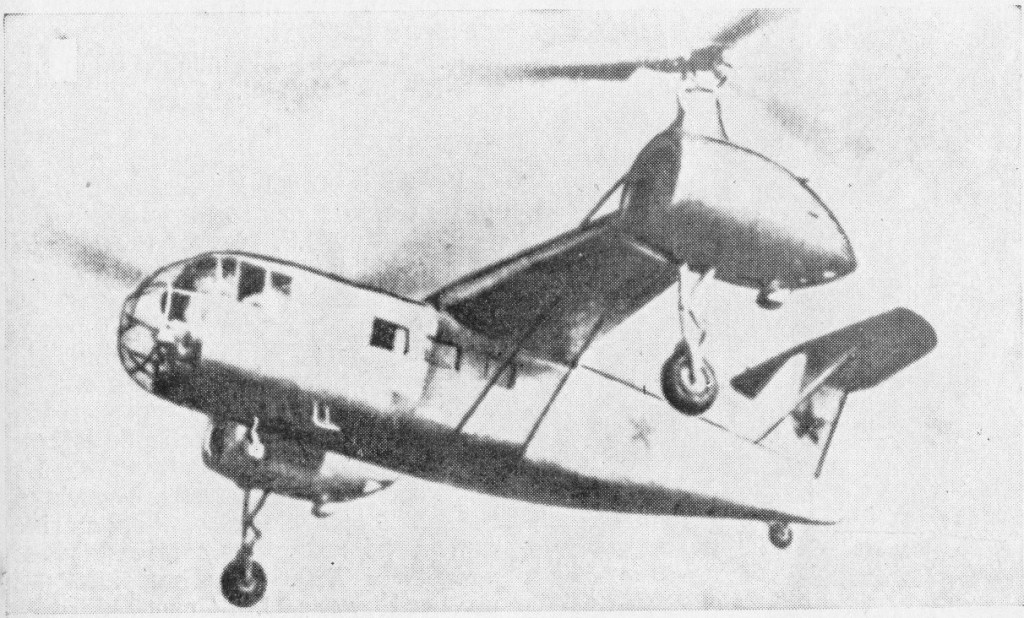
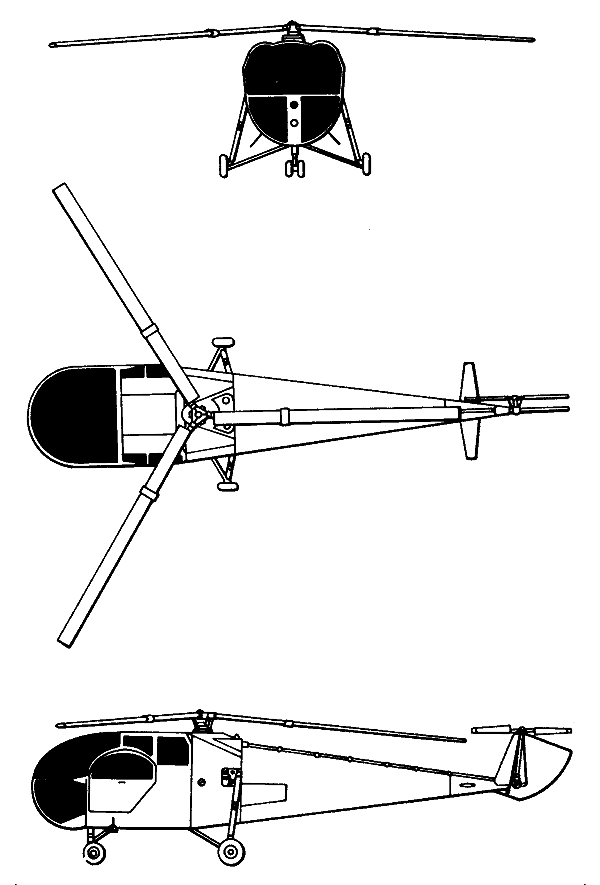
The third Bratukhin helicopter was based on the Omega / G-2 but planned from outset for operational use by VVS as AK (Artilleriiskii Korrektirovshchik – artillery correction). There were no significant differences apart from more powerful, imported, engines. Two prototypes ordered in 1944 and first flown in 1945. On completion of State trials in 1945, a batch of ten AKs were ordered. Soviet histories mention only original two prototypes as having flown. A single AK delivered to VVS with dual control for training helicopter pilots.
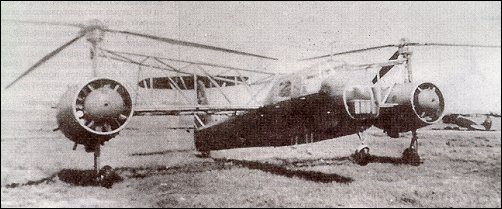
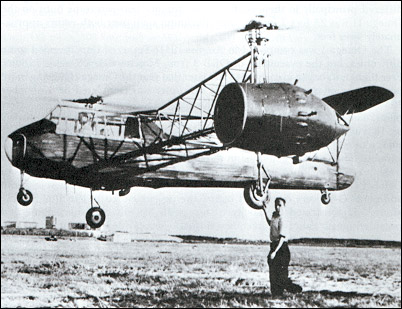
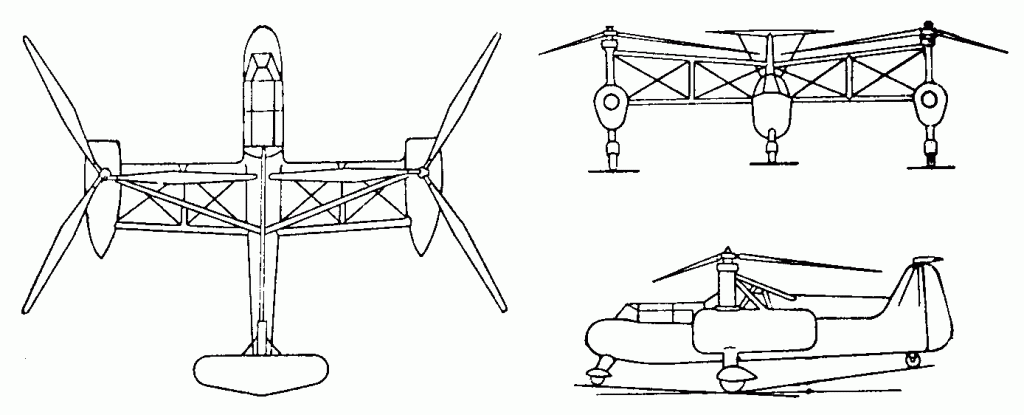
Also designated 2MG (twin-engined helicopter), the Omega project was authorised on 27 June 1940 with two engine rotor groups side-by-side and steel-tube construction with fabric covering. Lateral structures carrying engine rotor units and fixed main landing gears were triangular spaceframes with two lower booms and one at top, with no covering. Fully articulated hubs of steel and light-alloy, carrying three duralumin blades, rotors being handed to rotate in opposite directions. Each rotor was driven by separate MV-6 engine linked with synchronizing shaft with universal joint on aircraft centreline. This shaft provided also opportunity to fly helicopter with any one of engines running. Engines of Omega were equipped with specially designed gearboxes, clutch and other elements. Manual controls, driving swash-plates in fixed and rotating parts of head for collective and cyclic pitch control. Much research into optimum method with differential collective to apply initial bank and then T-tail rudder, worked by pedals, to make turns. Emergency control for immediately autorotative setting of both rotors. Final 0.231 gearbox to rotors (577 rpm). No centrifugal clutches. Three mechanical clutches, with overrunning capability, engaged by observer after both engines were running. First drive to associated rotor was clutched-in; then interlink left/right shaft. Fuel tanks behind engines. Observer behind pilot.
The helicopter was ready for testing in August 1941, thr final design having no wheel or rotor brakes but trimming tailplane with pilot handwheel. Tentative hovering tests, interrupted by engine rough running and overheating. Six-month delay followed the evacuation of the OKB-3 in October 1941. Pilot K.I.Ponomaryov gradually made progress in 1942, discovering structural and control problems but remained tethered until early 1943. The engines seriously overheated.
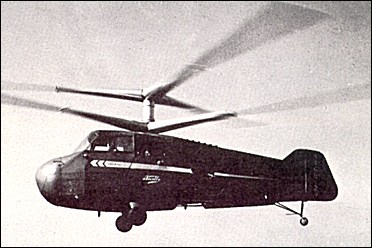
The Omega II, sometimes called G-2 (helicopter 2), was the original design with superior engines in streamlined pods with fan-assisted cooling. Gearboxes, clutches, cooling system etc were redesigned. Drive ratio 0.32. Important progress was made in optimization of gearbox ratio. It resulted in increase of the rotor lift force by 300kg and substantial increase of ceiling.
Rotor masts and outriggers stiffened, and dynamic parts (cliutches and gearboxes) redesigned for a longer life. Test flown by Ponomaryov in September 1944 with good results, but damaged in January 1945, repaired and improved (drive ratio 0.283) and used again from July 1945, by this time for research and pilot training. With chief engineer D.T.Matsitskii as observer, gained a height of 3km. Demonstrated in Tushino by M.K.Baikalov in August 1946.
Omega II
The Omega II performed in the 1948 Soviet Aviation Day Display at Tushino.
Omega Engine: 2 x MV-6 piston engine, 220hp Rotor diameter: 7.0m Length: 8.2m Width with rotors turning: 14.2m Take-off weight: 2050kg Empty weight: 1760kg Max speed: 186km/h Service ceiling: 700m Hovering ceiling: 290m Range: 250km Crew: 1
Omega II Engine: 2×750 h.p. Ash-21 Rotors: 2 x 3-blade main rotors on outriggers. Seats: 8
When the WWII started, all helicopter related jobs were concentrated in single OKB-3 headed by Ivan Pavlovich Bratukhin. Involved in helicopter development since the late 1930s, I. P. Bratukhin first designed a twin-rotor helicopter, with an engine and related rotor mounted at each end of an outrigger. Designated 2MG Omega, this was completed in 1941. Vibration problems resulted in construction of Omega II in 1943. A series of similar twin-rotor helicopters were built up to 1948.
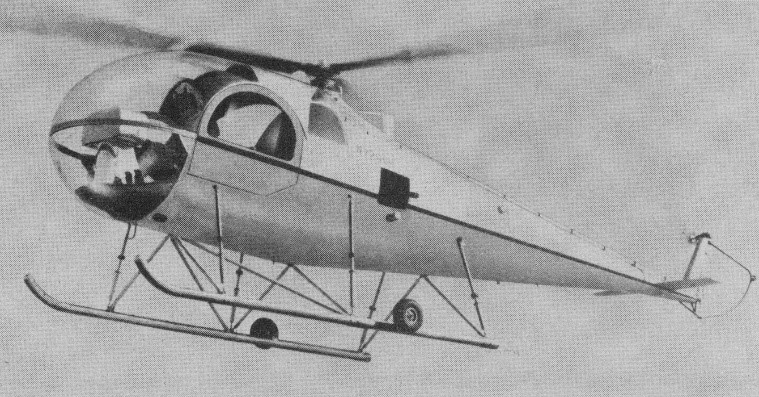
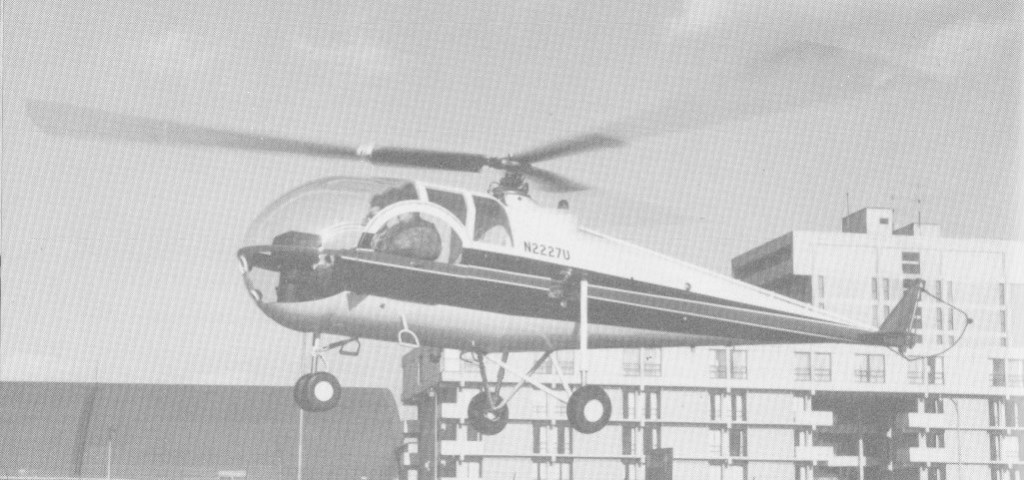
Brantly produced an enlarged B-2, named the Model 305 which had a longer forward fuselage providing a rear 3-passenger bench seat. The new five seater (N2200U) made its first flight in January 1964, powered by a 305hp Lycoming IVO-540-A1A engine and received its type certificate on 29 July 1965. The cabin has two bucket seats forward, seating for three aft, capacity for 200 lb of baggage, can fly 120 mph and sold for $48,900.
Brantly immediately commenced production but the Model 305 suffered from persistent ground resonance problems and they only built 45 examples.
It differs from the B2B externally by having a small variable-incidence tail-plane, and an enlarged cabin accommodates a total of five persons on two side-by-side forward seats, and an aft bench seat for three. The rotor system and airframe was the same as the B-2B, but enlarged and conventional direct mechanical flying controls.
The landing gear was a choice of skid, wheel or float gear. Skid type has four oleo struts, two on each side, and small retractable ground handling wheels. Wheel gear has single mainwheels and twin nosewheels, all with oleo-pneumatic shock-absorbers of Brantly manufacture. Goodyear mainwheels and tyres size 5.00-5, pressure 1.93 bars. Goodyear single-disc hydraulic brakes on mainwheels.
The 227.4kW Textron Lycoming IVO-540-B1A flat-six engine, was mounted vertically, with dual cooling fans. One rubber fuel cell under engine, capacity 163 litres. Refuelling point in port side of fuselage. Oil capacity 9.5 litres.
A rear compartment for 113kg of baggage, with downward hinged door on starboard side.
Model 305
44 were built during the 1960s and another four built by Hynes Aviation in 1985 as the H-5. Michael K. Hynes, owner of the type certificates, established Brantly-Hynes Helicopter Inc. on 1 January 1975, initially to provide product support for the large number of Brantly helicopters in use. He subsequently started up a production line for the B-2B, and also the larger Model 305.
Improved prototype with redesigned rotor head and new blade aerofoil completed about 30 hours flying by mid-January 1990. New main rotor bearing fitted. Cabin streamlined. New production was to begin 1993, but none built.
Engines: Lycoming IVO-540-B1A, 305 hp, 227kW Main rotor diameter: 8.74m Fuselage length: 7.44m Height: 2.44m Disc loading: 4.5 lb/sq.ft. Pwr loading: 9.5 lb/hp. Max TO wt: 1315kg, 2900 lb. Empty wt: 816kg, 1732 lb. Equipped useful load: 1106 lb. Payload max fuel: 854 lb. Range max fuel/ cruise: 199 nm/ 1.9 hr. Range max fuel and payload: 354km Service ceiling: 3660m, 11,000 ft. Max speed: 193km/h Max cruise: 177km/h, 104 kt. Max range cruise: 95 kt. ROC: 975 fpm. HIGE: 4000 ft. HOGE: 1500 ft. Max sling load: 800 lb. Fuel cap: 252 lb. Seats: 5.
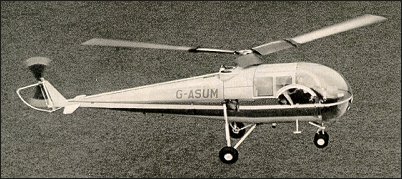
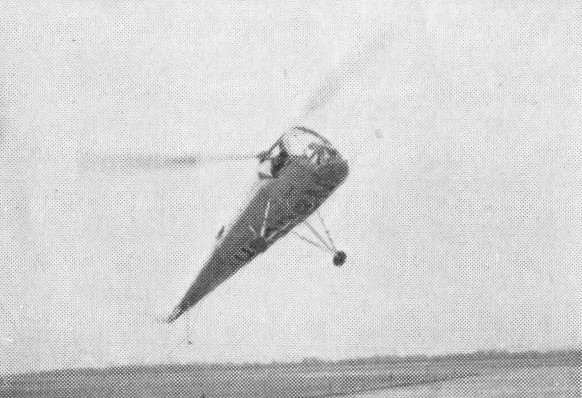
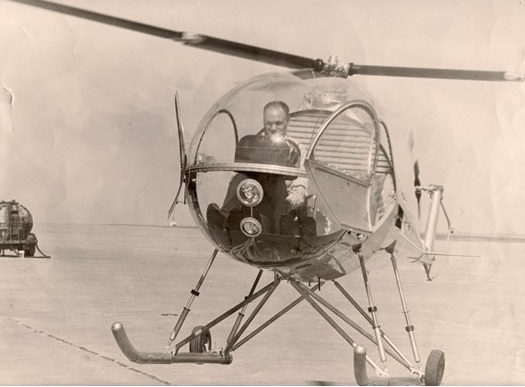
Developed from coaxial twin-rotor B-1 by Newby Brantly, the B-2 with single main rotor and anti-torque tail rotor configuration first flew on 21 February 1953. An improved second prototype flew on 14 August 1956. This was to enter production in 1958 receiving FAA certification on 27 April 1959.
1955 B-2
A total of 194 B-2s and 18 B-2As (with additional headroom) were produced between 1960 and 1963 and the improved Model B-2B with metal rotor blades and fuel-injected Lycoming IVO-360-A1A engine was certified on 1 July 1963. A total of 165 were built between 1963 and 1967 (the company owned by Gates Learjet from 1966).
B2A
Type certificates for the Brantly Bs were purchased in 1971 by Michael Hynes and revised as the 2 H2/YHO 3BR. Michael K. Hynes established Brantly-Hynes Helicopter Inc. on 1 January 1975, initially to provide product support for the large number of Brantly helicopters in use. He subsequently started up a production line for the B-2B and built one (as H-2) in 1975, and also the larger Model 305. James T. Kimura was the third owner of the B-2 type certificate, and delivered his first B-2B on 25 August 1990. Brantly Helicopter Industries (BHI) took over manufacturing and marketing rights and production facilities in 1989 with three were built under this name, which received the FAA production certificate on 19 July 1996. The first new-build B-2B (N25411 c/n 2001) was flown on 12 April 1991. In 1992, a B-2B cost US$120,000 to US$135,000 depending on equipment fit. On 23 December 1994, Brantly International obtained the type certificates for the Brantly B-2B and 305 helicopters from Japanese-American businessman James T Kimura’s Brantly Helicopter Industries, which had acquired them in May 1989. In 2002, Brantly employed 40 in its 2,790 ha facility. By 2002, Brantly Helicopter Inc of Vernon, Texas were again producing the B2B.
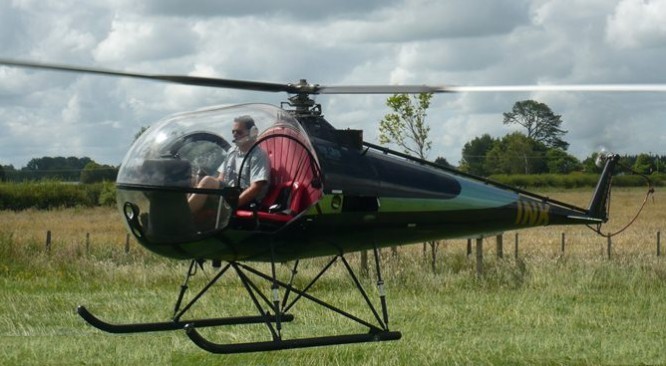
Brantly B2B
British Executive Air Services had acquired a production licence for the B-2. In 2003 the cost was US$170,000 basic equipped.
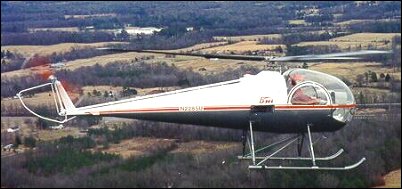
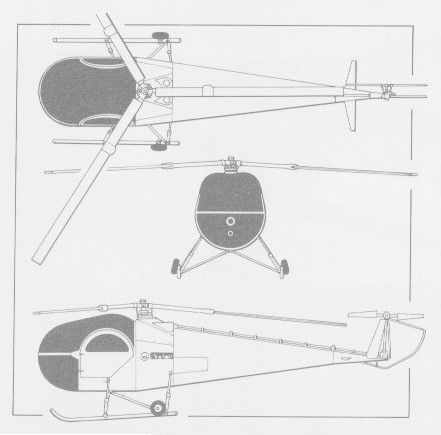
A relatively simple design, with blown main transparency and constant-taper fuselage. Double-articulated three-blade main rotor with pitch-change and flapping hinges close to hub and flap/lag hinges at 40% blade span; symmetrical, rigid, inboard blade section with 29% thickness/chord ratio, outboard section NACA 0012; outer blades quickly removable for compact storage; rotor brake standard; two-blade tail rotor mounted on starboard side, with guard. Transmission through automatic centrifugal clutch and planetary reduction gear. Bevel gear take-off from main transmission, with flexible coupling to tail rotor drive-shaft. Main rotor/engine rpm ratio 1:6.158; tail rotor ratio 1:1. Main rotor minimum speed 400 rpm; maximum 472 rpm. Conventional and manual controls; small fixed tailplanes on port and starboard sides of tailcone. A semi-monocoque fuselage with alloy-stressed skin. Inboard rotor blades have stainless steel leading-edge spar; outboard blades have extruded aluminium spar; polyurethane core with bonded aluminium envelope riveted to spar. All-metal tail rotor blades. Fixed skid type landing gear with oleo-pneumatic shock-absorbers; small retractable ground handling wheels, size 10×3.5, pressure 4.12 bar; fixed tailskid. Optional inflatable pontoons attach to standard skids for over-water operation. One 134kW Textron Lycoming IVO-360-A1A flat-four air-cooled piston engine, mounted vertically. Fuel contained in two interconnected bladder tanks behind cabin, total capacity 117 litres of which 115 litres are usable. Oil capacity 6.9 litres. Two seats, side by side in enclosed cabin; forward-hinged door on each side. Dual controls and cabin heater standard. Ground accessible baggage compartment, maximum capacity 22.7kg in forward end of tailcone.
In 1959 the Army procured five examples of the Brantly Model B-2 light helicopter for evaluation in the observation role. The five machines obtained by the Army (serials 58-1492 through -1496) were designated YHO-3 and tested at both Fort Rucker and the Naval Air Test Center at Patuxant River, Maryland. The aircraft was ultimately judged to be too small to be of practical military use and all five examples were eventually returned to the manufacturer.
Brantly B-2B
B-2 Engine: Lycoming 135 hp Rotors: 3-blade main 2-blade tail Rotor diameter: 23 ft Loaded weight: 1,250 lb Seats: 2
B2B Engines: Lycoming IVO-360-A1A, 180 hp,134kW. Main rotor diameter: 7.24m Fuselage length: 6.63m Height: 2.06m Disc loading: 3.7 lb/sq.ft. Pwr loading: 9.3 lb/hp. Max TO wt: 1670 lb / 757kg Empty wt: 1032 lb / 463kg Equipped useful load: 576 lb. Payload max fuel: 390 lb. Range max fuel/ cruise: 152 nm/1.8 hr. Range max fuel / range: 196 nm/ 2.3 hr. Service ceiling: 12,500 ft / 3290m Max speed: 161km/h Max cruise: 87 kt / 145km/h Max range cruise: 87 kt. ROC: 1400 fpm. HIGE: 4300 ft. HOGE: 2500 ft. Max sling load: 400 lb. Fuel cap: 186 lb. Seats: 2.
2 H2/YHO 3BR Engine: Lycoming IVO-360-A1A, 180 hp. TBO: 900 hrs. Main rotor: 23.7 ft. Length: 28 ft. Height: 6.8 ft. Max ramp weight: 1670 lbs. Max takeoff weight: 1670 lbs. Standard empty weight: 1069 lbs. Max useful load: 601 lbs. Zero fuel weight: 1490 lbs. Max landing weight: 1670 lbs. Max sling load: 400 lbs. Disc loading: 3.7 lbs/sq.ft. Power loading: 9.3 lbs/hp. Max usable fuel: 183 lbs. Max rate of climb: 1330 fpm. Service ceiling: 12,500 ft. Hover in ground effect: 4,300 ft. Hover out of ground effect: 2500 ft. Max speed: 87 kts. Normal cruise @ 3000 ft: 78 kts. Fuel flow @ normal cruise: 72 pph. Endurance @ normal cruise: 2.4 hr. Seats: 2.
Brantly B-2B Engine: Lycoming IVO-360, 180 hp Rotor span: 7.24 m Blade area: 0.203 sq.m MAUW: 757 kg Empty weight: 463 kg Max speed: 161 kph Cruise speed: 145 kph Climb rate: 9.6 m/s Seats: 2
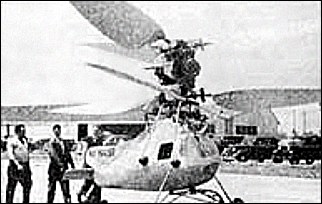
In 1943, N. P. Brantly began the design of a lightweight helicopter, built and flown in 1946 under the designation Brantly B-1. The B-1 was constructed by his employer, the Pennsylvania Elastic Company. Brantly used a coaxial twin-rotor configuration but the design was too heavy and complicated to appeal. With two co-axial contra-rotating three-bladed rotors, neither push rods nor cranks were visible in the rotary wing assembly. The collective, cyclic and differential controls were completely enclosed in the hubs and ran in an oil-bath. The three-blade rotors had a fixed pitch central “star” and a universal joint combining two hinges was 1.8 metres from the root of the blades. The radius of the non-flapping part of the blades was 1.8 metres. Each blade weighed only 5.5 kilos and the rotors normally turned at 320 r.p.m. The B-1 prototype (NX69125) was powered by a 150hp Franklin engine in the tube and fabric fuselage and had a fixed tailwheel undercarriage and directional control was achieved through a small rudder on the sternpost – because the twin main rotors were expected to neutralise the normal torque effect.
B-1 Number of seats: 2 Engine: 1 x Franklin 335, 150hp Rotor diameter: 9m Length: 5.33m Height: 2.36m Weight fully loaded: 907kg Empty weight: 601kg Cruising speed: 182km/h Range: 640km
Brantly Helicopter Industries Founded by N. P. Brantly, who designed the Brantly B-1, with co-axial rotors, in 1943. From this design he developed the improved Model B-2, using the rotor evolved for the B-1, a two-seat helicopter which first flew on August 14,1956. Subsequently entered production as Model B-2A, superseded by B-2B in 1963. Larger Model 305, a five-seat aircraft, first flew in January 1964. Company acquired by Lear Jet Industries Inc in May 1966. The Brantly helicopter interests, which had been acquired by Lear Jet Industries in 1966, passed to in 1969, and to Brantly Operations Inc in late 1970. On January 1, 1975 Michael K. Hynes founded Brantly-Hynes Helicopter Inc., having gained ownership of the Brantly interests, later becoming just Hynes Helicopter as division of Hynes Aviation Industries Inc. Production of Model B-2B two-seater and Model 305 five-seater continued. Rights to helicopters acquired by businessman James Kimura from Hynes Aviation Industries 1989, forming Brantly Helicopter Industries.
1998: Brantly Intrnational Wilbarger County Airport 12399 Airport Dr TX 76384 Vernon USA
De Bothezat who, after abandoning his first helicopter in 1923, had created a firm for the design and manufacturing of industrial fans, returned in 1937 to the helicopter: he created then the Helicopter Corporation of America and built a coaxial helicopter. A single-seat close-cockpit helicopter with 85hp radial engine and two coaxial rotors, the machine was completed by De Bothezat’s colleagues after he passed away in 1939. Testing was entrusted to a Russian ace of World War I Captain Sergievsky.
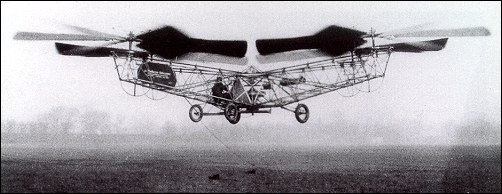
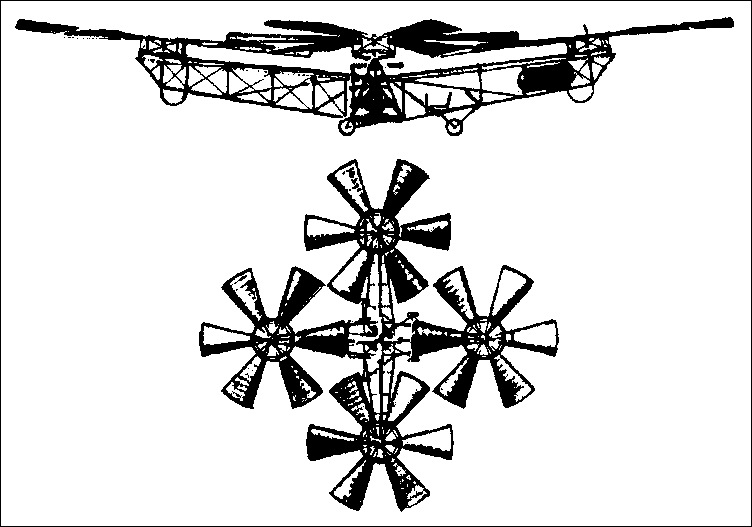
In January 1921, the US Army Air Corps awarded a $20,000 contract to Dr. George de Bothezat and Ivan Jerome to develop a vertical flight machine at Dayton. The 1678kg “X”-shaped structure supported an 8.1m diameter six-blade rotor at each end of the 9m arms. At the ends of the lateral arms, two small propellers with variable pitch were used for thrusting and yaw control. A small lifting rotor was also mounted above the 180hp Le Rhone radial engine (which it also cooled) at the junction of the frames, but was later removed as unnecessary. Each rotor had individual collective pitch control to produce differential thrust through vehicle inclination for translation. The aircraft weighed 1610 kg at take-off and made its first flight in October 1922. The engine was soon upgraded to a 220hp Bentley BR-2 rotary. About 100 flights were made by the end of 1923 at what would eventually be known as Wright Field near Dayton, Ohio. On 18th December 1922 during a test by the Technical Section at McCook Field (now known as Wright Field), the aircraft rose 1.8 metres from the ground and remained airborne for 1 minute 42 seconds. On 19th January 1923 it lifted two persons to a height of 1.2 metres, and on 17th April 1923 it lifted not only the pilot but also four people hanging on to the framework. Although the contract called for a 100m hover, the highest it ever reached was about 5m. After expending $200,000, de Bothezat demonstrated that his vehicle could be quite stable and that the practical helicopter was theoretically possible. It was, however, underpowered, unresponsive, mechanically complex and susceptible to reliability problems. Pilot workload was too high during hover to attempt lateral motion. Development ended in 1923.
Bothezat helicopter Engine: 1 x Le Rhone radial 135kW, 180hp / Bentley BR-2 rotary, 220hp Rotor diameter: 8.08m Length and width: 19.8m Height: 3.05m Take-off weight: 1700kg
 All Aero