Cunliffe-Owen Aircraft built in 1947 the prototype W.10 helicopter for Cierva; this project shelved too, and shortly afterwards company abandoned its aviation interests.
Helicopters
Cornu Helicopter
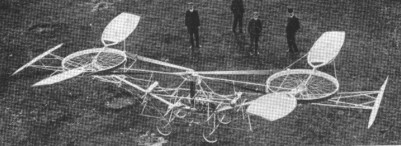
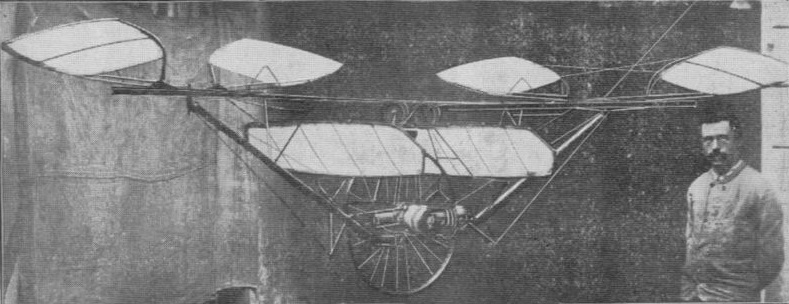
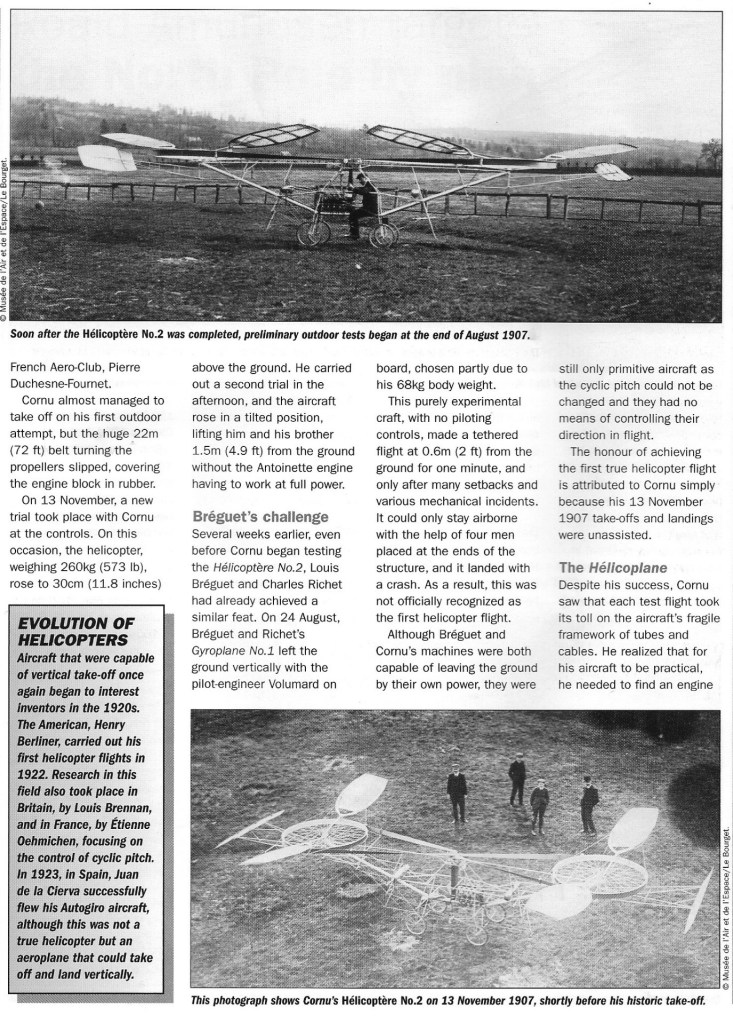
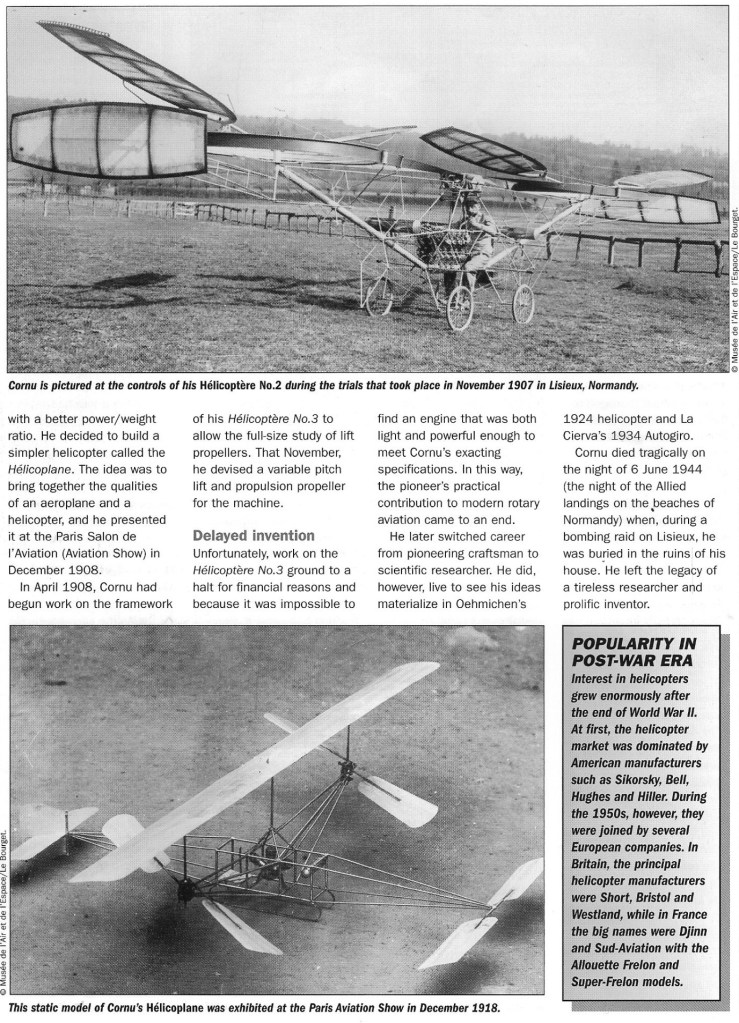
At Coquainvilliers, near Lisieux, France, Paul Cornu, a bicycle maker, built a practical heli¬copter with fore and aft rotors driven by belts from a 24 hp Antoinette engine, which made a free flight lasting about 20 seconds on 13 November 1907. The machine was stabilized with sticks by men on the ground because of its poor controllability. Powered by an Antoinette engine, it rose about 1 foot on its first flight, and then climbed to 5 feet carrying Cornu and his brother.
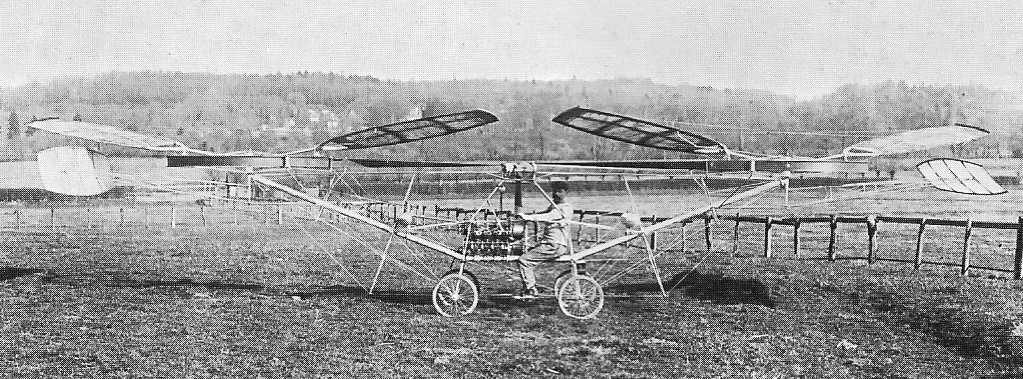
The central frame supported the engine, pilot seat and fuel tank, and the whole contraption weighed just over 250kg. To rock the ship from side to side, or to nose up and down, there were movable flat surfaces ‘control vanes’ mounted under the rotors so the airflow would push against them. The system on the Cornu machine was ineffectual.
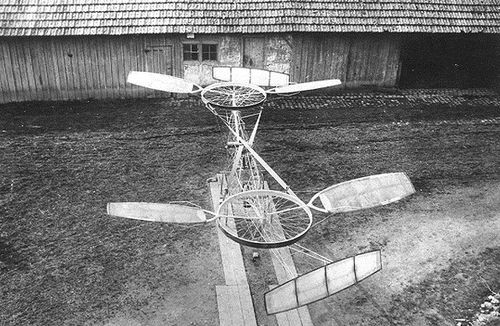
The chassis rested on a four-wheeled landing gear. The rotors were paddle-shaped and fabric-covered, mounted on large horizontal, bicycle-type wheels situated one at each end of the machine. The design followed that of a small scale model made by Cornu a year or so previously with 2.25m rotors, a 2hp Buchet engine and a weight of 13kg. The full-scale machine made its second flight with Cornu’s brother hanging on to the framework, increasing the total weight to 328kg, and take-offs to about 2m were made later carrying the pilot only.
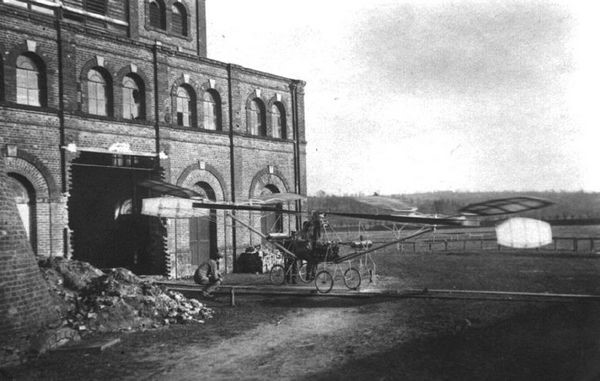
Cornu was unfortunate in that his flight came just as public hysteria was focusing on the fixed wing achievements of the Wrights. He was unable to obtain support for developing his helicopter.
Engine: Antoinette, 18kW, 24 hp
Rotor diameter: 6m approx
Empty weight: 203kg
Loaded weight: approx 250 kg
Cornu, Paul
The first Paul Cornu helicopter was built in 1906 in Lisieux. The machine weighed 13.75 kg and its Buchet engine delivered a full 2 hp and drove two 2,25 m rotors. Horizontal propulsion was achieved by inclined surfaces that were placed in the downwash from the lifting propellers.
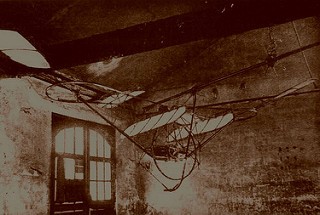
It reached an altitude of three metres and made flights of up to 20 metres.
Continental Copters JC-1 Jet Cat
Special agricultural modification of Bell JetRanger
Continental Copters El Tomcat
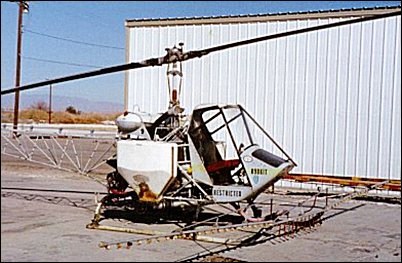
In 1959, Continental Copters Inc. of Fort Worth, Texas, developed and produced a specialised single-seat agricultural aircraft based on the Bell Model 47G-2. Payload is increased by deletion of unnecessary structure and equipment. Known as the El Tomcat Mk.II, this aircraft flew for the first time in April 1959 and received an FAA supplementary type certificate soon afterwards. An improved variant, the El Tomcat Mk.III, made its maiden flight in April 1965 as an improved version of the Mk.II, and subsequent variants were progressively introduced. The Tomcat Mk.III weighs empty 540kg and 1105kg loaded.
The El Tomcat Mk.IIIA was flown in January 1966 with 200hp Franklin 6V4-200-C32, 210hp 6V-335-A or a 235hp 6V-350-A engine.
The El Tomcat Mk.IIIB of 1967 had a still lower and repositioned windscreen, modified glassfibre nose, lower cabin roof and a 6V-350 engine.
The Mk.IIIC of 1968 was an improved version with a 200-235hp 6V4-200-C32, 6V-335-A or 6V-350A engine and was first flown in May 1968.
The Mk.V (first flown in June 1968) entered production in 1968 with a 220hp Lycoming VO-435-B1A engine (empty weight 620kg and maximum weight 1105kg), followed by the improved Mk.V-A with a 260hp VO-435-A1F engine and a folding jump-seat to permit carriage of a flagman to distant work sites. The latest version is the 265hp VO-435-BlA-engined Mk.V-B.
El Tomcat Mk.II
El Tomcat Mk.III
Empty weight: 540kg
Loaded weight: 1105kg
El Tomcat Mk.IIIA
Engine: 200hp Franklin 6V4-200-C32, 210hp 6V-335-A or 235hp Franklin 6V-350-A
El Tomcat Mk.IIIB
Engine: Franklin 6V-350
El Tomcat Mk.IIIC
Engine: 200-235hp Franklin 6V4-200-C32, Franklin 6V-335-A or Franklin 6V-350A
El Tomcat Mk.V
Ngine: 220hp Lycoming VO-435-B1A engine
Empty weight: 620kg
Maximum weight: 1105kg
El Tomcat Mk.V-A
Engine: 260hp VO-435-A1F
Disc loading: 2.6 lb/sq.ft.
Pwr loading: 9.42 lb/hp.
Max TO wt: 2450 lb.
Empty wt: 1420 lb.
Equipped useful load: 991 lb.
Payload max fuel: 817 lb.
Range max fuel/ cruise: 81 nm/ 1.3 hr.
Service ceiling: 10,500 ft.
Max sling load: 844 lb.
Cruise speed: 65 kt.
Working endurance: 1.5 hr.
ROC: 1500 fpm.
HIGE: 5900 ft.
HOGE: 1400 ft.
Fuel cap: 174 lb.
Seats: 1.
El Tomcat Mk.V-B
Engine: 265hp VO-435-BlA
Mk.VI-B
Engine: Lycoming TVO-435-B1A, 260 hp.
Seats: 1.
Disc loading: 2.6 lb/sq.ft.
Pwr loading: 10.9 lb/hp.
Max TO wt: 2850 lb.
Empty wt: 1490 lb.
Equipped useful load: 1321 lb.
Payload max fuel: 1147 lb.
Range max fuel/ cruise: 50 nm/ 0.8 hr.
Service ceiling: 10,500 ft.
Max sling load: 1194 lb.
Cruise speed: 65 kt.
Working endurance: 1.5 hr.
ROC: 1800 fpm.
HIGE: 5900 ft.
HOGE: 1400 ft.
Fuel cap: 174 lb.
Continental Copters Inc
USA
From 1959 produced assorted versions of the El Tomcat, specialized single-seat agricultural conversions of Bell Model 47 helicopter. Successive variants included Mks IIIA, IIIB, IIIC, V, V-A, V-B, VI, Vl-A, and Vl-B, of which many completed; also marketed kits for operator conversion. Developed JC-1 Jet-Cat as special agricultural modification of Bell JetRanger. Also assembled Bell 47G series helicopters to order using spare and surplus components.
CNIAR / IAR / Industria Aeronautica Romania / ICA Brasov / IAR-SA Brasov / Regia Autonoma Industria / Aeronautica Romana / Intreprinderea de Constructii Aeronautice / URMV-3 / Sovromtractor
In 1925 was established in Brason the first large Romanian aircraft named “Societate Anonima Industria Aeronautica Romana” (IAR) to build aircraft and aero engines. Between 1925 and 1945 this company built around 1000 aircraft of 25 different types of which eight were under foreign licence including the Potez 25, Morane-Saulnier 35, Fleet 10-G, PZL11 c and XXIV. Indigenous designs included the IAR.15 single-seat fighter monoplane.
The most known aircraft entirely conceived and built by this company was the IAR-80 combat plane, ranked the fourth in the world at the time of its appearance in 1939.
Renamed Regia Autonoma Industria Aeronautica Romana in 1940, but still using IAR for types.
Came under joint Soviet/Romanian control as Sovromtractor from 1946, with Brasov works known as URMV-3 between 1950 and 1959. Only a team of enthusiastic specialists led by Iosef Silimon continued to design, build, and repair light aircraft.
Aircraft development at Brasov by mid-1956 included IAR 811 piston trainer (first flown 1949), IAR 813 two-seat lightplane, IAR 814 twin-engined transport of 1953 and IAR 817 single-engined general-purpose light transport of 1955. Aircraft from LFIL factory at Reghin included RG-6 tandem two-seat sports and training monoplane.
The ICA-Brasov or Intreprinderea de Constructii Aeronautice Brasov (Aircraft Construction Factory Brasov) is responsible for all sailplane development and production in Romania, and their principal designer is Professor losif Silimon, who has created a long series of sailplanes that are widely used in the national clubs; these are prefixed by the letters ‘IS’ which form the Professor’s initials.
In 1968 it was decided to restore the the aircraft factory under the new name “ICA Brasov”. Undertook repair and overhaul of light aircraft; built aircraft of its own design, such as the IAR-824 six seat general-purpose light aircraft and IS-28/IS-29 sailplanes, manufactured Aerospatiale SA 316B Alouette III helicopters under license, participated in license-construction of the Britten-Norman BN-2A Islander and carried out series production of nationally designed aircraft.
In 1976 the IS28M2 motor glider began manufacture, and in 1977 the tandem two-seat IS28M1 motor glider prototype had been completed, from which the IAR-34 was derived.
Name changed to IAR-SA Brasov in 1991. Has built Aerospatiale Alouette helicopter as IAR 316B (280), Russian Ka-126 helicopter, and French Puma helicopter (as IAR 330L Puma) under license, with Puma 2000 upgraded IAR 330L model offered with more engine power, Hellfire antiarmor missiles and advanced avionics among changes. Has agreement with Eurocopter to construct up to 80 AS 350BA and AS 355N helicopters. Made agreement with Bell Helicopter Textron of U.S.A. to license build 96 AH-1W SuperCobra attack helicopters for the Romanian armed forces as AH-1RO Draculas, with Bell taking a majority shareholding in the privatizing company as part of the agreement. Kraiova works to license-manufacture Russian Beriev Be-32K. Own products include IAR 46 two-seat lightplane (first flown 1993), IAR-35 glider, and IS-28 series of gliders/motorgliders.
2008: IAR Brasov No. 1, Aeroportului Street P.O. Box 198 Brasov 2200 Romania
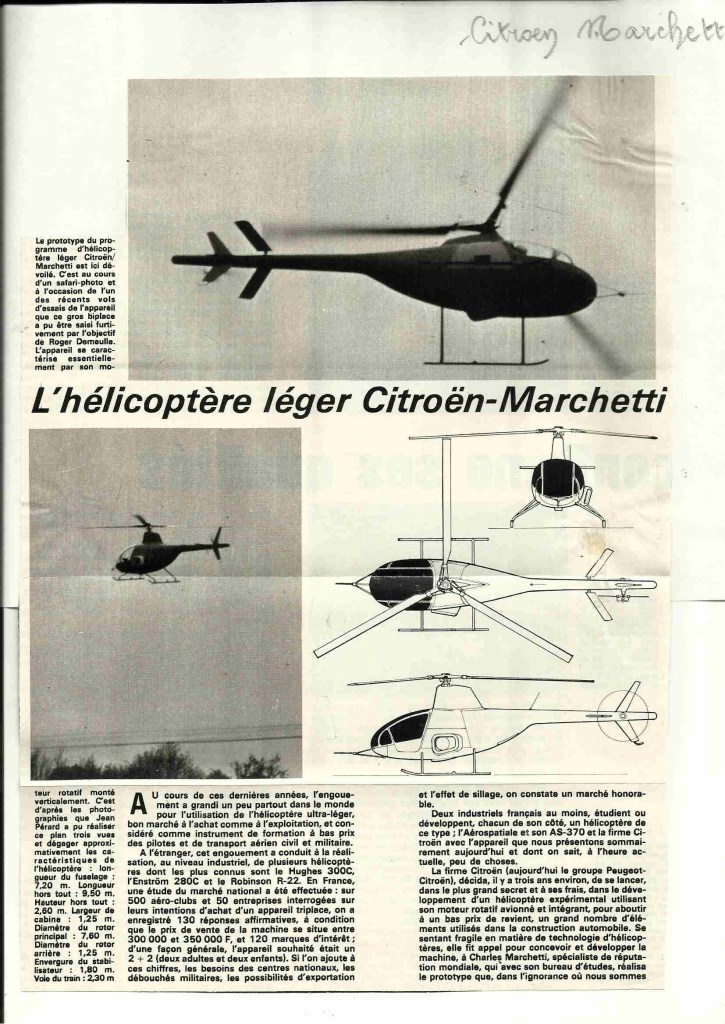
Citroen RE-2

In the 1970’s Citroen experimented with a small light helicopter, powered by a Wankel engine developed in a joint venture with NSU (Comotor), as part of their investigation into alternative engine development.
All started with Comotor, a joint-venture between NSU and Citroën for the development and marketing of rotary motors. The small Citroën M35 preceded the Citroën GS Birotor, which, despite of their good performance and exclusive image, always suffered from high fuel consumption and low reliability. The last attempt to save Comotor was the RE-2 helicopter.
French helicopter engineer Charles Marcetti was commissioned to design and build a small helicopter, which would be powered by a Comotor 624 twin-rotor (170hp) engine. A development of the engine used in the prototype GS Birotor. Charles Marchetti had designed the successful helicopter Alouette.
The damage to Comotor was already done. Sales of the Citroën GS Birotor were disastrous, and the Board of Directors of the brand I wanted to put point and end to the project. Clutching at straws, Citroën looked at the sky: “we will produce a helicopter, and we’ll use our thrusters rotating to make it fly”.
The engine was a Comotor 624 of two rotors, a capacity of 1,990 cc and 101 HP fitted with Solex carburetor by a system of mechanical fuel injection, developed by Citroën. The fuel feed and cooling were modified.
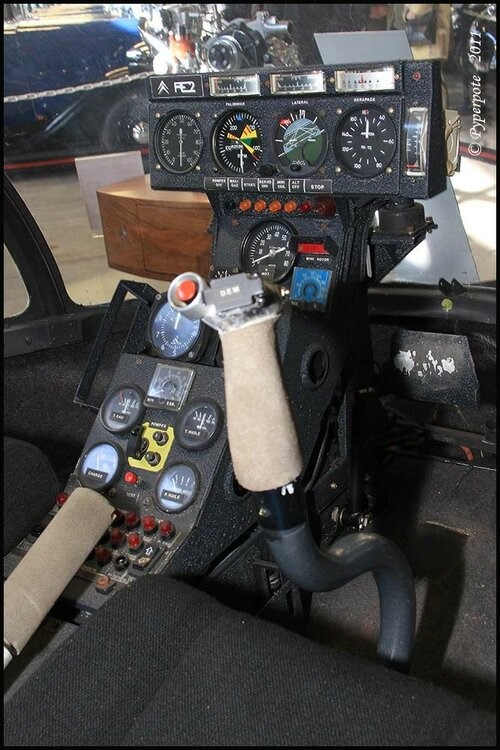
After months of rushed development, the first prototype would rise from the ground, the Christmas Eve of the year 1975. It was a helicopter designed for two occupants, for recreational use. Citroën wanted to have his helicopter ready as soon as possible, and with the rush even had difficulties to find a test pilot.
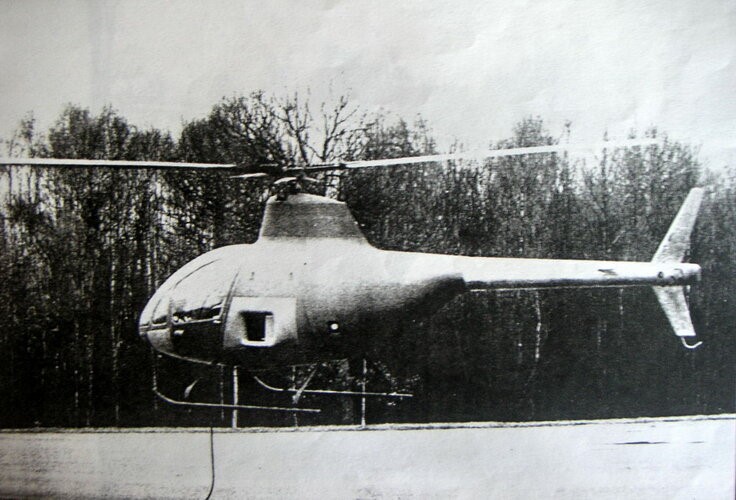
This engine was capable of to propel the aircraft to a cruise speed of 173 km/h and on the paper, could climb to a ceiling of 3,500 meters altitude. Citroën had been flown successfully with its RE-2, but did not yet have the government certification to sell it to the public. During the processes of approval, it was discovered that the engine overheated after a time running at high-rate.
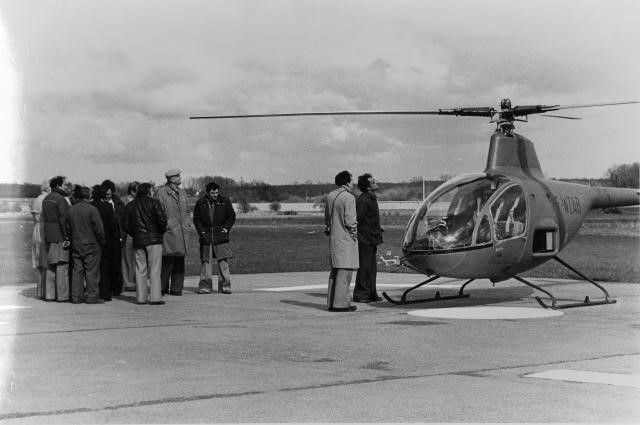
Although the tests were successful, over-heating problems with the engine and pending bankruptcy brought the project to an end. The lack of funds and technical problems delayed the certification of the aircraft, that it would never be completed.
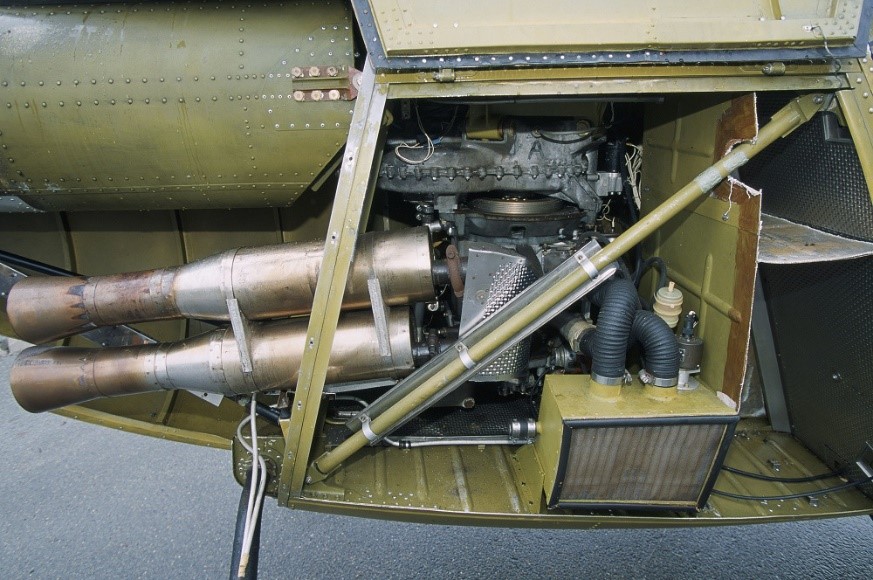
While the engineers solved the engine problems, Citroen came under Peugeot, in the recently formed PSA Group. Although the RE-2 solved their problems and got a permit of flight six months in 1977 for the final adjustments, in Peugeot were fed up.
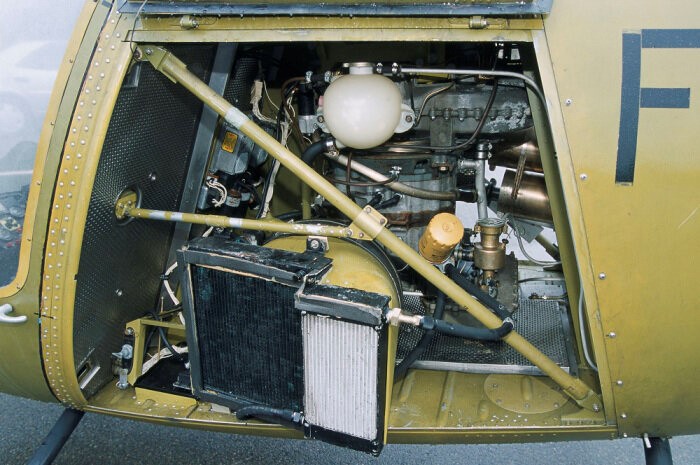
On May 5, 1979, Peugeot ordered to Citroën the immediate cancellation of the project after only 38 hours of flight.
The RE-2 went to the Musée Citroën in France.
RE-2
Engine: 1 x Citroën Comotor 624 rotary (Wankel), 160-190hp
Length: 7,18 m
Height: 2,59 m
Weight: 700 kg
Cievra CR Twin / CR.LTH-1
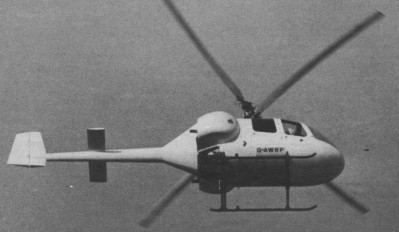
J.Weir maintained a working association with J.S.Shapiro, and in 1961 63 Servotec built a man carrying helicopter model to embody Weir’s ideas of a non stalling rotor, which emerged from many years of model tests. In the course of this collaboration, Weir became aware of the CR Twin development and in 1965 decided to give this development financial support. This combination of interests was cemented in a take over of Rotorcraft Ltd by the Cierva Autogiro Co, which was thereupon renamed the Cierva Rotorcraft Co. The largest shareholders were Weir and Shapiro.
The design for a four seat helicopter was shaping up during 1965, and in 1967 the Ministry of Technology awarded a research contract as a partial contribution to test some novel features. Also in 1967 construction of the prototype began, and the first flight took place in August 1969. In the same year Servotec Ltd was taken over by Cierva Rotor¬craft Ltd. Servotec, with its design and inspection approval, continues development work on the CR Twin helicopter and also work under contract to several organisations, including Canadair, Boeing Vertol and Bell.
The CR Twin retains the basic layout of two engines driving two contra rotating coaxial rotors, as this was con¬sidered to be the only configuration in which the aims of twin engined safety, simplicity and efficiency could be attained at a low first cost. When the aircraft was designed the only means of achieving the desired performance at a low cost was by the use of piston engines. The turbine engines then available, and indeed still available several years later, were too costly, required a further reduction stage in the main gearbox and had an excessive fuel con¬sumption in cruise.
Two prototypes were built, using Rolls Royce Continental O 300 engines of a nominal 145 bhp each. Designated CR.LTH-1 (otherwise known as the CR-Twin) and the first aircraft, G-AWRP, first flew in 1969 followed by G-AXFM (GB-2) later that year, and a third pre-production machine, G-AZAU (GB-3) in mid-1971. This latter aircraft was fitted with 210hp Continental IO-360-D engines, and the production variants were to be the CR.420 with 210hp Continental TSIO-360-A engines and the CR.640 with 320hp Continental Tiara T6-320 engines. These aircraft were used to demonstrate the practicability of the rotor and airframe, but the lower engine power actually avail¬able was inadequate to permit single engined flying. Test flights showed that the low speed handling was easier than with conventional helicopters (having a single main rotor and an anti torque rotor). No difficulties were encountered when engaging rotors in wind speeds up to 35kt. Adequate yaw control was available for normal helicopter manoeuvres, and no control difficulties were met in side¬ways flight at 25kt or in quick stops. A maximum speed of 90kt IAS was attained using less than maximum power, and full autorotation was achieved.
The first pre production CR Twin was under construc¬tion in Servotec’s workshops at Redhill in 1972. For its initial flight trials this aircraft was to be fitted with normally aspirated Rolls Royce Continental IO 360s of 210 bhp each.
An extremely simple mechanical layout was chosen for the CR Twin. The engines are mounted at about 400 to the fore and aft axis, each driving into the main gearbox through a short drive shaft and combined centrifugal clutch and free-wheel unit.
A single stage reduction main gearbox is used, comprising only two input pinions and two output crown wheels the upper of which drives the lower rotor and the lower the upper rotor. The engines, gearbox and rotors are mounted as a combined power/lift group in a separate tubular sub-frame.
The rotor is controlled manually by the pilot with no servo assistance being provided. The blades are of a symmetrical untwisted section so that the same spare rotor blade can be fitted to either the upper or the lower rotor, should a blade be damaged in service. Each main rotor blade has a hollow main spar of “compressed wood,” a plastic material reinforced with wood fibres, to the leading edge of which is bonded a stainless-steel anti-erosion strip and within which nose-balance weights are fitted. A blade
carcass of glass-fibre cloth of increased thickness towards the blade root is bonded to the main spar aft of the erosion strip, and is injected with polyurethane foam in order to stabilise the trailing-edge section.
The canopy, cowlings, Tail-cone and fairways are all constructed of glass-fibre and are mounted on a simple light-alloy platform that also provides mountings for the undercarriage, the subframe supporting the complete power-lift group, the controls, fuel system and instruments. A feature of the helicopter is the ease with which the canopy, cowlings and tail cone can all be quickly removed in order to simplify major servicing operations.
The design has followed the sealed-maintenance concept by which field unit assemblies can be exchanged quickly without exceptional skill or facilities.
Development was eventually abandoned in 1975 due to lack of further financial backing.
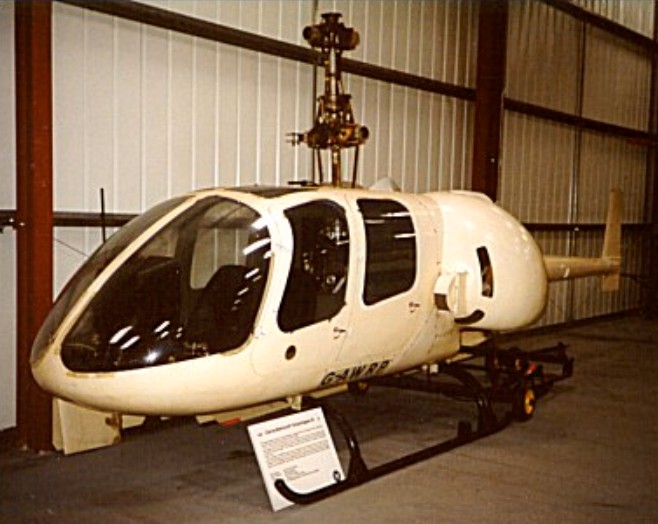
CR Twin 420
2 x Continental TSIO 360A, 210 h.p.
Rotor diameter: 10.06m
Fuselage length: 8.58m
Max take-off weight: 1564kg
Max speed: 222km/h
Cruising speed: 193km/h
Blade section Naca 00 symmetrical
Mean chord 8in tapered.
Fuel cap: 65 Imp gal (295 lt).
Baggage capacity (rear fuselage): 16 cu ft, 0.453 cu.m, (rear cabin), 47 cu.ft, (1.34cu.m).
CR Twin 640
2 x Continental Tiara T6-320, 320 h.p.
Rotor diameter: 10.06m
Fuselage length: 8.58m
Max take-off weight: 1564kg
Max speed: 222km/h
Cruising speed: 193km/h
Blade section Naca 00 symmetrical
Mean chord 8in tapered.
Fuel cap: 65 Imp gal (295 lt).
Baggage capacity (rear fuselage): 16 cu ft, 0.453 cu.m, (rear cabin), 47 cu.ft, (1.34cu.m).
Cierva W.14 / Saunders-Roe Skeeter / AOP.10 / AOP.12

The prototype Skeeter helicopter was designed by the Cievra Autogyro Company as the W14 Skeeter 1 with a 106hp Jameson FF-1 engine and first flew on 8 October 1948 (G-AJCJ), but early development aircraft were under-powered and suffered from resonance problems. The Skeeter had a small, steel tube fuselage structure with a semi-monocoque tail boom section. The three-blade main rotor had metal spars with wooden ribs and a fabric skin, and the two-blade tail rotor was entirely of wood. All the aircraft had tricycle landing gear, although some tests were done with skids.
Cierva W.14 / Saunders-Roe Skeeter Article
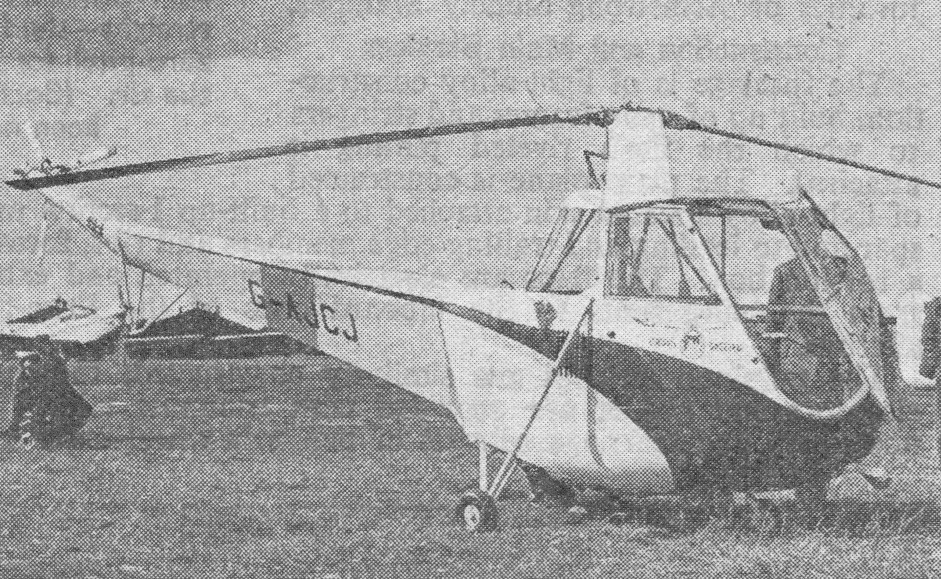
A second machine, the Skeeter 2 G-ALUF, was flown on October 20th, 1949, in which the most important of several design changes were the employment of a 145hp Gipsy Major 10 engine, increased rotor diameter and a slightly longer tailboom of circular instead of triangular cross-section. Two further-modified Skeeter 3’s were begun by Cierva which were completed by Saro, for evaluation by the Ministry of Supply, after the latter company had acquired Cierva in January 1951. Two Mk. 3 (Gipsy Major 10) and one Mk. 4 (Bombardier 702) were constructed for Ministry of Supply evaluation. The two Mk. 3’s were later fitted with Bombardier engines, and re-designated Mk. 3B. One similar machine was completed as the Skeeter 4.
During 1960 a new skid undercarriage was adopted on the Skeeter for the British Army in place of the wheels previously fitted.
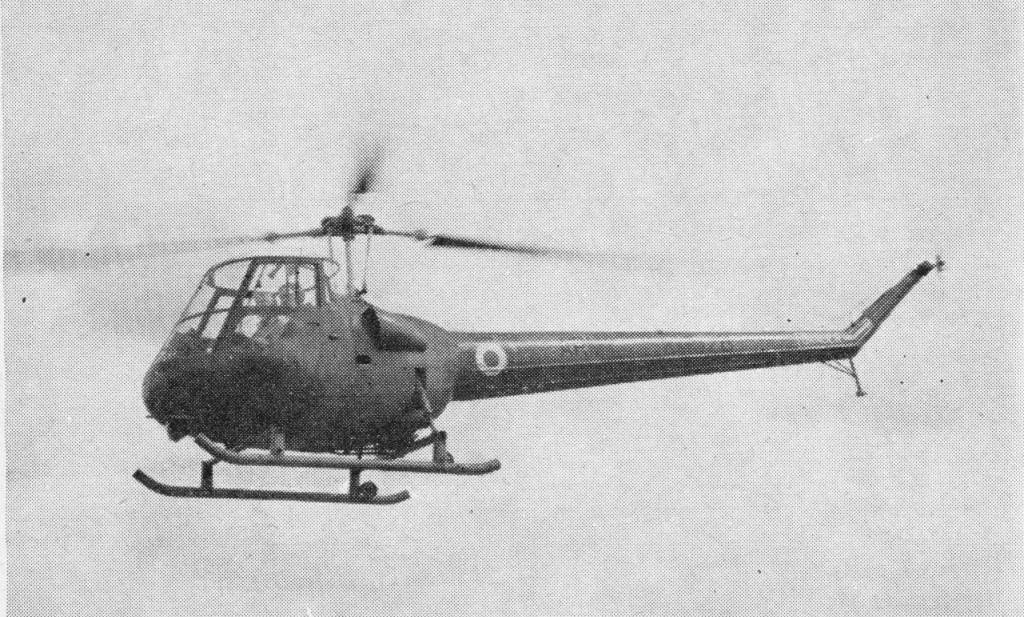
Saro’s two Skeeter 5 prototypes, built as a private venture, was essentially similar apart from instruments and minor controls such as the positioning of the rotor brake, they differed in detail from the prototype Mark 2 Skeeter. The Mark 5 has a 190 b.h.p. Blackburn Cirrus Bombardier 704 engine, while the Mark 3 has a 180 b.h.p. Bombardier 702. The engine is fan cooled with a belt drive. They were the first machines of the series to be really free of the ground resonance problems which had beset the earlier prototypes. In 1956 the Skeeter 5’s were refitted with 200hp Gipsy Major 201’s.
In its civil form, the Skeeter Mark 5 has a 27 gallon fuel tank, which gives an endurance of about three hours, and a further 11 gallons may be carried in an auxiliary tank. The rotor and control system are simple with the three blades being built up on tubular steel spars, with ply ribs and fabric covering. Each blade weighs in the region of 45 lb. The tail rotor of the Mark 3 differed from that of the Mark 5 in having only two blades.
The government-sponsored Skeeter 6 had a 149kW Gipsy Major 30. The power of these engines is much the same but the latter version is a little heavier, carrying more payload and having a higher cruising speed. The Skeeter is built up from four sections the tail cone, complete with rotor, the rear all metal fuselage boom, the centre section, complete with engine, and the cockpit. This seats two side by side with full dual control and instrumenta¬tion.
The Skeeter Mk.6 made overseas appearances at Paris and Stuttgart in June 1956.
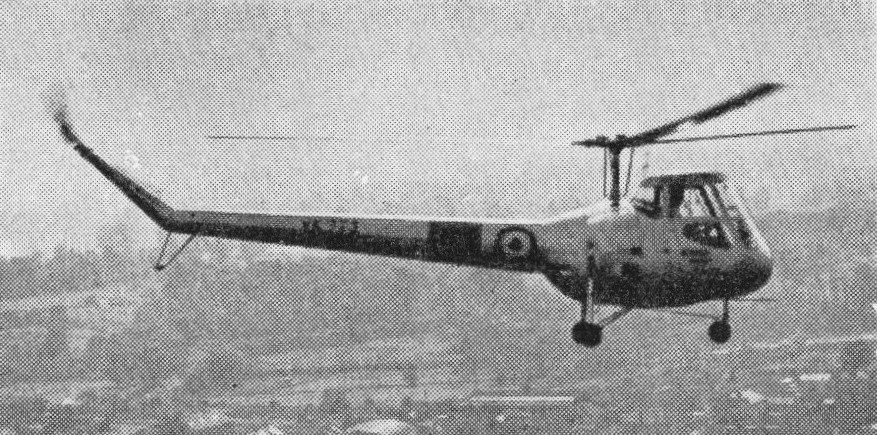
After pre-service trials with the Skeeter 6 prototypes, initial production orders were given for two basically similar versions with the Gipsy Major 200 engine. These were the four Skeeter 6A, ordered for the Army Air Corps as the AOP Mk.10, and one Skeeter 6B as the T Mk.11 dual-control trainer for the RAF. Follow-on orders were placed later for the Skeeter 7A (AOP Mk.12) and 7B (T Mk.13), which differed chiefly in having 215hp Gipsy Major 215 engines. The Skeeter 7 was also the subject of a small export order, the Federal German Army and Navy ordering eleven and four as Mk.50 and Mk.51 respectively. Final variant was the Skeeter 8, basically an adaptation of the 7 for commercial operation. Three were built for C. of A. tests, but no civil orders ensued and Skeeter production came to an end in 1960 (by which time Saunders-Roe had become part of the Westland group) after a total of seventy-seven aircraft had been built.
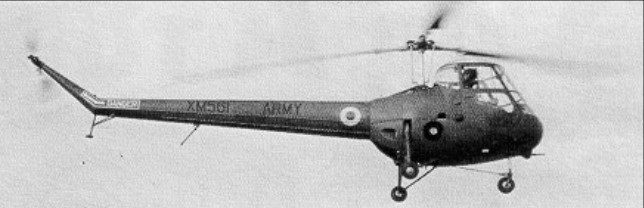
The Skeeter was the first helicopter to enter British Army Air Corps service, replacing fixed-wing Auster aircraft.
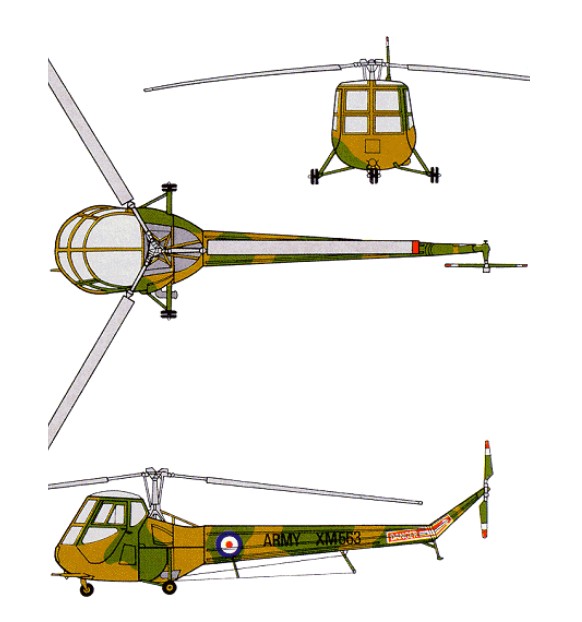
The definitive military version was the AOP12 and deliveries began in June 1958. In the three years this version was in production a total of 64 were built in three separate batches. The Saro Skeeter AOP 12 was a two-seat reconnaissance and artillery-observation-post light helicopter which served with the British Army Air Corps between 1957 and 1967. It was powered by a de Havilland Gipsy Major Type 140 piston engine, delivering 215 bhp at 2850 rpm. It had a cruising speed of 76 knots, a service ceiling of 12800 feet and a range of 160 nautical miles.
In 1957 a small number of Skeeter AOP 10s were delivered to the Army and a T.11 to the RAF and about 50 AOP 12s and T13s were delivered in 1959.
A small number of Skeeters, designated Marks 50 and 51, served in Germany. The German Army and Navy received six and four respectively, which were transferred to the Portuguese Air Force in 1961 but never flown.
Of the fifty or so Skeeters supplied to the British services, the AOP 12’s served mostly at the Army Air Corps Training School, while the RAF T13’s were allocated to the Central Flying School and to No.651 Squadron. Ten of the German Skeeters were handed over in July 1961 to the Forca Aerea Portuguesa, with whom they were still in service in 1968. Dual controls are fitted as standard in all Skeeters. During their early life various Skeeter prototypes were used to flight-test a supercharged Gipsy Major engine, a Blackburn Turmo shaft turbine, and a Napier rocket-powered tip-drive system.

With only a single crewman aboard, the Skeeter could be flown in a casualty evacuation role with a stretcher pannier supported on each side of the cabin.
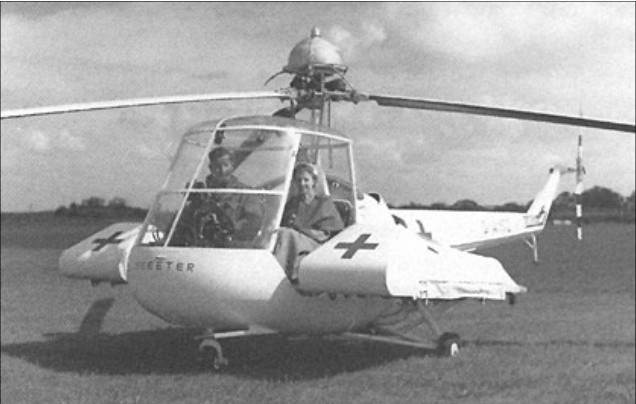
Most Skeeters were replaced by Scout helicopters in 1967 and 1968 having served with four Army Air Corps Squadrons.
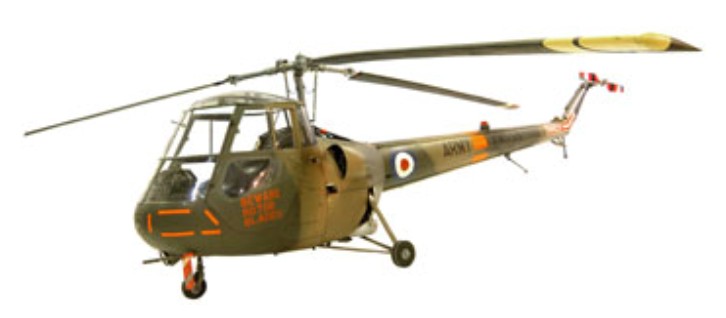
Most Skeeters were replaced by Scout helicopters in 1967 and 1968 having served with four Army Air Corps Squadrons.
Cierva W14 Skeeter
Weight: 1210 lb
Cierva W14 Skeeter 1
Engine: 106hp Jameson FF-1
Seats: 2
Cierva Skeeter 2
Engine: 145hp Gipsy Major 10
Cierva Skeeter 3
Engine: 145hp Gipsy Major 10
Saro Skeeter 3B
Engine: 180 bhp Bombardier 702
Rotor dia: 32 ft
Length, 31 ft. 2 in
Tail rotor: 3 blade
Gross wt: 2,100 lb
Saro Skeeter 3B
Engine: 180hp Blackburn Bombardier 702
Tail rotor: 3 blade
Saro Skeeter 4
Saro Skeeter 5
Engine: 190 b.h.p. Blackburn Cirrus Bombardier 704
Fuel capacity: 27 gallon
Auxiliary fuel: 11 gallons
Rotor: three blades
Blade weight: 45 lb
Tail rotor: 2 blade
Endurance: 3 hr
Saro Skeeter 6
Engine: Gipsy Major 30, 186 h.p.
Rotor diameter: 32 ft
Rotors: 3-blade main; 3-blade tail
Fuselage length: 28 ft 5 in
Loaded weight: 2,200 lb
Ceiling: 11,900 ft
Typical range: 260 miles at 101 mph
Seats: 2
Skeeter 6A / AOP 10
Engine: Gipsy Major 200
Skeeter 6B / Skeeter T Mk.11
Engine: Gipsy Major 200
Saro Skeeter 7A / AOP 12
Engine: de Havilland Gipsy Major Type 140, 215 bhp at 2850 rpm
Cruising speed: 76 knots
Service ceiling: 12,800 feet
Range: 160 nm
Seats: 2
Saunders Roe AOP 12 Skeeter
Engine : De Havilland Gipsy Major 200 Mk 30, 200 hp
Length: (blades folded) 28 ft 5 in
Length with rotors turning: 8.66m
Fuselage length: 26.509 ft / 8.08 m
Rotor diameter: 32 ft / 9.75 m
Height: 2.29m
Empty weight: 780kg
Max take off weight: 2200.6 lb / 998.0 kg
Max. speed: 87 kt / 162 km/h
Range: 186 nm / 345 km
Hovering ceiling, IGE: 1680m
Service ceiling: 3900m
Crew: 2
7B / T Mk.13
Engine: de Havilland Gipsy Major Type 140, 215 bhp at 2850 rpm
Skeeter 8
Skeeter Mk 50
Main rotor diameter: 9.75m
Maximum speed: 267km/h
Skeeter Mk 51
Main rotor diameter: 9.75m
Maximum speed: 267km/h

 All Aero