Schramm’s association with flying began in 1958 when he built and flew a Bensen Gyrocopter. He studied at California Polytechnic State University and eventually was drafted into the military where he worked on missles as an electronics technician at the White Sands Proving Ground. There he did design and drawings and began to formulate a plan for building a helicopter that the average pilot could afford. After his discharge in 1967, he immediately entered helicopter manufacturing and started his own company, Rotorway, with the goal of producing his own designs. After Schramm’s health began to fail in 1987, he made some poor business decisions and failed to put the right people in charge of operations during his absence. This resulted in the company declaring bankruptcy in 1990. After leaving Rotorway, Schramm moved to Nampa, Idaho, and began to develop a new engine for Dan Denney. By the time he returned to the drawing board, the Rotax 582 and 618 were on the market and the power to weight ration that would suit his design. Almost three years later, he accomplished his goal of landing on War Eagle Mountain. Funds were short so Schramm formed Eagle R&D LLC to try to gain some financial backing.
1997: 2203 S. 10th Ave, Caldwell, ID 83605, USA. 2009: Eagle Research & Development, 2321 Hemingway Blvd, Nampa, Idaho, USA
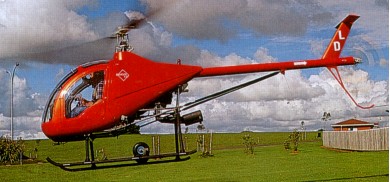
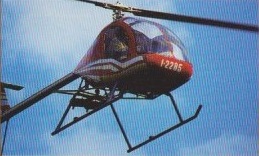
Designed by Angelo and Alfredo Castiglioni to FAR 27. Constructed with a welded titanium frame, the overall configuration is conventional, with a two bladed main rotor with a semi-rigid teetering head, and two bladed tail rotor. Both sets of blades are metal and of similar design to the proven Jet Ranger – although the blades, following European convention, rotate clockwise (when viewed from above). The Dragon Fly shows the influence of Bell Augusta parentage. The transmission is only about 20 cm deep and 30 cm in diameter. It is driven through a pair of triple V-belts and a centrifugal clutch by a horizontally opposed, four cylinder, two stroke engine. At 6250 RPM the 1052 cc engine develops 105 HP, although a more powerful 1300 cc 140 HP version is undergoing testing at the moment (1995) and will be fully inter-changeable with the 105 HP engine. The engine is fed by four Nikuni 44 carburettors, each with their own air filter and automatic vacuum pump, ensuring continuous fuel supply in the event of a failure of both of the main booster pumps. The carbs are mounted on each cylinder via a thermionic manifold – thereby eliminating the need for a carburettor heat control since they are heated directly by conduction. The need for a mixture control is also eliminated by the provision of a fixed jet with automatic altitude and temperature compensation. Engine cooling is by forced air from two axial, belt driven fans. HELIOT variant is for military and civil special operations, with a 661 lb (300 kg) useful load and is fitted with a camera and color monitor; can carry an external module to permit unmanned remote flying; with module removed, HELIOT can be piloted.
Dragonfly 300 Engine: Hirth F30A26AK, 105 hp. MTOW: 450 kg. Empty wt: 230 kg. Rotor Dia: 6.6m. Cabin width: 1.25m. Vne: 80 kt. Cruise: 65 kt. HIGE: 6730 ft. HOGE: 4760 ft. Endurance: 2 hr 50 min. Fuel cap: 64 lt. ROC @ 37 kt: 1300 fpm. Seats: 2. Descent autorotation: 1200 fpm @ 35 kt.
Engine: Hirth F30, 130 hp Rotor span: 6.6 m MAUW: 450 kg Empty weight: 230 kg Fuel capacity: 60 lt Max speed: 150 kph Cruise speed: 110 kph Minimum speed: 0 kph Climb rate: 9.5 m/s Seats: 2 Fuel consumption: 18 lt/hr Price (1998): £65,000 Kit price (1998): $83,000
Established 1993, produces the Dragon Fly model 333 two-seat piston-engined light helicopter (certificated June 1996). HELIOT variant is for military and civil special operations, with a 661 lb (300 kg) useful load and is fitted with a camera and color monitor; can carry an external module to permit unmanned remote flying; with module removed, HELIOT can be piloted. 1998: Via Raffaello, 1/A, I-22060 Cucciago (CO), Italy.
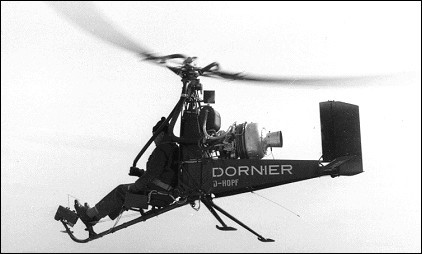
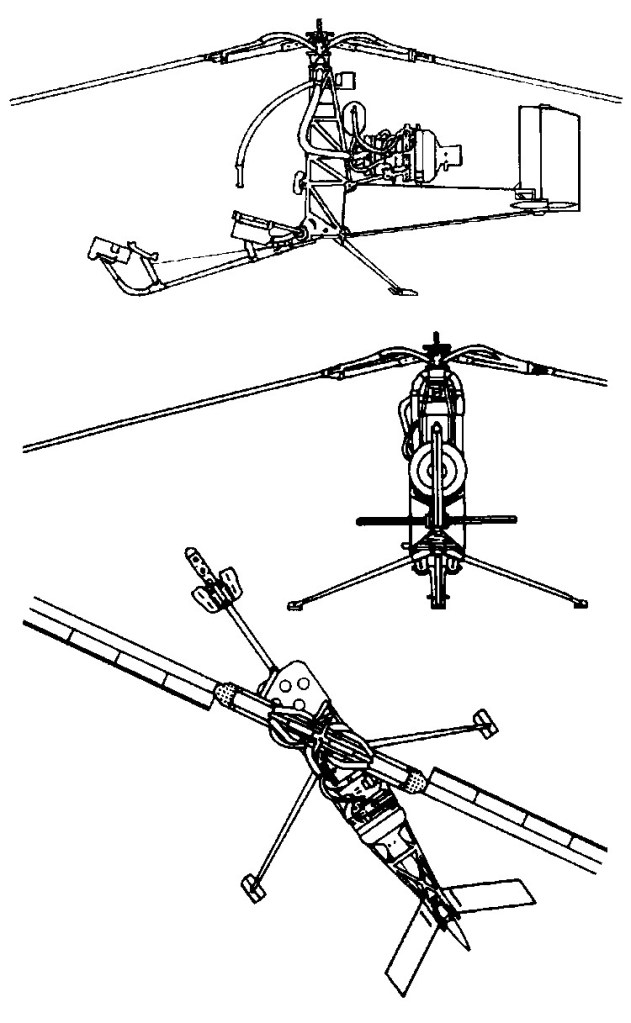
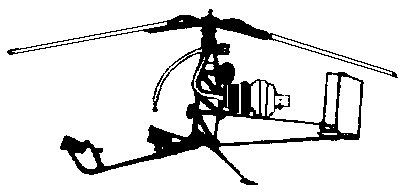
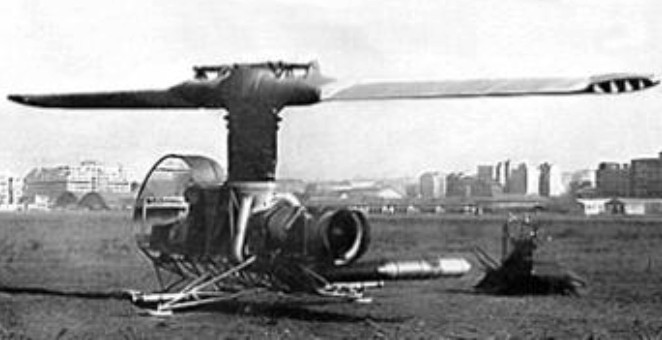
The Dornier Do.32 was one of the first helicopters designed and built by the German helicopter industry after the war. It was a small, ultra-lightweight single-seater which could be carried in a container of modest size, measuring 3.8m long and less than 1m wide. The container was fitted with wheels, could be towed by an ordinary motor car, and also served as a take-off and landing platform. The mini helicopter could be assembled in just five minutes.
The Do.32 was powered by a 100shp BMW 6012 turbine which drove the rotor through a cold cycle. The prototype was tested on 29 June 1962 and completed the test programme in mid 1963, when the German company displayed a second model at the Paris Air Show. A few others were built but the two-seat derivative (with a 250shp turbine) offered to the German government was not adopted.
Do-32 Engine: BMW 6012 turbine, 100shp Main rotor diameter: 7.50m Fuselage length: 3.20m Height: 1.90m Max take-off weight: 280kg Empty weight: 151kg Max speed: 115km/h Cruising speed: 115km/h Range: 90km Endurance: 50min, Crew: 1
Do 32 E/U Kieblitz Engine: BMW Turbokompressor 6012 L Length: 10.499 ft / 3.2 m Height: 6.234 ft / 1.9 m Rotor diameter: 24.606 ft / 7.5 m Max take off weight: 617.4 lb / 280.0 kg Max. speed: 62 kts / 115 kph Range: 49 nm / 90 km Crew: 1
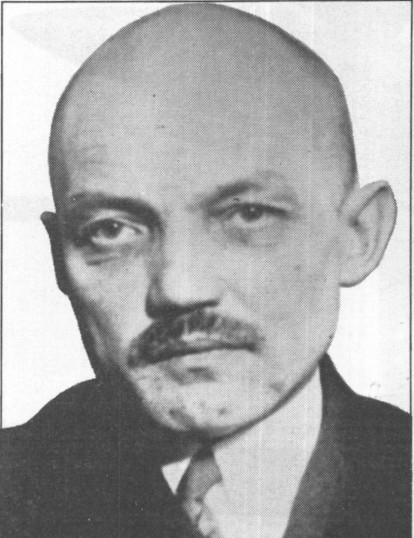
Dr Claude Dornier was employed by Count Zeppelin in 1910, and in 1914 was in charge of the design and construction of large all-metal marine aircraft at Zeppelin-Werke Lindau. Here he produced the Rs.I in 1915, then the largest aircraft in the world, with a span of 43.5m. By 1918 three more giant flying-boats had been built, Rs.II, III, and IV, as well as prototypes of single-seat and two-seat fighters.
All employed Dornier’s techniques of advanced metal construction. After the war the works were transferred to Manzel, near Friedrichshafen, where some two-seaters for the Swiss Air Force were completed. At Manzel, between 1920 and 1925, appeared the Libelle, Delphin, Komet and Merkur, small civil aircraft, and the Falke, an unsuccessful fighter. In 1922 the company became Dornier Metallbauten GmbH and in 1926, as the Manzel works were too small, it transferred to Altenrhein in Switzerland (Aktien Gesellschaft für Dornier Fluzeuge). Here, for the next three years, Aktien Gesellschaft fur Dornier Flugzeug was occupied in building three Do X flying-boats, the largest aircraft of their time, powered by 12 engines. Two were sold to Italy. Bomber designs followed, the Do N, P, and Y being built 1929-1931. These led to the Do F which, like the Do 11, began in 1933 to reequip the German Air Force. However, in 1932 production was resumed in Germany. The Swiss factory subsequently became the Eidgenossisches Flugzeugwerk. 1932 production in Germany, this time as Dornier-Werke GmbH, began with the military Wal (later the Do 18) and Do 11 bomber, supplanted later by the Do 23. In 1934 appeared its first modern warplane, the Do 17, evolved from a fast, six-passenger mailplane designed for Deutsche Luft Hansa. The Do 17 and its successor, the Do 217, which served as a nightfighter, were the only Dornier designs to see largescale production during 1935-1943. Towards the end of the war the company produced the Do 335 push-pull twin-engined heavy fighter with a top speed of 763km/h, probably the fastest piston-engined Second World War fighter.
After the war Dornier became established in Spain. The first postwar aircraft developed completely in Germany was the twin-engined STOL Do 28. An experimental STOL jet transport followed, the Do 31, and the Do 29 research aircraft. From 1966 the company developed the Skyservant and was involved in international programs. Collaboration with Avions Marcel Dassault-Breguet Aviation on Alpha Jet development and production included research into supercritical wing. Merkle joined Dornier in 1969. Became Dornier GmbH in 1972. A majority shareholding was acquired by Daimler-Benz AG in 1985. In 1989 Deutsche Aerospace AG was formed as a corporate unit of Daimler-Benz Group and intended to unite the work of Dornier, MBB, MTU and more, and was renamed Daimler- Benz Aerospace AG. in 1995, with the Regional Aircraft division administered by Dornier Luftfahrt GmbH. In June 1996 Fairchild Aerospace purchased 80% of Dornier Luftfahrt from Daimler-Benz Aerospace, forming Fairchild Dornier Germany Dornier Luftfahrt GmbH. Within Daimler Chrysler Aerospace AG, Dornier Flugzeugwerft GmbH represents part of the Military Aircraft business unit.
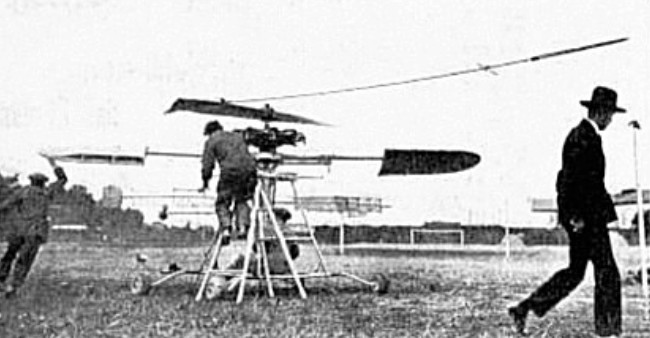
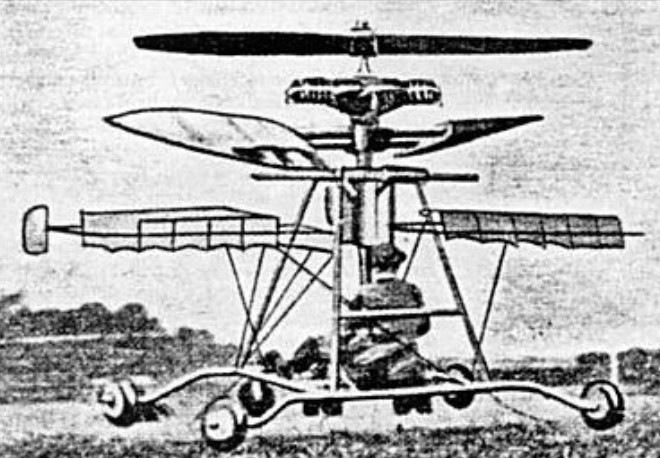
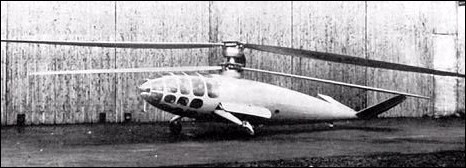
In 1938, Rene Dorand created the Societe Francaise Du Gyroplane, to develop a new aircraft with coaxial rotors, the GII, which was evacuated to Chambery in 1940 and finished. After the end of the war, it was found that no one dared to start the rotors, which, were very close to one another. The aircraft was donated to the French Air Museum.
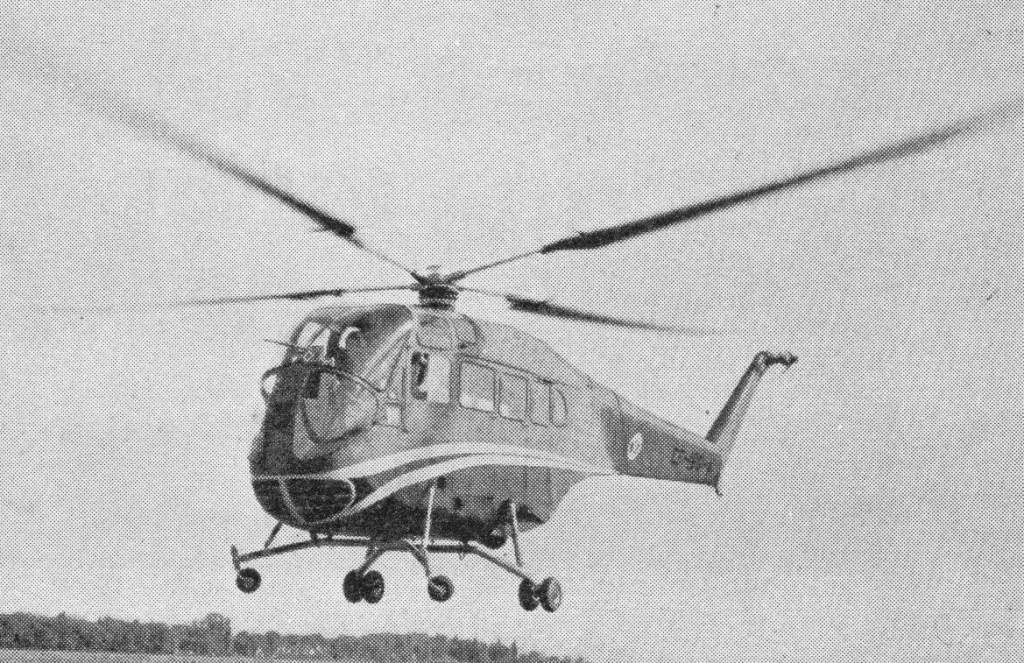
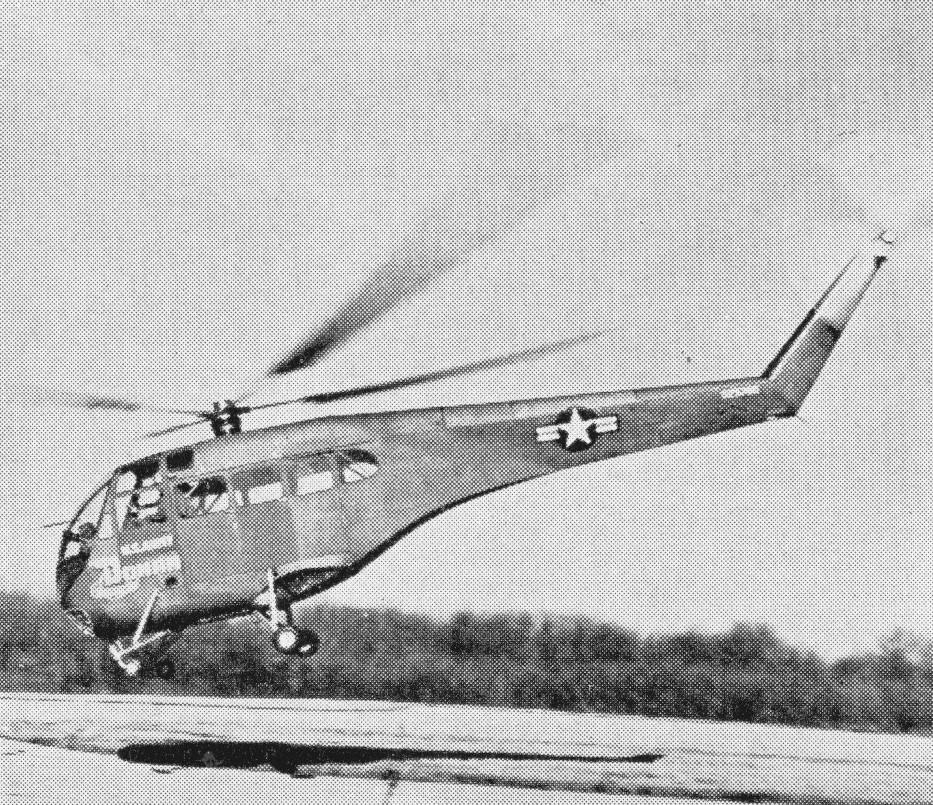
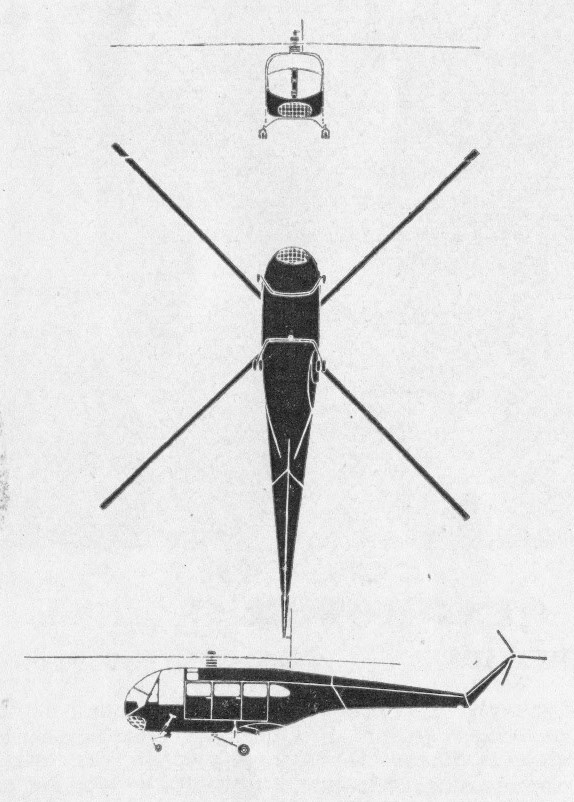
The LZ-5 was similar to the LZ-4 but used a 400hp supercharged Lycoming 580-D engine, and had numerous detail changes. The measurements and layout of this production model very closely resemble those of the hand-made LZ-4. The 8-cylinder supercharged engine is placed beneath the pilot’s compartment; the crankshaft is inclined at an angle of 32degs and drive engagement to the rotor is through a fluid coupling. The front cabin is big enough to take two pilots; the main cabin has room for six passengers with luggage, or four stretchers or cargo over an area of 3.7 square metres. The first example first flew on 27 April 1953. With hingeless rotor unit and hydraulic rotor control system, the prototype received C.A.A. certification for passenger carrying in 1953.
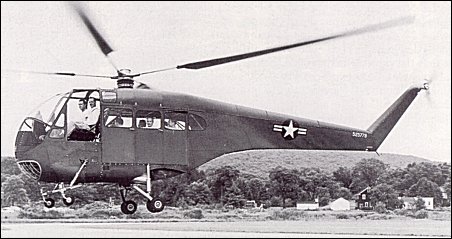
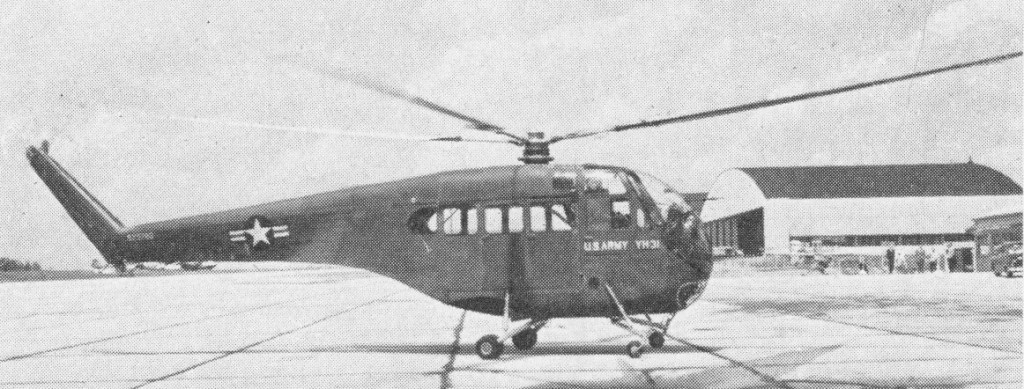
Doman gained a contract from the U.S. Army to supply two aircraft designated YH-31. These were evaluated following delivery in late 1953 (serials 52-5779 and -5780) but it was felt that the possible maintenance problems of the complex rotor system would cause problems with field maintenance. Consequently, the two aircraft were retired in 1958 following a period of use as executive transports in the Washington, DC area until their 1958 withdrawal from the Army inventory. Doman also designed a small two-seat helicopter, the D-10, to an Army requirement. This would have been powered by an Allison 250 turbine but was not built.
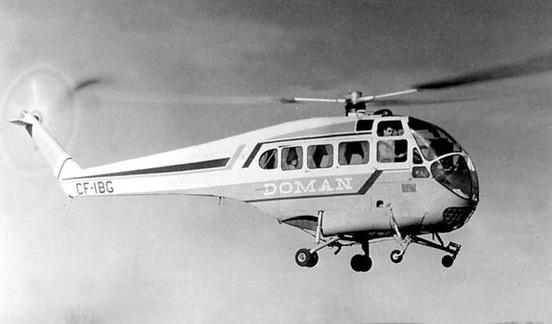
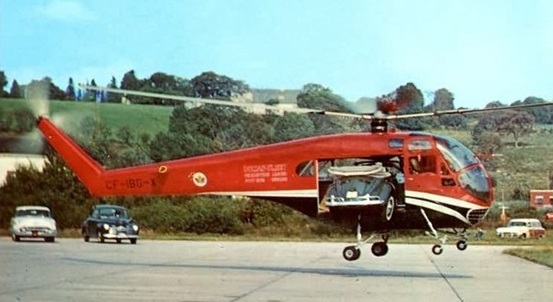
Doman actually completed two more development machines in addition to the pair of YH-31s (N94561 and N812). The third aircraft was modified into a new variant – the D-10B – which had a turbocharged Lycoming HIO-720-A1A engine and minor changes and was the subject of a co-production agreement with Fleet in Canada. N812 became CF-IBG-X.
For the Fleet licence agreement one LZ-5 prototype was demonstrated in Canadian markings.
A number of deals and production relationships were subsequently established by Doman in an effort to get the LZ.5 into production. Hiller were licenced to build the military version. Doman also entered into an arrangement with Ambrosini in Italy for them to market the D-10B and for production of 20 airframes to be carried out by Aeronautica Sicula at Palermo in Sicily with final assembly at Doman’s factory in Danbury, Connecticut. A plan was also devised for Aeronautica Sicula to fit a D-10B with a Turbomeca Astazou turbine. The agreement with the Italians collapsed and a new company was subsequently established as Caribe Doman in Puerto Rico during 1966.
Unfortunately, the LZ-5 was obsolete by this time as more modern turbine-powered helicopters flooded onto the market. A further company, Berlin-Doman was formed and a new project launched as the BD-19 but this was also stillborn and the Doman helicopters finally vanished into obscurity.
With its 7 ft (2.13 m) wide doors removed on both sides the helicopter showed in mid-1956 its capability of lifting bulky cargo without slings by transporting a 1,900 lb (862 kg) cabriolet Volkswagen.
Only three LZ-5s were built.
LZ-5 Engine: 1 x Lycoming SO-580-D, 400hp Rotor diameter: 48 ft / 14.64m Type of rotors: 4-blade main; 3-blade tail. Fuselage Length: 37 ft. 10 in / 11.57m Height: 3.12m Gross weight: 5,000 lb / 2363kg Empty weight: 1297kg Maximum speed: 110 m.p.h./ 169km/h Cruising speed: 138km/h Rate of climb: 396m/min Absolute ceiling: 18,000 ft / 5490m Typical range: 245 miles at 86 m.p.h. with full load. Number of seats: 8

 All Aero