Eurocopter Tiger

France and Germany agreed in 1984 to develop a common combat helicopter, and Eurocopter Tiger GmbH was formed on 18 September 1985 to manage development and manufacture for French and German armies. It was not a full member of Eurocopter because it was working on a single government contract. Executive authority for programme is DFHB (Deutsch Franzosisches Hubschrauberburo) in Koblenz; procurement agency is German government BWB (Bundesamt fur Wehrtechnik und Beschaffung).

The original 1984 MoU was amended 13 November 1987; FSD approved 8 December 1987; main development contract awarded 30 November 1989, when name Tiger (Germany)/Tigre (France) adopted.

Original partners require three versions in two basic configurations with about 80% commonality: U-Tiger is basis of the UHT and ÍÀÑ, both with mast-mounted sight and Trigat missiles; HCP (Helicoptere de Combat Polyvalent) is basis of the HAP (roof sight and turreted gun). Other variants proposed to meet export requirements.

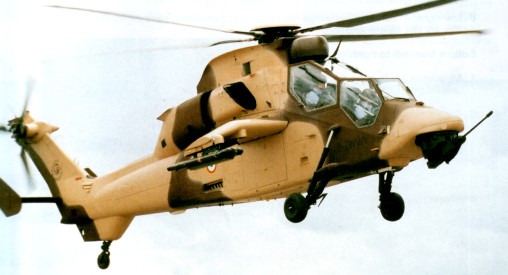
Tigre HAP: Helicoptere d’Appui et de Protection; name Gerfaut dropped late 1993; escort and fire support version for French Army; armed with 30mm Giat AM-30781 automatic cannon in undernose turret, with 150 to 450 rounds of ammunition; four Mistral air-to-air missiles and two pods each with twenty-two 68mm unguided TDA rockets delivering armour-piercing darts, mounted on stub-wmgs, or 12-round rocket pod instead of each pair of Mistrals, making total of 68 rockets; roof-mounted sight, with TV, FLIR, laser range-finder and direct view optics sensors; image intensifiers integrated, in helmets; and extended self-defence system. ÍAÐ configuration was approved by late 1998, permitting òóðå qualification in December 2002. Deliveries from Marignane in 2003; final aircraft due in 2010.

UHT: Unterstutzangshubschrauber Tiger (previously designated UHU); German Army multirole ‘utility’ or muttirole anti-tank and fire-support helicopter for delivery from 2002; replaces dedicated anti-tank PAH-2 Tiger; type qualification due in December 2002; final assembly at Donauwörth. Underwing pylons for HOT 3 or (from 2006) Trigat missiles, Stinger self-defence missiles, unguided rockets, gun pod and extended self-defence system; mast-mounted TV/FLIR/laser ranger sight for gunner; nose-mounted FLIR for piloting. A mid-life upgrade for the UHT may integrate the Mauser 30mm gun in a chin turret which traverses ±140° in azimuth and from +20 to -45° in elevation.

Tigre ÍÀÑ: Helicoptere Anti-Char; anti-tank variant for French Army; final assembly at Donauwörth. Type qualification due in third quarter of 2011; same weapon options (except Mistral AAM in place of Stinger), mast-mounted sight and pilot FLIR system as UHT. A mid-life upgrade to the HCP could see addition of a mast-mounted automatic air surveillance and warning system, in the form of DAV pulse Doppler radar, together with HUMS and an IR jammer.

Five development aircraft built, including three unarmed aerodynamic prototypes, used also for core avionics testing (PT1, 2 and 3), one (PT4) in HAP (initially called Gerfaut) configuration and one (PT5) as UHT prototype; PT1 rolled out 4 February 1991; first flight 27 April 1991; fifth prototype flew on 21 February 1996, at which time the first four aircraft had accumulated 1,090 flying hours; total of 2,869 hours flown by five prototypes up to June 2001. Germany confirmed purchase of full 212 required, 1994, having considered cut to 138, but later reconsidered.

PT1/F-ZWWW: Aerodynamic prototype; basic avionics; first flight 27 April 1991. Successively fitted with aerodynamic mockups of mast-mounted and roof-mounted sights, nose-mounted gun and weapon containers. Relegated to ground fatigue testing and static display in early 1996 on completion of flight programme. Flown 502 hours.

PT2/F-ZWWY: HAP aerodynamic configuration; full core avionics; rolled out 9 November 1992; first flight 22 April 1993. Used for radar cross-section and detectability tests. Retrofit with HAP systems completed in November 1996; redesigned PT2R. Mistral launch trials at Landes ranges 14/15 December 1998; Technical assessment by French Army at Valence between 17 May and 3 June 1999; rocket qualification, June 1999. Used for HAP version qualification (redesignated PT2R2) at Landes test centre between 4 April and 12 May 2000. Redesignated PT2X in 2001 to serve as multimission demonstrator, adding LFK/ SAGEM sighting system for HOT 3 anti-tank missiles in addition to original Mistral missiles and rockets. Deck landing trials, May 2002, aboard FS Siroco, an amphibious landing ship.

PT3/9823: Full core avionics (including navigation and autopilot); first flight (as F-ZWWT) 19 November 1993. Retrofit with UHT systems began in February 1997; redesignated PT3R; Euromep Ñ (see Avionics) from late 1997. ÏÎÒ launches with mast sight at extreme range in night and smoke conditions, June 1999; hot weather trials at Bateen AB in Abu Dhabi September 1999. Moved back to France for ÍÀÑ development,

PT4/F-ZWWU: HAP aerodynamic configuration and avionics (including roof sight, HUD and Topowl helmet sight; first Tiger with live weapons system); first flight 15 December 1994. Sighting system trials early 1995; Giat cannon trials (15 ground-based tests) completed at Toulon, April 1995; full testing began at CEV Cazaux, 21 September 1995 and, by late November, had demonstrated airborne cannon firing and launch of Mistral AAM (without seeker); by 1 January 1997 had fired eight Mistrals, 3,000 cannon rounds and 50 rockets; 1997 trials included two more Mistrals, rockets and tests of gun controls. Painted in three-tone disruptive camouflage. Winter trials in Sweden, early 1997 with skid/skis landing gear. Flown 296 hours to 1 December 1997; crashed during night low-level evaluation by Australian Army 17 February 1998.

PT5/9825: Full UHT avionics; first flight 21 February 1996. Undertook German Army weapon trials (Stinger, HOT 2 and 12.7mm podded gun) in 1997 including the firing of six HOT 2s using Euromep Osiris mast-mounted sight. Retrofitted as PT5R with production-standard weapon system; first flight 8 October 1999.

PT6 and PT7: Static test airframes for fatigue and crash-resistance trials.

PS1/F-ZVLJ: Ðòå-series HAP built at Marignane on production tooling; laid down in third quarter of 1998; first flight 21 December 2000. Tasks include validation of production methods and planned production configuration.

UHT S01/9826: First true production aircraft; planned to fly on 1 March 2002, but not rolled out until 22 March; first flight 2 August 2002; used for six-month techeval/opeval trials, replacing PT5R.

HAP S01: First production French Tiger, first flight (F-ZKDB) 26 March 2003; delivery to French Army in July 2003.
Industrialisation phase brought forward by two years to strengthen export prospects and Franco-German MoU signed 30 June 1995; timetable then was first deliveries in 1999 to France (approximately 10) and for export, but France announced spending moratorium in November 1995, postponing authorisation of further funding commitments until signature of a FFr2.5 billion (DM733.6 million) production investment contract on 20 June 1997. Deliveries then expected in 2001, but further delayed to July 2003 (for HAP; 2011 for ÍÀÑ) by May 1996 defence plan, which envisaged procurement of only 25 Tigres in 2000-2002 budgets.

In October 1996, Germany announced a 12-month delay in launching Tiger production because of funding constraints. However, the government planned to recoup lost time by accelerating production when eventually begun, maintaining in-service date (ISD) of 2001 and having 50 delivered by 2006, after which the manufacturing tempo would be reduced. However, by 1999, first UHT delivery planned in December 2002. France indicated in early 1997 that it would be prepared to see a single Tiger production line located at Donauwörth in Germany which, combined with other economies, would reduce French expenditure by FFr13.5 billion, but a second assembly line at Marignane was subsequently confirmed. Production investment agreed June 1997.

On 20 May 1998, France and Germany signed a commitment to order an initial joint batch of 160 Tigers. However, planned late 1998 placing of contracts was delayed by requirement of new German government to conduct a defence review; options included delaying ISD; or reducing numbers; or even cancelling UHT and procuring French HAP version. Production contract was finally signed on 18 June 1999 for the full 160 aircraft; first deliveries in 2002. HAP deliveries to include two in 2003, eight in 2004 and 10 per year in 2005-10; first production aircraft (9826) flew in Germany, 2 August 2002. Production of the first batch of 320 engines (plus 12 spares) began during 2000, and will continue through 2011. June 1999 contract also formalised German contract change from PAH2 to UHT and French change from HAP to HAP-F (Finalise).

Joint team at Marignane is flight testing basic helicopter, updating avionics during trials, and testing HAP variant; similar team at Ottobrünn is qualifying basic avionics, Euromep mission equipment package, and integrating weapons system. Rotor downwash problems resulted in trial forward positioning of horizontal stabiliser; by mid-1994 definitive solution adopted of reversion to original position, but halving area. By January 1998, the design had been frozen, and the development programme was more than 90% complete.

First export order for Tiger confirmed 14 August 2001, when Australia announced selection to meet AIR 87 requirement. Contract signed 21 December 2001 for 22 helicopters. MoU on co-operation and exchange of information, to lead to production and delivery, signed by Eurocopter and Australian Defence Science and Technology Organisation on 12 July 2002.

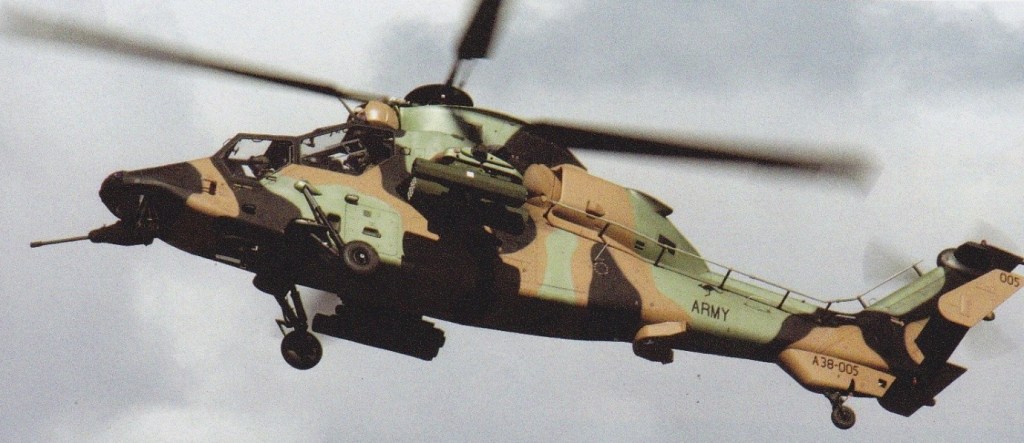
The first locally-assembled Eurocopter Tiger for the Australian Army, A38-005, was handed over at Brisbane on 18 July 2005.

Eurocopter Tiger Article

Tiger development cost, shared equally by France and Germany, reported DM2.2 billion. Production tooling cost FFr2.6 billion (US$500 million) (1996). Unit cost (1996) for UH estimated as US$ 11 million, including launchers and all government-furnished equipment. Initial batch of 160 assigned FFr21.5 billion, of which FFr13 billion for 80 German helicopters and FFr8.5 billion for 80 French (1998). Australian programme unit cost US$30.6 million (2001).

Original requirement was for 427 (France 75 HÀÐ and 140 ÍÀÑ, Germany 212 PAH-2); UHU (later UHT) version substituted for PAH-2s in 1993; French order amended by 1994 to 115 HAP and 100 ÍÀÑ but may be reduced to overall total of 180; in mid-2001 French Army expressed preference for multirole Helicoptere d’Appui-Destructiou (HAD) version in place of two subvariants now on order. Germany committed to 212, of which 112 to be funded between 2001 and 2009; initial commitment of 20 May 1998 confirmed 80 each by France (70 HAP, 10 ÍÀÑ) and Germany (80 UHT), as agreed by Franco-German Security Council on 9 December 1996. By 2002, official German sources suggesting full requirement only 110 and Eurocopter resigned to total of 240 between two launch partners. Germany’s Tigers are required to equip four 48-aircraft regiments, each supporting an Army division, first being established in 2009-11. A joint training school at le Luc is being established as the Ecole Franco-Allemand, or EFA with a Thomson Training and Simulation/STN Atlas aircrew training system, including six-axis motion simulators and wide-angle visual systems. Training course lasts 28 weeks for a crew chief, or 19 weeks for a pilot. Fleet of 14 German and 14 French Tigers will be assigned by 2006, with eleven simulators. In October 2000 there were reports that the German MoD was considering reducing its Tiger buy to 100 helicopters.

A tandem-seat design with pylon-mounted armament, FEL (fibre elastomer) main rotor has infinite life except for inspection of elastomeric elements at more than 2,500-hour intervals; hub consists of titanium centrepiece (including duct for mast-mounted sight) with composites starplates bolted above and below; flap and lead/lag motions of blades allowed by elastic bending of neck region and pitch change by elastic part of elastomeric bearings; lead/lag damping by solid-state viscoelastic damper struts faired into trailing-edge of each blade root; equivalent flapping hinge offset of 10.5% gives high control power; SARIB passive vibration damping system between transmission and airframe; three-blade Spheriflex tail rotor has composites blades with fork roots; built-in ram air engine exhaust suppressors.

Flying controls are fully powered hydraulic controls by SAMM/Liebherr; Labinal/Electrometal servo trim; horizontal tail mounted beneath tail rotor; autopilot is part of basic avionics system.

The structure is 80% CFRP, block and sandwich and Kevlar sandwich; 6% titanium and 11% aluminium; airframe structure protected against lightning and EMP by embedded copper/bronze grid and copper bonding foil; stub-wings of aluminium spars with CFRP ribs and skins; titanium engine deck may be replaced by GFRP; airframe tolerates crash impacts at 10.5m/s and meets MIL-STD-1290 crashworthiness standards; titanium main rotor hub centrepiece and tail rotor Spheriflcx integral hub/mast; blade spars filament-wound; GFRP, CFRP skins and subsidiary spars and foam filling. French plants building transmission, tail rotor, centre-fuselage (including engine installation), aerodynamics, fuel and electrical systems, weight control, maintainability, reliability and survivability; Eurocopter Deutschland responsible for main rotor, flight control and hydraulic systems, front and rear fuselage (including cockpits), prototype assembly, flight characteristics and performance, stress and vibration testing and simulation.

Th landing gear is a tail wheel type, non-retractable, with single wheel on each unit. Designed to absorb impacts of up to 6m/s. Main gear by Messier-Bugatti, tail gear by Liebherr Aerotechnik.

Power is from two MTU/Rolls-Royce/Turbomeca MTR 390 modular turboshaft engines mounted side by side above centre-fuselage, divided by armour plate ‘keel’ (engine first flown in Panther testbed 14 February 1991); power ratings are maximum T-O 958kW, super emergency 1,160kW, maximum continuous 873kW. LHTEC has proposed the T800-801 as a potential alternative power plant for export variants of the Tiger. Self-sealing crashworthy fuel tanks, with explosion suppression and with non-return valves, which minimise leakage in a crash; total capacity 1,360 litres. Provision for two external tanks, one on each inboard pylon, each of approximately 350 litres capacity. Gearbox has specified 30 minutes’ dry running capability (demonstrated 65 minutes, November 1994).

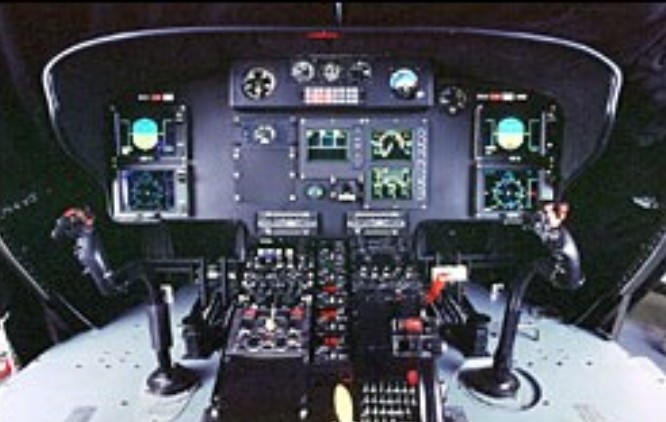
The crew of two is in tandem, with pilot in front and weapons system operator at rear; full dual controls; both crew members can perform all tasks and weapon operation except that anti-tank missile firing only available to gunner. Armoured, impact-absorbing seats; stepped cockpits, with flat-plate windscreens and slightly curved non-glint transparencies.

Redundant hydraulic, electrical and fuel systems. Primary power generation by two 20kVA alternators; DC power generation by two 300A 28V transformer/rectifiers and two 23Ah Ni/Cd batteries.

Dual redundant AFCS provides four-axis command and stability augmentation. Basic AFCS modes: attitude hold, heading hold. Higher AFCS modes: Heading/acquire/hold, barometric altitude capture/hold, altitude acquire, airspeed hold, vertical speed acquire/hold, nav coupling, radar height hold. Doppler hover hold, line of sight acquisition/ hold. Other AFCS functions: gun recoil force compensation, axis decoupling and tactical mode (follow-up trim on override of break-out forces).

Basic or core avionics common to all three versions include bus/display system, com radio (French and German systems vary), autonomous nav system and radio/DoppIer navaids, Thales TSC 2000 IFF Mk 12, NH 90-based ECM suite (including laser warning) and AFCS, all connected to and controlled through redundant MIL-STD-1553B data highway. Flight: Navigation system, by Thales, Teldix and EADS, is fully redundant; system contains two Thales PIXYZ three-axis ring laser gyro units, two air data computers, two magnetic sensors, one Teldix/BAE Canada CMA 2012 Doppler radar, a radio altimeter and GPS providing data to Dornier EuroGrid digital map system; these sensors also provide signals for flight control, information display and guidance; integrated duplex AFCS by Thales and Nord Micro; AFCS computers produced by Thales, VDO-Luft and Litef. Instrumentation: Colour liquid crystal flight displays showing symbology and imagery (two per cockpit for flight and weapon/systems information) by Thales and VDO-Luft; each crewman has central control/display unit for inputting all radio, electronic systems and navigation selections; digital map display system by Dormer and VDO-Luft (incorporating NH 90’s Eurogrid map generation system); engine and systems data are fed into the databus for in-flight indication find subsequent maintenance analysis. BAE Systems Knighthelm fully integrated day and night helmet ordered for German Tigers; French Tigres have similar Thales Topowl helmet-mounted sights, with integrated night vision (image intensifiers), FLIR, video and synthetic raster symbology. Mission: Euromep (European mission equipment package) includes SATEL Condor 2 pilot vision subsystem (PVS), air-to-air subsystem (Stinger or Mistral), mast-mounted sight and missile subsystem and Euromep management system all connected to separate MIL-STD-1553B data highway. Euromep Standard  avionics first flew February 1995 (PT5); Standard Ñ testing began in late 1997 (PT3R). PVS has 40×30° instantaneous field of view (with ±110 x 35° total field of view) thermal imaging sensor steered by helmet position detector giving both crewmen day/night/bad weather vision, flight symbology and air-to-air aiming in helmet-mounted display; mast-mounted sight, gunner sight electronics and gunner’s head-in target acquisition display and ATGW 3 subsystem connected by separate data highway; HOT 3 missile system also available. Thales armament control panel and fire-control computer.

HAP combat support mission equipment package includes SFIM STRIX gyrostabilised roof-mounted sight (with IRCCD IR channel) above rear cockpit; includes direct view optics with folding sight tube, television and IR channels and laser ranger/designator. Self-defence: EADS C-model EW suite (as in NH 90) is one element in HAP’s fully integrated avionics suite. This has an EADS laser warning receiver, EADS missile launch warning device (Lenkflugkörpersysteme) and Thales EW processor and radar warning receiver. Also chaff and flare dispensers (with up to 144 cartridges, sequenced by a Saphir M system). UH is similar, but with option of fitting IR jammer.

The Tiger has four outboard weapon stations or auxiliary fuel tank. HCP (HAP) options all include one 30mm Giat AM-30781 automatic cannon with up to 450 rounds (traversing from +33 to -30° in elevation and through ±90° in azimuth).

Interest shown by Spain in 25 Tigers to be delivered from 2010; in early 2002, contract discussions reached impasse over R&D funding for specific Spanish multirole HAD variant.
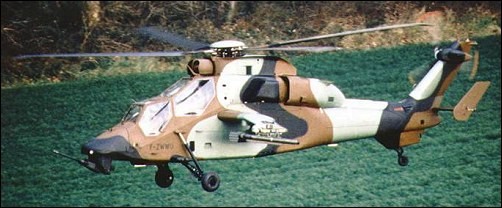
The Tiger was being built in three variants, the PAH-2, HAC and HAP versions to undertake the anti-tank, close support and fighter helicopter roles. The Tiger will form the backbone of the German Heeresflieger anti-tank helicopter fleet (PAH-2) and the French ALAT fleet, undertaking both the antitank (HAC-3) and combat support role (HAP).

The two anti-tank versions (PAH-2/HAC-3) will be almost identical except for some armament, communications and navigation systems. Both versions will be fitted with a mast-mounted sight, nose-mounted thermal imager and helmet-mounted sight/display and can be armed with either 8 x HOT 2/3 or TRIGAT anti-tank missiles, 4 x Stinger or Mistral air-to-air missiles. The HAP escort/attack version is fitted with a roof-mounted STRIX sight and 30mm turret-mounted GIAT AM-30781 cannon, 4 x Mistral air-to-air missiles, 2 x 22 rockets and each stub wing has tip-mounts for additional air-to-air missiles.

Versions built are:

ARH Tiger (HCP): Hybrid Tiger variant to meet Australian Army Air 87 requirement. Based on French HAP, with undernose Giat 30-781 30mm cannon, roof-mounted sight and provision for underwing rocket pods, but with added anti-tank capability, initially with HOT missile then (from 2006) with Trigat AC3G. Australia also requires integration of the AGM-114 Hellfire ATM. Maximum mission weight of 6,100 to 6,300kg. A$1,300 million (US$674 million) contract for 22 signed 21 December 2001. First four from European production; remaining 18 to be assembled in Brisbane, beginning April 2003. First European deliveries (two) due December 2004; Australian-built deliveries between July 2005 and April 2008.

HCP Tiger (HCP): Export version based on French Army HAP with the same undernose gun turret and roof-mounted sight, HOT 3 and Trigat missiles; Hellfire optional. Strix roof sight (direct view optics optional) and additional laser designator plus video signal interfacing for Trigat operation. Either Mistral or Stinger air-to-air missiles. A mid-life upgrade to the HCP could see addition of a DAV mast-mounted air surveillance radar (pulse Doppler type) or a mast-mounted MMW radar for automatic ground and air surveillance. No gun pod option.

Tigre HAD: Helicoptere d’Appui-Destruction. Multirole version; development cost estimated as ˆ152 million (2002). Offered to Spain. Uprated engines, roof sight for Trigat ATMs.

Tiger T800: LHTEC T800 or CTS800 engines proposed as an engine option for the Tiger. Turkey is sales prospect, as Army has reservations about growth potential of MTR390.
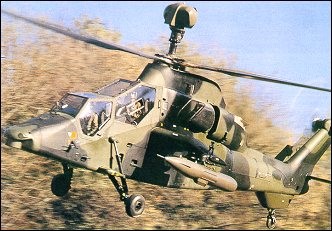
The first two Eurocopter Tiger for the Australian Army were handed over on 15 December 2005. The first four were manufactured in France and remaining 18 assembled by Eurocopter’s Australian Aerospace facility at Brisbane airport. The first of these was flown on 21 December 2005.

Tiger
Engine: 2 x MTU/R-R Turbomeca MTR 390, 1267 shp.
Instant pwr: 958 kW.
Rotor dia: 13 m.
Length: 15m.
Height: 3.83m.
Rotor diameter : 42.651 ft / 13.0 m
Fuselage width 1.11m
MTOW: 12789.0 lb / 5800 kg.
Weight empty : 7276.5 lb / 3300.0 kg
Payload: 6000 kg.
Max speed: 269 kts.
Cruise (armed) 150 knots
Cruise (econ) 130 knots
De¬sign limit speed 175 knots.
Max range: 670 km.
Endurance 2 h 50 mm (incl reserve)
Ferry range 700 nm (1300 km).
HOGE: 10,655 ft.
Initial climb rate: 1968.5 ft/min / 10.0 m/s
Service ceiling: 13,000 ft / 3960 m.
Crew: 2.
Typical weapons load: 30mm turreted gun (450 rounds); plus up to 8 HOT (anti-armor) and 4 Mis¬tral (air-to-air) missiles; or 44 rock¬ets and 4 Mistral missiles; or 68 rockets; or two ferry tanks.

Eurocopter Tiger UT
Engine: 2 x MTU/R-R Turbomeca MTR 390, 1267 shp.
Main rotor diameter: 13.0m
Tail rotor diameter: 2.70m
Length overall, with rotors turning: 15.80m
Fuselage length: 14.08m
Height to top of rotor head: 3.84m
Height to top of tail rotor disc: 4.32m
Width over weapon pylons: 4.53m
Internal fuel weight: 1080kg
External fuel weight (two tanks): 555kg
Mission take-off weight: 5300-6100kg
Max take-off weight: 6100kg
Cruising speed: 230km/h
Range on internal fuel: 800km
Range with ferry tanks: 1280km
Endurance: operational mission: 2h 50min
Endurance: max external fuel: 3h 25min

Eurocopter Tiger HCP
Engine: 2 x MTU/R-R Turbomeca MTR 390, 1267 shp.
Main rotor diameter: 13.0m
Tail rotor diameter: 2.70m
Length overall, with rotors turning: 15.80m
Height to top of rotor head: 3.84m
Height to top of tail rotor disc: 4.32m
Width over weapon pylons: 4.53m
Empty weight: 4200kg
Internal fuel weight: 1080kg
External fuel weight (two tanks): 555kg
Mission take-off weight: 5300-6100kg
Max take-off weight: 6100kg
Never-exceed speed: 322km/h
Max level speed: 278km/h
Cruising speed: 230km/h
Range on internal fuel: 800km
Range with ferry tanks: 1280km
Endurance: operational mission: 2h 50min
Endurance: max external fuel: 3h 25min
Eurocopter Tiger HAP
Engine: 2 x MTU/R-R Turbomeca MTR 390, 1267 shp.
Main rotor diameter: 13.0m
Tail rotor diameter: 2.70m
Length overall, with rotors turning: 15.80m
Height to top of rotor head: 3.84m
Height to top of tail rotor disc: 4.32m
Width over weapon pylons: 4.53m
Internal fuel weight: 1080kg
External fuel weight (two tanks): 555kg
Mission take-off weight: 5300-6100kg
Max take-off weight: 6100kg
Never-exceed speed: 322km/h
Cruising speed: 230km/h
Max rate of climb at sea level: 690m/min
Vertical rate of climb: 384m/min
Hovering ceiling OGE: 3500m
Range on internal fuel: 800km
Range with ferry tanks: 1280km
Endurance: operational mission: 2h 50min
Endurance: max external fuel: 3h 25min

Eurocopter EC175 / Airbus Helicopters EC175 / Harbin Z-15 / Avicopter Z-15

Airbus Helicopters EC175 Paris Air Show 2009

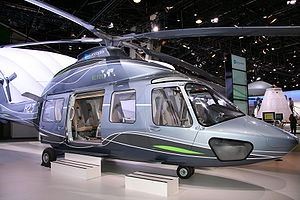
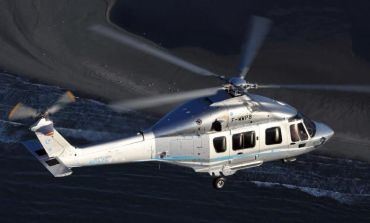
The Airbus Helicopters EC175 (also Avicopter Z-15) is a 7-ton class medium utility helicopter being developed by Airbus Helicopters (formerly Eurocopter Group) and AVIC. Formally launched at Heli-Expo in Houston on 24 February 2008, the EC175 was due to be certified in 2011.

A development contract for the EC175 was signed on 5 December 2005, with Preliminary Design Review (PDR) completed on 5 December 2006 and Critical Design Review (CDR) completed on 5 December 2007. Development of the EC175 was expected to cost €600 million.

During the EC175’s formal unveiling at Heli-Expo 2008, Eurocopter booked a total of 111 purchase options from 13 customers, including launch customers Bristow Helicopters and the VIH Aviation Group. During the Zhuhai Airshow in November 2008, a letter of intent for 5 Z-15s was signed between HAIG and Chinese domestic general-purpose aviation company Longken General Aviation Cooperation.

First flown on the 4 December 2009, the prototype had its official maiden flight on 17 December 2009 in Marignane, France.

The EC175 held the 3km and 6km time-to-climb records for its class, ratified by FAI, at about a minute per kilometre.

The EC175 will be extensively designed and built using computer-aided design/computer-aided manufacturing (CAD/CAM). The gears and the casing of the EC175’s main gearbox (MGB) have, for example, been completely developed using CATIA V5, a first for Airbus Helicopters. The use of CAD has allowed Airbus Helicopters and HAIG to create a virtual mock-up, simplifying the task of coordinating between partners based 10,000 km apart. The first EC175 airframe structure was delivered by HAIG to Airbus Helicopters Marignane in November 2008.

The EC175 is powered by two 1,325 kW (1,775 shp) class, Full Authority Digital Engine Control (FADEC)-equipped Pratt & Whitney Canada PT6C-67E turboshafts, with 5,000 hour time between overhaul (TBO) and on-condition maintenance. The aircraft has a five-blade Spheriflex main rotor and a three-blade tail rotor. The EC175’s main gearbox incorporates two accessory gearboxes, de-clutchable, avoiding the cost and weight of an auxiliary power unit (APU).

The EC175 has a 16-seat interior with access through sliding doors, and jettisonable windows. The EC175’s cockpit features four 6X8 inch multi-function LCD displays, plus an optional central mission display. The EC175’s avionics are derived from those developed for the EC225, and include a 4-axis dual duplex autopilot, linked to the aircraft’s Flight Management System.

Airbus Helicopters will have responsibility for the EC175’s main gearbox, tail rotor, avionics, autopilot, hydraulic and electrical systems, doors and transparencies. Airbus Helicopters will also be the technical lead and system integrator, and will build two of the three prototypes (the first and third). HAIG will be responsible for the airframe, tail and intermediate gearboxes, main rotor, fuel system, flight controls and landing gear.

Price 2014: US$7,900,000

Variants:
EC175
Aircraft produced by Airbus Helicopters for the European, American and international markets.

Z-15
Aircraft produced by HAIG for Chinese operators.

Specifications:

EC175
Engines: 2 × Pratt & Whitney Canada PT6C-67E turboshaft, 1,324 kW (1,776 shp) each
Length: 15.68 m
Rotor diameter: 14.80 m
Height: 3.47 m (5.34 m overall)
Disc area: 172 m²
Empty weight: 4,603 kg
Max. takeoff weight: 7,800 kg (16,535 lb)
Fuel capacity: 2,616 lt / 695 USgal
Maximum speed: 315 km/h
Cruise speed: 285 km/h
Range: 1259.36 km (680 nmi, 782.53 mi)
Service ceiling: 6,000 m
Crew: 2 pilots
Capacity: 16/18 passengers
Cabin Volume: 434 cu ft
Baggage Volume: 95.4 cu ft

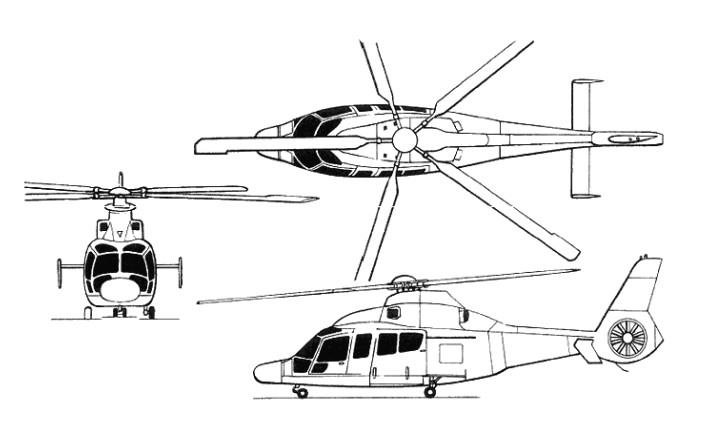
Eurocopter EC-155

The programme was launched in September 1996, as further development of the Dauphin 2. Announced at the 1997 Paris Air Show, when known as the AS 365N4 Dauphin 2, with a wide 12-passenger fuselage, five-blade main rotor and improved avionics suite.

The first flight was as a conversion of DGV testbed F-WDFK (AS 365N3 Dauphin 2), on 16 June 1997. 1,000 flying hours was achieved by February 1998.

The new, EC 155 designation was revealed at the February 1998 HAI convention.

The first production EC 155 (F-WWGZ) flew on 11 March 1998 and JAR certification was received on 9 December 1998. Certification for single pilot in IFR issued 25 January 2000.

The EC 155B1, compared to earlier Dauphin models, has bulged sliding cabin doors, redesigned cabin windows and 40% larger cabin area. Five-blade Spheriflex main rotor and 10-blade Fenestron rotor with unevenly spaced blades to reduce noise.

Power is from two FADEÑ-equipped Turbomeca Arriel 2C2 turboshafts, each rated at 697kW for T-O, 645kW max continuous power and 780kW for 30 seconds. Standard fuel in six tanks, total capacity 1,257 litres; provision for auxiliary tank in baggage compartment, with capacity for 180 litres; or ferry tank in place of rear seats in cabin, capacity 460 litres; refuelling point above landing gear door on port side. Oil capacity 14 litres.

Standard accommodation for pilot and copilot or passenger in front, and three rows of four seats to rear; high-density seating for one pilot and up to 14 passengers; VIP configurations for between four and eight persons in addition to pilot; 12 cabin seats in offshore version, up to six stretchers in casevac role; one crew door and one large sliding door on each side; freight hold aft of cabin rear bulkhead, with door on both sides. Option of hinged cabin door on VIP versions.

Electrical system includes two starter/generators, each 160 A, 28 V DC and 43 Ah Ni/Cd battery. Duplicated hydraulic system. Optional 10 kVA alternator.

The first customer, German Border Guard (Bundesgrenzschutz; BGS), ordered 13 for delivery between 16 March 1999 and 2000 and further two in February 2002 for delivery in 2003. German Interior Ministry ordered two for Baden-Wurttemberg regional government in February 2000 for delivery in March 2001; Hong Kong Government Flying Service ordered five of which last delivered 17 December 2002; firm orders stood at 33 by June 2000, of which eight were placed in 1999. Orders in 2000 totalled seven, six of which were placed by Shell Nigeria, whose first aircraft was delivered on 25 September 2001. Swedish Helicopter Service ordered three in June 2001 for delivery between October and December 2002. By October 2001, 44 had been ordered of which 18 were in service. First Nigerian example handed over 26 September 2001. Sales in 2001 totalled 13, including three for COHC (China), two for SFC (Vietnam) and three for SHS (Sweden). Further 13 purchased by BGS in February 2002.

Versions:

EC 155B: Baseline version; replaced in 2002; MTOW 4,800kg and Arriel 2C1 engines.

EC 155B1: Upgraded version from 2002; as described. Features include new engine cowlings, new hydraulic cooling system, chip detectors, cargo fire protection, jettisonable cockpit doors; fixed cockpit footsteps and Thales AHV 16 radar altimeter display. Available with standard Corporate, Offshore and Parapublic equipment packages.

EC 155B HTT: Helicoptere Tous Temps (all-weather helicopter). Technology demonstrator (F-WQEZ), first flown 15 October 2002, for evaluation of helicopter navigation, ground collision avoidance and autopilot systems.

Eurocopter EC-155
Main rotor diameter: 12.6m
Fenestron diameter: 1.10m
Length with rotors turning: 14.30m
Fuselage length: 12.71m
Height to top of rotor head: 3.64m
Overall height (tip of fin): 4.35m
Max take-off weight: 4850kg
Empty weight: 2615kg
External payload: 1600kg
Never-exceed speed: 324km/h
Max cruising speed: 267km/h
Econ cruising speed at FL60: 270km/h
Service ceiling, IGE: 4570m
Hovering ceiling, IGE: 2290m
Hovering ceiling, OGE: 2365m
Range with standard fuel: 785km
Endurance with standard tanks: 4h

Eurocopter EC-145 / UH-72

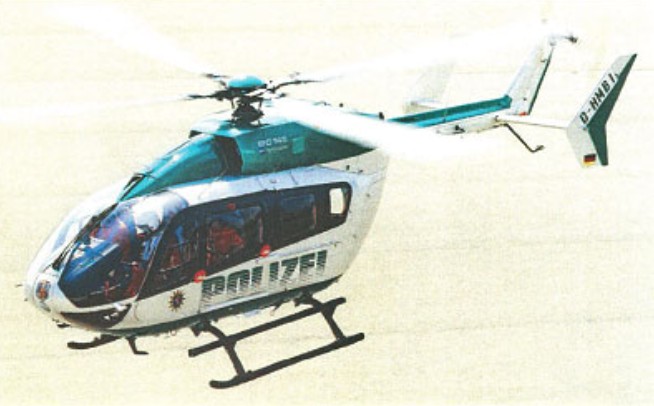
Incorporation of EC 135 technology into the BK 117 began in 1997. Named EC 145 in late 1990, but retains engineering designation BK 117C-2 and is marketed in Japan as such.

Eurocopter EC-145 Article

The first flight of German aircraft (D-HMBK) (unannounced) was on 12 June 1999, and the first flight of Japanese prototype was on 15 March 2000. A third prototype (D-HMBL) joined the programme on 14 April 2000, and fourth (D-HMBM) on 27 October 2000. Kawasaki builds tail section; Eurocopter responsible for forward section. Certification by LBA received 12 December 2000; commercial launch at Paris Air Show, June 2001; FAA certification awarded 14 February 2002, coincident with type’s formal “introduction” at HeliExpo, Orlando, Florida.

Launch customer was French Securite Civile, which ordered 32 in December 1997 for delivery between and 2006 to replace Alouette III; two preproduction examples delivered May 2001 for familiarisation; first production example (F-ZBPA) formally handed over at Nimes-Garons 24 April 2002; initial batch of 15 received by mid-2003. Second customer is French Gendarmerie, with firm order for eight placed in 1999; deliveries began and initial batch of five received by mid-2003. ADAC (German Automobile Club) ordered two in June 2001 to become civilian launch customer; delivery in 2002. Eight ordered in 2001, including four for Rega HEMS in Switzerland, delivered from 21 November 2002. Two for Hesse Police (Germany) delivered from April 2002.

The Securite Civile contract was valued at US$170 million. Flyaway cost reported as US$4.9 million (2000).

The BK 117 fuselage was redesigned forward of engines; new nose, based on EC 135, provides improved visibility. Main rotor blades are same diameter as BK 117, but have EC 135 profile. The EC-145 has composite main rotor blades with a rigid rotor system. Redesigned tail rotor.

Two Turbomeca Arriel 1E2 turboshafts, each rated at 550kW for take-off, 516kW maximum continuous and 574kW for 2 1/2 minutes’ OEI. Main transmission rated at 776kW for twin-engine T-O, 632kW maximum continuous, for single-engine operarion 551kW allowed for 2 1/2 minutes, 404kW for maximum continuous. Standard fuel contained in main tank, usable capacity 741.5 litres and left and right supply tanks, usable capacities 59 litres and 67 litres respectively, for total capacity of 867.5 litres. Optional long-range tanks increase usable capacity to 1,086 litres.

Compared with BK 117, cabin is more spacious through removal of centre post and door supports.

America’s world-predominant aerospace industry, particularly in the rotary-wing field, also failed to prevail in the US Army’s selection for its major Light Utility Helicopter (LUH) programme to replace an initial 322 Bell UH-IHs and OH-58A/Cs over ten years. Despite an impressive range of indigenous options, the US Army was allowed preference for EADS/Eurocopter’s UHA45.

This is the military version of the civil utility twin Turbomeca Arriel 1E2 turboshaft-engined EC145, redesignated UH-72A Lakota (an American Indian tribe) by the US Army. Part production and overall assembly will be undertaken in the USA by American Eurocopter in Columbus, Mississippi, and Turbomeca USA in Grand Prairie, Texas.

The 100th example of the UH-72A Lakota 09-72100IN697AE (c/n 9315) was handed over to the US Army on March 4 2010 at American Eurocopter’s production facility in Columbus, Mississippi. It was to be assigned the Combat Training Center of the Joint Multinational Readiness Command at Hohenfels, Germany. There it was to be equipped with a Multiple Integrated Laser Engagement System (MILES), a SMart On-Board Data Interface Module (SMODIM), and an electronic data manager.

Engine: 2 x Turbomeca Arriel 1E2 turboshaft, 770 shp.
Main rotor diameter: 11.0m
Tail rotor diameter: 1.96m
Overall length, rotors turning: 13.03m
Fuselage length: 10.19m
Height overall, rotors turning: 3.96m
Height to top of main rotor head: 3.45m
Max T-O weight: 3585kg
Empty weight: 1792kg
Max underslung load: 1500kg
Max speed: 145 kts.
Never exceed speed (3000kg T-O weight): 278km/h
Max cruising speed: 252km/h
Max rate of climb: 674m/min
Service ceiling: 5485m
Hovering ceiling, IGE: 4695m
Hovering ceiling, OGE: 4345m
Range at normal cruising speed, standard fuel: 700km
Range at normal cruising speed, optional fuel: 875km

Eurocopter EC-135

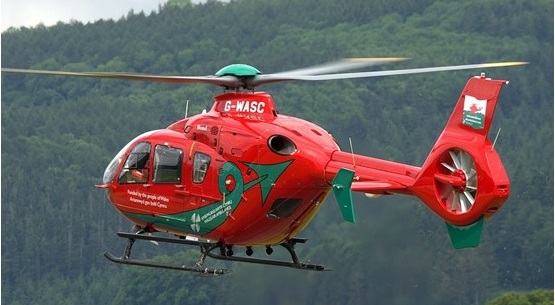
The EC-135 light twin was intended as a replacement for Eurocopter’s successful Bo.105. The combination of the Bo.108 and the fenestron (shrouded tail rotor) led to the definitive EC-135 which had its first flight on 15 February 1994 at Ottobrun, Munich.

Eurocopter EC-135 Article

Built using composite materials, the EC-135 is a modern technology helicopter incorporating the latest in modular cockpit design and Anti-Resonance Isolation Systems etc. The tail-rotor has been replaced with a 10-blade advanced Fenestron and the helicopter incorporates the latest bearingless main rotor system. It can be powered with either Pratt & Whitney 206B, or Turbomeca Arrius 1B1 powerplants managed through a FADEC control system. With an all-up-weight of 2485kg, the EC-135 has a larger cabin area than the Bo.108 and has been designed to accommodate seven adults or five in luxury club seats. Intended to replace the successful Bo.105 series, the EC-135 has been designed for reduced operator costs and to provide ease of maintenance.

PROGRAMME: First flight on 15 October 1988 as a technology prototype, D-HBOX, previously known as BO 108, powered by two Rolls-Royce 250-C20R turboshafts with conventional tail rotor. A new all-composites bearingless tail rotor was tested during 1990. Eurocopter announced in January 1991 that BO 108 was to succeed BO 105. The first flight of the second prototype (D-HBEC) powered by two Turbomeca TM 319-1B Arrius was on 5 June 1991, and production main and tail rotors were flight tested during 1992 in preparation for certification programme. The design was revised late 1992 to increase maximum seating to seven; advanced Fenestron adopted.

Two preproduction prototypes D-HECX and D-HECY made first flights respectively on 15 February and 16 April 1994 powered by Turbomeca Arrius 2B and P&WC PW206B intended as production alternatives. The third preproduction prototype (D-HECZ) made its first flight on 28 November 1994, powered by Arrius 2B, and subsequently made the type’s US debut at HeliExpo ’95 in Las Vegas in January 1995. Total flight time of first three preproduction EC 135s was nearly 1,600 hours by the end of 1996, by which time all three preproduction prototypes had been retired. VFR certification to JAR 27 was achieved on 16 June 1996 and to FAR Pt 27 with Category A provisions and for both engine options, on 31 July 1996. IFR certification was awarded jointly by DGAC (France) and LBA (Germany) on 9 December 1998, while that for CAA was attained late 2000. LBA (JAA) single pilot TFR certification was achieved on 2 December 1999, and certified in 17 countries by June 2000. The first two production aircraft were delivered to Deutsche Rettungsflugwacht on 31 July 1996.

More than 300 were on order by 92 customers in 25 countries by January 2003. The 100th was delivered (to Bavarian Police) on 16 June 1999, and 250th to Spanish operator CoyotAir on 25 October 2002, some two-thirds with Turbomeca engines. Thirty were ordered in 1999, 40 in 2000 and 38 in 2001. Deliveries totalled 37 in 1999 and 31 in 2000.

The development programme was funded by Eurocopter Deutschland and Eurocopter Canada, suppliers, and German Ministries of Economics and Research and Technology. Flyaway cost was US$2.39 million (1996). Designed to FAR Pt 27 including Category A and European JAR 27, of pod-and-boom configuration, with Fenestron. Forward flight stability is by two horizontal and four vertical (fin, underfin and two endplates) surfaces. Equipped with a four-blade FVW bearingless main rotor, single-piece rotor head/mast, rotor rpm are variable. Composites blades are mounted on controlled flexibility composites arms giving flap, lag and pitch-change freedom. Control demands are transmitted from rods to root of blade by rigid CFRP pitch cuffs. The main rotor blades have DM-H3 and -4 aerofoils with non-linear twist and tapered transonic tips, and the main rotor axis is tilted forward 5 deg. The Fenestron has 10 asymmetrically spaced blades.

Airframe drag 30% lower than BO 105 by clean and compact external shape; cabin height retained by shallow two-stage transmission; vibration reduced by ARIS mounting between transmission and fuselage; all dynamically loaded components to have 3,500 hours MTBR or be maintained on-condition.

The second BO 108 prototype had EFIS-based IFR system; fuselage stretched 15cm and interior cabin width extended by 10cm; main rotor diameter extended to 10.20m; for EC 135, tail rotor replaced in 1992 by New Generation Fenestron with 11 fixed flow-straightening vanes in fan efflux designed to avoid momentum losses and improve fan figure of merit; vanes are swept relative to radius and fan has different number of blades to avoid shocks and reduce noise; fan blade tip speed is only 185m/s; maximum T-O weight increased to 2,720kg.

Conventional hydraulic fully powered controls with integrated electrical SAS servos; objective is single-pilot IFR with cost-effective stability augmentation. Electric cyclic trim system.

The airframe mainly Kevlar/CFRP sandwich composites, except aluminium alloy sidewalls, pod lower module and cabin floor, tailboom and around cargo area; some titanium in engine bay; composites tailplane. Landing gear is skid type; ground handling wheels can be fitted.

Power is a choice of turboshaft engines. Turbomeca-engined aircraft have two Arrius 2B2s, each giving 452kW at T-O, 426kW maximum continuous, 528kW OEI continuous, 580kW for 2 minutes with OEI and 609kW for 30 seconds. Alternative power plant is two Pratt & Whitney Canada PW206B2s, each giving 463kW at T-O, 419kW maximum continuous, 528kW OEI continuous, 580kW for 2 minutes with OEI and 609kW for 30 seconds. Both types of engine have FADEC. Transmission rating 616kW maximum T-O, 567êW maximum continuous, 353kW OEI continuous, 513kW for 2 minutes with OEI and 526kW for 30 seconds.

Fuel capacity of first 249 aircraft 673 litres of which 663 litres are usable. Capacity 700 litres from No. 250. Additional long-range tank optional, usable capacity 198.5 litres. Optional self-sealing fuel tanks. Oil capacity 8 litres.

Accommodation is for seven persons, including one or two pilots, in standard version, or six persons in VIP version; optional max capacity of eight. Four-point harnesses for front seats; three-point harnesses for remaining seats. Forward-hinged doors for two front occupants; sliding doors for five persons in cabin. Rear of pod has clamshell doors for bulky items/cargo; flights permissible with clamshell doors removed; optional window in each rear door. Unobstructed cabin interior. EMS variant can accommodate one pilot with two stretcher cases and two seated medical staff/ attendants; alternative layouts for one, one, three, or two, one, three, or two, two, two.

A redundant 28V DC electrical supply systems to JAR/FAR 27 standards; two 160A 28V starter/generators and 24V 17Ah Ni/Cd batteries in Arrius 2B variant, two 200A 28V starter/generators and 24V 25Ah Ni/Cd batteries in PW206B variant. Fully redundant dual hydraulic systems. NATO standard external power connector.

Instrumentation includes Liquid crystal dual-screen (Thales SMD45) vehicle and engine management displays with AN equipment.

Eurocopter EC-135T-2+

Versions:

EC 135P1: Pratt & Whitney engine version (PW206B). First two (D-HQQQ and D-HYYY; c/ns 0005 and 0006) delivered on 31 July 1996 to Deutsche Rettungsflugwacht.

EC 135P2: Introduced August 2001. FW206B2 engine with improved contingency ratings.

EC 135T1: Turbomeca engine version. First (0010/ N4037A) delivered to USA in November 1996. Early helicopters had 435kW Arrius 2B engines, later replaced by 500kW Arrius 2B1. Uprated Arrius 2B1A engine certified April 2001.

EC 135T2: Deliveries from September 2002. Arrius 2B2 engines.

EC 135 ACT/FHS: Active control technology and flying helicopter simulator; German fly-by-light trials programme; first flight of modified production EC 135 (D-HECV) from Eurocopter’s Ottobrunn facility 28 January 2002.

EC 135 APH: Advanced Police Helicopter. Unified mission fit offered by McAlpine Helicopters of UK, 1997; allows simple outfitting with sensors and equipment, according to tasking, using underfuselage pod; typical equipment, including loudspeakers, searchlights, microwave downlink and multisensor turret, can be fitted externally; TV and video equipment earned internally. Pod reduces maximum speed by 9km/h.

Engines: 2 x Turbomeca Arrius 2B
Instant pwr: 360 340 kW.

Engines: 2 x P&WC PW206B.
Instant pwr: 340 kW.

Main rotor diameter: 10.2m
Overall length, rotor turning: 12.16m
Fuselage length: 10.20m
Height overall: 3.51m
Height to top of rotor head: 3.35m
Max take-off weight: 2835kg
Max take-off weight with external load: 2900kg
Empty weight: 1490kg
Max cruising speed: 256km/h
Econ cruising speed: 239km/h
Service ceiling: 3050m
Hovering ceiling, OGE: 2195m
Range: 620km

EC-135P1
Engine: 2 x P&WC PW206B, 465 kW.
Rotor dia: 10.2 m.
MTOW: 2720 kg.
Useful load: 1240 kg.
Max cruise: 139-145 kts.
Max speed: 150 kts.
Max range: 800 km.
Seats: 7.

EC-135P2
Engine: 2 x P&WC PW206B.

Eurocopter EC-130

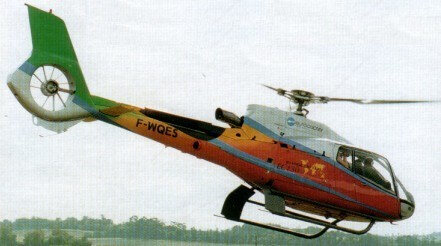
Derived from the AS 350 Ecureuil, the PT-1 prototype first flew (unannounced) in June 1999 and was registered F-WQEV in May 2000.

Eurocopter EC-130 Article

The design is as for the AS 350B3, but considerably modified external appearance, with windscreen side panels, doors and landing gear from EC 120, plus Fenestron based on EC 135, although symmetrical, carried by redesigned tailboom. The dual hydraulic system is from the AS 355N. Cabin width was increased by 25cm to give an additional 23% internal space, accommodating seven or eight seats and enlarged (10%) baggage compartment.

Power is one 543kW Turbomeca Arriel 2B1 turboshaft with transmission rated at 632kW for T-O, with FADEC. Fuel capacity 540 litres in single tank. The EC-130 retains the AS 355B3 engine and transmission, but automatic system (in conjunction with dual-channel FADEC, plus third, digital, back-up channel) matches rotor speed to flight conditions for noise reduction. The 84.3 EPNdB flyover rating is 7 dB below ICAO limit and 0.5 dB under special Grand Canyon National Park restrictions achieved by use of parabolic rotor tips.

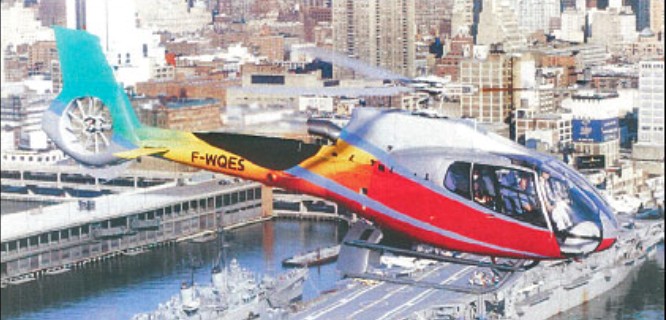
A second prototype (F-WQES) assisted in a 200 hour test programme, including high-altitude testing in Albuquerque, USA, in September 2000.

With dual controls, accommodation is for a pilot and up to seven passengers in a transport role, or pilot and one or two stretcher patients plus two medical attendants in casualty evacuation configuration.

JAA certification was achieved on 14 December 2000, and FAA certification on 21 December 2000. The EC-130 was revealed only in February 2001, when initial production aircraft (also 3,000th of Ecureuil family) were handed over to Blue Hawaiian Helicopters at HeliExpo. Four preproduction helicopters were delivered to the launch customers in the first half of 2001.

The initial production version, the EC-130B4, has a dual-channel FADEC (full authority digital electronic control) unit and a third, independent channel for engine control. The engine is the Turbomeca Arriel 2B1 turbine (the same as that fitted to the AS 350 B3, sans the FADEC system), which gives a maximum shaft horsepower at take-off of 847. The Arriel drives a Starflex-type main rotor, the speed of which is automatically varied to reduce noise, giving a fast cruise speed of 127 knots, a maximum take-off weight of 2,400 kg and a useful load of 1030 kg, and a range at this weight of 345 nm. Equipment includes a 4.5kW 28V DC starter-generator, 15 Ah batteryand a 28V DC cabin outlet.

Announced orders included Blue Hawaiian (10 in 2001), Rocky Mountain Helicopters (10 in 2001), Mont Blanc Helicopteres (two) and five to UK customers. Deliveries started in June 2001 and totalled 10 in 2001 and 30 in 2002. The cost in 2002 was US$1.6 million.

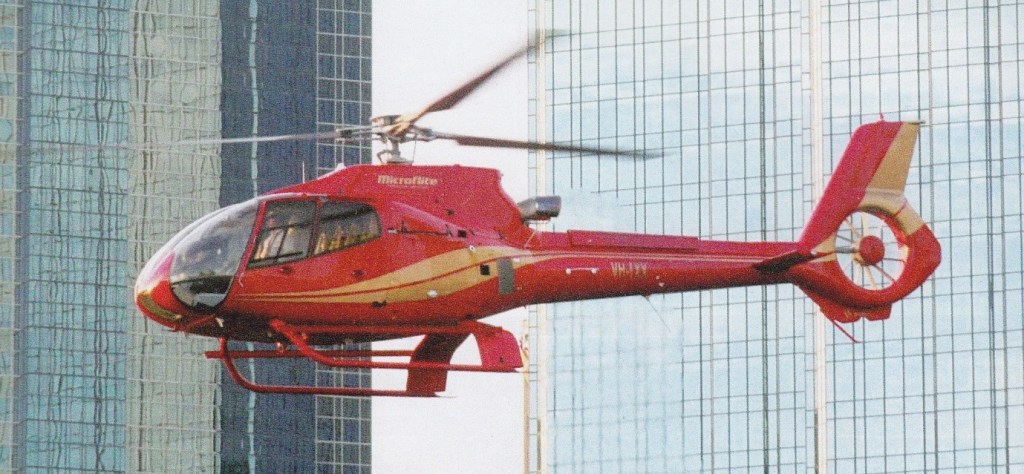
Eurocopter EC 130B4 VH-IXX

EC-130B4
Engine: Turbomeca Arriel 2B1, 847 shp (728 shp max continuous)
Main rotor diameter: 10.69m
Overall length, rotors turning: 12.64m
Fuselage length: 10.68m
Height to top of fin: 3.61m
Height to top of rotor head: 3.34m
Max T-O weight, internal load: 2400kg
Max T-O weight, external load load: 2800kg
Empty weight: 1360kg
Never exceed speed: 287km/h
Max operating speed: 235km/h
Max rate of climb at sea level: 698m/min
Service ceiling: 7010m
Hovering ceiling, IGE: 5875m
Hovering ceiling, OGE: 5320m
Range: 345 nm.
Pax cap: 7/8.

Eurocopter EC-120

In 2003 the first Australian assembled EC-120B was completed.

Eurocopter EC-120 Article

EC-120
Engine: 1 x Turbomeca Arrius 1B1.
Instant pwr: 373 kW.
Rotor dia: 10.2 m.
MTOW: 1550 kg.
Useful load: 700 kg.
Max cruise: 130 kts.
Max range: 600 km.
Service ceiling: 7850 ft.
Crew: 1.
Pax: 4.
Seats: 5.

EC-120B
Engine: 1 x Turbomeca Arrius 2F, 504 shp.
Length : 37.795 ft / 11.52 m
Height : 11.155 ft / 3.4 m
Rotor diameter : 33.465 ft / 10.2 m
Max take off weight : 3704.4 lb / 1680.0 kg
Weight empty : 1973.5 lb / 895.0 kg
Max. payload weight : 1653.8 lb / 750.0 kg
Max. speed : 150 kts / 278 km/h
Econ cruise: 105 kts.
Max cruise: 123 kts.
Initial climb rate: 1474.41 ft/min / 7.49 m/s
Service ceiling: 20013 ft / 6100 m
Range: 405 nm / 750 km
Crew: 1
Payload: 4pax / 750 kg

Erickson Air-Crane Co LLC

USA
Founded 1972 to operate Sikorsky S-64s as heavy-lift helicopters. Developed Helitanker system for S-64 to permit firefighting role. Purchased Type Certificate and production rights for S-64 from Sikorsky in 1992, and can construct new examples to improved Erickson S-64 Aircrane standard. Also developed modifications for ex-U.S. Army CH-54s to bring them up to Aircrane standard.

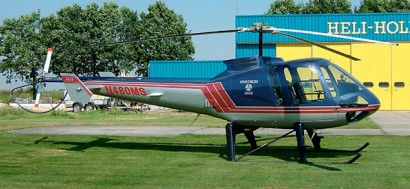
Enstrom 480 / TH-28

A number of models were developed and produced based on the body style of the 280. After preliminary market and design studies, Enstrom initiated the development of a larger, turbine-powered helicopter in 1988.
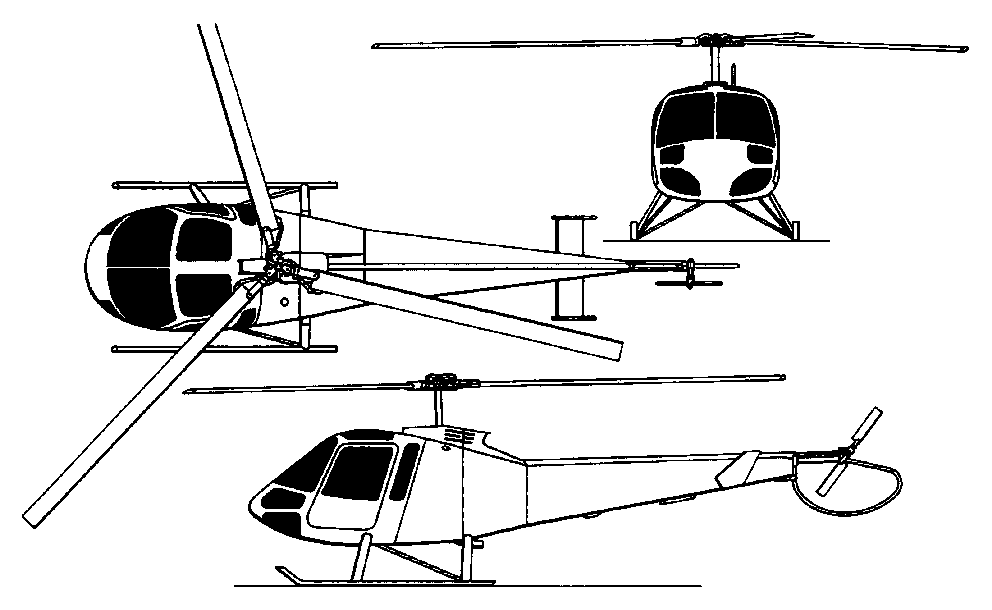
Primarily developed from the four-seat Model 280L Hawk, the Eagle prototype, based on a converted 280FX airframe, flew for the first time in December 1988, powered by Allison 250-C20W turbine, followed by a definitive aircraft (N8631E) with a wider cabin on 7 October 1989. The 480 initial version has a five-seat (two plus three) configuration with staggered seating for forward visibility from all seats. Easily reconfigured to three seats for training or executive transport; or pilot’s seat only for transporting light cargo. Instrument panel centrally located above avionics console.
Announced in February 1990, the Eagle is powered by an Allison 250 turboshaft. The second 480/TH-28 (production prototype) flew in December 1991.
Initial FAA certification for the 480 was received on 7 June 1993; in December 1994, the approval was extended to FAR 27 standards.

Enstrom 480 Article

A three-seat version, designated TH-28, was proposed by Enstrom for the US Army’s New Training Helicopter (NTH) programme. Specially configured as a training light patrol helicopter: unique features include three crashworthy seats, crashworthy fuel system, and a large instrument panel which will accommodate dual instrumentation for either VFR or IFR training. Seating configuration allows training of two students simultaneously.
The TH-28 was flown first in 1990. A production representative helicopter made its maiden flight on 21 December 1991. The TH-28 was granted FAA certification to C.A.R. Part 6 standards in September 1992.
Turbine-powered certification of the TH28 came in September 1992 and the 480, to FAR Pt27 standards, in December 1994.
Development of the more capable 480B variant powered by the Rolls Royce/ Allison 250-C20W turbine powerplant had begun in the spring of 1999, and FAA certification of the new model was obtained on 9 February 2001. In August 2003, the UK CAA also certified the Enstrom 480B turbine helicopter.
The 480B basically equipped (2003) cost US$639,500, and features a high-inertia, three-blade, fully articulated main rotor system with upgraded main rotor gearbox, unboosted flight controls and high skid gear as standard equipment. The rotor speed is 372 rpm nominal; 385 rpm maximum permissible, and an anti-nodal vibrating cantilever beam to damp vibration at low speeds. The 480B cabin layout can be quickly reconfigured to seat one, three or five persons. A baggage compartment is in the tailboom.
Optional equipment includes emergency pop-out floats, air conditioning and cargo hook rated for external loads up to 454kg. The 480B can also be fitted with police patrol equipment including special police radios, searchlight, siren/PA system, FLIR and data recording facility.
The prototype, N480EN was exhibited at NBAA Convention, New Orleans, October 2000.

Production began in 1994 with initial deliveries to Europe. By June 2002, 43 480, 10 480B and four TH-28 had been registered. Final TH-28 produced in 1993 and delivered to China in 1993. Nine 480B delivered by mid-2003. Certified and operating in 14 countries: Australia, Belgium, Brazil, Canada, China, France, Germany, Japan, South Africa, Sweden, Switzerland, Thailand, UK and USA. In addition, 480 are also operating in Burkina Faso and Russian Federation. Customers include the Indonesian Police which ordered 18 480B in 2003.

TH-28
Engine: 1 x Allison 250-C20W.
Instant pwr: 313 kW.
Rotor dia: 9.8 m.
MTOW: 1293 kg.
Useful load: 533 kg.
Max speed: 122 kts.
Max cruise: 114 kts.
Max range: 765 km.
HIGE: 14,000 ft.
HOGE: 12,000 ft.
Service ceiling: 13,000 ft.
Crew: 1.
Seats: 3.

480
Engine: 1 x Allison 250-C20W, 212kW.
Instant pwr: 313 kW.
Rotor dia: 9.8 m.
Length: 8.92m
Height: 2.79m
MTOW: 1293 kg.
Useful load: 533 kg.
Max speed: 122 kts.
Max cruise: 114 kts.
Max range: 765 km.
HIGE: 14,000 ft.
HOGE: 12,000 ft.
Service ceiling: 13,000 ft.
Crew: 1.
Pax: 3/4.
Seats: 5.

480B
Engine: 313kW Rolls-Royce 250-C20W turboshaft, derated to 227kW take-off / 207kW continuous
Fuel capacity: 340 litres