Germany
Joseph Wagner of Friedrichshafen began developing a helicopter in 1960, as a basic, torque-free vehicle to which specialized equipment and accommodation could be added. Rotorcar III was roadable; main development vehicle was Sky-trac. Aerocar and three Sky-trac 1 s were completed in mid-1960s.
Helicopters
Wagener WR3 Rotocar
Experimental helicopter, Germany, 1969
Wagener, Flugzeugbau
Germany
Hans Wagener of Hamburg produced his first aircraft, the HW4A, in 1933. Used as test-bed for anexperimental two stroke engine.
VTOL Aircraft Pty Ltd
Australia
Formed 1971 by D. A. Phillips to develop Phillicopter two-seat light helicopter. Design had begun 1962, prototype first flew 1971, and an improved model appeared 1992.
Vortech CW-105F
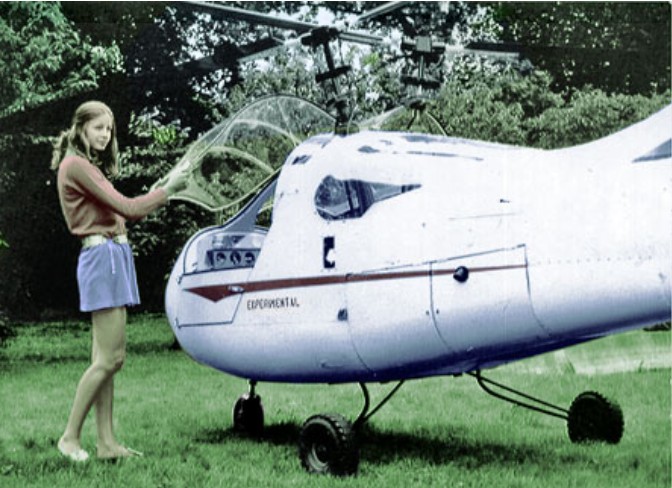
The CW-105F was designed, built and first flown in Europe. The prototype used a Continental C90-12F engine.
It has Lamborghini-style doors and an intermeshing twin-rotor system. The CW-105F is a true helicopter and will take off and land vertically, hover and fly forward, backward and sideward. It’s counterrotating dual rotor system cancels torque, eliminating the need for a tail rotor. The rotor system provides both cyclic and collective control. The CW-105F has been designed to carry 2 people.
The package consists of the huge set of blueprints, with 76 separate “Plans” (construction drawings), a complete Parts List, and photos. Every aspect of the CW-105F’s construction is detailed, including the rotor head and hub, the aluminum rotor blades, the control system, the airframe, engine mount, pilot/passenger compartment, exterior skin, and so on.
CW-105
Length: 16 ft 6 in
Height: 7 ft
Width: 4 ft
Empty Weigh: 520 lbs
Gross Weight: 1,100 lbs
Useful Payload: 580 lbs
Rotor Diameter: 23 ft (per set)
Chord: 6 in
Engine: Lycoming O-235 to O-360
Maximum Speed: 75 mph
Cruise Speed: 60 mph
Rate of Climb: 900 fpm
Range: 225 miles
Service Ceiling: 11,000 ft
Vortech Kestrel

The Kestrel is a single-seat ultralight helicopter powered by small jet engines mounted on the tips of the rotorblades. This form of power eliminates the need for a tail rotor, simplifying and reducing the cost of construction.
If ordered separately, the jet-helicopter construction package is available for $23.95 (+$3 postage US, $8 foreign). This package includes the Vortech Catalog. The Kestrel was available as a kit, in 2001.
Length: 12 ft
Height: 7 ft
Empty wt: 180 lbs
Gross wt: 440 lbs
Payload (max) 260 lbs
Engines (2): G8-2-20 jets
Fuel: propane
Fuel consump: 12+ USgal/hr
Rotor dia: 25 ft
Speed (max): 95 mph (63 as ultralight)
Altitude (max): 12,500 ft
Vortech Skylark 1

Developed from the G-1 design, pilots have expressed amazement at this craft’s stability and manoeuvrability. The Skylark can be flown in the Experimental Aircraft category. Although this is one of the more affordable homebuilts, the airframe and all of its major components have been designed for quality, dependability and durability.
Full instrumentation Skylark kit minus engine and instruments: $19,995 in 2001.
Skylark construction plans in 2001:
Reduced-size prints (11″ x 17″ format): $75 (add $6 postage U.S. or $16 foreign)
Full size prints (18″ x 24″ format): $175 (add $7 postage U.S. or $22 foreign)
Features of the Skylark:
- Full helicopter flight: vertical take-offs & landings; forward, backward & sideward flight; hovering.
- Standard helicopter control system
-All-aluminum main- & tail-rotor blades - Aircraft-grade steel & aluminum airframe & major components, plus all AN hardware
- Full instrumentation

Engine Rotax 582, 65 hp
Main Rotor Diameter 19 ft
Disk area: 283 sq.ft
Tail Rotor Diameter 3 ft 6 in
Height 7 ft
Length 17 ft 6 in
Empty Weight 350 lbs
Gross Weight 725 lbs
Payload Weight 375 lbs
Fuel cap: 10 USG
Power Loading 10.8 lbs/hp
Disc Loading 2.5 lbs/sq ft
Maximum Speed 95 mph
Cruise Speed 70 mph
Rate Of Climb 1,000 fpm
Maximum Altitude 12,500 ft
Range: 120 sm
Seats: 1
Vortech G-1
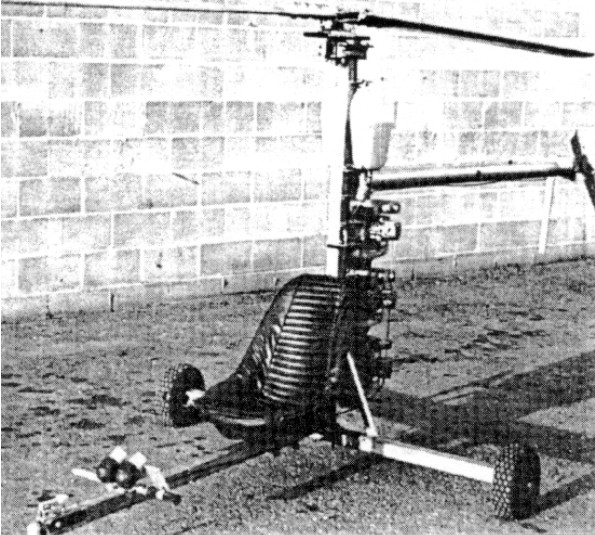
The G-1 Ultrtalight Helicopter, created in the early 1970s by Art Weilage, was tested and sold as low-cost kits by Compcop, Inc. Vortech offers the original construction prints to hobbyists curious about this design, or who want to study the concept as inspiration for a design of their own.
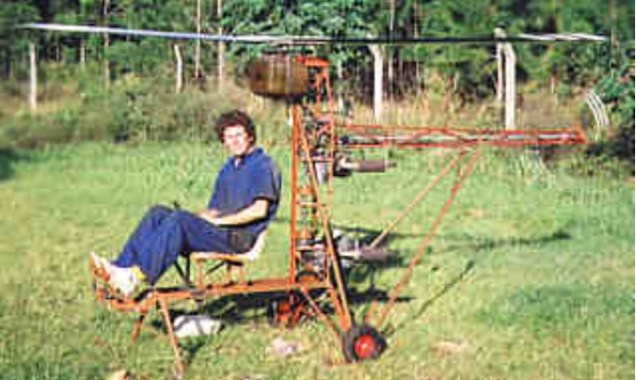
Developed, tested and sold in the 1970’s by Compcop, the G-1 was designed to fill the need for an affordable, easy-to-build ultralight helicopter. The entire helicopter can be built at home with ordinary tools at a low cost. No license is required to fly the G-1 because it is in the license-free “Ultralight Aircraft” category (see FAR Part 103). The construction manual provides all the details needed to build the G-1 with an engine of 40 h.p. or higher. The three McCulloch go-cart engines can be replaced with a single engine such as the Rotax 447. Aluminium construction.
Carries one person. Takes off and lands vertically. Flies forward, backward, sideward, & hovers.

Engines: 3 x McCulloch MC101 42 hp
Empty wt: 150 lb
Max wt: 420 lb
Rotor span: 12ft
Height: 5.5ft
Length: 12ft
Max speed: 80 mph
Cruise: 55 mph
Climb rate: 1,000 fpm
Range: 120 sm
Service ceiling: 10,000 ft
Seats: 1
Engine (typical) Kawasaki or Rotax, 40+ hp
Length 12 ft
Width 5.7 ft
Height 5 ft 6 in
Main rotor diameter 12 ft
Tail rotor diameter 2 ft
Empty weight 150 lbs
Gross weight 420 lbs
Useful payload 270 lbs
Fuel capacity 5 USgals
Fuel consumption 4 USgals/hour
Speed (max.) 80 mph
Altitude (max.) 10,000 ft asl
Engine: 3 x McCulloch, 9.5 hp
Rotor span: 3.66 m
MAUW: 190 kg
Empty weight: 66 kg
Fuel capacity: 19 lt
Max speed: 128 kph
Cruise speed: 80 kph
Fuel consumption: 12 lt/hr
Seats: 1
Plan price (1998): $34.95
Vortech
Offered the G-1B single-seat ultralight helicopter (plans or kit), Kestrel single-seat pressure-jet helicopter (plans or kit), MEG-2XH strap-on pressure-jet helicopter (plans or kit), Shadow two-seat autogyro (kit), and Skylark I single-seat helicopter (kit).
1996-7: PO Box 511-KD, Fallston, MD 21047, USA.
Volocopter VC200

17 November 2013 was the first flight of the two-seat Volocopter VC200 aircraft. The VC200 was able to hover indoors and by February 2014 the VC200 transitioned to forward flight.
 All Aero