Léger 1907 Hélicoptère

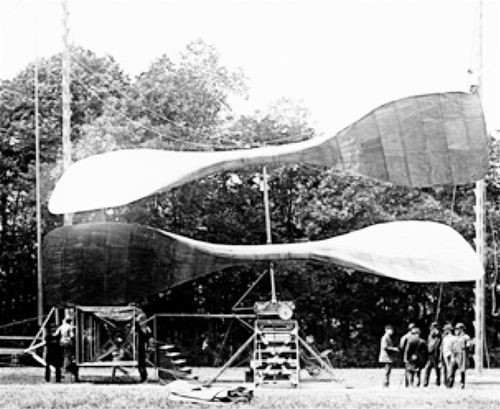
In 1905 Maurice Léger had Ouviere from Marseille build a huge ill-fated helicopter at Monaco. A half-scale model was built first, with a 5.6 kW electric motor on the ground, and a connecting cable. The spoon-bladed aluminum propellers were 6.5 m in diameter, and the empty weight of the model was 110 kg. The full-scale machine appeared shortly after, an enormous construction for the period, with two coupled Antoinette engines, driving two contra-rotating propellers made of fabric-covered frames. The pilot and his passenger sat on the base with twin steering wheels. A biplane tail unit was fixed within the diameter of the rotors. It was destroyed on its first test.
Lataste Gyroscopique

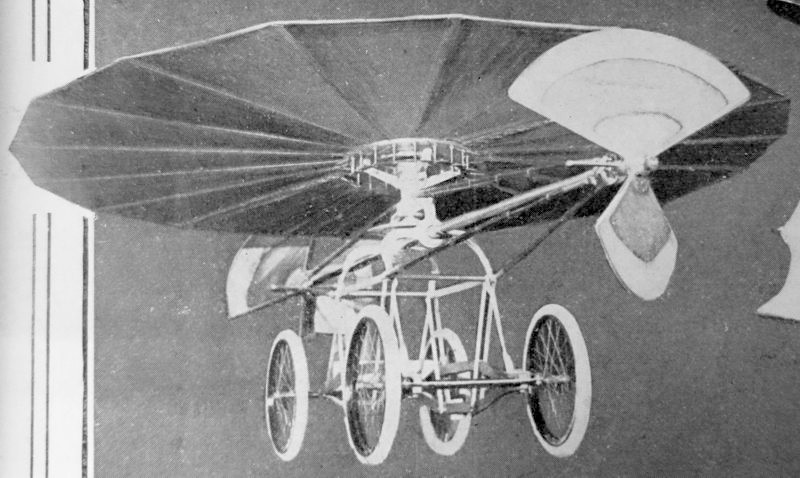
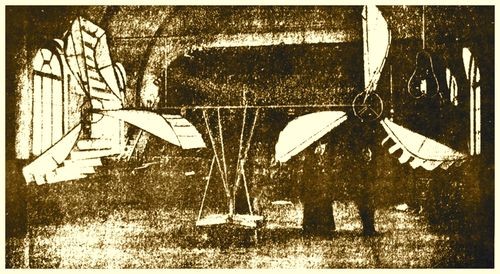
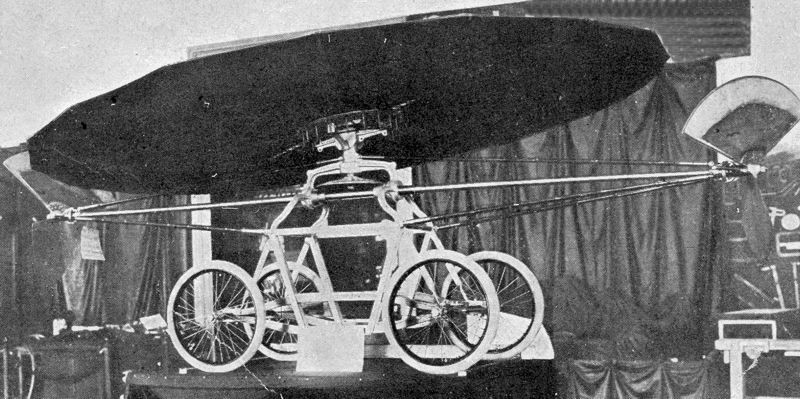
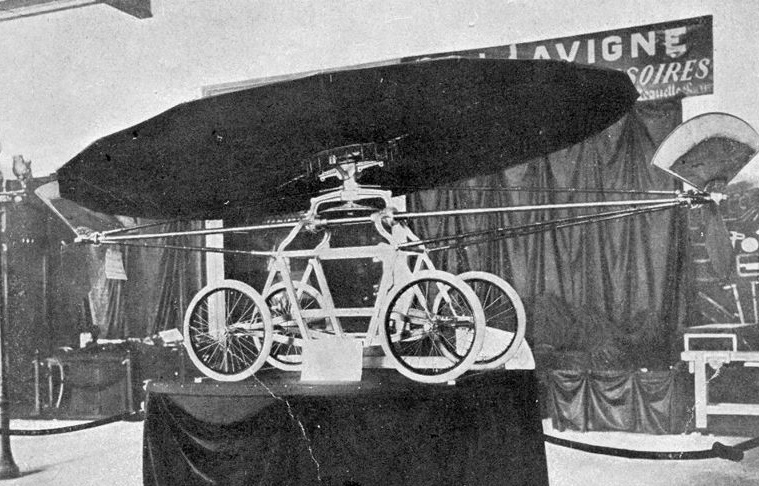
The 1909 French Lataste Aeroplane Gyroscopique was constructed of metal and the circular top wing was covered with fabric. It featured a long, uncovered, tapered frame with a propeller at each end; each propeller had two semicircular blades like sections of Archimedean screws, and turned the same way. Above the frame was the flat rotating, circular wing surface, probably mounted on a swivel joint. This surface and the propellers were driven through a long horizontal propeller shaft and planetary gears; the shaft ran through a cylindrical fuel tank inside the fuselage. The machine was mounted on four wheels, with the pilot sitting between them holding on to a steering wheel, which probably controlled the rotating winged surface high above him.

The photo shows a model of machine, which was displayed at the first Paris Salon Aéronautique in December 1908.

Langdon Helicopter

The 1929 single-place Helicopter used a helical vane arrangement with a myriad of wires replacing the wings and stabilizers on a heavily-modified Curtiss JN-4D fuselage. US patent #1,694,880 was granted in 1928. The rotor was driven by a disc drive, with friction providing speed control.

The plane was apparently built, but flight info, if any, was unrecorded.

Engine: 150hp Hisso A
Rotor: 26’0″

Landgraf H-2

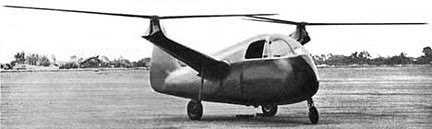
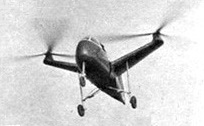
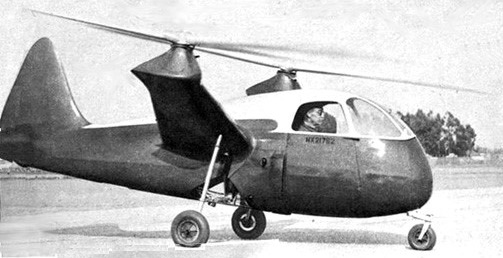
Designed by Fred Landgraf with twin overlapping rotors on wingform pylon, and retractable landing gear. The sole example, NX21762, first flew on 2 November 1944.

A U.S. Army development contract was issued in 1945 but it was damaged in a test flight.

Sale price was to be $2,300. A U.K. license was held by Firth Helicopters of London.

The company, beset by financial problems, cancelled development of a three place H-3 and 5-8 place H-4, and auctioned its design and tooling in 1949, with the remains of the prototype going for $50.

H-2
Engine: Pobjoy R, 85hp
Span: 27’0″
Rotor: 16’0″
Length: 15’0″
Useful load: 186 lb
Max speed: 100 mph
Seats: 1
Undercarriage: retractable

Landgraf Helicopter Co

1943: (Fred) Landgraf Helicopter Co, 135 St at Central Ave, Los Angeles CA.
Incorporated 1943 at Los Angeles by Fred Landgraf, after several years development of H-2 twin-rotor light helicopter, which first flew in 1944. U.S. Army development contract 1945. Retractable tricycle landing gear, and overlapping synchronised rotors. U.K. license held by Firth Helicopters of London, but parent company inactive by 1949.

In 1949 Landgraf Helicopter Co disposed of its machinery and office equipment by auction. The prototype H-2 helicopter, badly damaged in a crash some months before, was sold for $50. The company remained in existence, though completely inactive.

Laisnez & Wilfart Auto-Volant

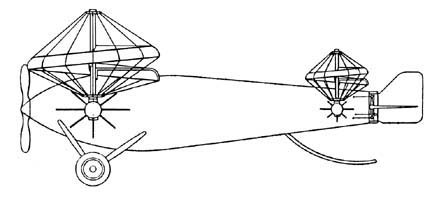
L’Auto-Volant, was a helicopter invented and built by Jean-Baptiste Laisnez and Charles Wilfart in France during 1905–06. Two rotors consisting of three arms, each of which held small moveable blades closed to form a flat surface on the downward stroke. The machine was featured in the February 1905 issue of the Parisian publication “Cosmos”. It was also the subject of the 1905 French patent #357,036.