Manzolini Libellula

Proposed final version

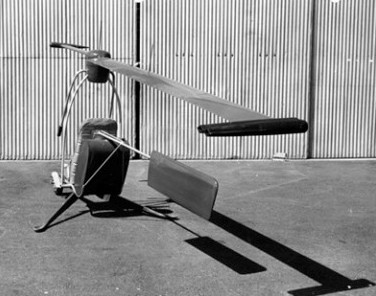
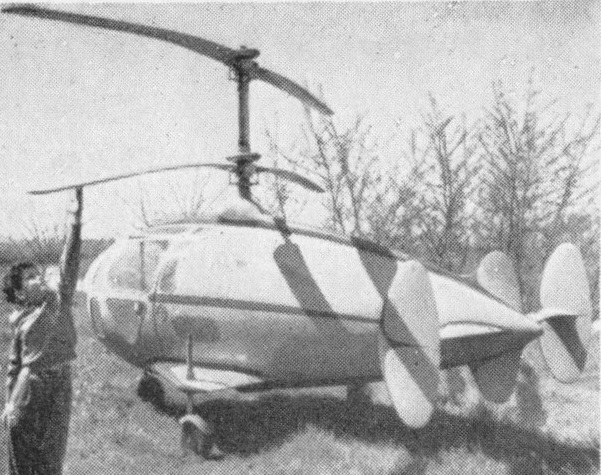
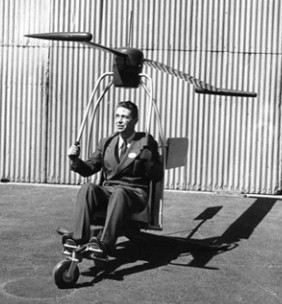
The Libellula was the brainchild of Count Ettore Manzolini. With an open framework fuselage and fixed skid undercarriage, Manzolini devised a coaxial rotor system for the Libellula and flew his ‘stripped’ prototype on 7 January 1952.

A mock-up of a proposed final version was prepared.

Engine: Hirth 105 hp
Rotors: 2 x 2-blade co-axial
Rotor diameter: 26 ft
Loaded weight: 1,430 lb
Cruising speed: 65 mph
Seats: 1

Lockheed CL-595 / Model 186 Aerogyro / Model 286 / XH 51A Aerogyro

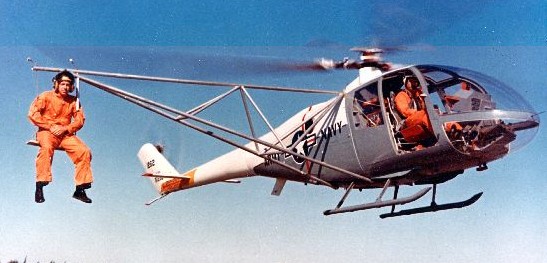
Lockheed began developing its rigid rotor concept with the CL-475 helicopter design in 1959 and the performance of the CL-475 encouraged Lockheed to continue development. Lockheed submitted the CL-475 to the Army as a candidate to replace the Bell OH-13 Sioux and Hiller OH-23 Raven observation helicopters. Lockheed also tested the commercial market waters without success. However, in February 1962, Lockheed’s Model 186, a new design based on the CL-475 rigid rotor, was selected as the winner for a joint Army-Navy program to evaluate the rigid rotor for high-speed flight capability.

Two four-seat, three-bladed XH-51As were ordered and built for the program. Powered by the 550 shp (410 kW) Pratt & Whitney Canada PT6B-9 turboshaft engine, XH-51A (serial number 61-51262) first flew on 2 November 1962. As flight testing progressed, the original three-bladed, rigid rotor system demonstrated instability at higher speed ranges. Lockheed engineers solved the problem by modifying the aircraft with a four-bladed rotor system. In 1963, the Army’s Technology Research and Evaluation Command (TRECOM) contracted with Lockheed to modify one of the XH-51 aircraft into a compound helicopter.

The second XH-51A (serial number 61-51263) was subsequently converted by adding wings with a span of 16.1 ft (4.9 m), and a 2,500 hp (1,864 kW) Pratt & Whitney J60-2 turbojet engine mounted on the left wing to increase performance. The XH-51A Compound first flew without powering up the turbojet on 21 September 1964, while tests were conducted for balance and handling. The aircraft’s first flight as a true compound helicopter took place on 10 April 1965, and on 29 November 1967 achieved a speed of 263 knots (302.6 mph, 486.9 km/h).

In June 1964, NASA ordered a five-seat, three-bladed variant, the XH-51N (NASA 531) as a helicopter test vehicle.

Lockheed built two demonstrator aircraft, designated the Lockheed Model 286, to market to the public (registration numbers N286L and N265LC). These aircraft had the five-seat configuration of the XH-51N with the four-bladed rotor system of the XH-51A. The Model 286 was certificated for civil operation by the FAA on 30 June 1966, but Lockheed never sold any aircraft. Lockheed used the aircraft for several years as executive transports, eventually sold them to a collector where they were destroyed by fire in 1988.

The two XH-51A examples (Serial Numbers 61-51262 and 61-51263) are stored at the United States Army Aviation Museum at Fort Rucker.

Variants:

186
Civil version of 286/XH-51
Rotor dia: 35 ft
Length: 32 ft

286 / XH-51A
four place, three-bladed rotor
Engine: 1 × Pratt & Whitney Canada PT6B-9 turboshaft, 550 hp (410 kW)
Length: 40 ft 9 in (12.40 m)
Rotor diameter: 35 ft 0 in (10.67 m)
Height: 8 ft 2½ in (2.50 m)
Disc area: 962 ft² (89.4 m²)
Empty weight: 2,790 lb (1,265 kg)
Max takeoff weight: 4,100 lb (1,864 kg)
Maximum speed: 151 knots (174 mph, 280 km/h)
Cruise speed: 139 knots (160mph, 257 km/h)
Range: 226 NM (260 mi, 418 km)
Service ceiling: 16,000 ft (4,876 m) (hover ceiling (in ground effect))
Rate of climb: 2,000 ft/min (10 m/s)
Disc loading: 4.26 lb/sq.ft (20.9 kg/sq.m)
Power/mass: 0.27 hp/lb (0.44 kW/kg)

XH-51A Compound
modified with a four-bladed rotor and stub wings and an auxiliary 2,900 hp Pratt & Whitney J60-2 engine.
Rotor diameter: 31 ft 7 in
Length: 31 ft 7 in

Model 286
five place civilian or military light helicopter offered for sale, none were sold.

Model 286 / XH-51N
five place, three-bladed rotor modified for NASA test purposes.

Lockheed CL-475

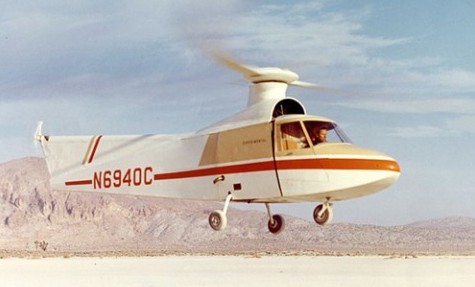
The concept of the rigid rotor coupled to a gyroscope system was developed by an Advanced Concepts Group led by Irven Culver to seek significant improvements in performance, cost, reliability, and handling characteristics of helicopters. Following testing of a small radio-controlled vehicle – with a 1.52m diameter, two blade, hingeless rotor driven by a McCoy 60 model aeroplane engine – the small design team undertook in July 1959 to design and build an experimental two-seat helicopter for full-scale demonstration of the new concept.

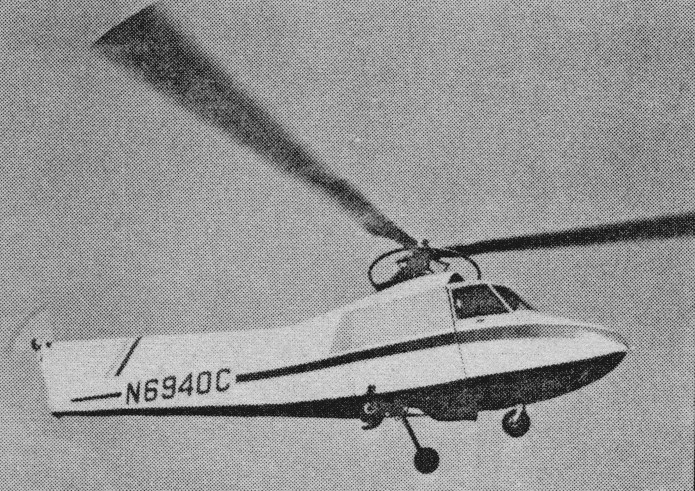
Designated CL-475, this research helicopter had a steel and aluminium tubing covered frame with fabric and a Plexiglass cabin with side-by-side seats. Its 140hp Lycoming VO-360-AIA four-cylinder air-cooled engine initially drove a two-blade wooden rotor, with gyroscopic control being provided by a double metal ‘lollipop’ attached to the blades and connected to the swashplate by springs. In this form the CL-475, which was registered N6940C, was completed in autumn 1959 and was trucked to Rosamond Lake in the Mojave Desert where initial trials could be made without attracting undue attention.

Excessive vibration was encountered during the first flight on 2 November, 1959, and forced Irv Culver’s team to experiment during the next six months with a variety of three- and four-blade wooden rotor designs. The vibration problem, however, was brought within reasonable limits only after the adoption of a three-blade metal rotor and the installation of a new gyroscopic ring attached directly to the swashplate. The CL-475, which in mid-1960 had been moved to the Lockheed facility at Rye Canyon, was then evaluated by FAA, NASA and military pilots and proved to be easy to fly. In fact, a pilot without previous helicopter experience was once able to ferry it alone. Pleased with the results, Lockheed incorporated the rigid-rotor concept in its entry for the US Army light observation helicopter (LOH) competition in 1961. Although the Army did not select this Lockheed design, it had sufficient confidence in the new concept to order jointly with the Navy two Lockheed XH-51 research helicopters.

At the end of its trial programme, the CL-475 was put in storage until 1975, when it was donated by Lockheed to the National Air and Space Museum, Smithsonian Institution. It has now been loaned to the US Army Aviation Museum at Fort Rucker, Alabama.

Lockheed began developing its rigid rotor concept with the CL-475 helicopter design in 1959 and the performance of the CL-475 encouraged Lockheed to continue development. Lockheed submitted the CL-475 to the Army as a candidate to replace the Bell OH-13 Sioux and Hiller OH-23 Raven observation helicopters. Lockheed also tested the commercial market waters without success. However, in February 1962, Lockheed’s Model 186, a new design based on the CL-475 rigid rotor, was selected as the winner for a joint Army-Navy program to evaluate the rigid rotor for high-speed flight capability.

Lockheed CL-475 prototype
Registration: N6940C
Engine: 1 x 140 hp Lycoming VO-360-AIA
Main rotor: three-blade
Main rotor diameter: 32 ft
Weight: approx 2,000 lb
Seats: two side-by-side

Lockheed AH-56A Cheyenne

In March 1966 Lockheed began development of an advanced armed heli¬copter, designated as the AH 56A Cheyenne. Known as a compound helicopter, being provided with small low set cantilever wings to off load the main rotor in high speed flight, it was designed to have a maximum level speed 244 mph (393 km/h). Army support came to an end in 1969, and economic considerations eventually caused Lock¬heed to end its development programme.

Gallery

AH-56A Cheyenne
Engines: 1 x General Electric T64 GE 16, 3925 shp.
Rotor dia: 51 ft 3 in (15.62 m).
Length: 60 ft 1 in (18.31 m).
Height: 13 ft 8.5 in (4.18 m).
Max TO wt: 18,300 lb (8300 kg).
Max level speed: 244 mph (393 kph).
Range: 1,225 miles.
Ceiling: 20,000 ft.

Lockheed

Loughead Aircraft Manufacturing Company
Lockheed Aircraft Company

Of the Loughead three brothers Victor (the oldest), Allan and Malcolm, Allan started as a mechanic for a local aviation enthusiast who owned a Curtiss pusher, and he soon became a barnstormer and flight in-structor.
Allan and Malcolm Loughead built their first aircraft, the Model G seaplane, in 1913.
With Malcolm, he formed the Loughead Aircraft Manufacturing Company at Santa Barbara, California, in 1916,
With the help of designer Jack Northrop, Lockheed built the F1 twin-engined flying-boat in 1918, but it was turned down by the Navy. In 1923 Northrop left to take a job with Donald Douglas, and later founded his own corporation.

Loughead Aircraft Manufacturing Company survived until the end of World War 1, when thousands of surplus aircraft and engines flooded the market. Malcolm left to join the automobile industry. The original Lockheed Com¬pany built the moulded-plywood S-1 sports plane. It could not compete with cheap war-surplus aircraft, and the company suspended manufac¬ture in 1920 and was liquidated in 1921.

In 1926, Allan refounded the Lockheed Aircraft Company of Hollywood, and with a young designer, John K. Northrop, soon turned out a radical all wood, monocoque, cantilever monoplane the Lockheed Vega from 1925, a fast two-seater intended for airline work. 141 were built between 1925 and 1932.

Company moved to Burbank 1928. Vega gave rise to low-wing series of transports, the Altair/Orion/Sirius, differing in seating arrangements. Many records and notable flights performed on these aircraft.

In 1929, Lockheed came under the control of the Detroit Aircraft Corpora¬tion, then came the Depression. After the Great Crash Detroit Aircraft Corporation went bankrupt in 1931 and with it, Lockheed. The company went into receivership and, in partnership with Carl Squier a Lloyd Stear¬man, Robert Gross bought the assets in 1932 for $40,000.

Lockheed brothers had left the company, formed Lockheed Brothers Aircraft Corporation Company purchased by Robert E. Cross and Lloyd Stearman for a consortium, resumed trading under old name.

Launched a new series of twin-engined transports, starting with the Lockheed 10A Electra. To¬gether with Stearman and a young de¬signer, Hall Hibbard, Gross supervised development of the Lockheed 10 the original Electra. If the project failed, the company would surely collapse. Midway through the development, wind tunnel tests revealed that the plane had insufficient rudder control. Working in a wind tunnel at the University of Michigan, a young graduate student modified the design and added a twin tail. It solved the problem, and Gross, recognizing talent, immediately hired the student. His name was Clarence “Kelly” Johnson.
In 1934, the Lockheed 10 Electra flew.

In 1937 the L-14 Super Electra appeared, a smaller executive version of the L-10A. RAF bought 250 bomber variants of 14, called Hudson, in 1938. L-18 Lodestar flew 1939, a lengthened and more powerful Model 14.
The Lockheed P-38 Lightning of 1939, introduced as a high-altitude interceptor, had worldwide use, mainly as ground-attack and fighter-bomber aircraft.

In 1939 TWA formulated a requirement for a long-range transport and C. L. Johnson designed the 558km/h Constellation, which first flew in 1943. First 22 requisitioned as military transports. Built up to 1958 in increasingly powerful, larger-capacity and longer-range versions.

Ventura of 1941 was a bomber variant of Model 18. Naval PV-1 came in 1942 and the torpedo-carrying PV-2 Harpoon in 1943. Success of the Harpoon led to long-range Neptune, main equipment of patrol squadrons 1947-1962.

Lockheed was employing 94,000 people by June 1943, but by the end of 1944 were down to 60,000, and by the summer of 1945 they were down to 35,000 – fewer than 1939.

By April 1948 their employment was down to 13,800.

First flight August 1954 of C-130 Hercules tactical military turboprop transport, later also produced in commercial form; delivered from 1956 and remaining in production in 1999 in latest C-130J form with fully integrated digital avionics, advanced engines and propellers, and other improvements (well over 2,200 Hercules transports built).

Company also produced the four-turboprop Electra airliner (first flown December 1957) and derived P-3 Orion long-range maritime patrol/reconnaissance aircraft (first flown August 1958, and remaining in production in the U.S.A. until 1995, although Japanese Kawasaki-built examples continued in production).

Around 1960 Fokker was looking for and American partner. Lockheed turned down the proposal because they thought it could not be profitable, but Northrop agreed to by a twenty-one percent share.

C-130 followed by much larger strategic C-141 StarLifter transport (first flown December 1963) and C-5A Galaxy (first flown June 1968) which, at 348,810kg gross weight and with a span of 67.88m, was then the world’s largest operational aircraft; C-5B followed for USAF and two C-5As modified to carry outsized space cargoes as C-5Cs.

First U.S. jet fighter was Lockheed P-80 Shooting Star (first flown January 1944) which later saw service in Korea. F-104 of 1954 was smallest-span-ever American service aircraft (wings spanned 6.7m) and first fighter capable of sustained Mach 2.0. Saw widespread service as part of U.S. offshore arms and aid deals. Subsequent activities included CP-140 Aurora for Canada as a development of the Orion ;S-3 Viking carrier-borne anti-submarine aircraft (first flown January 1972 and later also used by the U.S. Navy in ES-3A electronic reconnaissance and signals/ communications intelligence, and US-3A carrier onboard delivery variants); and L-1011 TriStar widebodied airliner (first flown November 1970).

A secret “Skunk Works” at Palmdale, California, was responsible for the military U-2 Dragon Lady spyplane (first flown August 1955), A-12 Mach 3.6 strategic reconnaissance aircraft sponsored by the CIA (first flown April 1962) and developed into the YF-12 interceptor and fully operational SR-71A Mach 3+ strategic reconnaissance aircraft for the USAF, and the F-117A stealth fighter for subsonic night attack on priority targets (first flown June 1981), among other types.

In September 1977 Lockheed Aircraft Corporation took new name Lockheed Corporation.
The Tactical Military Aircraft division of General Dynamics bought by Lockheed Corporation in March 1993, becoming Lockheed Fort Worth Company. In March 1995 Lockheed Corporation merged with Martin Marietta to form Lockheed Martin Corporation. Intended merger with Northrop Grumman, announced in July 1997, did not take place. Company set-up then included Lockheed Martin Tactical Aircraft Systems in charge of F-16 production and updates and part of the F-22 program; Lockheed Martin Aeronautical Systems tasked with F-22, military transport and maritime patrol aircraft work, plus production and support of C-130 and P-3; and Lockheed Martin Skunk Works which undertakes advanced, secret and innovative design/development, work including support and improvement of F-117A, U-2 / TR-1, X-33 reusable launch vehicle and more. There are many other divisions.

1990 Lockheed Martin programs include continued production of the F-16 fighter and C-130 transport, development and production of the F-22 Raptor air dominance fighter (first flown September 1990, with first flight of an engineering and manufacturing development aircraft September 1997, and deliveries of full production to start to USAF in 2002 to allow initial operational capability in 2005); and development in association with Northrop Grumman and BAe of Joint Strike Fighter for U.S. forces.
Lipkowski Helicopter

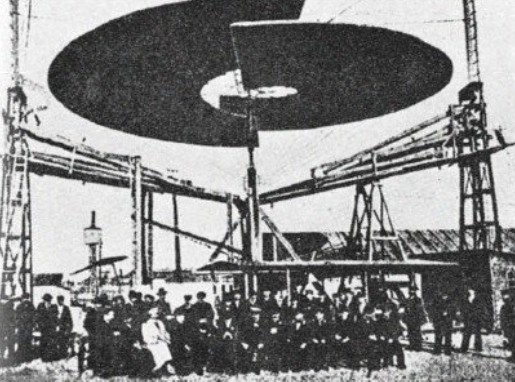
Jozef Lipkowski, a Polish engineer and inventor working in France and Russia, designed a huge helicopter-type flying machine in Russia at the end of 1904. According to descriptions in the contemporary press, the proposed aircraft featured two vertical co-axial shafts of steel tubes, to which two gigantic contra-rotating ‘screws’ (rotors) were attached. Each ‘screw’consisted of two half-circular ‘wings’ (blades) which were supported by a long steel tube and comprised a wooden ‘felloe’ and steel ‘spokes’ covered with doped silk. A nacelle, accommodating the aviators and two engines, one for vertical and the other for horizontal flight, was mounted beneath. A rudder and a propulsive airscrew on a horizontal shaft were attached to the nacelle and provided means of control.

Early in 1905 the Pitulovskie Establishments in Petersburg constructed one complete rotor for the proposed aircraft for tests which were aimed at determining whether a vertical ascent would be possible. Ground trials with the gigantic rotor device, driven by an electric motor, yielded remarkably interesting results, confirming in full the designers calculations. An official report, dated 16 March, 1905, and signed by Prof N. L. Shtchukin, who was appointed to witness and supervise the experiment, stated that Lipkowski’s rotor, consisting of two ‘half-wings’ with an overall diameter of 16m and a combined gross area of 200 sq m, which were powered by a 35hp (electric) motor, lifted 778kg at 40rpm, this indicating a lift/power ratio of 22.22kg/hp (or more than twice as good as the then best achievements).

For these initial tests the half-circular blades were set at a very efficient angle of incidence of 3.5°. Later Lipkowski made further trials with the blades set at various angles from 5° to 8°. Allowing for unforeseen contingencies and the possible loss of rotor efficiency in a complete machine, the designer accepted a lift/power ratio of 12.5kg/hp as the basis for his final calculations. Estimated weights of various elements of his giant helicopter included: two rotors 2000kg; nacelle, steering and transmission systems 1000kg; crew and fuel 1000kg; two engines 4500kg; the estimated gross weight of the machine being 8500kg. Lipkowski proposed using a 700hp engine for vertical movement and a 150hp engine for horizontal flight. In later years he went to France to see whether he could obtain the required engines, but impressed with Wrights’ and Bleriot’s flights, he came to the conclusion that the future of flying belonged to fixed-wing aircraft and abandoned work on his pioneering project.

LIFT Aircraft Hexa

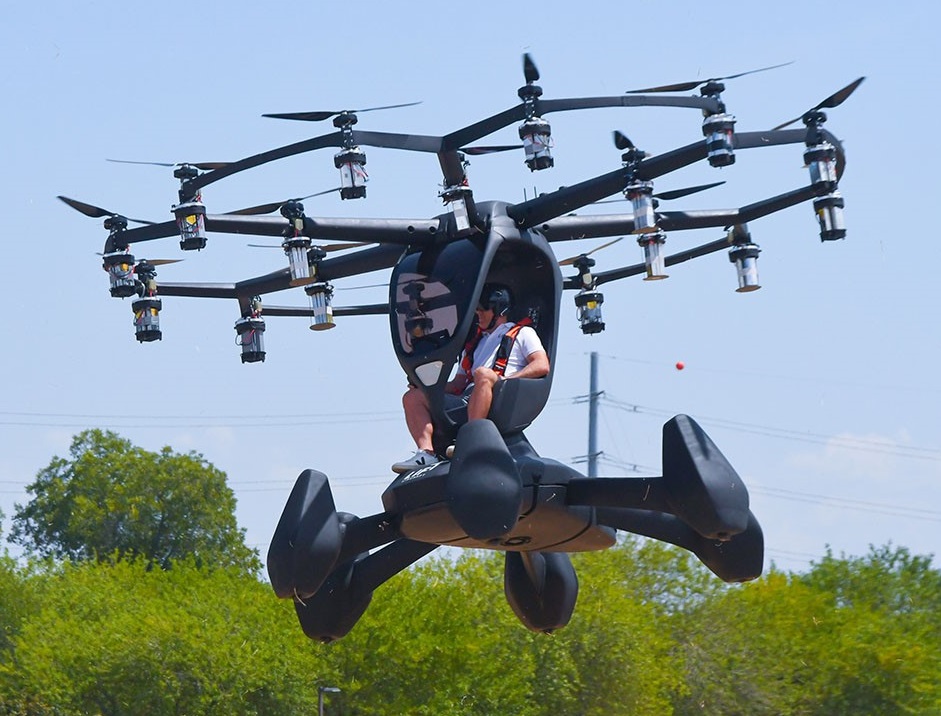
A multicopter being developed by Texas company LIFT Aircraft circa 2020, the company advertises it as an ultralight, but legal ultralights must weigh less than 254 pounds – Hexa tips the scales at 432 pounds.

The craft looks marginally smooth in flight, and the pilot demonstrates only vertical flight, very slow forward flight and a little hovering.

It’s called Hexa, though Hexa has 18 rotors, which are, the company says, all individually controlled by a computer utilizing triple-redundant autopilots. There’s also a whole-airplane recovery parachute system (WARPS), airbags. and it’s said to be amphibious.

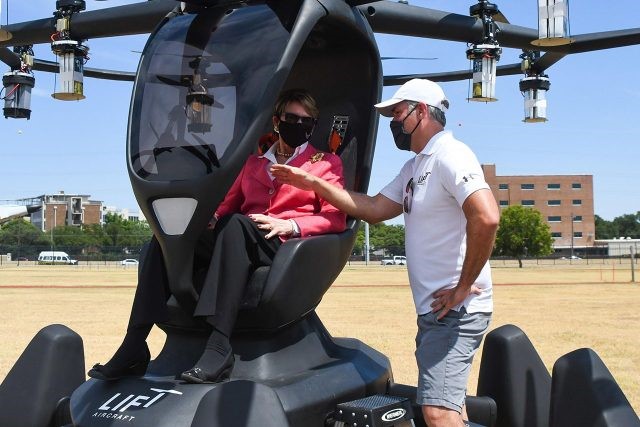
The United States Air Force witnessed a flight test of a new. The craft was flown by the company’s CEO and chief pilot for the Air Force at Camp Mabry. The USAF Chief of Staff even sat in it. USAF Secretary Barbara Barrett was there for the demonstration.

U.S. Air Force Secretary Barbara Barrett with LIFT CEO Matt Chasen