This, the first rotorcraft (1952) which Nagler designed after his arrival in the United States, was of the ‘strap-on’ variety. Its intended use was to cross rivers or other obstacles. The required height was to be reached by power from six solid-propellant rockets, fired in pairs and providing a 9kg thrust for about twenty seconds. Slow descent was ensured by the auto-rotation of the rotor. The six rockets could be replaced for later use. The wearer’s legs were to be the landing gear.
With the addition of a 2 cylinder opposed engine driving a pusher prop also in 1952, the XNH-1 was re-designated XNH-2 Heligyro.
XNH-I Heliglider Engine: 6 x 9 kg rockets Weight empty: 29.5kg / 67 b Crew: 1
Bruno Nagler, whose earliest rotary wing experiments go back to 1929, emigrated to the United States in 1952. There he has built various prototypes, all single-seat, like his former designs, but with a totally different concept of an anti-torque rotor in the extension of the main rotor.
Nagler’s Model NH-160 single-seat helicopter first flew in 1955. The VG-1 Vertigyro developed later comprised a Piper Colt aircraft fuselage with conventional engine. Its rotor system was driven by a turbine engine, enabling the craft to be flown as a gyroplane, a helicopter, or a combination of both.
Design work of the (formerly Unis, Obchodni Spol, Sro) Bongo began in 1992 followed by model tests in 1993 with construction of a technology demonstrator started in 1996.
A public debut was at Ârno International Machinery Fair 1997 (then called TINTS NA40 and with two-blade main rotor) by the first prototype, OK-CIU. The prototype began 70 hours of tethered hover flights in March 1998, and two further prototypes were completed by mid-1998.
NA Design planed Normal category certification to FAR Pts 27, 33, 34 and 36 by late 2003, subject to finding joint venture Western partner to share certification, manufacturing and marketing costs. In 2002 financial support of US$2.5 million was still being solicited. The project was put on hold in late 2002 while finance was sought but, despite this, a new version, the four-seat NA50, was announced in late 2002.
Nothing further had been heard by early 2003.
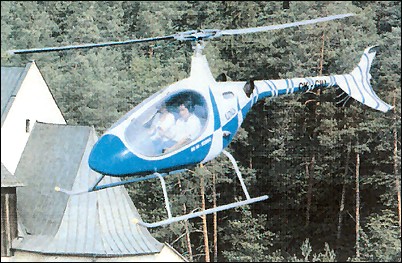
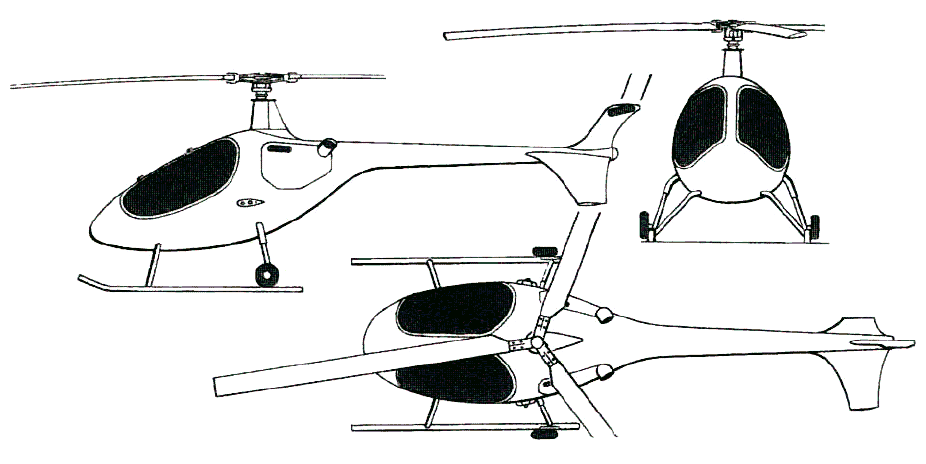
The NA Design NA 40 Bongo two-seat ultralight helicopter features a three-blade teetering rotor and pod and boom fuselage with an inverted Y-tail unit. A Cocomo patented anti-torque system eliminates the need for a tail rotor, reducing transmission complexity and operating noise level.
Flying controls were conventional cyclic and collective, with a ducted air anti-torque system. The structure is mainly composites, including the rotor blades. Some aluminium is in the fuselage, otherwise it is a double-curvature monocoque sandwich, with a laminated, vacuum-formed elastomeric rotor head. The landing gear is a tubular twin-skid gear with ground handling wheels. Inflatable permanent or emergency floats are optional.
Power is from two 86kW Prvni Brnenska Strojina PBS Velka Bites ÒÅ 50Â turboshafts, with FADEC and dual ignition. The engines are mounted side by side behind the cockpit with transmission via a combining gearbox. A single self-sealing fuel tank is beneath the engines, with a capacity of 210 litres.
A baggage space is aft of the two seats and gull-wing window/doors are on each side, hinged on the centreline and opening upward. A dual 27V DC electrical systems and external power receptacle are provided.
NA40 Bongo Rotor diameter: 7.48m Fuselage length: 6.15m Height to top of rotor head: 2.35m Empty weight, equipped: 480kg Max load on external sling: 250kg Max take-off weight: 950kg Never-exceed speed: 280km/h Max cruising speed: 250km/h Econ cruising speed: 230km/h Hovering ceiling IGE: 4,000m Max range: 500km
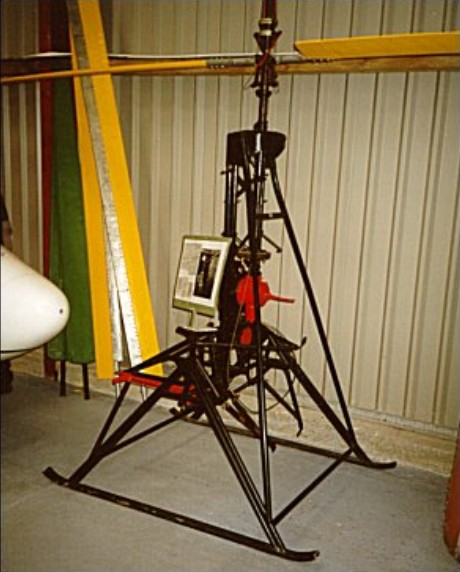
Built in 1954 at Salford, Manchester by Mr. John Murray, a motor mechanic from Salford, who started designing and building this single seat helicopter in 1951 in his spare time. He utilised the equipment available to him in his garage and spent three years and over £1000 building what was designated the M-1. It was ready to start testing in May 1954 powered by a JAP J-99 piston engine. In 1995 the Murray M-1 was donated to the Helicopter Museum but is missing the engine and many other original components.
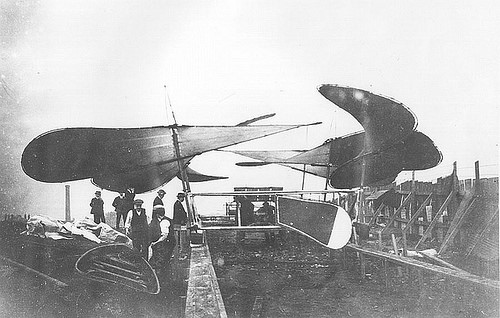
In Glasgow, construction on Mumford’s second helicopter was started in 1913.
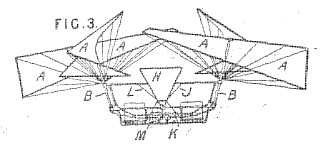
The patented Mumford machine was originally identified as the Mumford Aerodrome in a 1909 article published in “The Aero”, Vol. 1, No. 1.
The crew consisted of one pilot, no passengers.
The invention of Mumford was patented in Great Britain as improvements in or connected with Aerodromes or Flying Machines. In the USA a patent was also acquired by Mumford; Improvements in or connected with Aerodromes or Flying Machines.in France there were equivalent patents Aéroplanes ou machines volantes and Machines volantes.
In Glasgow, Mumford’s first machine was started in 1908, and after a rather long and active life for an early flying machine, was wrecked in 1912. In that time, it went through a number of improvements and alterations, as various flaws with the design were attended to. Construction on the second helicopter was started in 1913.
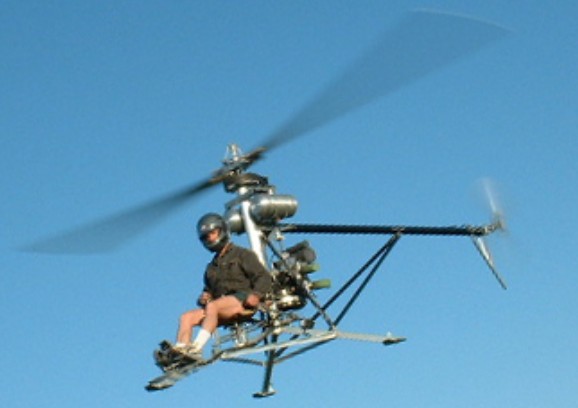
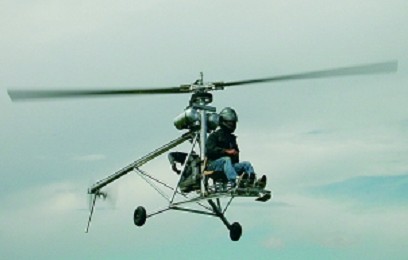
The ultralight Mosquito is one of the worlds lightest manned Helicopters that was designed and developed over 10 years to deliver performance, relability and easy of flight. The original prototype has been flying since 1994 and meets the ultralight Part 103 requirements.
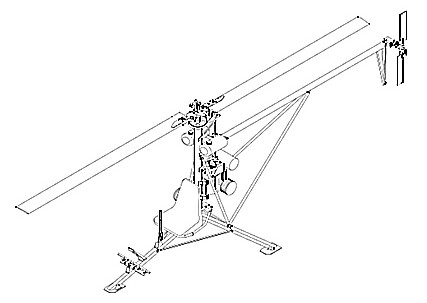
The Mosquito frame is made up of Aircraft Grade 6061-T6 aluminum and utilises a simple triangulated structure with straight tubing throughout to maximize strength, reduce weight and simplify construction. The additional use of a Carbon Fibre tail boom and support struts adds to the Mosquito’s structural ridgidity. The Mosquito’s tripod legs are equiped with small skid pads to help reduce lateral movement during engine run-up to lift off stage. Ground handling wheels are also available to easy ground transport.
The Mosquito is powered by Compact Radial Engine’s – MZ202, 60-hp, a two cycle, two cylinder engine. This engine empolys Reed Induction which yields a very flat torque curve ensuring power is delivered constantly over the required operating range. The MZ202 also has a lower operating speed of 6000 rpm resulting in less stress on the engine and improving reliability. The complete engine package only weighs 69 pounds and comes with a 180-watt alternator that provides power to run the electrical system which also features and an electric start system.
Mosquito
The primary reduction is bolted directly to the engine. A centrifugal clutch on the engine crankshaft permits startup of the engine without the load of the rotor. Power is transmitted from the clutch to the driven pulley of the reduction through an HTD cog belt. The driven pulley houses the sprage clutch, which permits the rotor to overspeed the engine during autorotation.
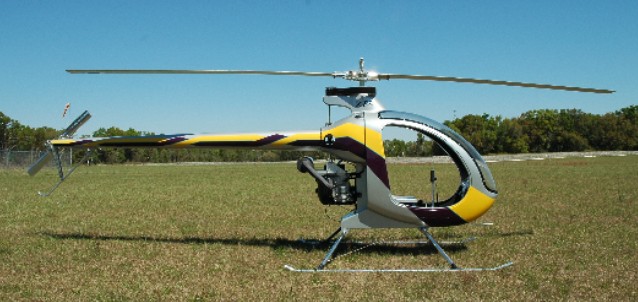
The Mosquito XE is the same aircraft, but the open frame tubing has been replaced with an all fiberglass closed in design. The XE airframe is a unibody construction made entirely of high quality fiberglass in a vinylester matrix. Power is provided by the same Compact Radial Engines MZ202 used for years on the open version of the Mosquito. This two cylinder, two stroke engine has a power output of 60hp, ample to do the work for its 610lbs of gross weight.
Mosquito XE
The power train, controls and rotor systems have been through some minor modifications to suit the XE design. The collective control has been adjusted to adapt to the different mounts in the XE. The main rotor blade diameter has increased by 1.5 ft to account for the additional gross weight. The Mosquito XEL is the same as the XE but is equipped with floats.
Materials provided with the kit include fiberglass airframe parts, machined parts, instruments (Rotor/Engine Tach, redundant digital engine tach with hour meter, dual EGT/CHT, Airspeed Indicator), rotor blades and engine. Many of the airframe parts are already joined. The builder needs only to bolt and rivet the final major components together.
A comprehensive assembly manual is provided along with a full set of part and assembly drawings as well as exploded view drawings. Builder assistance can be provided by phone or email. It requires around 250 to 300 hours of build time. Standard shop tools are required to cut and form some of the simple frame and control parts and for bolt and rivet assembly. A quick build parts set, in which all the parts nomally fabricated and formed by the builder are already finished, is available to save more build time. A small amount of welding is required on the exhaust system.
Optional extras to consider with purchase of the Mosquito include factory paint, tail fins, ceramic pistons, seat covers, governor kits, wheel kits and quick build parts. The Mosquito XE can be ordered in several stages of kit. The 1st kit includes the materials and components for building the composite airframe. This group consists of the composite enclosure, fuel tank, tail boom, landing gear and the full Builder’s Set of Plans and Instructions. The kit is designed to meet the 51% rule. The 2nd kit is for the cyclic, collective, torque tubes, push-pull tubes, swash plate, and rotor controls. The 3rd is the power drive system consisting of primary and secondary reduction units, sprague clutch, engine coupling shafts, tail rotor drive shaft components, gear boxes, main rotor shaft assembly, and associated bearings, couplings, etc. and the 4th group includes the engine, battery, centrifugal engine clutch, fuel tanks, fuel valves, fuel lines, throttle, switches, wiring, and instruments. The final stage is the assembly of the rotor heads, the tail rotor blades, and main rotor blades but the manufacturer likes to see you have some training under your belt before finishing this stage and being tempted or hurried to get airborn.
Delivery on complete kits is around 6 months from placing a deposit, or around 2 months for a kit group, depending on factory demand at the time.
Total Kit Price: US$17,495 after US$2,000 training rebate in 2009.
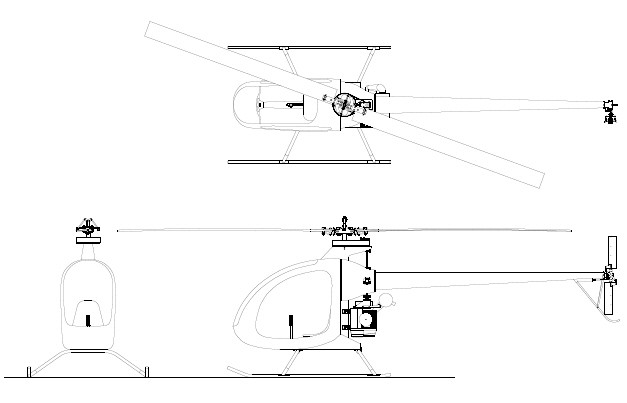
Mosquito Engine: Compact Radial Engines MZ202, 2 cylinder, 2 stroke, 60 HP (45kW) Frame Length: 16 ft. Overall Length: 20 ft Width: 72 in. Height: 83 in Main Rotor Diameter: 18 ft Tail Rotor Diameter: 40 in. Empty Weight: 254 lb. Gross Weight: 530 lbs Useful (Pilot) Load: 250 lbs Fuel Capacity: 5 US gallons Main Rotor Speed: 540 rpm Tail Rotor Speed: 2500 rpm Fuel Flow at Cruise: Approximately 4.5 U.S. Gallons per hour Flight Duration: Approx. 60 min. Hover in ground effect: 8,000 ft. (estimated) Hover out of ground effect: 6,500 ft. (estimated) Max Speed: 70 mph
Mosquito XE Frame Length: 16 ft Overall Length: 20 ft Width: 72 in Height: 84 in. Main Rotor Diameter: 19.5 ft Tail Rotor Diameter: 40 in. Empty Weight XE: 298 lb Gross Weight: 610 lbs Useful (Pilot) Load: 240 lbs. Fuel Capacity: 12 US gallons Engine: Compact Radial Engines MZ202, 2 cylinder, 2 stroke 64 HP (45kW) Electrical System: 12 volt DC battery, starter, 180 watt alternator Main Rotor Speeds: 540 rpm Tail Rotor Speeds: 2500 rpm Fuel burn: 4.5 gph Range: 150 miles Hover in ground effect: 8,000 ft. (estimated) Hover out of ground effect: 6,500 ft. (estimated) Max Speed: 80 MPH Price: $30,000 including engine/instruments (2009)
Mosquito XEL Frame Length: 16 ft Overall Length: 20 ft Width: 72 in Height: 84 in. Main Rotor Diameter: 19.5 ft Tail Rotor Diameter: 40 in. Empty Weight XEL: 312 lb Gross Weight: 610 lbs Useful (Pilot) Load: 240 lbs. Fuel Capacity: 5 US gallons Engine: Compact Radial Engines MZ202, 2 cylinder, 2 stroke 64 HP (45kW) Electrical System: 12 volt DC battery, starter, 180 watt alternator Main Rotor Speeds: 540 rpm Tail Rotor Speeds: 2500 rpm Fuel burn: 4.5 gph Range: 60 miles Hover in ground effect: 8,000 ft. (estimated) Hover out of ground effect: 6,500 ft. (estimated) Max Speed: 80 MPH Price: $31,000 including engine/instruments (2009)
Mosquito XE3 Frame Length: 16 ft Overall Length: 20 ft Width: 72 in Height: 84 in. Main Rotor Diameter: 19.5 ft Tail Rotor Diameter: 40 in. Empty wt: 360 lb Gross wt: 720 lb Useful load: 290 lb Fuel Capacity: 12 gal Range: 150 miles Cruise spd: 80 mph Max spd: 100+ mph Fuel burn at cruise: 5 gph Engine: CRE MZ301 3 cyl 2 cycle Power 85 hp Main Rotor RPM: 590 Tail rotor rpm: 2500 Hover in ground effect 9500 ft (est) Hover out of ground effect 7500 ft (est) Price: $36,000 including engine/instruments (2009)
Mosquito XET Frame Length: 16 ft Overall Length: 20 ft Width: 72 in Height: 84 in. Main Rotor Diameter: 19.5 ft Tail Rotor Diameter: 40 in. Empty wt: 433 lb Gross wt: 820 lb Useful load (with optional aux tank): 240 lb Useful load (without optional aux tank): 290 lb Fuel capacity: 12 gal Aux tank capacity: 8 gal Range (with aux tank): 160 miles Cruise spd: 80 mph Max spd: 100+ mph Fuel burn at cruise: 8.5 gph Engine: Solar T62-2A1 turbine Power: 90 hp Main Rotor RPM: 590 Tail Rotor RPM: 2500 Hover in ground effect 9000 ft (est) Hover out of ground effect 7000 ft (est) Price: $37,000 excluding engine (2009)



 All Aero