USA
Company engaged in helicopter development immediately after Second World War. Built two-seat helicopter for U.S. Army under designation XR-11. Little more heard until the mid-1950s, when the RH-1 Pinwheel ‘strap-on’ personal helicopter appeared in 1954.
Helicopters
Roteron XM-1

In 1945 William Thomas, President of the Roteron Corporation, began work on a midget helicopter of an original design. By placing its 5-cylinder engine between the two co-axial rotors, he had more space available in the fuselage, and considerable saving in construction also resulted because power was directly transmitted to the rotors.
The rotors each had two sets of blades, a longer set below a shorter set which, produced an anti-torque effect. Both sets of blades were made of solid laminated maple wood. The pitch and speed of either rotor could be controlled and in case of engine failure they could turn by auto-rotation.
The fuselage consisted of a steel tubing frame covered with an aluminium skin and plastic covering. The rudder, supported at the end of two tubes, could pivot from the vertical to the semi-horizontal position. The tricycle undercarriage had three fully swivelling wheels.
Weight: 104kg
Rotor span: 4.72m
Length: 3.25m
Seats: 1
Haseloh Helicopter
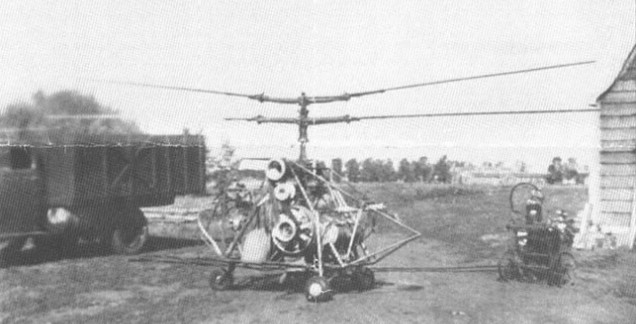
The origins of Rotary Air Force South Africa. date back to 1943 when Bernard J. Haseloh hovered his first experimental helicopter at his shop in Ponoka, Alberta , Canada.
Mr. Haseloh was discouraged from building and testing amateur/experimental built helicopters, by the Government who felt that the technology for the power driven rotor system was too complex for the private individual.
To further complicate matters, at that time the Government had no regulations in place for amateur/experimental built helicopters.
Haseloh did have an experimental helicopter hovering in 1943.
Robinson Helicopters R66
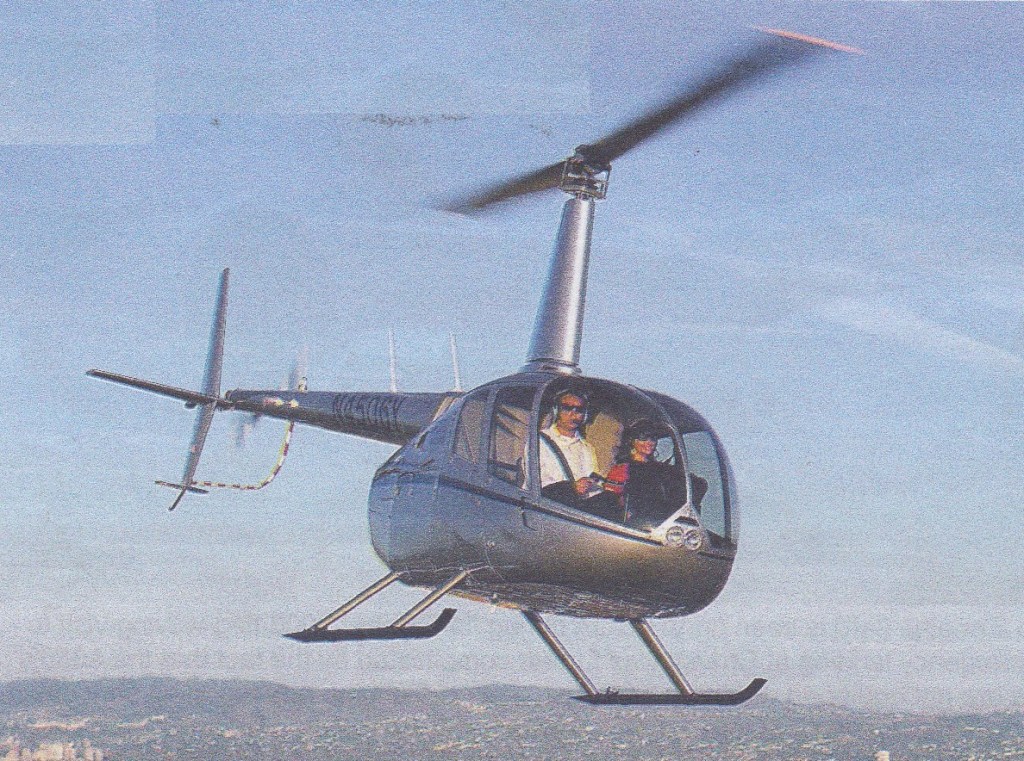
Robinson Helicopter Company achieved certification of the new turbine-powered R66 on 25 October 2010 during a ceremony held at the Robinson facility in Torrance, California, three years and eight months after the company had publicly announced plans to develop a five-place turbine helicopter.
The R66, the first Robinson with such power, has a single Rolls-Royce RR300 turboshaft engine. Like the piston-powered R44, the R66 has a two-blade rotor system and an open interior configuration but with increased reserve power and altitude performance.

The relationship between Rolls-Royce and Robinson Helicopter Company began in 2005 with the signing of a development agreement, and the two companies have worked closely since then to develop the RR300 engine, a development of the Allison C250.

Robinson Helicopters R44
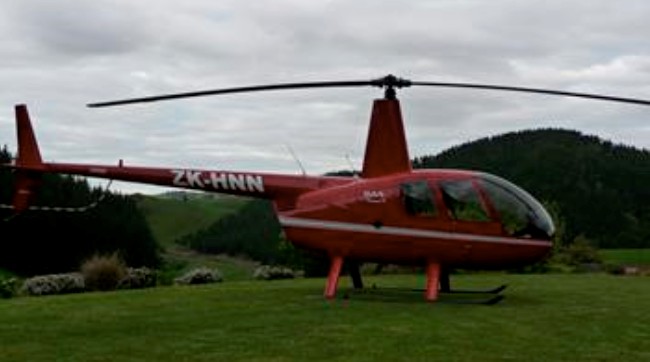
Although one of the most successful civilian helicopters since the Bell JetRanger, the R.22B was limited to only two people and in the summer of 1986 Frank Robinson began designing a larger four-seater version as the R44.
Designated R44, this new aircraft closely resembled its smaller sibling and retained the two-blade main rotor layout. Designed to the requirements of FAR Pt 27, features include electronic throttle governor to reduce pilot workload by controlling rotor and engine rpm during normal operations, rotor brake, automatic clutch engagement to simplify and reduce start-up procedure and reduce chance of overspeed, and T-bar pistol grip cyclic control.
The R44 is powered by the Lycoming 0-540-F1B5 engine, which normally produces 260 hp at 2,800 rpm. In the R44, the rpm is reduced to 2,692, and the pilot is limited to using 225 hp for five minutes and 205 hp for maximum continuous power. The five-minute power setting (225 hp) is only 86.5% power, while 205 hp is just 78.8%. Over the years, Lycoming has been so impressed with the reliability and condition of both the R22 and R44 engines that they actually increased the TB0s to 2,200 hours. This is the first time a helicopter powered by a reciprocating engine has been given a longer TBO than fixed-wing aircraft powered by the same engine.
The R44 Astro Lycoming O-540 FIB5 gives a cruise speed of 210km and a range of 640km plus.
Flying controls are conventional, with Robinson central cyclic stick; rpm governor; rotor brake standard. The left-hand collective control lever and pedals can be removed if required. Four persons are seated 2 + 2. Baggage stowage beneath each seat. Dual controls. Cabin heated and ventilated. Tinted windscreen and door windows.
The prototype (N44RH) first flew on 31 March 1990 and two aircraft were engaged on the flight test programme. The first two R44s built accumulated more than 200 flying hours between 1990 and 1992. A third aircraft flew in March 1992, and the type was certificated on 10 December 1992.
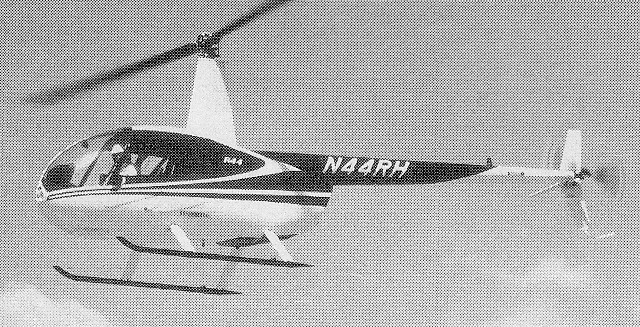
A new production site at Santa Maria, California, has been prepared for the R44, though the first 25 aircraft were built at Torrance alongside the R22. This first batch of helicopters was only being released to customers in the south-western USA, in case they need to be recalled for modifications.
Introduced onto the market in 1993, the R-44 Astro was as successful as the smaller R-22 Beta with both operators and private owners who are moving into more cost effective machinery which combines turbine performance with piston engine economy. On 22 March 1992 36 deposits of $15,000 was taken on the first day of R44 sales. During 1994 Robinson sold over 195 helicopters — 89 R-22s and 106 R-44s.
Export deliveries commenced in 1993. By mid-1993 orders were approaching 150. Fuel consumption is less than 68 litres per hour, and the patented Robinson tri-hinge rotor is fitted with a rotor brake. Flyaway cost of a fully equipped R44 was listed at $235,000. Standard equipment includes rotor brake; tinted windscreen and windows; belly hardpoint; dual landing lights; navigation, panel and map lights; anti-collision light; ground handling wheels; tow cart adapter, rotor blade tie-downs; and windscreen cover. Optional equipment includes three-cylinder engine priming system; RHC oil filter; observation bubble windows; cabin heater/ defogger; metallic base or trim exterior colours; and leather seats.
The first R44 to reach 2,000 hours was the seventh production machine, which was returned for overhaul in mid-1996. By January 1997, 308 R44s were operating in 38 different countries.
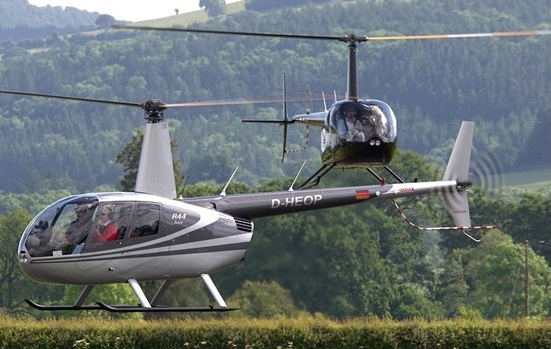
In August 1997 an R44 became first piston helicopter flown around the world.
A total of 1,125 were delivered by 1 Septemeber 2001. Deliveries had totalled 150 in 1999, 264 in 2000, and 194 in 2001. Total of 57 delivered in first three months of 2003. 1,000th delivery took place in February 2001.
In June 2002 an R44 Raven (G-NUDE) became the first piston-engined helicopter to land at the North Pole.
Japanese certification was achieved on 18 November 2002.
COSTS: Raven I US$307,000, Raven II US$343,280; Clipper I with utility floats US$323,000, Clipper II with utility floats US$356,000. Clipper II with pop-out floats US$363,000, R44 Police Helicopter US$509,000, R44 Newscopter US$549,000 (all 2003). Direct operating cost US$43.30 per hour; total (500 hours annually) US$131.87 per hour (both 2003).
Landing gear varys with fixed skids; or, on R44 Clipper I, twin utility floats; or, on R44 Clipper II, twin utility floats, or pop-out helium floats, which inflate in 2 seconds.
The Raven features as standard a hydraulic flight control system, maintenance free ‘elastomeric’ tail rotor hinge bearings, RPM governor, rotor brake and auxiliary fuel. The 260hp O-540 is derated to 205hp (maximum continuous) and 225 hp (5 minute take-off rating). The Raven II has a fuel injected IO-540 de-rated to 245 hp for five minutes and 205 hp maximum continuous. This gives better altitude performance and a 100 lb increase in payload.
Versions:
R44 Astro
Initial version; no longer produced.
R44 Raven I: Basic version, introduced in April 2000 to replace Astro; features 194kW Textron Lycoming O-540 engine derated to 168kW at T-O, 153kW continuous; hydraulic control system standard; plus elastomeric tail rotor bearings and adjustable pedals for pilot.
R44 Raven II: Upgraded version introduced in June 2002. FAA certification 10 October 2002; first deliveries November 2002. Features a Textron Lycoming IO-540 engine, 28V 70A electrical system, increased lifting area on main rotor blades, and aerodynamic tip caps on main and tail rotor blades. Total of 124 ordered and 40 delivered by February 2003, including two ENG variants. As described.
R44 Clipper I and Clipper II: Float-equipped versions, initially certified (as R44 Clipper) 17 July 1996. Both versions available with twin utility floats; pop-out floats available only on R44 Clipper II. Total of 141 Clippers sold by 1 June 2001. The Clipper was available 2003 for $281,000.
R44 Police Helicopter: Specially modified Raven II for law enforcement, with Inframetrics 445G Mk II IR sensor, TV camera and x7 zoom lens mounted in gyrostabilised nose turret; LCD video monitor; Spectrolab SX-5E 15 to 20 million candlepower searchlight; FM radio package; bubble door windows; Bendix/King KFM 985 dual-band transceiver, KY 196A VHF, II Morrow Apollo SL-60 standby comms, KT 76C transponder, 28V electrical system and extended landing gear struts. Empty weight, equipped, approx 715kg. Certified July 1997; first customer El Monte Police Agency of Los Angeles. Recent customers include the Estonian Air Force, which ordered two in February 2002 for delivery commencing May 2002, and China’s Zheng Zhou Public Security Bureau, which took delivery of one in June 2002 following its appearance at the China Expo 2002 exhibition.
R44 Newscopter: Digital electronic news gathering (ENG) version of Raven II intended for media companies and fitted with Ikegami HL-59WNA digital camera with x21 lens and 360° continuous rotation with five-axis gyro stabilisation; and microwave transmitter; four video monitors, two micro cameras, KY 196A VHF, KT 76C transponder (Mode C), GPS, two FM radios and bubble window in port door. Deliveries began January 1998; 29 sold by 1 June 2002. First digital ENG Raven II delivered on 9 February 2003 to Sky Helicopters of Garland, Texas, and was the 30th ENG Newscopter delivered.
R44 IFR: Equipped for IFR helicopter training IFR package adds US$27,200 to standard cost. 18 Sold by 1 June 2001.
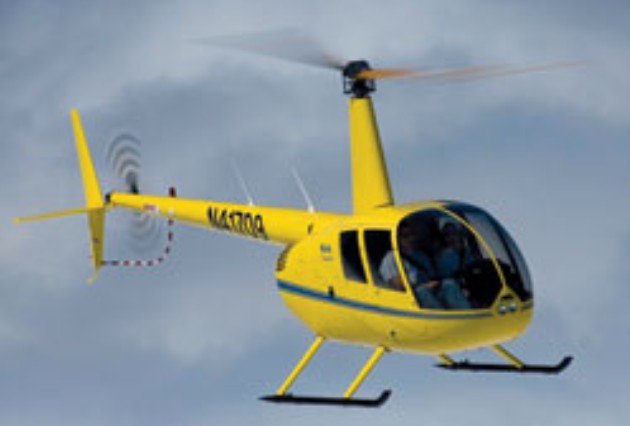
R44
Engine: 1 x Textron Lycoming O-540-F1B, 205 hp
Instant pwr: 170 kW
Rotor dia: 10 m
Empty equip wt: 1400 lb
MTOW: 1090 kg (2400 lb)
Useful load: 455 kg
Cruise @ 75%: 113 kts
Max range: 640 km
Seats: 4
Std Fuel cap: 190 lb
Aux fuel cap: 110 lb
Unusable fuel: 5 Gal
HIGE: 7000 ft
HOGE: 4500 ft
ROC: 1000 fpm
Max op alt: 14,000 ft
Vne: <2200 lb-130 kt, >2200 lb-120 kt, Doors off-100kt
Glide: @ 90 kt, 4.7-1, 1500 fpm
Robinson R 44 Astro
Engine : Lycoming O 540, 222 hp
Length: 29.757 ft / 9.07 m
Height: 10.761 ft / 3.28 m
Rotor diameter : 33.005 ft / 10.06 m
Max take off weight : 2399.0 lb / 1088.0 kg
Weight empty : 1400.2 lb / 635.0 kg
Cruising speed : 113 kts / 209 km/h
Initial climb rate : 984.25 ft/min / 5.00 m/s
Service ceiling : 13993 ft / 4265 m
Range : 348 nm / 644 km
Crew : 1+3
2008 Robinson R44 Raven II
New price: US$387,000
Engine: Lycoming IO-540, 245 hp@SL
TBO: 2200 hr
Fuel type: 100/100LL
Rotor size: 33 ft
Landing gear: Skids/Floats
Max ramp weight: 2500 lb
Gross weight: 2500 lb
Landing weight: 2500 lb
Empty weight, std: 1506 lb
Useful load, std: 994 lb
Payload, full std. fuel: 700 lb
Usable fuel, std: 49 USG
Overall length: 38 ft. 2 in
Height: 10 ft. 11 in
Power loading: 10.2 lbs./hp
Seating capacity: 4
Cabin doors: 2
Cabin width: 49 in
Cruise speed 75% power: 113 kt
Best rate of climb (SL): 1000 fpm
Service ceiling: 14,000 ft
Hover in ground effect: 8950 ft
Hover out of ground effect: 4500 ft
Robinson Helicopters R22
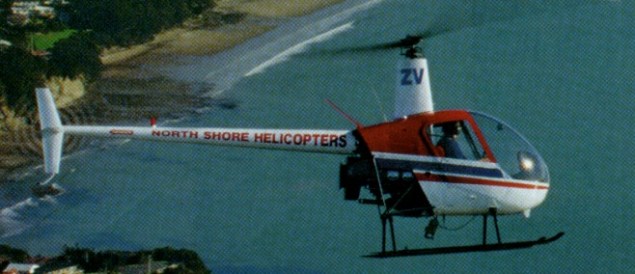
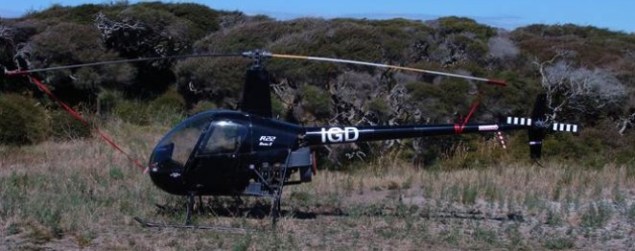
From the time that helicopters became practical aircraft their unit costs have always been high in comparison with those of fixed-wing aircraft of similar capacity. In the United States Franklin D. Robinson formed the Robinson Helicopter Company, based at Torrance in California, to design and market a lightweight civil helicopter which would be competitive in price with two-seat fixed-wing aircraft then on the market.
Robinson produced the small two-seat R-22, powered by a Lycoming piston engine and the two-blade rotor system was designed around a patented three-hinge coupling that does away with lag hinges, dampers and hydraulics. The O-320 normally runs at 2,700 rpm to produce 160 hp. Robinson reduced the rpm to 2,652 and limited the pilot to only 131 hp for five minutes and 124 hp for maximum continuous power. An elastic teeter hinge stop was later included to prevent the rotors from striking the tail boom while winding up or running down in gusting winds (Beta model). To reduce operating costs the R-22 is built from non-exotic materials, relying on standard aerospace metals with an emphasis on durability and maintainability. Other than routine maintenance every 100 hours, the helicopter only requires a factory overhaul every 2000hrs of flight.
Design began in 1973 and the first R-22 flew on 28 August 1975, followed by a second in early 1977, and these two aircraft were used to gain FAA and CAA certification on 16 March 1979 and June 1981 respectively. The R22 was the first helicop¬ter to be certificated under the new and more stringent FAR Part 27. Deliveries began in October 1979. The R-22 sold quickly and in 1983 a modified R-22A was certified to allow the helicopter to undertake IFR training and operate with US Police Forces who had shown an interest. Over 500 of these models sold world-wide and in August 1985 the R-22 Beta model was announced.
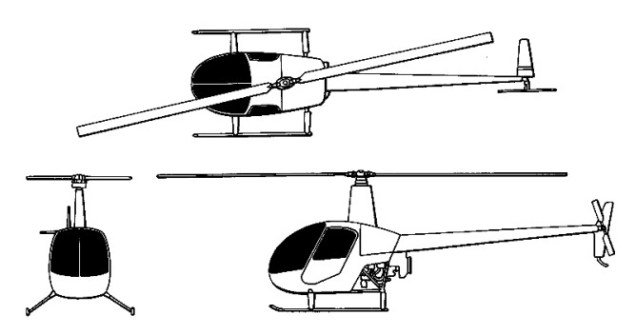
A simple, pod-and-boom light helicopter; horizontal stabiliser, starboard side only; vertical stabiliser above and below boom; offset to starboard; tall rotor mast. Horizontally mounted piston engine drives transmission through multiple V belts and sprag-type overrunning clutch; main and tail gearboxes use spiral bevel gears; maintenance-free flexible couplings of proprietary manufacture used in both main and tail rotor drives. Two-blade semi-articulated main rotor, with tri-hinged underslung rotor head to reduce blade flexing, rotor vibration and control force feedback, and an elastic teeter hinge stop to prevent blade-boom contact when starting or stopping rotor in high winds; blade section NACA 63-015 (modified); two-blade tail rotor on port side; rotor brake standard.
Flying controls are manual. Removable dual controls standard. All-metal bonded blades with stainless steel spar and leading-edge, light alloy skin and light alloy honeycomb filling; frame section of steel tube with light alloy skinning; full monocoque light alloy tailboom. Welded steel tube and light alloy skid landing gear, with energy-absorbing crosstubes.
The basic model, which became known as the R22 Alpha, was replaced from the 501st aircraft onwards, in 1985, by the upengined R22 Beta. Improvements to the R-22 Beta model include uprated 160hp Lycoming O-320-B2C engine, high-capacity oil cooler, improved heater, demister, silencer and rotor brake. This two-seater can cruise at 178km/h and with a twenty US gallon tank of fuel travel for 385km. The Beta was certified on 5 August 1985. The more powerful Textron Lycoming O-360 engine provides better high-level hover performance and allows take-off power to be sustained up to 2,285m. Previously optional, tinted windscreen and door windows were fitted as standard. Production began at c/n 2571.
Despite the company’s small size, Robinson achieved a production rate of about 30 R22s per month, with 402 produced in 1991 alone. There have also been military customers, such as Turkey, who ordered 10 for basic pilot training. Over 2300 R22s of all versions had been delivered by early 1993. Total production of the R22 had exceeded 2,500 aircraft by 1995.
Japanese certification was achieved on 18 November 2002. By September 2003, Robinson had produced 5,000 helicopters, including 390 in 2000, 328 in 2001 and 255 in 2002. Production rate 11 helicopters per week in 2003. Factory floor area 24,150 sq.m. Workforce totals 820. Company is ISO 9001 certified.
The R22 Beta II cost US$170,000 for the basic version in 2003. The engine is mounted in the lower rear section of the main fuselage, with cooling fan. Over the years, Lycoming has been so impressed with the reliability and condition of both the R22 and R44 engines that they actually increased the TBOs to 2,200 hours. Light alloy main fuel tank in upper rear section of the fuselage on port side. Transmission overhaul interval 2,200 hours or 12 years.
Two seats side by side in enclosed cabin, with inertia reel shoulder harness. Curved two-panel, tinted windscreen. Removable door, with tinted window, on each side. Baggage space beneath each seat. Cabin heated and ventilated. Electrical system, powered by 12V DC alternator, includes navigation, panel and map lights, dual landing lights, anti-collision light and battery.
Standard equipment includes rotor brake; tinted windscreen and windows; belly hardpoint; dual landing lights; navigation, panel and map lights; anti-collision light; ground handling wheels; rotor blade tiedowns; and windscreen cover.
Optional equipment includes three-cylinder engine priming system; RHC oil filter; cabin heater/defogger; metallic base or trim exterior colours; and leather seats.
The R22 was purchased by only a couple of military customers, the Turkish Army, in 1992 and Argentina, mainly for use by the Buenos Aires Police.
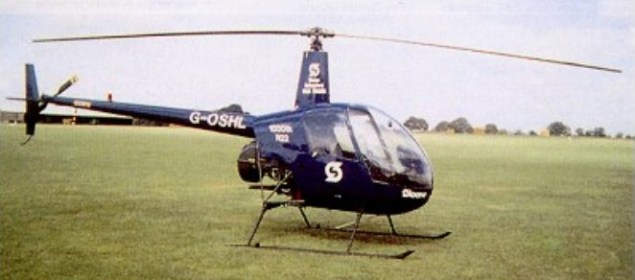
Variants:
R22 Mariner: fitted with floats and wheels, first delivered for offshore work in Mexico and Venezuela
R22 Police: version with special communications fit and optional port-side controls. Uprated electrical generator for searchlight, loudspeaker, siren and ATC transponder
R22 IFR: training version with improved flight instruments and radio for Instrument Flying Rules operations
External load R22: additional cargo hook certified to carry 181kg underslung load. When fitted aircraft has a VNE (never exceed speed) limit of 139km/h. Conversions undertaken by Classic Helicopter Corp. of Boeing Field, Seattle, Wa.
R22 Agricultural: equipped with low-profile belly hopper and spray-bar system
Specifications:
R-22
Engine: Lycoming O 320-A2B, derated to 124 hp
TBO: 2,000 hrs
Rotor: Two blade, teetering, 25 ft. dia
Length: 21 ft. 10 in
Height: 8 ft. 9 in
Max ramp weight: 1,300 lbs
Max takeoff weight: 1,300 lbs / 621kg
Standard empty weight: 790 lbs
Max useful load: 510 lbs
Payload max fuel: 389 lb
Disc loading: 2.6 lb/sq.ft
Power loading: 10.5 lb/hp
Max usable fuel: 20 USG/120 lbs
Max rate of climb, sea level: 1200 fpm
Max rate of climb, 5,000 feet: 1060 fpm
Max operating altitude: 14,000 ft
Max speed: 101 kts
Cruise, 65 % power at 8,000 ft: 94 kts
Fuel flow at 65 % power: 8 USG/hr
Endurance at 65% power, no res: 2.5 hrs
Max cruise: 96 kt
Max range cruise: 87 kt
Range max fuel/ cruise: 108 nm/1.1 hr
Range max fuel / range: 118 nm/ 1.4 hr
Service ceiling: 14,000 ft
Hover in ground effect: 6500 ft
Hover out of ground effect: 4500 ft
Seats: 2
199 built
R22HP
Engine: Lycoming O-320-B2C, 160 hp de-rated to 124 hp
TBO: 2000 hrs
Main rotor: 25.2 ft
Seats: 2
Length: 28.7 ft
Height: 8.8 ft
Max ramp weight: 1300 lbs
Max takeoff weight: 1300 lbs / 621kg
Standard empty weight: 800 lbs
Max useful load: 500 lbs
Zero fuel weight: 1184 lbs
Max landing weight: 1300 lbs
Disc loading: 2.6 lbs/sq.ft
Power loading: 10.5 lbs/hp
Max usable fuel: 120 lbs
Max rate of climb: 1200 fpm
Service ceiling: 14,000 ft
Hover in ground effect: 8,300 ft
Hover out of ground effect: 6,400 ft
Max speed: 102 kts
Normal cruise 75% @ 3000 ft: 94 kts
Fuel flow @ normal cruise: 48 pph
Endurance @ normal cruise: 2.3 hr
151 built
R-22 Alpha
Engine: 1 x Textron Lycoming O-320-B2C, 160hp derated to 124 hp
Instant pwr: 95 kW
Rotor dia: 7.7 m
MTOW: 1370 lb, 621 kg
Empty wt: 824 lb, 380 kg
Useful load: 240 kg
Fuel cap: (19.2 gallons) 115 lb, 75 lt
Pilot, passenger and Baggage 431 lb
Vne: 102 kts
Cruise Airspeed 75%: 96 kt
Maximum Range (No Reserve) 208 nautical miles
ROC @ 53 kt: 1000 fpm
HIGE: 6970 ft
HOGE: 5200 ft
Service ceiling: 14,000 ft
Crew: 1
Seats: 2
151 built
R22 Beta
Engine: 1 x Textron Lycoming O-320-B2C, 119kW, 131 hp for five minutes and 124 hp continuous
Main rotor diameter: 7.67m
Length: 6.3m
Height: 2.67m
Max take-off weight: 621kg
Empty weight: 379kg
Max speed: 180km/h
Ceiling: 4265m
Range with max payload: 592km
Crew: 1
Passengers: 1
R22 Beta II
Engine: Lycoming O-360, 131 hp
MTOW: 1370 lb
Empty wt: 855 lb
Usable fuel capacity: 72.5 lt
Optional auxiliary fuel capacity: 39.75 lt
HIGE: 9400 ft
Max op alt: 14,000 ft
Robinson Helicopters
After working for Bell, Kaman, Cessna and then Hughes, Frank Robinson formed Robinson Helicopters in 1971 to design and build a low-cost, piston engined, two-seat lightweight helicopter as the R22, which first flew in August 1975. Deliveries started 1979 and over 2,700 since sold in several versions, including improved R22 Alpha and Beta, Mariner with floats, IFR Trainer for instrument training, Law Enforcement and Agricultural versions. A four-seat development first flown March 1990 as the R44 Astro, with deliveries from 1993. Variants include IFR Trainer, Newscopter for media operations, and Police Helicopter.
1995: 24747 Crenshaw Blvd, Torrance, CA 90505, USA.
Rhyme Inc Rhyme

The Rhyme uses four small flat twin engines for power.
Engine: 4 x Rhyme 125, 40 hp
Rotor span: 4 m
MAUW: 220 kg
Empty weight: 65 kg
Fuel capacity: 30 lt
Max speed: 200 kph
Cruise speed: 100 kph
Fuel consumption: 10 lt/hr
Seats: 1
Price (1998): $30,000
Rhyme Inc
1998:
H&M Minami Aoyama East 304 Minami Aoyama
5.11.14 Minato-ku
Tokyo 107
Japan
LSA helicopter builder
Revolution Voyager 500
The two seat Voyager 500 was launched at the Sn ‘n Fun show in Florida in 1998. Still only in kit form, it featured a three cylinder two stroke engine.
Engine: US Airpower, 138 hp
Rotor span: 6.80 m
Blade area: 0.2 sq.m
MAUW: 515 kg
Empty weight: 276 kg
Fuel capacity: 76 lt
Max speed: 193 kph
Cruise speed: 152 kph
Minimum speed: 0 kph
Climb rate: 6 m/s
Seats: 2
Fuel consumption: 30 lt/hr
Kit price (1998): $48,500
 All Aero