RotorWay International Executive

162F

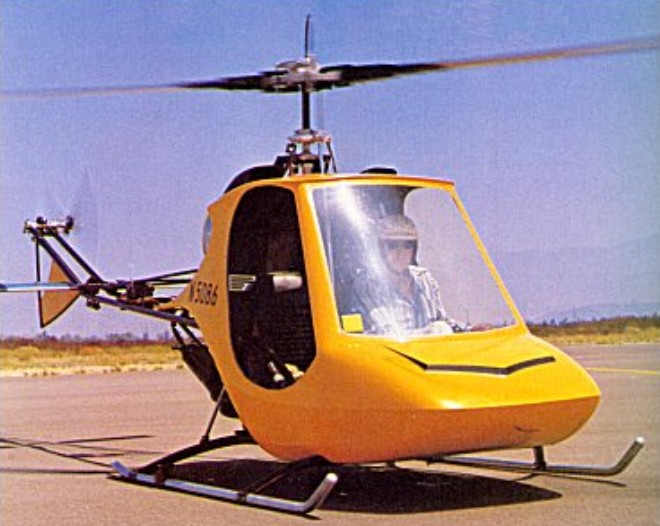
First presented at the 1980 Oshkosh. The RotorWay Exec is a two-place aircraft which features Rotorway’s RW-145 engine which offers improved operation on inexpensive automotive fuels as well as a greater ability to accomplish hovering maneuvers. Its asymmetrical airfoil rotor blades, a result of several years of research and development, reduce the autorotation descent rate to approximately 1300 fpm, and the increased lift for given pitch movement of these blades translates into less wear and tear on the powerplant. Other features include a simplified rotor blade thrust retention system, a fully enclosed streamlined fuselage and ultra-light tail boom construction.
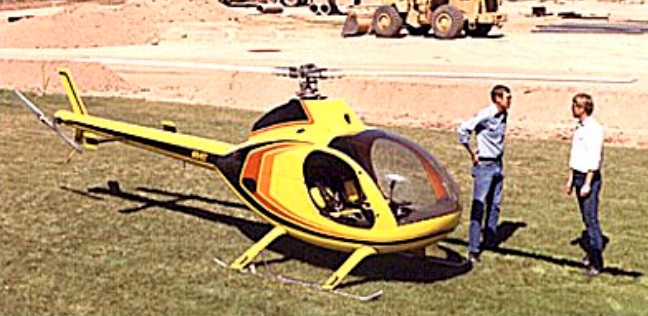
Rotorway Exec

Purchased by a former customer, John Netherwood, a businessman from England, the new company recognized the design hurdles of the Elete and promptly set out to address making the proven Exec model a better aircraft to sell, the Exec 90. The Exec was reviewed from top to bottom. Any and all suggestions from the experienced staff were considered, evaluated and many implemented. Extensive redesigning was done and when all was complete, 21 items were changed or improved including the aerodynamics, drive train, stability and power.
The engine was once more a primary area of improvement, a task made even easier by the fact that RotorWay had been engineering and manufacturing their own engine for years by this time. The RI 162 cubic inch engine was specifically designed for rotorcraft flight and possessed an incredibly light weight to horsepower ratio. Extended life limits were added to the chains, belts, rotor system and asymmetrical blades.

Improvements were made in every aspect of the aircraft including the method of packing and organizing the kit, the manuals, and the customer service program to assist the builder with technical information. Many critical systems were then assembled by RotorWay itself, almost all of the fabrication completed for the builder. All of the welding was now done at the factory as well. The rotor blades required little more than finishing touches. The tailboom had been formed and riveted and was ready for inspection covers to be fitted and mounted on the airframe. The wiring harness was assembled and tested, coming ready for installation.

The Exec 90 was the only piston-powered helicopter at the time to utilize an asymmetrical airfoil for improved autorotation characteristics and safety. The Exec 90 also utilized a unique drive system, eliminating an expensive transmission, metal chip detectors and possible in-flight failures. With all of this in place, the expected build time with the standard kit was about 500 hours. A quick build kit was soon offered, cutting that time nearly in half. Eventually, the quick build kit became the only way in which to purchase the helicopter. Pilot and passenger load was 400 pounds with a normal cruise of 95 mph and a maximum airspeed of 115 mph.
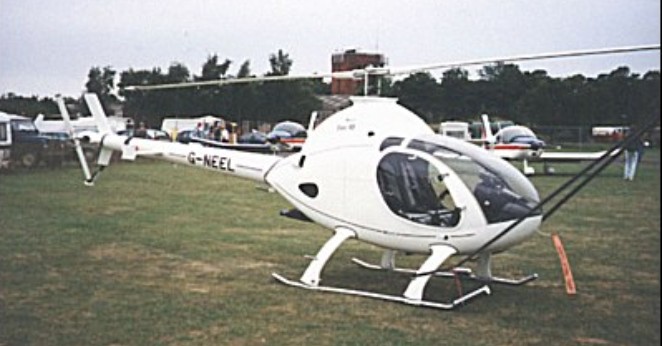
Exec 90

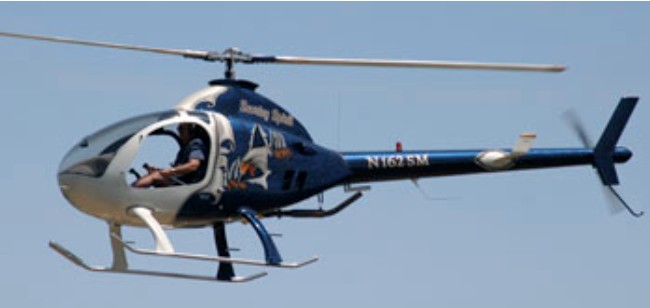
The Exec 162F powerplant utilises the very latest, fully automated, digital electronic control system. Designed to incorporate high performance with maximum reliability, maintenance on the Exec is kept to a minimum. Fuel consumption is only 8 USG per hour and the Exec 162F works with 92 Octane. The Exec 162F utilizes an asymmetrical airfoil for improved autorotation characteristics and safety. An elastomeric rotor hub eliminates a lot of moving parts, bringing considerable simplicity to the rotor system.

The many prefabricated components of the Exec 162F make the kit an easy project for the first time builder. The average build time of only 450 hours is one of the lowest in the kit industry. Some have even done it in as low as 300 hours. There is no welding to be done, only minor fabrication work, and all major components are pre-assembled.

Each of the Exec 162F’s smaller components are provided on detailed shrink wrapped cards. Each part is numbered to coincide with the construction manuals, prints, and templates. Construction manuals are in see-do style using step by step photographs. The Exec 162F can be built and stored in a one car garage. The kit was designed with the amateur builder in mind and no special tools are required.

With the introduction of the Exec 162F came a new cabin design. The side by side seating arrangement was modified from that of previous models, adding 2 cu. ft. of cabin space and greatly increasing cabin comfort. The cabin is 44 inches across the shoulders. The floorpan was widened to provide more leg room. Cabin doors were also widened to improve accessibility to the cabin. Dual controls are standard with each kit.

The Exec 162F utilizes the latest in fuel injection and electronic ignition. The “FADEC SYSTEM” (Fully Automated Digital Electronic Control) controls the Exec 162F powerplant. This processing unit provides the powerplant with the correct fuel, air, and ignition ratios required for optimum performance with minimum fuel expenditure. Sensors monitor the engine’s vital functions. These are provided to the pilot via a digital display in the cockpit. This display will also automatically display any system operating out of its normal range.
Unique to this system is its excellent component redundancy. All Systems have a backup and in the event of a total loss or failure of any system component, including the electronic control unit, a redundant system will automatically engage for uninterrupted operation. Dual electronic ignition, electronic fuel injection, and complete engine monitoring are all part of the “FADEC” system.
Exec 162 F

Flight orientation and maintenance training was available to RotorWay owners.

Brochure $15, Video $15, both $25. Kit: $64,350 complete in 2009.

Gallery

Executive 145
Engine 145-hp RotorWay RW-152
Gross Wt. 1285 lb
Empty Wt. 830 lb
Fuel capacity 15 USG
Rotor diameter 25 ft
Length 21 ft 6 in
Top speed 115 mph
Cruise 90-95 mph
Climb rate 1200 fpm
Range 190 miles

Exec 162F
Engines: RotorWay RI162 with FADEC system
Rotor Blades: 25 ft / 7.6 m RotorWay aluminum alloy
Elastomeric rotor and hub
Tail rotor: 50.25in / 1.2 m
Width: 5 ft 5 in
Height: 8 ft / 2.4 m
Fuselage Length: 22 ft / 6.7m
Overall length: 29 ft 6 in / 9 m
Empty Weight: 975 lbs / 442 lb
Useful Load: 525 lbs / 238 kg
Gross Weight: 1,500 lbs / 680 kg
Fuel cap: 17 USG / 64 lt
Min Speed: Hover
Cruise: 95-100 mph
Top Speed: 115 mph / 100 kt
ROC: 1000 fpm
Service ceiling: 10,000 ft
HIGE: 7000 ft
HOGE: 5000 ft
Range: 180 sm / 2 hr.
Cabin width: 44 in / 1.1 m
Landing gear: skids
Skid width: 65 in / 1.6 m
Seats: 2

Exec 162 F
Engine: Rotorway 162, 150 hp
Rotor span: 7.62 m
MAUW: 680 kg
Empty weight: 442 kg
Fuel capacity: 65 lt
Max speed: 185 kph
Cruise speed: 153 kph
Minimum speed: 0 kph
Climb rate: 5 m/s
Seats: 2
Fuel consumption: 30 lt/hr
Kit price (1998): $62,350
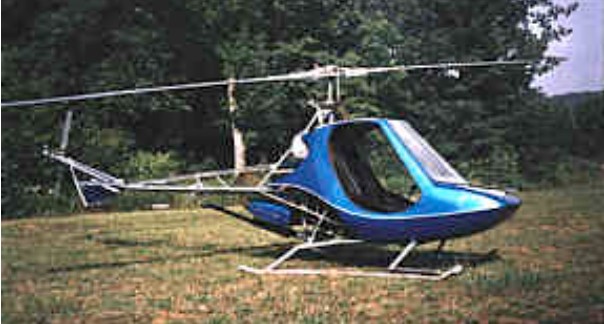
RotorWay International Scorpion Too / Scorpion 133

Scorpion 133

Designed by B.J.Schramm, in 1972, the Scorpion II was introduced with an OMC 125 horsepower, 2 cycle engine which provided the added power to fly two lightweight people in cool, low density altitude environments with a gross weight of 1125 pounds. But despite all the improvements, overhaul times on the major components were still not up to the desired levels.

In 1973 the new Scorpion Too made its first flight at Oshkosh with designer B. J. Schramm piloting. In 1975, RotorWay developed its own four-cylinder engine to better meet the helicopter’s requirements for a two-person load and an empty-vehicle weight of less than 700 pounds.

In 1974, the company embarked on a major redesign of the helicopter once more with the end goal of reducing the amount of maintenance time required per every hour of flight. The first, and most important, item to be addressed was the elimination of the inefficient 2 cycle engine. The company realized that there would never be a way to sufficiently dampen the excessive vibration and low torque associated with this type of engine. The vibration was found to cause rapid wear in various parts and had a tendency to cause cracks in airframe and drive systems.

Unable to find an engine manufacturer to make their 4-cycle engine suitable for the helicopter, RotorWay set forth on producing their own engine. Called the RotorWay RW 133, this 4 cycle, 4-stroke engine now had the added power and torque the company was looking for. The RW 133 had a cruise speed of 80 mph with a range of 120 miles and a useful load of 420 pounds.

In 1975 a 4-cycle engine, the RW 133, went from design to prototype, to production. In 1976, RotorWay changed the model designation from the Scorpion Too to the Scorpion 133 to indicate the new RW 133 power plant. This new Scorpion has a new asymmetrical airfoil rotor system.

B.J. Schramm wanted to give the world a low cost personal helicopter, but it wasn’t until the summer of 1976 that he finally raised the flag. As of October 1, 1976, RotorWay Corporation sold Scorpion 133 kits for $13,500 including a completely new water cooled 133 hp (derated from 140) engine de¬signed and produced by RotorWay. Schramm owns his own foundry.

The engine has a single ignition system, the airframe is steel tubing that comes to the builder tack welded into the proper alignment. The builder with no welding experience is encouraged to get expert help to finish the welds; any experienced aircraft welder could do the job handily. The airframe is designed for very low initial cost. It is also designed to be easy to repair and overhaul, taking only eight hours to disassemble to a bare ship, 16 hours to rebuild the subassemblies and 20 hours to reassemble. The frame is based on several intersecting circles and triangles that offer excellent rigidity, a pylon over the cabin for rollover protection and a notice¬able lack of busy little clusters of tubing in favor of simple single tube structures.

The rotor system is a clockwise rotating two-blade teeter system (to avoid the cost of designing out ground resonance in the landing gear) with a clever system that separates the collective and cyclic functions so that blade pitch changes only when the pilot moves the collective control. A cable runs up the rotor shaft and curves back down to connect to a scissor that regulates the blade pitch. An otherwise conventional swash plate operates the cyclic control of the rotors. The airfoils are asymmetrical, which Schramm says avoids pressure center shifts and produces lift at lower angles of attack. The controls are all push pull cables.

The primary drive uses belts, which have good power pulse damping characteristics and perform well in low torque applications. The secondary uses a chain drive because of the higher torque; the chain produces a loss of only 1.5 percent of power, which is much better than gears would have achieved. Three belts from the secondary run a relay race to the tail rotor, and they’re happy transmitting as much as 25 hp, though the Scorpion’s tail rotor could never draw more than 15.

The cabin enclosure is all fiberglass and can be removed in 10 or 15 minutes; if it’s damaged, it can be repaired with conventional glass repair kits. It can be equipped with dual controls, which take about 10 minutes to install. The throttle is five percent coordinated with collective. Pedals are conventional, although it takes awhile to get used to kicking the right rudder for hover torque instead of the left, since the rotors turn opposite of normal.

Scorpion Too

Scorpion Too
Engine: 105kW Evinrude marine.
Seats: 2

Scorpion 133
Engine: RW 133, water cooled, four stroke, 133 hp
Length: 22 ft
Height: 7.5 ft
Width (cab): 4 ft
Rotor dia: 24 ft
Gross weight: 1,235 lb
Empty weight: 805 lb
Accessories: 15 lb
Equipped useful load: 415 lb
Payload max std fuel: 355 lb
Fuel capacity, standard: 10 USG/60 lb
Fuel capacity, optional: 15 USG/90 lb
Disc loading: 2.5 lb/sq.ft
Power loading: 9.3 lb/hp
Rate of climb: 800 fpm
Service ceiling: 10,000 ft
Max cruise: 70 knots
Hover I.G.E. 6500 ft
Range (max fuel, optimum cruise power, one person): 130 nm/2 hr
Range (max fuel, optimum cruise power, two persons): 79 nm/1.3 hr
Fuel flow at maximum cruise 45 lb/hr
Fuel flow at maximum range cruise 40 lb/hr
Seats: 2

RotorWay International Scorpion

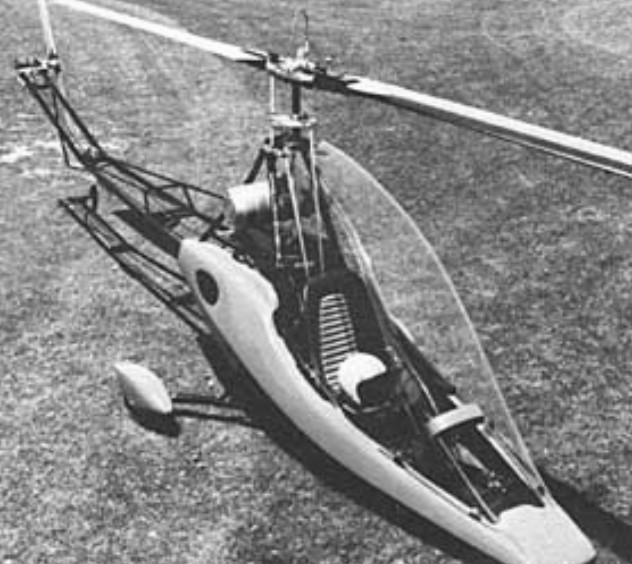
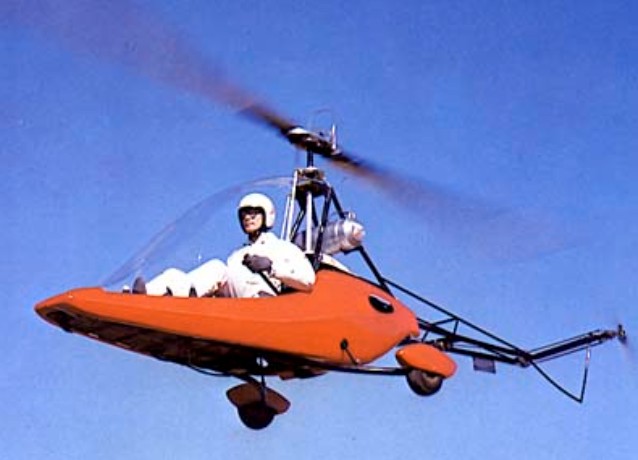
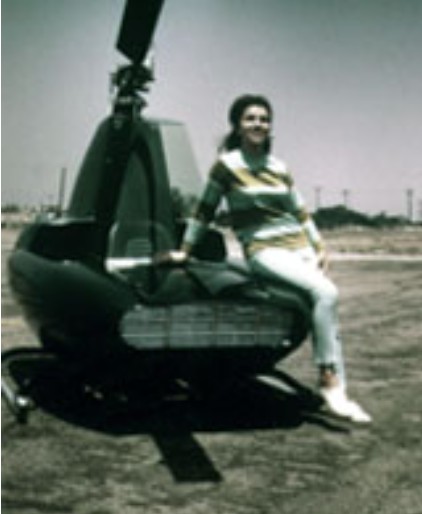
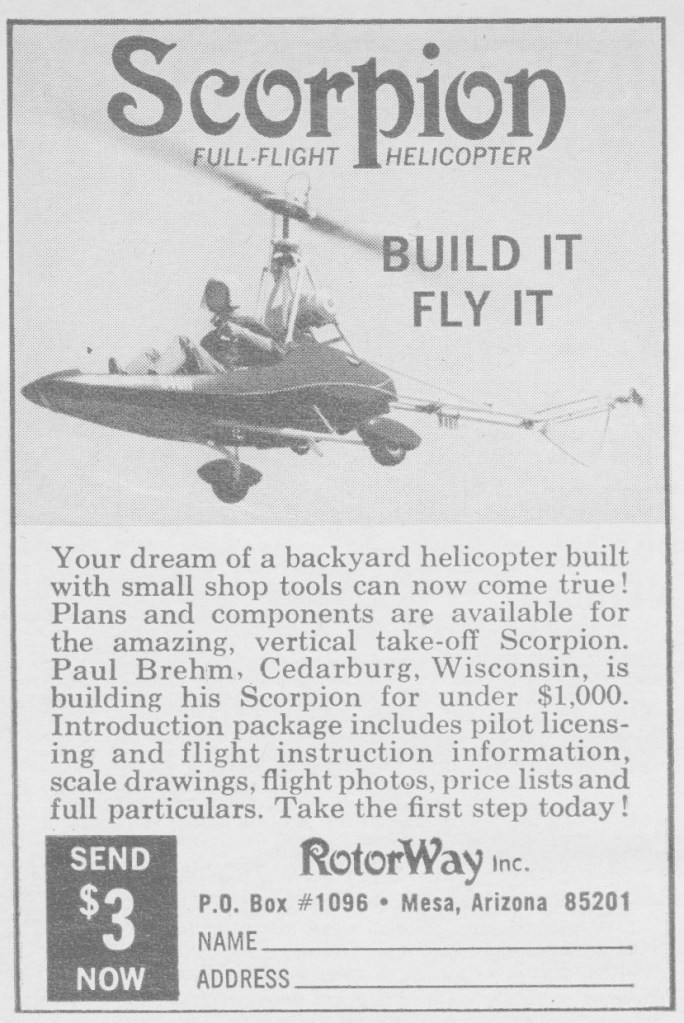
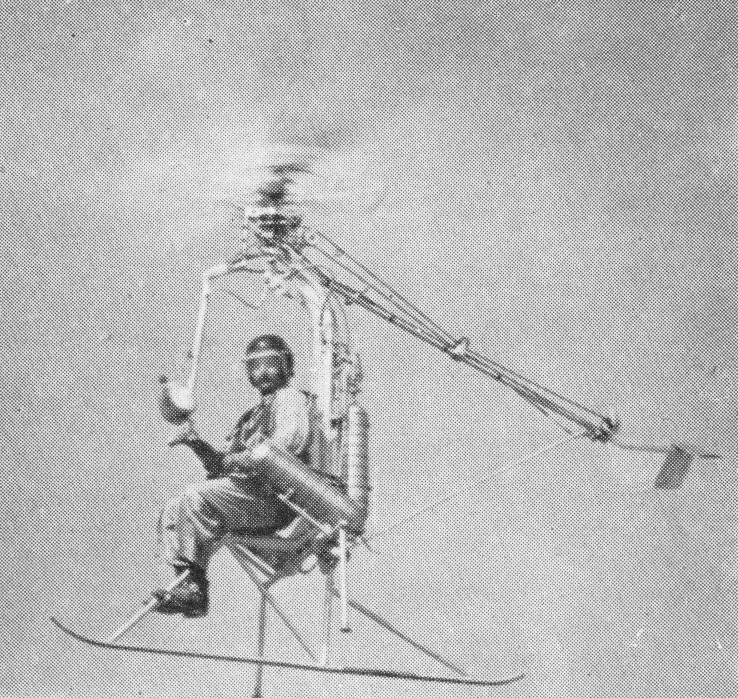
The Scorpion was the first real kit helicopter on the market that actually flew. It generated a tremendous amount of excitement in the aviation world. This was an experimental aircraft in the truest sense of the word, the company pioneering a concept of individual helicopter ownership and flight and making it a reality. It was not meant for the commercial market, but rather for the sport-flying public. While priced at $6,000, far more than the average car at the time, it still opened the possibility of individual helicopter ownership to a whole new audience. The greatest challenge was to design a helicopter that the average customer could actually build while providing the essential elements required for helicopter flight. When first introduced to the public it was an open-cabin single-seater.

Of all the systems available for propulsion, RotorWay chose what had proven to be one of the most efficient systems and paralleled the design also used on most light commercial helicopters at the time: a standard main rotor with a tail rotor to counteract the torque. Analyzing the pros and cons of three classical types of rotor hub systems (semi-rigid, rigid and fully articulated), RotorWay opted for the semi-rigid system for the Scorpion. In this system, the collective and cyclic controls were kept completely distinct by a patented system which used a flexible push-pull cable for control separation. All controls functioned with precision bearings and quality dampening devices.

This breakthrough in design, along with an extremely simplified rotor blade and off the shelf drivetrain components all served to make the RotorWay extremely simple in design, never sacrificing structural strength. This was RotorWay’s constant objective. The original design, whose prototype was first flown in 1966, had very low life limits on major components. This was the main weakness that needed to be addressed with further research and development. With the help of consulting engineers, along with creative input and ideas from innovative customers, an improved version of the Scorpion was introduced in 1971. Among the improvements made were all-aluminum rotor blades, a 115 horsepower OMC 2-cycle engine (Evinrude Vulcan V-4 outboard motor) and a heavier drive system (shafts and bearings).

The Scorpion also utilized a system of v-belts to drive the tail rotor. This had a number of inherent safety features. First of all, the belts were not subject to torsional fatigue as in a long shaft. Secondly, the tail rotor drive gearbox overheating was eliminated. The result was that maintenance was both simplified and reduced.
Build time was approximately 600 hours with far more of the fabrication done by the builder than in the current model. It proved to be an extremely popular product and set the stage for even better things ahead.
Price 1982: US$21,700.

Scorpion
Engine: 1 x Mercury, 47kW
Main rotor diameter: 5.85m
Max take-off weight: 272kg
Empty weight: 172kg
Max speed: 137km/h
Service ceiling: 3655m
Range: 257km

Engine 145-hp RotorWay
Gross Wt. 1250 lb
Empty Wt. 830 lb
Fuel capacity 10 USG
Rotor diameter 25 ft
Length 25 ft
Top speed 85mph
Cruise 65-70 mph
Climb rate 1200 fpm
Range 110 miles

Engine: Evinrude 14 cylinder outboard marine engine, 115 hp
Length: 17ft 1.25in
Rotor dia: 19 ft 6.5 in
Speed: 90 mph
Ceiling: 12,000 ft
Range: 105 miles
Seats: 1

Scorpion-I
Engine hp: 85 to 115 hp
Length: 17 ft
Height: 6 ft
Width (cab): 2 ft
Rotor dia: 19 ft
Empty weight: 375 lb
Gross weight: 700+ lb
Payload: 425+ lb
Disc loading: 2.2 lbs/sq.ft
Range: 160 miles
Speed (max): 95 mph
Speed (cruise): 65 mph
Service ceiling: 12,000 ft
Rate of climb: 900 ft/min

RotorWay International Javelin

In 1958, B.J.Schramm set up a company to market a single-seat amateur-built helicopter known as the Schramm “Javelin”. This machine had a tubular steel structure with a formed aluminium body shell and was powered by a 75kW Mercury powerboat engine. It first flew in August 1965.

Named the Javelin (in several different forms), this first attempt by RotorWay Aircraft founder, designer and builder, B.J. Schramm, turned into a learning process that led to the eventual success of the Scorpion, the company’s first production helicopter, offered in 1967.

RotorWay International

B J Schramm’s association with flying began in 1958 when he founded Schramm Aircraft Company, and built and flew a Bensen Gyrocopter.

He studied at California Polytechnic State University and eventually was drafted into the military where he worked on missiles as an electronics technician at the White Sands Proving Ground. There he did design and drawings and began to formulate a plan for building a helicopter that the average pilot could afford. After his discharge in 1967, he immediately entered helicopter manufacturing and started his own company, Rotorway, with the goal of producing his own designs.

Schramm began building a horizontally opposed engine based on the VW design. Ultimately it was water cooled and used cylinders and crankshaft of his own design. After years of development it was a 180 lb engine that put out 150 hp. The engine had a 600 hour TBO, primarily due to valve wear.

First established in 1961 in Chandler, Arizona, as RotorWay Aircraft, the company premiered its first kit helicopter model, the Scorpion, at the 1967 Oshkosh Fly-In.

November 1969

RotorWay Aircraft Inc founded 1970 to market in plans and kit forms the Scorpion single-seat helicopter, developed from the Schramm Javelin. Followed by the two-seat Scorpion Too, subsequently known as Scorpion 133 and using a RotorWay RW-145 piston engine.

1977-80: Rotorway Aircraft Inc. 14805 S. Interstate 10/Tempe, Arizona 85284, USA.

Exec two-seat helicopter appeared 1980 to supplement and eventually replace Scorpion 133, offered in its kit-built Exec 162F form (available since 1994) using a 150 hp RotorWay Rl 162F engine; over 500 Exec 90 and latest Exec 162F kits delivered since 1990, in which year company became RotorWay International.

The Executive model was soon born in 1980 and continued to be the company’s premier model until the assets of the company were sold in 1990.

In 1987 Schramm’s health began to fail and he went to the Mayo clinic for treatment. He made some poor business decisions and failed to put the right people in charge of operations during his absence. This resulted in the company declaring bankruptcy in 1990.

1998:
4141 West Chandler Blvd
AZ 85226 Chandler
USA

A group of British investors, led by John Netherwood, purchased the company. Then, he set about getting the newly christened RotorWay International on its feet with the help of many of the previous RotorWay Aircraft staff and their expertise. John Neatherwood, a British distributor, took over the business, paid off the creditors, and built a plant in Chandler, Arizona. Rotorway was selling approximately 60 units a year.

By late September of 1990, the company introduced a greatly improved helicopter, derived from the original Executive, and called it the Exec 90.

In 1994, RotorWay International moved to a new 37,000 sq. ft. facility, which would house the entire company versus the multiple locations they were previously distributed amongst. Along with the modern, streamlined factory, the company also introduced a new and improved helicopter, the model Exec 162F.

In 1996, when John Netherwood decided to sell the company, the employees negotiated an ESOP (Employee Stock Ownership Plan) arrangement to purchase RotorWay International. Rotorway remained employee owned until February of 2007 when the company was acquired by an ownership group led by Grant Norwitz, who first became acquainted with the company when he purchased one of its helicopters. He joined Rotorway in 2006 as CEO.

2009: RotorWay International
4140 W. Mercury Way
Chandler, AZ 85226

RotorWay International was bought February 14, 2007 by a small group of investors comprising the company’s upper level management — Grant Norwitz, CEO, Bill Adams, COO, and Judy Craven, CFO. Of these, only Norwitz is still with the company as of mid-2008.

In February 2009, RotorWay purchased PMC Machining and Manufacturing, a Phoenix-based builder of helicopter parts. The CEO of PMC, Mark Porter, became president and COO of RotorWay as part of the acquisition. The company also announced plans to certify a two-seat turbine helicopter using the Rolls-Royce RR300 engine and said that acquiring PMC will make that possible.

Although it is the third largest helicopter manufacturer in the United States, RotorWay has established a factory in South Africa that manufactures ready-made helicopters in addition to kits. RotorWay has also begun the process of expanding into the certified helicopter market.

Awards and recognition
2005 Exec 162F is named Oshkosh AirVenture grand champion.
2004 Exec 162F is named Oshkosh AirVenture gold lindy grand champion, silver lindy reserve grand champion, and a model wins for outstanding workmanship.
2003 Exec 162F wins Oshkosh AirVenture grand champion and reserve grand champion.
2002 Exec 162F wins Oshkosh AirVenture reserve grand champion and for outstanding workmanship.
2001 Exec 162F wins Oshkosh AirVenture reserve grand champion, champion, and outstanding workmanship.
2000 HAI Aviation Repair Specialist Award for work done on the FADEC system.
1999 Finalist for the Flight International’s Aerospace Industry Awards, in the category of Corporate and General Aviation.
RotorWay Exc 162 was featured on Discovery Channel show “A Chopper is Born”.

Rotorcraft Grasshopper II

The Grasshopper 1 flew on March 11, 1962, but was considered to be underpowered. Only six months later the Grasshopper II emerged with two Walter Minor engines, and made its first hover on November 26 of that year. Its chief sponsor, F. G. Mitchell, died the same year and his heirs were unable to continue the financial support of the Grasshopper on their own.

Rotorcraft Grasshopper I

In 1951 J. S. Shapiro, formed a company, Servotec Ltd, to undertake R&D and contract design work for the aviation and light engineering industries. Shapiro had previously been with Sir Frank Whittle at Power Jets Ltd, where he came into contact with James Weir’s enthusiasm for personal helicopters. Aided by a loan from the Kemsley Flying Trust, Servotec began serious studies of small, foolproof helicopters and designed an experi¬mental model of the twin engined coaxial Grasshopper. These researches came to the notice of F. G. Mitchell, head of the Mitchell Engineering Group, who became fired with Weir’s and Shapiro’s enthusiasm.

Mitchell Engineering and Shapiro founded a new company in 1960, Rotorcraft Ltd, specifically to undertake the development of a helicopter which would embody the principles which had crystallised over the years. The construction was contracted to Servotec and two years later the company completed its first coaxial rotor helicopter, the Grasshopper 1.

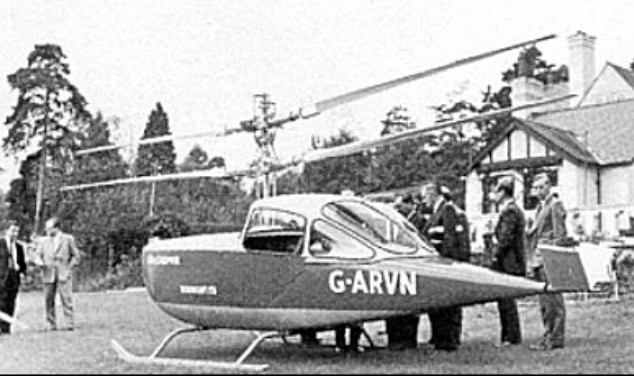
The “Grasshopper” in its definitive form had an enclosed fuselage sports car with a small v-tail and a skid undercarriage. It was powered by a pair of 65hp Walter Mikron piston engines mounted forward of the two seat cabin. These drove a pair of two-blade coaxial rotors mounted on a pylon which emerged just ahead of the cockpit windshield.

G-ARVN, the prototype, flew on 11 March 1962, but was withdrawn from use the following spring when funding was withdrawn following the death of the owner of Mitchell Engineering, and the project was abandoned. It was considered to be underpowered.

Rotorcraft Ltd

Formed jointly by Mitchell Engineering Group and Servotec Ltd to develop the Grasshopper twin-engined light helicopter designed by Jacob Shapiro. Powered by two Walter Minor engines, this was first flown in 1962. A second example was built, but the type did not enter production.

James Weir became aware of the CR Twin development and in 1965 decided to give this development financial support. This combination of interests was cemented in a take over of Rotorcraft Ltd by the Cierva Autogiro Co, which was thereupon renamed the Cierva Rotorcraft Co.

Rotor-craft RH-1 Pinwheel

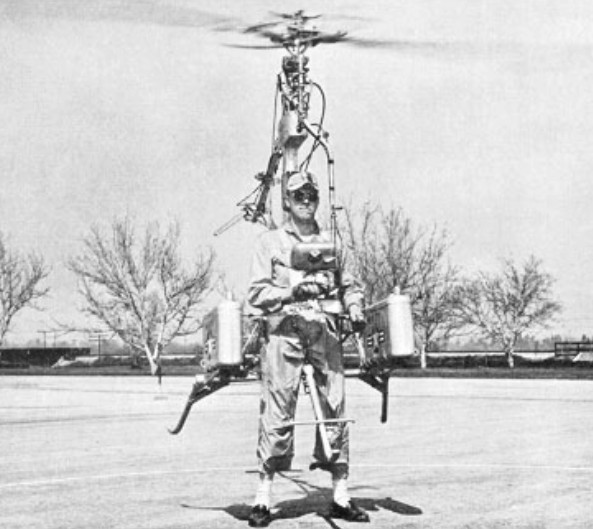
Little more heard of Gilbert Magill until the mid-1950s, when the RH-1 Pinwheel ‘strap-on’ personal helicopter appeared in 1954. The Rotorcraft RF-1 Pinwheel one-man helicopter was designed in 1954 to provide military personnel with a simple go-anywhere vehicle. Basically a strap-on device, it relied upon liquid propellants to power a tipjet at the end of each rotor blade, there thus being no rotor torque effect. The Pinwheel had a ‘quadripod’ frame layout, with the pilot sitting in the centre of the structure with a pair of liquid nitrogen tanks positioned behind him to feed Reaction Motors XLR-32RM rocket motors mounted at the rotor tips. A belt-driven rail rotor was incorporated in the simple and limited structure to provide steering capability.

Designed and built under US Navy contract, the RH-1 was extensively tested and made public demonstrations in 1955, leading to development of a similar Sky Hook military version. The capability of the Pinwheel can be measured by a maximum speed of 161km/h and ceiling of 4570m.

RH-1 Pinwheell
Engines: 2 x Reaction Motors XLR-32RM rocket
Rotors: 2-blade tip-powered main; 1-blade tail.
Empty weight: 100 lb
Cruising speed: 96km/h
Endurance: 9 min
Seats: 1

Rotor-craft X-2 Dragonfly / XR-11 / XH-11

In 1945 the Rotor-Craft Corporation began developmental work on a helicopter with tandem rotor configuration, designed by its President, Gilbert W. Magill, and embodying various novel features, especially the use of a rigid rotor system. The only designer in the United States to have preceded Magill in this line was Landgraf, who employed side-by-side rotor blades fixed rigidly to the hubs.

In 1953 Rotor-Craft acquired the patents of the Landgraf Helicopter Company, including those related to ‘rigid rotors’. At the time Magill stated: ‘Rigid rotor helicopters will be less costly to produce, and the safety of rigid blades that cannot droop and endanger passengers or others approaching the machine is expected to be attractive to both armed services and commercial helicopter operators.’

The absence of reliable technical data about its own particular version of the rigid rotor concept decided Rotor-Craft to design a test stand which would enable a quarter-scale rotor assembly to be thoroughly tested during the developmental stage.

This helicopter had two three-bladed rotors set in tandem and overlapping though separated by a distance of 3.76m; the level of the rear rotor was above that of the forward rotor.

The Rotor-Craft XR-11, designed by Mr. Gilbert Magill, is so far the only tandem rotor helicopter to have flown with rigid blades, and it is claimed that inherent stability has been built into the design without resorting to the use of auxiliary aerofoils or gyroscopic weights. Soon the designation of the helicopter was changed to XH-11. It was under development for the U.S.A.F. for three years, then tested at the Cal-Aero Technical Institute at Glendale, California.

A feature of the XR-11 is the rigid mounting of the rotor blades, without hinges or flapping joints, the rotor discs constantly remaining perpendicular to the shafts and following broadly the principle of the controllable-pitch airscrew. The blades were connected in such a way that their span axis was at the rear of the driving shaft. Pitch control rods are enclosed in hollow drive shafts, resulting in a very clean assembly. The blade roots embody levers, which enter the hollow drive shafts via slots, connecting with their respective pitch control rods; the two three-bladed oppositely rotating rotors are mounted in tandem and overlap, the forward rotar turning anti-clockwise and the aft rotor turning clockwise. It is of interest to note that the c of g location is some 40% to the rear of the forward rotor shaft, which is therefore carrying some 50% greater disc loading than the rear shaft.

Swashplates for cyclic and collective pitch changes are positioned at the bases of the rotor drive shafts, eliminating a number of components normally used for transferring control movements. For forward or backward flight the swash-plate was tilted fore and aft by a push-pull rod, while collective pitch change was obtained by raising or lowering another push-pull rod. Mr. Magill claims that the control system is extremely sensitive and the lag in control response is almost imperceptible. A number of standard automotive parts are incorporated in the structure, reducing initial costs and maintenance time. The clutch and gears in the rotor assembly are reworked Ford units, a Studebaker free-wheeling unit is employed and all the universal joints are standard car accessories.

Welded steel-tube construction is used for the fuselage and the rotor blades are of laminated birch construction.

The project was ultimately cancelled.

Randall Franklin, 13.01.2007
In 1948 I was 18 going to college and as a hobby designing a helicopter. By chance I met Gilbert Magill, and he was kind enough to advise me on my plans. He gave me a job at Rotot Craft working in the shop while developing the Dragon Fly. I did minor jobs of fileing tubing for welds etc. I witnessed it’s disastrous test flight. It got on the ground cushion and fell about 3 feet. The tube framing was hinged and an adjustable link was above the pilot head. That adjustment sheared and the fuselage collapsed in half. The rotors seperated in all directions and one missed my head by a foot or two. The pilot was uninjured but looked stunned. This happened at the Grand Central Air Terminal in Glendale Ca. The swash plates were at the bottom of the masts. Very much like the Enstrom Helicopter of today. Magill was a true genious, and years ahead of his time. One of the big investors in this helicopter was Lucille Ball. This early helicopter experience qualified me to be in the US Army’s first helicopter class at Ft. Sill OK. I flew in the Korean War, and later many years with World Wide Helicopters all over the world. I owe many thanks to Gilbert Magill, for a long and exciting career in helicopters. I regret that I have lost contact with him.

X-2 Dragonfly
Engine: Continental A 100, 110hp
Rotor diameter: 5.49m
Overall length: 4.57m
Height: 2.29m
Weight empty: 408kg
Weight fully loaded: 612kg

Engine: 110hp Continental C-100
Gross weight: 615kg