Scheutzow Bee / Model B

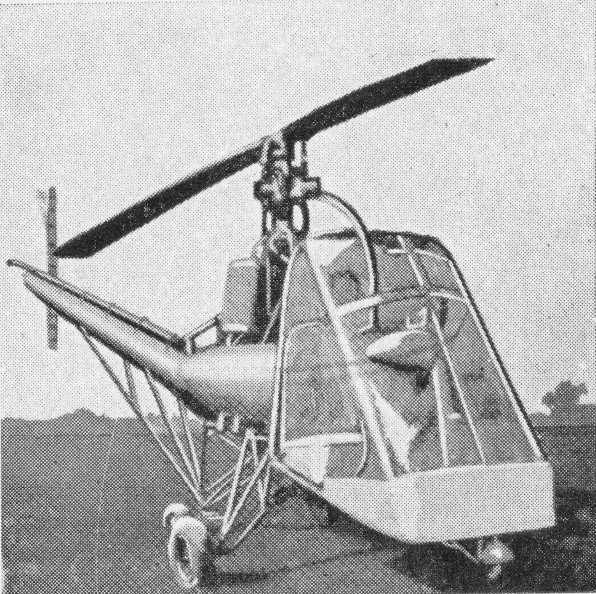
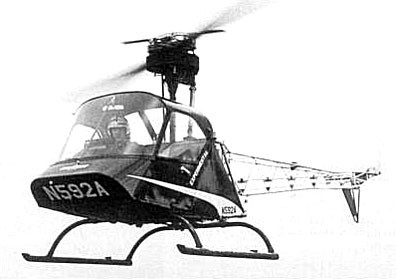
Scheutzow Bee N592A

Webb Scheutzow formed Scheutzow Helicopter Corp in the early 1960s by to build a light helicopter with special rotorhead (blades carried on rubber bushings). The Bee side-by-side two-seater flew 1968 and three prototypes were built.

Ceased development 1977.

Engine: Lycoming IVO-360-A1A, 180hp derated to 165hp
Rotor diameter: 27’0″
Length: 24’1″
Useflu load: 590 lb
Max speed: 93 mph
Cruise speed: 80 mph
Range: 175-200 mi
Ceiling (hover): 10,800′
Seats: 2

Saunders-Roe P.531

In November 1957 when Saunders-Roe Ltd. began its design of a private venture for a Skeeter development and replacement. Two prototypes of the aircraft, then known as the Saro P.531, were begun early in 1958, the first (G-APNU) flying on 20 July and the second (G-APNV) on 30 September 1958. Several Skeeter components were used in their construction, including the tailboom, short-legged tricycle undercarriage and rotor blades (the P.531 having a 4-blade assembly). Both prototypes were powered by Blackburn-built 400shp Turmo 603 shaft turbines, derated to 325shp.

Saunders-Roe P.531 G-APNU

Westland, after acquiring Saunders-Roe in 1959, took development an important stage further by completing two more prototypes with double the power and various other changes including a skid undercarriage. The first with a 1050shp Bristol Siddeley Nimbus engine derated to 635shp, and the other with a de Havilland Gnome H.1000 turbine derated to 685shp. Subsequently developing the P.531 as the Scout AH.Mk 1 for the British Army and Wasp HAS.Mk 1 for the Royal Navy.

Engine: Blackburn A.129 free-turbine
Seats: 5-6

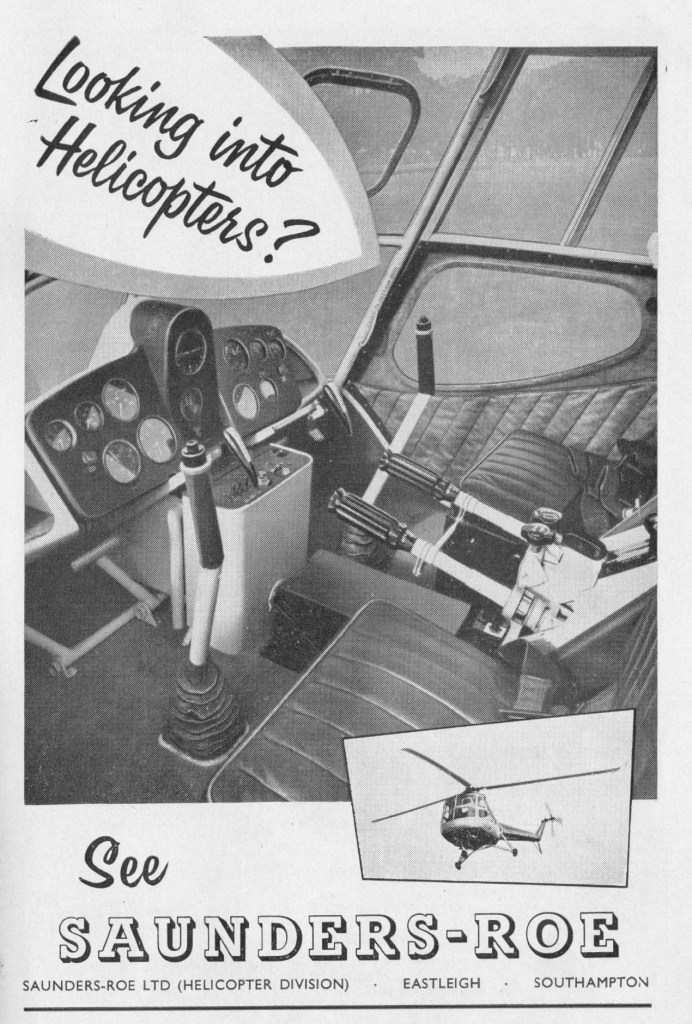
Saunders-Roe

In 1928 pioneer pilot/constructor A. V. Roe (later Sir) acquired an interest in S. E. Saunders Ltd and firm was reconstituted as Saunders-Roe. First new product was Cutty Sark flying-boat, with Fokker-type wing, built in small numbers; also larger Cloud (1931) of which RAF had 16.

Most successful product was twin-engined London biplane flying-boat of 1934 which served with RAF until 1941. Shrimp two-seat four-engined aircraft was built to serve as research vehicle for larger types. Company built the Supermarine Walrus and Sea Otter in quantity. SR/A1 of 1947 was world’s first jet-propelled flying-boat fighter, but was not ordered into service. Princess ten-turboprop commercial flying-boat of 1952 was a great technical achievement, but never entered service. SR.53, first flown in 1957, was experimental turbojet/rocket interceptor which demonstrated climb of about 15,240m/min.

1955

Cierva joined Saunders-Roe in 1957.

Promising SR.177 development was abandoned despite international interest. Company entered helicopter field in early 1950s with small Skeeter (originally Cierva), though in 1928 S.E. Saunders had made Isaaco Helicogyre (which never flew) for the Air Ministry. Five-seat P.531 built 1958, but in 1959 company was acquired by Westland Aircraft, which developed the P.531 as the Wasp/Scout.

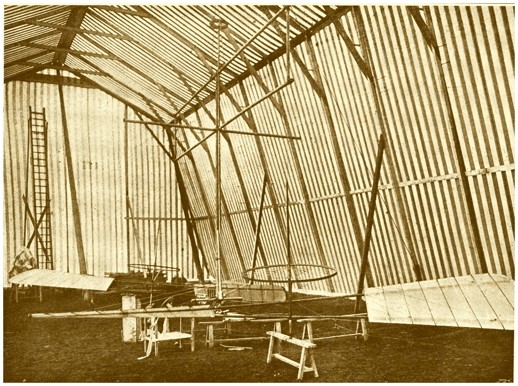
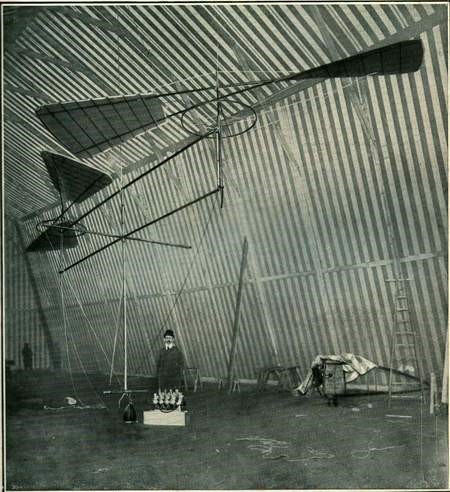
Santos-Dumont No.12

This helicopter was built to perform the first “kilomètre en circuit fermé” 50,000 francs challenge of Deutsch and Archdeacon. The challenge was won by Farman two years later.

The Santos-Dumont No.12 was a bamboo framework hélicoptère designed and built during 1905/06 at Neuilly St. James. It had two rotors and a propeller, powered by a 24 hp Antoinette V-8.

The apparatus was abandoned soon after mechanical tests revealed inherent flaws in the transmission of power to the contra-rotating rotors.

Sablier Helicopter

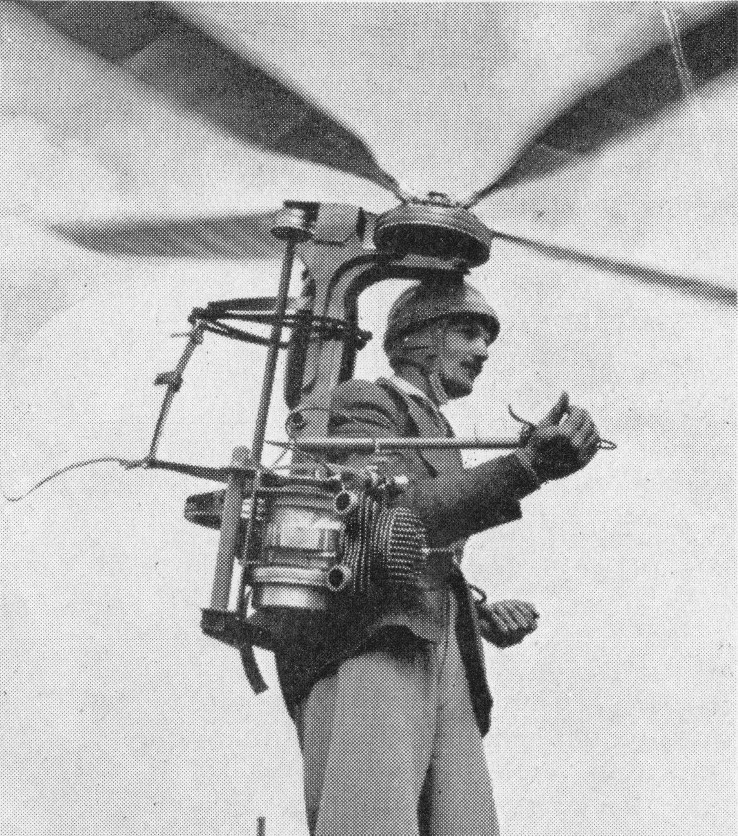
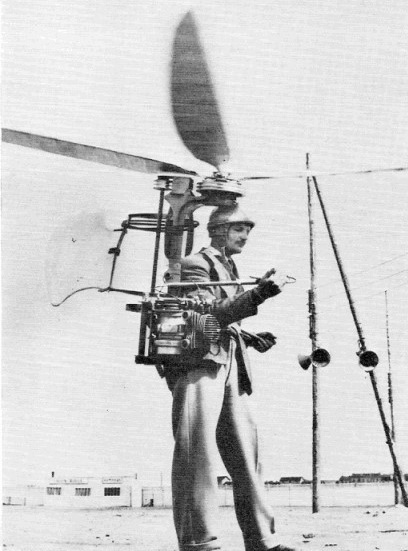
Strap-on personal helicopter built at home in France by George Sablier. George Sablier demonstrated his one-man helicopter at the International Meeting of Individual Helicopters in St. Etienne, France, in 1954. A special apparatus prevents the pilot from gyrating with the propeller.

Engine: 6 h.p. piston
Rotors: 4-blade
Rotor diameter: 10 ft
Loaded weight: 60 lb
Max. speed: 31 mph
Endurance: 10 hr

RotorWay International A600 Talon

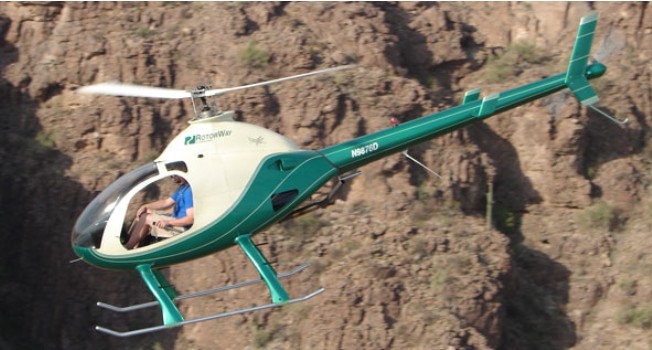
The A600 Talon is a top-to-bottom redesign, incorporating many customer-initiated requests, advanced electronics, engineering, and convenience items. The cockpit is now all-glass, using the MGL Avionics system. The completely redesigned and tuned FADEC system now has a secondary FADEC as a clone of the primary. Any failure of the primary unit will be imperceptible to the engine informing the pilot on the MGL display. The 162’s primary drive chain is replaced by a heavy-duty cog belt for ease of maintenance and longevity.

The useful load is 535 pounds, including a 100-pound luggage compartment. Economy cruise is a practical 90mph and fast long-distance cruise has already been demonstrated at 100 plus, with the doors off! The landing gear is 10 inches wider, 10 inches longer, and 7” higher than its smaller predecessor the Exec 162. This enables improvements in strength and stability, while offering greater accessibility underneath for the optional accessory luggage pod.

Process controls and designs with the new Talon’s manufacture at Rotorway’s new factory, are specifically aimed at the company’s plan to develop and deliver a certified helicopter. The A600 Talon is to be built in the new facility, on the new line, under the new processes that are being set up and proven to enable the certified machine to follow as early as 2011 in the United States. These new processes, materials, and documentation on the experimental, owner-built A600 Talon are designed to mesh into the processes and controls to be used on the future certified machine. The result is that the Talon will be built to type certified standards, of certified materials. First customer deliveries are set for October 2007.

Engine Standard: RI 600N, 147 hp
Engine Supercharged: RI 600S, 167 hp
Gross weight: 1500 lbs
Empty weight: 965 lbs
Fuel cap: 17 USG
Service ceiling: 10,000 ft
HIGE: 6000/7500ft(Supercharged)
Normal cruise: 115 mph
HOGE: 4000/6000ft(Supercharged)
Max IAS SL: 115 mph
Main rotor dia: 25 ft
Tail rotor dia: 50.25 in
Fuselage Length: 22 ft
Overall length: 29.5 ft
Cabin width: 44 in
Skid width: 72 in
Height: 103 in
Seats: 2
RotorWay International Elete

In the late 80’s, RotorWay created the Elete, a larger, two-place helicopter. The Elete had an RW 152, water-cooled, dual electronic, 4 stroke engine that provided 152 horsepower with a pilot and passenger payload of 400 lb / 180kg. Normal cruise was 113 mph / 180km/h with maximum airspeed of 130 mph / 210km/h. After selling three Elete helicopters, the company finally succumbed to financial challenges and was soon purchased by a former customer, John Netherwood, a businessman from England. The new company recognized the design hurdles of the Elete and promptly set out to address making the proven Exec model a better aircraft to sell.

After selling three “Elete” helicopters, the company finally succumbed to financial challenges and was soon purchased by a former customer, John Netherwood, a businessman from England. The new company recognized the design hurdles of the “Elete” and set out to improve the proven “Exec” model a better aircraft to sell.