France
Sellet-Pelletier Helicoptere first flew in 1987 the Grillon 120 single/two-seat light helicopter.
Helicopters
Seibel S-4 / YH-24 Sky Hawk
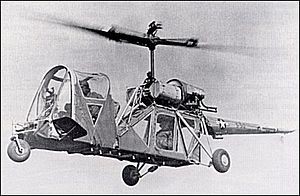
Charles Seibel began development on the S-4 after forming the Seibel Helicopter Company with funding from local Kansas oil investors. The S-4 was a continuation of his work on his previous design, the Seibel S-3, which he flew as a demonstrator for his design concepts; primarily a new design for a two-bladed rotor system and a simplified transmission. These features would also be incorporated into the S-4 design.
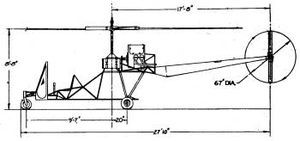
The S-4 frame was a welded steel-tube box frame, with two decks. A lower deck supported the control panel, pilot’s seat, wheeled, tricycle landing gear, and a small passenger/cargo area accessible from the rear, and an upper deck carried the engine, the fuel and oil tanks, and supported the transmission and rotor assembly. A tapered, monocoque, alloy tail boom with a two-bladed antitorque tail rotor was attached at the rear of the upper deck.
In January 1949, the S-4 N5152 c/n 1 lifted off the ground for the first time, piloted by Johnny Gibbs. In March 1950, certification tests were completed and on 23 April 1950, the S-4 received civil certification by the CAA.

Both the U.S. Army and U.S. Air Force showed interest in the S-4. In early 1951, the U.S. Army ordered two examples for operational and engineering evaluation in the observation, utility, and aeromedical evacuation roles. The Army designated the S-4 as the YH-24 Sky Hawk. The first Sky Hawk, serial number 51-5112, was delivered to Fort Bragg, North Carolina in April 1951 and returned to Cessna in 1952; the second YH-24, serial number 51-5113, was delivered to Wright Field, modified to S-4B. YH-24 51-5113 with a 165hp Franklin 6A4-165-B3, was modified as a side-by-side trainer for Army testing at Fort Sill OK. Both ships were eventually scrapped by Cessna.
Despite the simplicity of the S-4, the Army determined that it did not provide a sufficient payload capability and the aircraft were dropped from the inventory and returned to Seibel in 1952. Only the two were built.
A larger engine, the Lycoming O-290B with 125 hp, would be installed in the aircraft and side-by-side seats, making it the 1950 S-4A N5153 c/n 2. Flight tests by CAA’s Hal Hermes.

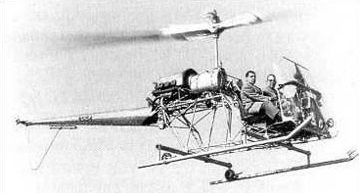
Based on feedback from the Army during the evaluation, Seibel, shortened the fuselage of the second YH-24 (51-5113) and widened the cockpit for a co-pilot’s seat next to the pilot’s seat. Seibel also replaced that aircraft’s original wheeled, tricycle undercarriage with landing skids. This aircraft would become the S-4B. The S-4B would serve as the basis for the design of the Cessna CH-1 Skyhook, the only helicopter Cessna ever produced.
Variants:
S-4
Original design, certified by the CAA in 1950.
S-4A
Featured an upgraded, 125 hp Lycoming O-290B engine.
S-4B
Modified airframe based on Army recommendations during YH-24 evaluation. Two-seat cockpit and skid landing gear.
Specifications:
S-4 Skyhawk
Engine: 108hp Lycoming O-235-C1
Rotor: 29″2″
Length: 27’10”
Useful load: 580 lb
Max speed: 65 mph
Cruise: 58 mph
Range: 100 mi
Ceiling: 4300′.
Seats: 2 tandem
S-4A
Engine: 125hp Lycoming O-290-B
Length: 24’6″
Seats: 2-3
YH-24
Engine: 1 × Lycoming O-290-D, 125 hp (93 kw)
Rotor diameter: 29 ft 11⁄2 in (8.88 m)
Disc area: 666 sq ft (61.9 m2)
Length: 27 ft 10 in (8.48 m)
Height: 10 ft (3.05 m)
Empty weight: 960 lb (436 kg)
Max. takeoff weight: 1,540 lb (700 kg)
Maximum speed: 65 mph (105 km/h)
Cruise speed: 58 mph (93 km/h)
Range: 98 mi (85 nmi, 158 km)
Service ceiling: 4,300 ft (1,310 m)
Rate of climb: 700 ft/min (3.6 m/s)
Crew: 1-2
S-4B / YH-24
Engine: 165hp Franklin 6A4-165-B3
Seats: side-by-side
Seibel S-3

With two collaborators Seibel built in 1947 the S-3 light helicopter with lateral and longitudinal control effected by changing the center of gravity. Each blade attaches to the rotor hub with the help of a piece of bent sheet metal. This formed an angle that could be “twisted” to control changes in pitch. The advantage of this design is how mechanically simple it is. There is no need for bearings, hinges or dampers.
A moveable cabin section shifted in response to “cyclic” stick inputs, thereby shifting the c/g and causing the machine to act accordingly. This was soon abandoned (insufficient control and the potential for roll-over on a hard landing) and replaced by a more conventional cyclic control system for testing and promotional flying.
S-3 NX735B c/n 1 was built in a cellar from miscellaneous spare parts, including a truck differential and an automotive clutch.
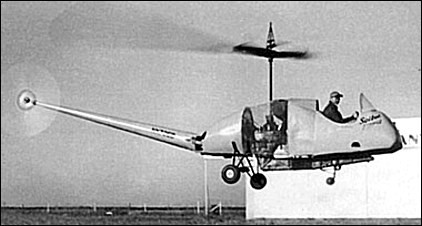
The S-3, NX735B, first took flight on 4 September 1947 and flew mainly to demonstrate Charles Seibel’s simplified two-bladed rotor system and transmission.
Most design and features evolved into the Cessna CH Skyhook.
Engine 65hp Franklin
Rotor diameter: 7.62m
Loaded weight: 365kg
Empty weight: 245kg
Cruising speed: 112km/h
Inclined climb: 275m/min
Absolute ceiling: 3660m
Seats: 1
Seibel Helicopter Co
1943: (Charles W) Seibel,
Kenmore NY
USA
(while working for Bell Co).
1946:
Wichita KS
USA
(while working for Boeing Co on XL-15).
In 1943 designed the Seibel S-1 twin-tilt rotor. Preliminary first design, patented in March 1944.
With two collaborators built in 1947 S-3 light helicopter (lateral and longitudinal control effected by changing center of gravity).
The S-2 of 1947 was a single-place open coaxial design study. No specs or data found.
Established early 1948 Seibel Helicopter Co Inc, Wilson Field, Wichita.
S-4A of 1948 had special blade-attachment system patented for S-3. Followed by S-4B with more powerful engine and side-by-side seats.
1949: 5613 N Broadway,
Wichita
USA
1951; 3400 N Broadway,
Wichita.
USA
In March 1952 company taken over by Cessna.
Scott 16-disc Helicopter
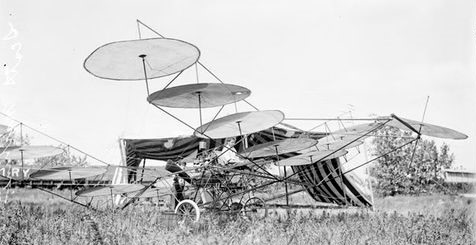
James F Scott’s 1910 smaller craft looked like a helicopter, but wasn’t. It consisted of an open structure bearing two V-frames on which 16 discs were mounted in fore and aft V-frames. The 8′ diameter disks were built of radially ribbed fabric, like umbrellas. There was no drive-shafting or other driving mechanisms for the disks, but a 40hp water-cooled engine drove a pusher propeller. Apparently, the disks were supposed to produce some form of lift. It is not known if the contraption was ever flown.
Scott, James F
Chicago IL
Lawrenceburg IN
Salt Lake City UT.
USA
Built an aircraft in 1909 and a form of helicopter in 1910.
Schweizer 330 / 333

The Schweizer turbine 330 is powered by an Allison 225 C10A engine. The new 350 shp Allison engine has been derated to 200 shp in the 330, which the company claims will provide a full 200 shp under standard day conditions up to 18,000 feet or to 16,000 feet on a 95oF day.
The piston powered 300 and the turbine powered 330 have virtually identical dynamic components main and tail rotor blades, transmissions and drive shafts with the exception of the powerplants.
In training configuration the 330 features three abreast seating, with the middle seat raised and slightly aft to give the instructor an overview. Another variant, for the civil utility market, has four seats in two by two configuration.
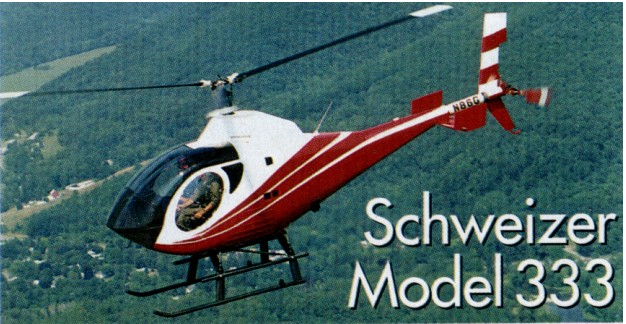
In September 2000 Schweizer Aircraft received type certification for the 333. This upgraded version of the 330SP features a new rotor system composed of cambered airfoil blades combined with an increase in maximum and continuous takeoff power. This gives 290 lbs more useful load and a cruise 20 kts higher than the 330SP. The 330SP may be upgraded to the 333.
Schweizer 330 Sky Knight
Engine: Allison 250-C10A, 148 shp
Length: 30.84 ft / 9.4 m
Height: 8.53 ft / 2.6 m
Rotor diameter: 26.903 ft / 8.2 m
Max take off weight: 2050.7 lb / 930.0 kg
Weight empty: 1049.6 lb / 476.0 kg
Max. speed: 100 kt / 185 km/h
Cruising speed: 91 kt / 169 km/h
Initial climb rate: 1574.8 ft/min / 8.0 m/s
Service ceiling: 20997 ft / 6400 m
Range: 241 nm / 446 km
Fuel capacity: 60 gal / 227 lt
Crew: 1
Payload: 2-3 pax
330 / TH-330
Engine: 1 x Allison 250-C20W
Instant pwr: 175 kW
Rotor dia: 8.17 m / 27’6″
MTOW: 1000 kg
Useful load: 475 kg
Max speed: 230 mph
Max cruise: 108 kts
Max range: 495 km
Ceiling: 11,200′
HIGE: 13,900 ft
HOGE: 11,200 ft
Crew: 1
Pax: 3
Seats: 3-4
333
Engine: 1 x RR-Allison 250-C20W
Schweizer Aircraft Corp
The Schweizer Aircraft Corporation was an American manufacturer of sailplanes, agricultural aircraft and helicopters located in Horseheads, New York. The company grew out of the Mercury Glider Club which produced the first two Schweizer gliders in the Schweizers’ barn. The company was originally called the Schweizer Metal Aircraft Company. Attorney Bob McDowell indicated to the Schweizers that they should move their manufacturing operation out of their father’s barn and relocate to the Elmira, New York area. The Schweizers received the suggestion positively as they needed more space to produce gliders, but they had no money with which to make the move.
It was incorporated in 1939 by three Schweizer brothers (Paul, William, and Ernest), who built their first glider in 1930.
McDowell convinced Elmira Industries Inc, the local business development corporation, to provide space for the Schweizers on the second floor of the Elmira Knitting Mill Building in return for stock in the company. This resulted in the Schweizer Metal Aircraft Company becoming the Schweizer Aircraft Corporation in 1939, with a sale of shares to Elmira Industries, local businessmen and soaring pilots.
Schweizer primarily produced light, piston-engined helicopters for use in utility and flight-training roles. The Schweizer 300CBi, originally designed and manufactured by Hughes aircraft as the Hughes 269 for the United States Army, is one of the most widely used training helicopters in the world. In 1986, Schweizer acquired all rights to the helicopter from McDonnell Douglas, who had purchased Hughes Helicopters in 1984. After Schweizer acquired the FAA Type Certificate, the helicopter was known for a short time as the Schweizer-Hughes 300C and then simply, the Schweizer 300C.
Schweizer is perhaps known best for its popular line of gliders (sailplanes), the earliest of which (the model SGP 1-1) was produced in 1930. Although very few of the early gliders were built, later models gained popularity, such as the SGS 2-8 and 2-12, which were adopted by the U.S. Army Air Corps for training as the TG-2 and TG-3, respectively.
The Schweizer SGS 1-23 was a world class competition and record setting glider between its first flight in 1948 and the end of its production in 1967.
In the 1950s and 60s the Schweizer Aircraft Corporation designed and manufactured the very popular SGS 1-26 and SGS 2-33 gliders. They are easy to fly, with simple construction, and are quite rugged and forgiving. A powered light aircraft, the Schweizer SA 1-30 was tested, but did not go into production.
The 2-33 was adopted by the United States Air Force Academy as the TG-4, for use in introductory airmanship training. The Academy used over a dozen such gliders until 2002 when they were replaced by more modern sailplanes. The Royal Canadian Air Cadets continue to operate a fleet of over seventy 2-33As.
Other popular Schweizer gliders include the single-seat SGS 1-26 and the two or three-seat 2-32, both of which can be found in many soaring clubs and in private ownership across the United States.
Primarily designers and makers of sailplanes, one of which (SGS 2-32) fitted with piston engine was tested by Lockheed Aircraft Corporation as Q-Star for ‘quiet reconnaissance’ in Vietnam. On Q-Star was based the Lockheed YO-3A, using Schweizer wings and tail, new fuselage and muffled engine.
Company also built for Grumman the Ag-Cat agricultural biplane, later for Gulfstream, before acquiring the rights in 1981 (Ag-Cat subsequently produced by Ag-Cat Corporation).
Schweizer produced the Grumman G-164 Ag Cat, a single-engine biplane agricultural aircraft originally developed by Grumman in the 1950s. Under the contract with Grumman the airplane was built almost continuously between 1957 and 1981. During this period of time Schweizer built 2,455 of the airplanes.
In 1981 Schweizer bought the rights to the design and continued production under the name Schweizer Ag Cat. In 1995 Schweizer sold the rights to the Ag Cat to Ag-Cat Corp. of Malden, Texas. In February 2001 the design was sold to Allied Ag-Cat Productions Inc. of Walnut Ridge, Arkansas. Allied Ag-Cat is not producing new aircraft although a related company operates a large fleet of Ag-Cats.
The basic airframe incorporates many safety innovations, including a pressurized cockpit to keep pesticides out, air conditioning and a fuselage structure that is designed to progressively collapse in the event of a collision.
The basic designof Schweizer S269C remained unchanged over the years. Between Hughes and Schweizer, nearly 3,000 copies of the Model 269/300 have been built and flown over the last 50 years. Schweizer continued to develop the Model 300 by adding a turbine and redesigning the body to create the Schweizer 330, and then further developments led to the development of the Schweizer 333.
An improved version in the series, the Sikorsky S-434, was released in 2008.
In 1972 Schweizer hired David Thurston and production of his Thurston Teal was part of the agreement to work at Schweizer. The company produced three Schweizer TSC-1A1 Teals and nine TSC-1A2 Teal IIs before production was moved to Teal Aircraft in 1976.
The development of the Schweizer SGM 2-37 two-place motor glider for the United States Air Force Academy in 1982 led to a new area of expertise for the company. In the mid-1960s Lockheed had used the Schweizer SGS 2-32 sailplane as the basis for its YO-3 quiet reconnaissance aircraft. Schweizer decided to develop the SGM 2-37 into a similar concept aircraft as the YO-3. The result was the SA 2-37A and B, known as the RG-8A in military use.
The RG-8A was later developed by the company into the twin piston-engined and twin-boom SA 2-38 Condor with the US military designation of RU-38A Twin Condor. This design was further refined into the turboprop-powered RU-38B Twin Condor. The RU-38 was still in production in 2008.
It is believed the US Drug Enforcement Administration purchased aircraft designated Shadowhawk from Schweizer. The aircraft had a poor operational history. They may be designated SA 38B.
Other projects
In partnership with Northrop Grumman (formerly Ryan Aeronautical), Schweizer is developing the MQ-8 Fire Scout helicopter UAV.
Schweizer is currently participating in development of Sikorsky’s X-2 Demonstrator, a prototype aircraft using co-axial rotor blades with a pusher propeller for extra forward thrust.
Makes fuselage assemblies for Piper Aircraft Corporation and structures for Bell Helicopters. Became license-holder for Hughes 300 helicopter in 1983, producing piston-engined three-seat Model 300C from 1984 to present day and developing new 3/4-seat Model 330 turboshaft-powered helicopter (first flown June 1988); also supports Hughes Model 269s.
In 1986 flew the SA 2-37A low-noise special-missions aircraft suited to surveillance and other roles, followed in May 1995 by a radical twin-boom SA 2-37A conversion known as SA 2-38A. Two joined the U.S. Coast Guard as RU-38A Twin Condors for covert patrol and surveillance (one by conversion, one built as new).
In December 1999, Schweizer Aircraft celebrated its 60th Anniversary, and had built more than 2,160 sailplanes. Schweizer was a major U.S. aerospace contractor and no longer manufactured gliders.
Helicopter products offered by the company as of February 2009 included the 300C, 300CBi, and 333.
Previously the oldest privately owned aircraft company in the United States, Schweizer was acquired by Sikorsky Aircraft Corporation of Stratford, Connecticut, in 2004, and became a diversified aerospace company.
In 2011 and 2012 Sikorsky Aircraft Corporation laid off all the workers and closed the plant.
Schmidt Paracopter Model 2
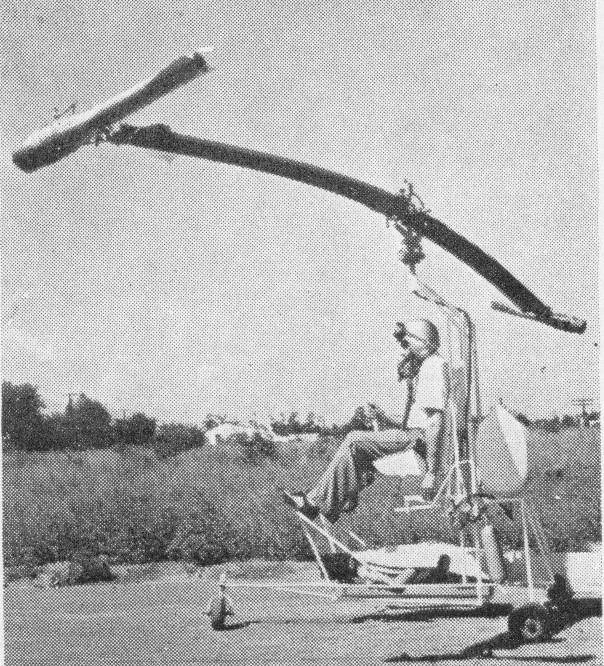
A prototype built circa 1958 by George Schmidt, an engineer who was formerly with Focke-Achgelis in Germany. Designed primarily to rescue wounded from front-line areas: one stretcher can be carried beneath the pilot’s seat.
Power: 2 x 10⁵ lb Schmidt pulse-jets
Rotors: 2-blade tip-powered main
Rotor diameter: 17 ft 5 in
Loaded weight: 775 lb
Max. speed: 132 mph
Ceiling: 12,300 ft
Seats: 2
Scheutzow Flexhub
The 1963 Scheutzow Helicopter Flexhub was described “test-bed” version of Model B N564A, the blades were set on rubber bushings instead of conventional ball- and roller-bearings..
Engine: Continental C-85, 85hp
Rotor diameter: 22’9″
Length; 18’6″
Useful load: 470 lb
Max speed: 85 mph
Cruise speed: 75 mph
Range: 170
Seats: 2
 All Aero