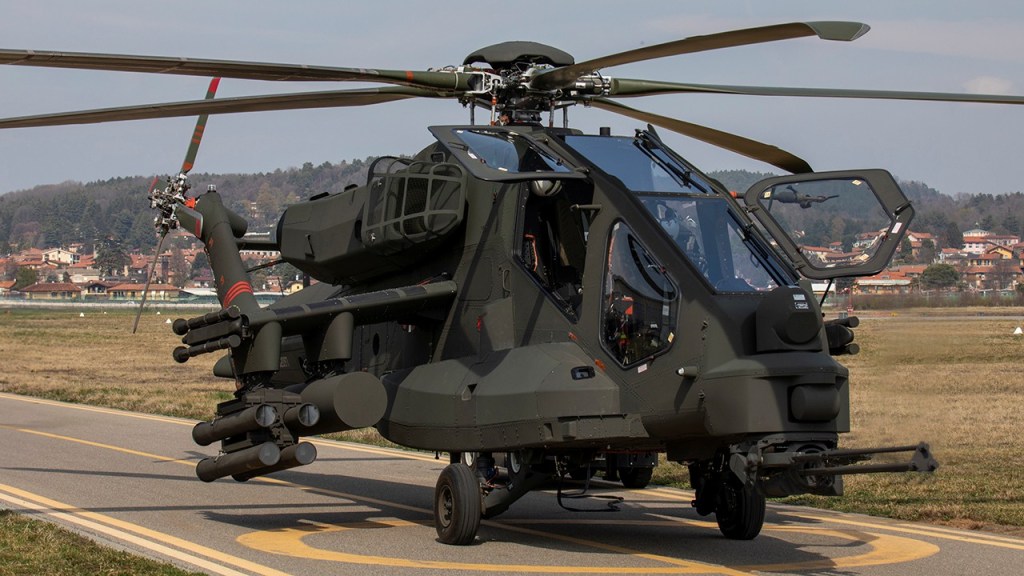
Development of the AW249 formally started upon receipt of a €487 million contract from the Italian Army as a replacement for the Agusta A129 Mangusta. It is to be larger, more survivable, and have greater autonomy than the Mangusta, incorporating stealth technologies and mission systems to control unmanned aerial vehicles (UAV)s. Numerous mature technologies will also be incorporated, such as the OTO Melara TM197B 20 mm chin-mounted cannon, Rafael Advanced Defense Systems Toplite targeting system and Spike missile, it is intended for the AW249 to have lower operating costs than the preceding Mangusta. Leonardo is actively seeking partners to collaborate on the AW249; a letter of intent on this matter was signed with the Polish Armaments Group during July 2018.
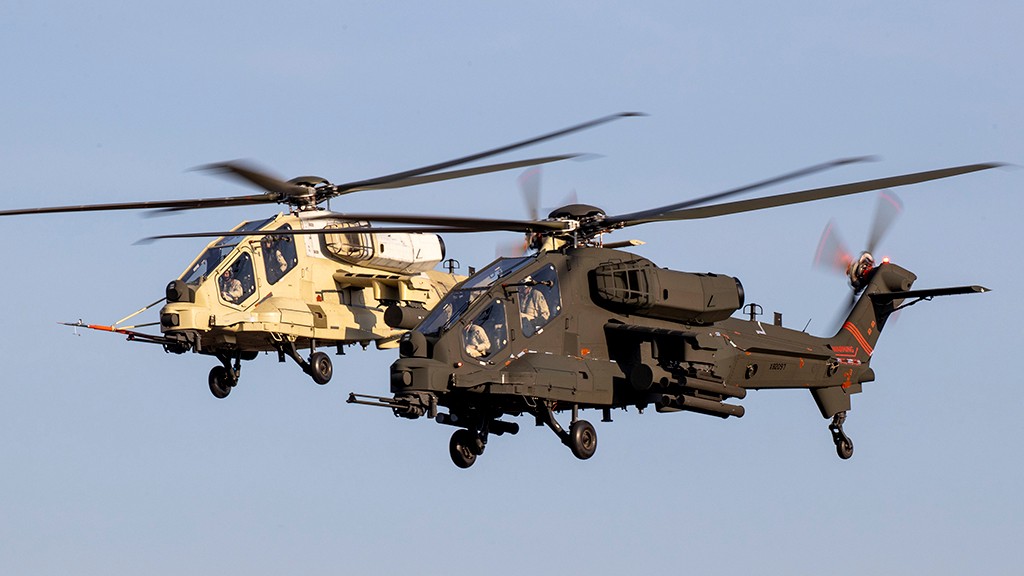
Prototypes of the AW249 attack helicopter
The maiden flight of the AW249 was originally scheduled to take place during 2020, but flew for the first time on 12 August 2022 from the company’s plant in Vergiate. There are to be a single prototype and three pre-serial production rotorcraft built ahead of quantity production AW249s.
Powerplant: 2 × General Electric CT7-8E6 turboshaft Max take-off power: 2,503 shp (1,866 kW) Max continuous power: 2,274 shp (1,696 kW)) Span: 14.60 m (47 ft 11 in) Length: 17.63 m (57 ft 10 in) Width: 4.60 m (15 ft 1 in) Height: 4.26 m (14 ft 0 in) Max takeoff weight: 8,300 kg (18,298 lb) Maximum speed: 287 km/h (178 mph, 155 kn) (at maximum cruise power, with an average mission weight) Cruise speed: 259 km/h (161 mph, 140 kn) Range: 796 km (495 mi, 430 nmi) Endurance: 4 hours 5 minutes (at maximum take-off power, with an average mission weight) Service ceiling: 6,100 m (20,000 ft) Rate of climb: 11.9 m/s (2,350 ft/min) Capacity: 2,800 kg (6,200 lb) (weapons) Crew: two Hardpoints: 6 (2 under each wing, 1 on the wingtip)
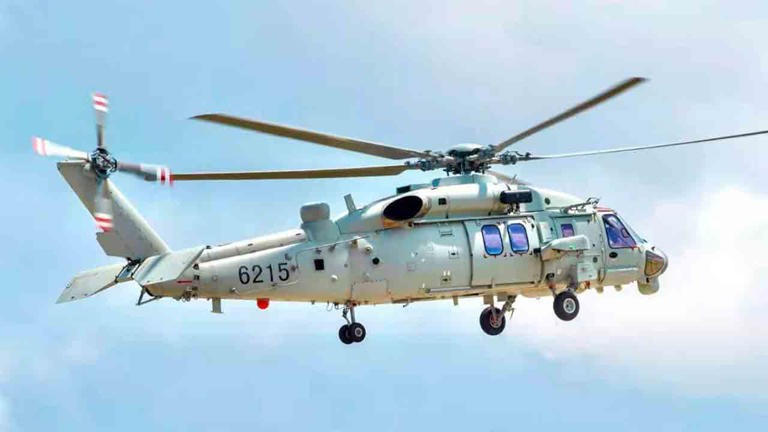
As part of this modernization, the Zhi-9S and Ka-52 helicopters were being replaced in 2025 by the new Zhi-20F anti-submarine helicopters aboard the fourth production batch of Type 052D guided-missile destroyers.
Zhi-20F Specifications: Engines: two WZ-10 turboshaft engines, 2,100 – 2,700 hp Length: 20 meters Height: 5.3 meters Maximum speed: 360 km/h Cruising speed: 290 km/h Maximum takeoff weight: 10 tons Service ceiling: 6,000 meters Flight range: 560 km
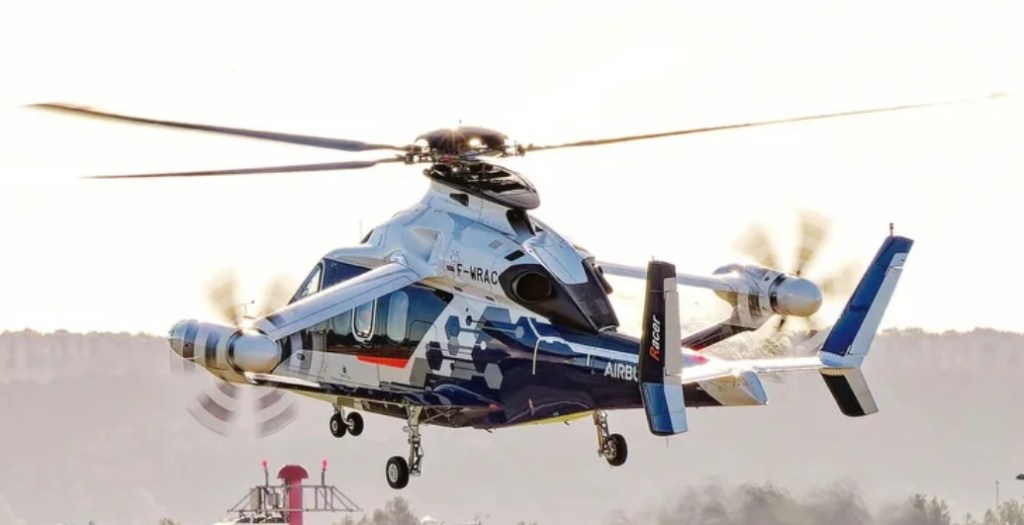
Airbus uses the Racer as a testbed for technology, one of its main focuses is developing an aerodynamic airframe. Aside from a sleek design, it features a pair of box-wing outriggers equipped with additional rotors and a twin-boom tail that forgoes the typical rear rotor setup.
The Airbus team set a goal of reaching a fast cruise speed of 253 mph, which it achieved within two months of the Racer’s first flight. Test pilot Hervé Jammayrac later pushed it up to 260 mph. It achieved its speed in part due to a design that produces a drag coefficient in the same range as Airbus’s smallest models despite its larger size.
A pair of Safran Aneto-1X engines each make 2,500 shp.
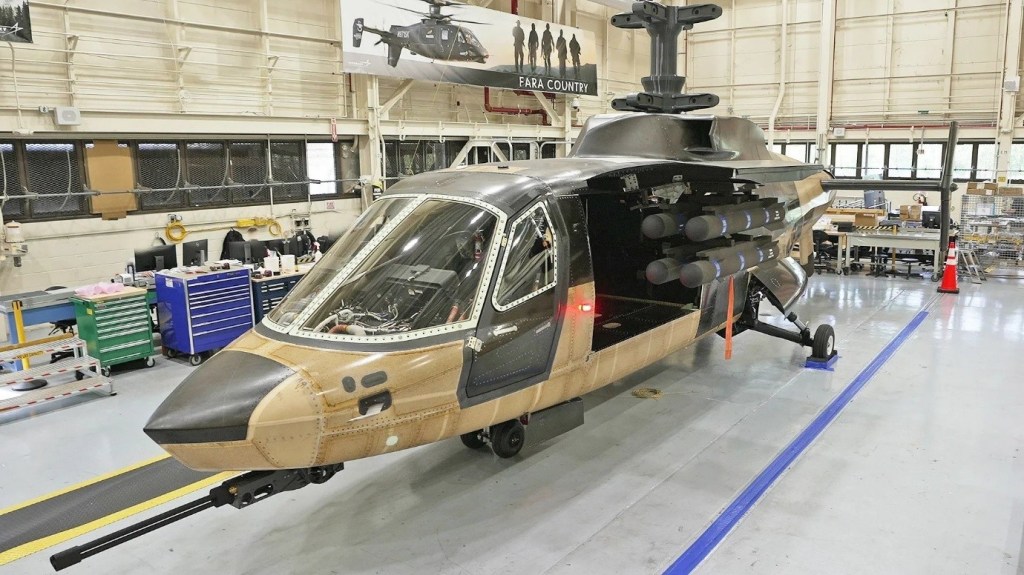
The first RaiderX competitive prototype in a hangar at Sikorsky’s West Palm Beach, Florida, facility.
The S-97, in turn, paved the way for the promising RaiderX, which was widely seen as being a potential frontrunner for the Future Attack Reconnaissance Aircraft (FARA) program, which aimed to supply the Army with a high-speed new-generation scout and attack helicopter. FARA was cancelled early 2024.
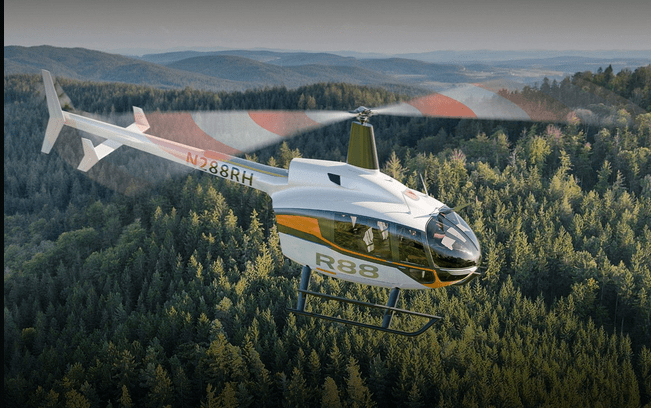
The R88 will feature an open-tail rotor design and two-bladed main rotor system. It also includes new LED aircraft exterior lights, including pulsed landing and taxi lights, tail rotor lighting, scene lighting, and entry lights, further enhancing utility and safety.
The internal payload was expected to accommodate over 2,800 pounds and deliver more than 3.5 hours of flight time and more than 350 nautical miles of range. It will carry up to two pilots and up to eight passengers for a passenger total of 1,800 pounds with a full fuel tank.
Large sliding doors on each side will provide easy access for passengers and cargo. The rear has a fold-down, truck-bed style door for simplified cargo loading or easily accommodating a HEMS stretcher. The aircraft is available with standard skids or optional high skids for increased ground clearance and compatibility with a firefighting water tank.
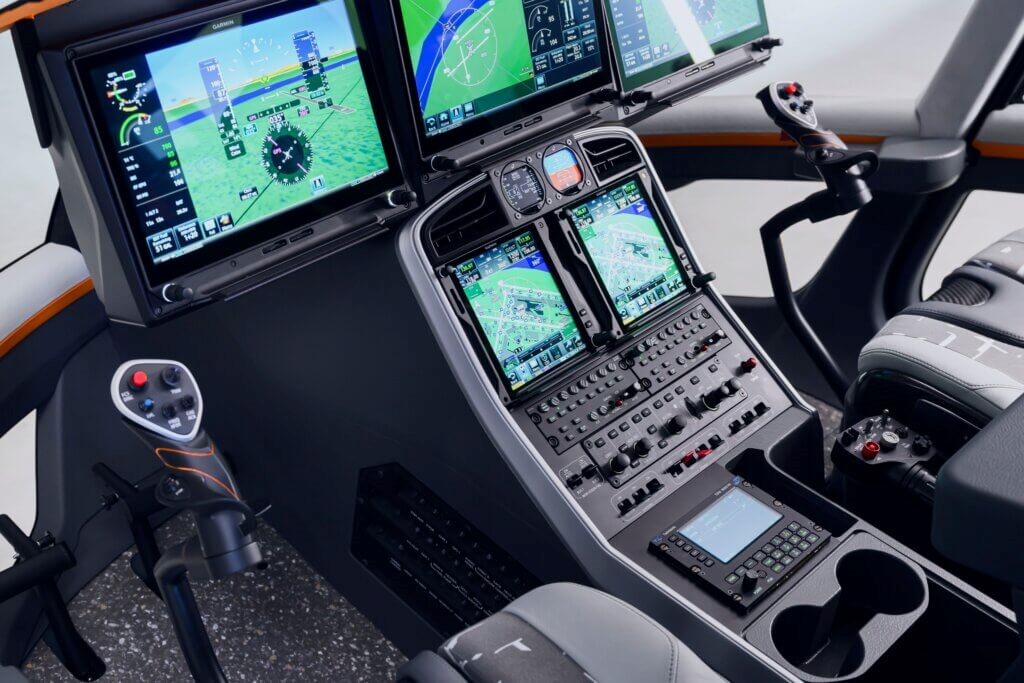
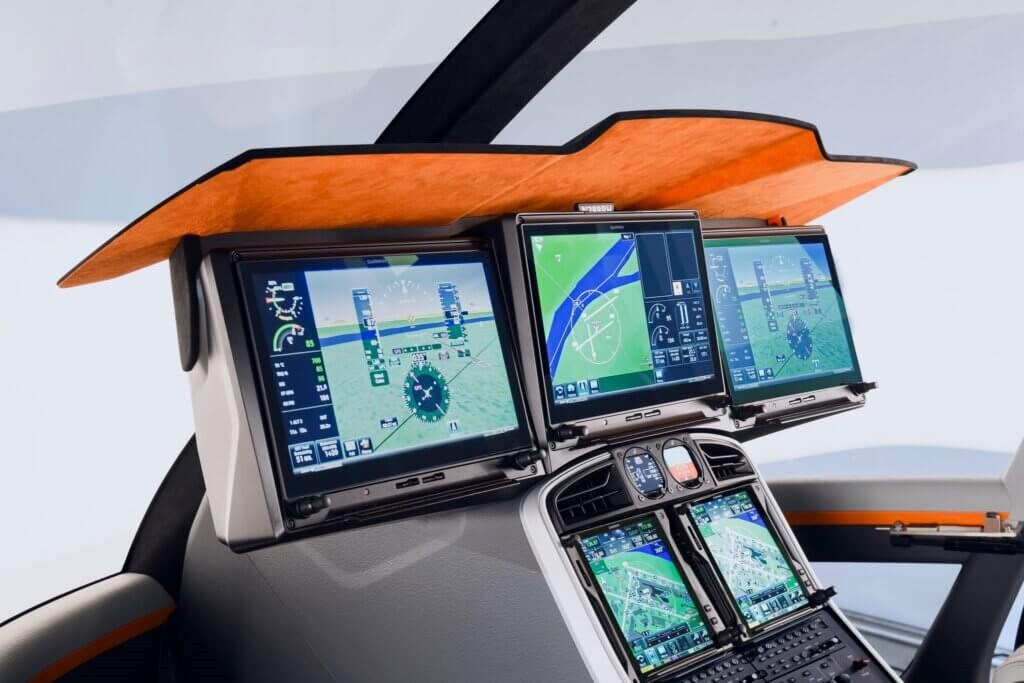
The Garmin avionics suite includes large Garmin G500H TXI displays and GTN navigators with touchscreen controls for easy operation, vivid displays, and extensive capabilities. The G500H TXI will include a crew-alerting system to provide the pilot with intelligent information about the aircraft’s systems. Offered is a standard 4-axis autopilot from Garmin. This system will provide a full range of important safety functions, including level mode, hover assist, limit cueing, low/high speed protection, and low altitude protection.
A standard data recording system with Datalink automatically will capture engine and system data for simplified operation and maintenance. A standard health usage monitoring system (HUMS) will monitor critical components and provide real-time track and balance data so operators can address issues before they affect operations.
The R88 incorporates dual hydraulics for pitch and roll for critical flight controls. Other standard safety features include an inlet barrier filter and impact-resistant windshields certified to Part 29 transport helicopter requirements.
The R88 introduces dual cyclic controls with removable controls on both sides, allowing the pilot in command to be in either the left or right seat with a passenger in the other seat. The aircraft will be type-certified for optional single-pilot IFR operations. The all-new interior design features comfortable, functional seating, easy-to-maintain materials, and a versatile layout.
New LED exterior lighting, including pulse landing and taxi lights, tail rotor lighting, scene lighting, and entry lights, further enhance safety.
The configurable cabin features a flat floor, allowing for multiple forward and club seating configurations, effective air medical and public safety mission configurations, and multiple future seating options. A fold-down, truck-bed style rear door simplifies cargo loading and accommodates a HEMS stretcher. The air conditioning system is made entirely by Robinson Helicopter.
Robinson partnered with Safran Helicopter Engines to add the Arriel 2W engine.
The R88 offers a wide range of optional OEM-provided mission equipment, including a 3000-lb. HEC-rated cargo hook, utility basket, optional wire strike protection kit, pop-out floats, and more.
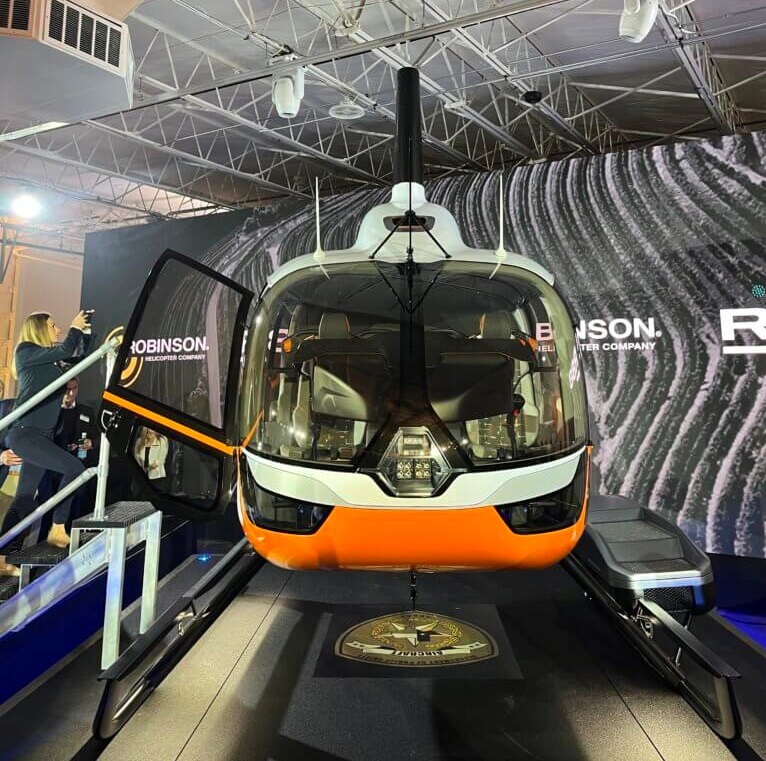
The aircraft was shown with two banks of four seats in the main cabin.
With a launch price starting at $3.3 million, the R88 was presented in a configuration of two pilot seats followed by two banks of four passenger seats, illustrating the 275-cubic-foot (7.8-cubic-meter) cabin volume.
Powered by the 1,000-shaft-horsepower Safran Arriel 2W, the R88 has a payload capacity of up to 1,800 pounds (815 kilograms) with full fuel, and a range of 350 nautical miles (650 kilometers), with endurance above 3.5 hours.
The R88 was shown with a high-skid configuration and cargo basket.
The engine of the R88 is in a different position than it is in the R66 and R44. Those types have a low engine placement within the airframe, while the R88’s engine is moved higher — representing a more “conventional” placement in a helicopter.
It has the standard Robinson two-bladed main rotor and tail, but scaled up to accommodate the increase in power and size provided by the Arriel engine. The blades have a 50 percent bigger chord than those of the R66, and are “quite a bit” longer, said Smith.
The tail boom looks similar to Robinson’s other types, but is higher up on the airframe. When the aircraft is equipped with high skids — as it was during the type’s unveiling in Dallas — the boom is high enough for most people to comfortably walk underneath.
Inside, the cockpit is fully glass, with dual conventional cyclic controls (rather than Robinson’s famed “T” bar — or teetering cyclic — as used in the other types in its range).
Switching to a conventional cyclic was the result of another functional decision, driven by the aircraft’s large width. They couldn’t get the teetering cyclic to work — it’s too large of a movement.
The R88 has a Garmin avionics suite, including large G500H TXi displays and GTN navigators with touchscreen controls.
G500H TXi avionics.
The R88 will have a four-axis autopilot as standard, along with data recording with datalink and a health and usage monitoring system (HUMS). Other safety features include an inlet barrier filter and impact-resistant windshields certified to part 29 transport helicopter standards.
Optional equipment will include a 3,000-pound human external cargo (HEC)-rated cargo hook, utility basket, wire strike protection kit, and pop-out floats.
The cabin has three entry points. Sliding doors — a new feature for a Robinson helicopter — are on both sides, while a fold-down door at the back of the cabin provides access from the rear.
Engine: Sunstrand, 260 hp HP range: 160-360 Height: 8.8 ft Length: 22 ft Disk span: 26.8 ft Disk area: 565.5 sq.ft Empty weight: 1100 lb Gross weight: 2050 lb Fuel capacity: 40 USG Top speed: 105 mph Cruise: 99 mph Range: 258 sm Rate of climb: 1305 fpm Service ceiling: 10,200 ft Seats: 2 Landing gear: skid
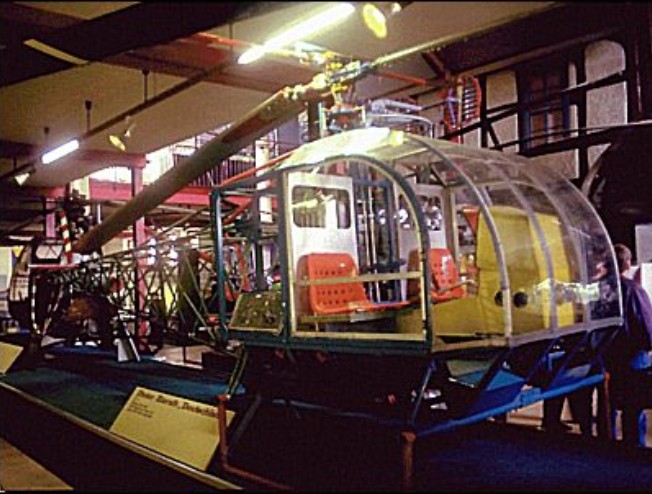
Factory worker Dieter Zierath from Bünde tried 1978 to bring his dreams to real life, to build his own helicopter. Before he could finish his project, he suffered from a heart attack.





 All Aero