Aeros Stealth

Stealth

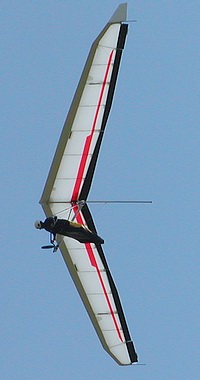
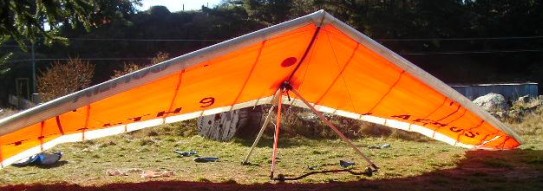
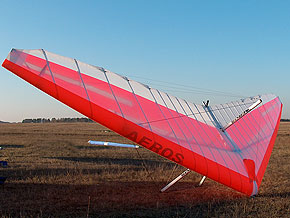
In 1995 a new machine on the Stalker basis was designed, with internal membrane ribs. It was named Stealth. After sport season and flights at the World Championship in Spain overall sail and partially frame configuration has been changed and by the end of the year the Stealth appearance was finally set.

A high performance glider, it was known for its quick handling and tricky landing characteristics. ThS stealth line began life as a kingposted glider and evolved into a topless wing. First the kingpost was mostly removed, but retained the top few inches for the kingpost hangpoint. Then the kingpost was removed completely and the trademark aluminum box crossbars were replaced with square carbon fiber crossbars. The stealth eventually evolved into the Combat glider line.
Stealth

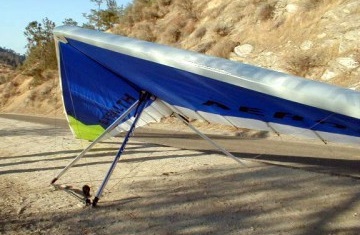
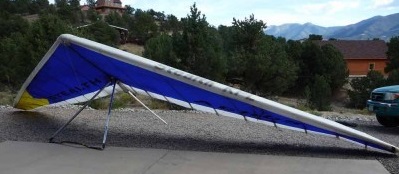
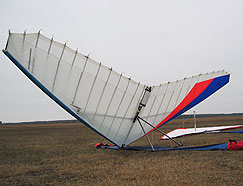
In 1996 a new, kinpostless, Stealth 14 KPL had completed flight trials and by the end of the year the wing was ready for certification in England and there appeared a small model Stealth 12 KPL.
Stealth KPL 2

The sports hang glider designs, Stealth 14 KPL and Stealth 13 KPL, were prepared for manufacture in 1997.

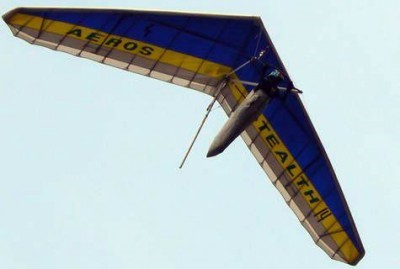
Kingpostless Stealths of all sizes receive airworthiness certificates in BHPA and DHV (Germany) in 1998. Stealth became a popular design, within a year 150 wings of this type has been manufactured.
Stealth KPL 3

All Stealth KPL gliders feature a spar of folded and riveted sheet aluminium

Gallery

Stealth 12 KPL
Wing area: 11.4 sq.m
Wing span: 9.45 m
Aspect ratio: 7.8
Nose angle: 128 – 130 degs
Weight: 28 kg
Pilot weight: 45-65 kg
No of upper battens: 24
Breakdown length: 5.1 / 3.5 m
Min. airspeed: 32 km/h
Max. airspeed: 110 km/h
Best glide ratio: 13
Certification: DHV 3 / BHPA #9705128
Price (1998): £3150

Stealth 12 KPL3
Area: 11.8 sq.m
Wing span: 9.45 m
Aspect ratio: 8.25
Nose angle: 130-132 degs
Weight: 28 kg
Pilot weight: 45-65 kg
Number of battens: 24
Breakdown length: 5.2/3.6 m
Minimum airspeed: 30-32 km/h
Maximum airspeed: 100+ km/h
Max glide ratio: 13+
Certification: DHV 01-325-97

Stealth 13 E
Area: 13.2 sq.m
Wing span: 9.85 m
Aspect ratio: 7.35
Nose angle: 128 – 130 degs
Weight: 30 kg
Load weigth: 55 – 75 kg
No of upper battens: 22
Breakdown length: 5.7 / 3.8 / 2.2 m
Min. airspeed: 28 – 30 km/h
Max. airspeed: 100 + km/h
Best glide ratio: 12 +
Kingpost: Yes

Stealth 13E
Wing area: 13.2 m²
Wing span: 10.5 m
Aspect ratio: 7.65
Hang glider weight: 31 kg
Minimum pilot weight: 60 kg
Maximum pilot weight: 85 kg
Minimum speed: 28 km/h
Maximum speed: 100 km/h
Max glide ratio (L/H): 13
Packed length: 5.1 m
Packed length short: 3.2 m
Number of battens: 26
Nose angle: 127°

Stealth 13 KPL 2
Wing area: 13.2 sq.m
Wing span: 10.05 m
Aspect ratio: 7.65
Nose angle: 128 – 130 degs
Weight: 34.5 kg
Pilot weight: 65 – 85 kg
No of upper battens: 22
Breakdown length: 5.7 / 3.8 m
Min. airspeed: 28 – 30 km/h
Max. airspeed: 100+ km/h
Best glide ratio: 13 +
Certificate: BHPA and DHV
Price (1998): £ 3150

Stealth KPL 2 13
Wing area: 13.2 m²
Wing span: 9.9 m
Aspect ratio: 7.65
Hang glider weight: 34 kg
Minimum pilot weight: 55 kg
Maximum pilot weight: 85 kg
Minimum speed: 29 km/h
Maximum speed: 110 km/h
Max glide ratio (L/H): 14
Minimum sink rate: 0.9 m/s
Packed length: 5.8 m
Packed length short: 3.9 m
Number of battens: 22
Nose angle: 127°

Stealth 13 KPL 3
Area: 13.2 sq.m
Wing span: 10.05 m
Aspect ratio: 7.65
Nose angle: 130-132 degs
Weight: 33.5 kg
Pilot weight: 65-90 kg
Number of battens: 22
Breakdown length: 5.8/3.9 m
Minimum airspeed: 28-30 km/h
Maximum airspeed: 100+ km/h
Max glide ratio: 15+
Certification: DHV 01-340-98

Stealth 14 E
Area: 14.0 sq.m
Wing span: 10.25 m
Aspect ratio: 7.5
Nose angle: 128 – 130 degs
Weight: 32 kg
Load weigth: 65 – 100 kg
No of upper battens: 24
Breakdown length: 5.8 / 3.9 / 2.2 m
Min. airspeed: 28 – 30 km/h
Max. airspeed: 100 + km/h
Best glide ratio: 12 +
Certificate: BHPA
Kingpost: Yes

Stealth 14E
Wing area: 14 m²
Wing span: 10.45 m
Aspect ratio: 7.8
Hang glider weight: 32 kg
Minimum pilot weight: 75 kg
Maximum pilot weight: 100 kg
Minimum speed: 28 km/h
Maximum speed: 100 km/h
Max glide ratio (L/H): 13
Packed length: 5.9 m
Packed length short: 4.1 m
Number of battens: 28
Nose angle: 127°
Stealth 14 KPL
Wing area: 14 sq.m
Wing span: 10.45 m
Aspect ratio: 7.8
Nose angle: 128 – 130 degs
Weight: 37 kg
Pilot weight: 65 – 100 kg
No of upper battens: 24
Breakdown length: 5.8 / 3.9 m
Min. airspeed: 28 – 30 km/h
Max. airspeed: 100+ km/h
Best glide ratio: 13 +
Certification: BHPA # 9705127
Price (1998): £ 3150

Stealth 14 KPL 2
Wing area: 14 sq.m
Wing span: 10.45 m
Aspect ratio: 7.8
Nose angle: 128 – 130 degs
Weight: 35.5 kg
Pilot weight: 75-105 kg
No of upper battens: 24
Breakdown length: 5.8 / 3.9 m
Min. airspeed: 28 – 30 km/h
Maximum speed: 110 km/h
Best glide ratio: 14
Minimum sink rate: 0.9 m/s
Certificate: BHPA and DHV
Price (1998): £ 3150

Stealth 14 KPL 3
Area: 14.0 sq.m
Wing span: 10.45 m
Aspect ratio: 7.8
Nose angle: 130-132 degs
Weight: 35.5 kg
Pilot weight: 75-100 kg
No. of battens: 24
Breakdown length: 5.9/4.1 m
Minimum airspeed: 28-30 km/h
Maximum airspeed: 110+ km/h
Max glide ratio: 15+
Certification: DHV 01-343-99

Stealth 14 W
Wing area: 14 sq.m
Wing span: 10.25 m
Aspect ratio: 7.5
Nose angle: 128 – 130 degs
Weight: 31 kg
Pilot weight: 65-100 kg
No of upper battens: 24
Breakdown length: 5.8 / 3.9 m
Min. airspeed: 28 – 30 km/h
Max. airspeed: 100 + km/h
Best glide ratio: 12+
Kingpost: Yes
Certification: DHV / BHPA
Price (1998): £ 3150

Stealth 14W
Wing area: 14 m²
Wing span: 10.45 m
Aspect ratio: 7.8
Hang glider weight: 31 kg
Minimum pilot weight: 75 kg
Maximum pilot weight: 100 kg
Minimum speed: 28 km/h
Maximum speed: 110 km/h
Max glide ratio (L/H): 13
Packed length: 5.9 m
Packed length short: 4.1 m
Number of battens: 28
Nose angle: 127°
Aeros Profi

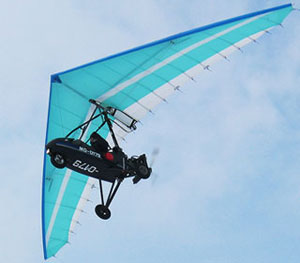
The Aeros team create the Profi new trike wing in 2000. It was designed as the wing for professionals.
A trike wing. The wing has wide speed range, from 45 to 130 km/h, and maximum speed is achieved without great physical efforts required from the pilot. The wing has easy roll handling, with efforts comparable with usual competition hang gliders.
In 2004 the Aeros-2 trike with a Rotax-912 engine and a Profi wing achieved DULV preliminary airworthiness certificate for the maximum take-off weight of 472.5 kg.
Further improvement led to serial production of Aeros first kingpostless trike wing, the Profi TL, in 2006. The Profi TL has higher trim speeds and more responsive pitch and roll handling.
By 2007, the Profi TL design had added winglets, to improve handling at the high speeds.
The topless Profi TL wing for microlights has streamline struts replace the usual kingpost, reducing the drag and providing better performance. The 14.5sq.m sail is designed and cut to give good stall characteristics, easy handling in rough air and a 472.5 kg load-bearing capacity. The sail material is plain and strong NCV cloth with UV protection, optionally provided with light profiled carbon leading edge inserts.
This topless wing will enable long distance flights with a maximum speed with Aeros 2 trike unit and Rotax 912 of 140 kph in horizontal flight. The electromechanic trim device maintains the cruising speed easily. Flying fast is easy with acceptable bar pressure.
If necessary the wing can be stored fixed to the pylon and rolled. It can be assembled upright like free flight hangglider.
The Profi TL wing in a base version comes with the winglets.
The winglets refine longitudinal stability that is especially noticeable in straight flights at high speeds. The Profi TL with winglets is more stable in spirals, as sliding reduces. The winglets enable well-defined turns and changing of bank angle. The winglets don’t affect stall characteristics no wing performance at the maximum flight speed. The maximum flight speed with the winglets increases 5-10 km/h.

Profi
Wing area: 14.5 sq.m
Wing span: 10 m
Aspect ratio: 6.9
Nose angle: 128 degs
Max. speed: 130 km/h
Min. speed, (with max. load): 52 km/h
Cruising speed: 85-100 km/h
Operational acceleration range: +4 / -2 G
Max. takeoff weight: 472.5 kg
Wing weight (without covers): 48 kg
Stall Speed: 29 mph

Profi 14.5
Wing area: 14.5 sq.m / 156 sq.ft
Wing Weight: 49 kg / 108 lb
Wingspan: 10 m / 32.8 ft
Dual Surface: 77%
Nose Angle: 130 deg
Aspect Ratio: 6.9
Folded Length: 5.4 m / 17.7 ft
Short Folded Length: 4.1 m / 13.4 ft
Stall Speed: 46 km/h / 29 MPH
Wing Loading MTOW: +6 / -3g
Minimum Flying Speed: 50 km/h / 31 MPH
Minimum Cruise Speed: 67 km/h / 42 MPH
Maximum Cruise Speed: 120 km/h / 75 MPH
Maximum Level Speed: 144 km/h / 90 MPH
VNE: 152 km/h / 95 MPH
Ground Roll: 75 m / 250 ft
Rate of climb: 2.7 m/s / 550 fpm
Sink Rate: 2.5 m/s / 500 fpm
Performances taken at Sea Level with an all up weight of 350 kg / 770 lbs in an Aerotrike powered by the Rotax 582 engine (64HP) with a ‘C’ Gearbox.

Profi-TL / Aeros 2 -Rotax 912 trike
Wing area: 14.5 sq.m
Wing span: 10 m
Aspect ratio: 6.9
Nose angle: 128 degs
Max. speed: 140 km/h
Min. speed (with max. load): 52 km/h
Max. takeoff weight: 450 kg
Cruising speed (with trim device): 85-125 km/h
Wing wt (w/out covers): 52 kg
Operational acceleration range: +4 / -2 G

Aeros Stranger

Stranger trike wing.

In 1991 specialists of the Ultralight Aircraft Department organised Limited Liability Association Aeros and, starting from November 1991, began to manufacture new wings: sports hang glider Stalker-14 and wings for the Stranger trike.
In 1993 dacron and lavsan versions of Stranger were finished and during 1996, 220 Stranger wings were manufactured and the Aeros’ staff expanded to 30 employees.
In 1995 the Graffiti trike with the Stranger wing was certified. The wing has successfully undergone strength and aerodynamic testing in the course of the certification at DULV and within a year 80 Stranger wings had been sold.
The Stranger 14.8 Wing wing is a high-performance high-speed cruiser. This wing is more agile than the Stream (and faster), but has slightly less climb ability.
After 15 years of experience in operation with these wings further modification resulted in the Stranger 2 trike wing. Flight performance of these wings has almost no differences, while design and sail color scheme are different. The Stranger 2М modification includes streamlined downtubes. The Stranger 2 wing has a wide speed range and good controllability in all flight modes.
Stall is smooth, first the wing “slumps”, then drops the nose and starts picking up speed, if the pilot releases the control bar. The wing doesn’t tend to side-slip at stall.
Despite good controllability, the wing is stable at turns (neither sliding, nor accelerating) and easily keeps on course at turbulent flights. Descending, even if the control bar is slightly pulled-in, Stranger easily picks up speed and for a relatively long time can fly using ground effect. At landing, even in strong surface turbulence, the wing has no problems until touching the ground.
During 1997 over 70 Stealths and over 100 Strangers were manufactured.

Stranger
2 seat motortrike wing
Wing area: 14.8 sq.m
Wingspan: 10.2 m
Weight: 50 kg
Load weight: 400 kg
No. upper battens: 25
Min speed: 50-52 kph
Max speed: 110+ kph

Stranger 14.8
Wing area: 14.8 sq.m / 160 sq.ft
Minimum Flying Speed: 50 km/h / 31 MPH
Wing Weight: 47 kg / 103 lb
Minimum Cruise Speed: 67 km/h / 42 MPH
Wingspan: 10.3 m / 33.8 ft
Maximum Cruise Speed: 104 km/h / 65 MPH
Dual Surface: 82%
Maximum Level Speed: 120 km/h / 75 MPH
Nose Angle: 126 deg
Aspect Ratio: 7.15
Folded Length: 5.9 m / 19.3 ft
Short Folded Length: 4.2 m / 13.8 ft
Wing Loading: +6g -3g
Stall Speed: 45 km/h / 28 MPH
VNE: 125 km/h / 78 MPH
Ground Roll: 70 m / 230 ft
Rate of climb: 3 m/s / 600 fpm
Sink Rate: 2.3 m/s / 450 fpm
Performances taken at Sea Level with an all up weight of 350 kg / 770 lbs in an Aerotrike powered by the Rotax 582 engine (64HP) with a ‘C’ Gearbox.

Stranger 2
Wing area: 14.8 sq.m
Wing span: 10.3 m
Aspect ratio: 7.2
Nose angle: 126 degs
Max. speed: 110+ km/h
Min. speed, (with max. load): 55 km/h
Cruising speed: 75-85 km/h
Operational acceleration range: +4 / -2 G
Max. launch weight: 450 kg
Wing weight (without covers): 48 kg
Certificate DULV (with Graffiti trike): D131-1.1

Aeros Stream

The Stream trike wing was put into production in 1997, capable of a maximum takeoff weight of 450 kg. Stream was designed on the Stranger basis with a main purpose of increasing the maximum launch weight up to 450 kg, while preserving the Stranger’s flight performance
Stream wing has as wide speed range, and the minimum speed is a bit lower (50 km/h for a single-seater variant). Controllability is not as control sensitive as the Stranger, but predictable at any speed. Launch is without any peculiarities – after the take-off, while the wing has not acquired trimming speed, there is some slight reverse effort on the control bar, which can be balanced, if necessary. After the take-off the wing is trimmed at cruising speeds of 80-85 km/h. Pitch effort at all speed range (from 50 to 110 km/h) have good gradient.
Stall is smooth and extended in time – first the wing “parachutes” flat, then the nose pitches downward and the wing starts acquiring speed. Reverse effort on the control bar is minor. There is no tendency to asymmetric stall.
The wing is suitable for flight training, as it forgives many pilots’ mistakes and does not play tricks. In its training variant the wing can be furnished with control frame extension for the instructor.

Stranger
2 seat motortrike wing
Wing area: 14.8 sq.m
Wingspan: 10.2 m
Weight: 50 kg
Load weight: 400 kg
No. upper battens: 25
Min speed: 50-52 kph
Max speed: 110+ kph

Stream 16.2
Wing area: 16.2 sq.m / 175 sq.ft
Wing Weight: 50 kg / 110 lb
Wingspan: 10.3 m / 33.8 ft
Dual Surface: 74%
Nose Angle: 126 deg
Aspect Ratio: 6.55
Folded Length: 5.9 m / 19.3 ft
Short Folded Length: 4.2 m / 13.8 ft
Max. launch weight: 450 kg
Wing weight (w/out covers): 51 kg
Stall Speed: 43 km/h / 27 MPH
Wing Loading 450 kg / 992 lb: +6g -3g
Minimum Flying Speed: 48 km/h / 30 MPH
Minimum Cruise Speed: 64 km/h / 40 MPH
Maximum Cruise Speed: 104 km/h / 65 MPH
Maximum Level Speed: 110 km/h 69 MPH
VNE: 120 km/h / 75 MPH
Ground Roll: 55 m 180 ft
Rate of climb: 4 m/s / 800 fpm
Sink Rate: 2 m/s / 390 fpm
Performances taken at Sea Level with an all up weight of 350 kg / 770 lbs in an Aerotrike powered by the Rotax 582 engine (64HP) with a ‘C’ Gearbox.

Aeros Still

The Still 17 trike wing was designed to facilitate ‘low and slow’ flight, be easy to handle, even in slightly rough weather, and easy to rig and derig. The Still has great climb ability, which is traded off with a low cruise speed and low top speed. The stall speed is also low, which adds to this wing’s great short-field capabilities.
Manufacture of the Still 17 started in 1999, with a simple design with open floating cross-bar and a wide speed range for this design of a wing, from 50 to 100 km/h. Roll efforts are low, both for entering and exiting the turn. Launch is easy, and after the lift-off it is recommended to pull-in slightly, especially with a powerful engine or in a single-seater variant. After launching the wing is balanced at cruising speeds of 70-75 km/h. The wing can be balanced at lower speed, but in that case it is more roll-sensitive. Pitch efforts in all speed range (from 50 to 100 km/h) are morderate. Stall is smooth, and in near-stall mode the Still-17 continues steady flight and its nose sinks only after release of the control bar, after which the wing gains lost speed with minimal dive.

Still
Wing area: 19 sq.m
Wingspan: 10.2 m
Weight: 50 kg
Load weight: 450 kg
No. upper battens: 16
Min speed: 40-42 kph
Max speed: 80 kph

Still 17
Wing area: 17.4 sqm
Wing span: 10.3 m
Aspect ratio: 6.1
Nose angle: 122 degree
Max.speed: 105 km/h
Min. speed (with max. load): 50 km/h
Cruising speed: 65-80 km/h
Operational acceleration range: +4/-2 G
Max. launch weight: 450 kg
Wing weight (without covers): 45 kg
Stall Speed: 25 mph

Aeros Phantom

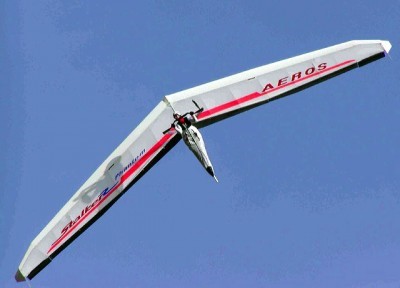
Being a further development of its predecessor – the 2004 Stalker rigid wing glider, the Phantom inherited the flight performance and comfort level while air towing. This became possible due to the increased rigidity of the wing as well as it’s aileron control system at the cost of only a couple of additional kilograms of weight, the Phantom gives the pilot more confidence and makes the endeavor of rigid wing flight more safe as well.

Compared with the Stalker, the Phantom features a wider nose angle and higher aspect ratio, more surface area of the ailerons and SPADDs, and an advanced control system allowing for decreased bar pressure at high speed.

A new RVG (rigid variable geometry) allows the pilot to lower the ailerons simultaneously in flight to increase trim speed and lighten the already light bar pressure for high speed runs. Ailerons make for much quicker roll rate as compared to spoileron rigids.

Phantom 145
Area: 13.5 sq.m
Wing span: 13.2 m
Aspect ratio: 12.9
Nose angle: 127°
Weight: 41 kg
Minimum pilot weight: 50 kg
Maximum pilot weight: 100 kg
Load weight: 50-100 kg
Breakdown length: 5.7 x 0.5 x 0.2 m
Min sink ratio: 0.65 m/s
Min airspeed: 33-35 km/h
Max airspeed: 110 km/h
Best glide ratio: 19

Aeros Parasol     

In the very first year of the company’s existence it was decided to explore other spheres of ultralight aircraft. Fathers of paragliding theme were originally redesigned copy of a hang glider Airwave Black Magic (called “the Parasol”), which was popular in the West, and the first independent creative work – paraglider Zig-Zag.

Aeros Stalker

Stalker

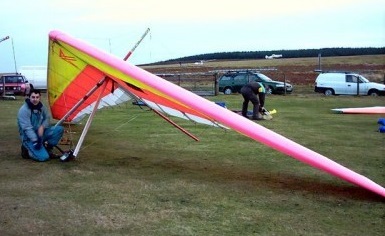
In 1991 specialists of the Ultralight Aircraft Department organised Limited Liability Association Aeros and starting from November 1991, began to manufacture new wings: sports hang glider Stalker-14 and wings for trike Stranger.

By 1992 the Stalker-14 had proved to be quite successful so it was prepared for certification with BHPA (UK). Over 50 Stalkers were made in 1993, and to satisfy demands of not very big pilots a small model Stalker-12 was developed. In 1994 Stalker-14 No.100 was made, dispatched to England and Model Stalker-12 was granted BHPA.

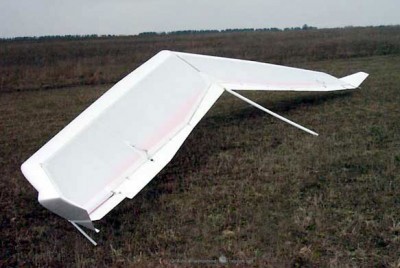
In 1999 Aeros designed and built a rigid wing Stalker (ultralight sailplane with beam aerodynamic control), certified by DHV in 2001.

Stalker Rigid

Stalker 12
Area, sqm: 12.0 sq.m
Wing span: 9.3 m
Aspect ratio: 7.2
Nose angle: 130 – 132 deg
Weight: 28 kg
Load weight: 45 – 65 kg
Number of upper battens: 21
Breakdown length: 5.1 x 3.3 x 2.0 m
Min. airspeed: 30 – 32 km/h
Max. airspeed: 90+ km/h
Best glide ratio: 11
Certificate: BHPA #9405097

Stalker 12
Wing area: 11.7 m²
Wing span: 9.2 m
Aspect ratio: 7.6
Minimum pilot weight: 45 kg
Maximum pilot weight: 65 kg
Packed length: 2 m
Nose angle: 131°

Stalker 13
Wing area: 12.9 m²
Wing span: 9.9 m
Aspect ratio: 7.6
Minimum pilot weight: 55 kg
Maximum pilot weight: 75 kg
Packed length: 2 m
Nose angle: 131°

Stalker 14
Area: 14.0 sq.m
Wing span: 10.3 m
Aspect ratio: 7.6
Nose angle: 126 – 128 deg
Weight: 34 kg
Load weight: 65 – 92 kg
Number of upper battens: 23
Breakdown length: 5.8 x 4.1 x 2.2 m
Min. airspeed: 29 – 31 kmh
Max. airspeed: 90 kmh
Best glide ratio: 11 +
Certificate: BHPA #9306091

Stalker 15
Wing area: 14 m²
Wing span: 10.3 m
Aspect ratio: 7.6
Hang glider weight: 34 kg
Minimum pilot weight: 65 kg
Maximum pilot weight: 92 kg
Minimum speed: 32 km/h
Maximum speed: 85 km/h
Max glide ratio (L/H): 11
Packed length: 2 m
Number of battens: 30
Nose angle: 131°

Stalker Rigid 12
Wing area: 12 m²
Wing span: 9.2 m
Aspect ratio: 7.2
Minimum pilot weight: 45 kg
Maximum pilot weight: 85 kg
Minimum speed: 25 km/h
Maximum speed: 130 km/h
Max glide ratio (L/H): 19
Minimum sink rate: 0.7 m/s
Nose angle: 127°

Stalker Rigid 14
Wing area: 14 m²
Wing span: 10.3 m
Aspect ratio: 7.6
Minimum pilot weight: 65 kg
Maximum pilot weight: 92 kg
Minimum speed: 25 km/h
Maximum speed: 130 km/h
Max glide ratio (L/H): 19
Minimum sink rate: 0.7 m/s
Nose angle: 127°