
Agur Gliders 1st
Anatoly Cohn, APCO’s owner and founder, started in hang gliding, designing and building gliders from 1976 with Agur Gliders until 1982 when he founded APCO.
Sea Palace Beach
P.O.B 1035 Bat-Yam 59110
Israel
A 1986 hang glider.
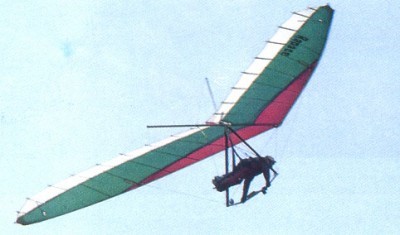
A 1988 hang glider.
Rapace 15
Wing area: 14.6 m²
Wing span: 10.4 m
Aspect ratio: 7.4
Hang glider weight: 30 kg
Minimum speed: 26 km/h
Maximum speed: 80 km/h
Max glide ratio (L/H): 10.4
Max glide ratio speed: 36 km/h
Minimum sink rate: 1.2 m/s
Packed length short: 4.2 m
Number of battens: 15
Nose angle: 130°
Rapace 16
Wing area: 15.4 m²
Wing span: 10.6 m
Aspect ratio: 7.3
Hang glider weight: 32 kg
Minimum speed: 26 km/h
Maximum speed: 80 km/h
Max glide ratio (L/H): 11.1
Max glide ratio speed: 35 km/h
Minimum sink rate: 1.1 m/s
Packed length short: 4.4 m
Number of battens: 15
Nose angle: 130°
Rapace 17
Wing area: 16.7 m²
Wing span: 10.6 m
Aspect ratio: 6.9
Hang glider weight: 34 kg
Minimum speed: 28 km/h
Maximum speed: 80 km/h
Max glide ratio (L/H): 11.1
Max glide ratio speed: 35 km/h
Minimum sink rate: 1.1 m/s
Packed length short: 4.4 m
Number of battens: 15
Nose angle: 130°
The Aeros Star was a 2001 hang glider.
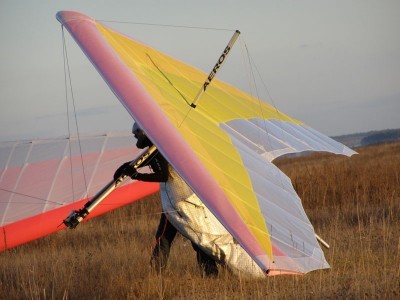
A 2010 hang glider for Intermediate pilots.
Wing area: 16.2 m²
Wing span: 9.6 m
Aspect ratio: 5.7
Hang glider weight: 25 kg
Minimum pilot weight: 60 kg
Maximum pilot weight: 114 kg
Minimum speed: 25 km/h
Maximum speed: 80 km/h
Max glide ratio (L/H): 9
Packed length: 5.7 m
Packed length short: 2.5 m
Number of battens: 15
Nose angle: 120°
1 seat motortrike wing
Wing area: 16.2 sq.m
Wingspan: 9.6 m
Weight: 36 kg
Load weight: 240 kg
No. upper battens: 15
Min speed: 36-38 kph
Max speed: 70 kph
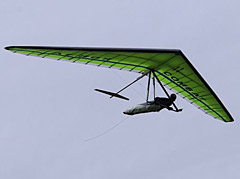
The first prototype of a high-performance Combat competition hang glider was designed and flew in 2000. The Combat glider is updated, and Aeros presented the new Combat 2 in 2001.
During 2003, the Combat L, which was lighter and better than its predecessor Combat 2, was designed. After extensive testing, Aeros releases the Combat L in 2006, and for lightweight pilots, the Combat L 12 with reduced wing area was designed.
Aeros continued improvement of the Combat in 2007 gave the Combat L 07 with a newly designed oval crossbeam, stiffer sprogs and an advanced design of the sail, which has many refinements and is made with new durable semi-transparent sailcloth. The top performance Combat L 07 was certified by DHV in 2008 in three sizes: 12, 13 and 14.
The full range of glider sizes (12, 13, 14, or 15) were available.
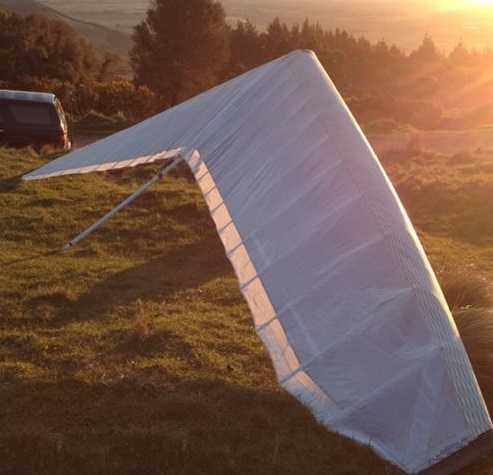
Different from the Combat 2, the Combat L is significantly lighter, depending on glider size and option it is 1.5 – 2 kilograms lighter. Basically it is a new glider with a wide variety of options. The sail design has not changed much. The main difference is leading edges, made of 7075 alloy and of completely different design. The leading edges are in three parts which allow a pilot to inspect and change them easily when needed. Having about the same stiffness they are significantly lighter. The Aeros Combat L is supplied standard with WW Slipstream profile uprights and reinforced Aeros Airfoil carbon speedbar with Aeros Airfoil knuckles. The aluminium Airfoil speedbar with Airfoil knuckles can be set optionally. Options are: carbon fiber battens, additional aluminum round bacebar, aluminum airfoiled speed bar, competition wires, additional carbon fiber inserts, light weight glider bag and light weight pads.
The competition options include light carbon 10mm battens for best performance, profiled carbon leading edge inserts, and XC light bag.
Changing the battens stiffness changed not only handling and climb, but performance as well. The sail was available in two options of the upper surface materials: PX10T or Grille Polyester 180G. The new sail is an advanced design with many refinements and stronger PX Mylar – PX Mylar leading edge cloth. The durable NCV semi-transparent sailcloth keeps the upper surface very clean and tight, providing soft handling and good coordination. The undersurface is Dacron and can be cut out in two separate colour layout designs.
It is possible to use more VG than on the Combat 2 on when thermaling which improves a climb rate. The Combat L glides slightly better than Combat 2.
The glider has stronger crossbar, the pull-back wire is changed from 2.5 mm to 3 mm diameter.
Believing they could excede the characteristics of Combat L 07 Aeros launched the serial production of new competition hang glider, the Combat 13 09. The most popular being 13 (13.7 sq.m).
There has been added a new glider size of the 09 series – Combat 09 13.2, of 13.2 sq.m. which is between the Combat 12 and Combat 13.7. The performance of the new glider is slightly better than Combat 09 13 (13.7sq.m), with better climb rate. Measurements where done with the tail. Combat 09 13.2 seams to feel in the air and perform with the tail even better than without. The new glider has aspect ratio 8.05 maintaining the same wing span. Theoretically this means that the glider with more aspect ratio should have better low speed glide ratio.
Compared to the Combat L 07, the Combat 09 has new sail and frame design. Totally new sail cut, new batten profiles, stiffer leading edge, stiffer and lighter keel. Test flights in Ukraine and Switzerland determined that the Combat 09 has better performance and climbing abilities in comparison with Combat L 13 07. Although the Combat 09 has stiffer frame, the glider keeps soft Combat L 07 handling and good coordination. The landing characteristics are the same or slightly better than Combat L 07.
The Combat L12 was designed by Sergey Drobyshev, is 12.8 sq.m and was built for people 50-75 kg. The optimum is 65-75kg clip-in pilot weight. About twenty Combat L12 were sold by November 2006.
The sail cut is designed with a thin low drag airfoil profile, has 24 top battens, 62-50mm 7075 aluminium leading edges, and light firm dive struts. The nose cover blends smoothly into the sail. The modified pulley system with bearings allows you pull VG with 2 fingers. The glider weight is about 33.5 kg.
Options are a carbon reinforced speedbar or an aluminium profiled basebar together with all streamline fittings. The uprights are 50 mm shorter than on bigger Combats along with a 40 mm shorter speed bar. Options are two wire sets: standard version and second version that keeps the control bar 5 cm back. Optionally the small Combat is provided with all high performance items like light profiled carbon leading edge inserts, 10mm carbon battens and a thin 5.6 m bag.
Combat L 12
Sail area: 12.8 sq.m (138 sq.ft)
Wing span: 10 m (32.8 ft)
Aspect ratio: 7.8
Nose angle: 129-131 degs
Pilot clip weight optim.: 75 kg (165 lb)
Weight (without bags): 33.5 kg (74 lb)
No. upper sail battens: 24
No. bottom sail battens: 6
Breakdown length: 3.8/5.6 m (12.4/18.4 ft)
Tested load: +6/-3 G
Wind speed max: 12 m/sec (27 mph)
Min. speed optimal wt: 29-31 km/h (18-19 mph)
Max. speed optimal wt: 110+ km/h (69 mph)
Min. pilot weight: 60 kg (132 lb)
Maximum pilot weight: 90 kg (198 lb)
Certificate: DHV # 01 0430 08
Combat L 13
Sail area: 13.7 sq.m (145 sq.ft)
Wing span: 10.35 m (33.93 ft)
Aspect ratio: 7.9
Nose angle: 129-131 degs
Pilot clip weight optim: 85 kg (187 lb)
Weight (without bags): 34.5 kg (77 lb)
No. upper sail battens: 24
No. bottom sail battens: 6
Breakdown length: 3.9/5.8 m (12.8/19 ft)
Tested load: +6/-3 G
Wind speed max: 12 m/sec (27 mph)
Min. speed optimal wt: 29-31 km/h (18-19 mph)
Max. speed optimal wt: 110+ km/h (69 mph)
Min. pilot weight: 75 kg (165 lb)
Maximum pilot weight: 110 kg (243 lb)
Max glide ratio speed: 16 km/h
Certificate: DHV # 01 0431 08
Combat L 14
Sail area: 14.2 sq.m (153 sq.ft)
Wing span: 10.7 m (35.1 ft)
Aspect ratio: 8.06
Nose angle: 129-131 degs
Pilot clip weight optim: 95 kg (209 lb)
Weight (without bags): 35.9 kg (79 lb)
No. upper sail battens: 24
No. bottom sail battens: 6
Breakdown length: 4.1/5.9 m (13.4/19.3 ft)
Tested load: +6/-3 G
Wind speed max: 12 m/sec (27 mph)
Min. speed optimal wt: 29-31 km/h (18-19 mph)
Max. speed optimal wt: 110+ km/h (69 mph)
Min. pilot weight: 85 kg (187 lb)
Maximum pilot weight: 115 kg (254 lb)
Certificate: DHV # 01 0432 08
Max glide ratio speed: 16 km/h
Number of battens: 30
Combat L 15
Sail area: 14.7 sq.m (158 sq.ft)
Wing span: 10.7 m (35.1 ft)
Aspect ratio: 7.8
Nose angle: 129-131 degs
Pilot clip weight optim.: 100 kg (220 lb)
Weight (without bags): 36 kg (80 lb)
No. upper sail battens: 24
No. bottom sail battens: 6
Breakdown length: 4.1/5.9 m (13.4/19.3 ft)
Min. speed optimal wt: 29-31 km/h (18-19 mph)
Tested load: +6/-3 G
Max. speed optimal wt: 110+ km/h (69 mph)
Wind speed max: 12 m/sec (27 mph)
Min. pilot weight: 90 kg (198 lb)
Maximum pilot weight: 120 kg (265 lb)
Max glide ratio speed: 16 km/h
Number of battens: 30
Combat 09 14.9
Sail area: 14.9 sq.m (160 sq.ft)
Wing span: 10.7 m (35.1 ft)
Aspect ratio: 7.7
Nose angle: 129-131 degs
Pilot clip weight optim: 100 kg (220 lb)
Weight (without bags): 35.8 kg (79 lb)
No. upper sail battens: 24
No. bottom sail battens: 6
Tested load: +6/-3 G
Breakdown length: 4.15/5.9 m (13.4/19.3 ft)
Min. speed / optim. wt: 29-31 km/h (18-19 mph)
Wind speed max: 12 m/sec (27 mph)
Max. speed / optim. wt: 110+ km/h (69 mph)
Min. pilot weight: 90 kg (198 lb)
Max. pilot weight: 120 kg (265 lb)
Combat 09 14.5
Wing area: 14.5 m²
Wing span: 10.7 m
Aspect ratio: 7.7
Hang glider weight: 36 kg
Combat 09 14.2
Sail area: 14.2 sq.m (153 sq.ft)
Wing span: 10.7 m (35.1 ft)
Aspect ratio: 8.06
Nose angle: 129-131 degs
Pilot clip weight optim: 95 kg (209 lb)
Weight (without bags): 35.0 kg (78 lb)
No. upper sail battens: 24
No. bottom sail battens: 6
Breakdown length: 4.15/5.9 m (13.4/19.3 ft)
Tested load: +6/-3 G
Wind speed max: 12 m/sec (27 mph)
Min. speed / optim. wt: 29-31 km/h (18-19 mph)
Max. speed / optim. wt: 110+ km/h (69 mph)
Min. pilot weight: 85 kg (187 lb)
Max. pilot weight: 115 kg (254 lb)
Combat 09 13.7
Sail area: 13.7 sq.m (145 sq.ft)
Wing span: 10.35 m (33.93 ft)
Aspect ratio: 7.9
Nose angle: 129-131 degs
Pilot clip weight optim: 85 kg (187 lb)
Weight (without bags): 34.5 kg (77 lb)
No. of upper sail battens: 24
No. bottom sail battens: 6
Breakdown length: 4.1/5.8 m (12.8/19 ft)
Tested load: +6/-3 G
Wind speed max: 12 m/sec (27 mph)
Min. speed / optim. wt: 29-31 km/h (18-19 mph)
Max. speed / optim. wt: 110+ km/h (69 mph)
Min. pilot weight: 75 kg (165 lb)
Max. pilot weight: 110 kg (243 lb)
Combat 09 13.2
Sail area: 13.2 sq.m (142 sq.ft)
Wing span: 10.35 m (33.93 ft)
Aspect ratio: 8.05
Nose angle: 129-131 degs
Pilot clip weight optim: 80 kg (176 lb)
Weight (without bags): 34.0 kg (75 lb)
No. of upper sail battens: 24
No. bottom sail battens: 6
Breakdown length: 4.1/5.8 m (12.8/19 ft)
Tested load: +6/-3 G
Wind speed max: 12 m/sec (27 mph)
Min. speed / optim. wt: 29-31 km/h (18-19 mph)
Max. speed / optim. wt: 110+ km/h (69 mph)
Min. pilot weight: 70 kg (154 lb)
Max. pilot weight: 110 kg (243 lb)
Combat 09 12.8
Sail area: 12.8 sq.m (138 sq.ft)
Wing span: 10 m (32.81 ft)
Aspect ratio: 7.8
Nose angle: 129-131 degs
Pilot clip weight optim: 75 kg (165 lb)
Weight (without bags): 33 kg (73 lb)
No. of upper sail battens: 24
No. bottom sail battens: 6
Breakdown length: 4.0/5.6 m (13/18.4 ft)
Tested load: +6/-3 G
Wind speed max: 12 m/sec (27 mph)
Min. speed / optim. wt: 29-31 km/h (18-19 mph)
Max. speed / optim. wt: 110+ km/h (69 mph)
Min. pilot weight: 60 kg (132 lb)
Max. pilot weight: 90 kg (198 lb)
Combat 09 GT 12.8
Wing area: 12.8 m²
Wing span: 10 m
Aspect ratio: 7.8
Hang glider weight: 33 kg
Combat 09 GT 13.2
Wing area: 13.2 m²
Wing span: 10.35 m
Aspect ratio: 8.05
Hang glider weight: 34 kg
Combat 09 GT 13.5
Wing area: 13.5 m²
Wing span: 10.7 m
Aspect ratio: 8.5
Hang glider weight: 35 kg
Combat 09 GT 13.7
Wing area: 13.7 m²
Wing span: 10.35 m
Aspect ratio: 7.9
Hang glider weight: 35 kg
Combat 09 GT 14.2
Wing area: 14.2 m²
Wing span: 10.7 m
Aspect ratio: 8.06
Hang glider weight: 35 kg
Combat 09 GT 14.5
Wing area: 14.5 m²
Wing span: 10.7 m
Aspect ratio: 7.7
Hang glider weight: 36 kg
Combat 14
Wing area: 14.2 m²
Wing span: 10.7 m
Aspect ratio: 8.06
Hang glider weight: 36 kg
Minimum pilot weight: 75 kg
Maximum pilot weight: 100 kg
Minimum speed: 30 km/h
Maximum speed: 110 km/h
Max glide ratio (L/H): 15
Packed length: 5.9 m
Packed length short: 4.1 m
Number of battens: 26
Nose angle: 127°
Combat 15
Wing area: 14.6 m²
Wing span: 10.7 m
Aspect ratio: 7.84
Hang glider weight: 36 kg
Minimum pilot weight: 85 kg
Maximum pilot weight: 115 kg
Minimum speed: 30 km/h
Maximum speed: 110 km/h
Max glide ratio (L/H): 15
Packed length: 5.9 m
Packed length short: 4.1 m
Number of battens: 26
Nose angle: 127°
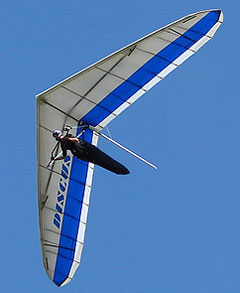
Aeros has been working on an intermediate design for about 3 years, but had not made it the priority that was warranted. The first prototype was flying in the spring of 2002 and U.S. Aeros received the first prototype during the summer for testing. After receiving this glider, U.S. Aeros’ VP, Sunny Venesky worked with the designers at the Aeros factory to fine tune the glider to get it ready for the market.
The criteria for this glider was, very stable on tow (without a fin), very stable in roll – mindlessly predictable handling, very easy to land, and vg operation that actually does something
The result is a glider that is the easiest to land than Aeros has ever produced before.
It combines high performance with simple piloting and maintaining, that makes it a perfect wing for those who do not take part in competitions, but wish to experience soaring.
Since 2006, the Discus glider has been available in all sizes, including Discus 12 and Discus 13. The Discus C becomes available for those pilots who are keen on high performance, light weight and easy handling all in one.
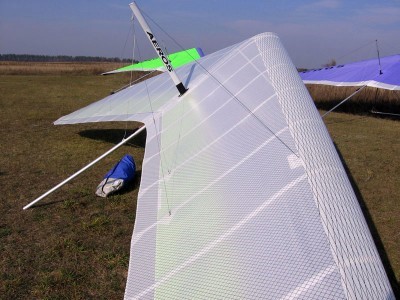
The Discus’ design has curved tips, is very stable on tow, and the variable geometry mechanism allows control of the sail tension in the air, optimizing the glider’s configuration according to flight condition. Featured are curved tips, wire braced washout tube – allowing for reduction in reflex bridles, standard with Finsterwalder aerofoil hardware and speedbar, and is available in an optional 2.4 m (7 ft.) breakdown length.
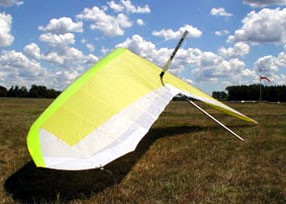
The glider is available in two modifications: A and B.
The 2007 Discus C for Intermediate pilots, in addition to the aero king post and control frame, there are a range of fabric choices (including Dacron or Matrix); wire lengths also differ from the standard Discus.
A Discus M version is also offered. This modification has a different keel tube design that allows use of a number of motorised harnesses such as Mosquito, Doodlebug and the like.
A Discus 15T wing is a choice for a nanolight single-seater trike. This wing utilizes reinforced frame, trike attachment bracket and the control bar shifted backwards.
From the 2006 flying season a Discus version with aluminum airfoil speedbar and basetubes with reduced aerodynamical resistance was available. This was available as a modified Discus, or a separate option (a speedbar, basetubes, lower wires and a keel tube) to upgrade an existing glider.
The Aeros Discus C is an ideal choice for the pilot looking for a high performance glider, whilst maintaining light weight and easy handling.
The standard Aeros Discus has a very respectable performance but the Aeros Discus C is unbeatable for performance in its class.
The Discus C has retained all of the features of the standard Discus. It is a simple machine, stable on tow and very easy to land. The handling is set up for relatively experienced pilots as well as pitch pressure, so flying fast will be comfortable and bar pressure will remain acceptable.
The pulley system is modified for easier use.
The Wills Wing litestream downtube airfoil sections are not as wide as on the Combat, but are convenient and comfortable to hold in the arms.
Available in two Sizes: Discus C14 (13.7 sq.m) and Discus C15 (14.7 sq.m)
The Discus C features Matrix (Bainbridge) sail, Wills Wing Litestream down tubes, Wills Wing aluminium Airfoil basebar with all the streamline fittings, and Wills Wing Slipstream kingpost.
Discus 12
Wing area: 11.6 m²
Wing span: 9.2 m
Aspect ratio: 7.3
Hang glider weight: 25 kg
Minimum pilot weight: 50 kg
Maximum pilot weight: 80 kg
Minimum speed: 30 km/h
Maximum speed: 80 km/h
Packed length: 4.7 m
Packed length short: 3.8 m
Number of battens: 22
Nose angle: 125°
Discus 13
Sail area: 12.8 sq.m (138 sq.ft)
Wing span: 9.6 m (31.5 ft)
Aspect ratio: 7.2
Nose angle: 125-128 degs
Pilot clip weight optim.: 75 kg (165 lb)
Weight (without bags): 28.3 kg (62.3 lb)
No of upper sail battens: 20
No of bottom sail battens: 4
Breakdown length: 4.9/3.94 m (16.1/12.9 ft)
Tested load: +6 / -3 G
Wind speed max: 12 m/sec (27 mph)
Min. airspeed: 29-30 km/h (18-19 mph)
Max. airspeed: 80 km/h (50 mph)
Min. clip-in weight: 65 kg (143 lb)
Max. clip-in weight: 100 kg (220.5 lb)
Discus 14
Sail area: 13.7 sq.m (147.5 sq.ft)
Wing span: 10 m (32.8 ft)
Aspect ratio: 7.3
Nose angle: 125-128 degs
Pilot clip weight optim.: 85 kg (187 lb)
Weight (without bags): 31 kg (68 lb)
No of upper sail battens: 20
No of bottom sail battens: 4
Breakdown length: 5.1/4.1 m (16.7/13.4 ft)
Tested load: +6 / -3 G
Wind speed max: 12 m/sec (27 mph)
Min. airspeed: 29-30 km/h (18-19 mph)
Max. airspeed: 80 km/h (50 mph)
Min. clip-in weight: 75 kg (165 lb)
Max. clip-in weight: 115 kg (254 lb)
Discus 15
Sail area: 14.7 sq.m (158 sq.ft)
Wing span: 10.3 m (33.8 ft)
Aspect ratio: 7.2
Nose angle: 125-128 degs
Pilot clip weight optim.: 95 kg (209 lb)
Weight (without bags): 33 kg (73 lb)
No of upper sail battens: 20
No of bottom sail battens: 4
Breakdown length: 5.2/4.2 m (17/13.8 ft)
Tested load: +6 / -3 G
Wind speed max: 12 m/sec (27 mph)
Min. airspeed: 29-30 km/h (18-19 mph)
Max. airspeed: 80 km/h (50 mph)
Min. clip-in weight: 85 kg (187 lb)
Max. clip-in weight: 125 kg (276 lb)
Discus C14
Sail area: 13.7 sq.m
Discus C15
Sail area: 14.7 sq.m
In 1993 a new training hang glider, the Student-16, was designed and built. These were named Target abroad.
BHPA certificates for the Target-16 and Target-13 were received and the Student was still being manufactured in 1998. Targets are beginner-friendly with smooth proportionate control pull allowing experience for switching to more sport wings. Hang gliders of Target family have been designed taking into consideration all usual requirements of flight school instructors for training devices. They are easy to repair and rigid construction stands hard landings.
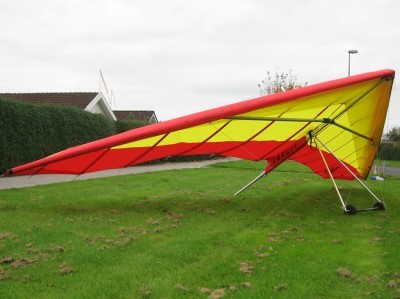
It was very easy to scooter tow, aerotow and footlaunch. PIO’s were non existent even while training with this glider. It was also easy to keep up with and even out climb other gliders, but penetration lacked. It is very easy to rig, forgiving in flight, easy to tow and hill launch. It can be a bit lively ground handling in strong conditions and penetration lacks. Overall a great glider for someone out of school or for someone looking for stress free easy flying.
In 1999 the tandem Target-192 was developed.
For flight school instructors and anyone who wants to fly a tandem, Aeros created the tandem Target 21 in 2006, obtaining the BHPA certificate in 2007. In 2007 the new Target 16 for beginners was made significantly lighter and weighed only 23.5 kg without bags.
The Target 13M/16M version is specially modified for the installation of a small and light engine which will allow foot launch, and to gain altitude easily. The glider’s frame is strengthened, there is an extra keel tube in-cut not to interfere with powerplant and propeller installing. “Doodlebug” and “Mosquito” powered harnesses have been used.
The Target 21 tandem hang glider launches, handles and lands quite similarly to Target 16. The glider is comfortable at all flight modes from the first steps at launch to the very landing. Despite its large size, the glider can be easily flown by a single pilot unless his weight is under 85 kg. The Target 21 features 7075 leading edges and a 48×1.5/45×1.5 mm keel tube, 36×1.5 mm control frame downtubes, 32×2 mm control frame basetube, 180 HTP Square trailing edge fabric, 7075-T6 battens with lever type rear batten tips, full leading edge Mylar insert and streamlined kingpost. Options include a full landing gear set.
Target 13
Sail area: 13.4 sq.m
Wing span: 8.65 m
Aspect ratio: 5.6
Nose angle: 118 degs
Weight: 24.5 kg
Brakedown length: 5.1/3.2/2/0 m
Hook-in pilot weight: 50-75 kg
Top Batten Number: 13
Double Sail: 30 %
Min. airspeed: 25-26 km/h
Max. airspeed: 70 km/h
Best glide ratio: 7
BHPA Certificate: № 9511109
Price (1998): £ 1795
Target 132
Wing area: 13.4 m²
Wing span: 8.65 m
Aspect ratio: 5.6
Hang glider weight: 24 kg
Minimum pilot weight: 45 kg
Maximum pilot weight: 65 kg
Minimum speed: 25 km/h
Maximum speed: 70 km/h
Max glide ratio (L/H): 7
Packed length: 5.1 m
Packed length short: 3.2 m
Number of battens: 13
Nose angle: 118°
Target 16
Sail area: 16.2 sq.m / 175 sq.ft
Wing span: 9.6 m
Aspect ratio: 5.7
Nose angle: 120 degs
Weight: 26 kg / 57 lb
Brakedown length: 5.7/3.8/2.0 m
Hook-in pilot weight: 65-105 kg
Top Batten Number: 15
Double Sail: 30 %
Min. airspeed: 23-25 km/h
Max. airspeed: 70 km/h
Best glide ratio: 7
KP/TL: Kingpost
BHPA Certificate: № 9511108
Skill Level: Novice
VG: No
Price (1998): £ 1795
Target 162
Wing area: 16.2 m²
Wing span: 9.6 m
Aspect ratio: 5.7
Hang glider weight: 26 kg
Minimum pilot weight: 60 kg
Maximum pilot weight: 100 kg
Minimum speed: 23 km/h
Maximum speed: 70 km/h
Max glide ratio (L/H): 7
Packed length: 5.7 m
Packed length short: 3.8 m
Number of battens: 15
Nose angle: 120°
Target 192
Wing area: 19 m²
Wing span: 10.5 m
Aspect ratio: 5.7
Hang glider weight: 33 kg
Minimum pilot weight: 85 kg
Maximum pilot weight: 180 kg
Minimum speed: 22 km/h
Maximum speed: 70 km/h
Max glide ratio (L/H): 7
Packed length: 6.1 m
Packed length short: 4 m
Number of battens: 15
Nose angle: 120°
Target 21 Tandem
Sail area: 20.5 sq.m
Wing span: 10.8 m
Aspect ratio: 5.7
Nose angle: 122 degs
Weight: 34 kg
Brakedown length: 4.3/6.4 m
Hook-in pilot weight: 85-190 kg
Top Batten Number: 18
Double Sail: 30 %
Min. airspeed: 26 km/h
Max. airspeed: 85 km/h
Best glide ratio: 7
BHPA Certificate: № 0708170
 All Aero