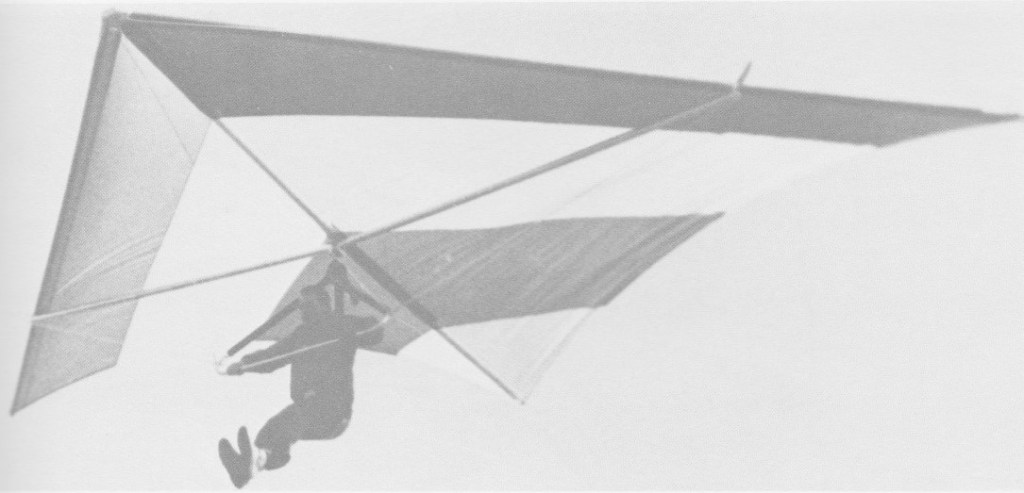
The Air Capitol HangGliders Skyhog is a medium aspect glider which gives higher performance than a standard Rogallo. The use of positive dihedral and reflex makes it suitable for beginners. Extra large spars and leading edge stressing, which is tunable, allow a tight sail.
The airframe is made from 6061-T6 2in x .035 polished aluminium tubing, internally sleeved with 6061T6 1 15/16in aluminium tubing. The aluminium caps are cast.
All rigging is 3/32in aircraft quality cables that are completely encased in vinyl. All hardware is aircraft quality.
The sail is made from 3.0oz stabilised dacron. Load tapes are sewn into the sail to distribute loads. Basic colours were white, bright red and light blue. Other colours were availabe on special order. A smooth cast aluminium nose piece is fitted.
The pilot support is a full height adjustable soft seat that is padded. 5000 lb test webbing goes around the body. A prone harness was optional.
A top-stressing adjusting nut tightens all the cables simultaneously. Only one nut must be removed for the entire wing to fold up. The control bar is padded and can be left on the wing when folded.
18×16 Leading edge: 18 ft Keel length: 16 ft Wing span: 27 ft Wing area: 220 sq,ft Aspect ratio: 3.3 Nose angle: 100˚ Sail billow: 5˚ Weight: 35 lb Pilot weight: 125-225 lb Takeoff speed: 10 mph Stall speed: 12 mph Max speed: 55 mph Best glide ratio (L/D): 5-1 Best L/D speed: 21 mph Min sink: 310 fpm
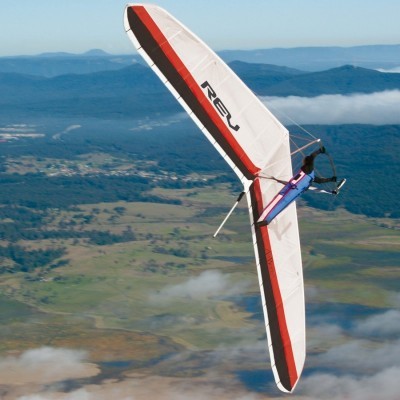
An aluminum / carbon composite structure, the Rev abandons the cam overdrive in favor of a conventional system; high speed profile control system (on the first 4 battens). A very nice working sail (the air inlets are minimized to the maximum.
In flight the Airborne lands without problem, a return to neutral present, and a tendency to “smooth” turbulence is good.
Blade 132 Wing area: 12.26 m² Wing span: 9 m Hang glider weight: 28 kg Packed length: 5.3 m Packed length short: 3.7 m Number of battens: 25 Nose angle: 125°
Blade 141 Wing area: 13.12 m² Wing span: 9.91 m Aspect ratio: 7.2 Hang glider weight: 32 kg Minimum pilot weight: 55 kg Maximum pilot weight: 80 kg Packed length: 5.5 m Packed length short: 3.9 m Number of battens: 29 Nose angle: 125°
Blade 152 Wing area: 14.23 m² Wing span: 10.12 m Aspect ratio: 7.2 Hang glider weight: 34 kg Minimum pilot weight: 70 kg Maximum pilot weight: 95 kg Packed length: 5.7 m Packed length short: 4 m Number of battens: 31 Nose angle: 125°
A 1992 hang glider for intermediate pilots, the Blitz is described as a very good wing. The glider handles nice and easy, good on towing (no yaws). Just one thing is not so pleasant, it’s when you approach landing don’t take too much speed (unless you VG is pulled enough) because glider starts to yaw, if you do so pull your VG (polispast) more. But the glider is very good.
Blitz 137 Wing area: 12.76 m² Wing span: 9.36 m Aspect ratio: 6.9 Hang glider weight: 29 kg Minimum pilot weight: 45 kg Maximum pilot weight: 65 kg Packed length: 5.3 m Packed length short: 3.8 m Number of battens: 27 Nose angle: 127°
Blitz 146 Wing area: 13.6 m² Wing span: 9.75 m Aspect ratio: 6.9 Hang glider weight: 31 kg Minimum pilot weight: 55 kg Maximum pilot weight: 80 kg Packed length: 5.6 m Packed length short: 4.1 m Number of battens: 29 Nose angle: 127°
Blitz 155 Wing area: 14.37 m² Wing span: 10.1 m Aspect ratio: 7.1 Hang glider weight: 33 kg Minimum pilot weight: 60 kg Maximum pilot weight: 95kg Packed length: 5.7 m Packed length short: 4.3 m Number of battens: 29 Nose angle: 127°
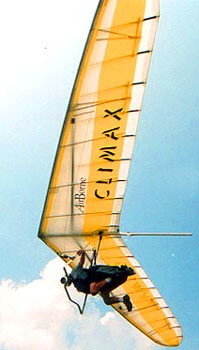
The 2000 Airborne Climax is a well rounded glider: recreational use, cross country flights or competition, it will do it all due to its light handling, plus easy takeoff and landing characteristics. It was available with 2 types of A frame, either standard or airfoiled aluminium tubes. Round carbon fiber crossbar. Aluminium alloy dive sticks and battons.
The Climax 13 is not for lightweight pilots, as it requires a high wing load.
Climax 2
The 2001 Climax 2 (C2) is for Advanced pilots.
Airborne C2-13
Standard with a full PX mylar sail, the Climax 2 was available in 13 and 14 sq.m.
Climax 2 Lite (C2 Lite)
The Climax 2 Lite (C2 Lite) for advanved pilots also appeared in 2001.
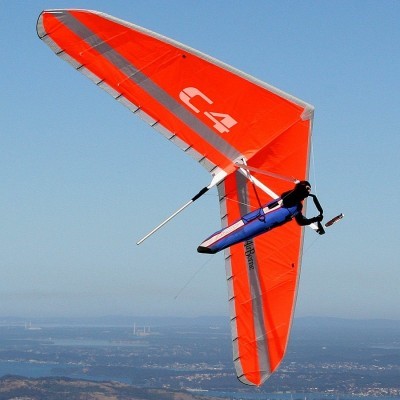
This third version of the Climax, the 2005 C4, was a success. Not only the crafting quality upped a level, but flying qualities are also remarkable concerning easy handling and pleasure. Taking off and landing are easy, the model earned in handling and speed. Overdrive requires very low effort, performances were in those of the top range models.
C4
The C4 VG Cam system is an efficient and simple way to change the geometry of the airframe in flight. The Cam levers extend the cross bars, thus changing the nose angle of the glider, which in turn tightens the sail to give an increased glide angle. This system allows the bottom rigging to remain tight in the loose VG setting, giving the pilot a much more solid feeling when ground handling for take-off. Because the cross bars do not change position, as with conventional VG systems, the static balance of the glider remains constant as does the anhedral. The centre section on the C4 is manufactured in house on a CNC miller and the cross bar wedge is made from solid 7075 alumininium. The cross bar ends are milled in house from solid 6061-T6 and are bonded into the carbon fibre cross bars. Stainless steel pins are used to connect the cross bar ends to the wedge plates. The CNC works to + or – 0.1 of a millimetre tolerance.
Manufactured in house on our CNC miller the nose wire clip allows for quick and easy attachement of nose wires, and the crossbar pullback on the C4 is easy with the 2:1 reduction. The pullback easily locates into the quickclip. The keel, and front and rear leading edges are made from 7075 aluminium.
The top control frame holes are finished off with neoprene.
Features include new airfoil profiles, new tip geometry, more double surface, taller keel pocket for a stable high speed airfoil at the centre section, a new under surface panel layout, reduced wing twist and exceptional sail constructed of PX 20 leading edge. The main sail is made from “Matrix” Polyester laminate with a 13-degree warp oriented X-Ply Polyester yarn. A light weight Taffeta is laminated to the cloth for extra durability.
Streamline clip tip battens are constructed from virtually maintenance free 7075-T6 tubing.
Optional features include Microdrag Control Frame, streamline Control Frame, and streamline Control Frame Option with Carbon Microdrag base bar. This option offers the advantages of the most comfortable carbon base bar in combination with the narrow streamline control frame uprights for an easy grip on foot launch.
Climax 13 Wing area: 13.1 m² Wing span: 9.6 m Aspect ratio: 7 Hang glider weight: 33 kg Minimum pilot weight: 55 kg Maximum pilot weight: 90 kg Vne (Velocity Never To Exceed): 85 km/h VA (Maximum Maneuvering Speed): 74 km/h Maximum Speed at Minimum Wing Loading Vd: 115 km/h Packed length: 4.9 m Packed length short: 3.8 m Number of battens: 28 Nose angle: 127°
Climax 14 Wing area: 14.3 m² Wing span: 10.4 m Aspect ratio: 8 Hang glider weight: 35 kg Minimum pilot weight: 75 kg Maximum pilot weight: 120 kg Vne (Velocity Never To Exceed): 85 km/h VA (Maximum Maneuvering Speed): 74 km/h Maximum Speed at Minimum Wing Loading Vd: 115 km/h Packed length: 5.3 m Packed length short: 4.1 m Number of battens: 30 Nose angle: 127°
C2 13 Wing area: 13.1 m² Wing span: 9.6 m Aspect ratio: 7 Hang glider weight: 33 kg Minimum pilot weight: 55 kg Maximum pilot weight: 90 kg Maximum speed: 115 km/h Max glide ratio speed: 56 km/h Packed length: 4.9 m Packed length short: 3.8 m Number of battens: 28 Nose angle: 127°
C2 14 Wing area: 14.3 m² Wing span: 10.4 m Aspect ratio: 7.5 Hang glider weight: 36 kg Minimum pilot weight: 75 kg Maximum pilot weight: 120 kg Maximum speed: 115 km/h Max glide ratio speed: 56 km/h Packed length: 5.3 m Packed length short: 4.1 m Number of battens: 30 Nose angle: 127°
C2 Lite 13 Wing area: 13.1 m² Wing span: 9.6 m Aspect ratio: 7 Hang glider weight: 33 kg Minimum pilot weight: 55 kg Maximum pilot weight: 90 kg Maximum speed: 115 km/h Max glide ratio speed: 56 km/h Packed length: 4.9 m Packed length short: 3.8 m Number of battens: 28 Nose angle: 127°
C2 Lite 14 Wing area: 14.3 m² Wing span: 10.4 m Aspect ratio: 7.5 Hang glider weight: 36 kg Minimum pilot weight: 75 kg Maximum pilot weight: 120 kg Maximum speed: 115 km/h Max glide ratio speed: 56 km/h Packed length: 5.3 m Packed length short: 4.1 m Number of battens: 30 Nose angle: 127°
C4-13 Sail Area: 12.7 sq m / 137 sq ft Wing Span: 9.6 m / 31.5 feet Aspect Ratio: 7.3 Nose Angle: 128-133 deg Double Surface: 93% Battens: 22 + 6 Glider Weight: 33 kg / 73 lb Pack Up Length: 4.9 m / 16.1 ft Short Pack Length: 3.8 m / 12.5 ft Pilot Weight: 55 – 80 kg / 121 – 176 lb Minimum speed: 40 km/h Max glide ratio speed: 56 km/h VNE: 85 km/h / 53 mph Max Manoeuring Speed: 74 km/h / 46 mph Steady State Speed: 125 km/h / 78 mph
C4-13.5 Sail Area: 13.5 sq m / 146 sq ft Wing Span: 10.00 m / 32.8 feet Aspect Ratio: 7.4 Nose Angle: 128-133 deg Double Surface: 93% Battens: 24 + 6 Glider Weight: 34 kg / 75 lb Pack Up Length: 5.1 m / 16.7 ft Short Pack Length: 4.0 m / 13.1 ft Pilot Weight: 70 -100 kg / 154 – 220 lb VNE: 85 kmh / 53 mph Minimum speed: 40 km/h Max glide ratio speed: 56 km/h Max Manoeuring Speed: 74 km/h / 46 mph Steady State Speed: 125 km/h / 78 mph Certification: DHV
C4-14 Sail Area: 14.3 sq m / 154 sq ft Wing Span: 10.4 m / 34.1 feet Aspect Ratio: 7.5 Nose Angle: 128-133 degrees Double Surface: 93% Battens: 24 + 6 Glider Weight: 36 kg / 79 lb Pack Up Length: 5.3 m / 17.3 ft Short Pack Length: 4.1 m / 13.5 ft Pilot Weight: 85 – 120 kg / 187 – 265 lb VNE: 85 kmh / 53 mph Minimum speed: 40 km/h Max glide ratio speed: 56 km/h Max Manoeuring Speed: 74 km/h / 46 mph Steady State Speed: 125 km/h / 78 mph Certification: DHV
Designed to be fun to fly, light weight, quick and easy to set-up and able to fly the dunes, coastal cliff or inland thermals the 2001 Fun is light and well balanced, which makes this glider easy to launch and easy to land. A glider for the novice, or for experienced pilot’s who want to put the fun back into their sport, the The Fun was brought out in 1998, in three sizes; The FUN 160, 190, and 220 (Tandem).
Airborne Fun 190
With USHGMA certification, 7075-T6 airframe for strength and light weight (19 23 kg) the Fun can be flown prone or seated (with PG harness), and can be rigged both flat or on the A frame.
Fun
Features include Sky Floating handling and performance, Carbon Fiber washout rods, 7075-T6 battens, and a Ladder Hang Loop is available for tandem operators.
FUN 160 Sail Area: 14.9 sq m / 160 sq ft Wing Span: 9.07 m / 29.8 ft Aspect Ratio: 5.5 Nose Angle: 118 deg Double Surface: 26% Battens: 13 Glider Weight: 19 kg / 42 lb Assembly Time: 6 min Pack Up Length: 5.31 m / 17.4 ft Short Pack Length: 3.60 m / 11.8 ft Pilot Weight: 50-90 kg / 110-198 lb VNE: 80 km/h / 50 mph Max. manoeuvring speed: 69 km/h / 43 mph Steady state speed: 35 mph / 56 km/h Round Down Tubes: Standard Straight Base Tube: Standard Faired Down Tubes: Not Available Speed Bar: Option
FUN 190 Sail Area: 17.7 sq m / 190 sq ft Wing Span: 10.1 m / 33.1 ft Aspect Ratio: 5.8 Nose Angle: 118 deg Double Surface: 26% Battens: 13 Glider Weight: 23 kg / 51 lb Assembly Time: 6 min Pack Up Length: 5.9 0 m / 19.5 ft Short Pack Length: 4.10 m / 13.4 ft Pilot Weight: 70-120 kg / 154-265 lb VNE: 80 km/h / 50 mph Max. manoeuvring speed: 69 km/h / 43 mph Steady state speed: 35 mph / 56 km/h Round Down Tubes: Standard Straight Base Tube: Standard Faired Down Tubes: Not Available Speed Bar: Option
FUN 220 Sail Area: 20.5 sq m / 220 sq ft Wing Span: 10.8 m / 35.3 ft Aspect Ratio: 5.7 Nose Angle: 118 deg Double Surface: 26% Battens: 13 Glider Weight: 28 kg / 62 lb Assembly Time: 6 min Pack Up Length: 6.34 m / 20.8 ft Short Pack Length: 4.60 m / 15.0 ft Pilot Weight: 85-187 kg / 187-412 lb VNE: 65 km/h / 40 mph Max. manoeuvring speed: 65 km/h / 40 mph Steady state speed: 35 mph / 56 km/h Round Down Tubes: Not Available Straight Base Tube: Standard Faired Down Tubes: Standard Speed Bar: Option Seats: 2
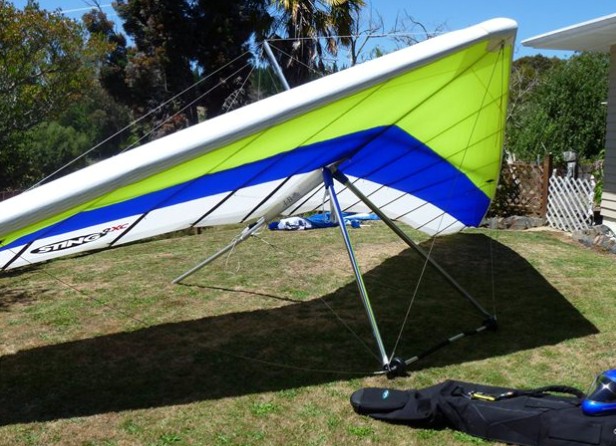
The Sting 2 is a recreational hang glider updated with 7075 airframe and battens, with faired king post, downtubes and speed bar as standard. The XC range also includes a VG system. Classed as Airbornes’ “recreational” glider the Sting is for the experienced pilot that desire reasonable performance with exceptional climb. A glider that is still very easy to launch and land.
Pilots who like to fly with a powered harness or lite trikes often use the 175 Sting. The Sting 175 has a light weight 7075-T6 main airframe and battens, and is easy to short pack. Standard configuration includes faired down tubes, speed bar with grips, PX 10 leading edge, variable geometry and enclosed battens.
The Sting 3 was available 154 and 168
The Sting 2 was being replaced by the Sting 3, and as of April 2010, only the 175 size was still in production. The consensus is that the Sting 3 is a step up in performance from the Sting 2, and may not be suitable for novice pilots. The Sting’s bottom surface covers 70 percent.
Sting 2 XC-175
The Sting 3 featured a much improved glide performance and ease of steering with the VG on. The Sting 3 has an increased range of travel on the VG system. Landing the Sting is fun, with great low speed handling authority right up to an easy flare and touch down. The Sting 3 has a new luff curve at the heart of the design meaning that the sail has been entirely redesigned. The most recognisable difference is the undersurface layout and the increased amount of undersurface, particularly at the tips to improve the high speed glide performance. Features include improved glide angle at inter thermal glide speeds, lighter roll control at low speeds, lighter roll control and more predictable docile stall with vg on, lighter pitch pressures and easy aerotow using a shoulder attached tow bridle and a wider range of travel for the variable geometry system.
Airborne Sting 3 – 168
The 2011 Sting 3 has an increased range of travel on the VG system. Landing the Sting is with low speed handling authority right up to an easy flare and touch down.
The Sting 3 has a new luff curve at the heart of the design meaning that the sail has been entirely redesigned. The sail most recognisable difference is the undersurface layout and the increased amount of undersurface, particularly at the tips to improve the high speed glide performance.
The Sting is constructed using 7075 airframe, fitted with faired king post, downtubes and speed bar as standard. The Sting includes a VG system as standard.
The cost in 2011 was $7500.
The Sting 3 uses the same control frame as the C4, with streamline downtubes, interchangeable control bar options including round speedbar with grips, airfoil aluminium and airfoil carbon control bars – all changed by pip pins. New are the 7075 airframe with the PX 10 leading edge, sail luff curve, airfoils, top surface, new under surface, with increased double surface area for long XC glides, and improved under surface control with an additional batten (all enclosed).
Sting 2 118 Wing area: 11 m² Wing span: 7.88 m Aspect ratio: 5.5 Hang glider weight: 20 kg Minimum pilot weight: 45 kg Maximum pilot weight: 65 kg Maximum speed: 85 km/h Packed length: 4.8 m Packed length short: 3.4 m Number of battens: 15 Nose angle: 121°
Sting 2 140 Wing area: 13 m² Wing span: 8.5 m Aspect ratio: 5.5 Hang glider weight: 24 kg Minimum pilot weight: 50 kg Maximum pilot weight: 75 kg Maximum speed: 85 km/h Packed length: 5.2 m Packed length short: 3.6 m Number of battens: 19 Nose angle: 121°
Sting 2 154 Wing area: 14.3 m² Wing span: 9.09 m Aspect ratio: 5.7 Hang glider weight: 26 kg Minimum pilot weight: 60 kg Maximum pilot weight: 90 kg Maximum speed: 85 km/h Packed length: 5.5 m Packed length short: 3.9 m Number of battens: 19 Nose angle: 121°
Sting 2 175 Wing area: 16.3 m² Wing span: 9.8 m Aspect ratio: 5.9 Hang glider weight: 30 kg Minimum pilot weight: 80 kg Maximum pilot weight: 135 kg Maximum speed: 85 km/h Packed length: 6 m Packed length short: 4.2 m Number of battens: 23 Nose angle: 121°
Sting 2X 118 Wing area: 11 m² Wing span: 7.9 m Aspect ratio: 5.5 Hang glider weight: 20 kg Minimum pilot weight: 45 kg Maximum pilot weight: 65 kg Maximum speed: 85 km/h Packed length: 4.8 m Packed length short: 3.4 m Number of battens: 15 Nose angle: 121°
Sting 2X 140 Wing area: 13 m² Wing span: 8.5 m Aspect ratio: 5.5 Hang glider weight: 24 kg Minimum pilot weight: 50 kg Maximum pilot weight: 75 kg Maximum speed: 85 km/h Packed length: 5.2 m Packed length short: 3.6 m Number of battens: 19 Nose angle: 121°
Sting 2X 154 Wing area: 14.3 m² Wing span: 9.1 m Aspect ratio: 5.7 Hang glider weight: 26 kg Minimum pilot weight: 60 kg Maximum pilot weight: 90 kg Maximum speed: 85 km/h Packed length: 5.5 m Packed length short: 3.9 m Number of battens: 19 Nose angle: 121°
Sting 2X 175 Wing area: 16.3 m² Wing span: 9.8 m Aspect ratio: 5.9 Hang glider weight: 30 kg Minimum pilot weight: 80 kg Maximum pilot weight: 135 kg Maximum speed: 85 km/h Packed length: 6 m Packed length short: 4.2 m Number of battens: 23 Nose angle: 121°
Sting II XC 154 Sail Area: 14.33 sq m / 154 sq ft Wing Span: 9.1 m / 29.8 ft Aspect Ratio: 5.7 Nose Angle: 121 deg Double Surface: 70% Battens: 19 Glider Weight: 26 kg / 57 lb Assembly Time: 7 min Pack Up Length: 5.5 m / 18.1 ft Short Pack Length: 3.9 m / 12.8 ft Pilot Weight: 60-90 kg / 132-198 lb VNE: 85 km/h / 53 mph Max manoeuvring speed: 74 km/h / 46 mph Steady state speed: 35 mph / 56 km/h
Sting 2 XC 175 Sail Area: 16.28 sq m / 175 sq ft Glider Weight: 30 kg / 66 lb Wing Span: 9.8 m / 32.1 ft Aspect Ratio: 5.9 Nose Angle: 121 deg Double Surface: 70% Pilot Weight: 80-135 kg / 176-298 lb Skill Level: Novice SS/DS: Battens: 23 Assembly Time: 8 min Pack Up Length: 6.0 m / 19.7 ft Short Pack Length: 4.2 m / 13.8 ft VNE: 85 km/h / 53 mph Max manoeuvring speed: 74 km/h / 46 mph Steady state speed: 35 mph / 56 km/h Double Surface KP/TL Kingpost VG: Yes Extras: Padded speed bar, faired down tubes, variable geometry, spring loaded batten tips, 7075 Aluminum
Sting 3 154 Sail Area: 14.33 sq m / 154 sq ft Wing Span: 9.1 m / 29.8 ft Aspect Ratio: 5.7 Nose Angle: 121 deg Double Surface: 75% Battens: 22 Glider Weight: 26 kg / 57 lb Assembly Time: 7 min Pack Up Length: 5.5 m / 18.1 ft Short Pack Length: 3.9 m / 12.8 ft Pilot Weight: 60-100 kg / 132-220 lb VNE: 85 km/h / 53 mph Max manoeuvring speed: 74 km/h / 46 mph Steady state speed: 35 mph / 56 km/h
Sting 3 168 Sail Area: 15.60 sq m / 168 sq ft Wing Span: 9.5 m / 31.1 ft Aspect Ratio: 5.7 Nose Angle: 121 deg Double Surface: 75% Battens: 24 Glider Weight: 30 kg / 66 lb Assembly Time: 8 min Pack Up Length: 5.7 m / 18.7 ft Short Pack Length: 4.1 m / 13.5 ft Pilot Weight: 80-120 kg / 176-264.5 lb VNE: 85 km/h / 53 mph Max manoeuvring speed: 74 km/h / 46 mph Steady state speed: 35 mph / 56 km/h
The Shark first appeared in 1996. A kingpostless design the Shark’s speed and handling improved without compromising proven strength and dive recovery.
The Shark (rated Int/Adv) gives solid stability at speed, tight wires (in all VG settings) for safer launching, light to pull VG, sprung battens for a clean trailing edge, a 7 minute rigging (both flat or up), a 7075 airframe with 7075 battens, USHGMA certification and optional folding speedbar.
VB is cam type so the wing wires always remain tight which is fantastic for ground handling and confident take offs. This glider is easy in turns and to land. Both responsive and stable in bumpy air, it makes it a good glider for aero towing or difficult/small conditions.
The Shark 156 wing was large but remained very manageable and the performance was there. Very stable in turbulent conditions. It’s a well made glider and lovely to fly. It can be thermalled even with the VB fully pulled on, so not the tightest highest performing sail, but the compromise is inspirational.
The Airborne’s shark is not being produced anymore.
Shark 132 Wing area: 12.3 m² Wing span: 9.36 m Aspect ratio: 7.2 Hang glider weight: 28 kg Minimum pilot weight: 50 kg Maximum pilot weight: 85 kg Minimum speed: 30 km/h Maximum speed: 85 km/h Packed length: 5.3 m Packed length short: 3.7 m Number of battens: 29 Nose angle: 127°
Shark 144 Wing area: 13.4 m² Wing span: 9.71 m Aspect ratio: 7.2 Hang glider weight: 32 kg Minimum pilot weight: 65 kg Maximum pilot weight: 105 kg Minimum speed: 30 km/h Maximum speed: 85 km/h Packed length: 5.5 m Packed length short: 3.9 m Number of battens: 29 Nose angle: 127°
Shark 156 Wing area: 14.6 m² Wing span: 10.36 m Aspect ratio: 7.3 Hang glider weight: 35 kg Minimum pilot weight: 80 kg Maximum pilot weight: 125 kg Minimum speed: 30 km/h Maximum speed: 85 km/h Packed length: 5.9 m Packed length short: 4.2 m Number of battens: 31 Nose angle: 127°






 All Aero