The newer version of the Xtrem, called the Xbow, was certified in the 138 (140 Sq ft) version 4 months before the factury shutdown, 35 were sold in 3 months.
Hang-glider
Airwave Gliders Sportster
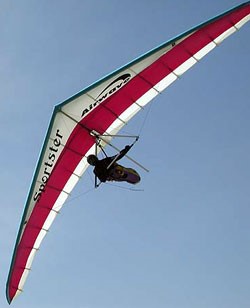
The Airwave Sportster is a 2002 hang glider for intermediate pilots.
Sportster S
Wing area: 12.4 m²
Wing span: 9.9 m
Aspect ratio: 7.9
Hang glider weight: 28 kg
Minimum pilot weight: 75 kg
Maximum pilot weight: 130 kg
Packed length: 4.9 m
Packed length short: 3.7 m
Sportster M
Wing area: 13.9 m²
Wing span: 10 m
Aspect ratio: 7.19
Hang glider weight: 30 kg
Minimum pilot weight: 80 kg
Maximum pilot weight: 138 kg
Packed length: 5.2 m
Packed length short: 3.85 m
Sportster L
Wing area: 14.8 m²
Wing span: 10.35 m
Aspect ratio: 7.24
Hang glider weight: 31 kg
Minimum pilot weight: 88 kg
Maximum pilot weight: 140 kg
Packed length: 5.25 m
Packed length short: 3.9 m
Airwave Gliders Speedster
A hang glider for Advanced pilots.
Airwave Gliders Magic
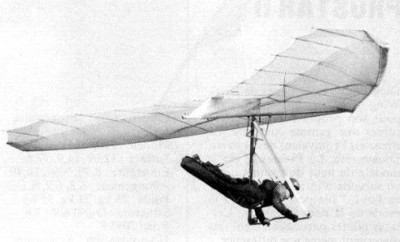
The Magic Comet was made by Airwave under the US UP license. It was therefore the first Airwave wing, which stood out from other productions by the quality of manufacture. At the time, the pilots who flew under ATLAS re-christened their wings MAGIC-ATLAS so they spoke only about MAGIC.
From experience gained in production of Comets under licence the Airwave company developed its own machine, the Magic, in 1982. The company policy is to use quality materials and to pay great attention to details. Aircraft quality bolts, stainless steel fittings, bushed bolt-holes and moulded plastic sleeves for swages are standard. The Magic was priced at £975.00-£996.00.
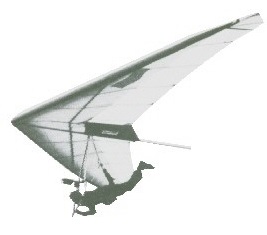
Airwave reworked the Magic to include a wider nose angle and new tips and designated the machine as Magic 2.
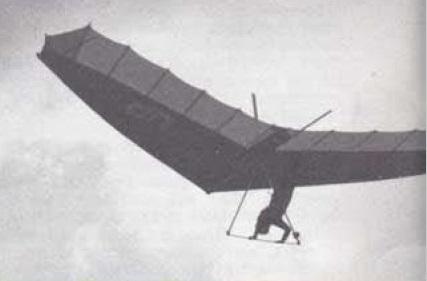
The 1983 Magic 165 was the only size at the first generation of Magic.
For advanced pilots, the Magic 3 166 take-off is without surprises with a 30 km/h wind, pleasant to pilot, but a bit physical though, easy to land.
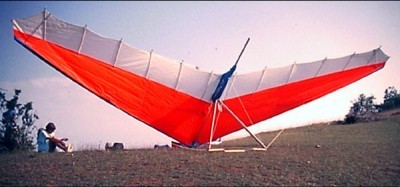
The 1985 Magic 4 is based on a Magic 3 sail but featured a complete review of the airframe in order to reduce drag to a minimum. The kingpost has a deeper airfoil section offering lower drag coefficient, while wire junctions are tucked into a neat new top to give a clean finish. The crosstubes are lighter, being larger diameter than before, with a new wing bolt connection. The uprights are of deeper section fore and aft with a larger diameter internal tube. Injection mouldings are used extensively to give a high standard of finish.
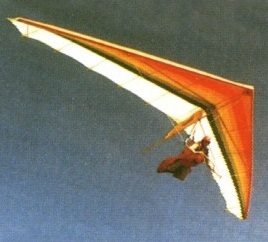
The nose catch has been moved back along the keel slightly to allow the fitment of the later standard nose cone. In order to give easier pre-flight inspection of the wing bolt connections two zip pockets were fitted. The ball tips were lightened and combined with new crosstubes a reduced roll yaw inertia was obtained.
A progression of the early Magic series, the Magic 4 had a good climb rate, was quite stable, tended to weather vane into wind due to large keel pocket, and was an overall good glider for pilots with 35+ hours.
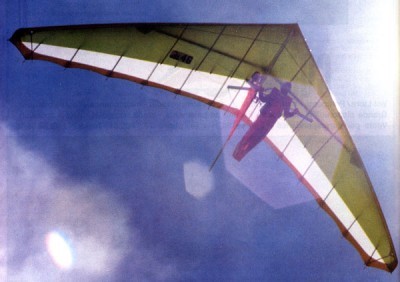
Some have areofoil of round uprights. The A frame also seems extememly wide compared to modern gliders – especially tall on the 177.
It was easy to set up and the cam lever to hook back the crosstube pull back cable was a brilliant idea. Takeoffs were reasonably easy but sometimes the nose would pop up followed by a rapid dive as the Magic picked up speed. Pitch pressure was good, increasing progressively as the bar was pulled back, and it was easy to maintain a high speed with the VG on full with roll corrections fairly easy to make provided you kept your arms in good condition by flying often.
Energy retention in turns was very good and the IV thermalled best with a good high speed turn until you found the core and then you could ease the bar out into an easily coordinated turn with only minor corrections to pitch and roll. Steep coordinated turns were great fun on this glider. You could pull into a steep dive, pick up speed and roll into a 60 degree banked turn and push hard out until your triceps ached and not worry about stalling the glider.
Landings were a little tricker with a good hard flare required to end up on your feet in light conditions. If you left it too late the gilder wouldn’t respond and you’d end up nosing in. Top landings were a breeze though particulary in strong condtions. You could line up square into the wind and pick your landing spot and then adjust the pitch angle to come down right on it without fear of nosing in or being flipped over. The pitch response was very authorative and had no surprises.
It was a real pain to set up on the ground if the ground wasn’t flat. The battens just wouldn’t go in easily and would always catch the sail with much coaxing required to get them in. Also the battens would bend easily being made of very thin aluminium and checking the profiles was necessary quite often as the glider would develop a turn easily with only a slight increase in the camber of the outboard battens.
The Magic 4 “full race” with a vanishing edge edge in Kevlar of about ten centimeters was a little less manageable than the Magic 4 but more performance in transition.
Magic 1 165
Sail area 165 sq ft
Magic 135
Wing area: 12.54 m²
Hang glider weight: 26 kg
Minimum pilot weight: 45 kg
Maximum pilot weight: 84 kg
Magic 150
Wing area: 14.4 m²
Hang glider weight: 29 kg
Magic 165
Wing area: 15.33 m²
Hang glider weight: 29 kg
Magic 166
Wing area: 15.42 m²
Hang glider weight: 32 kg
Magic 177
Wing area: 16.44 m²
Hang glider weight: 34 kg
Minimum pilot weight: 68 kg
Maximum pilot weight: 113 kg
Magic 185
Wing area: 17.19 m²
Hang glider weight: 35 kg
Minimum pilot weight: 68 kg
Maximum pilot weight: 113 kg
Magic 3 150
Wing area: 13.95 m²
Wing span: 9.5 m
Aspect ratio: 6.26
Hang glider weight: 27 kg
Magic 3 155
Wing area: 14.4 m²
Wing span: 10 m
Aspect ratio: 6.7
Hang glider weight: 29 kg
Magic 3 166
Wing area: 15.4 m²
Wing span: 10.4 m
Aspect ratio: 6.8
Hang glider weight: 30 kg
Magic 3 177
Wing area: 16.45 m²
Wing span: 10.6 m
Aspect ratio: 6.84
Hang glider weight: 32 kg
Magic 4 133
Magic 4 155
Magic 4 166
Sail area: 15.8 sq m
Aspect ratio: 6.8
Span: 10.4 m / 33 ft 8 in
Leading edge 19 ft 8 in
Root chord: 7 ft 10 in
Packed length: 6.0 m
Weight: 28 kg
Optimum pilot weight: 70-79 kg
Magic 4 177
Wing area: 16.44 m²
Hang glider weight: 34 kg
Minimum pilot weight: 68 kg
Maximum pilot weight: 113 kg
Maximum speed: 80 km/h
Packed length: 6.2 m
Packed length short: 4.2 m
Number of battens: 17
Airwave Gliders K3 / K4 / K5

Whereas the K2 is the successor to the Kiss, the 1993 K3, K4 and K5 are in fact different sizes of the same model of glider, the successor to the K2.
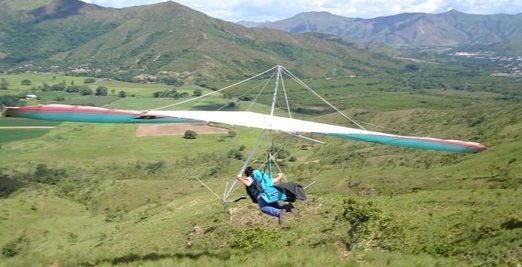
The series of K is the declination in different surfaces of the same wing. The K5: 13.8sq.m; The K4: 14.4 sq.m; The K2: 13,47 sq.m and the K3 is the most area. This does not seem very logical in terms of classification but these wings were designed on different dates, which may partly explain the codifications.
The 1991 K3 was a real performance glider for the heavier pilot. Whether in strong thermal conditions or weak ridge lift this machine will allow you to work the lift to its maximum, due to its excellent co-ordination and performance.
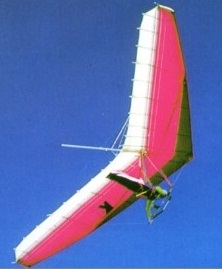
The 1992 K4 was a high performance machine which blended friendly handling and good allround performance and was aimed at the competent mid-weight club pilot. The handling was reported to be light and precise and that this combined with good co-ordination makes thermalling a pure delight. A very efficient trimmer system transforms the glider from being docile and easy handling into a machine that will convert precious altitude into cross country distance.
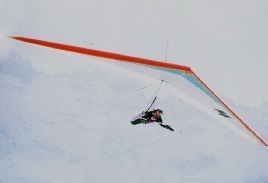
A few later developments called K4+ were made. One was bought by G Rogers, a well know West Country pilot.
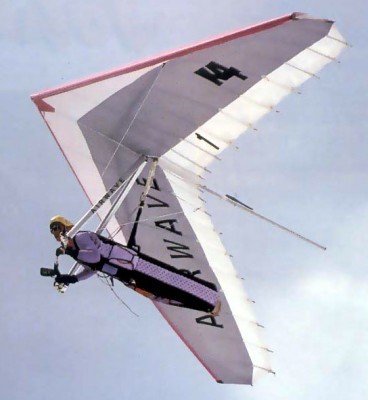
The K4 has erased the difficulties of the KISS: spiral instability, Dutch roll at high speed, high sensitivity in strong conditions. It lost some of the KISS’s exemplary maneuverability. The K4 is a homogeneous wing, stable spiral, with better finesse, in short a very good wing of a top quality at the time.
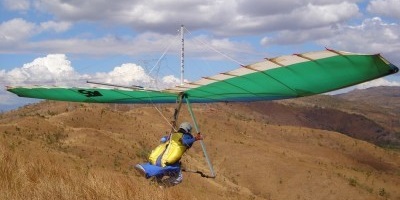
The 1993 K5 is the last of the ‘K’ series of gliders and was a replacement for the K2, incorporating some of the developments introduce in the K3 and the K4.
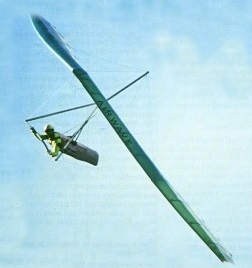
The K5 had 81% double surface, 26 battens (6 undersurface), and the airframe material is 7057 & 6082 aluminium alloy.
K3 160
Sail area: 15 sq m
Pilot weight: 154-220 lb
Span: 34 ft 2 in
Weight: 72.6 lb
Nose angle: 132 deg
Aspect ratio: 7.22
K4 155
Wing area: 14,4 m² / 155 sq ft
Wing span: 10,25 m
Aspect ratio: 7.3
Hang glider weight: 29 kg
Minimum pilot weight: 65 kg
Maximum pilot weight: 95 kg
Minimum speed: 24 km/h
Maximum speed: 89 km/h
Packed length: 5.5 m
Number of battens: 26
Nose angle: 132°
K5
Sail area: 148 sq ft
Stall speed: 16 mph
Span: 32.5ft
Nose angle: 132 deg
Aspect ratio: 7.1
Packed length: 18ft 1 in
Weight 32 kg (includes packing but not bag)
Pilot weight: 86kg
Optimum pilot weight: 75kg
K5 144
K5 138
Wing area: 13.8 m²
Wing span: 9.8 m
Aspect ratio: 7.1
Minimum pilot weight: 55 kg
Maximum pilot weight: 86 kg
Nose angle: 132°
Airwave Gliders K2
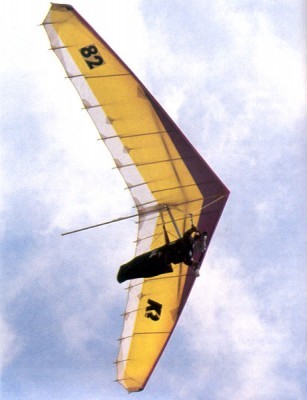
Successor to the Kiss, the 1990 K2 was easy to fly easy to land, and turns on a sixpence. The K2 joins the market opened up by the small Rumour from Solar Wings. The glider is said to be fast, the pitch/roll characteristics are slightly more traditional than the Kiss, which has gained the reputation of needing a delicate touch not suiting all pilots.
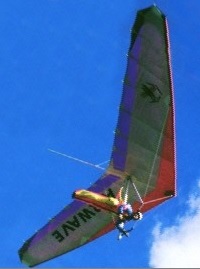
There are four undersurface battens, the fourth stabilising the double surface towards the tips and eliminating low yaw stability at speed. The machine has 18 main-body battens, no half ribs and a new wide keel pocket which gives crisper turns. The new trim tips were used to tune handling.
K2 133
K2 160
K2 144
Wing area: 13.47 m²
Wing span: 9.93 m
Aspect ratio: 7.37
Minimum pilot weight: 55 kg
Maximum pilot weight: 80 kg
Max glide ratio (L/H): 10.1
Max glide ratio speed: 33 km/h
Minimum sink rate: 0.9 m/s
Number of battens: 26
Nose angle: 130°
Airwave Gliders Formula / Magic 6
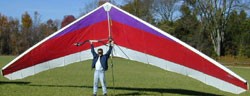
Produced by Pacific Airwave from around 1991 to 1994, the Formula was essentially a simplified Magic Kiss, with a lighter frame, fewer ribs, and looser sail. This allowed the glider to be flown more comfortably by the intermediate pilot than the Kiss. It was comparable to the Kiss in sink rate and, although it didn’t have the latter’s speed range, its lighter handling made it popular with weekend pilots.
A version of the Formula was made by Airwave UK and marketed as the Magic 6. The sails were made in the US and fitted to airframes made in England.
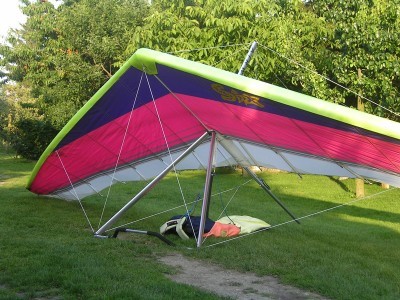
The 1990 Magic 6 was first released as the “Formula” in the United States by Pacific Airwave, the partner-company of Airwave Gliders in the UK. It had much the same planform as the Magic Kiss, but with fewer ribs, a looser sail, and some other differences which made it a lower-performing but much more docile glider than the Kiss. In fact, it was released as a Hang 3 (Intermediate) glider in the US. John LaTorre made the prototype sail for it, put many hours on the prototype itself, and continued test-flying some of the gliders as they came off the production line.
The 1990 Magic 6 was designed for the club pilot and has the appearance of slightly de-tuned Kiss. Both half-rib battens and VB were deleted.
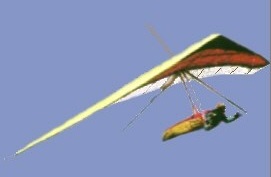
The flying characteristics of the glider are quite similar to those of the Kiss except that the tendency to oscillate in yaw/roll at speed has gone and the top speed is lower, probably by about 4 mph. The new trim-tips hold the tip at a fixed angle and can be rotated then secured to give different handling and the ability to trim out slight turns.
The Formula was made in two sizes; 144 and 154.
MAGIC 6 154
Wing area: 14.4 m² / 153.86 sq ft
Wing span: 9.93 m / 32 ft 6 in
Aspect ratio: 7.55
Hang glider weight: 32 kg / 65 lb
Minimum speed: 24 km/h
Maximum speed: 80 km/h
Minimum sink rate: 0.89 m/s
Optimum pilot weight: 132-187 lb
Number of battens: 26
Nose angle: 132°
Airwave Gliders Eclipse
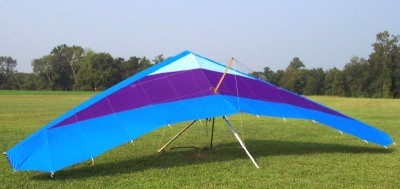
A 1986 hang glider built in two models; 170 and 190.
Airwave Gliders Pulse / North Wing Pulse
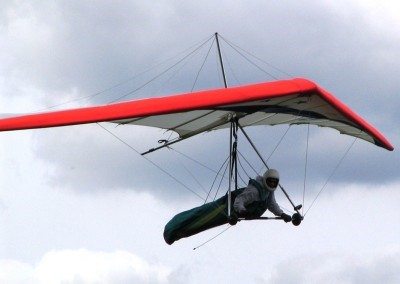
The first Pulse was built from 1992 to 1995.
It’s an excellent begginner to intermediate glider. Very easy handling. Easy set-up and tear-down. This is a great no VG double surface glider.
Great for ridge soaring, beach soaring (the best!) and thermals well too. Not really for cross-country though! Very friendly handling in all aspects including aerotowing. The Pulse is a “No surprises” glider. It trims way too slow at factory set hang point, moving the hang point a little forward (with some grip tape on the keel) solves this easily.
The Pulse 2 was produce from 1996.
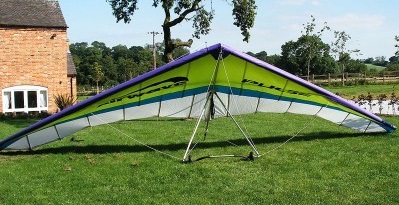
Made in 1996, the Pulse 2 is a light weight fun glider developed from USA Pacific Airwave’s Pulse. There were three sizes: 13, 15, and 18 m sq. The three gliders cover pilot weights from 100-250 lbs (45-113kg). In 1996 they were priced at £2555.00.
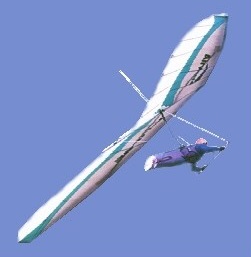
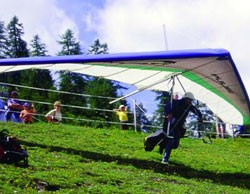
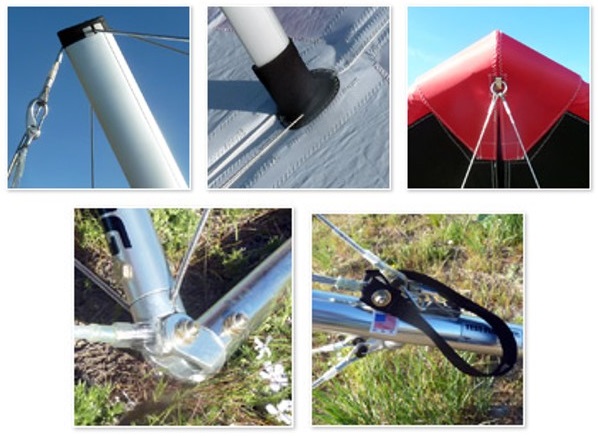
By the Pulse was back in production, with North Wing, Inc. under license. Manufactured to the same certified standards as originally made, the PULSE is HGMA Certified. Standard Features are Airfoil Kingpost, 4oz Sailcloth, 7075 Airframe & Ribs, Quick Set-Up, and 3 Stock Sails to choose from. Options were Streamline Safe-Edge Uprights, Comfort Bar, and Custom Sail Colours.
Pulse 9
Pilot Weight: 80-145 lb / 36-65 kg
Pulse 10
Pilot Weight: 130-185 lb / 60-85 kg
Pulse 11
Pilot Weight: 185-235 lb / 60-105
Pulse 2 13
Hang glider circa 1998.
Wing area: 13.56 sq.m
Certification: BHPA
Pilot weight: 52/75 kg
Wing span: 8.8 m
Nose Angle: 126 deg
Aspect ratio: 5.8
Price (1998) £ 2,175
Pulse 2 15
Hang glider circa 1998.
Wing area: 15.05 sq.m
Certification: BHPA
Pilot weight: 59/84 kg
Wing span: 9.4 m
Nose Angle: 126 deg
Aspect ratio: 6
Weight: 53 lbs / 24kg
Price (1998) £ 2,175
Pulse 2 18
Pulse 3 S
Wing area: 13.56 m²
Wing span: 8.8 m
Aspect ratio: 5.8
Hang glider weight: 20 kg
Minimum pilot weight: 45 kg
Maximum pilot weight: 74 kg
Packed length: 5.17 m
Packed length short: 3.66 m
Number of battens: 15
Pulse 3 M
Wing area: 15.8 m²
Wing span: 9.45 m
Aspect ratio: 5.9
Hang glider weight: 24 kg
Minimum pilot weight: 54 kg
Maximum pilot weight: 88 kg
Packed length: 5.43 m
Packed length short: 3.66 m
Number of battens: 15
Pulse 3 L
Wing area: 17.6 m²
Wing span: 10.21 m
Aspect ratio: 5.9
Hang glider weight: 26 kg
Minimum pilot weight: 68 kg
Maximum pilot weight: 113 kg
Packed length: 5.93 m
Packed length short: 3.9 m
Number of battens: 17
North Wings Pulse 9M
Double Surface: 57%
Area: 146 sq.ft
Span: 29.0 ft
Aspect Ratio: 5.8 : 1
Nose Angle: 126 deg
Max Stall: 25mph
VNE: 46mph
Number of top Sail Ribs: 14
Number of lower Sail Ribs: 4
Nose Rib: 1
Frame & Rib Material: 7075
Pilot Hook-In Weight: 90-190 lb
Glider Weight: 51 lb
USHPA Rating: 2 – 5
North Wings Pulse 10M
Double Surface: 58%
Area: 162 sq.ft
Span: 31.0 ft
Aspect Ratio: 5.9 : 1
Nose Angle: 126 deg
Max Stall: 25mph
VNE: 46mph
Number of top Sail Ribs: 14
Number of lower Sail Ribs: 4
Nose Rib: 1
Frame & Rib Material: 7075
Pilot Hook-In Weight: 120-215 lb
Glider Weight: 54 lb
USHPA Rating: 2 – 5
North Wings Pulse 11M
Double Surface: 59%
Area: 189 sq.ft
Span: 33.5 ft
Aspect Ratio: 6.0 : 1
Nose Angle: 126 deg
Max Stall: 25mph
VNE: 46mph
Number of top Sail Ribs: 16
Number of lower Sail Ribs: 4
Nose Rib: 1
Frame & Rib Material: 7075
Pilot Hook-In Weight: 160-260 lb
Glider Weight: 58 lb
USHPA Rating: 2 – 5
Airwave Gliders Klassic
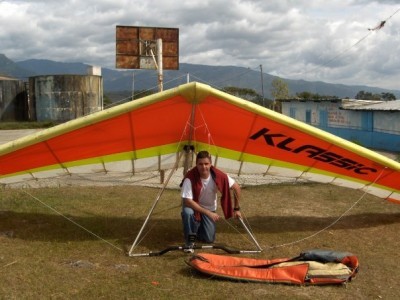
The 1994 Klassic was the culmination of years of development through the K series range of gliders. Produced in 4 sizes-12, 13, 14 and 15 m sq. Since they appeared on John Pendry’s Klassic 14 at the first league of 1994, Airwave perfected the design of winglet that were available on ’95 Klassics and as a retro-fit for ’94 models. Made from composite materials the winglets weighed under 200 g.
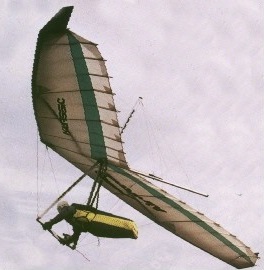
The Klassic Custom Comp glider is to full competition specification. It is fully tuned and includes winglets, stronger trailing edge and cut down battens.
Klassic 12
Wing area: 12.5 sq.m
Certification: DHV/BHPA
Pilot weight: 45-65 kg
Wing span: 9.2 m
Nose Angle: 127 deg
Aspect ratio: 6.75
Hang glider weight: 26 kg
Number of battens: 22
Packed length: 5.1 m
Packed length short: 3.6 m
Price (1998) £ 2,599
Klassic 13
Wing area: 13.5 sq.m
Certification: DHV 2-3/BHPA
Pilot weight: 55-75 kg
Wing span: 9.86 m
Nose Angle: 127 deg
Aspect ratio: 7.1
Hang glider weight: 29 kg
Packed length: 5.5 m
Packed length short: 3.8 m
Number of battens: 27
Price (1998) £ 2,599
Klassic 14
Wing area: 14.4 sq.m
Certification: DHV 2-3/BHPA
Pilot weight: 70-85 kg
Wing span: 10.25 m
Nose Angle: 127 deg
Aspect ratio: 7.3
Hang glider weight: 32 kg
Packed length: 5.7 m
Packed length short: 3.9 m
Number of battens: 27
Price (1998) £ 2,599
Klassic 14
Sail area: 155 sq ft
Span 33.8
Aspect ratio: 7.3
Nose angle: 132 deg
Weight: 32 kg
Packed length: 19 ft
Optimum pilot weight: 79-85 kg
Klassic 15
Wing area: 15.2 m²
Wing span: 10.36 m
Aspect ratio: 7.22
Hang glider weight: 33 kg
Minimum pilot weight: 80 kg
Maximum pilot weight: 100 kg
Packed length: 5.8 m
Packed length short: 3.9 m
Number of battens: 29
Nose angle: 127°
 All Aero