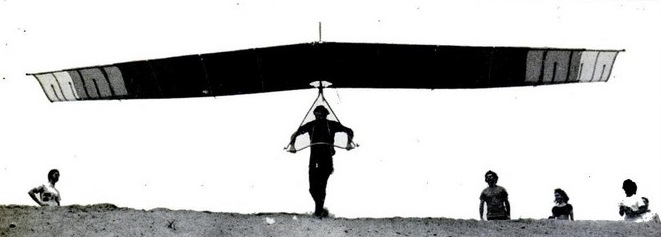
Stricly experimental, the light and simple 1974 Cronksail is essentially a tailless Quicksilver, designed and built by Dave Cronk, using Quicksilver components.
It later had wing-tip rudders for improved control.
Stricly experimental, the light and simple 1974 Cronksail is essentially a tailless Quicksilver, designed and built by Dave Cronk, using Quicksilver components.
It later had wing-tip rudders for improved control.
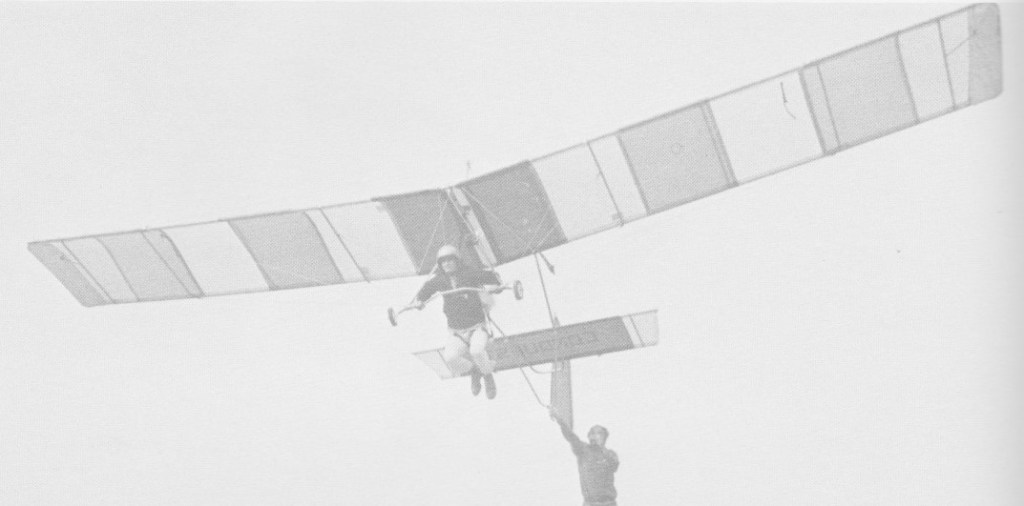
The Conquest is an advanced monoplane which was adapted from the Quicksilver. It is stressed for ridge soaring and thermal flying in as little as 12 mpd winds. The wing has a single surface, 12% airfoil and a load factor of 3.5.
The centre of gravity can be adjusted to the flyers weight. The Conquest goes to gether in under 15 minutes with a 7/16in spanner and a screwdriver. Optional extras were ailerons, wing fences and soaring wingtips. Landing wheels and tail skid were standard.
The airframe is made from 6061-T6 1 7/8in, 1 1/8in, 1in and 0.5in anodised aluminium, which came in a choice of colours: gold, blue, black, or red. Fully sleeved and doweled. Outer cables are 1/8in, inner cables are 5/32in, all 7 strand, stainless steel aircraft quality. All hardware is die-stamped, bent, hardened and anodised.
The sail is Howe and Bainbridge 3.8oz stabilised dacron. A fully adjustable seated harned was provided.
Conquest 52
Chord length: 4.33 ft
Wing span: 32.6 ft
Wing area: 140.8 sq,ft
Nose angle: 180˚
Weight: 63 lb
Pilot weight: 130-190 lb
Takeoff speed: 14 mph
Stall speed: 12 mph
Max speed: 30 mph
Best glide ratio (L/D): 8-1
Best L/D speed: 15 mph
Min sink: 250 fpm
Conquest 60
Chord length: 5 ft
Wing span: 32.6 ft
Wing area: 163 sq,ft
Nose angle: 180˚
Weight: 67 lb
Pilot weight: 160-225 lb
Takeoff speed: 14 mph
Stall speed: 12 mph
Max speed: 35 mph
Best glide ratio (L/D): 8-1
Best L/D speed: 15 mph
Min sink: 270 fpm
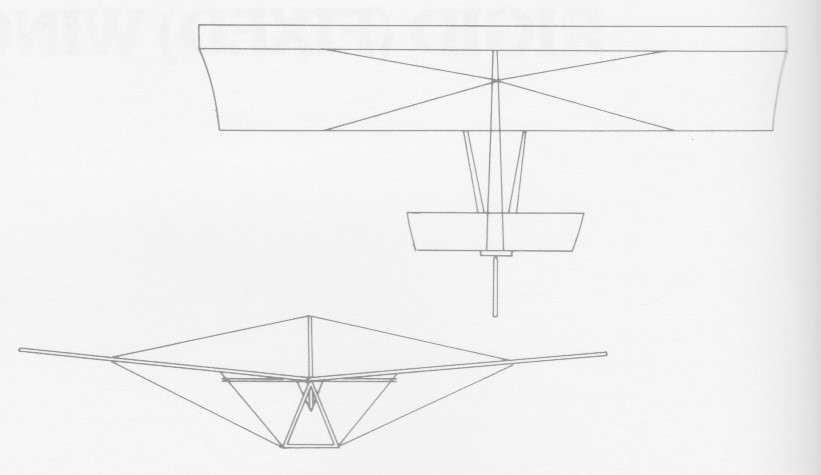
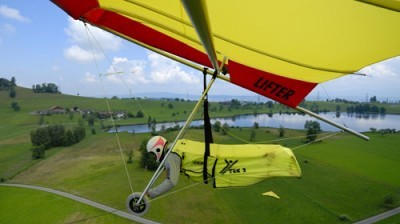
The Lifter was a 17kg hang glider for Novice pilots.
Delta-Flugschule Condor Thomas Kehren Im Boden
8825 Hütten/ZH
Switzerland
Hang glider builder
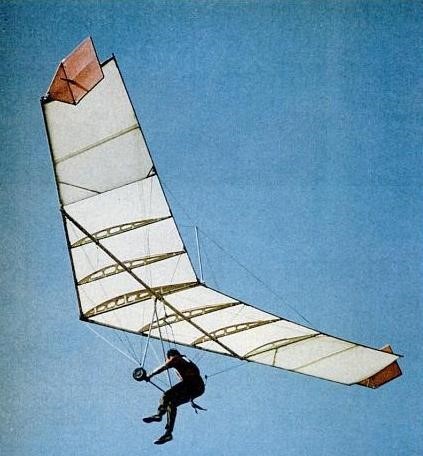
Frank Colver, his son Matt, and his friend Ernest Feher built the bamboo and plastic glider (R Miller’s Bamboo Bomber) that was at the 1st Otto meet. After the meet Colver started designing the one-off Skysail with inspiration from Richard Miller’s Conduit Condor. After testing a scale model actual construction on the Skysail started on November 5, 1971 and the wing was taken to the field for the first time on January 22 of 1972.
Colver sold many copies of plans for a model of the Skysail but never for the full size version, due to liability worries. If someone scaled it up that was their choice.
The airfoil at the tips was inverted to reduce the amount of physical twist need for pitch stability. This was 1974 and by that time Colver had changed from a triangle control bar to a parallel bar system for ease of ground handling.
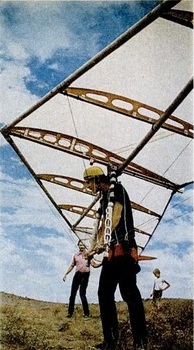
The end bays of the single surface wing have ribs upside down and were crossed underneath, not on top. Wingtip rudders were controlled through the seat.
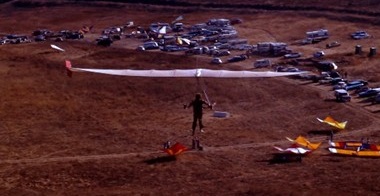
After Colver quit flying the Skysail it was donated to the San Diego Aerospace Museum where it burned up in the fire that destroyed the museum.
Wingspan: 31 ft 9 in
Glider weight: 70 lb
During the summer of 1982 in France, the CMV company produced a prototype based on the Easy Riser, using a canard. Its first flight was achieved in a fashion which was risky for the machine, but test pilot Bela Nogrady returned saying he had experienced some of the most marvellous feelings of his life.
1983: C.M.V. Company, 23 avenue Marceou, 75116 Paris, France. Hang glider and trike builder
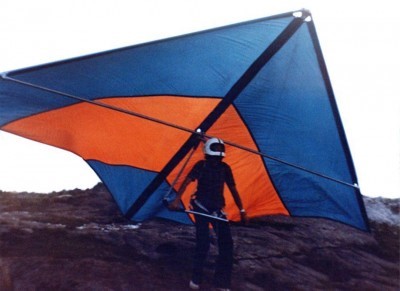
The 1976 Rogallo 1 Jorgecleva was built in Argentine by Jorge Cleva for Novice pilots.
Wing area: 16 m²
Wing span: 7.5 m
Hang glider weight: 24 kg
Minimum speed: 20 km/h
Maximum speed: 36 km/h
Max glide ratio speed: 30 km/h
Nose angle: 90°
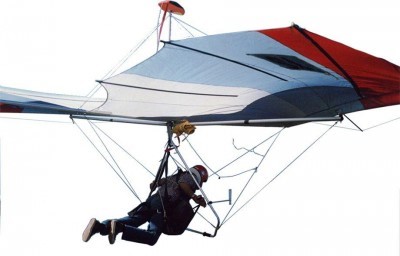
The 1980 Kestrel Jorge was built in Argentine by Jorge Cleva for Intermediate pilots.
Kestrel Jorge
Wing area: 17 m²
Wing span: 8.8 m
Hang glider weight: 30 kg
Maximum pilot weight: 130 kg
Minimum speed: 24 km/h
Maximum speed: 51 km/h
Max glide ratio speed: 40 km/h
Number of battens: 7
Nose angle: 110°
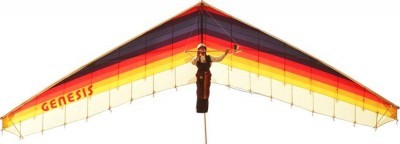
The 1986 Genesis was built in Argentine by Jorge Cleva for Advanced pilots.
Wing area: 14.30 m²
Wing span: 10.38 m
Aspect ratio: 7.5
Hang glider weight: 34 kg
Maximum pilot weight: 100 kg
Minimum speed: 25 km/h
Maximum speed: 100 km/h
Max glide ratio speed: 44 km/h
Number of battens: 35
Nose angle: 128°
 All Aero