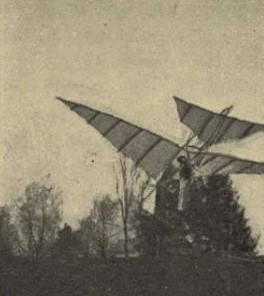
This canard glider was built by Charles J. Hendrickson of Middleton, New Jersey, in 1909. It was intended to be used with a two-cylinder Curtiss engine, but it was only flown as a glider, since starts without wheels proved unpracticable and adding wheels would make it too heavy. Hendrickson also designed and built other gliders, quite different to this design.
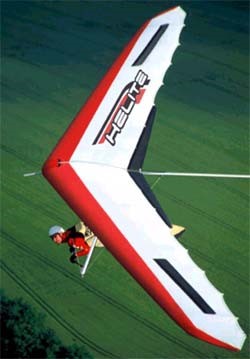
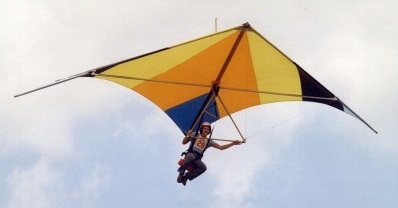
The 2003 Tsunami is an evolution of the Topsecret made by Lamouette for advanced pilots. Very straightforward transition from flex wing and easy to take off and land. Rigging is quick and easy, so is de-rigging.
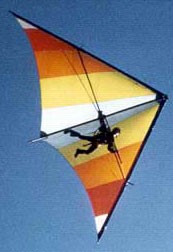
A wing that didn’t receive commercial success for other reasons.
Wing area: 13.8 m² Wing span: 12.87 m Aspect ratio: 12 Hang glider weight: 35 kg Minimum pilot weight: 55 kg Maximum pilot weight: 105 kg Packed length short: 5.6 m Nose angle: 127°
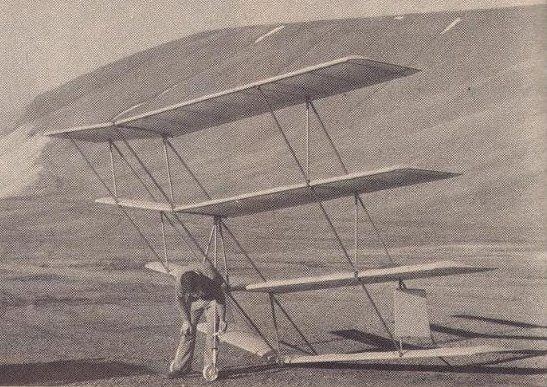
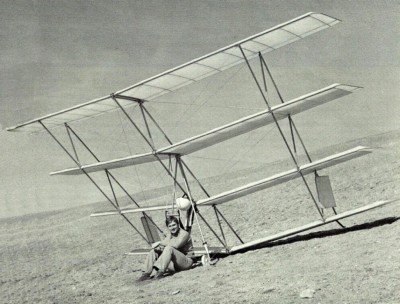
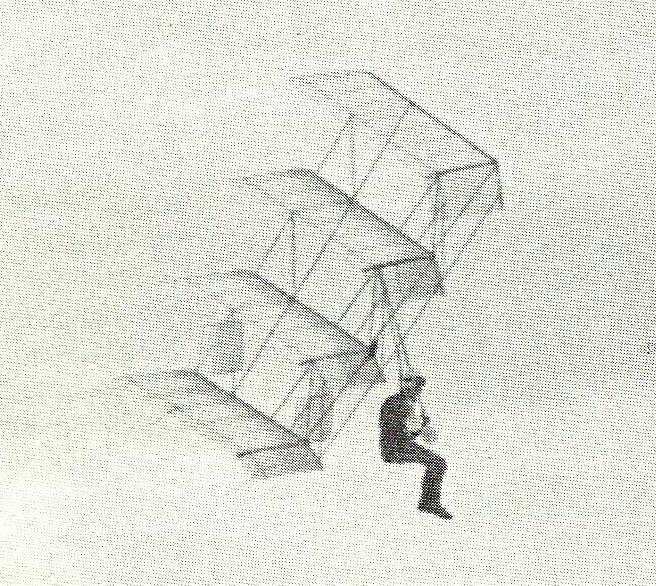
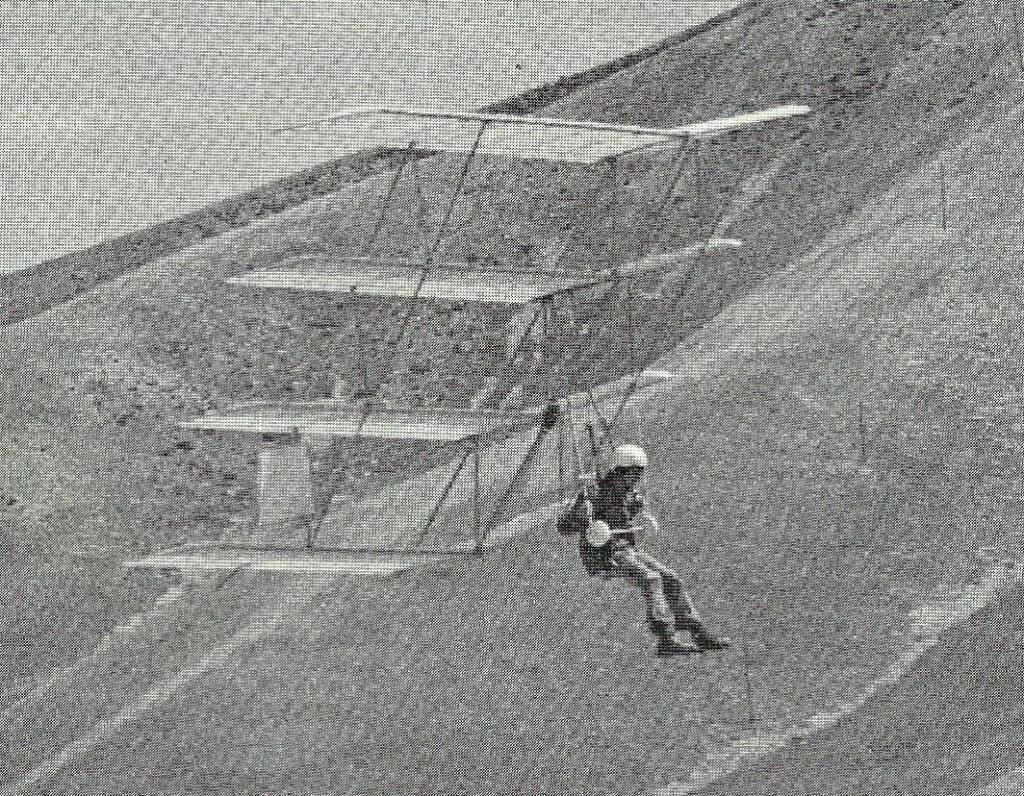
In the late 1970s, an American hang-glider enthusiast called Larry Hall used the Sellers Quadruplane as the basis for his own hang-glider design. The design goal was to fly a human pilot using super-efficient RC sailplane wings, with enough wings (stacked) to keep airspeeds low and provide good soaring ability.
Each wing panel of the QuadraPlane was separate, so setup/teardown always looked like a yard sale in progress. Each wing panel had 1.5 degrees more positive incidence than the wing below, for a total of 4.5 degrees between the top and bottom wings. This was done to provide an automatic dive recovery system, even though no reflexed airfoils were used. This increasing wing incidence, and the forward stagger of the upper wings, assured that they made more lift than the lower (rearward) wings, in a dive, and that would bring the glider back to normal flight modes, very quickly. Back in the day, a hang glider with an automatic dive recovery system was a rare bird.
The QuadraPlane had no tail surfaces. Steering was done by cables to the tip drag rudders, and they were very effective. The short wingspan meant that the QuadraPlane could turn in very small circles, and do it very well.
The pilot sat in a “swing seat” harness, with the pilot’s waist just below the triangle control-bar (where the wheels are). The glider was foot-launched, like any hang glider. In flight, the pilot had an amazing view, being far in front of the lower wings.
The QuadraPlane is now stored in the rafters of a hangar at the Morgan, Utah airstrip.
Spans from top: 20′ 10″; 19′ 10″; 18′ 10″; 17′ 10″ Chord 2′ 6″ Wing Area 185 sq.ft Dihedral 6 degrees Weight Approx. 65 lbs. Stagger 45 degrees Sweep 10 degrees Airfoil Similar to Icarus II without reflex Rudder Area 2.36 sq.ft each Overall height 10 ft
 All Aero