Icaro 2000 Laminar

The Laminar 2013 was for advanced pilots.
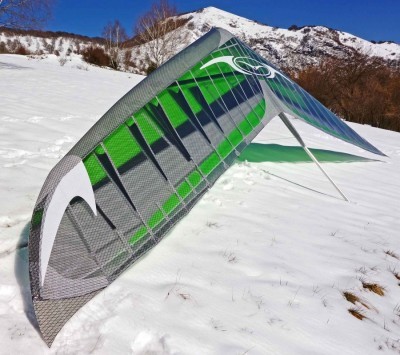
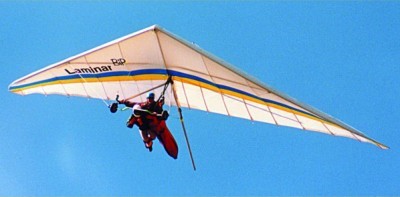
Laminar 2013
Laminar BIP

The 2002 Laminar Eazy EZ was for intermediate pilots. The EZ is the performance model with the same geometry as the ST and a few less battens and lighter.
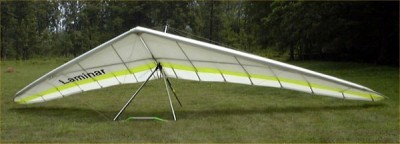
Laminar Eazy EZ

The 2000 Laminar Mr700 (Mrx) was for advanced pilots.
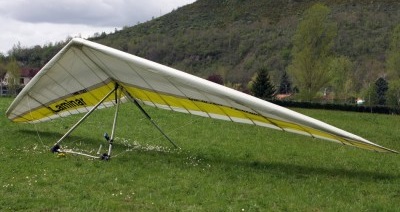
Laminar Mr700 (Mrx)

The 14m Laminar Mr700 (Mrx) version is very light in roll with vb off, vb on does stiffen up handling but does not yaw. Take off and landings are good, nice to thermal and good performance overall. Build quality is excellent with very nice precision made parts, rubber backed uprights, and easy to rig/de-rig.

Developed from 1997, the Laminar 13 ST I of 1998 is a particularly sympatic wing for those who do not weigh heavy, and is easy in all its handling, landing without problem.
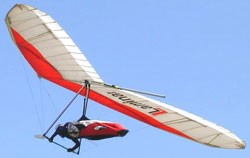
Laminar ST

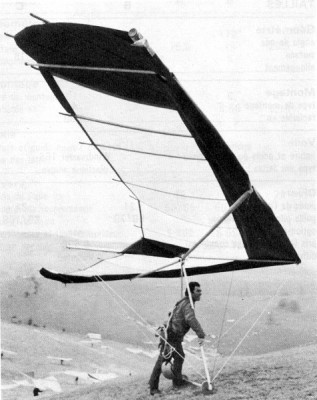
The Laminar ST is a topless model hang glider circa 1998. The R version has a kingpost.

Once in the air the Laminar ST wing is very nice, a little brighter and faster than a standard Laminar. In transition overdrive stretched in slightly turbulent conditions the wing tends to go in yaw and in addition it is very hard to turn and to correct, it is quite painful and unpleasant in the long transitions, overdrive stretched and low speed.

The Laminar ST 2 of 1999 is for advanced pilots.
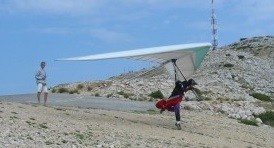
Laminar ST 2

The Laminar Z8 of 2006 was for advanced pilots.
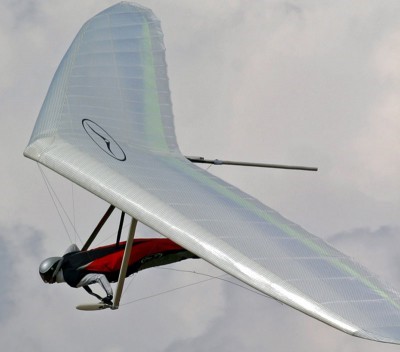
Laminar Z8

The 2008 Laminar Z9 was for advanced pilots.
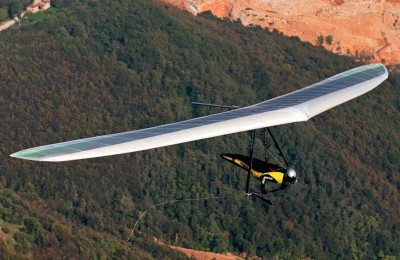
Laminar Z9

The 2003 Laminar Zero 7 was for advanced pilots.
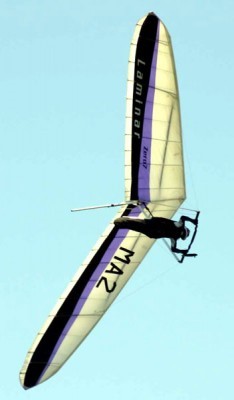
Laminar Zero 7

The 2010 Laminar ZX was for advanced pilots.
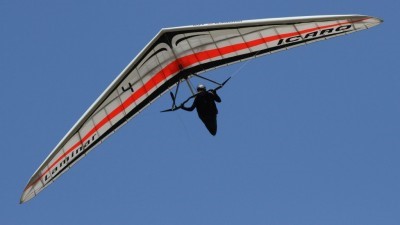
Laminar ZX

Laminar 12 ST
Wing area: 12.5 sq.m
Certification: DHV
Pilot weight: 50-85 kg
Wing span: 9.9 m
Nose Angle: 130 deg
Aspect ratio: 7.84
Hang glider weight: 32 kg
Minimum speed: 30 km/h
Packed length: 4.9 m
Packed length short: 3.7 m
Number of battens: 27
Price (1998) £ 3690

Laminar 13 ST
Wing area: 13.2 sq.m
Certification: DHV 2-3/SHV
Pilot weight: 60-90 kg
Wing span: 10.02 m
Nose Angle: 130 deg
Aspect ratio: 7.6
Hang glider weight: 33 kg
Minimum speed: 33 km/h
Maximum speed: 75 km/h
Max glide ratio (L/H): 11.37
Max glide ratio speed: 44 km/h
Minimum sink rate: 0.92 m/s
Packed length: 4.98 m
Packed length short: 4.15 m
Number of battens: 27
Price (1998) £ 3690

Laminar 14 ST
Wing area: 14.4 sq.m
Certification: DHV 3/SHV
Pilot weight: 75-110 kg
Wing span: 10.4 m
Nose Angle: 130 deg
Aspect ratio: 7.5
Hang glider weight: 34 kg
Minimum speed: 33 km/h
Packed length: 5.2 m
Packed length short: 4.15 m
Number of battens: 29
Price (1998) £ 3690

Laminar BIP 21
Wing area: 21 m²
Wing span: 11.2 m
Aspect ratio: 5
Hang glider weight: 38 kg
Minimum pilot weight: 115 kg
Maximum pilot weight: 200 kg
Minimum speed: 32 km/h
Maximum speed: 90 km/h
Packed length: 5.6 m
Packed length short: 4 m
Number of battens: 23
Nose angle: 127°

Laminar EZ 14
Wing area: 14.5 sq.m
Certification: DHV
Pilot weight: 65-95 kg
Wing span: 10.3 m
Nose Angle: 127 deg
Hang glider weight: 28 kg
Aspect ratio: 7.3
Packed length: 5.2 m
Packed length short: 4 m
Number of battens: 21

Laminar Eazy EZ 16
Wing area: 15.7 m²
Wing span: 10.5 m
Aspect ratio: 7
Hang glider weight: 30 kg
Minimum pilot weight: 75 kg
Maximum pilot weight: 110 kg
Packed length: 5.4 m
Packed length short: 4 m
Number of battens: 21
Nose angle: 127°
Global classification: DHV 1-2
Maximum speed (VNE): 80 km / h
Stall: 27 km / h
Double surface: 80.0%
Number of batten: 17/4

MR700 (MRX) 12 MR
Wing area: 13.36 m²
Wing span: 9.84 m
Aspect ratio: 7.25
Hang glider weight: 30 kg
Minimum pilot weight: 50 kg
Maximum pilot weight: 85 kg
Packed length: 4.9 m
Packed length short: 3.6 m
Number of battens: 27
Nose angle: 127°

MR700 (MRX) 13 MR
Wing area: 13.77 m²
Wing span: 10.06 m
Aspect ratio: 7.35
Hang glider weight: 32 kg
Minimum pilot weight: 60 kg
Maximum pilot weight: 90 kg
Packed length: 4.98 m
Packed length short: 4 m
Number of battens: 30
Nose angle: 127°

MR700 (MRX) 14 MR
Wing area: 14.88 m²
Wing span: 10.48 m
Aspect ratio: 7.38
Hang glider weight: 34 kg
Minimum pilot weight: 75 kg
Maximum pilot weight: 110 kg
Packed length: 5.2 m
Packed length short: 4.15 m
Number of battens: 30
Nose angle: 127°

Laminar R 13
Wing area: 13.2 sq.m
Certification: DHV 2-3/SHV
Pilot weight: 55-85 kg
Wing span: 10.2 m
Nose Angle: 130 deg
Aspect ratio: 7.6
Price (1998) £ 2810

Laminar R 12
Wing area: 12.5 sq.m
Certification: DHV 2-3
Pilot weight: 45/65 kg
Wing span: 9.9 m
Nose Angle: 130 deg
Aspect ratio: 7.8
Price (1998) £ 2810

Laminar R 14
Wing area: 14.4 sq.m
Certification: DHV 3/SHV
Pilot weight: 65-100 kg
Wing span: 10.4 m
Nose Angle: 130 deg
Aspect ratio: 7.51
Price (1998) £ 2810

Laminar Z8 L12.9
Wing area: 12.86 m²
Wing span: 9.84 m
Aspect ratio: 7.53
Hang glider weight: 30 kg
Minimum pilot weight: 50 kg
Maximum pilot weight: 75 kg
Packed length: 4.90 m
Packed length short: 3.50 m
Number of battens: 30
Nose angle: 128°

Laminar Z8 L13.2
Wing area: 13.18 m²
Wing span: 10.06 m
Aspect ratio: 7.68
Hang glider weight: 32 kg
Minimum pilot weight: 60 kg
Maximum pilot weight: 85 kg
Packed length: 4.98 m
Packed length short: 3.88 m
Number of battens: 30
Nose angle: 131°

Laminar Z8 L13.7
Wing area: 13.77 m²
Wing span: 10.06 m
Aspect ratio: 7.35
Hang glider weight: 32 kg
Minimum pilot weight: 65 kg
Maximum pilot weight: 90 kg
Packed length: 4.98 m
Packed length short: 3.88 m
Number of battens: 30
Nose angle: 131°

Laminar Z8 L14.1
Wing area: 14.12 m²
Wing span: 10.48 m
Aspect ratio: 7.78
Hang glider weight: 34 kg
Minimum pilot weight: 75 kg
Maximum pilot weight: 100 kg
Packed length: 5.20 m
Packed length short: 4.10 m
Number of battens: 32
Nose angle: 131°

Laminar Z8 L14.8
Wing area: 14.88 m²
Wing span: 10.48 m
Aspect ratio: 7.38
Hang glider weight: 34 kg
Minimum pilot weight: 85 kg
Maximum pilot weight: 110 kg
Packed length: 5.20 m
Packed length short: 4.10 m
Number of battens: 32
Nose angle: 131°

Zero7 13.3
Wing area: 13.3 m²

Zero7 13.7
Wing area: 13.77 m²
Wing span: 10.6 m
Aspect ratio: 7.35
Hang glider weight: 32 kg
Minimum pilot weight: 60 kg
Maximum pilot weight: 90 kg
Packed length: 5 m
Packed length short: 4 m
Number of battens: 30
Nose angle: 127°

Zero7 14.2
Wing area: 14.24 m²
Wing span: 10.33 m
Aspect ratio: 7.49
Hang glider weight: 33 kg
Minimum pilot weight: 70 kg
Maximum pilot weight: 100 kg
Packed length: 5 m
Packed length short: 4 m
Number of battens: 30
Nose angle: 127°

Zero7 14.8
Wing area: 14.88 m²
Wing span: 10.48 m
Aspect ratio: 7.38
Hang glider weight: 34 kg
Minimum pilot weight: 75 kg
Maximum pilot weight: 110 kg
Packed length: 5 m
Packed length short: 4 m
Number of battens: 30
Nose angle: 127°

Laminar ZX 12.6
Wing area: 12.52 m²
Wing span: 9.61 m
Aspect ratio: 7.38
Hang glider weight: 28 kg
Minimum pilot weight: 55 kg
Maximum pilot weight: 75 kg
Packed length: 4.75 m
Packed length short: 3.35 m
Nose angle: 132°

Laminar ZX 13.1
Wing area: 13.24 m²
Wing span: 10.05 m
Aspect ratio: 7.63
Hang glider weight: 30 kg
Minimum pilot weight: 70 kg
Maximum pilot weight: 85 kg
Packed length: 4.98 m
Packed length short: 3.90 m
Nose angle: 132°

Laminar ZX 13.7
Wing area: 13.88 m²
Wing span: 10.05 m
Aspect ratio: 7.28
Hang glider weight: 31 kg
Minimum pilot weight: 80 kg
Maximum pilot weight: 90 kg
Packed length: 4.98 m
Packed length short: 3.90 m
Nose angle: 132°

Laminar ZX 14.1
Wing area: 14.16 m²
Wing span: 10.54 m
Aspect ratio: 7.85
Hang glider weight: 32 kg
Minimum pilot weight: 90 kg
Maximum pilot weight: 100 kg
Packed length: 5.20 m
Packed length short: 4.10 m
Nose angle: 134°

Laminar ZX 14.8
Wing area: 14.82 m²
Wing span: 10.54 m
Aspect ratio: 7.50
Hang glider weight: 33 kg
Minimum pilot weight: 100 kg
Maximum pilot weight: 110 kg
Packed length: 5.20 m
Packed length short: 4.10 m
Nose angle: 134°
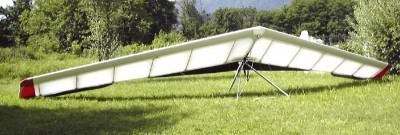
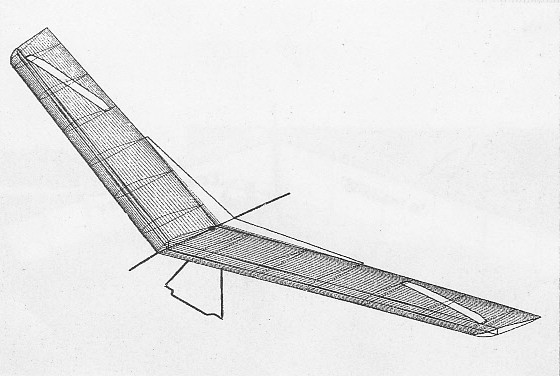
Icaro 2000

ICARO 2000, the first hang-glider factory in Europe, was founded in 1973 by Alfio Caronti & Peter Skaarup.

Alfio received his first glider from Bill Moyes, during a water-ski competition in 1969. He was the first Hang glider pilot in Europe, who took off from a mountain on the 4th November 1971. The glider used by Alfio Caronti was a kingpostless glider with square tubes.

Peter Skaarup was the technician of the factory and together they manufactured hang-gliders under the license of the Australian firm Moyes.

In 1981 Franco Garzia & Gianni Hotz, became the new owners of ICARO 2000 and continued to make Moyes hang-gliders. Their first glider was the Meteor 170.

Since 1983 ICARO has been using only tubes in Perunal (aluminium alloy 7075 for aeronautics) from the Swiss manufacturer Alumenziken.

Until 1991 ICARO sold, in Europe, more then 3,000 gliders (Moyes models like Mega II, Missile, Mars, GT, GTR and XS).

In 1992 Manfred Ruhmer becomes part of the staff and ICARO started to develop original designs with its own sailmakers and workshop with 20 employees and a 1,200+ sq m building. The development of new models was carried out by Manfred Ruhmer, one of the world’s best pilots and Franco Garzia, a former Italian champion. Since this time all ICARO hang glider models are certified by the DHV (Germany).

In 1992 the first ICARO’s original design appeared: the Brazil, followed in 1994 by the Laminar. With this wing ICARO started to reach competition results 1994 European Championship in Laragne (France): Manfred Ruhmer is 2nd 1995 World Championship in Ager (Spain): Manfred Ruhmer is 2nd. In 1995 the first prototype of kingpostless gliders appears.

In 1996 ICARO presented its first prototype of topless glider and with this wing, Manfred reached 2nd place in the European Championship in Hungary.

Since 1998 ICARO has its own landing area (more then 50.000sq m) with Club House, Camping facilities and Store of accessories for Sport Aviation: these facilities are located at Lago Maggiore (northern Italy), facing a mountain ideal for flying.

1998: Via Verdi, I-21038 Sangiano (VA), Italy.

In 1998 ICARO forms an agreement with Felix -A.I.R., by which ICARO will make keels and sails for the Atos (ICARO has made 550 so far) and obtains the option to sell the Atos in certain markets.

ICARO introduces on the paragliders’ scenery the Cyber, a new basic-intermediate wing, with the latest technology and construction methods and highest safety DHV 1. Also in 2000, on October 25th, ICARO reviewed its agreement with Felix; ICARO takes over the worldwide production and distribution of the Atos from the home base in Sangiano. Felix works exclusively on the development of the design.

After having sold more than 400 Atos in two years, a period in which ICARO took an active part in the manufacturing of sails, A-frames and keels, it was decided that henceforth A.I.R. would devote 100% to the development and technical support, whereas ICARO would become in charge of the production and distribution of the Atos.

In September 2001 Christian Ciech starts working for Icaro 2000 in the development team, and after six months comes into the scenery the new Icaro 2000’s rigid wing: the Stratos.

Hulton 1969 hang glider

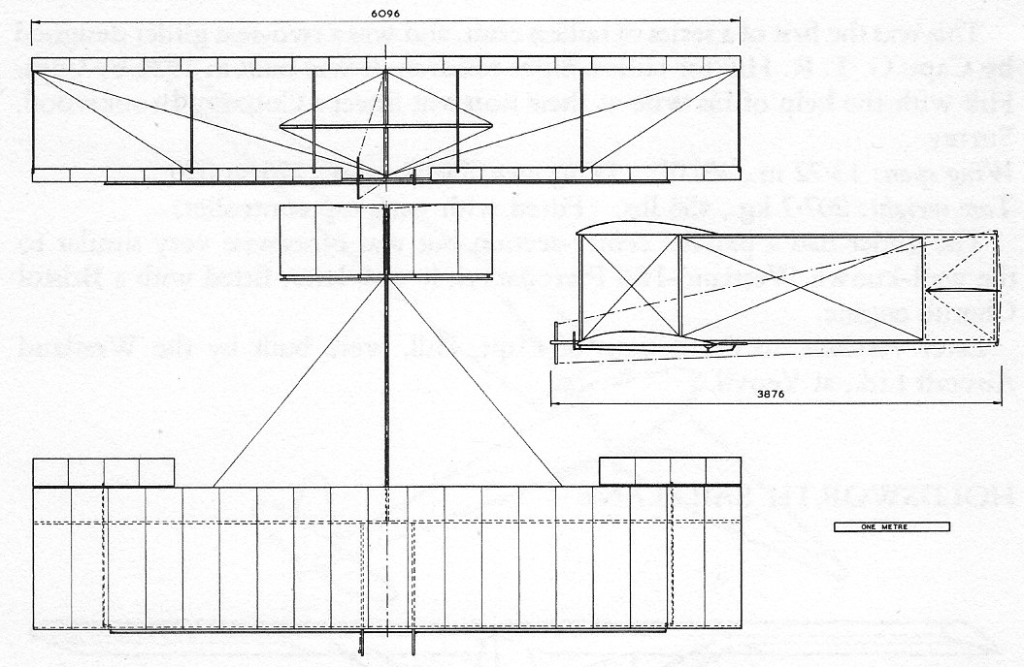
Designed by E.A.S. Hulton, London, UK, in 1969, this biplane hang-glider was wooden frame and fabric covered, based on the Ferris 1906 and the Anderson & Singer glider of 1911, with all-moving tailplane.
The upper and lower surfaces of each wing were fabric covered. Ailerons were on the lower wing only. No brakes or flaps were fitted.

Landings were made using leg undercarriage.

Only one was built, the first flight on 8 March 1969 from the I in 2 slope at the White Horse Hill, Uffington, Berkshire. The second flight, from the same site, piloted by David Potter, was unable to correct an almost vertical bank to port that developed, and the glider crashed from 50 ft. The pilot suffered bruising and a short period of unconsciousness. The glider was wrecked.

Wingspan: 6.10 m / 20 ft 0 in
Length: 3.88 m / 12 ft 9 in
Wing area: 14.86 sq.m / 166 sq.ft
Aspect ratio: 5

Howell Apex

A 1995 hang glider for Advanced pilots, the Apex has a D-tube structure at the leading edge and dacron at the trailing. Unlike the Swift, though, the leading edge is not structural. The D-tube stops short leaving a fiberglass fairing to absorb the impact of an ungraceful landing.

The Apex was built by Danny Howell, Monte Westlund, Lonnie Fiester, Mitch McAleer, & Floyd Fronius, to name a few.

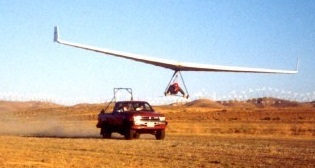
The original Apex had some damage after a truck tow ended with the Apex upside down and still attached by the nose safety line. One rudder damaged which Chuck Rhodes rebuilt and the tow rig frame bent beyond repair.

In 1998 Danny Howell, the designer of the Apex, offered the use of the molds to build another Apex. They had been stored in Mitch McAleer’s workshop for the previous 2 years. With the help of Mitch and Roy, the wing mold clam shells and the spar tools were moved to Roy Bailets’ hanger in Mojave.

They were machining a redesigned root fittings to allow the wings to fold in the usual hang glider fashion and carry the loads of the 42 ft. span in just 16% chord D-tube.

This new Apex will have the same 42 ft. span with rudder tips. Danny had wanted to put some spoilers on the upper surface near the tips. The entire wing (including D-tube) was to be covered with Poly Fiber P-106 fabric and 2 light coats of Poly Brush. The smaller and lighter D-tube will still have a forward and aft spar. Spar caps are pultruded carbon bar stock. These changes have resulted in a calculated 80 lb. glider. The orginal Apex had a 135 fpm minimum sink rate and the spoilers will make it easier to turn and ground handle. The Apex wing alone, without a pilot suspended below it, has a calculated 28:1 glide. The pilot will lower it to around 18:1.

Wing area: 16.4 m²
Wing span: 12.8 m
Aspect ratio: 10
Hang glider weight: 36 kg
Minimum sink rate: 0.7 m/s

Horton Alita HX

The first Alita designed by Reimar Horton was built by a group of enthusists in Argentina in 1953. It was destroyed in a storm.

The version B was then built, which never flew, and is in the aeronautical museum of moron Buenos Aires, Argentina.

HXa
Wing area: 11.2 m²
Wing span: 7.54 m
Hang glider weight: 39 kg
Minimum pilot weight: 75 kg
Maximum pilot weight: 75 kg
Maximum speed: 150 km/h
Max glide ratio: 30
Max glide ratio speed: 50 km/h
Maximum speed: 170 km/h
Max glide ratio: 18
Max glide ratio speed: 78 km/h
Landing speed: 42 km/h

HXb
Wing area: 17.5 m²
Wing span: 10 m
Hang glider weight: 39 kg
Minimum pilot weight: 75 kg
Maximum pilot weight: 75 kg
Maximum speed: 150 km/h
Max glide ratio: 20
Max glide ratio speed: 60 km/h
Landing speed: 36 km/h

HXc
Wing span: 15 m
Hang glider weight: 42 kg
Minimum pilot weight: 90 kg
Maximum pilot weight: 90 kg
Maximum speed: 150 km/h
Max glide ratio: 30
Max glide ratio speed: 50 km/h
Landing speed: 39 km/h

Horten Gebruder

Walter and Reimar Horten conducted flying-wing experiments prewar, building a series of tailless high-performance gliders. The Horten Ho V and Ho VI were both powered aircraft, leading to the turbojet-powered Ho IX flown in the summer of 1944. Before being destroyed in a landing accident after only a few hours flight, it had been flown at a speed of 800km/h. This was developed by Gothaer Waggonfabrik as the Gotha Go 229 V3 single-seat fighter, but the Gothaer works were captured by advancing U.S. forces before this prototype was completed.