Moyes SX / Super Xtralite

SX Super Xtralite

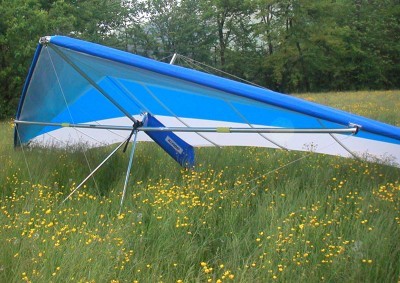
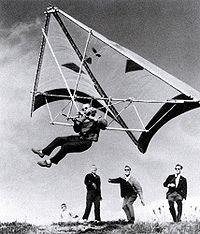
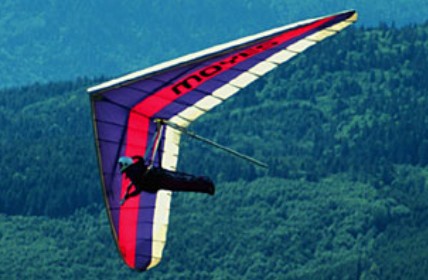
As well as user-friendly features such as smaller diameter uprights for more comfort and grip control on take-offs and landing, and redesigned aerodynamic tip leavers which make tensioning easier, the 1993 SX is the high performance glider for the recreational pilot.
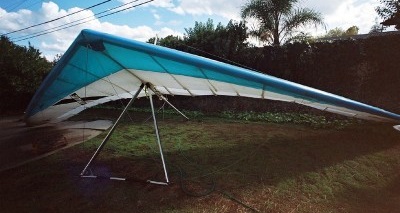
SX

Towing the SX pitch pressures are light and roll is standard giving great feedback. The SX is underated on the whole and is a stable and predictable glider. The VG is very stiff so apply some sailkote to the pulleys and it will free it up. The best way to fix the VG line is to use metal ball-bearing pulley from patio sliding glass doors. It makes it much smoother to pull.

The 1996 advanced Moyes Super Xtralite builds upon the successful plan frorm of the Xtralite while incorporating the sail design advances made by the CSX.

Experience
Last 100 hours been flying a Super Xtralite, which is great. The only complaint I have, I can’t keep up with the others when gliding at speed.
Mr. Green

Not exactly known for its “light weight”, the Extralite is however known as a fine wing. Aside from it’s weight, it is a no-surprises glider. It does what you expect, when you expect it. Also known as “a pleasure to fly”.

It yaws a little, bit slow in roll unless you pitch coordinate, then it is sweet. Great speed and energy retension. Tricky cross wind landing no trouble. Flares nice.

The XLT164 aerotows at 40mph well but requires a small amount of VB for Aerotow or will yaw above 45mph.

Xtralite 137
Wing area: 12.8 m²
Wing span: 9.85 m
Aspect ratio: 7.6
Hang glider weight: 31 kg
Minimum pilot weight: 59 kg
Maximum pilot weight: 110 kg
Minimum speed: 26 km/h
Maximum speed: 85 km/h
Max glide ratio speed: 42 km/h
Best glide angle: 13,02/1
Best sink rate: 180 fpm at 25mph
Packed length: 4.94 m
Packed length short: 3.75 m
Number of battens: 26
Nose angle: 127°

Xtralite 147
Wing area: 13.7 m²
Wing span: 10.3 m
Aspect ratio: 7.7
Hang glider weight: 33 kg
Minimum pilot weight: 72 kg
Maximum pilot weight: 113 kg
Minimum speed: 24 km/h
Maximum speed: 86.4 km/h
Max glide ratio speed: 42 km/h
Best glide angle: 13,02/1Packed length: 5.15 m
Packed length short: 3.75 m
Number of battens: 28
Nose angle: 127°

Xtralite 164
Wing area: 15.3 m²
Wing span: 10.8 m
Hang glider weight: 34 kg
Minimum pilot weight: 82 kg
Maximum pilot weight: 172 kg
Packed length: 5.5 m
Packed length short: 4.6 m
Number of battens: 28
Nose angle: 127°

Super Xtralite SX 2
Hang glider circa 1998.
Wing area: 11.8 sq.m
Pilot weight: 52-90 kg
Wing span: 9.15 m
Nose Angle: 127°
Aspect ratio: 7.1
Price (1998) £ 2999

Super Xtralite SX 3
Hang glider circa 1998.
Wing area: 12.8 sq.m
Wing span: 9.85 m
Certification: DHV
Pilot weight: 59-110 kg
Hang glider weight: 32 kg
Nose Angle: 127°
Aspect ratio: 7.6
Price (1998) £ 2999

Super Xtralite SX 4
Hang glider circa 1998.
Wing area: 13.5 sq.m
Certification: DHV 3
Pilot weight: 68-114 kg
Wing span: 10.1 m
Nose Angle: 127°
Aspect ratio: 7.6
Hang glider weight: 35 kg
Price (1998) £ 2999

Super Xtralite SX 5
Hang glider circa 1998.
Wing area: 14.2 sq.m
Certification: DHV 3
Pilot weight: 73-118 kg
Wing span: 10.26 m
Nose Angle: 127°
Aspect ratio: 7.7
Hang glider weight: 36 kg
Price (1998) £ 2999

Super Xtralite SX6
Wing area: 15.15 m²
Wing span: 10.61 m
Aspect ratio: 7.7
Hang glider weight: 37 kg
Minimum pilot weight: 85 kg
Maximum pilot weight: 127 kg
Nose angle: 127°
Moyes CSX

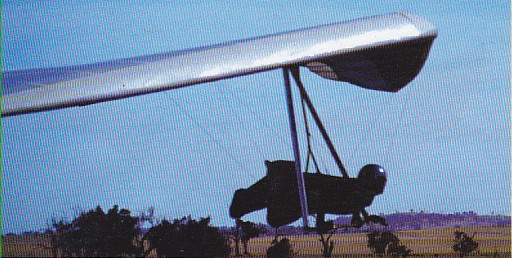
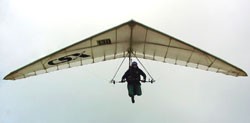
The Moyes CSX hang glider for advanced pilots first appeared in 1997.

On 12/02/1998 Rohan Holtkamp of Australia set a World Out-and-return distance record of 330.6 km at Eucla, Australia, in a Moyes Delta Gliders CSX-5.

CSX 3 137
A topless hang glider circa 1998.
Wing area: 12.8 sq.m
Certification: USHGA
Pilot weight: 52-90 kg
Wing span: 9.9 m
Nose Angle: 130 deg
Aspect ratio: 7.6

CSX 4 149
A topless hang glider circa 1998.
Wing area: 13.9 sq.m
Certification: DHV/USHGA
Pilot weight: 60-95 kg
Wing span: 10.1 m
Nose Angle: 130 deg
Aspect ratio: 7.6
Price (1998) £ 3750

CSX 5 153
A topless hang glider circa 1998.
Wing area: 14.2 sq.m
Certification: DHV/USHGA
Pilot weight: 65-105 kg
Wing span: 10.3 m
Nose Angle: 130 deg
Aspect ratio: 7.7
Price (1998) £ 3750

Moyes Mars / Icaro Mars

The 1984 Moyes Mars are very lightweight gliders with docile handling (even for a single surface glider). They have locked crossbars, predating the floating crossbar, and need to be flat rigged because of this. The hang straps slide to the front of the keel when de-rigged and are held to the crossbar junction by a strap when rigged. Failure to connect this strap can prove fatal.

Until 1991 ICARO sold, in Europe, more then 3,000 gliders (Moyes models like Mega II, Missile, Mars, GT, GTR and XS).

Icaro Mars

The Icaro Mars hang glider was from 1986 for novice pilots. Lovely simple glider, very easy take off and landing, great sink rate at trim. A little too heavy in roll for comfortable flying in rowdy conditions, otherwise a good first or fun glider.

Moyes Mars 150
Wing area: 14.6 m²
Wing span: 6.6 m
Hang glider weight: 22 kg
Nose angle: 120°

Moyes Mars 170
Wing area: 15.75 m²
Wing span: 8.84 m
Hang glider weight: 24 kg
Maximum flying weight: 122 kg
Nose angle: 125°

Icaro Mars 150
Wing area: 14.6 sq.m
Certification: DHV 1-2/SHV
Pilot weight: 50-80 kg
Wing span: 8.84 m
Nose Angle: 120 deg
Price (1998) £ 1190
Aspect ratio: 5.3
Hang glider weight: 19 kg
Packed length: 5.2 m
Packed length short: 3.3 m
Number of battens: 16

Icaro Mars 170
Wing area: 15.75 sq.m
Certification: DHV 1-2/SHV
Pilot weight: 60-110 kg
Wing span: 9.57 m
Nose Angle: 125 deg
Price (1998) £ 1190
Aspect ratio: 5.8
Hang glider weight: 23 kg
Packed length: 5.5 m
Packed length short: 3.75 m
Number of battens: 14

Moyes Delta Gliders / Moyes Microlights

Moyes Delta Gliders
Moyes Microlights
LiteFlite

Started in 1967, Moyes Delta Gliders was a Company solely dedicated to hang gliding.
1995: 2-4 Taylor St, Waverly, 2024 NSW, Australia.

1998: 1144 Bottany Road, NSW 2019 Botany, AUSTRALIA

2001: 200 Hillcrest Dr, Auburn, CA 95603, USA.
LiteFlite is owned and operated by Bill Moyes. Bill is based in Sydney at the Liteflite factory and frequently travels the world to sell and support his products. Bill has been flying and manufacturing aircraft since 1966 and has a long list of accolades to show for his efforts.

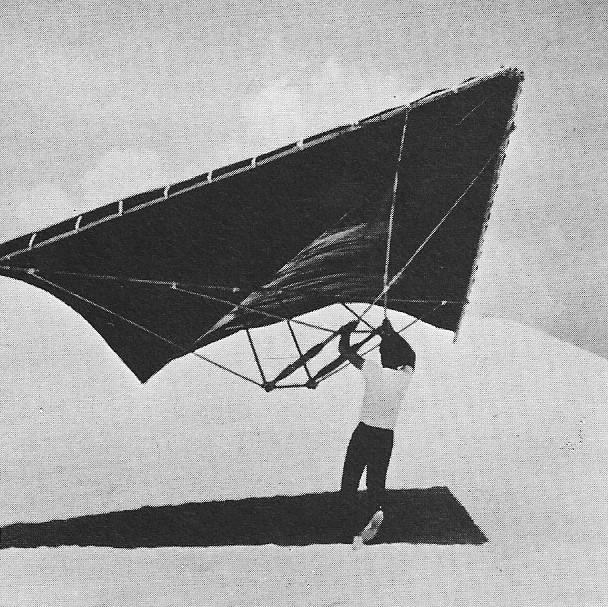
Bill Bennett and his partner Bill Moyes worked improvents into the Rogallo tow kites and Moyes towed to 1000 feet in 1967. After the towboat ran into a sand bar one day and the kite gently glided down, they began to deliberatelycut loose and experiment with untethered flight. This led the skiers up mountain sides where they made ski launches, sometimes gliding as far as five miles.

Bennett went to the USA in 1969 and began a tou of exhabitions which included flying over the Golden Gate Bridge to land on Alkatraz, and, on July 4th, circling the Statue of Liberty. American fliers were still using the Lilienthal-type parallel bars and hanging by their armpits but Bennett brought with him a trapeze style control bar and swinging seat.

After the success of his tour he settled down in LA and began to manufacture and promote hang gliders to the growing market in Southern California.

LiteFlite is a manufacturer of ultra light aircraft and hang gliding accessories. The main product from the LiteFlite stable is the Dragonfly, an ultra light aircraft most commonly used for towing hang gliders into the air. The Dragonfly has been in production since 1990 with approximately 100 aircraft being made, and is internationally recognised for its slow flying speed and great manoeuvrability.

Bill Moyes
Bob Bailey

2009: Moyes Microlghts Pty. Ltd, 173 Bronte Road, Waverly 2024, NSW, Australia.

Mitchell Wing

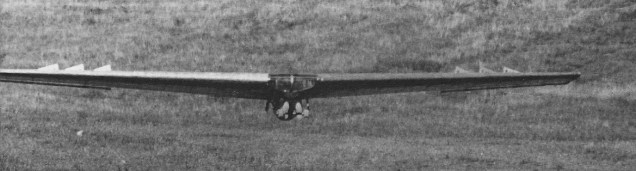
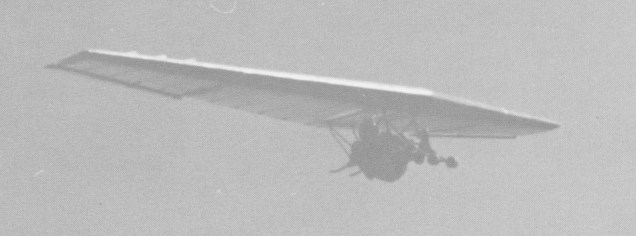
A hang gliding fanatic, Dr H Long, gave Don Mitchell control of a high performance wing. It has aerodynamic control of external “stabilator” surfaces about all three axises through the use of a joystick. No weight shift is required. Spoilers are used to initiate a turn or to steepen the glide path for landing. Its extremely flat glide and low sink rate allow it to takeoff and land in almost ‘no wind’ conditions.

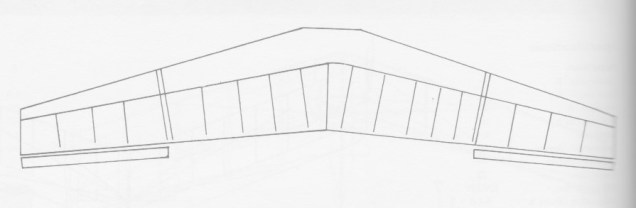
The wing is an all-wood structure with foam leading edge ribs. It has a single built-up C-spar with aircraft birch plywood torsion proof leading edge. The built-up truss ribs aft of the spar ar covered with seconite fabric.

The 8 ft 6 in outboard wing panels fold up over on top of the centre section for transportation. They may be removed as three pins connect outboard panels to the centre section.

The pilot is housed in a metal cage below the wing. Spoiler control is on the left, the control stick on the right. In flight the pilot goes into the supine position. A large clear mylar covering on the trailing edge above the pilot gives visibility overhead. The pilots cage folds up for ease in transportation.

In 1977 George Worthington flew an unpowered Mitchell Wing a straight distance of 107.8 miles.

By 1975 this same wing had become the B 10. The first powered version now carries the designation of B40F (F for foot launch).

The Mitchell was a rigid hang glider in wood, sold in plans. Two American companies were selling the rigid Mitchell. U.S Pacific sells plans and wood kits while Ameriplanes sells aluminium kits.

The 1976 wing was for advanced pilots. At lrast 20 service bulletins were to be applied to be safe.

Very pleasant in flight despite the strong reverse yaw but stable. The first 2 minutes are crucial because you have to understand everything quickly, the reverse yaw, the use of the rudders and the sensitivity of the handle on the pitch.

Wing area: 12.64 m²
Wing span: 10.2 m
Aspect ratio: 8.4
Hang glider weight: 35 kg
Minimum speed: 30 km/h
Maximum speed: 120 km/h
Max glide ratio (L/H): 16
Max glide ratio speed: 55 km/h
Minimum sink rate: 0.6 m/s

Wingspan: 10.36m
Wing area: 12.63m²
Weight: 37 kg – 39 with updates
VNE 120 km / h
Max. 100 km / h
Min speed: approx 30 Km / h
Max glide ratio (L/H): 16-18
Load: +6 -6G in free flight version (+4 -4 in ULM version)
Min fall rate: 0.6 – 0.8 m / sec

Wing span: 34 ft
Wing area: 136 sq,ft
Aspect ratio: 8.4
Weight: 68 lb
Takeoff speed: 14 mph
Stall speed: 11 mph
Max speed: 50 mph
Best glide ratio (L/D): 18-1
Best L/D speed: 32 mph
Min sink: 108 fpm

Miller Bamboo Butterfly Rogallo

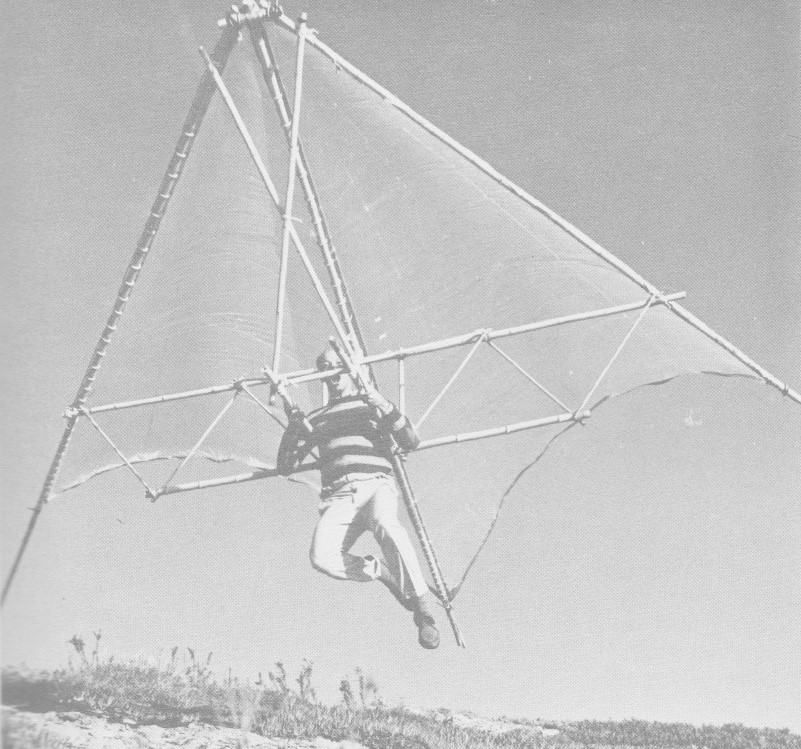
Richard Miller flying his new Bamboo Butterfly hang glider. Vista Del Mar California, 1966.

Barry Hill Palmer had a good paying aerospace job and was flying on a minimalist and inexpensive glider purely for curiosity and fun. He did not attempt to modernize or market the flexible wing hang glider; there was no attempt to publicize on the media, except for an ‘accidental’ report made by a small local newspaper. Palmer freely gave information about the wing to any person interested, including Francis Rogallo and Richard Miller, who develop the famous Bamboo Butterfly Rogallo wing hang glider, the plans of which circulated in some American magazines in the mid 1960s.

In 1964, after building some small Rogallo models, Miller used bamboo and polyethelene to construct the ‘Bamboo Butterfly’.

Over the next few years Miller and a growing number of friends slowly mastered the techniques of Rogallo flight.

Before the Butterfly was retired they had launched more than a hundred successful flights over Los Angeles beaches.